Best fluorocarbon leader length for spooky trout
One of the most frustrating things as an angler in Alberta is when you know there are fish in a spot, you can practically see them, but they just won't bite. They dart away at the first sign of your line, refusing to even look at your perfectly presented fly or lure. This happens all the time with trout, especially in our clear mountain streams and lakes. It’s like they have eyes in the back of their heads! This guide is going to dive deep into how to combat that "spooky trout" syndrome, focusing on the often-overlooked secret weapon: the length of your fluorocarbon leader.
Understanding Why Trout Get Spooky
Before we talk about solutions, let's really get into why trout seem to have a sixth sense when it comes to detecting your presence and your gear. It's not just paranoia; there are genuine biological and environmental factors at play that make them incredibly wary.
Water Clarity and Light Penetration
Alberta is blessed with some truly stunning, crystal-clear waters, especially in our mountain regions like the Bow River or high-alpine lakes. While beautiful for us, this clarity is a double-edged sword for fishing. In clear water, sunlight penetrates much deeper, making everything underwater highly visible. Your fishing line, even thin monofilament, can cast a shadow, create an unnatural glint, or simply appear as a thick, alien object in the water column. Trout, particularly the wily ones that have seen a few anglers, quickly learn to associate anything out of the ordinary with danger.
Imagine yourself standing at the edge of a pristine stream, peering into the gin-clear water. You can often see rocks, logs, and even fish with incredible detail. Now imagine being a trout in that same stream, constantly on alert for predators both above and below. Anything that looks or acts unnatural, like a thick fishing line, is immediately flagged as a potential threat. It's not just about what they see directly; the way light reflects off different materials also plays a huge role. Monofilament line can sometimes refract light in a way that creates a 'halo' effect, making it stand out even more.
Fish Sensory Perception
Trout are incredibly well-equipped for survival. Beyond their excellent eyesight, they possess a highly developed lateral line system. This sensory organ runs along the sides of their bodies and allows them to detect vibrations and pressure changes in the water. Even if they don't visually spot your line, the subtle drag it creates, or the way it moves a fly unnaturally, can be picked up by their lateral line. This is particularly true when your mainline, which is often thicker and less flexible, is too close to your presentation.
Think about a delicate dry fly presentation on a calm pool. If your heavy mainline is directly connected or too close, any subtle drift or ripple from the current affecting that line gets transferred straight to the fly, making it drag unnaturally across the surface. This is a dead giveaway to a discerning trout, especially a wise old brown or rainbow that's seen it all. Their entire existence revolves around recognizing natural food sources and avoiding predators, so any deviation from the norm is a huge red flag. This is why techniques like Fly Fishing for Trout on the Bow River emphasize delicate presentations and stealth.
The Role of Leader Material
This is where fluorocarbon steps in as a game-changer. Unlike traditional monofilament, fluorocarbon has a refractive index that is very close to that of water. In simpler terms, it virtually disappears underwater. It doesn't absorb water, so it maintains its strength and doesn't become opaque like some nylon lines can. It's also much denser than mono, which helps it sink faster and keep your lure or fly down in the strike zone, especially useful for nymphs or streamers.
While monofilament has its place, particularly for topwater presentations where buoyancy is desired, fluorocarbon shines in clear water and for spooky fish because of its invisibility. It's a key component in a truly stealthy setup, allowing your bait or fly to behave as naturally as possible, detached from the thicker, more visible main line. This material is so effective that many anglers use it for their entire mainline in specific situations, but for most, a fluorocarbon leader attached to a monofilament or braided mainline is the perfect compromise for a combination of strength, castability, and invisibility. Many anglers stock up on quality fluorocarbon from places like Bass Pro Shops or Amazon before their trips.
Factors Influencing Fluorocarbon Leader Length
Deciding on the "perfect" leader length isn't a one-size-fits-all answer. It's a dynamic choice that depends on several critical factors unique to your fishing situation. Ignoring these can mean the difference between a successful day and going home skunked.
Water Conditions
The environment you're fishing in plays a huge role in how long your leader needs to be.
- Clarity: This is perhaps the biggest factor. In gin-clear mountain streams and lakes, where visibility is high, a longer leader is almost always better. The more invisible line between your mainline and your presentation, the less likely a spooky trout is to see it. If you're fishing a place like parts of the Oldman River or high mountain lakes, where the water is truly pristine, going longer is prudent. Conversely, if you're fishing a river after a heavy rain, or a lake with naturally stained or turbid water, you can often get away with a shorter leader because the fish's visibility is already reduced.
- Depth: In shallower water, especially those under two or three feet, fish have less cover and are often more alert to overhead disturbances and visible lines. A longer leader helps create separation from your mainline and any boat or bankside shadows. In deeper water, the fish might not be as directly sensitive to a shorter leader, but clarity still matters.
- Current Speed: Fast currents can create drag on your line, making your presentation look unnatural. A longer leader can help mitigate this by allowing your fly or lure to drift more freely and naturally with the current, while your mainline is further upstream or out of the immediate drift lane. However, an excessively long leader in very fast current can sometimes be harder to control and manage. This is particularly important for river systems where flow rates can vary, like the Bow River.
Fishing Pressure
The more anglers a body of water sees, the wiser and warier the fish become. Highly pressured waters, especially those close to major cities like Calgary or Edmonton, will contain trout that have seen every fly, lure, and line known to humankind. These fish are educated, cautious, and will spook at the slightest hint of danger.
In these scenarios, a longer, finer fluorocarbon leader is absolutely essential. It minimizes the visual footprint of your gear, making your offering appear completely natural. Think of popular spots on the Bow River near Calgary; those trout aren't dumb. They've been caught and released multiple times, and they've learned to associate thick lines and unnatural drifts with trouble. On the flip side, if you're venturing into a remote, rarely fished alpine lake or stream, where fish rarely see human presence, you can often get away with a much shorter and perhaps even thicker leader because the fish are far less educated. The difference in their skittishness is palpable.
Your Fishing Technique
The way you present your bait or fly also impacts leader length.
- Fly Fishing: For dry flies, especially, a longer leader is often preferred to ensure a delicate, drag-free drift. The leader's length helps absorb any micro-currents that could otherwise pull your fly unnaturally. For nymphing or streamer fishing, while a long leader is still beneficial for stealth, the length might be slightly adjusted based on how deep you need to get and how sensitive you need to be to strikes. Learning various techniques is key, and resources like Fly Fishing for Trout on the Bow River can offer great insights into leader choices.
- Spin Fishing / Baitcasting: When throwing lures or bait, a longer leader still provides invisibility and shock absorption, especially if you're using braided mainline which is highly visible and has no stretch. However, an extremely long leader can sometimes make casting more difficult, especially with lighter lures, as the knot connecting your mainline to your leader might get caught in the rod guides. It's a balance between stealth and casting efficiency. For example, if you're targeting Rainbow Trout Fishing on the Bow River with spinning gear, a good medium-to-long leader is a wise choice.
Target Species and Size
Generally speaking, trout are more line-shy than many other freshwater species. Within trout species, some are notoriously more finicky than others. For example, a large, wild Brown Trout Fishing in Alberta in a clear stream might require a longer leader than a recently stocked rainbow trout in a pond. Bull Trout: Alberta's Threatened Native Fish are also highly sensitive and require utmost stealth.
Larger fish, regardless of species, tend to be more cautious and intelligent. They've survived longer by being wary. So, if you're specifically targeting trophy-sized trout, extending your leader length is a smart move to maximize your chances. Conversely, if you're just out to catch some panfish or smaller trout in a stocked pond, you likely don't need to overthink leader length as much.
Recommended Leader Lengths for Alberta Scenarios
Now that we've covered the "why," let's talk about the "how much." There's no single magic number, but we can break down common scenarios to help you dial in your leader length.
Short Leaders (2-4 feet)
A shorter fluorocarbon leader, typically 2 to 4 feet in length, has its place, even for trout. While it might seem counter-intuitive for spooky fish, there are specific situations where it’s the right call.
- Turbid or Stained Water: If you're fishing after a heavy rain or in a lake with naturally murky water, visibility is already low. The trout won't be able to see your mainline as clearly, so the need for extreme stealth is reduced. In these conditions, a shorter leader is easier to cast, especially with heavier lures, and allows for more direct contact with your bait, which can be crucial for feeling subtle bites in low visibility.
- Heavy Cover or Structure: When fishing around dense weeds, submerged timber, or rocky snags, a shorter leader is less prone to getting wrapped or snagged. It also provides a stronger, more direct connection to your mainline, which can be beneficial when you need to quickly pull a fish out of heavy cover to prevent it from burying itself.
- Aggressive Fish & Fast Action: Sometimes, trout aren't spooky at all! This might be during a hot bite, in very cold water when their metabolism is slow, or in highly oxygenated, faster-moving water where they're less likely to scrutinize. In these cases, a shorter leader won't hinder bites and will make landing fish quicker and easier, reducing wear on the fish.
- Topwater Lures with Braided Line: If you're using braided mainline for its sensitivity and strength, and throwing a topwater lure for pike (or even aggressive trout), a short fluorocarbon leader (or even just a heavy mono leader) acts as a shock absorber and a bit of abrasion resistance, but doesn't need to be overly long for stealth.
Medium Leaders (5-8 feet)
This is often the sweet spot for many Alberta trout fishing scenarios. A medium-length leader, typically between 5 and 8 feet, offers a great balance of stealth, castability, and control.
- General Clear Water Conditions: For most of our moderately clear lakes and rivers, this length provides enough separation between your mainline and your presentation to fool most trout. It's long enough to offer good invisibility but not so long that it becomes unmanageable for casting, especially with spinning or baitcasting gear. This is a great starting point for many of the Best Fishing Rivers in Alberta.
- Moderate Fishing Pressure: If you're fishing waters that see a decent amount of angler traffic but aren't hammered every day, a medium leader is a good compromise. It offers enough stealth for the moderately educated fish without requiring the extreme finesse of a very long leader.
- Versatility: This length works well for a variety of techniques, from drifting bait under a float to casting small spoons or spinners. It allows for a natural presentation without significantly impacting your ability to feel bites or set the hook. For general-purpose trout fishing with spinning gear, pairing a quality Best Fluorocarbon Line for Clear Water Trout in a 6-8 foot leader with your mainline is a solid choice.
- Nymphing in Rivers: For many nymphing situations, where you're trying to get flies down to depth but still want a natural drift, a 6-8 foot leader can be ideal, often with additional tippet sections added at the end for fineness and easy fly changes.
Long Leaders (9-15+ feet)
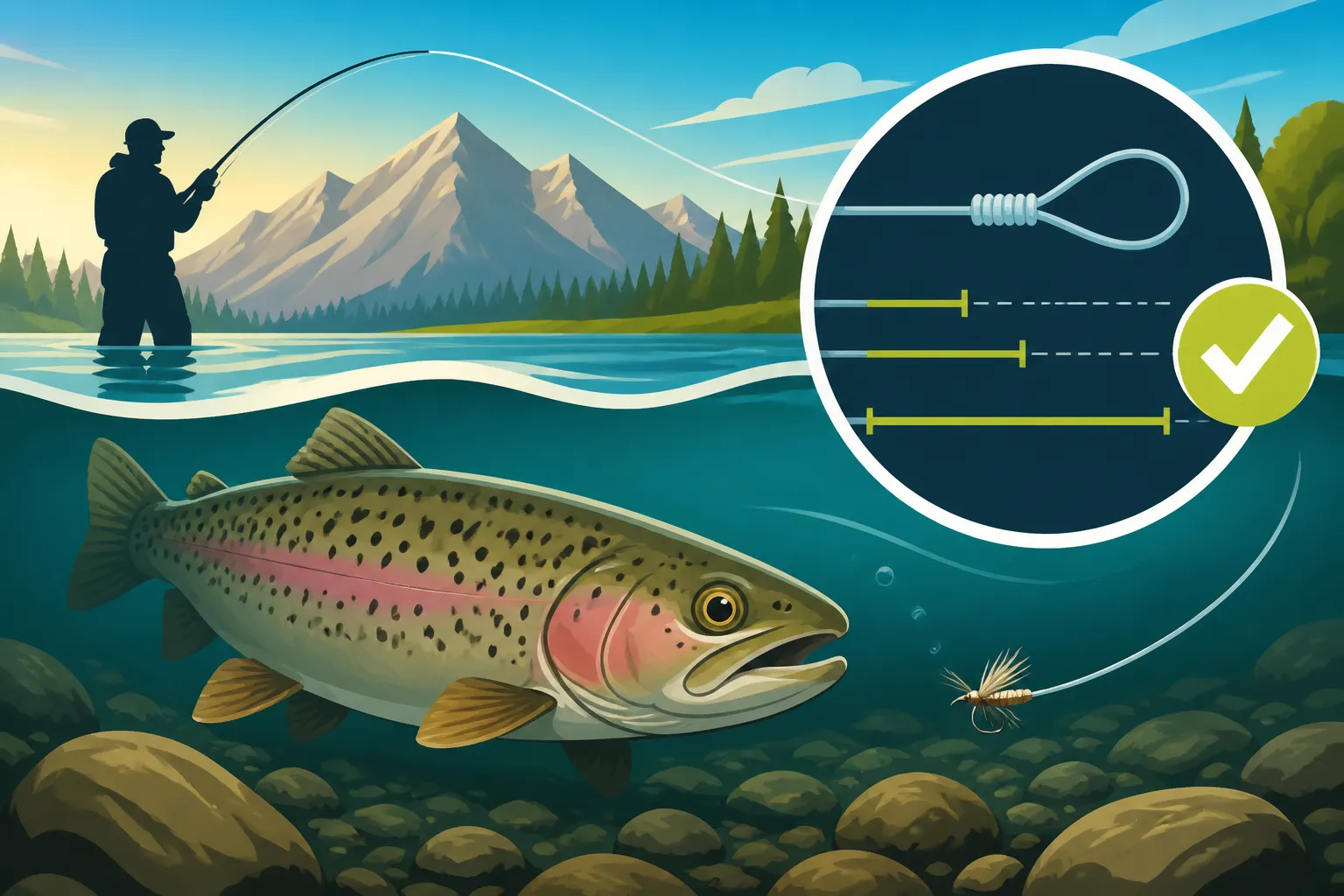
When trout are at their most wary and conditions are at their clearest, you need to go long. Leaders from 9 to 15 feet or even longer are specifically for those ultra-challenging situations.
- Ultra-Clear, Still Waters: High-alpine lakes, crystal-clear spring creeks, or calm, deep pools on major rivers often demand the longest leaders. In these environments, trout have ample time and perfect visibility to scrutinize your offering. A long leader ensures maximum separation from your mainline, making your lure or fly appear completely unattached and natural. Think about the clarity of some sections of the Crowsnest River or small mountain streams where Cutthroat Trout in Alberta's Mountain Streams reside.
- Highly Pressured Spots: Those legendary spots on the Bow River that see dozens of fly fishers daily? That's where a 12-foot or even 15-foot tapered fly leader with a long tippet section becomes essential. The fish are wise, and anything less than a perfect, invisible presentation will send them scurrying. This is where the absolute Best Gear for Bow River Fly Fishing really shines.
- Delicate Dry Fly Presentations: For incredibly subtle dry fly fishing, especially when trout are feeding on tiny insects on the surface, a long leader helps ensure a completely drag-free drift. The extra length allows the fly to float naturally without being influenced by any micro-currents pulling on the mainline. This is especially true when using lighter Best Fly Rods for the Bow River setups.
- Educated and Trophy Trout: If you're specifically targeting the largest, most experienced trout in a system, they demand the utmost stealth. These fish have survived multiple encounters with anglers, and their survival instinct is finely tuned. A long fluorocarbon leader is one of your best tools for tricking them.
Here's a quick summary table to help you visualize leader length choices:
| Situation Type | Water Clarity | Fishing Pressure | Recommended Leader Length (Fluorocarbon) | Primary Technique Examples |
|---|---|---|---|---|
| Aggressive/Stained | Turbid to Stained | Low | 2-4 feet | Casting spinners, bait, power fishing lures |
| General Purpose | Moderately Clear | Moderate | 5-8 feet | General fly nymphing, spin casting small lures |
| Spooky/Pressured | Ultra-Clear | High | 9-15+ feet | Delicate dry fly, finesse jigging, bait drifting |
| Heavy Cover | Any (usually stained) | Low-Moderate | 2-4 feet | Punching, flipping, short casts near structure |
| Trophy Hunting | Clear to Ultra-Clear | High | 8-15+ feet | Stealthy bait presentation, large fly offerings |
Tips for Rigging and Maintaining Your Fluorocarbon Leader
Having the right length of fluorocarbon leader is only half the battle. Proper rigging and maintenance are just as crucial to ensure it performs as intended and doesn't let you down when that trophy trout finally bites.
Proper Knot Tying
The strength of your leader system is only as good as its weakest knot. When connecting your fluorocarbon leader to your mainline (whether it's monofilament or braid), you need a reliable knot that maintains as much of the line's breaking strength as possible.
- For Braid to Fluorocarbon: The FG knot is widely considered one of the best for this connection. It's incredibly strong, slim, and passes through rod guides smoothly. It takes some practice, but it's worth learning. Other good options include the Alberto knot or the crazy Alberto knot, which are a bit easier to tie on the water.
- For Mono to Fluorocarbon: The double uni knot or a blood knot are excellent choices. They are relatively easy to tie, hold strong, and are quite streamlined. Make sure to lubricate your knots with saliva before tightening them to prevent line abrasion and ensure they cinch down properly. A poorly tied knot can reduce your line's strength by 50% or more, leading to heartbreaking break-offs. If you’re ever unsure, practice at home with different line weights.
Leader Material Selection (Test Strength)
Choosing the right test strength for your fluorocarbon leader is just as important as its length. You need to match it to your mainline, your target species, and the lures or flies you're using.
- Matching Mainline: Generally, your leader should be lighter in test strength than your mainline, acting as a "fuse" in case of a snag, so you only lose your leader and lure, not your entire mainline.
- Target Species: For Rainbow Trout Average Size on the Bow River, a 4-8 lb test fluorocarbon is often ideal. For smaller stream trout or panfish, you might drop down to 2-4 lb test. For larger lake trout or northern pike (if you're using fluorocarbon for pike, often as a bite guard), you might go up to 10-20 lb test, but typically, a much heavier monofilament or wire leader is used for pike given their sharp teeth. You can find a good range of options at retailers like Bass Pro Shops or even from online vendors on Amazon.
- Lure/Fly Size: The leader's strength should also be appropriate for the weight and size of your lure or fly. A very heavy lure on a light leader will often break off, and a very fine leader might not turn over a large fly effectively.
- Pound Test vs. Diameter: Remember that fluorocarbon generally has a smaller diameter for the same pound test compared to monofilament, contributing to its stealth. However, it's also less stretchy, so proper drag settings on your reel are crucial. Using the right Best Tackle for Panfish means selecting not just the right lures, but also the correct line.
Storage and Inspection
Fluorocarbon is durable, but it's not indestructible. Proper care will extend its life and prevent unexpected failures.
- Spool Storage: Keep your fluorocarbon spools out of direct sunlight and extreme heat, which can degrade the line over time. Store them in a cool, dry place. Many tackle boxes come with integrated spool holders, or you can use small soft cases.
- Regular Inspection: Before and during your fishing trip, run your leader through your fingers, feeling for nicks, abrasions, or kinks. These imperfections can severely weaken the line. If you feel any damage, cut off the affected section and re-tie. Even small nicks from rocks, fish teeth, or even accidental contact with your boot can compromise the leader.
- Re-tying: After catching a few fish, especially bigger ones, or if you've been fishing around abrasive structure, it's always a good idea to re-tie your leader. The stress of fighting fish and contact with their mouths can weaken the knot or the line near the hook. Better safe than sorry! This also applies to your mainline, as a well-maintained line is part of having the Best Tackle Box Setup for Alberta Anglers.
The art of fishing, especially for wary trout in Alberta's beautiful waters, is often about paying attention to the small details. Your fluorocarbon leader length is one of those crucial details. By understanding why trout are spooky and how different water conditions and fishing pressures affect their behavior, you can make an informed choice about your leader. Experiment, pay attention to what works in different spots, and you'll undoubtedly start landing more of those elusive, but incredibly rewarding, Alberta trout.
Disclaimer
This article is for general informational purposes only and does not constitute professional advice. Laws, prices and regulations vary by location and change over time. Consult a qualified professional for guidance on your specific situation.