Best ice auger for panfish holes
There's nothing quite like the crisp air and the anticipation of a bite when ice fishing for panfish in Alberta. But if you've ever hauled out a heavy, oversized auger just to punch a few small holes for tiny perch or crappie, you know the struggle is real. It's too much work, too much noise, and just plain overkill. This guide is here to help you cut through the confusion and find the ideal ice auger that makes drilling those perfect panfish holes a breeze, saving your energy for reeling in fish.
Why Panfish Holes Need a Different Approach
When you're out on a frozen Alberta lake, chasing those delicious panfish like yellow perch or whitefish, your approach to drilling holes can significantly impact your day. Many anglers default to their heavy-duty augers designed for much larger fish, and while those certainly can drill a hole, they're often not the best tool for the job when targeting smaller species. This isn't just about efficiency; it's about making your ice fishing experience more enjoyable and less of a chore.
The Problem with Oversized Augers
Imagine trudging across a vast expanse of ice, perhaps on Lesser Slave Lake Walleye Fishing excursions, with a cumbersome, heavy auger designed to cut 8-inch or 10-inch holes. When your target is a 6-inch perch, that massive hole is simply unnecessary. The larger the diameter of the hole, the more ice you have to cut, which translates to more effort, more time, and more physical strain. This is especially true if you're using a manual auger or if your electric auger's battery life becomes a concern after drilling several large holes.
Beyond the physical exertion, larger augers kick up a lot more ice chips. While you might not think much of it, these chips can quickly accumulate around your hole, making it messy and sometimes even refreezing your line if not cleared away. Plus, the sheer size and weight of a bigger auger make it less portable. If you're an active panfish angler who likes to "run and gun," drilling multiple holes to find the schools, a heavy auger will quickly wear you out, taking away from the fun of the day.
The Ideal Panfish Hole Size
So, what's the sweet spot for panfish? Generally, a hole diameter between 4 and 6 inches is absolutely perfect. A 4-inch hole is plenty big enough to land even the largest yellow perch or a good-sized crappie without any fuss. It requires significantly less effort to drill, whether you're using a manual or electric model. Think about it: cutting a 4-inch hole means removing much less ice volume compared to a 6-inch or 8-inch hole, let alone a 10-inch one. This reduced effort means you can drill more holes with less fatigue, covering more ground and increasing your chances of finding that productive school.
Furthermore, smaller holes are safer. While you should always be mindful of How thick ice needs to be to fish safely in Alberta, smaller holes reduce the overall amount of open water on the ice, especially if you're fishing in a group or with kids. They also tend to accumulate fewer ice chips, keeping your fishing area cleaner and your line free from obstructions. For those quick checks and moves when the bite slows, a smaller, quicker-to-drill hole is a huge advantage, letting you stay mobile and effective.
Types of Ice Augers Perfect for Panfish
Choosing the right ice auger can feel a bit overwhelming with all the options out there. For panfish, you're primarily looking for something efficient, relatively lightweight, and easy to handle. While gas-powered augers certainly have their place, they're often overkill and more trouble than they're worth for targeting smaller species. Let's break down the best contenders for your panfish pursuits.
Manual Hand Augers: Simple and Effective
For many years, and still today, the trusty manual hand auger has been the backbone of panfish ice fishing. These are simple machines: a set of sharp blades, a cutting head, an extension shaft, and a handle. You power them purely with your own muscle. They are wonderfully uncomplicated, which is a huge part of their appeal. There are no batteries to charge, no fuel to mix, and no engines to service.
Pros:
- Lightweight: By far the lightest option, making them incredibly easy to carry across the ice, especially if you're hiking into remote spots or moving frequently between holes.
- Quiet: Silent operation means no spooking fish with engine noise, which can be a real advantage in shallow panfish waters. Plus, it makes for a much more peaceful fishing experience.
- Affordable: Manual augers are typically the least expensive option upfront, a great entry point for new ice anglers or those on a budget. You can find excellent quality models at stores like Bass Pro Shops or online platforms.
- Reliable: With fewer moving parts, there's less to break. Just keep the blades sharp and protected.
Cons:
- Manual Effort: You're doing all the work! This can be tiring on thick ice (think anything over 18-24 inches) or if you plan to drill a very large number of holes.
- Slower: Drilling takes more time compared to power augers, which might limit your mobility if you're trying to fish a large area quickly.
Best for: Anglers who prefer a quiet, simple, and inexpensive approach; those fishing thinner ice (up to 18 inches); and anyone who values portability and a good workout on the ice. They are perfect for a casual day of chasing perch or crappie, especially on smaller, local ponds or lakes. If you're looking for a low-cost way to get started with Ice Fishing in Alberta, a hand auger is a fantastic choice.
Cordless Electric Augers: The Modern Angler's Choice
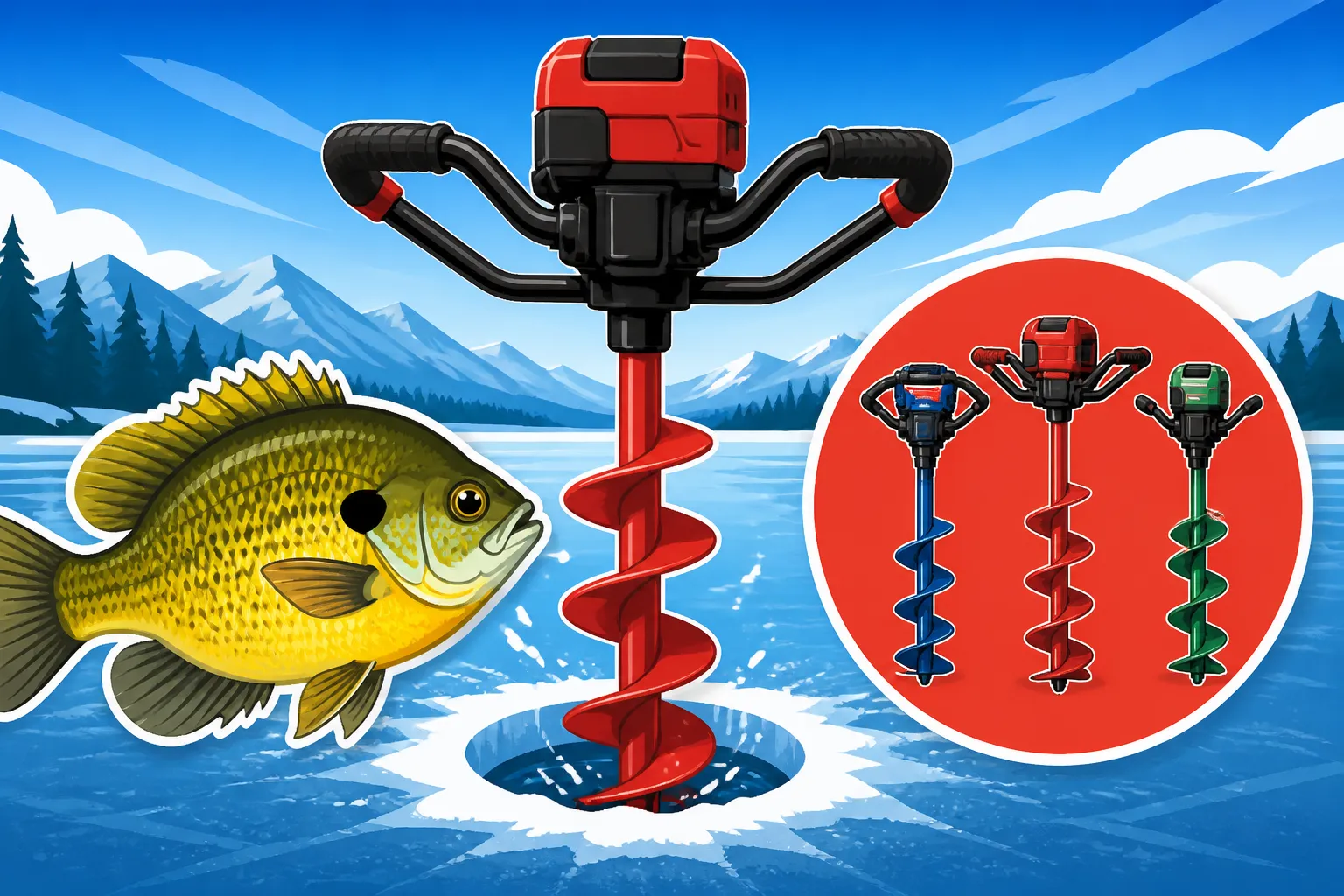
Over the last decade, cordless electric augers have revolutionized ice fishing. These augers combine the portability and quietness of a hand auger with the effortless power of a motor. They typically run on powerful lithium-ion batteries, similar to what you'd find in power tools. For panfish, an electric auger with a smaller diameter bit is a match made in heaven.
Pros:
- Fast and Effortless: They cut through ice like butter, with minimal physical exertion required. This means you can drill dozens of holes quickly, perfect for covering vast areas to locate schools of Yellow Perch in Alberta Lakes.
- Quiet and Fume-Free: Like hand augers, they are incredibly quiet, creating a peaceful environment and avoiding spooking fish. No gas fumes to contend with either, making them ideal for use inside an ice hut or in areas with still air.
- Powerful: Capable of handling very thick ice (2-3 feet or more) with ease, especially with a fresh battery.
- Relatively Lightweight (for power augers): While heavier than a manual auger, they are significantly lighter than traditional gas models, improving portability.
Cons:
- Battery Life: Dependent on battery charge. Cold weather can reduce efficiency, and you'll need to carry spare batteries for long days or heavy drilling. Charging infrastructure is needed.
- Cost: Generally more expensive upfront than hand augers, though prices have become more competitive.
- Weight: Still heavier than a hand auger, which can be a factor for extremely long treks.
Best for: Anglers who fish regularly, desire speed and convenience, and are willing to invest a bit more. They are superb for punching many holes quickly to locate roaming panfish schools, and their quiet operation is fantastic for stealth fishing. Many anglers find great deals and a wide selection of these models on online retailers like Amazon, or by visiting a dedicated outdoor store like Bass Pro Shops for hands-on comparison. They're quickly becoming a staple in Best Ice Fishing Gear for Alberta lists for good reason.
Propane/Gas Augers: When You Need Power (But Maybe Too Much)
Propane and gas-powered augers are the traditional heavy-hitters of the ice fishing world. They use small internal combustion engines to power their cutting blades, offering immense power and speed for drilling through the thickest ice.
Pros:
- Unrivaled Power: They can churn through feet of ice incredibly fast, even with large diameter bits.
- Fuel Availability: Gasoline is readily available, and propane cylinders are common.
Cons:
- Heavy and Bulky: These are typically the heaviest and bulkiest auger types, making them a workout to transport and less ideal for frequent hole-hopping.
- Noisy and Fumes: The engines are loud, which can disturb the peace of the ice and potentially scare away fish. They also produce exhaust fumes, making them unsuitable for enclosed shelters without proper ventilation.
- Maintenance: Require more maintenance than electric or manual augers (oil changes, spark plugs, fuel stabilizers).
- Overkill for Panfish: This is the big one. For the small holes required for panfish, a gas or propane auger is simply far too much power, weight, and noise. You don't need a sledgehammer to drive a thumbtack.
Best for: Anglers targeting large species like lake trout (e.g., Best Techniques for Ice Fishing Lake Trout), or those who primarily drill a few very large holes for tip-ups and stay put all day. For dedicated panfish expeditions, they are generally not recommended due to their downsides outweighing any perceived benefit for such small holes.
Key Features to Look for in a Panfish Auger
Once you've decided on the general type of auger, it's time to dive into the specifics that make one auger stand out from another for panfish success. These details can dramatically affect your comfort, efficiency, and overall enjoyment on the ice.
Blade Diameter: Smaller is Better
For panfish, the phrase "smaller is better" truly applies when it comes to blade diameter. You're not trying to pull up a monster lake trout, so you don't need a massive hole. A smaller hole means less ice to cut, which translates directly into less effort and faster drilling, whether you're using a hand auger or an electric one.
- 4-inch Diameter: This is the ultimate choice for the dedicated panfish angler. It's incredibly fast and easy to drill, perfect for small perch and crappie. You can punch many holes in a short amount of time without breaking a sweat, allowing you to quickly locate schools. The minimal ice displacement also means less mess around your fishing area.
- 5-inch Diameter: A fantastic all-around option that still leans heavily towards panfish. It's slightly wider than a 4-inch, offering a little more wiggle room for landing slightly larger panfish or even the occasional smaller walleye, without significantly increasing drilling effort. Many anglers consider this a great compromise if they might also occasionally target slightly larger species.
- 6-inch Diameter: While still perfectly suitable for panfish, this starts to venture into "general purpose" territory. It requires a noticeable amount more effort than a 4- or 5-inch hole but remains manageable for panfish. If you occasionally target small pike or walleye in addition to panfish and only want one auger, a 6-inch might be your upper limit. However, for pure panfish focus, it's often more than you need.
Here’s a quick comparison to help visualize the difference:
| Auger Diameter | Effort Required | Drilling Speed | Fish Size Comfortably Landed | Best Use Case |
|---|---|---|---|---|
| 4-inch | Very Low | Very Fast | Small to Medium Panfish | Dedicated panfish, high mobility, thin ice |
| 5-inch | Low | Fast | Medium Panfish, Small Walleye | Versatile panfish, frequent moving, varied ice |
| 6-inch | Medium | Moderate | Large Panfish, Small Pike | General ice fishing, occasional panfish, deeper ice |
Remember, the goal is efficiency and ease of use for the target species. Don't be tempted to go larger than necessary; you'll regret it after a few holes!
Weight and Portability
When you're chasing panfish, especially on vast Alberta lakes, mobility is key. Panfish often roam in schools, and being able to quickly move and drill new holes to stay on top of them is a huge advantage. This is where the weight and portability of your auger become critical.
A heavy, bulky auger will make you think twice about moving just a few yards, even if the bite has slowed. Lighter augers, particularly hand augers or compact electric models, are a joy to carry. They can often be slung over a shoulder or easily transported on a sled or in a Best Ice Hut for Alberta Lakes if you're using a shelter. Look for models that boast lightweight materials in their construction, such as aluminum shafts. For electric augers, consider the total weight including the battery, as some batteries can add significant heft. A lighter setup conserves your energy for the actual fishing, allows you to explore more territory, and ultimately, helps you catch more fish, whether you're targeting perch with Best Techniques for Perch Through the Ice or simply enjoying the peacefulness of the ice.
Ergonomics and Handle Design
You might not think much about the handle of an auger until you've drilled a dozen holes. But a well-designed handle can make a world of difference in your comfort and efficiency. For hand augers, look for handles that are comfortable to grip, even with gloves on, and provide good leverage. A wider, offset handle often allows for a more natural turning motion and reduces strain on your wrists and shoulders.
For electric augers, consider the balance of the unit. A well-balanced electric auger will feel lighter in your hands and be easier to control as it drills. The placement and design of the power button and safety switch should also be intuitive and easy to operate, even with cold hands or thick gloves. Some models offer adjustable handle heights, which can be a real boon for anglers of different statures, ensuring a comfortable and efficient drilling posture for everyone. Taking a moment to handle different models at a retailer like Bass Pro Shops can give you a good feel for what works best for you.
Making Your Choice: Hand Auger vs. Electric for Panfish
Now that we've explored the types and features, let's tie it all together to help you make the right decision for your panfish adventures. The "best" auger isn't a one-size-fits-all answer; it depends on your personal fishing style, budget, and the specific conditions you typically face.
Budget and Frequency of Use
Your budget is often the first factor in narrowing down choices. Hand augers are unequivocally the most budget-friendly option, making them an excellent choice for casual anglers, beginners, or those who only go out a few times a season. You can get a solid, reliable hand auger for a fraction of the cost of a power auger. This leaves more money for other essential gear like Best Spoons for Ice Fishing Panfish or a cozy Best Ice Hut for Alberta Lakes.
If you're an avid ice angler who hits the ice every weekend, or even multiple times a week during prime ice season, investing in an electric auger might be a wise decision. The convenience and speed it offers will greatly enhance your frequent trips, and the initial higher cost will be justified by the sheer number of holes you'll drill with ease. Electric augers, while more expensive, are becoming increasingly durable and efficient, making them a long-term investment for the dedicated angler. Keep an eye out for sales or refurbished units on platforms like Amazon or at big box stores like Bass Pro Shops to maximize your value.
Ice Conditions and Mobility
Consider the typical ice conditions on the Alberta lakes you fish. Are you usually on lakes with relatively thin, early-season ice (4-10 inches), or do you often face deep, late-season ice (2-3 feet or more)?
- Thinner Ice: For thinner ice, a hand auger is perfectly sufficient and incredibly efficient. The manual effort is minimal, and you'll appreciate the extreme portability for moving around.
- Thicker Ice: If you frequently encounter thick ice, an electric auger becomes a much more attractive option. Drilling through 2+ feet of ice with a hand auger, even a small 4-inch one, gets tiresome quickly. An electric auger will effortlessly power through, allowing you to maintain your mobility and focus on fishing.
Your fishing style also plays a role. Are you someone who drills a couple of holes, sets up a chair, and waits patiently? Or do you actively "run and gun," drilling a dozen holes in a small area, then moving a hundred yards and drilling another dozen to find the fish? For the latter, an electric auger (or a very light, efficient hand auger) will be your best friend, especially when chasing active panfish schools where quick relocation is critical for success. Knowing Best time to fish for perch in winter can also help dictate how many holes you might need to punch.
Augers for Family Fun
Ice fishing is a fantastic family activity in Alberta, and getting the kids involved is half the fun. When you're out with children or new anglers, ease of use is paramount. A heavy, difficult-to-operate auger can quickly turn a fun outing into a frustrating one.
Manual hand augers are great for teaching kids the ropes. They're safe (with proper supervision, of course), lightweight enough for older children to try, and allow everyone to participate in the process of setting up. The hands-on nature can be very engaging.
Electric augers, with their push-button operation and minimal effort, are also excellent for family outings, especially if the adults handle the drilling. They allow you to get holes in the ice quickly, so everyone can start fishing sooner. The quiet operation is also a plus, fostering a calm environment for learning and enjoying the outdoors. Ultimately, the goal is to choose an auger that adds to the enjoyment of the trip, not detracts from it. Whether it's the simplicity of a hand auger or the effortless power of an electric model, ensuring it's easy to manage will contribute to a memorable and successful panfish adventure.
Remember to consider what other species you might pursue. While this guide focuses on panfish, if you plan to occasionally target larger fish like walleye or northern pike from the same holes, you might consider the upper end of the panfish auger spectrum, like a 6-inch electric model. However, for pure panfish pursuit, keep it small, keep it light, and keep it efficient!
Disclaimer
This article is for general informational purposes only and does not constitute professional advice. Laws, prices and regulations vary by location and change over time. Consult a qualified professional for guidance on your specific situation.