Best Spoons for Ice Fishing Panfish
There's nothing quite like the excitement of seeing that tiny rod tip twitch during an Alberta ice fishing trip, especially when you're targeting those feisty panfish like yellow perch or even some crappie if you're lucky. But let's be real, sometimes you stare at that hole, jigging away, feeling like you're talking to a brick wall. The frustration of trying to tempt those finicky little eaters can be enough to make you pack it in. This guide is all about cutting through that frustration, diving deep into the world of ice fishing spoons specifically designed to entice panfish, helping you pick the right ones and present them like a pro.
Why Spoons Are a Panfish Ice Angler's Best Friend
When the water hardens over, the world under the ice changes dramatically. Fish, especially panfish, become more lethargic, and their feeding windows can be short and specific. While soft plastics and tiny jigs certainly have their place, spoons offer a unique combination of flash, vibration, and profile that can be absolutely irresistible, even to the most hesitant panfish.
The Irresistible Flash and Vibration
One of the biggest advantages of spoons in ice fishing is their ability to create visual attraction and emit subtle vibrations in the water column. Unlike a static bait, a spoon flutters and shimmers as it falls, mimicking a wounded baitfish or an insect struggling. This flash catches the eye of distant panfish, drawing them in to investigate. It's like a tiny, underwater disco ball, calling them over to the party.
Think about a school of yellow perch in a lake like Pigeon Lake. They might be scattered or hugging the bottom, not actively hunting. A small spoon dropping through the water creates flashes that can be seen from a surprising distance, triggering their curiosity. That subtle vibration, a tiny pulse sent through the water, also appeals to their lateral line, often signaling a feeding opportunity or something worth checking out. This combination of visual and sensory appeal is hard for panfish to ignore, often pulling them out of their hiding spots or off inactive schools.
Mimicking Natural Prey and Generating Strikes
Beyond just attracting fish, spoons are excellent at imitating the natural food sources that panfish key in on during the winter months. Many panfish, especially larger perch and crappie, will opportunistically feed on small baitfish, insect larvae, or even tiny crustaceans. The erratic action of a spoon can perfectly replicate these prey items.
A well-chosen spoon can drop quickly through the water column, then flutter on the pause, mimicking a dying minnow. Or, with subtle rod tip movements, it can dance in place, appearing like a struggling nymph. This realistic imitation, combined with the often-aggressive nature of panfish, leads to more committed strikes. It’s not just about getting them to look, it’s about getting them to bite down hard, and spoons excel at triggering that predatory instinct.
Types of Ice Fishing Spoons for Panfish
Not all spoons are created equal, especially when you're talking about panfish under the ice. There's a whole world of shapes, sizes, and actions out there, each designed to do something a little different. Understanding these variations is key to putting together a versatile tackle box that's ready for any situation.
Flutter Spoons: Subtle Seduction
Flutter spoons are characterized by their lighter gauge metal and broader profile, designed to create a slow, tantalizing fall with a wide, erratic wobble. They don't just drop; they dance. This action is incredibly effective when panfish are lethargic or suspended in the water column, unwilling to chase a fast-moving bait.
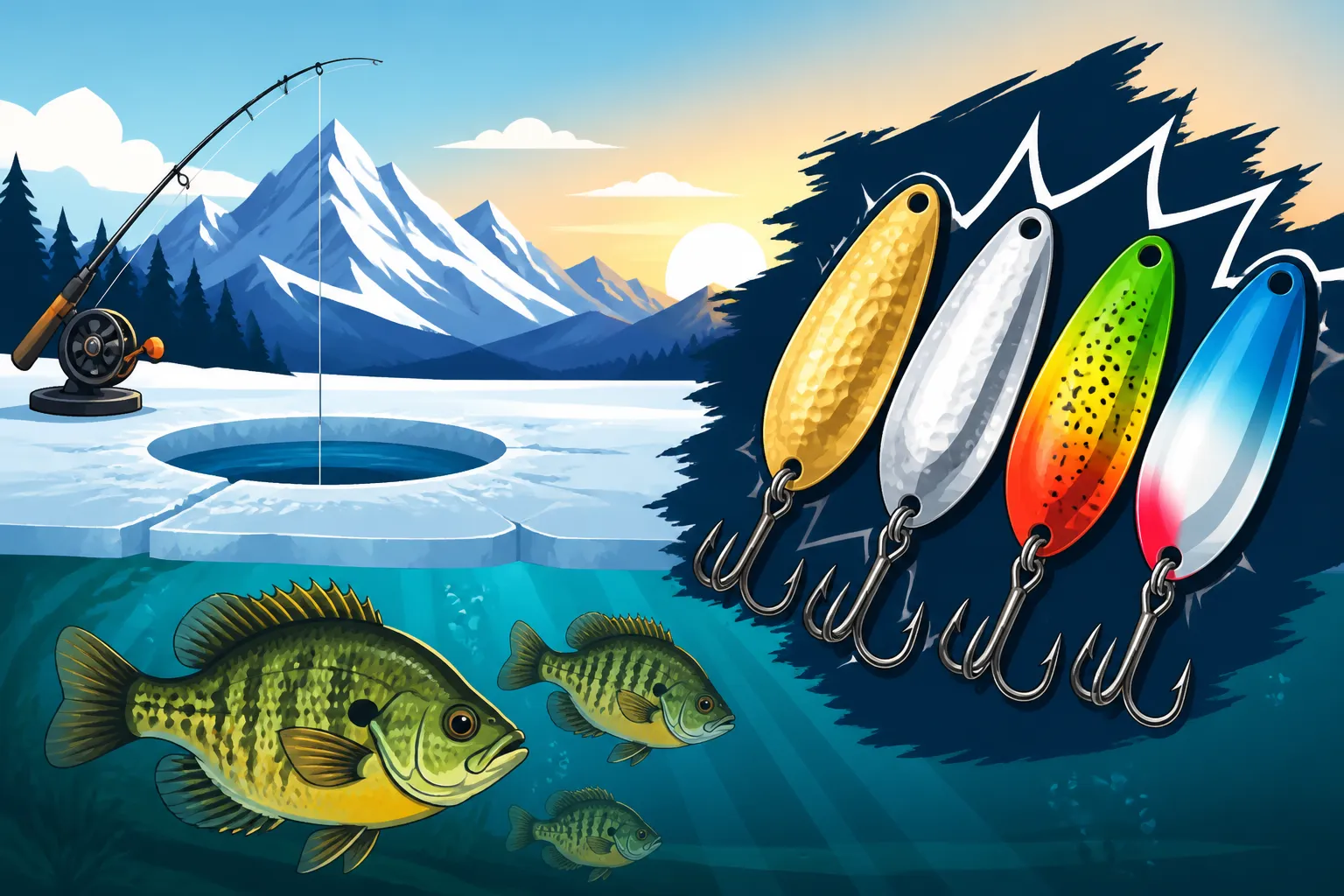
Imagine fishing a deep, clear lake in the middle of winter. The water is cold, and the yellow perch are holding just above the bottom, barely moving. A flutter spoon dropped down gently will slowly descend, shimmering and turning, staying in their strike zone longer. This prolonged exposure and subtle, non-threatening presentation can often coax a bite from even the most finicky fish. Brands like Lindy and Northland make some fantastic flutter spoons, often with enticing dimples or hammered finishes to enhance the flash. They're perfect for mimicking a dying baitfish, and their lighter weight means you can work them slowly without over-jigging.
Jigging Spoons: Aggressive Attraction
Jigging spoons are generally heavier and more compact than flutter spoons, designed for a quicker fall and a more aggressive, darting action. When you snap your rod tip up, these spoons will shoot sideways, then fall quickly with a tight shimmy. This action is fantastic for drawing fish in from a distance and triggering reaction strikes.
If you're out on a lake like Gull Lake and you've found an active school of perch, a jigging spoon can be your best friend. The rapid descent and sharp, erratic movements often trigger an immediate, aggressive bite, especially from larger fish. They create a "thump" in the water that can really call fish in. When fish are competitive or you're trying to quickly ascertain if fish are present in a hole, a jigging spoon allows you to cover the water column efficiently and elicit a response. Remember to experiment with different jigging cadences—sometimes a hard snap, sometimes a short pop, can make all the difference. Best Techniques for Perch Through the Ice could be a good read if you want to dive deeper into this.
Slab Spoons: Heavy Hitters for Deep Water
Slab spoons are the heavyweights of the panfish spoon world. They are typically thicker, more compact, and designed for rapid descents to deep water or through heavy currents. While they might not have the wide flutter of a true flutter spoon, their weight makes them ideal for getting down to where the big crappie or jumbo perch are holding in deeper structures.
Picture yourself on Cold Lake, targeting those large lake trout, but you notice a school of massive perch on your fish finder at 30 feet. A light flutter spoon might take too long to get down, or drift too much in subtle currents. A slab spoon drops like a rock, getting right into the strike zone quickly. While the action might be less exaggerated, a subtle lift and fall can still create enough flash and vibration to trigger a bite. They're also less prone to getting snagged in heavy cover if you're fishing around submerged brush or rock piles, as they tend to fall straighter.
Key Features to Look For in a Panfish Spoon
Choosing the right spoon isn't just about the type; it's about the details. Tiny nuances in size, color, and even the hook can make a massive difference in whether you're catching fish or just jigging holes. Paying attention to these features will seriously up your panfish game.
Size and Weight: Matching the Hatch
For panfish, generally, smaller is better. We're often talking about spoons in the 1/32 to 1/8 ounce range, with some going as small as 1/64 ounce. The idea is to match the size of the natural prey panfish are feeding on – tiny minnows, insect larvae, or zooplankton. A spoon that's too large can intimidate these smaller fish, while one that's too small might not be noticed.
The weight also dictates how quickly the spoon falls and how much action it has. In shallow water (under 10 feet), a lighter spoon allows for a slower fall and more time in the strike zone. In deeper water (15-30 feet), a slightly heavier spoon gets down faster, especially important when you're on a hot bite and want to get back to the fish quickly. Having a range of sizes and weights will prepare you for different depths and fish moods. You might start with a 1/16 oz spoon and scale up or down based on fish response. Alberta Panfish Fishing Guide can help you determine typical panfish sizes in various waters.
Color and Glow: Visibility is Key
Color choice can be critical, and it often depends on water clarity and light conditions. In clear water, natural colors like silver, gold, or subtle baitfish patterns often excel. These colors reflect natural light beautifully and imitate the flash of real forage. When fishing lakes with really clear water, like some of the mountain lakes, a natural presentation is key.
However, in stained or murky water, or during low light conditions (dawn, dusk, or deep under thick ice), brighter, more aggressive colors can be more effective. Chartreuse, orange, pink, or even bright blue can stand out better. Many spoons now come with glow-in-the-dark paints or UV finishes. A glow spoon can be an absolute game-changer in low-light situations or deep water, as the emitted light acts as a powerful attractant. Always remember to "charge" your glow spoons with a flashlight or UV light before sending them down the hole. Carrying an assortment of both natural and bright/glow colors is a smart move for any ice angler.
Hook Type and Sharpness: Sealing the Deal
The hook is where the rubber meets the road, or rather, where the fish meets the bait. Most panfish spoons come with a treble hook, but some feature a single hook. For panfish, small, sharp hooks are paramount. Their mouths are often delicate, and a dull or overly large hook can lead to missed bites.
Many anglers prefer to swap out the factory trebles for smaller, sharper hooks, or even an assist hook setup. Some spoons even come with a dropper chain and a small fly or plastic attached, offering a dual presentation. Regardless of the type, always check your hooks for sharpness. A quick run over a file or sharpening stone can turn a frustrating day of missed bites into a successful one. If your hook is bent, dull, or rusty, it's time to replace it. A sharp hook means better penetration and a higher landing ratio, especially with those paper-mouthed crappie. You can find a good selection of quality hooks and replacement trebles at any reputable outdoor retailer like Bass Pro Shops or even through Amazon.
How to Fish Spoons for Panfish
Jigging a spoon for panfish isn't just about dropping it down and hoping for the best. There's an art to it, a rhythm and technique that can transform an inactive school into a biting frenzy. Mastering these techniques will undoubtedly increase your catch rate and make your time on the ice far more productive.
Understanding Jigging Cadence
The "cadence" refers to the rhythm and motion you impart to your spoon. It's not a one-size-fits-all approach; what works one day might not work the next. Start with a common pattern: a sharp 6-12 inch lift, followed by a controlled fall, then a pause. The lift makes the spoon shoot and flash, while the fall and pause give the fish time to react and strike.
Vary this cadence. Sometimes a series of short, quick lifts and drops will trigger aggressive fish. Other times, a very subtle quiver of the rod tip, almost imperceptible, followed by a long pause, is what it takes for finicky panfish. Pay close attention to your electronics. If you see fish come in but not commit, change your cadence. Slow it down, speed it up, try longer pauses, or barely move the spoon at all. The fish will tell you what they want if you're patient enough to listen. Experimentation is the name of the game when it comes to finding that perfect rhythm.
Targeting Different Depths and Structures
Panfish relate to structure and depth, even under the ice. Yellow perch often congregate near weeds, drop-offs, or along flats. Crappie tend to suspend over deeper water or hold tight to submerged timber. Understanding these preferences helps you effectively present your spoon.
Start by working the entire water column. Drop your spoon to the bottom, then lift it 6-12 inches and start your jigging cadence. After a few minutes, reel up a foot or two and repeat. Continue this process until you find the fish's preferred depth. If you're marking fish on your sonar, focus your efforts just above them. Don't be afraid to experiment with different holes and locations. Sometimes simply moving 10-20 feet can put you directly on a biting school. Areas with transitions from deep to shallow, or points and humps, are often ice fishing hotspots. Remember to check out resources like Best Ice Fishing Lakes in Alberta for general areas and structures to target.
Using Baits and Scent for Added Attraction
While spoons are effective on their own, adding a little something extra can often seal the deal, especially on tough bites. Tipping your spoon with a small piece of bait can provide added scent and a natural texture that panfish find hard to resist.
Popular choices include a maggot (live or waxworm), a small piece of minnow, or even a tiny gulp bait. Thread a single maggot onto one of the hook points, or if using a single hook, thread it onto the hook shank. The scent trail that emanates from the bait, combined with the flash and vibration of the spoon, creates a powerful one-two punch. Be careful not to overload the hook, as too much bait can hinder the spoon's action. Scent attractants, often in gel or liquid form, can also be applied to the spoon for an extra edge, releasing a continuous odor trail that can draw in curious fish from a greater distance.
Seasonal Considerations and Spoon Selection
Ice fishing for panfish isn't a static sport. The conditions change throughout the winter, and so do the fish's behaviors. Smart anglers adapt their spoon selection to these seasonal shifts, ensuring they're always offering the most enticing presentation.
Early Ice: Aggressive and Shallow
When the first safe ice forms on lakes like Beauvais Lake, panfish are often still relatively active and feeding aggressively in shallower water, often near residual weeds or drop-offs. The water hasn't completely chilled to its lowest point, and the fish are still retaining some of their fall metabolism.
During this early ice period, spoons with a good amount of flash and a moderate to aggressive action can be highly effective. Think bright colors like gold, silver, or even chartreuse. Flutter spoons and smaller jigging spoons are excellent choices. The fish are often willing to chase, so you can work your spoon with a more pronounced jigging cadence. Don't be afraid to cover ground, drilling multiple holes in likely areas to find those active schools. Panfish are still relatively spread out and competitive, so a bold presentation can quickly grab their attention.
Mid-Winter: Finesse and Deep
As winter progresses and the ice thickens, temperatures drop to their coldest points, and oxygen levels can decrease, especially in shallower areas. Panfish tend to become more lethargic, often retreating to deeper water or holding tightly to specific structures. This is when finesse tactics really shine.
For mid-winter panfish, smaller, subtler spoons are usually the ticket. Think micro-spoons or very light flutter spoons in natural colors like silver, gold, or even muted greens and browns. Glow features become even more important in the deeper, darker water. Your jigging cadence should slow down significantly, often with long pauses of 10-20 seconds between subtle lifts or quivers. The goal is to tempt, not to provoke. A tiny tungsten jig with a plastic might outperform a spoon in these conditions, but a well-presented micro-spoon can still be deadly, especially when tipped with a maggot. Best Techniques for Ice Fishing Lake Trout might seem unrelated, but the finesse required for deep, cold water can be applied to panfish, too.
Late Ice: Pre-Spawn Activity and Shallow Return
As spring approaches and the ice begins to show signs of melting, the panfish, particularly perch and crappie, start to get restless. They sense the coming spawn and their metabolism begins to increase. They'll often move back into shallower areas, especially those near future spawning grounds.
This late-ice period can offer some of the most exciting panfish action of the season. Fish are often more aggressive again, similar to early ice, and will respond well to spoons with good flash and a varied retrieve. Don't be afraid to go back to those brighter colors and more pronounced jigging actions. However, be cautious about ice conditions during late ice. Always prioritize safety and check the ice thickness regularly. Access points might become slushy, so prepare for wet conditions. Focus on areas where you expect them to spawn once the ice breaks, such as shallower bays, weed edges, and submerged brush piles.
Essential Spoon Accessories and Maintenance
Having the right spoons is one thing, but making sure they perform optimally and last through many seasons is another. A few key accessories and a routine maintenance schedule can make a world of difference, preventing lost fish and extending the life of your favorite panfish lures.
Line, Leaders, and Knots
For panfish, a light line is crucial. Fluorocarbon or monofilament in the 2-4 pound test range is ideal. Lighter line allows the spoon to fall more naturally and provides better sensitivity for detecting those subtle panfish bites. If you're fishing in exceptionally clear water or targeting very wary fish, a fluorocarbon leader of 1-2 feet can offer an invisible connection to your spoon.
When it comes to knots, simplicity and strength are key. A Palomar knot is a fantastic all-around choice for tying on spoons, as it's strong and reliable. Ensure you moisten your line before tightening any knot to prevent weakening. Regularly check your line for nicks and abrasions, especially after reeling in a fish or hitting the bottom. A small nick can easily lead to a lost spoon and a lost fish. Replacing your line annually is a good practice to ensure maximum strength and performance.
Storage and Organization
A tackle box full of tangled spoons is a frustration no angler needs, especially when your hands are cold. Proper storage not only keeps your spoons organized but also protects their finishes and hooks. Smaller tackle organizers with individual compartments are perfect for ice fishing spoons. This prevents hooks from tangling and keeps the delicate paint finishes from getting scratched.
Consider a dedicated box just for your ice fishing spoons. Brands like Plano or Flambeau offer compact, secure tackle boxes that are great for this. Keep glow spoons separate or in a way that allows you to easily "charge" them without digging through your entire setup. When you get home, make sure your spoons are dry before putting them away to prevent rust, especially on the hooks. A little bit of care after each trip will ensure your spoons are ready to go for your next adventure. You can find these organizers at local fishing shops or online retailers like Amazon.
| Spoon Type | Typical Weight (oz) | Action Description | Best Conditions | Target Panfish (Alberta) |
|---|---|---|---|---|
| Flutter Spoon | 1/64 – 1/8 | Slow, wide wobble, tantalizing fall | Cold, clear water; lethargic fish; suspended fish | Perch, Crappie, Whitefish |
| Jigging Spoon | 1/32 – 1/8 | Quick dart, tight shimmy on fall, aggressive action | Active fish; searching for schools; stained water | Perch, Larger Crappie |
| Slab Spoon | 1/16 – 1/4 | Rapid descent, subtle shimmy | Deep water; strong currents; targeting specific marks | Larger Perch, Whitefish, Lake Trout (small) |
Disclaimer
This article is for general informational purposes only and does not constitute professional advice. Laws, prices and regulations vary by location and change over time. Consult a qualified professional for guidance on your specific situation.