Best Ice Hut for Alberta Lakes
There’s nothing quite like the thrill of ice fishing on a vast, frozen Alberta lake, but let's be honest, the elements here can be brutal. Biting winds, relentless cold, and swirling snow can quickly cut short even the most determined angler's day. That’s where a good ice hut comes in, transforming a bone-chilling endurance test into a cozy, productive, and truly enjoyable winter pastime. This guide will walk you through everything you need to know to pick the best ice hut for your Alberta adventures, helping you extend your time on the hard water and reel in more fish in comfort.
Why an Ice Hut is a Game-Changer on Alberta Lakes
For many seasoned anglers and newcomers alike, the thought of spending hours on the ice battling the elements isn't always appealing. Alberta winters are legendary for their intensity, making comfort a top priority for any outdoor pursuit. An ice hut isn't just a luxury; it's a vital piece of equipment that drastically improves your ice fishing experience, turning what could be a miserable day into a memorable one.
Battling Alberta's Harsh Winter Elements
We've all been there: bundled in layers, still feeling the penetrating chill as the wind whips across the open ice. Alberta's unique combination of dry, frigid air and often strong winds can make even a relatively mild winter day feel unbearable. An ice hut acts as your personal shield, creating a protected microclimate that significantly reduces your exposure to the cold, wind, and snow. It means you can stay out longer, fish more effectively, and avoid that dreaded windburn that often comes with a day on the ice. This protection is invaluable, allowing you to focus on the bite rather than constantly trying to stay warm.
Imagine being out on a lake like Lesser Slave Lake or Cold Lake, where the wind can really howl, and having a warm, sheltered space to retreat to. It makes all the difference when those fishing spots are active but the weather is less than cooperative. It also keeps your gear from being buried in snow or freezing solid, which is a small but mighty convenience when you're trying to re-tie a knot or change a bait.
Enhanced Comfort and Extended Fishing Sessions
Beyond just protection, an ice hut offers a level of comfort that open-ice fishing simply cannot match. With a heater running, you can shed some of those cumbersome layers, making it easier to move, rig lines, and fight fish. This improved comfort directly translates to longer fishing sessions. Instead of packing up early because your fingers and toes are numb, you can keep dropping lines, waiting for that next bite. This is especially true when targeting species like walleye or burbot, which are often more active during colder parts of the day or even into the evening.
Think about the simple pleasure of having a comfortable seat, a hot cup of coffee, and a clear view down your ice hole, all while a blizzard rages outside. It transforms the act of ice fishing from a test of endurance into a relaxing escape. You can lay out your tackle, organize your rods, and even have a small cooking setup without your hands freezing or your gear blowing away. This comfort extends to less stress, allowing you to truly enjoy the peace and solitude, or the camaraderie, of the ice.
Creating a Social Hub on the Ice
Ice fishing is often a social activity, and an ice hut provides the perfect gathering place. Whether you're out with family, friends, or introducing kids to the joys of winter angling, a spacious hut offers a warm, enclosed area for everyone to share. You can chat, play cards, enjoy a hot meal, and share stories while waiting for the flags to fly or the rod tips to twitch. This communal aspect makes the experience even more enjoyable and creates lasting memories.
For those introducing children to Ice Fishing in Alberta, a warm hut is almost non-negotiable. Kids simply don't have the same tolerance for cold as adults, and a comfortable shelter ensures they have a positive experience, increasing the chances they'll want to come back. It's also a great way to bond, huddling together against the winter and sharing in the excitement of each catch. A good ice hut becomes more than just a shelter; it becomes the heart of your ice fishing camp, a place where stories are told, and laughter echoes across the frozen landscape.
Types of Ice Huts: Finding Your Perfect Shelter
When you start looking at ice huts, you'll quickly realize there's a wide world of options out there, each designed with different angler needs in mind. From the angler who prefers to chase fish and move quickly to those who want a semi-permanent basecamp, there's a shelter type for everyone. Understanding the differences is key to choosing the best ice hut for your style of Ice Fishing in Alberta.
Portable Pop-Up Huts: Lightweight and Quick Setup
Pop-up ice huts are the darlings of versatility and convenience. They're designed to be lightweight, pack down small, and deploy in minutes, making them incredibly popular for anglers who want mobility. Think of them like a tent but for the ice – a central hub with fabric walls that "pop up" into a full-sized shelter when you unfold the frame. These huts come in various sizes, from compact one-person shelters to larger models that can comfortably accommodate a small group.
The biggest advantage of a pop-up hut is its ease of transport and rapid setup. You can carry it in a sled, on your back, or in the trunk of a car, and once you reach your spot, it's usually just a matter of pulling a few hubs and extending the poles. This makes them ideal for exploring different spots on Best Ice Fishing Lakes in Alberta or when fish are scattered and you need to relocate frequently. Many popular models are available from retailers like Bass Pro Shops, offering a good range of sizes and features. The main drawback can be their susceptibility to strong winds if not properly anchored, and while many are insulated, they might not hold heat quite as efficiently as a flip-over in extreme cold.
Flip-Over Shelters: Mobility Meets Convenience
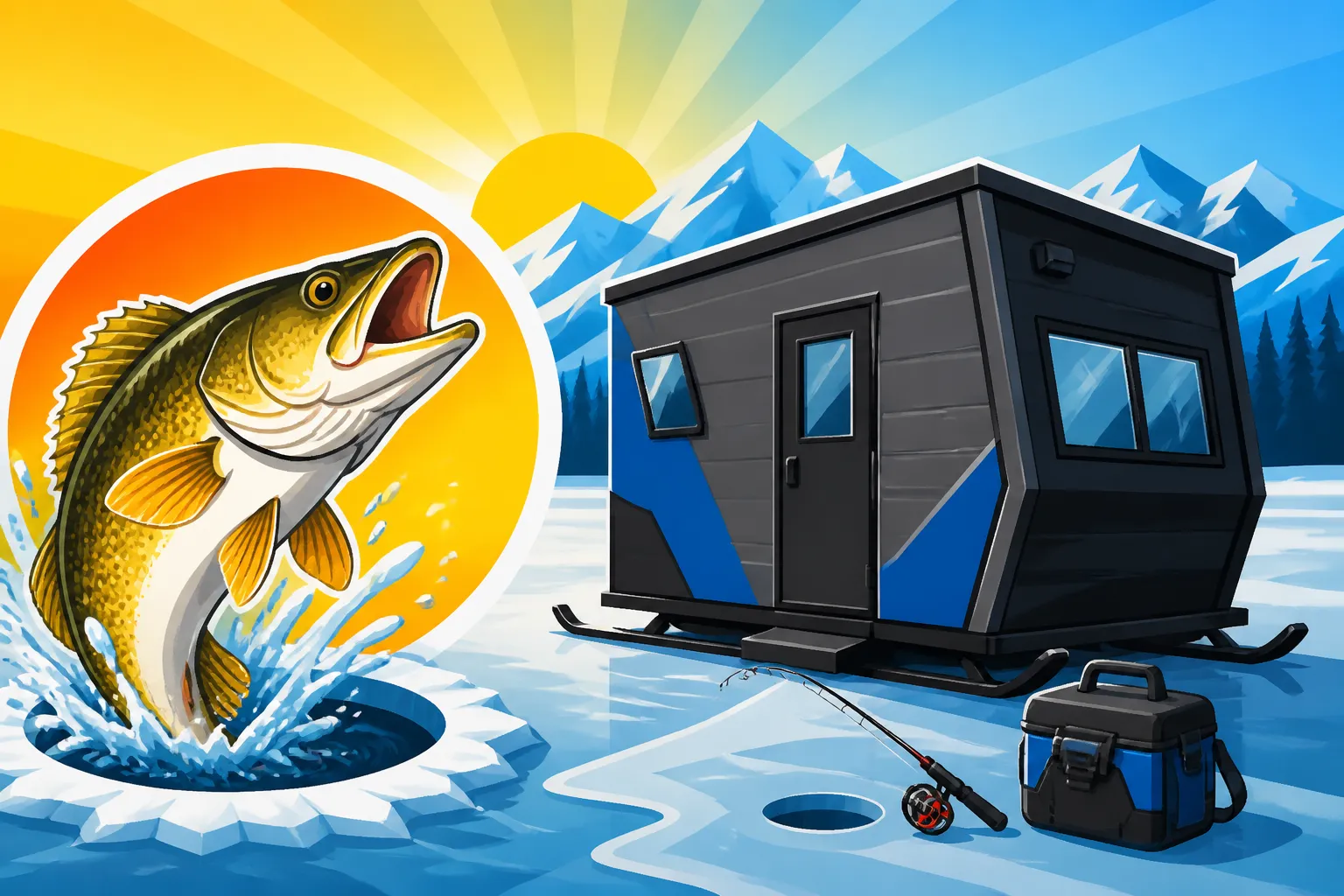
Flip-over ice shelters offer an ingenious combination of mobility and integrated convenience. These huts are typically mounted on a sled base, which serves as both storage for your gear and the foundation of the shelter. When you arrive at your fishing spot, you simply "flip" the top over, and the shelter deploys in seconds. Many flip-overs come with built-in seats, and some even have a dedicated space for a heater and electronic fish finders.
This design is a dream come true for the angler who likes to "run and gun" – moving from hole to hole until they find active fish. The sled makes it easy to tow behind an ATV, snowmobile, or even by hand (though they can be heavy). The integrated seating and instant setup mean you're fishing almost immediately after arriving. Brands available through online retailers like Amazon or local tackle shops offer a wide variety of sizes, from single-person models to larger two or three-person setups. While they offer excellent protection and often good insulation, their weight can be a consideration, especially if you're pulling one long distances by hand across deeper snow. They are, however, incredibly robust against the wind, given their low profile and solid base.
Permanent (Skid) Huts: The Ultimate Ice Shanty Experience
For those who have a favourite fishing spot on a lake with consistent ice, or who simply crave the ultimate in comfort and space, a permanent or "skid" hut is the way to go. These are essentially small cabins built on skids, designed to be towed onto the ice at the beginning of the season and often left there until spring thaw. They are typically much heavier and more robust than portable options, often featuring wooden or metal frames, full doors, windows, and even amenities like bunks, stoves, and more extensive lighting setups.
Permanent huts provide a home-away-from-home experience on the ice. They offer superior insulation, making them incredibly warm and comfortable even during the coldest Alberta days. You can set up multiple holes inside, cook elaborate meals, and truly relax. While they require significant effort to transport and set up initially (often needing a truck or heavy-duty snowmobile), once in place, they offer unparalleled luxury. Remember that leaving a hut on the ice might be subject to specific regulations, so always check Alberta Fishing Regulations Explained and local bylaws regarding ice hut registration and removal dates, which can vary by lake and region. They are an investment in comfort and often a DIY project for many passionate ice anglers, though some custom-built models can be found for sale.
| Feature | Portable Pop-Up Hut | Flip-Over Shelter | Permanent (Skid) Hut |
|---|---|---|---|
| Portability | Excellent (lightweight, compact) | Good (sled base, towable) | Poor (heavy, requires vehicle) |
| Setup Time | Fast (minutes) | Very Fast (seconds) | Slow (requires transport, initial setup) |
| Comfort/Warmth | Good (many insulated options) | Very Good (integrated insulation) | Excellent (heavy insulation, robust frame) |
| Wind Resistance | Fair (needs good anchoring) | Very Good (low profile, solid base) | Excellent (heavy construction) |
| Capacity Range | 1-6+ people | 1-3 people | 2-8+ people |
| Storage | Separate bags/sled required | Integrated sled storage | Ample interior storage |
| Price Point | Entry-level to Mid-range | Mid-range to High-end | High-end (often custom build) |
| Ideal For | Mobile anglers, groups, occasional use | Solo/duo anglers, aggressive hole-hopping | Dedicated anglers, long trips, basecamp |
Key Features to Consider When Buying an Ice Hut
Once you've narrowed down the type of ice hut that suits your style, it's time to dive into the nitty-gritty details. Not all ice huts are created equal, and understanding the specific features that matter will ensure you invest in a shelter that will serve you well for many Alberta winters. Considering our often extreme conditions, these features are more than just add-ons; they are necessities.
Size and Capacity: Solo Angler to Family Fun
The first practical consideration is how many people you typically fish with. Are you a lone wolf, preferring the solitude of the ice? Or do you gather a crew, making it a social event? Ice huts come in capacities ranging from single-person models to spacious shelters that can accommodate six or more anglers comfortably.
For the solo angler or a pair, a compact flip-over or a small pop-up might be ideal. These are lighter, easier to transport, and quicker to heat. If you're planning on bringing the whole family or a group of friends, a larger pop-up or even a permanent skid hut would be more suitable. Remember to factor in not just the number of people, but also the amount of gear you'll be bringing (rods, heaters, tackle boxes, chairs, Best Ice Auger for Alberta Lakes, etc.). A hut that feels spacious for two with minimal gear might feel cramped for two with a full arsenal of ice fishing equipment. Think about how much room you need to move around, set lines, and fight fish without bumping into each other or your gear.
Insulation and Fabric: Staying Warm When it's Minus Forty
This is perhaps the most critical feature for Alberta ice fishing. Our winters don't mess around, and good insulation is paramount for comfort and fuel efficiency for your heater. Most portable ice huts use heavy-duty fabric, often polyester, with varying levels of thermal insulation. Insulated huts typically feature multiple layers of fabric with an air gap or thermal material in between, much like a winter coat.
When looking at fabrics, consider the denier rating (a measure of fabric density and durability) and whether the hut boasts "thermal" or "insulated" walls. A higher denier count means more robust fabric, less prone to tearing. Thermal fabrics drastically reduce heat loss, meaning your heater works less, saving on propane and keeping you warmer. In non-insulated huts, condensation can also be a major issue, leading to frost buildup and drips, which is largely mitigated by insulated designs. For those bitter cold days when the mercury dips well below zero (Celsius, of course!), a fully insulated hut from a reputable brand found at retailers like Bass Pro Shops will make a world of difference.
Portability and Weight: Getting It On and Off the Ice
How you get your gear to your fishing spot directly impacts the type of hut and its features you should prioritize. If you fish close to shore, or have an ATV/snowmobile to pull a sled, weight and packed size might be less of a concern. However, if you're hoofing it across a long stretch of ice or navigating deep snow, portability becomes paramount.
Pop-up huts, especially the smaller ones, are generally the lightest and most compact, often fitting into a duffel bag for easy transport. Flip-over shelters, while heavier due to their integrated sled base, are designed for efficient towing and quick deployment once on the ice. Permanent huts are, by their nature, heavy and require specialized transport. Always check the packed dimensions and weight of a portable hut. Can you comfortably lift it into your vehicle? Will it fit in your sled with the rest of your Best Ice Fishing Gear for Alberta? These practical questions will help guide your choice and save you a lot of backaches.
Ventilation and Safety Features
While staying warm is crucial, proper ventilation within an ice hut is absolutely non-negotiable, especially if you're using a propane heater. Carbon monoxide poisoning is a serious risk, so ensure any hut you consider has adequate, adjustable vents. These allow fresh air in and dangerous fumes out. Many huts also feature clear vinyl windows, which not only let in natural light but also allow you to keep an eye on your tip-ups or surroundings.
Beyond ventilation, look for sturdy zippers, strong anchoring points (for securing it to the ice), and reflective strips or bright colours for visibility, especially if you're fishing at night or in low light conditions. Some models might even include internal pockets for organization, rod holders, or easy access doors. Always carry a carbon monoxide detector in your hut, regardless of its ventilation features. Your safety on the ice should always be your number one priority, especially when fishing solo or far from shore.
Setting Up Your Ice Hut for Success on Alberta's Ice
Having the best ice hut is only half the battle; knowing how to properly set it up and equip it for a long, comfortable day (or night!) on the ice is equally important. From choosing the right location to ensuring you stay warm and safe, a few strategic steps can make all the difference in your Alberta ice fishing experience.
Choosing Your Spot: Safety First
Before you even think about deploying your ice hut, the most important step is choosing a safe location. This means checking ice thickness – remember, How thick ice needs to be to fish safely in Alberta is a crucial piece of knowledge. Avoid areas with visible cracks, open water, or unusual discolouration, as well as spots near currents or inflows/outflows. Once you've confirmed safe ice, consider your fishing strategy. Are you targeting a specific structure, a drop-off, or a weed bed? Use a good ice auger to drill a test hole and check depth and bottom composition if you're unsure.
After safety, think about comfort. While an ice hut protects you, positioning it intelligently can further enhance your experience. If there's a prevailing wind, try to orient your hut so the smallest side faces into the wind to minimize buffeting. This also helps reduce the strain on your anchors and framework. Consider proximity to access points, especially if you're dragging a heavy flip-over or setting up a permanent shack. A little pre-planning goes a long way in ensuring a safe and productive day.
Anchoring and Securing Your Shelter
Once you've found your ideal spot and drilled your fishing holes, securing your ice hut is paramount. Alberta winds can pick up unexpectedly, and losing your shelter (or having it flip over) is a scenario no one wants. Most portable pop-up and flip-over shelters come with ice anchors that screw into the ice.
For pop-up huts, extend the hubs fully and then secure each corner with an anchor. Many anglers also use guy ropes attached to additional anchors for extra stability, especially if the weather is windy or forecast to worsen. For flip-over shelters, the sled base provides substantial weight, but it's still wise to use the integrated anchoring points, particularly on the side facing the wind. A good technique is to screw an anchor in, then run a strap or rope from the hut's frame to the anchor, keeping it taut. Always carry extra anchors and a drill driver attachment to make securing them much easier and faster. This seemingly simple step can save your entire fishing trip, not to mention your investment in the hut.
Heating and Lighting Your Ice Hut
The warmth inside your ice hut is what truly transforms the experience, and a reliable heater is a must-have for Alberta winters. Propane heaters are the most common choice for portable huts, with radiant models being popular for their efficiency and safety features. Always ensure you have enough propane for your planned trip, and carry a spare tank – you don't want to run out on a chilly afternoon! As mentioned before, proper ventilation is critical when using any combustion heater to prevent carbon monoxide buildup.
For lighting, many anglers use battery-powered LED lanterns or strip lights. These are energy-efficient, provide ample light for rigging lines and seeing your fish, and are much safer than open flames. Headlamps are also indispensable for detailed work or navigating outside the hut in the dark. Consider a portable power bank or a small generator if you're running multiple electronics, though many modern ice huts also have integrated LED lighting systems. With a good heater and ample light, you can comfortably extend your fishing well into the evening, which is often when species like walleye really start to bite.
Maintenance and Storage for Longevity
Investing in a quality ice hut is a significant step towards more enjoyable Alberta fishing trips. To protect that investment and ensure your hut lasts for many seasons, proper care and maintenance are crucial. Neglecting these steps can lead to mildew, fabric damage, and compromised structural integrity, shortening the lifespan of your shelter.
Cleaning and Drying After Each Trip
The most important maintenance step is also the simplest: thoroughly cleaning and drying your ice hut after every use. No matter how careful you are, snow, ice, slush, and fish slime will inevitably accumulate inside and out. As soon as you get home, set up your hut in a warm garage, basement, or even outdoors on a sunny, mild day if possible. Wipe down all surfaces, paying special attention to any fish blood or bait residue. A mild soap and water solution can be used for stubborn spots.
Once clean, allow the hut to air dry completely. This cannot be stressed enough, especially for insulated fabrics. Packing away a damp hut, even slightly damp, is a recipe for mildew growth, which not only smells terrible but can also degrade the fabric and insulation over time. Ensure every part of the fabric and frame is bone dry before folding it up and storing it. This might mean leaving it open for a day or two, especially in humid conditions. This effort will dramatically extend the life and usability of your ice hut, keeping it fresh for your next adventure to chase Best Techniques for Perch Through the Ice or Jigging for Burbot Through the Ice.
Repairs and Off-Season Storage
Throughout the season, inspect your ice hut for any signs of wear and tear. Small tears in the fabric can often be repaired with a patch kit designed for tents or heavy fabrics. Check the zippers regularly – they can get stiff or damaged in cold, icy conditions. A little silicone spray can keep them running smoothly. Inspect the poles and hubs on pop-up models for bends or cracks, and replace damaged parts promptly. It’s much easier to fix a small issue before it becomes a big problem.
For off-season storage, choose a cool, dry place where your hut is protected from direct sunlight, extreme temperatures, and pests. UV rays can degrade fabric over time, and rodents might find a cozy home (and a meal) in neglected shelters. Store the hut in its original bag or a sturdy container to protect it from dust and accidental damage. Some anglers like to add a moisture absorber to the storage container, especially in damp environments. By taking a little time to clean, inspect, and properly store your ice hut, you're ensuring it's ready to go when Alberta ice fishing season dates roll around again, allowing you to enjoy countless more comfortable days on the frozen lakes of Alberta, whether you're targeting Yellow Perch in Alberta Lakes or monster Best Techniques for Ice Fishing Lake Trout.
Disclaimer
This article is for general informational purposes only and does not constitute professional advice. Laws, prices and regulations vary by location and change over time. Consult a qualified professional for guidance on your specific situation.