Best Kayak for River Fishing in Alberta
There's nothing quite like the freedom of fishing Alberta's rivers from a kayak, but let me tell you, choosing the right vessel for our diverse waterways can feel like navigating a maze! Our rivers throw everything at you, from the powerful currents of the Bow to the snag-ridden sections of smaller streams, and a standard lake kayak just won't cut it. This guide is here to break down exactly what features make a kayak truly excel for river fishing in Alberta, ensuring you spend less time worrying about your boat and more time landing those beautiful fish.
The Unique Challenges of River Kayak Fishing in Alberta
Fishing Alberta's rivers is an incredible experience, offering stunning scenery and fantastic angling opportunities. However, these aren't your typical calm, predictable lakes. Our rivers present a unique set of challenges that demand a specific type of kayak – one that can handle the unexpected and keep you safe and effective on the water.
Navigating Diverse River Environments
Alberta's rivers are incredibly varied, from the wide, relatively gentle flows of sections of the North Saskatchewan near Edmonton, to the swift, rocky runs of the Bow River through Calgary, and the tight, technical sections of mountain streams like the Crowsnest. Each waterway has its own personality, and what works beautifully on a placid stretch might be a nightmare on a fast-moving riffle. You need a kayak that offers a versatile balance, capable of tracking well in calmer pools yet nimble enough to navigate quickly changing currents and tight bends.
This variability means that your "best" kayak choice might depend heavily on the specific rivers you plan to fish most often. If you're primarily targeting trout in smaller, more intimate streams, maneuverability and a shallow draft will be paramount. However, if your sights are set on the larger game fish in wider rivers, stability, speed, and gear capacity might take precedence. It's a tricky balance to strike, and often requires prioritizing based on your most frequent fishing adventures.
Beyond the current, consider the access points. Are you often launching from gravel bars, rocky shores, or proper boat ramps? The weight and length of your kayak will significantly impact how easy or difficult these launches and retrieves are. Dragging a heavy, long boat over rough terrain can quickly diminish the joy of a fishing trip, especially if you're venturing out solo.
Confronting Currents and Obstacles
One of the biggest differences between river and lake fishing in a kayak is the constant movement and the omnipresent threat of obstacles. Rivers are dynamic; currents can change speed and direction rapidly, especially around bends, submerged rocks, or fallen trees. You need a kayak that inspires confidence when the water gets a bit "pushy," allowing you to focus on your cast rather than fighting to stay in position.
Snags and strainers (fallen trees with branches extending into the water) are common in many Alberta rivers and can be serious hazards. A kayak designed for river use will often have a more robust hull and a shorter length for quicker turns, helping you avoid these dangers. Imagine floating downstream, completely engrossed in watching a fish rise, only to suddenly realize you're drifting directly into a logjam. A responsive kayak can make all the difference in quickly paddling out of trouble. Furthermore, proper outfitting, like a Best Life Jacket for Lake Kayak Fishing (though equally vital for rivers), and even a reliable Best Anchor System for River Fishing, can be critical for safety and positional stability.
Balancing Stability and Maneuverability
Here's the eternal dilemma for river kayak anglers: you want enough stability to comfortably stand and cast, or at least feel secure while reaching for gear, but you also need the agility to steer around hazards and hold your line in a current. Too stable can mean too sluggish, making it a chore to turn quickly. Too nimble might feel tippy and unstable, especially when reeling in a big fish or if unexpected turbulence hits.
The "sweet spot" usually involves a hull design that offers good initial stability (how stable it feels when you first get in) combined with decent secondary stability (how resistant it is to tipping over once it starts to lean). For rivers, maneuverability is often slightly more critical than outright speed. You're not usually trying to paddle vast distances in a straight line against a strong current; you're often drifting, making subtle corrections, and quickly changing direction to hit specific pockets or avoid obstacles. This is where a shorter, wider kayak with a well-designed hull can shine, allowing for precise control even in challenging conditions.
Key Kayak Features for Alberta River Anglers
When you're out on an Alberta river, whether it's the legendary Bow or a hidden gem in the foothills, your kayak becomes an extension of yourself. It needs to be more than just a floatation device; it's your fishing platform, your transport, and your safe haven. That means paying close attention to specific design features that make a real difference in these dynamic environments.
Hull Design and Primary Stability
For river fishing, the shape of the kayak's hull is paramount. You'll typically want a kayak that prioritizes stability over outright speed. Look for kayaks with a wider beam (width) and a flatter or pontoon-style hull. This design maximizes primary stability, making you feel secure when you're casting, retrieving, or simply enjoying the scenery. A stable platform is crucial when you're fighting a strong fish or navigating an unexpected eddy.
However, it’s not just about width. The rocker (the curve of the hull from bow to stern) plays a significant role in maneuverability. A kayak with more rocker will turn more easily, which is a huge advantage when you need to quickly change direction to avoid an obstacle or reposition in a tight current. Conversely, a flatter hull tracks straighter but can be harder to turn. For most Alberta rivers, a moderate rocker offers a good balance, allowing you to paddle efficiently on straighter stretches while still maintaining responsiveness for the technical bits. Always consider how the kayak’s chines (the edges where the hull sides meet the bottom) are shaped; softer, rounded chines can offer a smoother ride over choppy water, while harder, sharper chines can increase tracking and secondary stability.
Durability and Construction Materials for River Use
Rivers are tough on boats. You're going to encounter rocks, fallen logs, gravel bars, and potentially even underwater debris. This is not the place for delicate, lightweight kayaks. Rotomolded polyethylene is, hands down, the best material for river fishing kayaks. It's incredibly durable, impact-resistant, and can take a beating without catastrophic failure. While it's heavier than other materials, its resilience is a trade-off you'll be thankful for when you inevitably scrape over a submerged rock or beach on a rough shore.
Avoid composite materials or thermoformed ABS if your primary use will be rocky, challenging rivers, as these materials, while lighter and stiffer, are more prone to cracking or puncturing on sharp impacts. The flexibility of polyethylene allows it to absorb impacts, deforming temporarily rather than breaking. Think of it this way: you want a kayak that shrugs off a bump, not one that cries foul and leaves you stranded. The thick, seamless construction of rotomolded kayaks also offers superior abrasion resistance, which is vital for maintaining the integrity of your hull over seasons of river adventures.
Storage and Deck Layout for River Gear
River fishing often means carrying essential gear, but you don't want a cluttered deck that could snag your line or pose a tripping hazard. A well-designed river fishing kayak will have ample, accessible storage, ideally with flush-mounted rod holders and integrated gear tracks. Flush rod holders keep your spare rods out of the way when you're paddling or casting, reducing the chance of them getting caught on branches or impeding your movement. Gear tracks, like those offered by brands you might find at Bass Pro Shops, allow you to easily mount accessories like fish finders, camera mounts, or additional rod holders without drilling into your kayak.
Watertight hatches are essential for keeping valuables dry, especially on rivers where capsizes, while rare, are a possibility. Look for hatches that are easy to open and close, even with wet hands, but secure enough to stay sealed in rough water. A large, open tankwell with bungee cords at the stern is also highly practical for storing a cooler, a dry bag with extra clothes, or a tackle crate. Remember, every piece of gear should be secured, as a quick flip in a current can send unsecured items downstream faster than you can blink. Consider adding a Dry Bag for Kayak Fishing for essentials you truly can't afford to lose.
Exploring Different Kayak Types for River Fishing
The world of fishing kayaks has exploded, offering a bewildering array of designs. For Alberta's rivers, not all kayaks are created equal. Understanding the fundamental types and how they perform in moving water is key to making an informed decision.
Sit-on-Top Kayaks: The River Workhorses
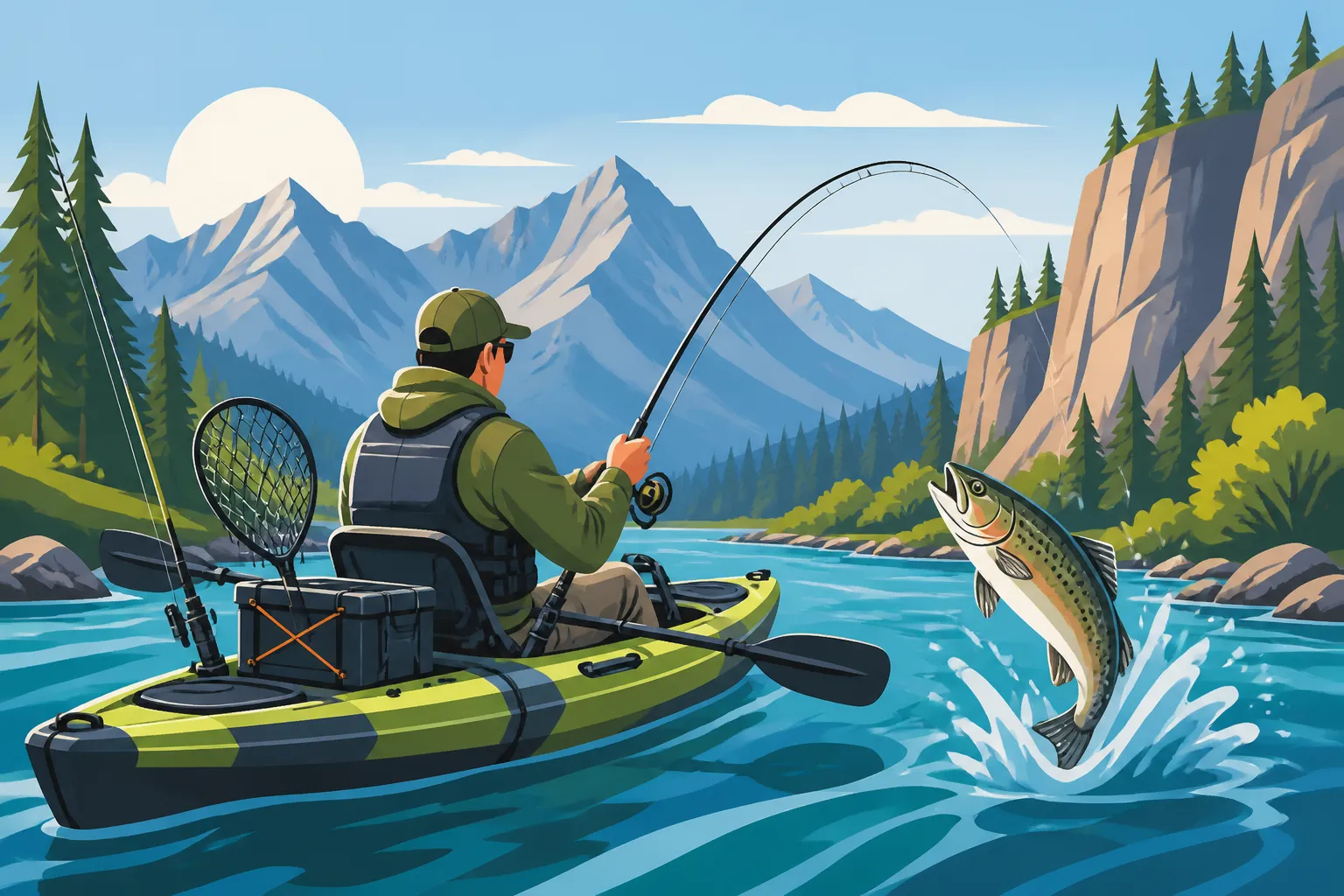
For the vast majority of Alberta river anglers, a sit-on-top (SOT) kayak is the undisputed champion. Why? Several reasons. First, safety. In the event of a capsize on a river, a sit-on-top is far easier to re-enter than a sit-inside kayak. There's no cockpit to fill with water, and you can simply climb back on from the side. This is a huge confidence booster, especially when fishing solo or in colder water.
Second, comfort and accessibility. SOTs offer an open deck, making it much easier to access gear, stand up to cast (on stable models), and move around. This flexibility is invaluable when you're constantly changing lures, untangling lines, or needing to stretch your legs. Many SOTs also come with integrated scupper holes that allow water to drain automatically, so waves or splashes from a hooked fish won't leave you sitting in a puddle. Look for SOTs with a wide, open deck area that offers plenty of room for your legs and tackle, allowing for easy transitions from paddling to fishing. These kayaks are often available from major retailers, including many options on Amazon, offering a broad selection of sizes and features.
Pedal-Drive Kayaks: Hands-Free River Navigation
Pedal-drive kayaks have revolutionized kayak fishing, and while they truly shine on lakes and larger, slower rivers, they can also be incredibly effective on certain Alberta river sections. The primary advantage is hands-free propulsion. This means you can maintain your position against a current, troll, or slowly move upstream while simultaneously casting and managing your rod. Imagine holding your line steady in an eddy while working a fish, without having to put down your rod to paddle!
However, pedal-drive systems come with a few considerations for rivers. The propeller or fins can get fouled by weeds or damaged by shallow rocks. While most modern pedal drives have a "kick-up" or retractable feature for shallow water, you still need to be vigilant. They are also generally heavier and more expensive than paddle kayaks, and can be harder to portage around rapids or difficult access points. For wider, deeper rivers like sections of the North Saskatchewan or Red Deer River, where longer stretches of hands-free fishing are desired, a pedal drive is a game-changer. But for smaller, rockier, or extremely shallow streams, a traditional paddle kayak might be a more practical choice.
Crossover and Hybrid Designs for Varied Waters
Sometimes, you need a kayak that can do a bit of everything, especially if you split your time between rivers and lakes. This is where crossover or hybrid kayak designs come into play. These boats often combine elements of both traditional fishing kayaks and recreational kayaks, or even whitewater kayaks. They might feature a slightly narrower beam than a pure fishing SOT for better paddling efficiency, but still offer good primary stability.
A crossover kayak could have a more defined keel for improved tracking on open water, but a shorter overall length and more rocker for better maneuverability in current. Some "river fishing" specific designs might even incorporate a self-bailing hull found in whitewater boats, meaning water drains rapidly through scupper holes, a desirable trait when hitting rapids or waves. While a hybrid might not be the absolute best at any one thing, it can be an excellent choice if your angling adventures frequently take you from big lakes to moderate rivers, providing a versatile platform for the diverse waters of Alberta.
Selecting the Right Kayak: Personal Factors to Weigh
Choosing the perfect kayak for river fishing in Alberta isn't just about the boat's features; it's deeply personal. Your individual fishing style, physical capabilities, and practical limitations all play a significant role in finding your ideal match. Think of it as finding a fishing partner – you want one that complements your strengths and helps you overcome challenges.
Your Fishing Style and Target Species
How you fish and what you're fishing for heavily influences your kayak choice. Are you a fly angler who needs a clean, uncluttered deck and the ability to stand and cast? Then a super stable, wide sit-on-top with minimal obstructions is likely your best bet. Brands like Jackson Kayak or Hobie often have models specifically designed with fly anglers in mind. If you primarily use spinning gear and prefer to sit, a slightly narrower, more efficient paddling kayak might be perfectly suitable, offering a good balance of speed and stability. Fly Fishing for Trout on the Bow River from a kayak, for instance, demands a different setup than casting for pike in slower river sections.
Consider your primary target species. If you're chasing powerful northern pike, you'll need a stable platform and a good landing net like a Best Landing Net for Pike that can handle a larger fish. If it's smaller trout, maneuverability to navigate tight pockets and pools might be more important. Do you like to drift fish, or do you prefer to anchor up and cast to specific spots? The answer will affect whether you prioritize a quick-turning hull or a boat with excellent anchoring capabilities. This introspection is crucial, as trying to force a kayak into a fishing style it wasn't designed for can lead to frustration.
Transportation, Launch, and Storage Practicalities
This is often the overlooked elephant in the room. A kayak might look perfect on paper, but if you can't easily get it to the water, launch it, or store it, it becomes a glorified lawn ornament. How do you plan to transport your kayak? Car-topping a 12-foot, 80-pound fishing kayak by yourself can be a real struggle, especially after a long day of fishing. Do you have a truck, a trailer, or a robust roof rack system? Lighter kayaks or those with integrated handles and wheels can make a significant difference in your enjoyment.
Think about the places you launch. Many prime river spots don't have convenient boat ramps. You might be dragging your kayak over gravel, mud, or rocky banks. A shorter, lighter kayak is far easier to manage in these situations. And where will you keep it when you're not fishing? Do you have garage space, or will it be stored outdoors? UV light, extreme temperatures, and security are all considerations. If storage is tight, a shorter kayak is more practical. The easier your kayak is to handle off the water, the more often you'll actually get out there and use it.
Budgeting for Your River Fishing Kayak and Accessories
Let's be real: kayak fishing can be an investment, and it's not just the kayak itself you need to factor in. A quality river fishing kayak, especially one with features like a pedal drive, can be a significant upfront cost. However, remember that this is a long-term investment in your outdoor enjoyment. Think about the value over time, not just the initial sticker price.
Beyond the kayak, you'll need essential accessories. A good paddle (often not included with the kayak), a personal flotation device (PFD), and a whistle are non-negotiable safety items required by law for Life Jacket Requirements for Alberta Boaters. You might also want a comfortable seat, a quality fish finder, extra rod holders, an anchor, and a dry bag. Don't forget a Best Landing Net for Trout or pike, depending on your quarry. While it can be tempting to go for the cheapest option, investing in durable, functional gear from reputable brands (which you can often find at various price points on platforms like Amazon or in stores like Bass Pro Shops) will save you money and headaches in the long run. Skimping on safety or essential gear is never a good idea.
Essential Safety and Accessories for River Kayak Fishing
River fishing in a kayak is an exhilarating experience, but rivers demand respect. Unlike lakes, currents, strainers, and rapidly changing conditions mean that safety is paramount. Beyond the kayak itself, equipping yourself with the right safety gear and useful accessories can literally be a lifesaver and dramatically enhance your fishing experience.
Non-Negotiable Safety Gear for River Conditions
First and foremost, a properly fitted Personal Flotation Device (PFD) is not optional; it's legally required in Alberta and an absolute necessity for your safety on the water. Choose a PFD specifically designed for paddling, which often means larger armholes for freedom of movement and a comfortable fit for long hours. Ensure it's in good condition, fits snugly, and you wear it at all times while on the river. It's a cliché for a reason: a PFD stored under a bungee isn't going to help you if you suddenly find yourself in the water.
Beyond your PFD, carry a whistle to signal for help, a painter (a short rope) that can be used for towing or securing your kayak, and a small, easily accessible first-aid kit. Water conditions in Alberta can change rapidly, and hypothermia can be a real threat, even on sunny days, if you unexpectedly enter cold water. Consider packing a dry bag with spare warm clothes, even in summer. If you're venturing into more remote areas, a communication device like a fully charged cell phone in a waterproof case or a satellite messenger could be crucial. Always let someone know your float plan – where you're launching, where you're taking out, and your estimated return time. Being prepared isn't being paranoid; it's being responsible.
Enhancing Your Experience with Smart Accessories
Once the safety essentials are covered, a few key accessories can significantly improve your river fishing kayak experience. A good paddle is critical. Even with a pedal drive, you'll need a paddle for launching, shallow water, and emergencies. Choose a paddle that's lightweight, appropriately sized for your height and kayak width, and has durable blades. A Best Wading Staff for Fast Current can also be an invaluable tool, not just for wading but for pushing off obstructions or stabilizing your kayak in strong currents.
An anchor system is another game-changer for river fishing. A drag chain or small grappling anchor allows you to slow your drift or hold your position in an eddy, letting you thoroughly work a seam or a logjam. Make sure the anchor system is quick to deploy and retrieve, and always be mindful of anchoring safely in currents – never anchor from the stern in moving water, as it can cause your kayak to swamp. Other useful additions include flush-mounted or rail-mounted rod holders to keep your rods secure, a small dry box for keys and electronics, and perhaps a fish finder if you're targeting deeper species. Don't forget a good pair of polarized sunglasses to cut glare and spot fish and structure beneath the surface. For those long days on the water, a well-placed cooler can also be a blessing for keeping snacks and drinks within reach.
Top Considerations and Where to Find Your River Fishing Kayak
Navigating the multitude of kayak options can still feel daunting even after understanding the key features. Let's wrap things up with a few final, actionable thoughts and point you in the right direction to find your ultimate Alberta river fishing machine.
Key Takeaways for River-Specific Kayak Choices
When you boil it down, a great river fishing kayak for Alberta will embody a few core principles. First, durability is king. Polyethylene construction is non-negotiable for handling the scrapes and bumps that come with river fishing. Second, stability and maneuverability strike a delicate balance. You need enough stability to feel safe and cast effectively, but enough rocker and a responsive hull design to turn quickly and navigate currents and obstacles. A sit-on-top format generally offers the best combination of safety, accessibility, and fishing functionality for rivers.
Third, think practical. How will you transport and launch this kayak? A boat that's a nightmare to get on and off your vehicle or drag to the water will quickly dampen your enthusiasm. Consider the overall weight and length in relation to your physical capabilities and vehicle setup. Finally, accessorize smartly. Your PFD, paddle, and safety gear are paramount. After that, an anchor system, rod holders, and dry storage are excellent additions that will significantly enhance your river fishing experience. Prioritize features that directly address the challenges of moving water.
| Feature | Ideal for River Fishing | Less Ideal for River Fishing | Why it Matters for Rivers |
|---|---|---|---|
| Hull Material | Rotomolded Polyethylene | Composite, Thermoformed ABS | Superior impact resistance and flexibility to absorb bumps from rocks and logs without cracking. |
| Hull Shape | Flatter/Pontoon-style with Moderate Rocker | Deep V-Hull, Flat without Rocker | Provides excellent primary stability for casting/standing while allowing for quick turns and navigation of obstacles without being too slow. |
| Kayak Type | Sit-on-Top (SOT) | Sit-Inside (Recreational/Touring) | Easier re-entry after a capsize, self-draining, and offers open deck space for gear, crucial for safety and convenience in moving water. |
| Length | 10-12.5 feet | Over 13 feet (for most rivers), Under 9 feet | Shorter length enhances maneuverability for navigating currents and obstacles. Longer boats track well but are sluggish to turn and harder to transport/launch. Too short sacrifices tracking. |
| Propulsion | Paddle (standard) or Pedal Drive (for wider, deeper rivers) | Not applicable | Paddle offers simplicity and works in all depths. Pedal drives offer hands-free fishing but can be vulnerable to shallow obstacles and weeds. |
| Storage | Flush Rod Holders, Gear Tracks, Secure Watertight Hatches | Rod holders that stick up, open storage without bungees | Keeps deck clear to avoid snags and allows for custom rigging. Secure storage is essential to prevent gear loss in currents or during a capsize. |
| Weight | Manageable for transport/launch (e.g., 60-85 lbs) | Excessively heavy (e.g., over 100 lbs for car-topping) | Directly impacts ease of loading/unloading from vehicle and dragging to river access points, especially if fishing solo. |
Reputable Retailers and Online Options
When you're ready to make your purchase, you have a few excellent avenues to explore. Specialty paddle sports stores are invaluable. They often have knowledgeable staff who can offer expert advice, let you "sit" in different models, and sometimes even arrange demo days. This hands-on experience can be incredibly helpful for finding the right fit and feel, especially for critical factors like comfort and stability. They'll also be your go-to for service and warranty support.
Larger outdoor retailers like Bass Pro Shops are another fantastic resource. They carry a wide selection of fishing kayaks from various manufacturers, allowing you to compare many models side-by-side. You'll also find all the accessories you need, from PFDs and paddles to fish finders and anchors. Their staff can often provide general guidance, and they frequently have sales that can make a quality kayak more accessible.
Finally, online retailers such as Amazon offer unparalleled convenience and selection. While you can't physically test the kayak, you can often find competitive pricing and a vast array of reviews from other anglers. This is an excellent way to research specific models, compare features, and purchase accessories. However, for a major purchase like a kayak, remember that shipping can be costly, and returns can be complicated, so do your homework thoroughly beforehand. No matter where you buy, remember to prioritize safety gear and practice basic Alberta Boating Laws for Anglers before heading out onto our beautiful, wild rivers. Happy paddling and tight lines!
Disclaimer
This article is for general informational purposes only and does not constitute professional advice. Laws, prices and regulations vary by location and change over time. Consult a qualified professional for guidance on your specific situation.