Best Anchor System for River Fishing
There's nothing quite like the rush of a productive day fishing Alberta's magnificent rivers, from the legendary Bow to the wild Athabasca. But any river angler knows the frustration of constantly fighting the current, endlessly repositioning your boat, or worse, having your anchor drag in crucial fishing spots. Trying to hold steady in moving water, especially when you're trying to hit that perfect seam or drift a nymph just right, can be incredibly challenging and frankly, downright exhausting. This comprehensive guide is here to cut through that frustration, helping you understand and choose the best anchor systems tailored for river fishing in our beautiful province, so you can spend more time fishing and less time fighting the flow.
Understanding the Challenges of River Anchoring in Alberta
River fishing in Alberta offers some truly incredible experiences, but it also presents a unique set of challenges that lake anglers rarely encounter. The dynamic environment of a river means your anchoring system needs to be robust, adaptable, and most importantly, reliable. Ignoring these factors can lead to a less productive day on the water and, in some cases, even unsafe situations.
The Unpredictable Nature of River Currents
Alberta's rivers, particularly those flowing from the mountains like the Bow, Crowsnest, or Oldman, are characterized by constantly changing currents. A gentle riffle can quickly turn into a powerful torrent, especially after spring run-off or heavy rains. These currents aren't just about speed; they also involve eddies, back-currents, and boils that can swirl your boat around, making it incredibly difficult to maintain a consistent position. What works perfectly in a slow, wide stretch of the Red Deer River might be entirely inadequate for the faster, deeper sections of the North Saskatchewan.
Imagine you're trying to fish a deep pool on the Bow River, a prime spot where big brown trout like to hold. You drop anchor, feeling confident, only for a sudden surge of current to catch your boat, pulling you off the prime lie and forcing you to reel in and reset. This isn't just annoying; it disrupts your fishing rhythm and spooks the fish you were targeting. Understanding these current dynamics is the first step in choosing an anchor system that won't leave you constantly battling the river itself. You need something that digs in quickly and holds firm against unpredictable forces, giving you the stability to focus on your cast and presentation.
Varied Riverbeds and Their Impact on Anchor Holding
One of the biggest headaches for river anglers is the wildly inconsistent nature of riverbeds. Unlike many lakes with relatively uniform bottoms, Alberta's rivers can present everything from smooth, slick bedrock to loose gravel, silty mud, or an endless maze of submerged logs and boulders. Each of these bottom types interacts differently with an anchor, and what holds perfectly in one spot might just skip and drag in another. Trying to use a mushroom anchor in a rocky, high-current section is a recipe for frustration, as it will simply tumble downstream.
Consider a typical day on the Oldman River. You might start fishing over a gravel bar, where a box or pyramid anchor would grab nicely. But as you move downstream to a deeper bend, the bottom could transition to silt or a jumble of rocks and woody debris. Your anchor, designed for gravel, might now become ineffective or, worse, snagged. This variation means you either need a highly versatile anchor, or perhaps even a selection of anchors, to ensure you can effectively hold your position regardless of what lies beneath the surface. It’s all about matching your anchor’s design to the riverbed material, which isn't always easy when you're moving between different stretches of a river.
Balancing Stability with Safety in Moving Water
While holding your boat securely is paramount for effective fishing, it must never come at the expense of safety. Rivers, by their very nature, are constantly in motion, and being anchored incorrectly or too rigidly can quickly turn dangerous. A sudden increase in water flow, or a large piece of debris (like a log or an entire tree branch after a storm) coming downstream, can put immense strain on your anchor line and boat. If you can't release your anchor quickly, you could find your boat swamped, pulled under, or spun into an obstruction. This is why understanding Alberta Boating Laws for Anglers is crucial, as they often touch upon general safety.
Think about a scenario where you've deployed a heavy anchor in a fast section of the Peace River. Suddenly, a massive log raft comes barreling down, heading straight for your boat. If your anchor system doesn't allow for a rapid and safe release, you could be in serious trouble, risking damage to your boat, losing valuable gear, or even personal injury. The goal is to achieve stable anchoring that allows you to fish effectively, but always with an escape plan. This means incorporating features like quick-release mechanisms and breakaway anchor setups into your system, ensuring that you can get free in an emergency without having to cut your line or put yourself in harm's way. Don't forget, having proper Life Jacket Requirements for Alberta Boaters is also non-negotiable for safety.
Types of Anchor Systems Best Suited for Alberta Rivers
When it comes to anchoring in Alberta's diverse rivers, there isn't a one-size-fits-all solution. Different anchor types are designed for different conditions, and understanding their strengths and weaknesses is key to choosing the right system for your specific needs. From classic designs to more specialized options, each has its place on the water.
Traditional Anchor Types: Box, Grapple, and Mushroom Anchors
These are some of the most common anchors you'll see, often carried by anglers who might also fish lakes or larger, slower rivers. Each has its own characteristics that make it more or less suitable for river use.
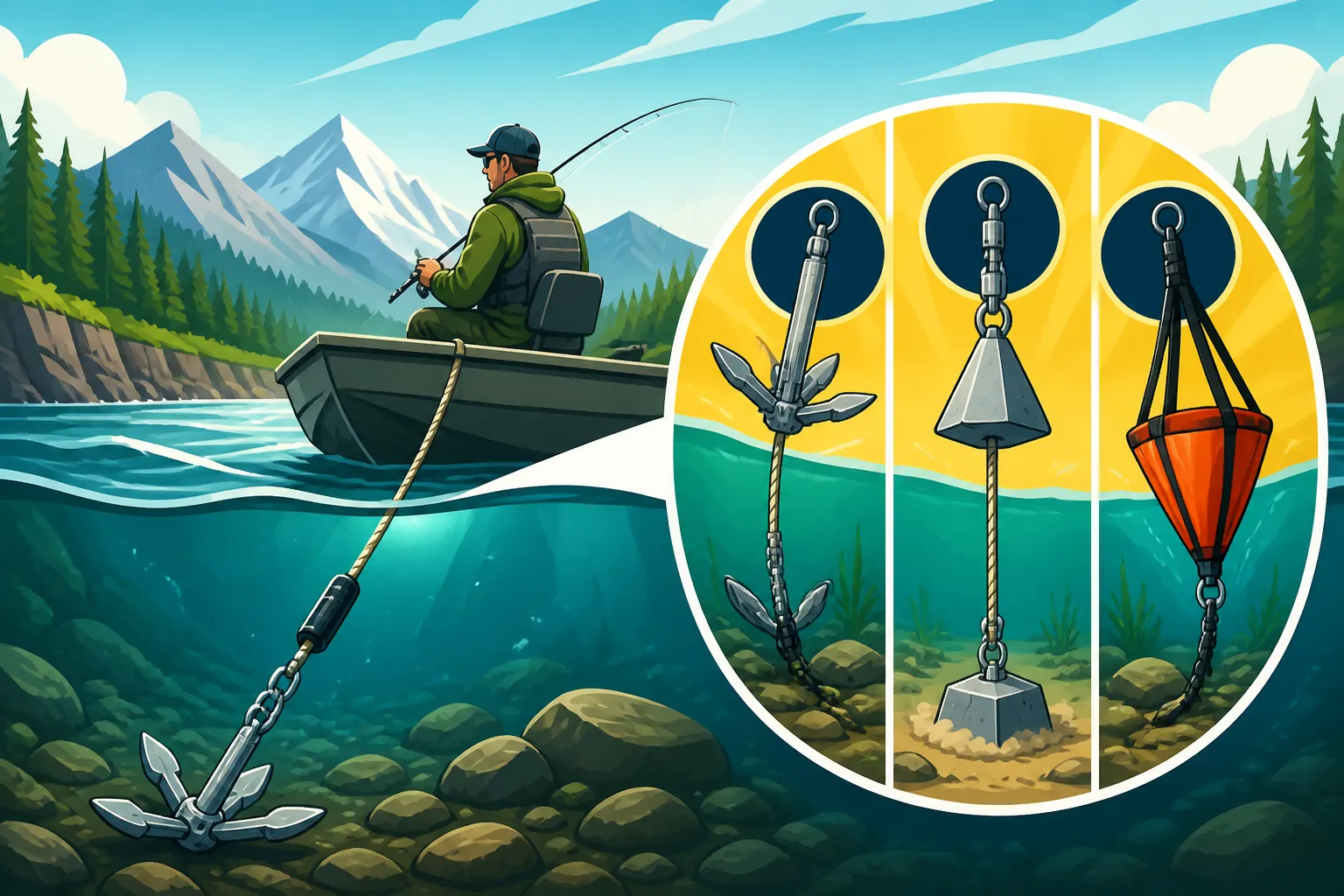
Box Anchors: A box anchor, sometimes called a slip-ring anchor, is designed to set quickly and hold well in various bottom conditions, especially soft to medium bottoms like sand or mud. Its flat, broad surfaces dig in and create resistance, and the folding design makes it compact for storage. They can work in slower river sections where the bottom is relatively soft, but in faster currents or over rocky bottoms, they might struggle to set or could get snagged between rocks. For anglers targeting walleye or pike in the more placid sections of the Red Deer or North Saskatchewan, a box anchor can offer decent holding power. However, always be mindful of current changes. You can often find a good selection of these at outdoor retailers like Bass Pro Shops.
Grapple Anchors: Grapple anchors, with their multiple tines, are designed to hook into structure like rocks, roots, or even weeds. They are generally lighter and fold up compactly, making them popular for smaller boats like canoes or kayaks. While they can be effective for securing to specific features in a river, they are notorious for getting permanently snagged. Imagine trying to hold your position in a section of the Athabasca River with a lot of submerged logs; a grapple anchor might grab on great, but then you're faced with the dilemma of either losing your anchor or risking flipping your boat trying to retrieve it. They are less ideal for general river anchoring where you need to move frequently or where the bottom is unknown.
Mushroom Anchors: Mushroom anchors are primarily designed for soft, muddy, or silty bottoms and are usually associated with pontoon boats or small crafts in calm, shallow waters. Their wide, inverted cup creates suction and resistance. In a river, however, a mushroom anchor is almost entirely useless. The current will simply push it along the bottom, never allowing it to set properly. Even in the slowest, muddiest slough-like sections of a river, the slightest flow will render them ineffective. If you’re serious about river fishing, it’s best to leave the mushroom anchor at home, as it simply can't provide the reliable hold needed against a river's force.
Advanced Anchor Systems: Drogues and Anchoring Poles
Sometimes, holding still isn't the primary goal; rather, it's about controlling your drift or temporarily pausing your movement. This is where drogues and anchoring poles come into play, offering different solutions to specific river fishing scenarios.
Drogues (Drift Socks): A drogue, or drift sock, isn't an anchor in the traditional sense, as it doesn't hold you stationary. Instead, it's a large parachute-like device that deploys in the water, creating drag and significantly slowing your boat's drift. This is invaluable for river fishing, especially when you want to present a bait or fly through a long run or seam at a more natural speed. On rivers like the Bow, where a slow, controlled drift is often key to success for trout, a drogue allows you to cover water meticulously without constantly paddling or using your motor. It helps you stay aligned with the current, preventing your boat from spinning wildly.
Drogues are fantastic for controlling your speed and orientation, giving you more time to work a stretch of water effectively. You can deploy one off the bow or stern, or even multiple drogues, to fine-tune your drift. They are particularly useful for fly fishing or delicate presentations where a natural speed is crucial. While they won't hold you in one spot, they offer unparalleled control over your movement, making them an essential piece of gear for many serious river anglers. Look for durable, well-stitched drogues that can withstand strong currents.
Anchoring Poles (Stakeout Poles): Anchoring poles, also known as stakeout poles, are long, sturdy poles (often fiberglass or aluminum) that you manually push into soft riverbeds to temporarily secure your boat. They are fantastic for shallow water fishing from kayaks, canoes, or small jon boats. Imagine you've paddled your kayak into a shallow back channel of the North Saskatchewan, spotted a nice pike lurking in the weeds, and need to stop quickly and silently to cast. A stakeout pole allows you to do just that, without the splashing or noise of dropping a traditional anchor.
These poles excel in situations where you need to make quick, temporary stops in depths typically less than 8-10 feet, provided the bottom is soft enough for the pole to penetrate and hold. They are silent, lightweight, and easy to deploy and retrieve. However, their effectiveness is entirely dependent on bottom composition and water depth; they are useless in deep water or over hard, rocky bottoms. For Best Kayaks for Alberta Fishing or small boats focusing on shallower, quieter sections of rivers, a good anchoring pole can be a game-changer for stealth and precision.
Specialized River Anchors: Pyramid and River Anchors
For those who regularly tackle the specific challenges of Alberta's rivers, specialized anchors are often the go-to choice. These designs are engineered to perform optimally in moving water and varied riverbeds.
Pyramid Anchors: Pyramid anchors are perhaps the most popular and effective choice for many river fishing scenarios. Their compact, heavy, pyramid shape, often with a slightly flattened base, allows them to dig into soft bottoms like sand or mud, and their corners and edges can wedge securely into rocky riverbeds. The weight-to-surface area ratio is excellent for holding in current. They tend to snag less often than grapple anchors but still offer a very strong hold. Because of their shape, they also tend to roll less in the current before setting.
These anchors are a fantastic all-around choice for Alberta rivers, offering reliability across a range of conditions. Whether you're trying to hold your position in a swift section of the Crowsnest River or a broader, gravelly stretch of the Red Deer, a pyramid anchor in the appropriate weight will generally give you a solid hold. They are also relatively easy to retrieve if they do get momentarily wedged, often freeing themselves with a strong tug from a different angle. Many anglers consider a good pyramid anchor to be the Best Anchor for Fishing Moving River Current.
River Anchors (Coated or Lead-Free): Specifically designed river anchors often take on a flattened, somewhat triangular or pyramid-like shape, but they might be coated in vinyl or rubber. This coating serves a couple of purposes: it protects your boat's hull from scratches and dings if the anchor bumps against it, and it can reduce noise when deploying or retrieving, which is a definite plus when targeting spooky fish. Beyond the coating, their design is optimized for river holding, often featuring a broad, flat bottom that maximizes drag and a tapered top that helps it dig in.
Many modern river anchors are also moving towards lead-free materials, which is an environmentally friendly choice for our precious Alberta waterways. These anchors are built to resist rolling in the current and maintain a consistent grab on the bottom. They are often heavier than traditional anchors of a similar footprint, packing more holding power into a compact shape. For serious river anglers who want a dedicated tool for the job, a specialized river anchor is a worthwhile investment. You can find excellent options online at Amazon or at local tackle shops.
| Anchor Type | Best Use Case | Riverbed Type | Pros | Cons |
|---|---|---|---|---|
| Box Anchor | Slower rivers, stillwater sections | Sand, mud, gravel | Sets quickly, folds for storage | Less effective in fast current/rocks |
| Grapple Anchor | Temporary hold on structure (weeds, rocks) | Rocky, weedy | Hooks onto specific features, compact | Prone to snagging, poor general hold |
| Mushroom Anchor | Not recommended for rivers | Soft mud, silt | Simple, cheap | No hold in current, easily drags |
| Drogue (Drift Sock) | Controlled drift, slowing boat | N/A (in water column) | Excellent drift control, stealth | Does not hold stationary, can get tangled |
| Anchoring Pole | Shallow, temporary stops from small boats | Soft mud, sand, silt | Silent, quick, lightweight | Limited depth, ineffective on hard bottoms |
| Pyramid Anchor | All-around river anchoring | Varied (sand, gravel, rock) | Strong hold, resists rolling, less snag | Heavy, can be bulky |
| Specialized River Anchor | Dedicated river use, protection | Varied (sand, gravel, rock) | Strong hold, coated for boat/noise | Can be more expensive, still heavy |
Essential Components of a Complete River Anchor System
An effective river anchor system is more than just the anchor itself. It's a carefully assembled combination of components designed to work together, ensuring both maximum holding power and the safety of you and your boat. Overlooking any part of this system can lead to frustration or, worse, a dangerous situation on the water.
Anchor Line, Rode, and Chain Considerations
The line connecting your anchor to your boat is often referred to as the "rode." For river fishing, the material, length, and strength of your rode are absolutely critical. You want a line that is strong enough to withstand significant pulling force from the current, durable enough to resist abrasion from rocks and debris, and long enough to allow your anchor to set properly.
Typically, a braided nylon or polypropylene rope is used. Nylon offers excellent stretch and shock absorption, which is great for absorbing the jolts of a boat swaying in current, preventing damage to cleats and reducing strain on the anchor. Polypropylene floats, which can be useful in certain scenarios to keep the line away from your prop, but it's less durable and doesn't offer the same shock absorption. The diameter of the rope should be appropriate for the size and weight of your anchor and boat, often ranging from 3/8" to 1/2" for most small to medium river boats.
Perhaps even more important than the rope itself is the use of an anchor chain, or "lead chain," between your anchor and the rope. This chain serves several vital purposes:
- Weight: It adds weight to the bottom end of your rode, helping the anchor lie flat and dig into the riverbed rather than being pulled upright by the boat.
- Abrasion Resistance: The chain is much more resistant to abrasion than rope, protecting your rode from sharp rocks and submerged objects on the bottom. This is a huge factor in rocky Alberta rivers.
- Improved Holding Power: By creating a low angle pull on the anchor, the chain allows the anchor to dig in more effectively. Without it, the rope might pull the anchor straight up, causing it to drag.
A good rule of thumb for anchor rode length in rivers is generally a 7:1 scope, meaning for every 1 foot of water depth, you need 7 feet of anchor line out. However, in strong currents, you might need even more, sometimes up to a 10:1 ratio, to ensure your anchor has enough horizontal pull to dig in and hold. Always carry plenty of extra rope – it's far better to have too much than too little. You can find quality anchor lines and chains at any marine supply store or general outdoor retailers.
Retrieval Systems: Pulleys, Cleats, and Quick Releases
Dropping and retrieving an anchor efficiently and safely is just as important as the anchor holding well. A well-designed retrieval system makes your day on the river smoother and significantly safer.
Pulleys (Anchor Trolley Systems): For kayaks and canoes, an anchor trolley system is an absolute game-changer. It's a simple setup of pulleys and a continuous loop of rope that runs along the side of your boat, allowing you to deploy your anchor from either the bow or the stern and then move the anchor line attachment point anywhere along the length of your boat. This means you can adjust your boat's orientation relative to the current without having to move the anchor itself. Want to fish a seam off your bow? Move the line forward. Need to present a bait from the stern? Slide it back.
An anchor trolley allows you to perfectly position your boat for casting and fishing, maximizing your effective fishing zone and minimizing the effort needed to maintain position. It also centralizes the pulling force, making your small craft more stable when anchored in current. Many Best Kayaks for Alberta Fishing setups include or are easily adapted for an anchor trolley. For those who frequently switch between different fishing techniques or target various river features, a trolley system is indispensable.
Cleats: Cleats are robust fittings on your boat to which you secure your anchor line. They need to be strong, securely mounted, and appropriately sized for your anchor line. Avoid plastic cleats for river anchoring; metal ones (stainless steel or anodized aluminum) are far more durable and trustworthy. The cleat should be positioned so that you can easily reach it, but also away from areas where it might snag your fishing line or clothing. Make sure any cleat on your boat is rated for the kind of strain a river anchor will put on it.
Quick Release Mechanisms (Breakaway Systems): This is a non-negotiable safety feature for river anchoring. A quick-release system allows you to instantly detach your anchor line from your boat in an emergency. This could be a simple, heavy-duty carabiner on a rope that you cut with a knife, or a specialized anchor release cleat. Some anglers use a "breakaway" system where the main anchor line is connected to a buoy or float, and a lighter trip line is attached to the anchor's crown (the top part). If the anchor gets snagged, you release the main line, and then pull the trip line from the buoy to free the anchor from the opposite direction.
Regardless of the specific design, the ability to rapidly jettison your anchor is paramount when fishing in fast, unpredictable rivers like the Ram River or Clearwater River. If your anchor gets snagged, or if a sudden surge of water or large debris threatens to overwhelm your boat, being able to release quickly can literally be a lifesaver. Ensure everyone on board knows how to use it.
Anchoring Accessories for Enhanced Performance and Safety
Beyond the core components, several accessories can significantly improve your river anchoring experience, adding layers of convenience, efficiency, and safety.
Anchor Buoys and Retrieval Rings: An anchor buoy is simply a brightly colored float attached to your anchor line. It serves as a visual marker for where your anchor is deployed and can be used in conjunction with a retrieval ring. A retrieval ring (often a heavy-duty stainless steel ring) slides down your anchor line to the anchor. If your anchor is snagged, you can run your boat downstream, pull the line from the buoy, and the retrieval ring will slide down, effectively pulling the anchor out backward, freeing it from the snag. This is an ingenious solution for those inevitable river bottom snags.
Anchor Caddies or Boxes: A designated spot for your anchor and line keeps your boat tidy, prevents tangles, and ensures your gear is ready to go when you need it. An anchor caddy might be a plastic box, a mesh bag, or a built-in compartment, but its purpose is the same: to manage your anchor system. This is especially important in smaller boats where space is at a premium, preventing your anchor from rolling around and potentially damaging your gear or injuring someone.
Gloves: A simple pair of work gloves or fishing gloves can save your hands a lot of discomfort, especially when deploying and retrieving heavy anchors or in cold weather. Ropes can cause rope burn, and wet, cold hands can quickly lose dexterity. Good grip gloves also help ensure you maintain control of your line, preventing accidental drops or slips. You can pick up sturdy gloves at any hardware or outdoor store.
Tailoring Your Anchor System to Your Boat and Fishing Style
Just as the rivers themselves vary, so do the boats and fishing styles of Alberta anglers. What works for a solo fly fisherman in a drift boat isn't necessarily ideal for a couple targeting walleye from a jon boat. Matching your anchor system to your vessel and preferred fishing method is crucial for both effectiveness and enjoyment.
Kayaks and Canoes: Lightweight and Efficient Systems
Kayaks and canoes are fantastic for exploring Alberta's rivers, offering stealth and access to shallow waters. However, their light weight and often limited space mean their anchor systems need to be compact, efficient, and appropriate for the size of the craft. Trying to manage a heavy, bulky anchor from a kayak is a recipe for frustration and potential instability.
For kayak anglers, the priority is often a lightweight anchor that still provides a good hold, paired with a highly adaptable retrieval system. A small, appropriately weighted pyramid anchor (often 3-5 lbs) is a popular choice, as its compact shape and holding power are ideal. This is often combined with an anchor trolley system, which as we discussed, allows you to change your boat's orientation without moving the anchor itself. This flexibility is vital when you're trying to cast to different angles or hold against varying currents from a single anchor point. Many companies offer purpose-built kayak anchor kits that include a small anchor, a compact rope, and a simple retrieval setup. For those exploring more remote waters, a stakeout pole can be a brilliant, silent option for temporary holds in skinny water, especially when used with a Best Kayak for River Fishing in Alberta. When buying, remember to check online options like Amazon for comprehensive kits.
Canoeists might opt for slightly heavier anchors (5-8 lbs) due to their larger size and carrying capacity, but the principles remain the same. Space is still a consideration, so a pyramid or folding box anchor that stores neatly is preferred. An anchor with a sufficient length of line (at least 50-75 feet for most river canoeing) and a quick-release mechanism is essential. Remember, stability is key in canoes, so avoid anchoring directly off the bow or stern in strong currents without a proper bow/stern attachment point, as this can make your canoe susceptible to swamping.
Small Jon Boats and Drift Boats: Versatility for Varying Conditions
Small jon boats and specialized drift boats are staples on many of Alberta's productive rivers. These boats are designed to navigate moving water, and their anchor systems need to reflect this versatility, often requiring heavier anchors and more robust retrieval setups.
Jon Boats: Jon boats are typically flat-bottomed, making them stable in calmer water but more susceptible to being pushed around in strong currents. For these boats, a pyramid anchor in the 8-15 lb range, depending on the boat's size and the typical river conditions you fish, is an excellent choice. The flat bottom of a jon boat often means you have more space for a dedicated anchor rope locker or bucket, keeping your line organized. A substantial length of anchor rode (100+ feet) with a good amount of chain is crucial, especially when fishing wider rivers like the North Saskatchewan where currents can be surprisingly strong and depths can vary.
Many jon boat anglers also equip their boats with bow-mounted anchor winches or pulley systems to make deployment and retrieval of heavier anchors easier, as continually lifting an 8-15 lb anchor by hand can become tiring. These systems also offer better control over how much line is out. For inspiration on equipping your vessel, check out articles like Best Boats for Alberta Lakes and Rivers.
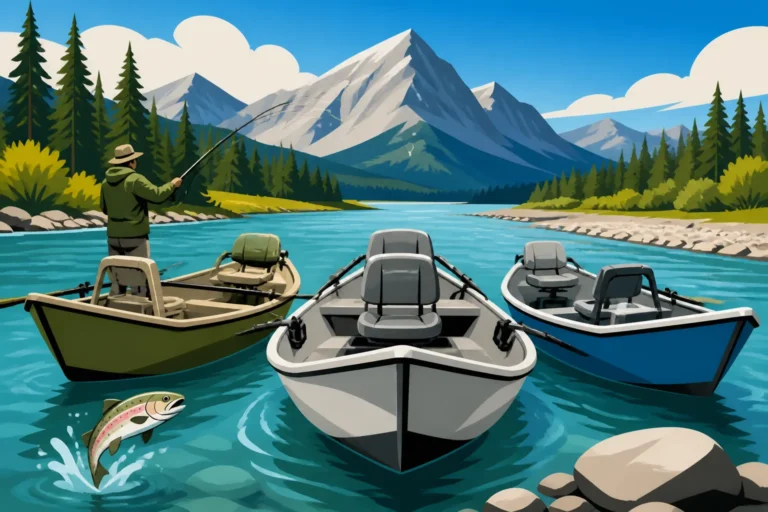
Drift Boats: Drift boats are specifically designed for navigating rivers, and their high bows and sterns, along with rocker, allow them to glide over obstacles. However, when you want to stop and fish a specific run, a robust anchor system is vital. Drift boats typically use much heavier anchors, often pyramid or specifically shaped river anchors, weighing anywhere from 15-30+ lbs. These heavy anchors are almost always deployed from a pulley system on the bow or stern, allowing the angler to easily lower and raise the anchor without excessive strain.
The sheer weight and specific design of drift boat anchors are engineered to hold these larger, heavier boats against significant currents. Often, drift boats will have a large anchor nest or well at the bow for the main anchor, along with a secondary "drogue anchor" (a drift sock) deployed from the stern to control the drift speed. The ability to anchor securely in a swift current and then release and move downstream to the next spot is fundamental to drift boat fishing. Ensuring a reliable quick-release mechanism is installed and practiced is paramount for drift boat safety, as these boats are often used in challenging river environments.
Larger River Boats: Maximizing Holding Power and Control
While less common than smaller boats, some larger vessels are used for fishing on wider, slower-moving rivers like parts of the Athabasca or Lesser Slave River's outflows, or where anglers are targeting larger species that require more space. These boats demand anchor systems with maximum holding power and advanced control features.
For larger river boats (e.g., jet boats, larger aluminum fishing boats), a heavy pyramid or specialized river anchor is essential, often in the 20-40 lb range, sometimes even more, depending on the boat's length and weight. A significant length of heavy-duty anchor rode (150-250 feet or more) with ample chain is critical to achieve the necessary scope and holding power in strong currents.
These boats will almost certainly feature electric anchor winches or hydraulic anchor systems, which allow for push-button deployment and retrieval of heavy anchors. These systems take all the physical strain out of anchoring, making it easy to reposition frequently. They often include integrated quick-release functions for safety. The placement of the anchor is also important, typically off the bow to allow the boat to pivot naturally in the current, presenting a stable platform for fishing.
Beyond the main anchor, larger river boats may also employ additional methods for boat control, such as bow-mounted trolling motors with GPS "spot-lock" features. While not an anchor in the traditional sense, these systems use GPS to automatically hold the boat in a precise position, even in current, by adjusting propeller thrust. This offers incredible versatility and hands-free boat control, allowing anglers to focus entirely on fishing. However, they are generally not powerful enough to completely negate a strong river current without assistance from a physical anchor. Always ensure your boat meets all Alberta Pleasure Craft Operator Card Requirement rules.
Strategic Anchoring Techniques for Alberta Rivers
Having the right anchor system is only half the battle; knowing how to use it effectively and safely in a dynamic river environment is equally important. Strategic anchoring can make the difference between a frustrating day and a successful one.
Positioning Your Boat for Optimal Drifting and Presentation
Anchoring in a river isn't just about stopping; it's about stopping in the right place to maximize your fishing opportunity. Often, you'll want to position your boat so that you can either present your lure or fly to a specific spot downstream, or so that you can make a controlled drift over a productive area. This requires a bit of foresight and understanding of river hydrodynamics.
When approaching a fishing spot, always scout ahead for potential hazards like submerged rocks, log jams, or shallow areas. Plan your approach from upstream, allowing the current to assist you. When you've identified your desired fishing zone, deploy your anchor upstream of that zone. As the anchor sets and the current pulls on your boat, you will settle into position, allowing you to effectively fish the area you intended. For example, if you want to fish a seam where a slower current meets a faster one, deploy your anchor slightly upstream and to the side of the seam, allowing your boat to settle perfectly alongside it.
Using an anchor trolley on a kayak or a bow-mounted pulley system on a larger boat allows you to fine-tune your position once the anchor has set. You can shift the anchor attachment point to swing your boat slightly, covering different angles of the fishing spot. This proactive approach ensures that by the time your boat is stable, you're already in prime position, rather than having to cast awkwardly or immediately fight the current. Don't just drop and hope; drop with a plan.
The Importance of a Breakaway Anchor System
We touched on this earlier, but it truly warrants its own section due to its critical importance in river safety. A breakaway anchor system, or at least a quick-release mechanism, is not optional for river fishing in Alberta—it's essential. Rivers are unpredictable, and circumstances can change rapidly.
Imagine you're anchored on the Red Deer River, fishing a calm eddy. Upstream, a sudden thunderstorm unleashes a torrent, sending a wall of water and debris downstream. Or, perhaps your anchor gets irrevocably snagged in a log jam, and the current starts pushing your boat sideways, creating dangerous strain. In these scenarios, the ability to instantly release your anchor and regain control of your boat is paramount. Trying to manually pull up a snagged anchor in an emergency can lead to capsizing, swamping, or being pulled into dangerous obstructions.
A common breakaway system involves attaching your anchor to your main anchor line with a heavy-duty zip tie or a lighter piece of cord, which is then secured to the buoy line. If the anchor snags, a strong tug from your boat breaks the zip tie, allowing you to pull the anchor out from the opposite end via the buoy line. Another simple method is to simply have a sharp knife readily accessible to cut your anchor line clean in an emergency. The key is speed and simplicity. Practice releasing your anchor quickly in a non-emergency situation so that the action becomes muscle memory. This simple preparation can save your boat, your gear, and potentially your life.
Practicing Safe Anchoring and Retrieval Methods
Beyond the equipment, the actual techniques you employ for anchoring and retrieval are vital for both your safety and the longevity of your gear. Rushing these steps can lead to accidents or damage.
Deployment: When deploying your anchor, especially a heavy one, never just "throw" it. Gently lower it over the side, feeding out the line smoothly. This prevents the anchor from splashing loudly, which can spook fish, and also prevents the line from tangling around your feet or other gear. As the anchor touches down and begins to set, gradually let out more line, allowing the current to pull the boat back and the anchor to dig in. Avoid putting your hands or feet near the anchor line as it's deploying, as a sudden snag could pull you over or cause rope burn. Always ensure your cleat or release mechanism is ready.
Retrieval: Retrieving an anchor, particularly a heavy one from a swift current, can be physically demanding. If you're using a manual system, pull the anchor line in steadily, hand-over-hand, allowing the boat to move slowly towards the anchor point. Once you're directly over the anchor, pull straight up to break it free. If it's snagged, try moving the boat around to different angles or using an anchor retrieval ring to pull it out backward. Never tie your anchor line off to your boat and try to motor away from a snagged anchor in strong current, as this can severely damage your boat's transom or even flip your vessel.
Always be aware of your surroundings during deployment and retrieval. Look upstream for other boats or potential hazards, and downstream to ensure you're not drifting into danger. For smaller crafts like kayaks or canoes, wearing your Life Jacket Requirements for Alberta Boaters is crucial, as leaning over to manage an anchor can quickly shift your center of gravity. Remember, patience and a methodical approach are your best friends when interacting with a river's current.
Maintenance and Storage for Your River Anchor System
Taking care of your anchoring gear is just as important as maintaining your rods and reels. A well-maintained anchor system is a reliable anchor system, and proper storage will extend its lifespan, ensuring it's ready for your next adventure on Alberta's rivers. Neglect can lead to rust, weakened lines, and ultimately, failure when you need it most.
Cleaning and Inspecting Your Anchor Gear
After every river trip, especially if you've been in muddy or silty water, it's a good habit to give your anchor system a quick rinse and inspection.
Cleaning: Use fresh water to rinse off your anchor, chain, and rope. Mud, silt, and small debris can accumulate on your anchor, and if left to dry, they can harden and become difficult to remove. This also prevents the transfer of invasive species between waterways, which is an important ecological responsibility for all Alberta anglers. Rinse your rope thoroughly, looking for any embedded grit or fine particulate that could cause internal abrasion. If your rope is particularly dirty, a gentle wash with mild soap and water can help. Ensure everything is thoroughly air-dried before storage to prevent mildew and corrosion. Never store wet rope or chain.
Inspecting: Take a moment to visually inspect every component of your anchor system.
- Anchor: Look for any signs of bending, cracks, or excessive wear on the flukes or edges, especially if you've been fishing rocky bottoms. Check for rust on metal components.
- Chain: Inspect each link of your anchor chain for distortion, cracks, or severe rust. A weakened link is a point of failure. Also, check the connection points where the chain meets the anchor and the rope.
- Rope (Rode): This is perhaps the most critical component to inspect. Look for fraying, cuts, nicks, or excessive wear, particularly in the sections that frequently rub against cleats, pulleys, or the riverbed. Pay close attention to splices and knots, as these are often high-stress points. Any significant damage to your rope means it's time for a replacement. Even minor fraying can indicate weakening.
- Hardware: Check all carabiners, quick-release mechanisms, pulleys, and cleats. Ensure they are moving freely, not corroded, and that their mounting hardware is secure.
This routine inspection allows you to identify potential problems before they lead to anchor failure during a critical moment on the river.
Proper Storage to Prevent Damage and Extend Lifespan
How you store your anchor system between trips can dramatically impact its longevity and readiness. A tangled, corroded mess is not what you want to discover when you're eager to hit the water.
Rope Management: The anchor rope should always be neatly coiled or flaked. This prevents frustrating tangles, known as "hanks," which can cause delays and safety issues when deploying your anchor. You can use a dedicated anchor bag or bucket to keep the rope tidy. Some anglers prefer to create a "daisy chain" with their rope for compact storage. Ensure the rope is kept out of direct sunlight when not in use, as UV exposure can degrade synthetic fibers over time. Keep it away from harsh chemicals like fuel or solvents, which can weaken the material.
Anchor and Chain Storage: Store your anchor and chain in a dedicated space that keeps them from rattling around and potentially damaging your boat or other gear. A rubberized or padded anchor box, or even a heavy-duty plastic bucket, can work well. This also keeps any residual mud or moisture contained. Ensure the anchor is not left in a position where it can chip or scratch your gel coat or aluminum hull. Many smaller boats and kayaks benefit from a compact anchor caddy. For larger anchors, ensure they are secured so they don't shift during transport.
Accessory Storage: Keep all your accessories, like anchor buoys, retrieval rings, and gloves, together with your main anchor system. This ensures that when you grab your anchor setup, you have everything you need. A small mesh bag can be useful for keeping these smaller items organized within your anchor storage container.
When to Replace Worn or Damaged Components
Knowing when to replace a component of your anchor system is crucial for safety. It's not about saving a few dollars; it's about investing in peace of mind and preventing potential accidents.
Rope: If your anchor rope shows significant fraying, deep cuts, excessive stiffness, or discolouration from sun exposure, it's time to replace it. A rope that has lost its integrity is a major safety risk. Even if only a small section is damaged, it compromises the entire length under strain. When in doubt, replace it. You can purchase high-quality marine rope at any reputable outdoor or marine supply store, including larger retailers like Bass Pro Shops.
Chain: If your anchor chain has any bent or cracked links, or if rust is so severe that it's visibly pitting and thinning the metal, it needs to be replaced. Rust significantly weakens metal, and a broken chain link will render your anchor useless. Always replace with appropriately sized, galvanized or stainless steel chain.
Anchor: While anchors are generally very durable, they can be damaged. If your anchor has severely bent flukes, a cracked shank, or if its coating (if applicable) is so compromised that it's causing excessive boat damage or snagging, consider replacing it. Sometimes, a severely bent fluke can prevent the anchor from setting properly, making it unreliable.
Hardware: Any carabiner, cleat, or pulley that is corroded, bent, or no longer operates smoothly should be replaced immediately. These small components are often critical to the safe and efficient operation of your anchor system. Don't overlook them.
Regular inspections and proactive replacement of worn components are key to maintaining a safe and effective river anchoring system. It's a small investment in time and money that pays huge dividends in safety and enjoyment on Alberta's incredible fishing rivers.
Disclaimer
This article is for general informational purposes only and does not constitute professional advice. Laws, prices and regulations vary by location and change over time. Consult a qualified professional for guidance on your specific situation.