Best technique for docks and laydowns
Ever felt that mix of excitement and dread when you see a beautiful dock or a complex fallen tree reaching into the water? You know there are fish there—it just feels right—but actually getting your lure in, not getting snagged, and successfully landing a fish feels like trying to solve a Rubik's Cube blindfolded. It's incredibly frustrating when those prime spots look so promising yet often result in lost tackle and empty hooks. This comprehensive guide is going to strip away the mystery and give you the proven techniques to confidently fish docks and laydowns, turning those intimidating structures into your new favourite fishing goldmines here in Alberta.
Understanding Why Docks and Laydowns are Fish Magnets
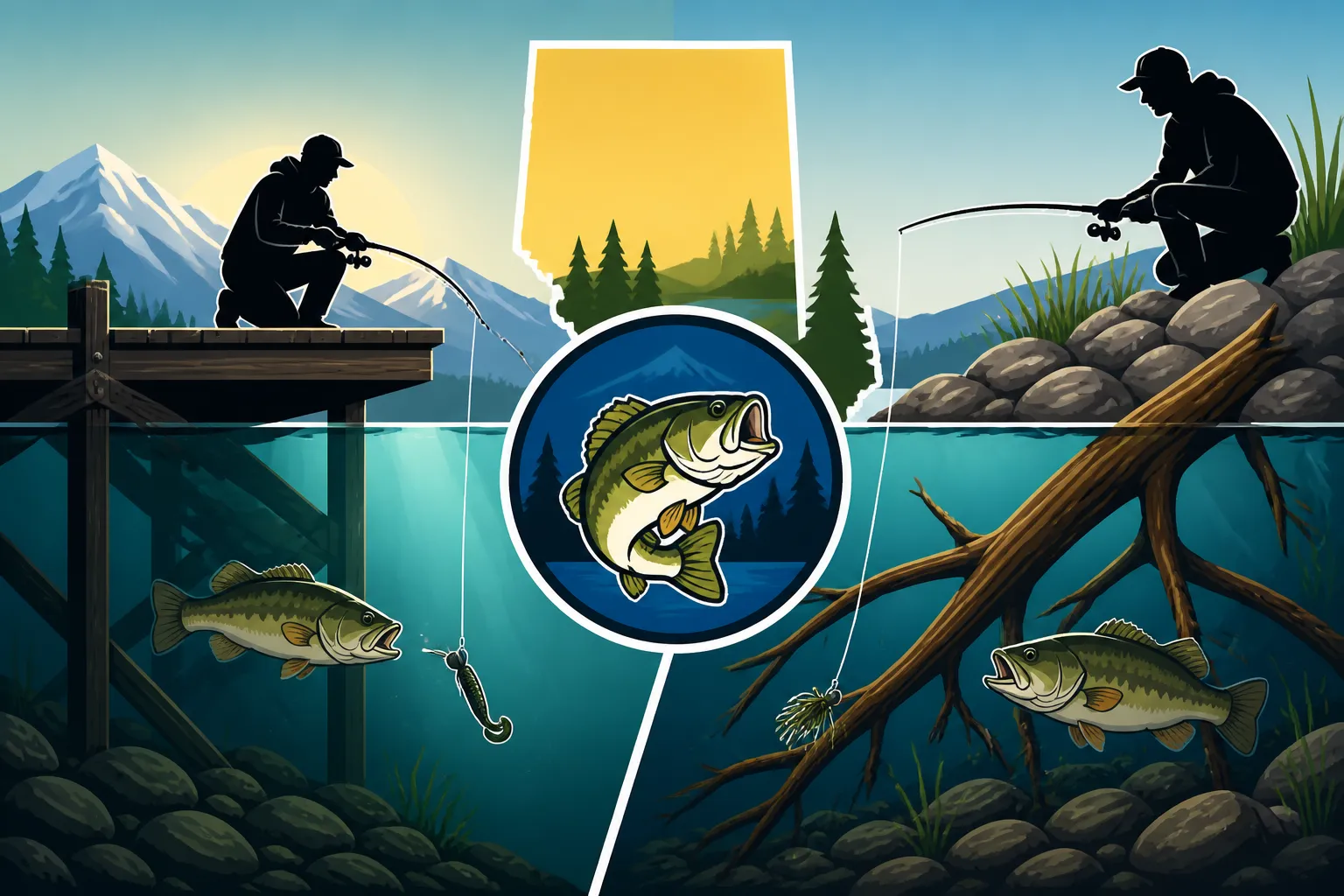
Think of docks and laydowns not just as obstacles, but as entire underwater ecosystems. Fish aren't just lounging around these structures; they're living their lives there. These spots provide essential elements for survival, making them consistent hotspots if you know how to approach them.
The Allure of Shade and Shelter
In many Alberta lakes and rivers, particularly during brighter days or the warmer months, fish seek refuge from the sun's intense rays. Just like we seek shade on a hot day, fish do too. Docks cast significant shadows that can run deep into the water, providing a cool, dim sanctuary. This is especially true for species like pike and walleye, which often prefer lower light conditions to ambush prey. These shadows aren't just about comfort; they also offer a sense of security from overhead predators like ospreys and eagles. A fish feeling safe and comfortable is more likely to stay put and, crucially, to feed.
Laydowns, or fallen trees and brush piles, offer a similar, perhaps even more complex, form of shelter. The dense network of branches creates nooks and crannies where fish can hide from larger predators. Imagine a big northern pike tucked deep into a brush pile, invisible to an unsuspecting perch swimming by. This isn't just theory; spend enough time observing and you'll see fish darting in and out of these structures with incredible speed and precision.
Ambush Points and Forage Zones
Beyond just shelter, docks and laydowns are prime ambush points. The irregular shapes and varying depths around these structures create perfect opportunities for predatory fish to hide and wait for their next meal. A walleye might sit just off the corner of a dock, patiently waiting for a school of minnows to pass by. A chunky rainbow trout might hold under a submerged log, ready to dart out and snatch an insect or a passing minnow.
These structures also act as natural forage zones. Algae and aquatic insects thrive on the submerged portions of docks and branches, which in turn attract baitfish like shiners, suckers, and perch. When baitfish congregate, larger predatory fish are never far behind. You'll often find a complete food chain operating around a single dock or laydown, from the smallest insects to the largest apex predators, all drawn to the cover and food availability these spots provide. This is why fishing these areas can be so productive; you're essentially targeting a natural feeding ground.
Different Types of Structure
Not all docks and laydowns are created equal, and understanding their nuances will greatly improve your success.
Docks:
- Floating Docks: These docks rise and fall with the water level, often providing consistent shade and cover regardless of the lake's fluctuations. Their undersides can accumulate algae and attract baitfish, and the pilings or anchors underneath offer additional structure.
- Stationary Docks (Pilings): These are fixed, often supported by wooden or metal pilings driven into the lakebed. The pilings themselves are fantastic vertical structure, creating eddy currents and dark spots for fish to hold. The corners where the dock meets the shore, or where the main section meets a finger, are particularly good.
- Boat Lifts and Moorings: Don't overlook these! The complex metal framework of a boat lift, or the chain and anchor of a mooring, provides excellent submerged structure. Fish love to hide in and around these metallic objects.
- Ramps and Rock Cribs: Sometimes docks are supported by underwater ramps or rock cribs. These add even more complexity and hiding spots, often with deeper water at the end.
Laydowns:
- Fallen Trees: These are perhaps the most common type of laydown. They can range from a single branch to an entire tree, often with a dense network of limbs extending into the water. The trunk itself creates a large shadow and current break.
- Brush Piles: Sometimes created intentionally by anglers or naturally by storms, brush piles are dense clusters of branches and smaller logs. These are extremely thick cover and require precise lure placement and heavy gear.
- Submerged Logs and Stumps: These can be remnants of old trees or logging operations, providing isolated pieces of structure that can hold surprisingly large fish. They're often harder to spot without a good fish finder.
Understanding these distinctions helps you tailor your approach, from how you position your boat to the type of lure you choose. For instance, skipping a lure under a low-hanging floating dock is different from pitching a jig into a deep, vertical piling cluster of a stationary dock.
Essential Gear for Targeting Docks and Laydowns
Fishing around structure can be tough on your gear, so you'll want to be well-prepared. This isn't the time for your lightest finesse setup unless you enjoy snapping lines and losing lures.
Rods, Reels, and Line Choices
When you're dealing with the abrasive surfaces of wood, metal, and concrete, your gear needs to be robust.
- Rods: For pitching and flipping into tight spots, a medium-heavy to heavy power baitcasting rod, usually 6'6" to 7'6" in length, is ideal. The stiffer backbone gives you the leverage to pull fish out of cover before they can bury themselves and snap your line. For lighter presentations or if you're primarily casting around the edges of structure, a medium-heavy spinning rod might also be useful, especially for skipping.
- Reels: A baitcasting reel with a good braking system and a decent gear ratio (6.1:1 to 7.1:1) is crucial for accurate casts and quickly taking up line after a bite. You need something that can handle the stress of pulling fish away from snags. For spinning setups, ensure a smooth drag and a reliable bail.
- Line: This is perhaps the most critical component.
- Braided Line: For your main line, braided line in the 30-50 lb test range is almost a must. Its zero stretch allows for excellent feel, powerful hooksets, and incredible abrasion resistance against rough surfaces. It cuts through weeds better too.
- Fluorocarbon Leader: While braid is fantastic, it's visible in clear water and doesn't stretch. Tying a 12-20 lb test fluorocarbon leader (2-4 feet long) to your braid using a strong knot like an FG or Albright knot gives you the best of both worlds: the invisibility and abrasion resistance of fluoro near the lure, and the strength and sensitivity of braid for the main line. You can find excellent quality braided and fluorocarbon lines on Amazon to suit your needs.
Lures and Baits
The right lure will navigate the cover, entice a bite, and give you the best chance of getting the fish out.
- Jigs: Flipping and pitching jigs (1/4 oz to 3/4 oz) with weed guards are deadly around docks and laydowns. Pair them with a soft plastic trailer like a craw or creature bait to add bulk and action. Black and blue, green pumpkin, and brown are classic colours. These lures mimic crawfish and other bottom dwellers that fish associate with structure.
- Texas-Rigged Soft Plastics: Worms, creature baits, and craws rigged Texas-style are virtually weedless, making them perfect for punching through thick cover. A 3/0 to 5/0 EWG (Extra Wide Gap) hook with a bullet weight (1/8 oz to 1/2 oz, pegged to the line) ensures a natural fall and minimizes snags. This setup allows you to present a soft bait deep into the heart of a brush pile.
- Spinnerbaits: Single or double-bladed spinnerbaits are excellent for working the edges of laydowns or the open water between dock pilings. Their flash and vibration can draw fish out of cover. Use tandem Colorado/Willow blade combinations for varied presentations.
- Topwater Lures: Especially during low light conditions (dawn, dusk) or on overcast days, topwater frogs, poppers, or walking baits can be incredibly effective when fished right over submerged cover or in the open pockets of docks. The explosive strikes are addicting! Remember to wait a moment after the strike to ensure the fish has the lure before setting the hook.
- Crankbaits: Shallow-diving crankbaits that deflect off structure can trigger reaction strikes. Choose models with a strong bill that can bounce off wood or pilings without getting hung up easily. Medium-diving crankbaits can also be effective on deeper docks.
For more specific recommendations, check out our guides on Best Tackle for Alberta Walleye and Best Pike Gear for Alberta Lakes.
Must-Have Accessories
Beyond your rod and reel, a few key accessories will make your dock and laydown fishing much more enjoyable and successful.
- Pliers/Hook Removers: Absolutely essential. Fish caught in dense cover often get hooked deep or in awkward positions. Long-nosed pliers or specialized hook removers are crucial for safe extraction for both you and the fish.
- Line Cutter: A sharp line cutter or small scissors for cleanly trimming braided line and fluorocarbon leaders.
- Small Landing Net: A compact but sturdy landing net, especially one with rubberized mesh, is invaluable for quickly landing fish and preventing them from thrashing back into the structure. For pike, a larger net like those mentioned in Best Landing Net for Pike can be a lifesaver.
- Polarized Sunglasses: These are a game-changer. They cut glare, allowing you to see submerged logs, brush, and even fish lurking under docks. This visual advantage helps with accurate casting and identifying prime targets.
- Tackle Management: A small, organized tackle box or bag specifically for your structure fishing lures is helpful. You'll be making quick lure changes, and having everything accessible will save time and frustration. Consider a waterproof box, readily available on Amazon, to protect your expensive lures.
- Lure Retriever: This might just be your best friend when fishing heavy cover. There are various types, from pole-mounted retrievers to chain-based ones you drop down your line. Investing in one can save you a lot of money in lost lures. You can easily find highly-rated lure retrievers on Amazon that pay for themselves after just a few saved baits.
Master Techniques for Fishing Docks
Fishing docks requires precision, patience, and a willingness to get your lure into places others shy away from. The fish that live there are often bigger and less pressured.
Pitching and Flipping
These are two related, fundamental techniques for close-quarters combat around structure.
- Pitching: This involves swinging your lure underhand in a pendulum motion, releasing it at the right moment to send it skipping or dropping gently into a tight target. You extend your rod tip towards the water, let the lure swing forward, and then, with a subtle wrist flick and a smooth rod sweep, you send the bait flying. The goal is a quiet entry, like a mouse sneaking into a pantry. This is excellent for reaching just under the edge of a dock or placing a bait precisely next to a piling.
- Flipping: This is for even closer quarters, often from right up against the dock. You pull out a few feet of line, hold the lure in your off-hand, and then with a gentle pendulum swing, drop or "flip" the lure into position. It's often used with shorter, heavier rods to drop a bait straight down into a hole in a brush pile or next to a dock post.
Both techniques emphasize stealth and accuracy. The key is to keep your casts low and controlled, aiming for the darkest recesses where the fish feel most secure. Once your lure is in the water, let it sink on a semi-slack line, carefully watching for any twitch or movement in your line that indicates a bite. Many bites around docks happen on the fall, so pay close attention.
Skipping Docks
This is an advanced but incredibly effective technique for reaching fish that are tucked far back under docks, where direct pitching might not reach.
- The Technique: It involves a low, sidearm cast, almost like skipping a stone across water. Your lure (often a jig or Texas-rigged plastic) needs to hit the water at a very shallow angle, causing it to bounce or "skip" several times across the surface, propelling it deep under the dock.
- Practice is Key: This takes practice to master. Start with a heavier lure that's easier to skip, like a 1/2 oz jig. The lower your rod tip and the shallower your angle of approach, the better it will skip.
- Lure Choice: Weedless lures are essential here. You don't want to get hung up on the first obstacle under the dock. A compact jig or a Texas-rigged soft plastic works best.
- Pay Attention to Backlash: Be mindful of baitcaster backlash as the lure decelerates rapidly after skipping. Feather your thumb on the spool carefully.
Once your lure is under the dock, let it sink. Work it slowly, covering the available water. Remember, fish under docks are often less pressured because fewer anglers can reach them.
Targeting Pilings and Edges
Docks aren't just one big piece of cover; they're a collection of individual hotspots.
- Pilings: Each piling, post, or support structure is a mini-ecosystem. Fish will often hold tight to the dark side of a piling, facing into the current or open water, waiting for bait. Drop your lure right alongside these vertical structures, letting it fall slowly. Don't be afraid to bump the piling with your lure; sometimes the slight vibration can trigger a reaction strike.
- Corners and Seams: The corners where docks meet the shore, or where different sections of a dock connect, create unique current breaks and ambush points. The "seams" between floating dock sections are also excellent places for fish to hold.
- Dock Edges: Work your lure along the entire perimeter of the dock, not just under it. Fish will often cruise the edges, especially during feeding times. A spinnerbait or a shallow crankbait can be effective here.
- Boat Slips: If there are empty boat slips, cast your lure into the back of them. The enclosed nature provides security, and fish will often hold in these protected areas.
Vary your retrieve speed and depth until you figure out what the fish want on a particular day. Sometimes they want a slow, dragging presentation; other times, a quicker hop or twitch is the ticket.
Strategies for Conquering Laydowns
Laydowns are often even more complex than docks, presenting a formidable challenge, but they also hold some of the biggest fish. These tangled masses of branches, logs, and debris are prime real estate for predatory fish.
Working the Branches
A laydown isn't just one spot; it's dozens of potential hotspots. You need to approach it methodically.
- Outer Edges: Start by fishing the very outermost branches. These are less risky for snags and often hold smaller, more aggressive fish. A spinnerbait or a shallow crankbait can be effective here, deflecting off the wood.
- Mid-Section: As you move closer, switch to weedless presentations like Texas-rigged plastics or jigs. Cast into the open pockets between branches, letting your lure fall into the deeper parts of the structure. Work your lure slowly, feeling every bump and tick.
- The Heart of the Laydown: This is where the biggest fish often hide. If you can get a weedless jig or a heavily weighted Texas rig into the densest part of the brush, you might be rewarded. This requires courage and confidence in your gear. Be prepared for immediate, powerful strikes and a strong battle to pull the fish out.
- The Trunk: The main trunk of a fallen tree creates a significant current break and shadow. Fish will often position themselves along the length of the trunk, especially on the side away from the main current. Cast your lure parallel to the trunk, letting it slowly work its way down.
Remember, fish can be at any depth within the laydown, from right on the bottom to suspended within the branches. Experiment with different retrieve depths until you find where they are holding.
Approach from All Angles
One common mistake is fishing a laydown from just one side. Fish can be oriented in any direction within the structure, and approaching from different angles presents your lure in a new way, often triggering a strike from a hesitant fish.
- Upstream/Downstream: If fishing a river, try casting both upstream and downstream, letting the current carry your lure naturally into or past the structure. Fish often face upstream, so presenting a bait from behind them can be very effective.
- Parallel: Cast parallel to the length of the laydown, covering as much linear structure as possible with one retrieve.
- Perpendicular: Cast perpendicular to the laydown, working your lure into the thickest part.
- The "Other" Side: If you can safely access the opposite side of the laydown (e.g., from a different bank or by repositioning your boat), do so. The fish on that side might be entirely unpressured.
Varying your angles also helps you avoid snags. What looks like an impenetrable mass from one angle might have a small, clear lane from another.
The Art of the Hang-Up and Retrieval
Let's be realistic: fishing docks and laydowns means you will get snagged. It's part of the game. The key is to minimize lost lures and learn how to free them.
- Don't Yank: When you feel a snag, resist the urge to immediately yank hard. Often, this just buries the hook deeper.
- Slack Line: Give your line some slack. Sometimes the lure will float free, or you can twitch it gently to dislodge it.
- Rod Tip Position: Point your rod tip directly at the snag. This gives you direct contact with the lure.
- Walk Around: If fishing from shore, and it's safe, try walking to a different angle. Sometimes pulling from a new direction is all it takes.
- "Bow String" Method: For tougher snags, put tension on your line with your rod tip pointed at the snag. Then, using your hand, pull the line back like a bow string and release it. The vibration can often pop the lure free. This technique works surprisingly well for jigs and Texas-rigged baits.
- Lure Retrievers: This is where that lure retriever comes in handy! If you have one, use it. Lower it down your line, slide it along the snagged lure, and hopefully, dislodge it. As mentioned earlier, there are some great options on Amazon that are worth every penny.
The goal isn't to never get snagged, but to develop the skill and patience to recover your gear when it does happen. Losing lures is an expensive part of structure fishing, but recovering them is a true art.
Seasonal Considerations for Dock and Laydown Fishing in Alberta
Just like fish movements vary throughout the year, so does their use of docks and laydowns. Understanding these seasonal shifts can help you target these structures more effectively. Our guide on Best Time of Year to Fish in Alberta offers broader insights into these patterns.
Spring: Pre-spawn and Early Post-spawn Patterns Around Shallow Cover
As the ice melts and Alberta's waters begin to warm in spring, fish like walleye and pike become very active, moving into shallower waters. Docks and laydowns become critical staging areas and even spawning grounds for some species.
- Pre-spawn: Fish will congregate around the warmer, shallower ends of docks or the sun-exposed parts of laydowns. These structures offer cover as they wait to spawn. Focus on the sunny sides of docks, especially those in bays or channels, where water temperatures rise fastest. Slow-moving jigs or spinnerbaits are effective here.
- Early Post-spawn: After spawning, fish are often lethargic but still remain close to cover to recover and feed. They might move slightly deeper but won't stray far from the immediate protection of a dock or fallen tree. Subtle presentations are key, perhaps smaller jigs or Texas-rigged worms. This is a great time to target pike using the techniques described in Best Techniques for Early Spring Pike.
- High Water: If spring runoff brings high water, new laydowns might become submerged, and docks might be partially underwater. These can be incredible fishing opportunities as fish use the newly flooded cover. Our Best Techniques for High Water Spring Conditions article can provide more context.
Summer: Deep Shade and Oxygenated Water Strategies
Summer brings warmer water temperatures and bright sunshine, driving fish into deeper, cooler, and shadier parts of structures.
- Deep Shade: During the heat of the day, fish will be tucked as deep and dark as possible under docks, or buried in the densest part of laydowns. Skipping lures far under docks, or pitching heavy jigs into the heart of brush piles, becomes paramount.
- Oxygenated Water: In some lakes, deeper docks and laydowns that provide access to thermoclines (layers of cooler, more oxygenated water) become prime locations. Look for docks over deeper water or laydowns that extend into drop-offs.
- Low Light: During dawn, dusk, or on cloudy days, fish might move to the outer edges of docks or even suspend around laydowns, becoming more aggressive. Topwater lures can be incredibly exciting during these times.
Fall: Fish Congregating Around Structure Before Winter
As water temperatures begin to drop in the fall, fish enter a feeding frenzy, bulking up for winter. Docks and laydowns continue to be productive, often holding larger schools of fish.
- Feeding Aggressively: Fish become more aggressive and less wary. They'll often be found around the deeper edges of docks or suspended within laydowns, ready to ambush prey.
- Baitfish Migration: As baitfish move into deeper or more protected waters, predatory fish follow, often congregating around prominent structures. Docks and laydowns can be bottlenecks for baitfish movement.
- Deeper Structure: Focus on laydowns and docks that offer access to deeper water, as fish will eventually transition to their wintering grounds. Vertical jigging alongside dock pilings or working deep-diving crankbaits around laydowns can be very effective.
| Structure Type | Common Fish Species | Best Lure Types | Retrieval Speed & Depth | Key Considerations |
|---|---|---|---|---|
| Floating Docks | Walleye, Pike, Perch | Jigs, Texas-rigs, Spinnerbaits, Topwater | Slow-medium, under/around dock | Target shade, skip lures far under, work pilings |
| Stationary Docks | Walleye, Pike, Trout | Jigs, Texas-rigs, Crankbaits, Swimmers | Slow, along pilings & edges | Focus on corners, deep pilings, current breaks |
| Fallen Trees (Laydowns) | Pike, Walleye, Burbot | Texas-rigs, Jigs, Spinnerbaits | Slow, methodical through branches | Fish every branch, approach from multiple angles |
| Brush Piles | Pike, Walleye, Perch | Heavily weighted Texas-rigs, Stout Jigs | Very slow, penetrate deep | Use heavy line, be prepared for snags, large fish |
| Boat Lifts/Moorings | Walleye, Pike, Trout | Jigs, Small Crankbaits | Slow, around metal framework | Look for vertical cover, fish directly underneath |
Disclaimer
This article is for general informational purposes only and does not constitute professional advice. Laws, prices and regulations vary by location and change over time. Consult a qualified professional for guidance on your specific situation.