How to catch pike around submerged timber
There's nothing quite like the thrill of a big northern pike hitting your lure, especially when you've managed to coax it out of the gnarly, submerged timber where it lives. Many anglers shy away from these intimidating areas, frustrated by constant snags and lost gear, but those brave enough to tackle the wood often reap the biggest rewards. This guide will help you understand why pike love submerged timber, equip you with the right gear, and teach you the techniques you need to successfully fish these challenging but highly productive spots in Alberta.
Why Submerged Timber is a Pike Magnet
If you've ever cast a line near a fallen tree or a brush pile, you've probably noticed that something just feels right about it. There's a certain wildness, a promise of hidden predators. For northern pike, submerged timber isn't just a place to hang out; it's a critical part of their survival strategy.
Cover and Ambush Points
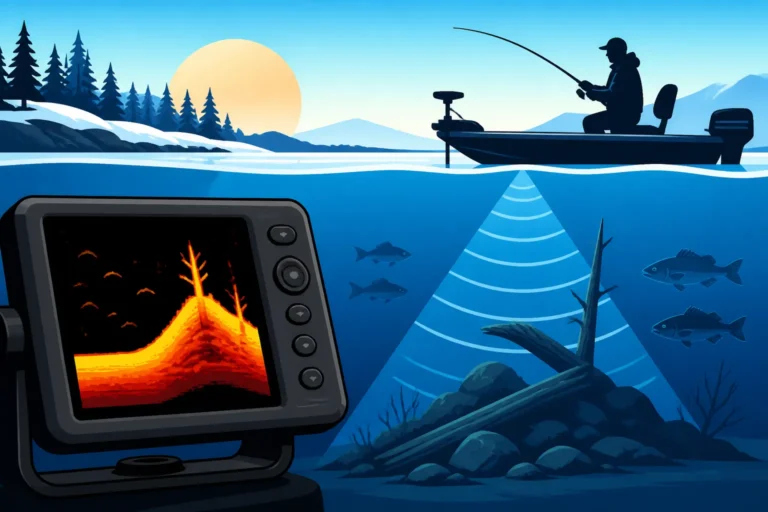
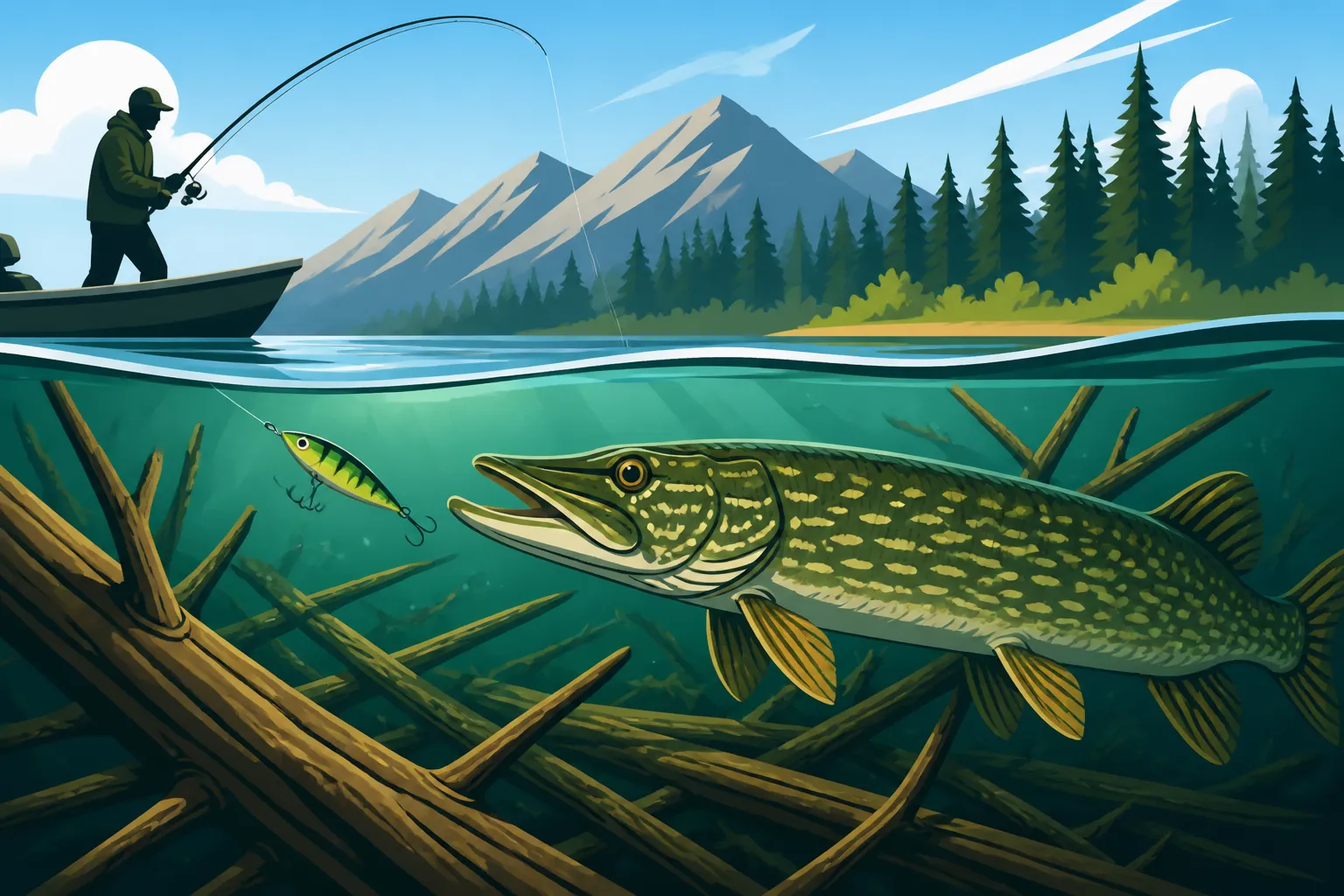
Northern pike are the ultimate ambush predators. They're built for explosive, short bursts of speed, relying on camouflage and surprise to catch their prey. Submerged timber – whether it's an old fallen poplar, a dense mat of dead branches, or a cluster of old stumps – provides the perfect environment for this hunting style.
Think of a large pike tucked just beneath a heavy log, or nestled deep within a sprawling brush pile. The dark wood breaks up its outline, making it virtually invisible to unsuspecting baitfish swimming by. These areas offer shade from the sun, which can be crucial on bright, clear days, and provide current breaks in rivers, allowing pike to conserve energy while waiting for their next meal. In many of Alberta's lakes and rivers, you'll find these natural structures where shorelines have eroded, old trees have fallen in, or even where human activity has created artificial brush piles. They are essentially readymade sniper's nests for a hungry pike. Understanding Northern Pike Habits in Alberta Lakes will give you even more insight into why these fish prefer such dense cover.
Forage and Food Source
It's not just the pike that love submerged timber; pretty much every small critter in the water does too. Smaller baitfish, minnows, insects, and even crayfish seek out the protection and rich ecosystem that fallen wood creates. Algae grows on the branches, providing food for smaller organisms, which in turn become food for larger ones. It's a whole miniature food chain thriving in and around the timber.
For a pike, this means a constant, readily available buffet. They don't have to expend a lot of energy chasing down scattered prey across open water. Instead, they can simply hold their position, hidden and camouflaged, and wait for a meal to swim past their noses. The denser the timber, the more concentrated the prey often is, making these spots incredibly attractive to larger, hungrier pike. If you want to know more about what these fish typically eat, check out our guide on How to Catch Northern Pike in Alberta.
Essential Gear for Fishing Submerged Timber
Fishing in and around submerged timber demands a specific setup. Your everyday open-water rig just won't cut it when you're trying to pull a belligerent pike out of a tangled mess of branches. Durability, strength, and sensitivity are key.
Rods, Reels, and Line Built for Battle
When you're dealing with timber, you need gear that can take a beating and give you the leverage to control a powerful fish.
- Rods: A heavy or medium-heavy power rod is absolutely crucial. You need backbone to effectively set the hook and, more importantly, to turn a pike's head and pull it away from snagging more branches. A fast action tip is still desirable for feeling subtle bites and making accurate casts, but the overall power should be significant. Think of a 6'6" to 7'6" rod. For a more general guide, you can look at Best Pike Gear for Alberta Lakes.
- Reels: Baitcasting reels are often the preferred choice for fishing timber. Their robust construction, stronger drag systems, and superior line control when casting heavy lures make them ideal. They give you the winching power you need to fight a pike that's trying to bury itself in the wood. While spinning gear can work, make sure it's a high-quality, heavy-duty spinning reel paired with a strong rod. Check out our recommendations for Best Baitcasting Reels for Pike Fishing if you're looking to upgrade.
- Line: This is where many anglers make mistakes. Braided line is almost a non-negotiable for timber fishing. Its zero stretch means incredible sensitivity, allowing you to feel every subtle bump against a branch and, more importantly, those faint pike bites. Its strength and abrasion resistance are paramount; it can cut through light weeds and withstand some rubbing against wood much better than monofilament or fluorocarbon. For these situations, a minimum of 30-pound test, often up to 50 or 65-pound test, is recommended. When you're ready to buy, you can find a great selection of heavy-duty baitcasting reels and braided lines on Amazon, often with helpful customer reviews. Learn more about optimal choices in Best Braided Line for Pike Fishing.
- Leaders: Despite the strength of braided line, it's not immune to pike teeth or sharp snags. A strong leader is essential. A heavy fluorocarbon leader (40-60lb test) offers good abrasion resistance and is less visible, or a wire leader (steel or titanium) can be used for ultimate bite-proof protection. The length of the leader can vary, but typically 12-18 inches is sufficient. We have a dedicated guide on Best Wire Leader for Pike Fishing that might help you decide.
Lures Designed for the Wood
Your choice of lure can make or break your timber fishing success. The goal is to maximize appeal to pike while minimizing snags.
- Weedless Spoons: These are a classic for a reason. Lures like the Johnson Silver Minnow, with a single hook riding upright, are incredibly effective at deflecting off wood and sliding through weeds. Their wobbling action is irresistible to pike, and they come in various colours and sizes.
- Spinnerbaits: With their single hook design and "arm" that protects the hook point, spinnerbaits are another excellent choice for timber. The flash and vibration are great for attracting attention, and they're surprisingly snag-resistant. Consider models with a stout wire frame and a good weed guard.
- Soft Plastic Jerkbaits (Rigged Weedless): Flukes, soft plastic swimbaits, or even creature baits rigged with a wide-gap EWG (Extra Wide Gap) hook are fantastic. When rigged properly (Tex-posed), the hook point is tucked into the plastic, making them virtually snag-proof. Their realistic action can be deadly.
- Topwater Lures: If the timber is shallow and dense, don't overlook topwater options like hollow-body frogs or buzzbaits. These glide over the thickest cover, and the explosive strike of a pike on topwater is something you'll never forget.
- Inline Single Hook Lures: While many crankbaits and jerkbaits come with treble hooks, it's often worth replacing them with strong, inline single hooks. This dramatically reduces snags and can still provide a solid hookup.
- Avoid: Generally, stay away from lures with multiple exposed treble hooks unless the timber is very sparse, or you're willing to lose a lot of gear. Deep-diving crankbaits can be snag magnets.
When stocking up on weedless spoons or robust spinnerbaits for timber fishing, checking out the selection on Amazon can give you a wide variety of options from different brands.
| Lure Type | Pros | Cons | Best For |
|---|---|---|---|
| Weedless Spoons | Highly snag-resistant, good flash/wobble | Limited depth control, can spin line | Shallow to medium depth timber, deflecting off branches |
| Spinnerbaits | Good vibration/flash, decent snag resistance | Can still get hung up on thick branches | Medium depth timber, covering water efficiently |
| Soft Plastic Jerkbaits | Excellent snag resistance (Tex-posed), natural | Requires careful rigging, less flash | Any depth, finessing through tight cover, subtle presentation |
| Hollow-Body Frogs | Virtually snag-proof on thick surface cover | Limited to surface, slower presentation | Heavily matted or extremely shallow timber |
| Buzzbaits | Creates a lot of commotion, exciting strikes | Limited to surface, retrieves quickly | Shallow timber with open lanes, exciting topwater action |
Techniques for Success in the Wood
Having the right gear is only half the battle. Learning how to present your lure and fight a fish in such unforgiving terrain is what truly separates the timber-fishing pros from the frustrated novices.
Precision Casting and Presentation
Fishing timber is not about power casting across the entire lake. It's about surgical precision. Every cast needs to be deliberate and accurate.
- Accuracy is Paramount: Your goal is to get your lure as close to the cover as possible without actually getting into the heaviest part of the snag on the initial cast. Look for lanes, pockets, and edges. A good approach is to cast parallel to a fallen log, or into a small opening within a brush pile.
- Controlled Casts: Practice short, controlled casts. Sidearm casts or pitching techniques can keep your lure low and accurate, preventing it from sailing over your target and landing in an unreachable tangle.
- Angle of Approach: Don't just cast from one spot. Work an area of timber from different angles. Sometimes, changing your casting angle by just a few feet can allow you to present your lure to a previously inaccessible pocket or trigger a strike from a pike that wasn't interested from another direction. If you're fishing a river, try casting upstream and letting your lure drift naturally into the cover, or casting downstream and retrieving it against the current.
Retrieval Strategies and Strike Detection
Once your lure is in the water, your retrieve needs to be just as thoughtful as your cast.
- Slow and Deliberate: Pike in timber are often waiting for an easy meal. A slow, deliberate retrieve that keeps your lure in the strike zone longer is usually more effective. Allow your weedless spoon to flutter, your spinnerbait blades to thump, or your soft plastic to glide enticingly past the structure.
- The "Snag and Pop" Technique: This is a crucial skill. You're going to get snagged temporarily. When your lure bumps into a branch, don't just rip it free. Instead, try to gently "pop" it over or off the obstruction with a slight twitch of the rod tip. Often, this erratic movement can trigger an instinctive strike from a pike that was previously just observing. It mimics an injured baitfish trying to escape.
- Feathering the Line: When casting into dense timber, sometimes you can "feather" the line with your thumb (on a baitcaster) or finger (on a spinning reel) as the lure approaches the water. This allows for a softer landing and better control, preventing the lure from plunging too deep into an immediate snag.
- Feeling the Bite: With braided line, you'll feel everything. A pike strike in timber often isn't a violent tug. It can be a subtle "thump," a sudden weight, or just your lure stopping abruptly. Don't hesitate.
- Immediate Hookset: The moment you feel anything unusual, set the hook hard and immediately. You need to get that hook firmly planted and, more importantly, start turning the fish away from the cover before it has a chance to burrow deeper into the wood. This aggressive hookset is critical for success.
Fighting Fish out of the Timber
You've hooked one! Now the real challenge begins: extracting it from its woody lair.
- Apply Heavy Pressure Immediately: This is not the time for finesse. As soon as you set the hook, apply heavy, constant pressure. Use the power of your heavy rod and strong line to literally drag that pike away from the densest part of the timber. Don't give it an inch of line if you can help it.
- Don't Let Them Run Deep: Pike will instinctively try to run back into the nearest cover. Your job is to prevent this. Keep your rod tip high and pointed at the fish, using side pressure to steer its head away from the snags. If it manages to get into the wood, you'll likely be dealing with a broken line or a hopelessly tangled fish.
- Maintain Tension: Even if the pike feels "stuck" in the wood, keep a tight line. Sometimes they're just tangled, and constant pressure can eventually work them free. If the line goes slack, the hook can come out or the fish can become even more deeply embedded.
- Proper Landing: Once you've pulled the pike clear of the timber, use a large, rubberized landing net to secure it quickly. A good landing net is essential for safely handling pike, especially those pulled from gnarly timber, and you can find a good range on Amazon. Avoid lifting pike by the gill plates or lips if you can help it, especially large ones, as this can cause internal damage.
Safety, Conservation, and Trouble Shooting
Fishing submerged timber can be tough on your gear and on the fish. Being prepared for snags, practicing responsible angling, and understanding how to troubleshoot common issues will make your experience more enjoyable and sustainable.
Minimizing Snags and Losing Lures
Let's be realistic: you will lose lures when fishing timber. It's part of the game. However, you can take steps to minimize the losses.
- Lure Selection is Key: As discussed, choose weedless or single-hook lures specifically designed for cover. This is your first and best defense against snags.
- Strategic Casting: Always consider your trajectory. Can you cast to the edge of the cover instead of directly into the densest part? Can you approach from an angle that allows your lure to slide over obstacles rather than plunge into them?
- The "Walk Around" Method: If you're bank fishing and get snagged on something visible, don't just pull. If it's safe and feasible, try walking along the bank to change your pulling angle. Sometimes, pulling from a different direction can free a lure that seems hopelessly stuck.
- Lure Retrievers: For more serious snags, a telescopic lure retriever can be a lifesaver, and there are many effective models available on Amazon. These tools often have chains or wires that can slide down your line to physically dislodge the lure. It's an investment that quickly pays for itself in saved lures.
Responsible Pike Handling and Release
Pike are resilient fish, but being pulled from dense timber can be incredibly stressful for them. Practicing responsible catch and release is vital, especially for the larger, breeding-size fish that often inhabit these areas.
- Minimize Fight Time: The heavy gear we discussed helps you get the fish in quickly, reducing exhaustion. The less time a pike spends battling against your line and the wood, the better its chances of survival.
- Proper Tools: Always have long-nosed pliers or a jaw spreader readily available. Pike have incredibly sharp teeth, and getting a hook out of their mouths, especially deep-set ones, requires specialized tools. Avoid putting your fingers in a pike's mouth at all costs.
- Handle with Care: Support the fish horizontally, especially larger ones, to protect their internal organs. Keep their time out of the water to an absolute minimum. A quick photo is fine, but get them back into the water as soon as possible.
- Revive If Necessary: If a pike seems sluggish upon release, hold it gently in the water, facing into the current if possible, and allow water to flow over its gills until it regains its strength and swims away on its own.
- Remember that Alberta Bull Trout Zero Possession Rule applies to a different species, but the principle of responsible handling for fragile populations is the same. For more detailed information on handling, refer to our guide on Northern Pike Fishing in Alberta.
Environmental Awareness
As anglers, we're guests in these wild places. Our actions have an impact, and it's our responsibility to minimize it.
- Pack It In, Pack It Out: Don't leave any trash behind. This includes broken line, lure packaging, and any other debris. Mono and braided lines can be deadly to wildlife.
- Respect the Habitat: While you're fishing the timber, be mindful of disturbing the area. Avoid breaking off branches or altering the natural structure. These snags are vital habitat.
- Know the Rules: Always be aware of local fishing regulations, including bag and possession limits, season dates, and specific rules for certain water bodies. Some areas might have specific rules about using wire leaders or certain lure types. The Reading the Alberta Guide to Sportfishing Regulations can provide all the details you need.
Fishing for northern pike around submerged timber is a true test of an angler's skill, patience, and resilience. It's challenging, frustrating at times, and you'll undoubtedly lose some gear along the way. But the rewards—the explosive strike, the powerful fight, and the sheer satisfaction of pulling a magnificent pike from its watery fortress—are unparalleled. With the right preparation, gear, and techniques, you'll be well on your way to mastering this exciting aspect of Alberta fishing.
Disclaimer
This article is for general informational purposes only and does not constitute professional advice. Laws, prices and regulations vary by location and change over time. Consult a qualified professional for guidance on your specific situation.