What water temperature lake trout prefer
Finding those elusive lake trout can feel like searching for a needle in a haystack, especially if you're not paying attention to the invisible forces that dictate their world. One of the biggest factors influencing where these deep-dwelling giants hang out is water temperature. This guide will dive deep into the specific temperature preferences of lake trout, helping you understand their seasonal movements and giving you the knowledge to consistently put your line in the right place, no matter the time of year.
Understanding the Lake Trout's Thermal Comfort Zone
Lake trout, true to their name, are cold-water fish. Unlike their cousins, the rainbow or brown trout, that might tolerate warmer stream sections for brief periods, lake trout thrive in environments where the water stays consistently cool. They are incredibly sensitive to temperature fluctuations, and their activity levels, feeding habits, and even their very survival are directly tied to finding their ideal thermal comfort zone.
You see, a lake trout isn't just looking for cold water; it's looking for a specific range of cold water that optimizes its metabolic functions. Too warm, and their metabolism speeds up to an unhealthy degree, burning more energy than they can replace, leading to stress and, in extreme cases, death. Too cold, and their metabolism slows down too much, making them lethargic and less inclined to feed. It’s a delicate balance, and understanding this balance is key to becoming a successful lake trout angler in Alberta.
The Ideal Temperature Range for Lake Trout
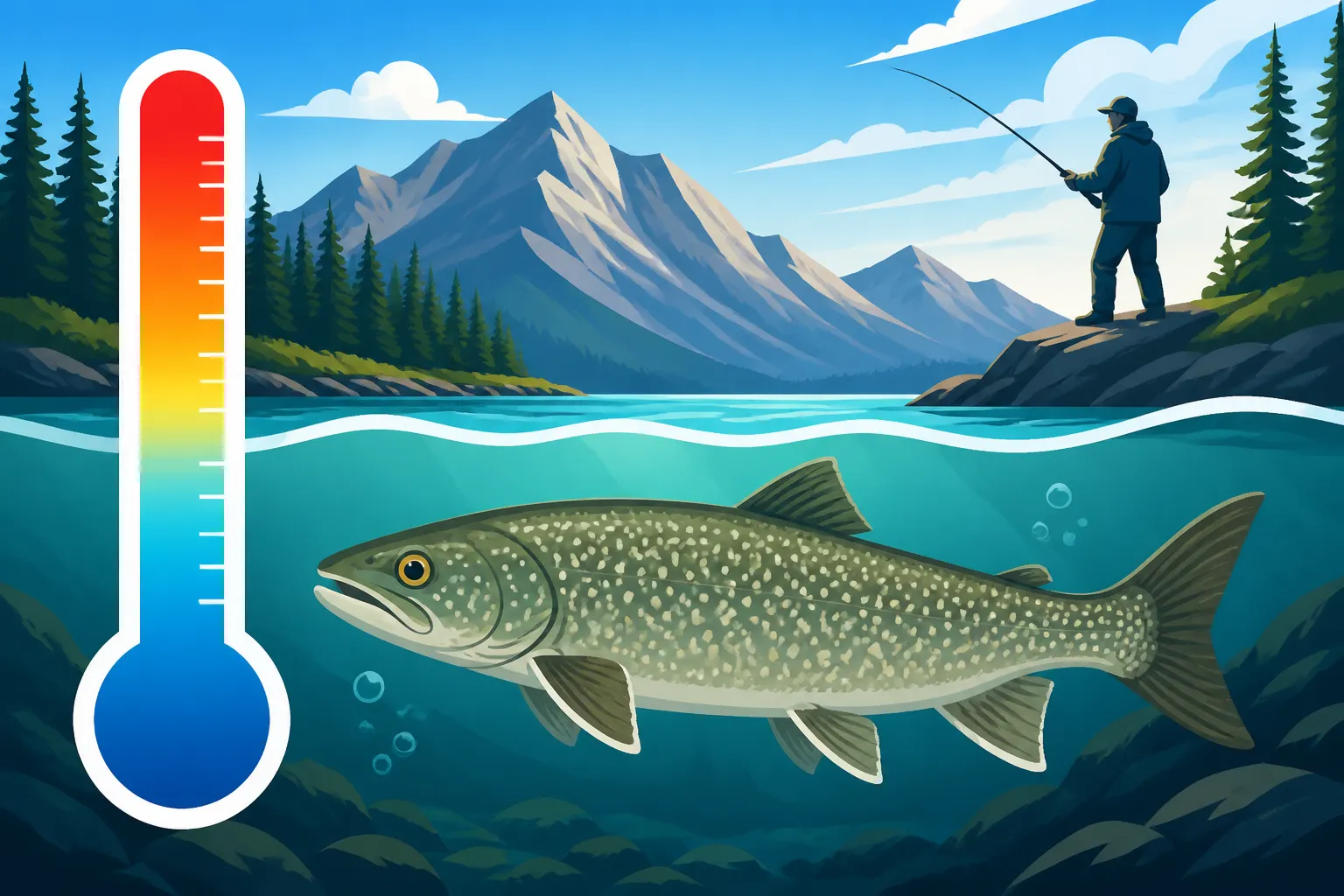
So, what's the magic number? Generally, lake trout prefer water temperatures ranging from 8°C to 12°C (46°F to 54°F). This is their absolute sweet spot, where they are most active, most comfortable, and most likely to be found feeding aggressively. Think of it as their ideal living room, where everything is just right.
However, they can tolerate temperatures a bit outside this range. You might find them in waters as cool as 4°C (39°F) or as warm as 15°C (59°F), especially if food is plentiful or they are forced into these zones by other environmental factors. But these are usually transitional zones or short-term stays. Prolonged exposure to temperatures outside their preferred zone will stress them. This is why when you're out on a hot summer day, you might struggle to find them in shallower water, even if that's where the baitfish are. They simply won't sacrifice their thermal comfort for an easy meal if it means risking their health.
How Temperature Influences Lake Trout Behavior
The water temperature doesn't just dictate where a lake trout lives; it also heavily influences what that fish is doing. In their preferred temperature range, lake trout are energetic predators. They'll actively chase down baitfish, investigate lures, and generally be more responsive to your offerings. This is when you often find them cruising structure, actively searching for food.
When temperatures climb above their comfort zone, even slightly, you'll notice a distinct change. They become sluggish, less willing to chase, and often suspend in deeper, cooler water, expending minimal energy. They might still strike if a lure is presented right on their nose, but they're not actively hunting. Conversely, if the water gets too cold, they also slow down, though typically not to the same degree as in overly warm water. They become more opportunistic feeders, often hugging the bottom or relating to structure, waiting for an easy meal to pass by rather than expending energy in pursuit. This understanding is crucial when planning your fishing strategy and lure presentation.
Seasonal Migration: Following the Thermocline
Alberta's lakes, especially the larger, deeper ones where lake trout thrive, undergo significant thermal changes throughout the year. Lake trout don't stay in one place; they're constantly on the move, chasing that elusive band of ideal temperature. This is where understanding the thermocline becomes absolutely vital.
A thermocline is a distinct layer within a large body of water where the temperature changes more rapidly with depth than it does in the layers above or below. It essentially creates different "floors" of water temperature in a lake. In spring and fall, the lake water is usually uniform in temperature (or "turns over"), but come summer, that thermocline sets up like a wall, and in winter, things change again under the ice.
Spring: Ice-Out and Shallow Water Opportunities
As winter ice begins to melt and break up in early spring, the entire water column is usually still quite cold and uniform in temperature, typically ranging from 0°C to 4°C (32°F to 39°F) in the immediate post-ice-out period. Lake trout, having spent the winter in deeper, stable water, will often move shallower, especially as surface temperatures begin to climb towards their preferred range.
This is a fantastic time for lake trout fishing because they can be found in relatively shallow water (sometimes as little as 10-20 feet) near shorelines, points, and reefs. These areas warm up faster and are often where baitfish, like whitefish or ciscoes, congregate as they become more active. The lake trout are often ravenously hungry after a long winter and will aggressively strike spoons, swimbaits, and even large jerkbaits. They haven't had the benefit of a stable thermocline yet, so they're willing to patrol a wider range of depths in search of food. Keep an eye on warming trends, as even a few degrees can spark a feeding frenzy. Best Techniques for Early Spring Pike might focus on pike, but the principles of fish moving shallower as water warms can apply.
Summer: The Deep Freeze of the Thermocline
Summer presents the biggest challenge and the most distinct pattern for lake trout anglers. As the sun beats down and warms the surface waters, a strong thermocline develops in deeper lakes. The warm water stays on top, forming an "epilimnion," while the cold water settles at the bottom, creating a "hypolimnion." In between these two layers is the thermocline, a narrow band where the temperature drops rapidly.
Lake trout will almost invariably be found in or just below the thermocline, or deeper in the hypolimnion, seeking out that 8°C to 12°C sweet spot. If the thermocline forms at 40 feet, that's where you'll likely find them. If it's at 60 feet, adjust your depth. They might make quick forays into warmer water to chase baitfish, but they won't linger. This is when your fish finder becomes your best friend, allowing you to identify the thermocline and target those specific depths. Trolling with downriggers or using heavy jigs becomes essential to get your lures into the strike zone. You can learn more about specific tactics in Best Techniques for Deep Water Summer Lake Trout or Trolling Techniques for Alberta Lake Trout.
Fall: Turnover and Renewed Activity
As autumn arrives, air temperatures drop, and the surface waters cool. Eventually, the surface water temperature matches the cooler water below the thermocline. This leads to a phenomenon known as "fall turnover," where the entire water column mixes, and the lake essentially becomes uniform in temperature again.
This period is another prime time for lake trout fishing. With the thermocline gone, lake trout can once again roam freely through different depths without thermal restrictions. They'll often move shallower, much like in spring, feeding heavily in preparation for the upcoming winter and their spawning season. Lake Trout Spawning Season in Alberta often falls in late fall, and fish can be found relating to rocky reefs and shoals where they lay their eggs. Large spoons, crankbaits, and even casting jigs into shallow structure can be incredibly effective. Pay attention to cool, cloudy days and falling water temperatures that signal the full turnover.
Winter: Under the Ice and Stable Depths
Once Alberta's lakes freeze over, the water beneath the ice stabilizes. The water at the surface, directly under the ice, will be around 0°C (32°F), while the deepest parts of the lake will often settle at a consistent 4°C (39°F) — the temperature at which water is most dense. Lake trout will typically inhabit these deeper, stable waters.
During winter, lake trout are often found near significant underwater structure such as humps, ledges, or deep points. They'll still seek out their preferred temperatures, which usually means the deeper sections of the lake. While they might not be as aggressive as during the height of summer or fall, they are still catchable through the ice. Jigging spoons, tube jigs, and live bait presented on the bottom or suspended just above structure are popular methods. Knowing where Best Ice Fishing Lakes in Alberta are can give you a head start, and specific gear like those found on Amazon can make a difference. Understanding Best Jigging Spoon for Winter Lake Trout can also be a game-changer for ice anglers.
Reading the Water: Tools and Tips for Locating Lake Trout
Knowing the preferred temperature range is one thing; actually finding that zone in a vast lake is another. Thankfully, modern technology and a keen eye for nature can give you a significant advantage. Don't leave it to guesswork!
The Indispensable Role of a Fish Finder
If you're serious about lake trout fishing, a quality fish finder is not an option; it's a necessity. These devices do more than just show you fish; they reveal the underwater world, including the crucial thermocline. Many modern units have temperature graphs or display water temperature at the transducer, and some even have advanced features that help you visually identify density changes that indicate a thermocline.
When you're out on the water, especially in summer, watch your fish finder closely. You'll typically see a distinct layer on your screen where the returns change or intensify, often accompanied by a rapid temperature drop reading from your transducer as you drop it deeper. This is your thermocline, and the lake trout will be there or just below it. Having a good understanding of Best Fish Finders for Alberta Lakes can help you choose the right unit for your needs. Practice reading your sonar; it's a skill that improves with time and experience.
Temperature Gauges and Probes
For those without a sophisticated fish finder, or as a complementary tool, a simple temperature gauge or probe can be highly effective. You can find weighted probes on Amazon that you lower to various depths to get an accurate temperature reading. This might seem low-tech, but it's incredibly effective at pinpointing that thermal comfort zone.
Even a basic thermometer attached to your fishing line and dropped to different depths can give you a rough idea of the temperature profile. While it's more time-consuming than a fish finder, it provides direct, undeniable data on where the water temperature is ideal. Don't be afraid to experiment and take readings in different parts of the lake, as thermocline depth can vary slightly depending on factors like wind and depth contours.
Understanding Lake Structure
Lake trout aren't just following temperatures; they're also relating to structure within those temperature zones. Look for deep drop-offs, underwater islands, humps, saddles, and rock piles that extend into the thermocline or deeper. These features provide ambush points, shelter, and often attract baitfish, making them prime real estate for lake trout.
In spring and fall, when they might be shallower, look for rocky points, reefs, and even sandy flats adjacent to deeper water. In winter, they'll often be on the deep sides of structure, using it for cover and as a foraging ground. The biggest lake trout often relate to the most subtle, yet significant, changes in bottom contour. Learning to read your lake map and identify these structures is just as important as reading your thermometer. For instance, knowing How Deep Lake Trout Go in Summer will combine temperature knowledge with structural insights.
Adapting Your Approach: Fishing Strategies for Temperature-Driven Depths
Once you've located the preferred temperature range and identified potential lake trout hangouts, it's time to adapt your fishing techniques. What works in shallow, cool spring water won't necessarily work in deep, stratified summer water.
Trolling for Deep-Water Lake Trout
During the summer months, when lake trout are concentrated in the thermocline or deeper, trolling is often the most effective method. This allows you to cover large areas and present your lures at precise depths. Downriggers are invaluable for this, as they let you run lures exactly where you want them, often right in the middle of that 8°C to 12°C band. Without downriggers, you'll rely on heavy lines, lead core, or specialized diving planers to get your spoons, plugs, or bucktail jigs down to the required depth.
Consider the speed of your troll as well. In warmer water (even if the fish are deep in cooler water), lake trout might be more active and respond to a faster presentation. In colder water or during slower periods, a slower, more deliberate troll might be necessary. Pay attention to the action of your lures at different speeds to ensure they're performing optimally at depth. Trolling Techniques for Alberta Lake Trout is a must-read for any serious laker angler.
Vertical Jigging and Dropping Baits
When lake trout are concentrated over specific pieces of structure, or when you've spotted them on your fish finder, vertical jigging or dropping baits is an excellent approach. This is particularly effective during ice fishing season or when you're targeting fish you've marked on your sonar during open water. Large tube jigs, heavy spoons, and specialized vertical jigs are popular choices.
The key here is presentation. Drop your lure directly to the depth where you're marking fish or where you know the ideal temperature band exists. Experiment with different jigging motions – long lifts, short twitches, dead sticks – until you find what triggers a strike. Sometimes a subtle presentation is best, especially if the fish are lethargic due to slightly off temperatures or pressure. Baiting your jig with a piece of cisco or sardine can also be incredibly effective, particularly when ice fishing.
Casting to Structure in Cooler Months
In spring and fall, when lake trout move shallower and the water temperature is more uniform and closer to their ideal range, casting becomes a viable and exciting option. Targeting rocky points, submerged humps, and current breaks with spoons, crankbaits, or large swimbaits can yield aggressive strikes.
This is a more active form of fishing, allowing you to thoroughly probe specific areas. Pay attention to retrieve speed; sometimes a fast, erratic retrieve will trigger a reaction strike, while other times a slower, more methodical retrieve is what's needed. Early morning and late evening can be particularly productive during these seasons when lake trout might venture even shallower to hunt. Always be ready for a powerful fight when one of these giants connects! Knowing the Lake Trout Average Size in Alberta Lakes will give you an idea of the kind of tackle you might need.
| Season | Preferred Temperature Range (Approx.) | Typical Depth Range (General) | Common Location Types | Recommended Tactics | Key Considerations |
|---|---|---|---|---|---|
| Spring | 4°C – 10°C (39°F – 50°F) | 10 – 40 feet | Rocky points, reefs, shallow bays | Casting spoons/jerkbaits, shallow trolling | Post-winter hunger, ice-out movements |
| Summer | 8°C – 12°C (46°F – 54°F) | Thermocline to deep bottom | Deep structure, humps, suspending | Deep trolling, vertical jigging | Locate thermocline, precise depth control |
| Fall | 6°C – 12°C (43°F – 54°F) | 10 – 60 feet | Spawning areas, rocky shoals, drop-offs | Casting/trolling large lures, jigging | Pre-spawn feeding, fall turnover, high activity |
| Winter | 4°C – 8°C (39°F – 46°F) | 30 – 100+ feet | Deep structure, humps, stable areas | Ice jigging spoons/tubes, dead sticking bait | Less aggressive, focus on structure and bait presence |
Ultimately, understanding the water temperature preferences of lake trout is a cornerstone of successful angling for these magnificent fish. It's a scientific approach that, when combined with local knowledge of Best Fishing Lakes in Alberta and practical fishing skills, dramatically increases your chances of a memorable day on the water. Whether you're chasing trophy fish in Alberta or simply enjoying a day out, letting the fish's thermal comfort zone guide your efforts will lead to more hookups and deeper satisfaction.
Disclaimer
This article is for general informational purposes only and does not constitute professional advice. Laws, prices and regulations vary by location and change over time. Consult a qualified professional for guidance on your specific situation.