Best rod length for walleye trolling
Trying to figure out the perfect rod length for walleye trolling can feel like searching for a needle in a haystack, especially when you're bombarded with so many options and conflicting advice at the tackle shop. It’s a common frustration—you want to get it right, but the sheer variety makes it tough to know where to start. This guide will cut through the confusion and help you understand exactly what rod length will give you the best chance at success on Alberta's walleye waters.
Understanding the Nuances of Walleye Trolling Rods
When you think about trolling for walleye, it's not just about dragging a lure behind your boat. There's an art and a science to it, and your choice of rod plays a much bigger role than many anglers realize. It’s more than just a stick to hold your line; it’s an integral part of your presentation and your ability to land fish.
Why Rod Length Matters for Trolling Success
The length of your fishing rod directly influences several critical aspects of trolling. First, it dictates how wide you can spread your lines, which is crucial when running multiple rods. Longer rods allow you to fan out your lures, covering a broader swath of water and preventing tangles, especially when you're making turns or dealing with changing currents. Imagine you're on a vast lake like Lesser Slave Lake, trying to locate active walleye. The more water you can effectively cover, the higher your chances of encountering a hungry fish.
Secondly, rod length affects the angle of your line entering the water. A longer rod, held up high, creates a flatter line angle, which can be beneficial for specific presentations or when trying to keep your lure higher in the water column over submerged structure. Conversely, a shorter rod might create a steeper angle, pulling your lure down more directly. This is a subtle difference, but walleye can be incredibly finicky, and presentation is everything. Finally, rod length plays a significant role in how the rod loads up when a fish strikes and how effectively you can fight and control that fish all the way to the net.
The "Sweet Spot" Length for Most Alberta Walleye Situations
For most walleye trolling scenarios in Alberta, the "sweet spot" for rod length typically falls into the 7-foot to 9-foot range. This length offers a fantastic balance of versatility, spread, and fish-fighting capability. Rods in this range provide enough length to comfortably clear your boat's transom or gunwales, making it easier to manage your lines and net fish without too much hassle.
Within this range, a 7'6" to 8'6" rod is often considered the ultimate workhorse for many Alberta anglers. It's long enough to give you a decent spread when running two or three rods, but not so long that it becomes cumbersome to handle in tighter spaces or when battling a strong walleye. Whether you're pulling crankbaits, slow-trolling bottom bouncers, or using small planer boards, these lengths generally perform exceptionally well. They provide that crucial leverage and forgiving flex needed to absorb head shakes and surges from a hooked walleye, helping to prevent pulled hooks, especially with toothy species like northern pike that often hit walleye lures.
Factors Influencing Your Rod Length Choice
While a "sweet spot" exists, it's not a one-size-fits-all answer. Several factors should weigh into your decision when selecting the ideal rod length for your walleye trolling adventures in Alberta. Ignoring these can lead to frustration, lost fish, or tangled lines.
Boat Size and Spacing Considerations
The size of your boat and how many rods you plan to run simultaneously are huge determinants of rod length. If you're fishing from a smaller boat, say a 14-foot aluminum utility boat, running two 9-foot rods might quickly lead to tangles or make it challenging to maneuver. In such cases, a pair of 7-foot rods might be more practical, allowing you just enough spread without creating a chaotic scene in your limited space. Alberta Boat Registration Rules are worth checking if you're upgrading your vessel.
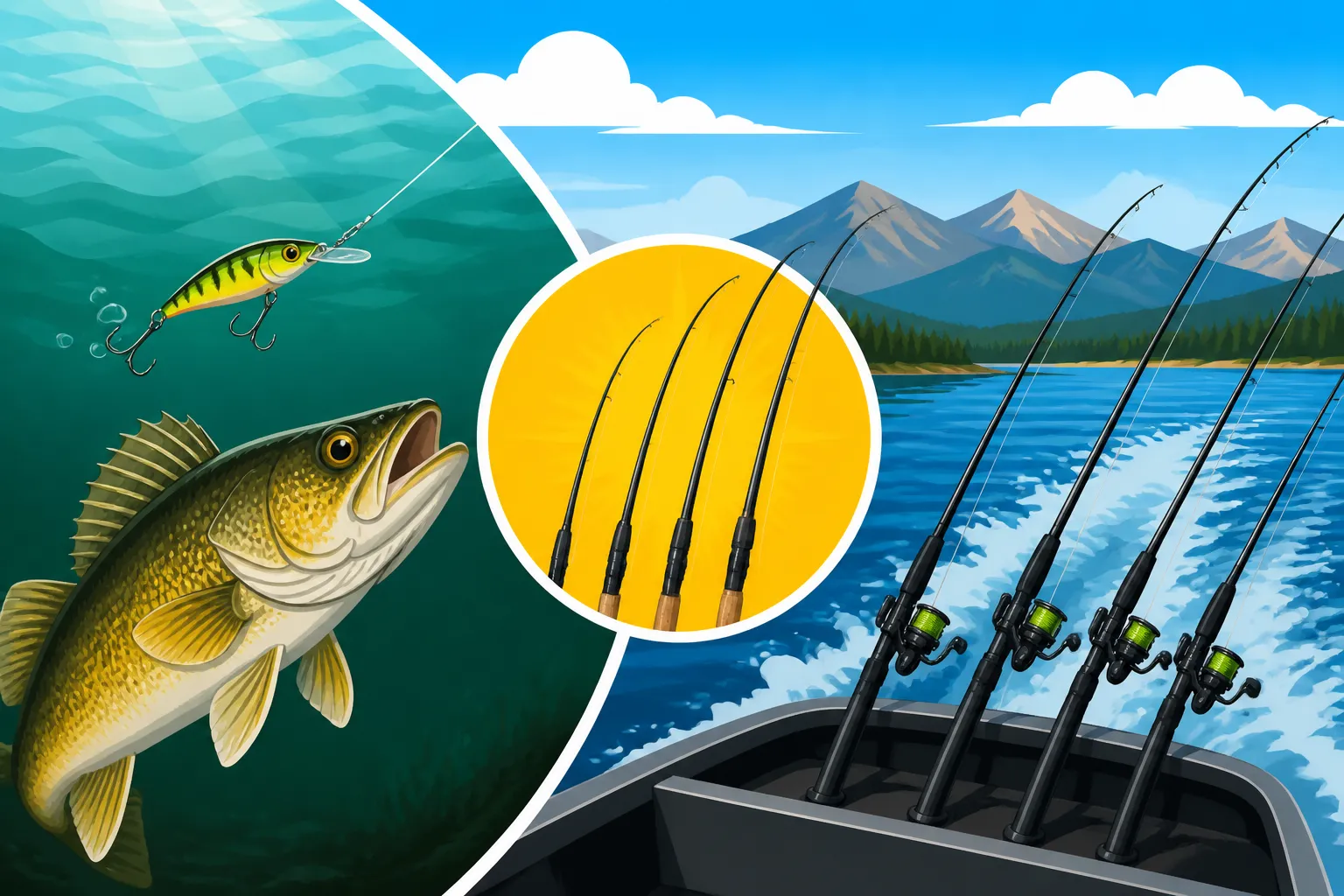
However, if you're in a larger multi-species boat, a 17-foot or 18-foot model, you'll have more room to work with. Here, longer rods in the 8 to 9-foot range become incredibly effective. They allow you to deploy four or even six rods without them interfering with each other. The goal is to maximize your coverage without turning your boat into a spiderweb of fishing line. Think about the common setup: two rods off the back, possibly two more angled out with rod holders, and perhaps even two more if you're running planer boards. Each rod needs its space, and length helps create that separation.
Lure Type and Presentation
The specific lure you're trolling and how you want it to present in the water also play into rod length. When you're pulling shallow-diving crankbaits that wobble and dive on their own, rod length primarily impacts spread. But if you're using bottom bouncers to present live bait or soft plastics, the rod's length and angle can subtly affect how that bouncer interacts with the lakebed. A longer rod might keep more line out of the water, reducing drag slightly.
For those running planer boards—which are fantastic for spreading lines wide and covering even more water, especially on big bodies of water like Cold Lake—longer rods, often 9 feet or more, are almost essential. These longer rods provide the necessary leverage to handle the pull of the board and the ability to swing the board clear of the boat when reeling in a fish. Similarly, if you are looking into how to specifically rig up your gear, you might also be interested in Best Tackle for Alberta Walleye.
Fighting a Walleye with Different Rod Lengths
Fighting a fish on a trolling rod feels different than fighting one on a casting rod. When trolling, the rod is often in a holder until a fish hits, and then you quickly grab it. A longer rod (8-9 feet) offers several advantages:
- Leverage: It provides excellent leverage, allowing you to quickly gain line and turn a fish's head, especially a stubborn walleye digging deep. This is particularly helpful when you have a decent-sized fish on the line.
- Shock Absorption: The longer, often more parabolic bend of a dedicated trolling rod acts like a shock absorber, cushioning the sudden surges and head shakes of a walleye, reducing the chance of hooks pulling free.
- Reach: When you get the fish close to the boat, the extra length can help you guide the fish around the motor or other lines more easily, positioning it perfectly for the net.
However, a rod that's too long (say, over 10 feet for a typical walleye) can become awkward to handle, especially if you're fishing solo or in a smaller boat. It can make netting a fish a real challenge and can be cumbersome to cast if you need to make a quick pitch to a visible target. Conversely, a rod that's too short (under 6.5 feet for trolling) might feel underpowered, lack the necessary spread, and make it harder to control a larger walleye, increasing fatigue and the risk of losing the fish. You'll find a wide selection of these rods at places like Bass Pro Shops, making it easy to compare lengths in person.
Specific Rod Lengths for Different Trolling Scenarios
Let's break down the different rod lengths and when they shine (or fall short) for walleye trolling. Understanding these distinctions will help you fine-tune your setup for various conditions you might encounter across Alberta.
Shorter Rods Under 7 Feet
Rods under 7 feet long are generally not ideal for dedicated walleye trolling. Their primary drawback is a lack of line spread, which dramatically increases the risk of tangles, especially when running multiple lines or making turns. They also offer less leverage, making it harder to fight larger walleye or clear the stern of your boat during a fight.
However, there are niche scenarios where they might be acceptable or even preferred. If you're fishing from a very small boat, like a canoe or a tiny jon boat, and only running one or two lines, a 6 to 6'6" rod can be more manageable due to limited space. They can also be useful if you're combining trolling with occasional casting or vertical jigging in the same outing, as their shorter length makes them more adept for those techniques. Just be aware of their limitations when it comes to true trolling efficiency.
Medium-Length Rods 7 to 8.5 Feet
This is where the magic happens for most walleye trolling in Alberta. Rods ranging from 7 feet to about 8.5 feet are the absolute workhorses for a reason. They offer the best balance of spread, fish-fighting power, and manageability.
- 7-foot to 7'6" rods: These are fantastic for general trolling, especially if you're running two to four rods. They provide enough spread to keep lines clear, offer good sensitivity to detect light bites, and have plenty of backbone to handle decent-sized walleye. They're also quite versatile, capable of handling crankbaits, bottom bouncers, and even lead core setups with ease. Many anglers find great value in comparing options available online through retailers like Amazon to find the perfect fit.
- 7'6" to 8'6" rods: Stepping up in length provides even better line spread, making them ideal for running three to five rods without constant re-spooling due to tangles. The added length gives you more control over your presentation and makes fighting a walleye a smoother experience. If you're fishing larger prairie lakes known for bigger walleye, like Pigeon Lake or parts of the North Saskatchewan River, the extra reach and shock absorption of these longer rods are invaluable. This range is particularly effective for pulling deep-diving crankbaits or substantial bottom bouncer rigs.
Longer Rods 9 Feet and Up
When you start venturing into the realm of 9-foot and longer rods, you're looking at specialized tools for specific trolling tactics.
- 9-foot to 10'6" rods: These are the go-to choices for anglers who consistently run planer boards. The extra length allows you to position your boards far out to the side of the boat, creating an incredibly wide spread and covering maximum water. This is a highly effective technique for targeting dispersed walleye in vast, open water. The long rod also helps to "sweep" the planer board away from the boat when a fish hits, simplifying the retrieve. While they offer superb leverage for fighting fish, their considerable length can make them a bit unwieldy in close quarters or if you're not used to handling them.
- 10'6"+ rods (often up to 14 feet): These ultra-long rods are even more specialized, typically used for specific techniques like Dipsy Divers, specialized lead core setups, or multi-line spread systems that require extreme line separation. They are powerful tools but demand significant boat space and practice to manage effectively. Most casual walleye anglers in Alberta won't need rods this long, but for dedicated tournament anglers or those employing advanced tactics, they can be a game-changer for How to Catch Walleye in Alberta.
Here's a quick comparison of rod lengths for walleye trolling:
| Rod Length Category | Typical Range | Pros for Walleye Trolling | Cons for Walleye Trolling | Ideal Use Cases |
|---|---|---|---|---|
| Shorter Rods | < 7 feet | Highly maneuverable in small boats; good for combo casting/jigging | Limited line spread, tangles easily with multiple rods | Very small boats (canoe, jon boat), single rod setups, mixed techniques |
| Medium Rods | 7 to 8.5 feet | Excellent balance of spread, fighting power, versatility | Can be cumbersome in very small boats if over 8 feet | Most common walleye trolling (crankbaits, bottom bouncers), 2-4 rods |
| Longer Rods | 9 feet and Up | Maximum line spread, ideal for planer boards, great leverage | Can be unwieldy, storage challenges, difficult in tight turns | Planer board setups, specialized deep-water tactics, 4+ rods |
Additional Rod Characteristics to Consider for Walleye Trolling
Beyond length, a few other rod characteristics are vital for a successful walleye trolling setup. Ignoring these can mean the difference between a triumphant day on the water and a frustrating one. Getting the right combination will complement your chosen rod length perfectly.
Rod Power and Action
"Power" refers to the strength of the rod, or how much force it takes to bend the blank. For walleye trolling, you'll generally want a rod with medium-light to medium-heavy power. A medium-light rod offers excellent sensitivity for light-biting walleye and can handle lighter presentations like small crankbaits or simple bottom bouncers. A medium-heavy rod provides more backbone for larger lures, heavier weights, or when targeting bigger fish, offering better control and hook-setting power.
"Action" describes where the rod bends when pressure is applied. For trolling, a moderate to fast action is often preferred.
- Moderate action rods bend more parabolically, distributing the flex throughout the rod blank. This acts as an excellent shock absorber, preventing hooks from tearing out of a walleye's delicate mouth and offering a smoother fight. They load up nicely when a fish strikes, often pulling the rod out of the holder with a satisfying bend.
- Fast action rods bend primarily in the tip section. This provides more sensitivity to feel subtle bites and gives you quicker, more direct hooksets. While great for detecting nuances, a very fast action might not be as forgiving for trolling as a moderate action, especially if you're new to it. Many dedicated trolling rods will lean towards a moderate-fast action, giving you a good blend of both worlds.
Handle Length and Comfort
The handle length of a trolling rod is often longer than that of a casting rod, and for good reason. A longer handle allows the rod to sit securely in a rod holder, providing a stable platform. More importantly, when you grab the rod to fight a fish, the longer butt section can be tucked under your arm or braced against your body for added leverage and comfort. This reduces fatigue during long days of trolling or when battling a particularly feisty walleye. Make sure the handle material, often EVA foam or cork, is comfortable in your hand, as you'll be holding onto it for extended periods once a fish hits.
Material and Construction
Trolling rods are built to withstand constant pressure and the stress of repeated fish fights.
- Fiberglass: Many traditional trolling rods are made from fiberglass or a composite blend. Fiberglass is known for its durability and more parabolic action, making it very forgiving and less prone to breakage. It's a workhorse material that stands up well to being constantly in a rod holder and absorbing the jolts of trolling.
- Graphite/Carbon Fiber: Modern advancements mean you'll also find graphite or carbon fiber trolling rods. These are typically lighter and more sensitive, transmitting subtle bites more readily. While generally more brittle than fiberglass, quality graphite rods are built with reinforced sections to handle the strains of trolling. A composite blend often offers the best of both worlds: the sensitivity of graphite with the durability and forgiving nature of fiberglass. Investing in a good quality rod will make a difference in your enjoyment and success, whether you're chasing walleye or exploring other species like those mentioned in How to Catch Northern Pike in Alberta. You may also want to investigate specific recommendations like Best Fishing Rods for Alberta Rivers.
Disclaimer
This article is for general informational purposes only and does not constitute professional advice. Laws, prices and regulations vary by location and change over time. Consult a qualified professional for guidance on your specific situation.