Best dry bag size for a full day kayak trip
There’s nothing quite like the freedom of a full day spent kayak fishing on one of Alberta’s stunning lakes or winding rivers. But that sense of freedom can quickly turn to frustration if your essential gear gets soaked, your phone dies, or your car keys end up at the bottom of the lake. Choosing the right dry bag size is crucial for a stress-free and successful day on the water, and this guide is here to help you navigate those choices so you can focus on the fishing, not the fumbling.
Why a Dry Bag is Non-Negotiable for Kayak Fishing in Alberta
You might think, "I'm careful, I won't flip." And while that's a great attitude to have, Mother Nature, other boaters, or even an unexpected snag can throw a wrench into your plans faster than you can say "fish on!" A dry bag isn't just about protecting your stuff in a worst-case scenario; it's about peace of mind throughout your entire trip, especially when dealing with the unpredictable weather and waters we have here in Alberta.
Protecting Your Essentials
Imagine finally landing that trophy walleye on Lesser Slave Lake, only to realize your phone, which was supposed to capture the moment, is waterlogged from an earlier splash. Or perhaps you're out on the Bow River Fishing Guide and a rogue wave from a passing drift boat drenches your wallet and car keys. These aren't just inconveniences; they can completely derail your day or even put you in a tough spot far from home. Your phone, GPS device, car keys (especially modern key fobs that don't tolerate water well), wallet, and any medications you need are absolutely non-negotiable items that must stay dry. Even something as simple as your fishing license – imagine trying to prove you're legal when your paper copy is a pulpy mess. Investing in a good dry bag ensures these critical items remain safe and functional, no matter what happens out on the water.
Maintaining Comfort and Safety
Beyond just your electronics and valuables, a dry bag plays a huge role in keeping you comfortable and safe during a long day of kayak fishing. Alberta's weather can shift on a dime. A sunny morning can turn into a chilly, rainy afternoon with surprising speed, particularly in the mountain regions or out on large, open lakes. Having a dry change of clothes, a warm hat, or even just a dry pair of socks can make all the difference in preventing hypothermia or simply making your ride back to shore bearable. Think about packing an extra fleece or a rain jacket; even if it's sunny when you launch, those items need to be kept dry until you actually need them. Staying comfortable also means having dry snacks and knowing your first-aid kit, should you need it, is in pristine condition. These comfort items are just as crucial for a full day's enjoyment and your overall well-being as your fishing tackle itself. You'll thank yourself when that unexpected squall rolls in.
What a "Full Day" Kayak Trip Means for Your Gear
When we talk about a "full day" kayak trip, we're not just talking about paddling out for an hour or two. This implies several hours on the water, often moving between different spots, potentially stopping for a shore lunch, and enduring whatever conditions the day throws at you. This extended time means you'll need more than just a minimalist approach to your gear. It's about being prepared for a range of scenarios, from hunger pangs to minor emergencies, and having the right tools for a successful fishing outing.
Personal Items You Can't Leave Behind
For a full day of paddling and fishing, your personal kit needs to be comprehensive yet compact enough for a kayak. First and foremost, as mentioned, your phone and car keys are paramount. Consider them the absolute top priority for waterproofing. Next, your wallet or a small pouch with ID, some cash, and important cards. Any personal medications are also critical. Beyond that, think comfort and protection from the elements: a good sunscreen, a hat with a brim, and polarized sunglasses are essential for protecting yourself from the Alberta sun and glare off the water. Don't forget a substantial water bottle (or two!) and enough snacks to fuel you for several hours. You might also want a compact camera to capture those stunning Alberta landscapes or your prize catch, but ensure it's either waterproof itself or housed within a truly dry environment. Always have your Alberta Fishing License Guide for 2026 details handy, either printed and laminated, or readily accessible on a fully charged, dry phone.
Essential Fishing Specifics
Since this is a fishing trip, your angling gear naturally takes center stage. However, you can’t bring your entire tackle box. You'll need a carefully curated selection. A small, waterproof tackle tray or two, pre-loaded with your preferred lures, jigs, or fly patterns for the day's target species (like specific ones for How to Catch Walleye in Alberta or Fly Fishing for Trout on the Bow River), is usually sufficient. An extra spool of fishing line or leader material is always a good idea. A sturdy multi-tool with pliers and cutters is invaluable for unhooking fish, cutting line, or making quick repairs. Don't forget a small measuring tape to ensure your catch meets the legal size limits and a compact, floating fish scale if you like to weigh your fish. A headlamp or small flashlight is also a smart addition, just in case your "full day" extends unexpectedly into dusk or beyond. And of course, if you're out on bigger waters like Cold Lake or Lesser Slave, a Best Portable Fish Finder for Kayak Fishing can be a game-changer, but it will need to be protected during transport or when not in use.
Emergency and Comfort Items
Even on a beautiful day, being prepared for minor emergencies or unexpected discomforts can make all the difference. A compact first-aid kit is a must, containing basics like bandaids, antiseptic wipes, pain relievers, and any personal allergy medications. Consider adding a small emergency blanket or space blanket, especially in cooler conditions. A small towel can be incredibly useful for drying hands, wiping down gear, or even giving a quick dry-off to a slippery fish before release. As mentioned earlier, a full change of clothes, particularly a dry pair of socks and a t-shirt or lightweight fleece, is a lifesaver if you get wet. For longer excursions, some folks even pack a compact water filter or purification tablets. Remember, even if you’re fishing a popular spot like the Bow River Trout Fishing Near Calgary, help might not be instantaneous, so self-sufficiency is key.
Sizing Up Your Options: Dry Bag Capacity Explained
Once you have a good handle on what you need to bring, the next step is figuring out how much space it all takes up. Dry bags are typically measured in liters, which can feel a bit abstract until you get a feel for what those numbers actually represent in terms of practical volume. This is where many anglers, myself included, have made mistakes in the past – either buying something too small and playing Tetris with their gear, or going way too big and having an unwieldy sack flapping around the kayak.
Understanding Liters and Practical Volume
Think of liters as a rough indicator of how much stuff you can cram into a dry bag.
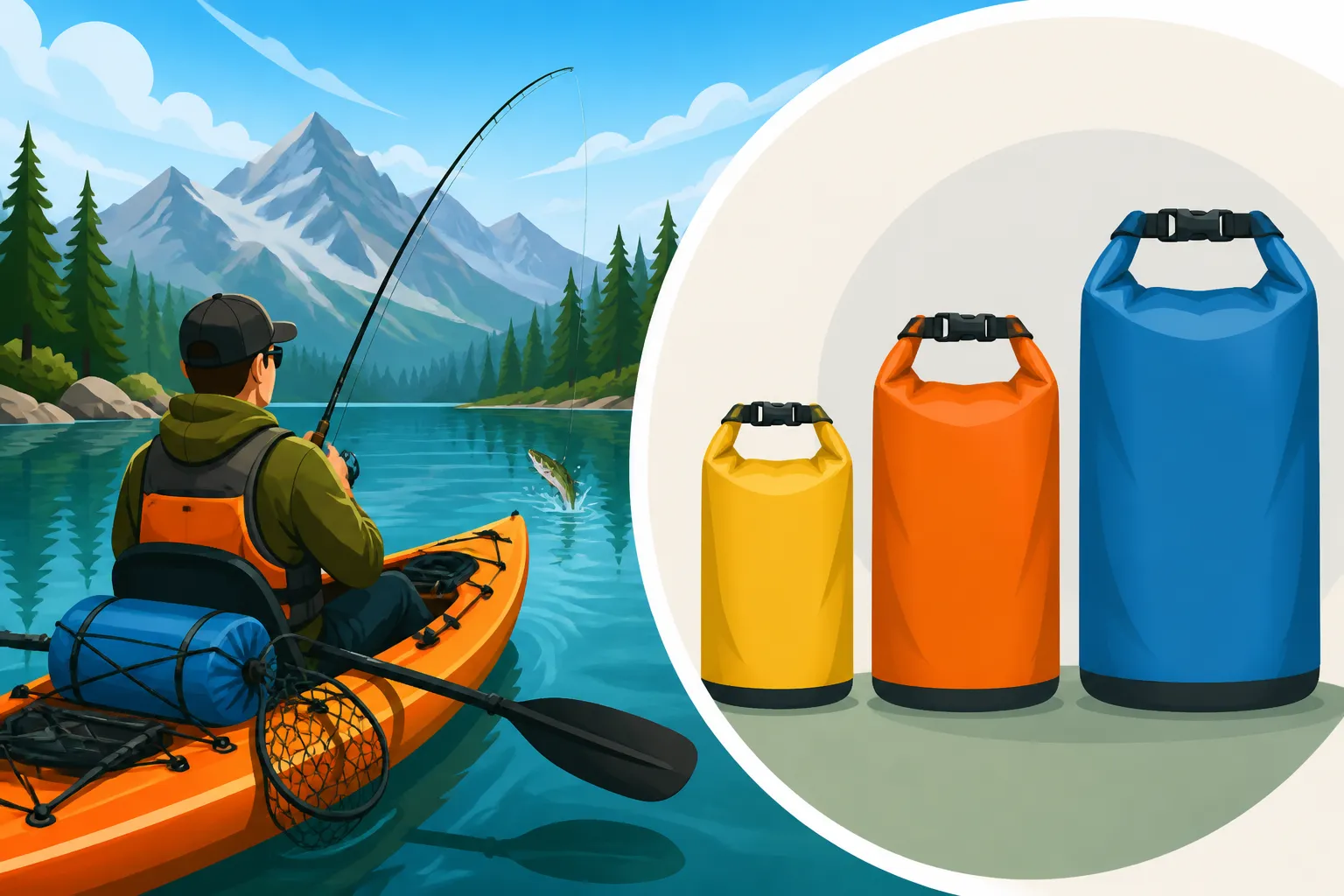
- 5-10 Liters (L): These are considered small dry bags. They're perfect for your absolute bare essentials: phone, wallet, keys, maybe a compact first-aid kit, and a couple of energy bars. They fit easily into smaller spaces in your kayak, or can be clipped onto your Best Life Jacket for Lake Kayak Fishing.
- 15-25 Liters (L): This range is often the sweet spot for a full-day kayak fishing trip. It offers enough room for your essentials, plus a change of clothes, a decent lunch, and maybe a small tackle box. This size still remains manageable within the confines of most fishing kayaks.
- 30-40+ Liters (L): These are larger capacity bags, suitable for multi-day trips, carrying shared gear for two people, or if you simply need to haul a lot of bulky items (like extra layers for truly cold weather, or specialized photography equipment). For a solo full-day trip, these can sometimes be a bit cumbersome.
Remember, the actual usable volume can also depend on the shape of the bag and how much you need to roll down the top to seal it properly.
Common Dry Bag Sizes for Full-Day Trips
Based on what most anglers carry for a full day on the water in Alberta, here's a breakdown of the most common and practical dry bag sizes:
-
10-15 Liter Dry Bags: These are ideal for the minimalist angler or as a primary bag for quick-access essentials. You can comfortably fit your phone, car keys, wallet, a compact first-aid kit, some sunscreen, and a few small snacks. You might even squeeze in a light rain shell if it's super compressible. This size is great if you plan to keep your fishing tackle and extra layers in separate, less critical, water-resistant bags. You can find excellent options in this size range at retailers like Bass Pro Shops, or by browsing the various brands on Amazon.
- Real-life scenario: You're planning a half-day trip on a calm lake like Beauvais Lake, and only need to keep your phone, keys, and wallet safe from splashes. A 10L bag clipped behind your seat or under a bungee cord is perfect.
-
20-25 Liter Dry Bags: This is often the gold standard for a solo angler heading out for a full day of kayak fishing. This size provides ample space for all your critical personal items (phone, keys, wallet, ID), a more substantial first-aid kit, a proper lunch, a full change of clothes (including socks!), a compact rain jacket, and maybe even a small tackle organizer or an extra reel spool. This allows for excellent preparedness without becoming overly bulky or difficult to maneuver in a Best Kayak for Lesser Slave Lake.
- Real-life scenario: You're heading out to the North Saskatchewan River near Edmonton for a full day of fishing. You'll need layers, lunch, all your personal electronics, and a small box of river-specific tackle. A 20-25L bag gives you the confidence that everything crucial will stay dry, even if you take an unexpected swim.
-
30+ Liter Dry Bags: While certainly offering maximum capacity, these larger bags might be a bit much for a solo full-day trip unless you have very bulky items or are packing for two. They can accommodate all the items from the 20-25L bag, plus extra heavy layers, a larger stove kit for a hot lunch, or specialized camera gear with multiple lenses. They're fantastic for longer expeditions or when you truly need to overpack for extreme conditions, but for typical full-day fishing, they can sometimes take up valuable deck space.
The Roll-Top Closure and Air Space
Most effective dry bags use a roll-top closure system, which is incredibly reliable when used correctly. The key here is to leave enough air space at the top to make at least three good, tight rolls of the material before clipping the buckle. This creates a secure, waterproof seal. If you pack your bag absolutely to the brim, you won't be able to roll it down properly, compromising its waterproof integrity. That means when you're choosing a size, factor in that the actual usable height will be slightly less than the total length of the bag. The air trapped inside after sealing also has a bonus feature: it helps the bag float if it happens to go overboard! This can be a real lifesaver when you’re out on a big body of water.
Beyond Size: Features to Consider for Kayak Fishing Dry Bags
While size is crucial, it's not the only factor. A great dry bag for kayak fishing needs to be tough, easy to use, and secure. Thinking about these additional features can elevate your dry bag choice from merely adequate to truly indispensable, especially when dealing with the realities of Alberta's diverse fishing environments.
Material Durability and Waterproofing
The material your dry bag is made from directly impacts its longevity and ability to keep water out.
- PVC (Polyvinyl Chloride): This is a very common material, known for being extremely durable and completely waterproof. It’s often used in heavy-duty dry bags and can withstand a lot of abrasion, which is great if your bag is going to be sliding around in the kayak or dragging against rocks occasionally. The downside is that it can be a bit stiffer and heavier.
- TPU (Thermoplastic Polyurethane): TPU is a newer, often lighter, and more flexible material. It's also incredibly tough and abrasion-resistant, often considered more environmentally friendly than PVC, and can perform better in very cold temperatures without stiffening up too much.
- Denier Rating: You might see a "Denier" rating (e.g., 500D, 700D). This refers to the fabric's thickness and durability. Higher denier means a tougher, more puncture-resistant material – a big plus when you've got hooks and sharp fishing tools around.
- Welded Seams: Look for dry bags with welded seams rather than stitched seams. Welded seams create a continuous, impenetrable barrier, whereas stitched seams, even if taped, can eventually let water seep through. This is a critical detail for true waterproofing.
Attachment Points and Carrying Options
A dry bag that’s just floating loose in your kayak is a liability. You need to be able to secure it.
- D-Rings and Loops: These are essential for lashing your dry bag down with bungee cords, carabiners, or straps. Ensure there are multiple, robust attachment points to secure the bag firmly to your kayak's deck, behind the seat, or in the storage well. Nobody wants to watch their essentials float away!
- Shoulder Straps/Handles: For a full day trip, you'll likely be carrying your dry bag to and from the launch point. Comfortable, adjustable shoulder straps (some even come with backpack-style straps) make this task much easier. Even simple grab handles are better than nothing. Consider how far you might need to carry your gear, especially if you're exploring Best Crown Land Fishing Lakes in Alberta where access might involve a bit of a hike.
Ease of Access and Organization
While a simple single-compartment dry bag is often the most waterproof, sometimes quick access and organization are important.
- External Pockets: Some dry bags feature external, often water-resistant (but rarely fully waterproof) pockets. These can be handy for items you need to grab quickly, like a small snack or a soft bait package, but don't rely on them for your phone or keys unless they specifically state they are fully submersible and have a reliable zipper.
- Internal Organization: For a full-day bag, a large main compartment is usually sufficient, but some anglers like to use smaller, brightly colored internal dry sacks or waterproof pouches within the main bag. This allows for quick identification and retrieval of specific items like a first-aid kit or electronics, preventing you from having to dump everything out to find one thing.
Visibility and Color
It might seem like a minor detail, but the color of your dry bag can be surprisingly important. If your bag accidentally goes overboard, especially in choppy water or low light conditions, a bright, highly visible color (like yellow, orange, or lime green) makes it much easier to spot and retrieve. A dark colored bag can quickly disappear against the water or shoreline, turning a minor mishap into a lost gear nightmare.
Dry Bag Size Comparison for a Full-Day Kayak Trip
Here’s a quick overview to help you visualize what different dry bag sizes typically accommodate for a full day of fishing on Alberta's waters.
| Dry Bag Size (Liters) | Typical Contents for a Full Day Kayak Trip | Best For | Considerations |
|---|---|---|---|
| 5-10 L | Phone, wallet, keys, ID, compact first-aid kit, small snacks, sunscreen. | Minimalist anglers; essential valuables. | Very compact, but limited space for extra layers or food. |
| 15 L | All above, plus a light rain jacket, small lunch, maybe a small tackle pouch, or compact camera. | Prepared minimalists; cooler weather with light layers. | Good balance of capacity and compactness. |
| 20-25 L | All above, plus full change of clothes (shirt, socks, pants), substantial lunch, small tackle box/organizer, fishing multi-tool, headlamp. | Most solo full-day kayak anglers; optimal for varied conditions. | "Sweet spot" for preparedness and manageable size. |
| 30 L | All above, plus bulkier extra layers (fleece, warm hat), larger lunch, specialized gear (e.g., larger camera, binoculars), or shared items. | Anglers needing extra room; slightly bulkier gear; cold weather; shared items. | Can be a bit bulky for smaller kayaks; ensure secure lashing. |
Choosing the right dry bag size for your full-day kayak fishing trip in Alberta is about balancing what you need with what your kayak can comfortably hold. Most often, a 20-25 liter bag will be your best friend, offering plenty of space for essential gear and comfort items without being overly cumbersome. Always prioritize keeping your phone, keys, and any emergency items absolutely bone dry. Whether you grab one from Bass Pro Shops or find a great deal on Amazon, make sure it’s a quality bag with welded seams and strong attachment points. Happy paddling, and tight lines out there!
Disclaimer
This article is for general informational purposes only and does not constitute professional advice. Laws, prices and regulations vary by location and change over time. Consult a qualified professional for guidance on your specific situation.