Alberta sauger limit
It can be incredibly frustrating to hit the water, land a fish you're excited about, only to then spend precious minutes wondering if you've correctly identified it. Is it a walleye, or is it a sauger? And what's the limit for that one? This confusion can lead to anxiety, and worse, unintentional violations. This guide will clarify everything you need to know about sauger in Alberta, specifically addressing their identification, daily and possession limits, and how to stay on the right side of the regulations to keep Alberta's fisheries healthy.
Understanding Sauger and Their Place in Alberta's Fisheries
Sauger are a fascinating and often overlooked fish species in Alberta, commonly found in many of our prairie rivers and lakes, though perhaps not as widely distributed as their famous cousin, the walleye. They're a valuable part of the aquatic ecosystem, and understanding them is the first step to fishing for them responsibly.
What Makes a Sauger Unique?
At first glance, a sauger (Sander canadensis) can easily be mistaken for a walleye (Sander vitreus). Both belong to the perch family and share a similar elongated body shape and golden-brown hue. However, sauger tend to be smaller than walleye, rarely exceeding 50 cm (20 inches) in length, and they generally prefer different habitats. While walleye often inhabit a wider range of water bodies, sauger are more at home in larger, often murkier rivers and lakes, particularly those with turbid water and sandy or silty bottoms. Think of major river systems like the Red Deer River or the South Saskatchewan River – these are prime sauger territory where they thrive in conditions that might be less appealing to their walleye relatives.
Their unique adaptations allow them to excel in these environments, feeding on smaller fish and aquatic insects. Unlike walleye, which often roam in open water, sauger tend to stick closer to the bottom and structural elements. Learning to identify them correctly isn't just about following rules; it's about appreciating the subtle biodiversity within our waters and understanding the specific roles each species plays.
Why Specific Sauger Regulations Exist
Just like with any other fish species in Alberta, sauger populations are carefully monitored and managed to ensure their sustainability for future generations of anglers. The regulations, including daily and possession limits, are put in place by Alberta Environment and Protected Areas (AEPA) based on scientific assessments of fish stocks, spawning success, and habitat health in specific water bodies. If populations are healthy, limits might be more generous; if a population is struggling, regulations might be more restrictive, sometimes even catch-and-release only.
These rules aren't arbitrary. They reflect a deep commitment to conservation and managing our natural resources. For sauger, specifically, their close resemblance to walleye means that regulations must often consider both species simultaneously to prevent unintended overharvest. By having clear guidelines, we can all do our part to ensure that both sauger and walleye populations remain robust in Alberta's diverse aquatic landscapes. It's all about balancing the joy of fishing with the imperative of protecting our precious natural heritage.
Alberta's Sauger Limits Explained: Zone by Zone
Navigating fishing regulations can feel like deciphering a complex code, especially when dealing with similar-looking species like sauger and walleye. The key takeaway is this: always, always refer to the most current Alberta Guide to Sportfishing Regulations. It's your bible on the water.
The General Rule: Sauger Often Grouped with Walleye
In most recreational fishing zones across Alberta, sauger are often managed under the same daily and possession limits as walleye. This means that if the regulation for a particular lake or river states a limit of "3 Walleye/Sauger," then your combined total of walleye and sauger cannot exceed three. This combined limit simplifies things somewhat for anglers, but it also places a greater emphasis on correct identification, as misidentifying a fish could lead you over the limit for one species or the other without realizing it.
For instance, if you're fishing on a specific stretch of the Red Deer River where the combined limit is three, and you catch three beautiful walleye, you cannot keep any sauger, even if you identify them correctly, because you've already met your combined limit. Conversely, if you've caught a sauger and then two walleye, you've also reached your limit. This integrated approach highlights the need for anglers to be keenly aware of both species when fishing in areas where both are present. You can find detailed breakdowns of these limits, often organized by specific water bodies and zones, by consulting the official guide or the Alberta Walleye Limit by Zone information.
How to Find the Specific Limits in Your Fishing Zone
Staying informed is critical. The official source for all fishing regulations in Alberta is the "Alberta Guide to Sportfishing Regulations." This guide is updated annually and provides a comprehensive list of all water bodies, their specific regulations, season dates, and limits for various species, including sauger. You can usually pick up a physical copy at most fishing license vendors, sporting goods stores, or even download a digital version from the MyWildAlberta website.
Beyond the physical guide, there are fantastic digital resources available. The MyWildAlberta portal offers a searchable database, and there's often a mobile app designed to help you quickly look up regulations based on your current location or a specific water body. I highly recommend checking out How to use the Alberta sportfishing regulations app for on-the-go access. It can be a lifesaver when you're out on the water and need a quick confirmation. Make it a habit to check the regulations for your chosen fishing spot before you head out, and refresh your memory periodically, as regulations can change from year to year. Knowing the rules for Alberta Fishing Season Dates by Zone is just as important as knowing the specific catch limits.
Special Considerations: Where Sauger Limits Might Differ
While sauger are often grouped with walleye, it's crucial to remember that exceptions can exist. Some specific water bodies might have unique regulations that treat sauger differently, perhaps due to localized conservation efforts or particularly vulnerable populations. For example, some areas might have a more restrictive limit for sauger than for walleye, or even implement a catch-and-release only rule for sauger while allowing retention of walleye.
It's also worth noting programs like the Alberta Walleye Special Harvest Licence Program, which sometimes allows for increased walleye retention in certain lakes to manage overpopulation, but these programs typically specify if sauger are included. Always read the fine print in the regulations for the specific lake or river you're fishing. Never assume that a general rule applies everywhere. When in doubt, err on the side of caution. A quick double-check of the Alberta Fishing Regulations Explained can save you a lot of grief and ensure you're fishing ethically and legally.
The Critical Difference: Sauger vs. Walleye Identification
This is where many anglers, even seasoned ones, can get tripped up. Correctly telling a sauger from a walleye is not just academic; it's fundamental to respecting the regulations and avoiding potential penalties. While they are cousins, they have several distinct features that, once learned, make identification much easier.
Distinctive Visual Cues: Spots, Scales, and Fin Differences
The most reliable way to differentiate a sauger from a walleye lies in three key areas: their dorsal fin, their cheek scales, and their overall body pattern.
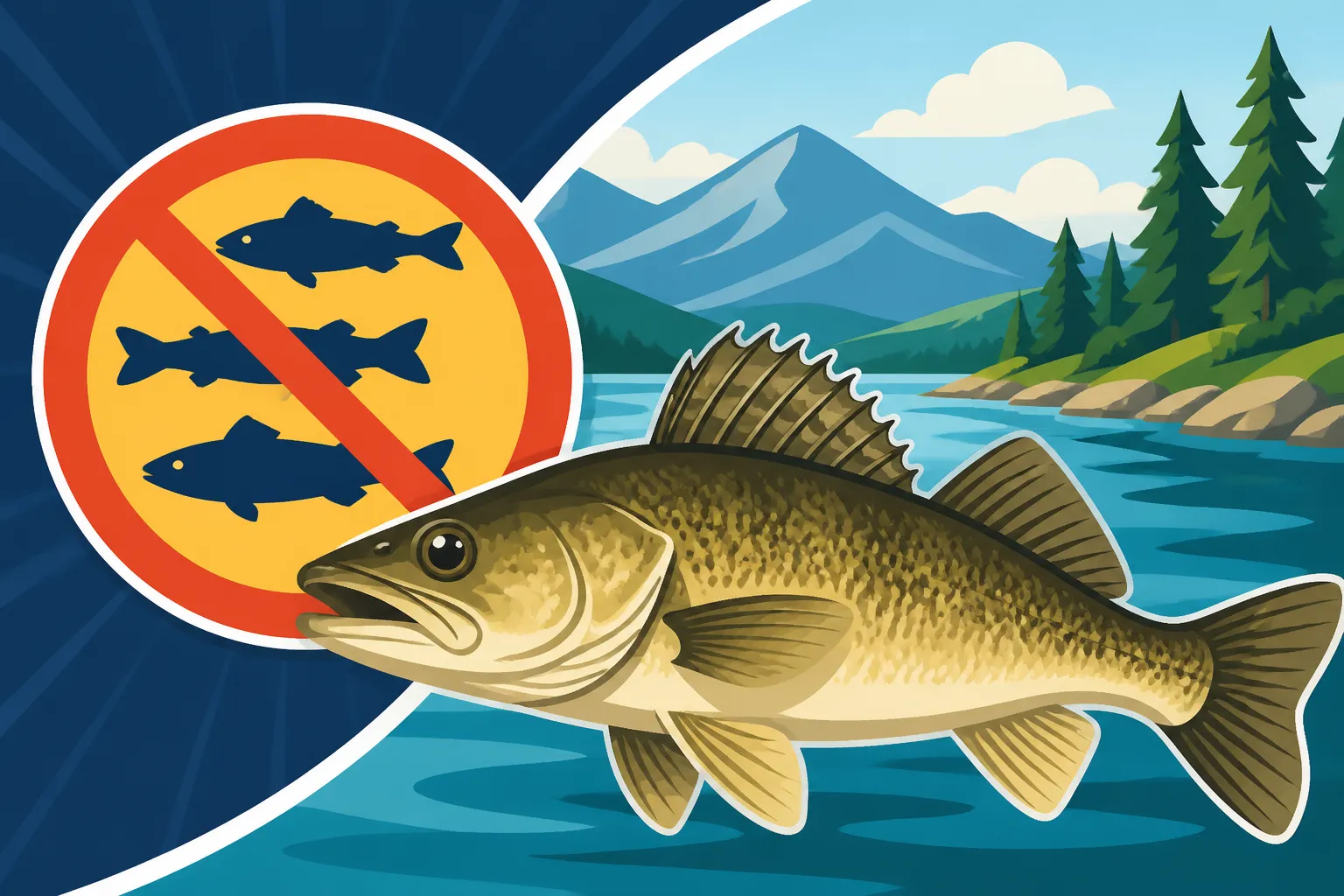
First, let's talk about the dorsal fin. The spiny dorsal fin (the one closer to the head) is your best friend here. A sauger will have distinct, dark spots arranged in rows or irregular blotches across the membranes of its spiny dorsal fin. These spots are usually quite prominent and unmistakable. In contrast, a walleye's spiny dorsal fin will typically be clear or have only very faint, diffused spots, if any. The most defining feature of a walleye's dorsal fin is a single, prominent, dark blotch at the base of the last two or three spines, often referred to as the "walleye eye spot." This blotch is absent on a sauger.
Second, consider the cheek scales. If you gently run your finger over the cheek area of the fish (the area between the eye and the gill cover), you'll notice a difference. Sauger have fully scaled cheeks, giving them a rough, sandpaper-like feel. Walleye, on the other hand, have mostly scale-less cheeks, which will feel much smoother to the touch. This tactile difference is a quick and reliable indicator, especially if the lighting isn't great for spotting fin details.
Finally, look at the body pattern. Sauger often have a more mottled or blotchy body pattern, with dark saddles or irregular patches along their sides that extend down onto their flanks. Walleye tend to have a more uniform, golden-yellow to olive-green body coloration with fewer, if any, distinct dark blotches on their sides. Additionally, the lower lobe of a walleye's tail fin often has a milky white tip, a feature that is typically absent in sauger. Knowing these points will greatly assist your Sauger Identification and Habits efforts.
Here's a quick reference table to help you:
| Feature | Sauger | Walleye |
|---|---|---|
| Dorsal Fin | Distinct dark spots across the membrane | Clear or faint spots, with a dark blotch at base of last 2-3 spines |
| Cheek Scales | Fully scaled, feels rough | Mostly scale-less, feels smooth |
| Body Pattern | Mottled, with dark blotches/saddles | More uniform, golden-yellow to olive-green, fewer blotches |
| Tail Fin | Typically no white tip on lower lobe | Often a milky white tip on lower lobe |
| Size (Typical) | Smaller, rarely exceeding 50 cm (20 inches) | Can grow significantly larger, commonly 50-75 cm (20-30 inches) |
Learning to Identify Accurately to Avoid Penalties
Misidentification isn't just a minor error; it can lead to serious consequences. Imagine a scenario where you believe you've caught a walleye, but it's actually a sauger, and the sauger limit in that particular water body is more restrictive, or even catch-and-release only. If you retain that fish, you could be in violation of the regulations, even if it was an honest mistake. Conservation officers are trained to identify fish accurately, and ignorance of the law is not a valid defense. Penalties for fishing violations can range from significant fines to loss of fishing privileges, as detailed in Alberta Fishing Without a License in Alberta: Penalties.
To prevent this, take the time to study Fish Species Identification Guide for Alberta images and descriptions. When you're on the water and catch a fish you suspect might be a sauger, don't rush. Take a moment to examine its dorsal fin, feel its cheeks, and look for body patterns. If you're still unsure and the regulations for sauger are more restrictive than for walleye, it's always best practice to safely release the fish. You can also carry a small, portable identification guide or use the MyWildAlberta app on your phone for immediate clarification. Better safe than sorry, and it protects our fish populations in the long run.
Responsible Angling and Conservation for Sauger
As anglers, we're not just consumers of a resource; we're stewards of it. Practicing responsible angling, especially for species like sauger that can be confused with others, is paramount to ensuring healthy fisheries for the future.
Best Practices for Catch-and-Release
Sometimes, even if you can legally keep a sauger, you might choose to release it, or you might be in a catch-and-release only zone. If you're practicing catch-and-release, doing it correctly is vital for the fish's survival. Sauger, like all fish, are delicate, and improper handling can lead to injury or death.
Here are some key tips for successful catch-and-release with sauger:
- Minimize Fight Time: Use appropriate tackle that allows you to land the fish efficiently, reducing exhaustion. Lighter rods or lines can prolong the fight, stressing the fish unnecessarily.
- Handle with Wet Hands: Always wet your hands before touching the fish. Dry hands can remove the fish's protective slime coat, making it vulnerable to infection.
- Keep it in the Water: Try to keep the fish in the water as much as possible, especially during unhooking and photography. If you must remove it, do so quickly and carefully.
- Use Barbless Hooks: In many special regulation waters, barbless hooks are mandatory, as indicated in articles like Which Alberta rivers mandate barbless hooks only. Even where not required, barbless hooks make unhooking much easier and less damaging. You can pinch down the barbs on your hooks with a pair of pliers, often found in multi-tools readily available on Amazon.
- Proper Unhooking Tools: Carry a pair of long-nosed pliers or a de-hooking tool. This allows you to remove hooks quickly and cleanly, especially if the fish has swallowed the bait.
- Support the Fish: When holding a fish for a quick photo, support its body horizontally with one hand under the belly and the other gently gripping the lower jaw. Avoid holding fish vertically by the jaw alone, as this can damage their internal organs and spine.
- Revive Gently: If the fish seems sluggish, hold it gently in the water, facing into the current (if in a river) or moving it slowly back and forth to force water over its gills, until it swims away under its own power.
By following these practices, you significantly increase the chances of a released sauger surviving and thriving, contributing to the overall health of the fishery.
Contributing to Sauger Conservation
Beyond following the regulations and practicing careful catch-and-release, there are other ways you can actively contribute to sauger conservation and the broader health of Alberta's aquatic environments.
One of the most direct ways is to respect all regulations. This includes not just bag limits, but also understanding Alberta Fishing License Guide for 2026 requirements and ensuring you always have your Alberta WIN Card, Explained and valid fishing license with you, whether digitally or printed, as discussed in Printing or Carrying a Digital Fishing License in Alberta. These licenses directly fund conservation efforts, fisheries management, and stocking programs.
Another crucial contribution is reporting violations. If you witness poaching, illegal netting, or any other activity that threatens fish populations or their habitat, report it to the Report A Poacher line or a local fish and wildlife office. These reports are vital for enforcement and help protect our natural resources from those who disregard the rules.
Finally, engage with local conservation groups and learn more about the specific challenges and successes in your favourite fishing areas. Understanding the habitat needs of sauger, knowing their spawning patterns, and advocating for clean water and healthy ecosystems are all part of being a truly responsible angler. Every little bit helps ensure that sauger, walleye, and all the other incredible fish species in Alberta continue to provide enjoyment for generations to come.
Disclaimer
Please be aware that fishing regulations in Alberta are subject to change. While every effort has been made to provide accurate and up-to-date information, the official "Alberta Guide to Sportfishing Regulations" remains the definitive legal source. Always consult the current guide or the MyWildAlberta website before heading out on your fishing trip to ensure compliance with all rules and regulations.