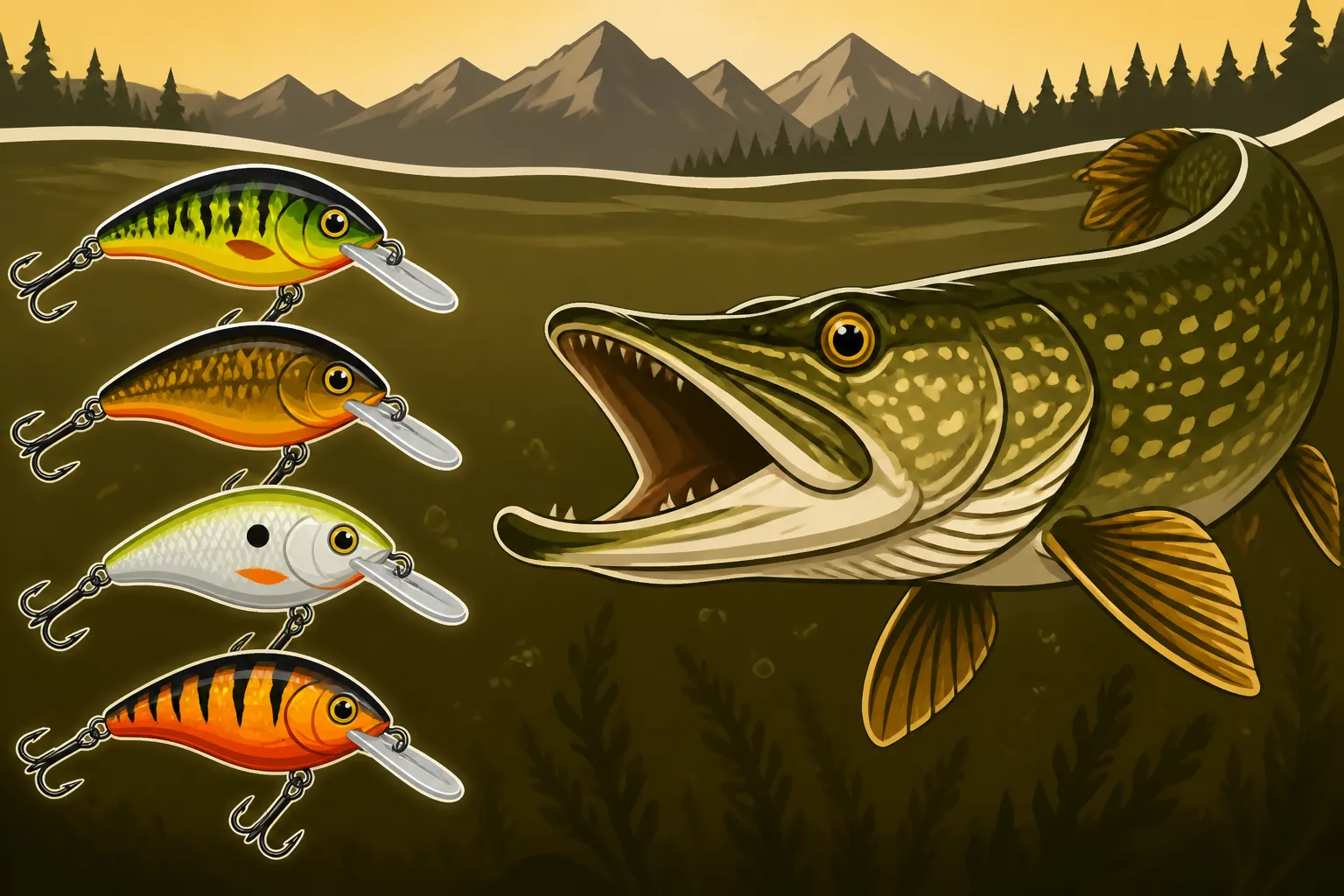
Best crankbait colors for pike in stained water
It can be incredibly frustrating to hit your favourite pike spot in Alberta only to find the water looking like a murky coffee, leaving you wondering if your trusty shiny lures will even be seen. Picking the right crankbait color for these stained water conditions is often the make-or-break difference between a banner day and a complete skunking. This guide is dedicated to helping you decipher the murky mystery, providing actionable advice on crankbait colors that consistently entice those aggressive northern pike.
Understanding Stained Water and Its Impact on Pike Fishing
When we talk about "stained water" in Alberta, we're not just talking about one thing. It's a broad term that can cover everything from the tea-stained clarity of a bog-fed lake in the northern reaches to the muddy, chocolate milk runoff after a heavy spring rain on a prairie river. This variety in water coloration directly impacts how light penetrates the water column and, consequently, how fish perceive your lures.
Types of Stained Water in Alberta
Understanding the specific type of stained water you're fishing can significantly refine your lure selection. It's not all just "dirty water"; there are nuances.
Tannin-Stained Waters
Many lakes and slow-moving rivers in central and northern Alberta, especially those with peat bogs and heavy vegetation, naturally have a dark, tea-stained appearance due to tannins released from decaying organic matter. Think of places like Lesser Slave Lake during certain times of the year, or many smaller, shallow lakes. This water often has decent visibility a few feet down but absorbs a lot of the light spectrum, making some colors disappear entirely. It tends to be a consistent color, rather than something that changes day-to-day. In these waters, the light that does penetrate tends to be on the red-orange end of the spectrum.
Sediment-Laden Waters
This is your classic "muddy" water, often found in larger rivers like the North Saskatchewan River after heavy rains, or in smaller tributaries that get churned up by agricultural runoff. The visibility here can be extremely poor, sometimes only a few inches. This kind of stain typically happens after weather events and can clear up over time. The suspended particles scatter and absorb light differently than tannins, often blocking almost all light penetration and making it tough for pike to rely on sight alone.
Algae Blooms
While not strictly "stained" by sediment or tannins, severe algae blooms can also severely reduce water clarity, giving the water a greenish or yellowish tint. This is more common in nutrient-rich prairie lakes during warmer months. The dense microscopic organisms block light and can create a challenging fishing environment. The color perception here might lean towards shades that contrast sharply with the green/yellow, or those that emit strong vibrations.
Why Stained Water is Challenging for Anglers
The biggest challenge with stained water is simple: pike can't see your lure as well. Pike are ambush predators, and while their lateral line is highly developed for detecting vibrations, they still rely heavily on their eyesight, especially when making that final strike. If your lure isn't visible, or doesn't stand out from the background murk, it's easily overlooked. This often leads to missed strikes, or fish that just don't commit. It's frustrating to cast your heart out and feel like you're fishing in a void, isn't it? That's why dialing in the right crankbait color, along with other sensory cues, is so crucial.
The Science Behind Crankbait Colors in Stained Water
Choosing the right color isn't just guesswork; there's a good bit of science, or at least understanding of physics and fish biology, that goes into it. Light behaves differently underwater, and fish perceive colors differently than humans do.
Light Penetration and Absorption
When light hits water, it doesn't all penetrate equally. Certain wavelengths (colors) of light are absorbed more quickly than others. Red light, for instance, is the first to disappear, often within the first 10-15 feet of clear water. Orange and yellow follow, while blue and green penetrate deepest.
In stained water, this absorption is drastically accelerated. The suspended particles or dissolved organic matter act like tiny filters, quickly scattering and absorbing most of the light spectrum. This means that at even shallow depths, and especially in heavily stained conditions, very little natural light remains. What does remain is often in the green-blue spectrum, even if the water itself looks brown or yellow. This is why bright, contrasting colors become so important.
How Pike See Colors
Pike have excellent vision, especially for movement and contrast. While it's impossible to know exactly what a pike sees, studies suggest they have good color vision, particularly in the green and red spectrums. However, their primary mode of detecting prey, especially in low-light or stained conditions, is often through their lateral line system. This sensory organ detects vibrations and pressure changes in the water.
So, while color is important for the final visual cue, a crankbait also needs to create enough disturbance to get the pike's attention in the first place. This is why many successful stained-water crankbaits are not just brightly colored but also have a strong wobble, rattle, or displacement of water.
Top Crankbait Colors for Stained Water Pike
Alright, let's get down to business. When the water's murky, you need colors that either stand out like a neon sign or mimic the natural forage in a way that creates a strong silhouette. Here are the tried-and-true winners for pike in Alberta's stained waters.
Chartreuse: The Unsung Hero
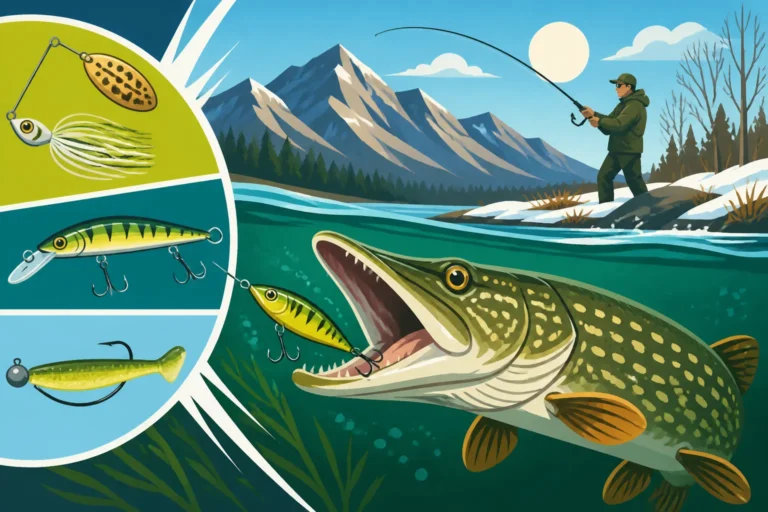
Chartreuse is, without a doubt, one of the most effective colors for stained water. It’s a super bright, fluorescent yellow-green that just screams "look at me!" in low visibility.
Why Chartreuse Works So Well
Chartreuse doesn't just reflect light; it often fluoresces, meaning it absorbs UV light and re-emits it as visible light, making it exceptionally bright and noticeable even when natural light penetration is minimal. It creates a stark contrast against brown or green stained water, appearing as a vibrant, almost glowing presence. It’s a phenomenal choice for tannin-stained lakes, muddy rivers, and even during algae blooms because it just pops. Many anglers report that pike, when they can't clearly discern subtle colors, are immediately drawn to this aggressive, high-contrast visual. You'll often find a good selection of chartreuse crankbaits, from deep divers to shallow runners, available through retailers like Amazon, making it easy to stock up.
When to Use Chartreuse
I'd tie on a chartreuse crankbait any time the water clarity is less than three feet. It's particularly deadly on cloudy days, at dawn or dusk, or in heavily churned-up river systems like sections of the Red Deer River after a good rain. If you're fishing a tannic lake, like some of the smaller northern Alberta waters, a chartreuse pattern can be a game-changer. It's also a great search bait – if pike are in the area, a chartreuse lure will often draw a reaction strike even if they're not actively feeding.
Fire Tiger: The Aggressive Standout
The Fire Tiger pattern is a classic for a reason. It typically features a chartreuse base, often with orange and black tiger stripes. It's another highly visible and aggressive pattern.
Combining Visibility and Contrast
The beauty of Fire Tiger is how it blends high visibility with strong contrast. The chartreuse provides that glowing presence, while the orange adds another high-contrast, visible color, and the black stripes create a powerful silhouette, especially against dim light. This multi-faceted visual makes it incredibly attractive to pike that are either curious or actively hunting in low-light conditions. It's a pattern that capitalizes on a pike's predatory instinct to strike at anything that looks out of place or vulnerable.
Optimal Situations for Fire Tiger
Fire Tiger is my go-to when the water is moderately stained, maybe 1-2 feet of visibility, or when fishing around heavy cover where pike might be ambushing prey. It works wonders in many of Alberta's productive pike lakes, from the weed beds of Pigeon Lake to the expansive flats of Lesser Slave Lake, especially when the sun is peeking through clouds. It's also fantastic when fishing near transition areas – where slightly clearer water meets heavily stained water – as it provides a clear target on both sides of the divide.
Fluorescent Orange: A Deep Dive Performer
While red disappears quickly, fluorescent orange has a surprising ability to maintain visibility deeper in some stained water types, especially those with a tannic tint.
Orange's Unique Properties
Fluorescent orange, much like chartreuse, has properties that make it stand out. It often retains its visibility better than non-fluorescent colors, and in tannin-stained waters, where red-orange wavelengths penetrate better, it can be particularly effective. It represents a different end of the color spectrum from chartreuse, offering a valuable alternative if pike are keying into something slightly different.
Best Uses for Fluorescent Orange
Consider a solid fluorescent orange crankbait when you're targeting deeper pike in tannin-stained lakes or when the water has a slightly reddish-brown hue. It's also a strong contender during very low-light conditions, like early morning or late evening, as its glow can often be the only thing visible. If you're using a deep-diving crankbait to get down to those thermoclines where pike might be lurking in a stained lake, a fluorescent orange can be surprisingly effective.
Black/Dark Silhouettes: Sometimes Less is More
This might seem counterintuitive for stained water, but a solid black or very dark-colored crankbait can be incredibly effective, especially in heavily overcast conditions or very dark, turbid water.
The Silhouette Effect
When there's very little light penetration, a bright color might simply blend into the overall murk. A dark silhouette, however, stands out sharply against any ambient light filtering from above. Imagine looking up from underwater: a dark object passing overhead creates a distinct, unmistakable shape. This makes it an excellent choice for mimicking baitfish or other prey struggling in the low light. It creates a strong, defined profile that pike can zero in on.
When a Dark Crankbait Shines
Use a black or dark-colored crankbait when the water is exceptionally muddy, like after a storm on the Pembina River, or on extremely dark, overcast days where there's minimal light. It's also a good choice for night fishing for walleye, but for pike, its utility is most pronounced when the water is so dark that other colors simply vanish. It’s a less common choice for pike, but one that seasoned anglers in Alberta occasionally turn to with great success, especially for larger, more cautious fish that rely more on subtle cues.
Combination Table: Stained Water Crankbait Colors
Here's a quick reference table to help you decide which colors to reach for based on water conditions:
| Water Clarity Description | Primary Stain Type | Recommended Crankbait Colors | Why These Work |
|---|---|---|---|
| Very Murky (inches visibility) | Sediment/Heavy Runoff | Chartreuse, Fire Tiger, Black/Dark (large profile) | High contrast, fluorescent properties cut through murk. Dark silhouettes provide strong profile against minimal light from above. |
| Moderately Stained (1-2 ft visibility) | Tannic/Light Sediment | Chartreuse, Fire Tiger, Fluorescent Orange, White/Silver (if some light) | Fluorescent colors pop. Fire Tiger adds strong contrast. Orange works in tannin-rich water. White/silver can flash if enough light penetrates. |
| Lightly Stained (2-4 ft visibility) | Algae Bloom/Mild Tannic | Chartreuse, Fire Tiger, White/Silver, Blue/Chrome | Still need contrast but can incorporate more natural baitfish patterns. Chartreuse/Fire Tiger for visibility. White/Silver for flash. Blue/Chrome can mimic baitfish in slightly clearer, greenish water. |
| Overcast/Low Light Conditions | Any Stained Water | Chartreuse, Fire Tiger, Fluorescent Orange, Black/Dark | Maximize visibility and contrast when natural light is scarce. Dark colors provide clear silhouette. |
Beyond Color: Other Crankbait Considerations for Stained Water
While color is a huge piece of the puzzle, it's never the only factor. In stained water, you need to engage multiple senses of the pike to truly get their attention.
Sound and Vibration: Calling Them In
Pike have an incredibly sensitive lateral line, which is their primary tool for sensing prey in low visibility. This makes sound and vibration paramount when fishing stained water.
Rattles and Knockers
Many crankbaits come equipped with internal rattles – small BBs or ball bearings that create noise as the lure moves through the water. This sound travels surprisingly far and can draw pike in from a distance, even if they can't see the lure yet. Think of it as a dinner bell in a dark room. The specific pitch and cadence of the rattle can sometimes make a difference; some pike prefer a high-frequency chatter, while others respond better to a deeper, more pronounced knocking sound. Experiment with different lures that offer various sound profiles to see what the fish are reacting to on a given day. You can find a vast selection of these on Amazon, often with detailed descriptions of their rattling features.
Water Displacement and Wobble
Beyond rattles, the physical movement of the crankbait itself creates pressure waves that pike can detect with their lateral line. Lures with a wide, aggressive wobble displace a lot of water, sending strong signals. Deeper-diving crankbaits often have a more pronounced wobble to help them "hunt" and attract fish from greater depths, which is a significant advantage in stained conditions where pike might be holding tight to structure or deep weed lines. When choosing a crankbait for pike, especially in stained water, pick one that you can feel thumping through your rod – that's the vibration doing its job. This is key for How to Catch Northern Pike in Alberta.
Size and Profile: Making an Impression
In stained water, a pike's strike zone might be significantly reduced. This means your lure needs to be big enough to present a clear target and mimic substantial prey.
Larger Lures for Visibility
Generally, opting for slightly larger crankbaits in stained water can be beneficial. A bigger lure creates a larger silhouette and displaces more water, making it easier for pike to detect visually and via their lateral line. While "trophy" pike can be targeted with specific patterns and techniques, even average-sized pike might prefer a larger meal that offers a better chance of being seen and intercepted. Don't be afraid to throw something a bit bigger than you usually would.
Profile and Shape
The profile of your crankbait also plays a role. A wide-bodied crankbait will create more displacement than a thin-bodied one, even if they're the same length. Lures that mimic the chunky profile of common Alberta baitfish like perch or suckers can be very effective, as pike are accustomed to hunting these larger forage species. Consider the Northern Pike Habits in Alberta Lakes and try to match the general shape of their preferred prey.
Retrieve Speed and Action: Triggering the Strike
How you work your crankbait is just as important as the lure itself, especially when visibility is low.
Slowing Down
In stained water, pike often need a bit more time to locate and commit to a lure. A slower retrieve can give them that extra moment. Instead of burning your crankbait back, try a steady, moderate retrieve with occasional pauses or twitches. This gives the lure more time in the strike zone and allows the vibrations and scent (if using a scented lure) to dissipate more widely. Many anglers find that Best Techniques for Early Spring Pike often involve a slower presentation due to cooler water and often murkier conditions.
Varying Your Retrieve
Even with a generally slower retrieve, varying your action is crucial. Introduce sudden jerks, sweeps, or quick turns of the reel handle to make the lure dart and change direction. This erratic movement can often trigger a reaction strike from a pike that's been following but hasn't committed. It mimics a wounded baitfish, an easy meal that pike rarely pass up.
Depth Control: Finding the Pike's Zone
Pike in stained water might be holding shallower than usual, or they might be tucked tight to structure. Understanding their depth preferences is key.
Matching the Hatch… and the Depth
If the stained water is relatively shallow, a shallow-running crankbait that deflects off bottom or weeds can be deadly. Pike often lurk in these areas, waiting for an easy meal. For deeper stained lakes, like parts of Cold Lake or other deep glacier-fed bodies that might have stained bays, you'll need a crankbait designed to reach those depths. Ensure your chosen crankbait's diving lip is suitable for the depth you're targeting. You can learn more about finding pike in different habitats by reading our guide on Where to Find Walleye in Alberta (though specific to walleye, many principles of finding fish in structure apply across species).
The Importance of Equipment in Stained Water Fishing
Having the right gear makes a difference. You want to feel every subtle bump, every vibration, and have the power to handle a feisty pike.
Rod and Reel Selection
For crankbait fishing, a medium-heavy rod with a moderate-fast action is usually ideal. This allows for long casts, good hook sets, and enough backbone to manage a strong fish. A baitcasting reel with a gear ratio around 6.4:1 or 7.1:1 offers a good balance of retrieve speed for covering water and cranking power. For more specific recommendations, check out our guide on Best Rod and Reel Combo for Beginners or if you're looking for more advanced setups, Best Pike Gear for Alberta Lakes.
Line Choices
Monofilament line is often a good choice for crankbait fishing because its stretch allows the lure to work more naturally and can prevent hooks from tearing out of a pike's mouth. However, in heavily stained water where sensitivity is critical, some anglers prefer a braided line with a fluorocarbon leader. Braided line offers superior sensitivity to feel subtle bites and the vibrations of the lure, while the fluorocarbon leader adds a bit of stealth and abrasion resistance against pike teeth. The length of your leader will depend on how stained the water is, but 12-18 inches is a common starting point.
Leader Material
Given pike's razor-sharp teeth, a proper leader is non-negotiable. Fluorocarbon leaders of 20-30lb test are common for crankbait fishing, but some anglers opt for a short wire leader, especially when fishing areas known for larger pike or where they're actively hitting the lure aggressively. Always prioritize tooth-proof leaders to avoid heartbreaking break-offs.
Final Thoughts on Conquering Stained Water for Alberta Pike
Fishing stained water in Alberta for pike doesn't have to be a guessing game. By understanding how light behaves, what colors pike can see, and how to maximize vibration and profile, you can dramatically increase your success. Don't be afraid to experiment with those bright chartreuse and fire tiger patterns, listen for the rattles, and feel the powerful wobble of your chosen crankbait. Remember, pike are aggressive, opportunistic predators. Give them something they can't ignore, and you'll be well on your way to a memorable day on the water, even when the visibility is less than ideal.
Disclaimer
Fishing regulations, conditions, and fish populations can change. Always consult the most current Alberta Guide to Sportfishing Regulations before heading out. This guide is for informational purposes only and does not supersede official government regulations. Practice safe angling and respect the environment.