Bow River Fishing Guide
The mighty Bow River can feel like a bit of an enigma to anglers, especially if you're new to its waters or visiting Alberta for the first time. You've heard the legends of its incredible trout fishing, but then you stand on its banks and the sheer volume of water, the currents, and the seemingly endless stretches can be pretty intimidating. Where do you even start? This comprehensive guide is here to demystify the Bow, breaking down everything you need to know to confidently cast a line and, hopefully, land some of the river's spectacular wild trout.
Understanding the Bow River's Unique Character for Anglers
The Bow River isn't just a river; it's an ecosystem, a legendary trout factory that draws anglers from around the globe. Its unique characteristics are what make it so special, and understanding these nuances is your first step to a successful day on the water.
The Bow's Distinct Zones: Upper, Middle, and Lower River
Thinking of the Bow as a single, uniform entity is a mistake. This river, stretching over 580 kilometers, transforms dramatically from its glacial headwaters in the Rocky Mountains to where it eventually joins the South Saskatchewan River. Each section presents different challenges and rewards for anglers.
The Upper Bow River originates in the pristine Banff National Park, flowing through iconic locations like Lake Louise and Canmore. Here, the river is characterized by colder, clearer, often faster-flowing waters, quintessential mountain streams. You'll find a mix of rainbow trout, cutthroat trout, and the occasional bull trout in these upper reaches, especially as you move into Kananaskis Country. Access can be more challenging, often requiring hiking or navigating remote trails. The fish here, while perhaps not as large on average as downstream, are vibrant, hard-fighting, and breathtakingly beautiful, living in truly stunning scenery. It's a different kind of angling experience, one where solitude and natural beauty are as much the prize as the fish themselves.
As the Bow flows eastward, it enters the Middle Bow River section, which dramatically includes the stretch flowing directly through Calgary. This is where many anglers get their first taste of the Bow. Surprisingly, even within a bustling city, the river maintains its integrity as a world-class trout fishery. The water here is influenced by the city's infrastructure but remains remarkably healthy. Access is plentiful, with numerous parks and public access points. The fish populations, particularly brown and rainbow trout, are robust, and many trophy-sized specimens reside in these urban waters, accustomed to the presence of people. Wading is common, but drift boats are also popular for covering more water and reaching less pressured spots.
Further downstream, past Calgary, lies the Lower Bow River, often considered the "blue ribbon" section. This stretch, particularly from Carseland Dam downstream to Wyndham-Carseland Provincial Park and beyond, is where the Bow truly shines for large, wild trout. The river here widens, slows slightly in places, and offers a rich, fertile environment. Agricultural runoff and diverse aquatic insect life create an abundant food source, allowing trout to grow to impressive sizes. Access largely involves drift boats, as public shore access becomes less frequent, but the rewards are often worth the effort. It's on this lower stretch that many anglers dream of landing a true Bow River monster. For more detailed information on specific boat access points, you might want to check out resources like Bow River fishing access between Carseland Dam and Calgary.
Why the Bow is a World-Class Trout Fishery
The Bow River's reputation as a world-class trout fishery isn't just angler hype; it's backed by a perfect storm of environmental factors that create an ideal habitat for trout. First and foremost are its nutrient-rich waters. The Bow receives a consistent supply of cold, clean water from glacial melt in the Rockies. As it flows downstream, it picks up nutrients from the fertile prairie soils and various tributaries. This rich nutrient load fuels an incredibly diverse and abundant aquatic insect population, forming the base of the food chain. We're talking about massive hatches of caddisflies, mayflies, stoneflies, and midges, providing a steady buffet for the trout.
Secondly, the stable temperatures are a huge advantage. The large volume of cold water from the mountains helps moderate water temperatures, preventing the extreme fluctuations that can stress fish in other rivers. This allows trout to remain active and feed throughout the year, even in the depths of winter (though ice fishing regulations apply in specific areas). This thermal stability contributes directly to the health and growth rates of the fish.
Finally, the diverse riverbed structure and habitat complexity offer trout everything they need to thrive. The Bow features a mix of riffles, runs, deep pools, undercut banks, and gravel bars. These varied features provide excellent spawning grounds, ample holding lies where trout can rest and ambush prey, and protection from predators and strong currents. This combination of cold, clean, nutrient-rich water, stable temperatures, and complex habitat has fostered a robust population of wild brown and rainbow trout, many of which grow to impressive sizes, making the trophy potential truly remarkable.
Seasonal Changes and Their Impact on Fishing
Just like the landscape around it, the Bow River changes with the seasons, and understanding these shifts is crucial for successful angling. What works in July likely won't work in April.
Spring (April – May): This is often a season of anticipation mixed with challenge. The infamous "runoff" period typically begins in late May or early June, when mountain snowpack melts rapidly, causing the river to swell, become cold, and often turn muddy with glacial flour. Fishing during peak runoff can be tough. However, early spring (April to mid-May) before the major runoff can offer fantastic opportunities. Water levels are usually lower and clearer, and trout are hungry after winter. Streamer fishing and nymphing are often very effective as fish look for larger meals. Post-runoff, as the river clears and settles, hatches begin in earnest, and trout become very active.
Summer (June – August): Ah, summer on the Bow. This is prime time for many anglers, especially fly fishers. The river generally runs at stable levels, and water temperatures are ideal for trout. This season is characterized by prolific insect hatches – caddis, mayflies, and grasshoppers become key food sources. Dry fly fishing can be exceptional, offering some of the most exciting visual strikes. Nymphing and streamer fishing remain consistently productive, especially during non-hatch periods or when targeting deeper-lying fish. Wading is excellent, and drift boat trips are in full swing. This is when the Bow truly comes alive.
Fall (September – November): Many seasoned Bow River anglers consider fall to be the absolute best time to fish. As water temperatures cool, brown trout begin their spawning rituals. While it's critical to avoid disturbing spawning fish and their redds (gravel nests), aggressive brown trout can be incredibly receptive to streamers and large nymphs as they prepare for and recover from spawning. Rainbow trout are also actively feeding, fattening up for winter. Fewer crowds, vibrant autumn colors, and the chance at a truly massive trout make fall an unforgettable experience. However, conditions can change rapidly, with early snowfalls or sudden drops in temperature.
Winter (December – March): Don't put your gear away yet! Winter fishing on the Bow offers a unique and often rewarding experience for the dedicated angler. While the upper sections might freeze over, many stretches, particularly the middle and lower Bow, remain open, thanks to groundwater upwellings and faster currents. Water levels are typically low and clear, making stealth and precise presentations paramount. Midges and small nymphs are the primary food source, and slow, deep presentations are key. It's a peaceful time on the river, with fewer anglers and often surprisingly active, strong fish. Just be prepared for cold weather and dress in layers.
Essential Regulations and Licenses for Bow River Fishing
Fishing in Alberta, especially on a revered waterbody like the Bow River, comes with its share of rules. These aren't just bureaucratic hurdles; they're in place to protect the fishery and ensure its health for generations to come. Getting caught without the right paperwork or breaking a rule can lead to significant penalties, so it pays to be prepared.
Navigating Alberta's Fishing License Requirements
First things first: almost everyone who wants to fish in Alberta needs a fishing license. This isn't just a suggestion; it's a legal requirement. The only exceptions are specific age groups or circumstances, like youth under 16 or Alberta seniors over 65 (though even then, rules apply). For anyone else, whether you're an Alberta resident, a Canadian non-resident, or an international visitor, you'll need to purchase an Alberta Sportfishing Licence.
The process usually starts with obtaining an Alberta Wildlife Identification Number (WIN) Card. This is a one-time purchase that acts as your permanent ID for all hunting and fishing licenses in Alberta. Once you have your WIN card, you can then purchase your actual fishing license. You can do this online through the MyWildAlberta portal, at various authorized license vendors (like sporting goods stores or even some general stores), or at Service Alberta registries. It's generally easiest to do it online through MyWildAlberta, where you can easily find your Alberta Fishing License Guide for 2026 and complete your purchase. Be sure to carry a physical or digital copy of your license with you at all times while fishing.
There are different types of licenses: annual, 1-day, or 7-day, and prices vary for residents, Canadian non-residents, and non-Canadian non-residents. Make sure you purchase the correct one for your residency and trip duration. It's a small investment that goes directly towards fisheries management and conservation efforts across the province.
Understanding Zone-Specific Rules and Special Regulations
The Bow River, being such a significant waterbody, is often subject to very specific regulations that go beyond the general provincial rules. Alberta is divided into management zones, and the Bow can traverse several of these, each potentially having slightly different nuances. For example, some sections of the Bow may be designated as "Special Regulation Waters."
A critical rule on the Bow, particularly for its famous trout stretches, is the mandatory use of barbless hooks. This regulation is paramount for the health of the wild trout population, as it greatly increases the survival rate of released fish. If you're using flies, your hooks must be barbless. If you're using lures, any treble hooks must be replaced with single, barbless hooks, or the barbs must be pinched down completely. Always double-check the specific regulations for the section of the Bow you plan to fish, as rules can vary even along a single river. The Alberta Guide to Sportfishing Regulations is your bible; seriously, read it cover to cover, or at least the sections pertaining to the Bow River. You can find comprehensive information on Reading the Alberta Guide to Sportfishing Regulations which will help you decipher the sometimes complex text.
These special regulations might also include specific bait restrictions (e.g., no bait allowed in certain trout streams to protect the fish from deep hooking), closures during spawning seasons, or specific tackle limitations. It’s not uncommon for stretches of the Bow to be designated as "catch and release only" for certain species, or for specific seasons to apply to certain fish. Always consult the official regulations before heading out, as they are updated annually.
Catch Limits and Species-Specific Regulations on the Bow
Beyond licenses and general rules, you need to be aware of the daily catch and possession limits for each species you might encounter. On the Bow River, trout are the main draw, and their regulations are often quite strict to maintain healthy wild populations.
For instance, many popular sections of the Bow River are managed as catch-and-release only for certain trout species, particularly the prized brown and rainbow trout. This means that any trout you catch must be immediately and safely released back into the water. Even in sections where retention is permitted, the limits are typically very low (e.g., one or two fish), and often with specific size restrictions (e.g., only fish within a certain slot limit can be kept). These rules are designed to protect the breeding stock and larger, older fish that contribute significantly to the fishery's vitality. For a complete breakdown of what you can and cannot keep, refer to Alberta Bag and Possession Limits by Species.
While less common in the main trout stretches of the Bow, if you venture into the headwaters or specific tributaries, you might encounter species like bull trout. It's crucial to know that bull trout have a zero possession limit across Alberta due to their threatened status. If you accidentally catch one, it must be released immediately and carefully. Understanding Alberta Bull Trout Zero Possession Rule is vital for any angler in the province.
Always practice proper catch and release techniques: minimize handling, keep the fish in the water as much as possible, use a knotless, rubberized landing net, and ensure the fish is revived before release. These small actions make a huge difference in the survival rate of the fish you encounter.
Prime Fishing Access Points on the Bow River
One of the great things about the Bow River is its accessibility, especially within and around Calgary. Whether you prefer wading, drift boating, or bank fishing, there are numerous spots to get your line in the water.
Best Shore Fishing Spots Near Calgary
For many anglers, especially those new to the river or without a boat, shore fishing is the most accessible way to experience the Bow. Calgary itself offers an impressive number of quality bank fishing opportunities.
Fish Creek Provincial Park is a gem. As one of North America's largest urban parks, it offers miles of riverbank access along the Bow. You can find numerous trails leading to prime fishing spots. Look for slower eddies, current seams, and areas with submerged structure. Parking is available at various access points within the park, and you can spend an entire day exploring different stretches. The convenience of being able to drive right up, find a spot, and cast a line makes it a fantastic option for a quick outing or a leisurely day.
Another excellent urban option is Pearce Estate Park and the adjacent Sam Livingston Fish Hatchery area. While the hatchery itself isn't for public fishing, the riverbanks around it, particularly downstream, provide great access. The river here can be quite diverse, with deeper runs and some excellent holding water. It's a popular spot, so you might encounter other anglers, but there's usually enough room to find your own peace. These spots are particularly good for families or those who prefer not to wade too deep or far. Remember that some parts of the Bow within city limits might be subject to additional city bylaws, but generally, the provincial fishing regulations apply. For more specific local tips, you can always seek out Best shore fishing near Calgary guides.
Further downstream from the city, but still easily accessible for a day trip, areas around Wyndham-Carseland Provincial Park offer good bank fishing, though boat access becomes more prevalent here. The sheer abundance of public parks and green spaces along the Bow's course through Calgary means that with a little exploration, you can almost always find a suitable spot to cast your line from shore.
Boat Launches and Drift Boat Access
For those who want to cover more water and reach less pressured stretches, drift boating or using a small powerboat (where permitted) is the way to go on the Bow. This allows you to float through miles of prime water, hitting riffles, runs, and pools that are inaccessible to shore anglers.
The most popular stretch for drift boats is typically the Lower Bow River, from Carseland Dam downstream. The Carseland Weir (Dam) is a common put-in point. From there, you can enjoy a leisurely float downstream, taking out at various points like Wyndham-Carseland Provincial Park or even further down towards Bassano, depending on how long you want your trip to be. These floats can be anywhere from a half-day to a full day, or even multi-day adventures for the truly dedicated. A common float for many guides and experienced anglers is from Carseland to Wyndham, offering a perfect balance of prime fishing water and manageable shuttle logistics. For detailed information on access and typical float times, resources like Bow River fishing access between Carseland Dam and Calgary can be incredibly helpful.
Within Calgary, some sections allow for motorboat use, but drift boats and pontoons are generally preferred for trout fishing, offering a quieter approach and better maneuverability in the current. Remember, operating any vessel on Alberta waters requires adherence to specific boating laws, including carrying appropriate safety equipment and potentially a Pleasure Craft Operator Card. If you're considering hiring a guide for a drift trip, using a service like FishingBooker can help you find experienced local outfitters who know all the best put-in and take-out spots, as well as the safest ways to navigate the river.
When planning a drift trip, consider the logistics of shuttling vehicles between your put-in and take-out points. Many guide services offer this as part of their package, or you can arrange it with a second vehicle or a designated driver. Always check current river conditions (flow rates, clarity) before you head out, as these can drastically affect safety and fishing success.
Exploring the Lower Bow River Downstream of Calgary
While the city sections of the Bow get a lot of attention, the Lower Bow River downstream of Calgary truly holds a special place in the hearts of trophy trout anglers. This is the fabled "blue ribbon" section, where brown and rainbow trout regularly exceed 20 inches, and 25-inch monsters aren't uncommon.
Once you pass the urban sprawl, the river takes on a more rural, open character. The banks are often agricultural land, making public shore access more limited, thus reinforcing the dominance of drift boat fishing in this area. The current is generally slower than in the mountain sections, and the river widens, offering expansive runs, deep channels, and prolific weed beds that shelter massive trout.
Key access points for this section, as mentioned, are often at or near Carseland Dam (for put-in) and Wyndham-Carseland Provincial Park (for take-out). Further downstream, spots near Bassano also offer opportunities, but the logistics become more involved. This stretch is characterized by its incredible insect life – large stoneflies, caddis, and mayflies, along with abundant scuds and baitfish, provide a constant food source for the trout, enabling them to grow to impressive sizes.
Fishing the Lower Bow requires patience and often a good guide, especially if it's your first time. The fish are intelligent and well-fed, so presentation and fly/lure selection are critical. This is not typically a "numbers" fishery; instead, it's about the quality and size of the fish. If you're dreaming of a true Alberta trophy trout, dedicating time to the Lower Bow River is a must.
Top Techniques and Baits for Bow River Trout
The Bow River’s healthy trout population means there are many ways to tempt a bite, but some techniques are more consistently productive than others, especially when targeting its notoriously discerning fish.
Mastering Fly Fishing on the Bow
Fly fishing is arguably the most iconic and effective method on the Bow River, and for good reason. The river’s prolific insect hatches provide endless opportunities for matching the hatch, while its diverse structure lends itself perfectly to various fly fishing approaches.
Nymphing is often the most consistent method for catching trout on the Bow, especially during non-hatch periods or when fish are feeding sub-surface. This technique involves drifting weighted fly patterns (nymphs) along the bottom, imitating aquatic insect larvae. A common setup involves a strike indicator, split shot (if needed), and one or two nymph patterns. Effective patterns include San Juan Worms, Prince Nymphs, Hare's Ears, Pheasant Tails, and various scud patterns. You'll want to focus your drifts through deeper runs, current seams, and around structure where trout tend to hold and feed. Mastering the "dead drift" – ensuring your flies move at the same speed as the current – is crucial for success.
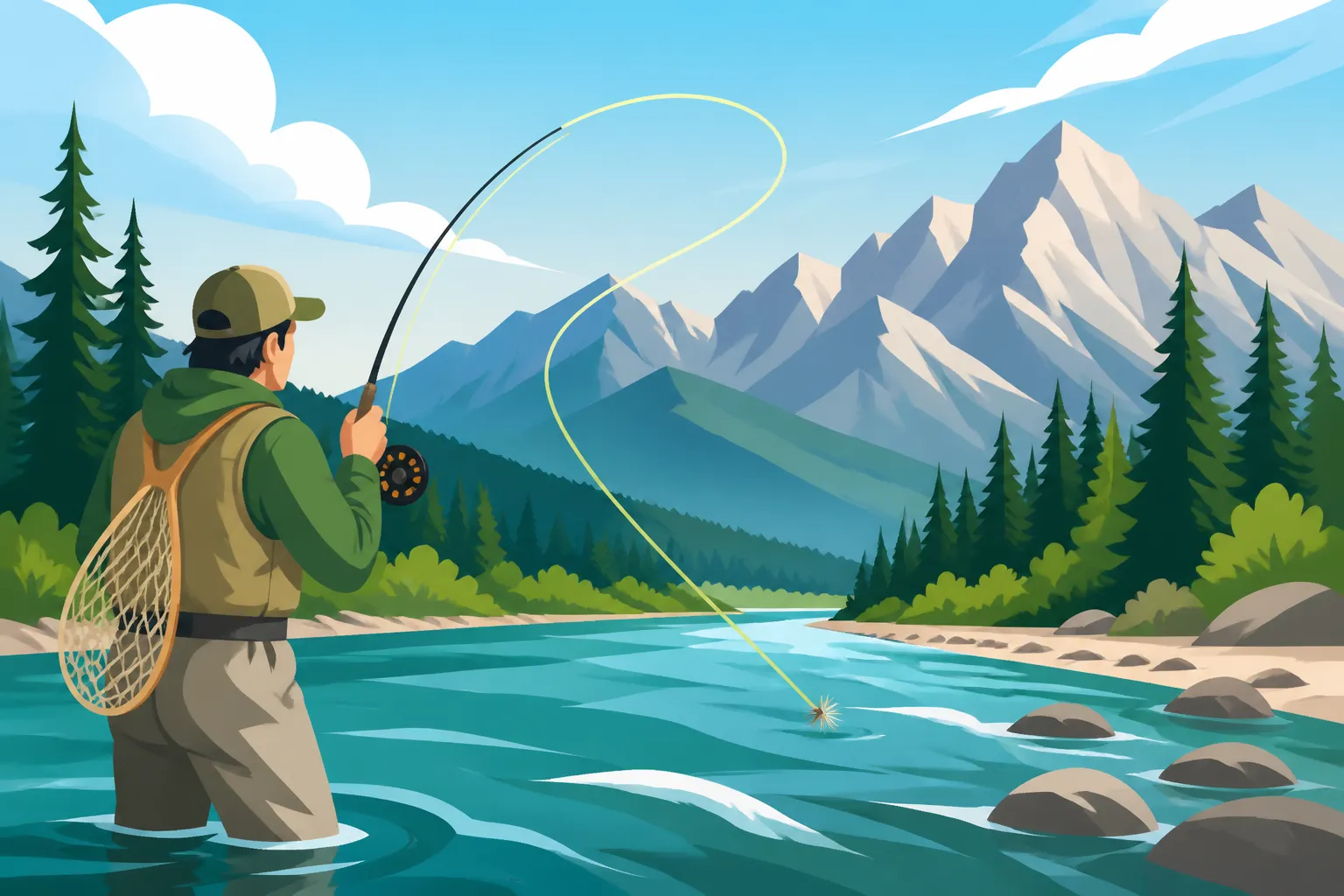
Dry fly fishing on the Bow is a truly exhilarating experience and what many fly fishers dream of. When trout are actively feeding on the surface, taking advantage of a hatch, there's nothing quite like seeing a fish rise and engulf your artificial fly. The Bow experiences significant hatches of caddisflies, mayflies (like Blue-Winged Olives and Pale Morning Duns), and stoneflies. Knowing what insects are active and having the right patterns is key. Popular dry flies include Elk Hair Caddis, Adams, Parachute Adams, and various hopper patterns in late summer and early fall. Presentation is critical; a gentle, accurate cast that allows the fly to float naturally is often the difference between a refusal and a hook-up. For a deeper dive into this, you can check out guides like Fly Fishing for Trout on the Bow River and Fly Patterns for the Bow River.
Streamer fishing is your go-to when targeting larger, more aggressive trout, especially brown trout looking for a bigger meal. Streamers imitate baitfish, leeches, or other large aquatic prey. This technique involves casting larger, weighted flies and stripping them back through the water, mimicking fleeing prey. Woolly Buggers, Sculpzillas, and various articulated streamers are popular choices. This method is particularly effective in fall when brown trout are aggressive, or after a rain when the water might be slightly discolored, giving predators an advantage. Focus on stripping streamers near undercut banks, deep pools, and log jams where big fish hide.
Effective Spin Fishing Strategies and Lures
While fly fishing is prominent, spin fishing can be incredibly effective on the Bow River, particularly for anglers who prefer this gear or when conditions make fly fishing challenging. The key is to choose appropriate lures and practice ethical angling.
The most important rule for spin fishing on the Bow, mirroring fly fishing regulations, is the mandatory use of single, barbless hooks. This means replacing treble hooks on most conventional lures with single hooks, or at the very least, pinching down all barbs completely. This greatly improves the survival rate of released fish.
Spinners are a classic and highly effective choice for Bow River trout. Lures like Mepps Aglia, Blue Fox Vibrax, and Panther Martin in sizes ranging from #1 to #3 are excellent. Their flashing blades and vibrating action mimic small baitfish or aquatic insects, drawing aggressive strikes. Cast upstream and retrieve at a pace that allows the blade to spin, or cast across current and let it swing downstream. Vary your retrieve speed and depth until you find what the fish are responding to.
Spoons are another solid option, particularly in larger sizes for bigger fish or when targeting deeper water. Thin, wobbling spoons like Little Cleos or Five of Diamonds can be very effective, especially in silver or gold finishes. Cast them out and retrieve them with a jigging motion or a steady retrieve. They are particularly good for imitating injured baitfish.
For a more subtle approach, small soft plastics can also work well. Tiny grubs or worm imitations rigged on a light jig head can be deadly, especially when fish are finicky. Focus on drifting these along the bottom, similar to nymphing, or slow-rolling them through deep pools. Always check the current regulations for any bait restrictions in your specific fishing zone.
Understanding Trout Behavior and Reading the Water
Becoming a successful angler on the Bow River, regardless of your chosen technique, hinges on your ability to "read the water" and understand trout behavior. Trout are creatures of habit and efficiency; they want to expend the least amount of energy for the most food.
When you approach a section of the river, take a moment to observe. Look for areas where the current changes, where deeper water meets shallow riffles, or where the riverbed shifts. These are often prime holding lies.
Current seams are lines in the water where two different current speeds meet. Trout love to sit just out of the main current, in the slower water of the seam, waiting for food to be delivered by the faster flow. Cast your flies or lures into the faster water upstream of the seam and let them drift naturally into the slower water where the fish are positioned.
Riffles and runs are shallower, faster-moving sections of the river. These areas are oxygen-rich and often hold abundant insect life. Trout will often position themselves at the head or tail of a riffle, or in pockets of slower water within them, ambushing food. Nymphing and dry fly fishing during hatches can be excellent in these areas.
Deep pools and undercut banks are crucial holding water, especially for larger trout. Pools offer refuge from strong currents and predators, while undercut banks provide shelter and shade. Streamers and weighted nymphs are very effective in these areas, as are spin fishing lures that can get down deep. Don't neglect the "tailout" of a pool – the shallower, faster water where the pool transitions into the next run – as fish often stack up here.
Log jams and submerged structure are natural fish magnets. They break up the current, provide cover, and create ambush points. Fish your offerings carefully around these obstacles, being mindful of potential snags. Stealth is also incredibly important on the Bow, especially in its clearer sections. Trout are easily spooked by sudden movements, bright clothing, or heavy footsteps on the bank. Approach your fishing spots quietly, and try to cast from a position that doesn't put you directly in the fish's line of sight. Learning how to read the water effectively will not only lead to more fish but also a deeper appreciation for the river itself. For challenges of fishing specific currents, you can always refer to resources like How to catch trout in fast current on the Bow River.
Species-Specific Guide for Bow River Anglers
While the Bow River is primarily known for its trout, it's home to a few distinct species, each with its own preferred habitat and behavior. Understanding these differences can help you tailor your approach for specific targets.
Targeting Wild Brown Trout in the Bow
The brown trout (Salmo trutta) are perhaps the most iconic and sought-after species on the Bow River. Renowned for their aggressive nature, beautiful golden-brown coloration with red and black spots, and often impressive size, they are a true prize for any angler. The Bow River's rich ecosystem allows brown trout to thrive, with many fish regularly exceeding 20 inches and occasionally reaching truly monstrous proportions, particularly in the lower river sections.
Brown trout are typically more reclusive and predatory than rainbows. They prefer to hold in deeper, slower water, often associated with structure like undercut banks, log jams, and large boulders. These spots provide excellent ambush points for them to dart out and capture unsuspecting prey. They are also known to be quite nocturnal, meaning they can be more active in low light conditions, such as dawn, dusk, or even during overcast days.
When targeting brown trout, larger offerings are often more effective. For fly anglers, streamers that imitate baitfish (like sculpins, minnows, or smaller trout) or leeches are highly successful. Think Woolly Buggers, Sex Dungeons, or articulated patterns in olive, black, or brown. Nymphing with larger patterns like stoneflies or San Juan Worms can also entice them. Spin anglers will find success with spoons, larger spinners, or jerkbaits that mimic baitfish. The fall spawning season, typically from September to November, is a prime time to target aggressive browns, though care must be taken not to disturb spawning fish on their redds. For more on these incredible fish, explore Brown Trout Fishing in Alberta and Brown Trout Habits in Alberta Streams.
Pursuing Rainbow Trout on the Bow River
Rainbow trout (Oncorhynchus mykiss) are the other dominant trout species in the Bow River and are equally prized for their acrobatic fights and stunning beauty. Identified by their iridescent silver-pink stripe running down their side and numerous small black spots, Bow River rainbows are strong, healthy, and plentiful.
Unlike browns, rainbows tend to prefer faster, more oxygenated water. You'll often find them holding in the heads and tails of riffles and runs, as well as in current seams where food is consistently delivered. They are typically more opportunistic feeders than browns, readily taking a wide variety of insects, both on the surface and subsurface.
For fly anglers, rainbow trout are often the primary target during prolific dry fly hatches. They will rise eagerly to mayflies, caddis, and stoneflies when conditions are right. When no surface activity is evident, nymphing is incredibly effective, with smaller patterns like Pheasant Tails, Hare's Ears, and various midge patterns often fooling them. Spin anglers can find success with smaller spinners (Mepps, Panther Martin) or tiny spoons, cast into the faster water.
Bow River rainbows are renowned for their strength and fighting spirit. When hooked, they often make spectacular aerial leaps and strong runs, making for an unforgettable battle. While not typically as large as the biggest brown trout, 18-22 inch rainbows are common, and larger specimens are certainly caught. For an in-depth look at these acrobatic fighters, check out Rainbow Trout Fishing on the Bow River or Rainbow Trout Habits on the Bow River.
Less Common Catches and What to Do
While brown and rainbow trout dominate the Bow River, anglers might occasionally encounter other species. It's important to be able to identify these and know the specific regulations, especially concerning protected species.
Mountain Whitefish (Prosopium williamsoni) are a native species frequently found throughout the Bow River system, particularly in the colder, cleaner stretches. They are members of the salmon family but are often mistaken for suckers due to their small, downward-facing mouths. Whitefish are excellent fighters on light tackle and are highly sought after by some anglers for their delicate white meat. They feed primarily on aquatic insects, often in similar habitats to trout, and can be caught on small nymphs, midge patterns, or even tiny spinners. There are specific regulations and possession limits for mountain whitefish, so consult the guide. For more on this species, you can refer to Mountain Whitefish in Alberta Rivers.
In the very upper reaches of the Bow and its tributaries, particularly within Banff National Park or in pristine headwater streams, you might, on rare occasions, encounter Cutthroat Trout (Oncorhynchus clarkii). These native trout are identifiable by the distinctive red or orange slash marks under their lower jaw. They are sensitive to habitat disturbance and are often found in more remote, pristine waters. While stunning, their populations are often fragile, and they are typically subject to strict catch-and-release regulations or specific possession limits.
Finally, though exceedingly rare in the main trout stretches of the Bow River due to habitat changes and competition, the native Bull Trout (Salvelinus confluentus) is an important and protected species in Alberta. Bull trout are identifiable by their pale spots on a dark background and lack of black spots, along with the distinctive "cutthroat" markings (though less pronounced than a cutthroat trout). They are apex predators in cold, clear waters. It is absolutely crucial to remember that bull trout have a zero possession limit across Alberta. If you are lucky enough to encounter one, it must be released immediately and carefully, ideally without removing it from the water. For detailed guidance on this protected species, refer to Bull Trout: Alberta's Threatened Native Fish. Knowing your species and adhering to regulations is key to responsible angling and protecting Alberta's diverse fisheries.
Planning Your Bow River Fishing Trip
A successful fishing trip isn't just about what you do on the water; it's also about the preparation beforehand. From choosing the right support to packing the right gear, a little planning goes a long way.
Choosing a Reputable Fishing Guide or Outfitter
For many, especially those unfamiliar with the Bow River or keen to learn its nuances quickly, hiring a professional fishing guide is an invaluable investment. A good guide offers much more than just a ride down the river; they provide expertise, safety, and a significantly higher chance of success.
Here's why a guide can be a game-changer:
- Local Knowledge: Guides spend hundreds of days on the river. They know the current conditions, where the fish are holding, what they're eating, and which techniques are working best on any given day. This kind of nuanced, real-time information is impossible to get from a book or map alone.
- Expert Instruction: If you're new to fly fishing or specific techniques, a guide can provide hands-on instruction on casting, presentation, reading water, and fighting fish. They'll teach you the subtleties that only come with experience.
- Access and Logistics: Guides have the boats, vehicles, and knowledge of put-in and take-out points, eliminating the hassle of shuttling vehicles. They also often have access to private land agreements for superior access.
- Safety: The Bow River, especially with its currents, can be dangerous for the inexperienced. Guides are trained in river safety and emergency protocols, ensuring your trip is as safe as it is enjoyable.
- Specialized Gear: A reputable guide will provide all the necessary fishing gear, including rods, reels, lines, and an extensive array of flies or lures, perfectly matched to the day's conditions. This is particularly beneficial for out-of-town visitors who don't want to transport their entire tackle collection.
When choosing a guide, look for those with strong local reputations, appropriate certifications, and a commitment to conservation. Services like FishingBooker can be an excellent resource for finding and booking highly-rated Bow River fishing guides and outfitters. They allow you to compare different guides, read reviews from other anglers, and find the perfect match for your experience level and desired trip.
Essential Gear Checklist for a Successful Day
Having the right gear can make all the difference between a frustrating day and a fantastic one. While a guide will supply most of what you need, here's a checklist for those venturing out on their own, or just to know what to expect:
For Fly Anglers:
- Rod and Reel: A 5 or 6-weight fly rod, 9-10 feet long, is ideal for the Bow, paired with a matching reel and floating fly line.
- Leaders and Tippet: Bring a variety of fluorocarbon leaders (9-12 ft, 3X-5X) and tippet spools (3X-6X) to match conditions and fly size.
- Flies: A selection of nymphs (e.g., San Juan Worms, Pheasant Tails, Hare's Ears, Prince Nymphs, various midge patterns), dry flies (e.g., Caddis, Mayflies like Adams, Hoppers), and streamers (e.g., Woolly Buggers, Sculpins) in various sizes and colors.
- Indicators & Split Shot: Essential for nymphing.
- Waders and Wading Boots: Breathable chest waders are ideal for comfort, paired with sturdy wading boots with good ankle support and grip. For specific recommendations, check out Best Waders for Alberta Trout Rivers.
- Landing Net: A large, rubberized, knotless landing net is crucial for safe catch and release of larger trout.
- Forceps or Hemostats: For hook removal.
- Line Nippers: For quick line changes.
- Polarized Sunglasses: Absolutely essential for spotting fish and reading water.
- Hat: For sun protection.
- Sunscreen and Insect Repellent: Protect yourself from the elements.
- Rain Gear: Alberta weather can change in an instant, even in summer.
- Water and Snacks: Stay hydrated and energized.
- First-Aid Kit: For minor scrapes and emergencies.
For Spin Anglers:
- Rod and Reel: A medium-light spinning rod (6-7 feet) paired with a matching spinning reel spooled with 6-8 lb monofilament or fluorocarbon line.
- Lures: A selection of small to medium spinners (Mepps, Blue Fox), spoons (Little Cleo), and small jerkbaits or soft plastic grubs. Remember, barbless single hooks only!
- Leaders: A short fluorocarbon leader (6-8 lb) can be beneficial for stealth in clear water.
- Landing Net: As above.
- Forceps/Pliers: For hook removal and pinching barbs.
- Polarized Sunglasses, Hat, Sunscreen, Bug Spray, Rain Gear, Water, Snacks, First-Aid Kit: All essential.
Having a specialized tackle bag or vest is also very helpful for keeping all your essentials organized and easily accessible. For a broader overview of general fishing equipment, you might find articles like Best Gear for Bow River Fly Fishing useful, even if you're spin fishing, as many principles apply.
Responsible Angling and Conservation Practices
The incredible fishery that is the Bow River exists because of dedicated conservation efforts and the responsible practices of anglers. As visitors to this precious resource, it’s our collective responsibility to ensure its health for future generations.
Practice Catch and Release: Many sections of the Bow, especially for trout, are catch-and-release only. Even where retention is allowed, consider practicing catch and release for the majority of your fish. This helps maintain strong populations and allows fish to grow to trophy sizes. When releasing fish:
- Minimize Handling: Keep the fish in the water as much as possible.
- Wet Hands: Always wet your hands before touching a fish to protect its slime coat, which is vital for disease prevention.
- Use a Net: A rubberized, knotless landing net cradles the fish and prevents scale and fin damage.
- Revive Gently: Hold the fish upright in the current, facing upstream, until it swims away under its own power. Never throw a fish back.
- Barbless Hooks: As mentioned repeatedly, these are critical for easy and safe hook removal.
Leave No Trace: Pack out everything you pack in. This includes all trash, broken fishing line, and any other litter. Leave the riverbank cleaner than you found it. This helps preserve the natural beauty and prevents harm to wildlife. Be especially mindful of discarded fishing line, which can be deadly to birds and other animals.
Respect Private Property: A significant portion of the Bow River flows through private land, particularly downstream of Calgary. Always be aware of property boundaries and only access the river through designated public access points. Do not trespass. This respect helps maintain good relationships between landowners and the angling community.
Know the Regulations: Ignorance of the law is no excuse. Always have a current copy of the Alberta Sportfishing Regulations (digital or physical) with you and understand the specific rules for the section of the Bow you are fishing. These rules protect the fishery.
By adhering to these responsible angling practices, you contribute to the ongoing health and vibrancy of the Bow River, ensuring that it remains a world-class destination for generations of anglers to come.
| Bow River Fishing Season Summary | Early Spring (Apr-May) | Summer (Jun-Aug) | Fall (Sept-Nov) | Winter (Dec-Mar) |
|---|---|---|---|---|
| Water Conditions | High runoff potential, cold. Clearer early spring. | Stable, clear, ideal temps. | Cooling, lower flows, clear. | Low, clear, cold. Ice in some areas. |
| Primary Techniques | Nymphing, Streamers. | Dry Fly, Nymphing, Streamers. | Streamers, Nymphing. | Nymphing (small), Midge fishing. |
| Target Species | Rainbow Trout, Brown Trout | Rainbow Trout, Brown Trout | Brown Trout (spawning runs), Rainbow Trout | Rainbow Trout, Brown Trout |
| Key Hatches/Food | Stonefly nymphs, larger subsurface. | Caddis, Mayflies, Hoppers, terrestrials. | Baitfish, large nymphs, small hatches. | Midges, small nymphs. |
| Access | Wading (careful!), drift boats (post-runoff). | Wading, drift boats. | Wading, drift boats. | Limited wading, open water drift boats. |
| Crowds | Moderate (can be high early pre-runoff). | High. | Moderate to High. | Low. |
Disclaimer
The information provided in this guide is for general informational purposes only and is not intended as legal advice. Fishing regulations in Alberta are subject to change, and it is the sole responsibility of the angler to consult and adhere to the most current Alberta Guide to Sportfishing Regulations issued by Alberta Environment and Protected Areas. Always prioritize safety and environmental stewardship while fishing.