Best wire leader for pike fishing
If you've spent any time at all chasing the magnificent northern pike across Alberta's diverse waters, you know the frustration: that sudden, jarring loss of tension, followed by the sickening realization that your line has gone slack, your favourite lure gone, and the battle-hungry pike has vanished. It's almost always a direct result of those razor-sharp teeth making short work of your fishing line. This guide is all about preventing that heartbreak by diving deep into the world of wire leaders, ensuring your next encounter with an Alberta pike ends with a successful catch and release, not just a story about the one that got away – along with your expensive tackle!
Why a Wire Leader is Non-Negotiable for Alberta Pike Fishing
Let's be blunt: fishing for northern pike without a wire leader is like going into battle with a butter knife. It’s an exercise in futility and, frankly, a disservice to the fish. These apex predators are built for tearing, slashing, and holding onto their prey, and their dental work is perfectly adapted for it.
The Pike's Teeth: A Formidable Challenge
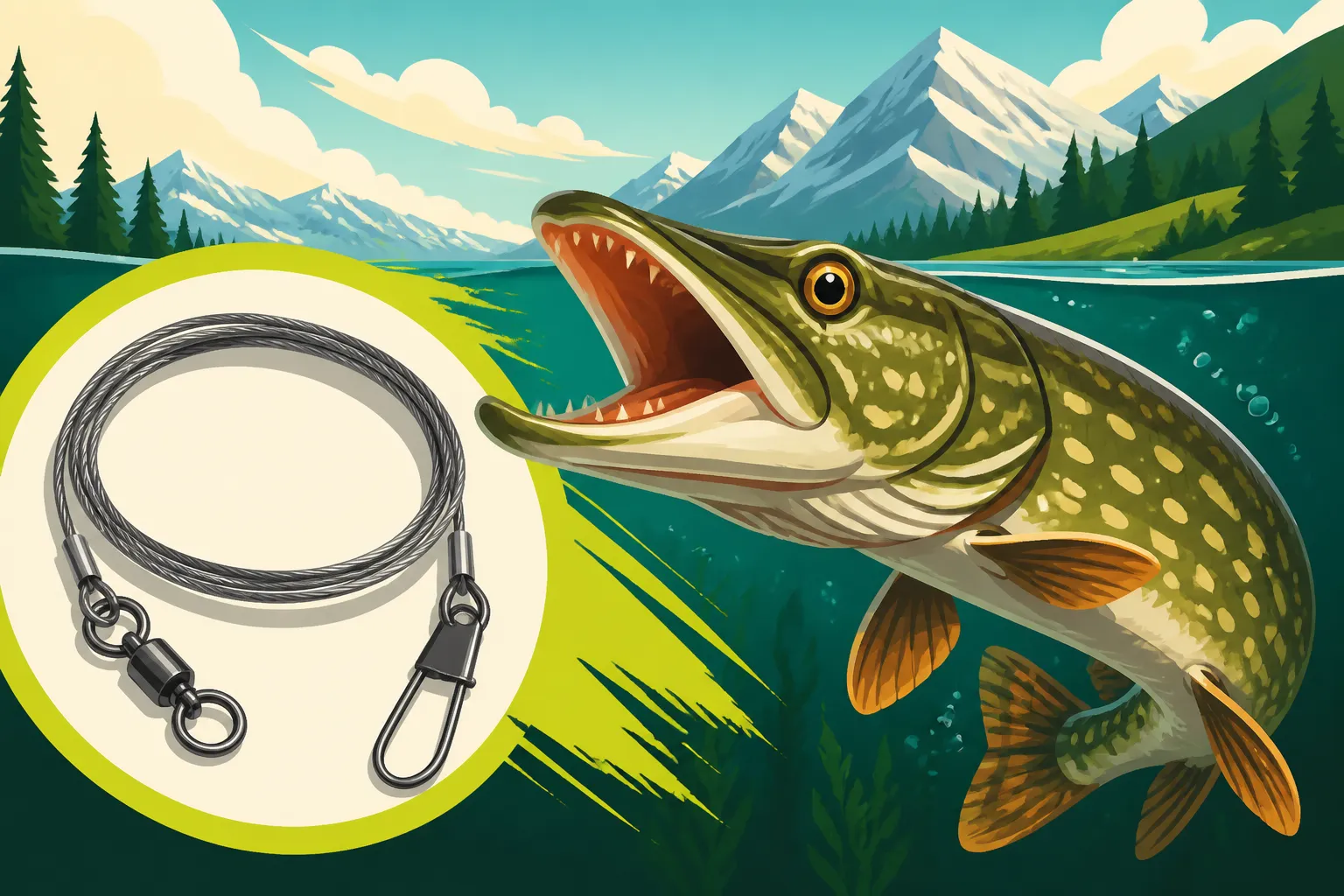
A pike's mouth is a gauntlet of danger for any standard fishing line. They possess hundreds of needle-sharp teeth, often described as canine-like, that line their jaws, not just on the sides but across the roof of their mouth and even on their tongue. When a pike strikes a lure, it doesn't just nibble; it clamps down with immense pressure, thrashing its head from side to side. Monofilament, fluorocarbon, or even braided lines, no matter how tough they might seem, simply don't stand a chance against this dental assault. It's not a matter of if your line will be cut, but when.
Imagine you're casting a brand new, highly effective spoon on a promising stretch of Lesser Slave Lake, perhaps targeting one of those bigger pike known to lurk there. You feel the heavy strike, set the hook, and for a glorious few seconds, you're locked in. Then, snap. Your line goes limp. The lure, a good twenty dollars, is now decorating the bottom of the lake, and the pike, though likely unharmed, is swimming off with a piece of metal in its mouth. This isn't just a blow to your wallet; it’s a preventable situation that a proper wire leader would have entirely averted. Protecting your tackle, and more importantly, ensuring the fish isn't left with hooks in its mouth, starts with the right leader. Northern Pike Habits in Alberta Lakes talks more about these impressive fish.
The Cost of Underestimating a Pike
The immediate cost of losing a lure might seem like the biggest issue, but there are deeper implications to underestimating a pike’s cutting power. Firstly, losing a fish because your line was cut can be soul-crushing, especially if it was a potential trophy. Anglers spend countless hours honing their skills, scouting spots, and investing in gear, only to have a moment of oversight undo it all.
Beyond personal disappointment, there's an environmental responsibility. Lost lures, especially those with multiple treble hooks, can become "ghost tackle." While pike often manage to shed hooks over time, leaving tackle in the water can pose a risk to other fish or wildlife. A wire leader acts as a critical safeguard, ensuring that when you hook a pike, you have the best possible chance of landing it, unhooking it quickly, and releasing it safely. This commitment to proper gear is part of responsible angling, something we should all strive for in Alberta's beautiful fisheries. Having the right tools, including the best Pike Gear for Alberta Lakes, is essential for a good day out.
Understanding Different Wire Leader Materials and Their Applications
When you walk into a tackle shop or browse online at places like Bass Pro Shops or Amazon, you'll quickly discover that "wire leader" isn't a single, uniform product. There's a variety of materials and constructions, each with its own strengths and ideal uses. Knowing the differences is key to making the best choice for your Alberta pike adventures.
Single-Strand vs. Multi-Strand Wire
The fundamental difference in wire leaders lies in their construction:
-
Single-Strand Wire (or Solid Wire): As the name suggests, this is a single, solid piece of metal wire.
- Pros: It's incredibly strong for its diameter, offers excellent abrasion resistance, and transmits vibrations from your lure very effectively, which can be a plus for feel. It's also often more economical.
- Cons: The biggest drawback is its tendency to kink. Once a single-strand wire gets a sharp bend or kink, its integrity is severely compromised, and it needs to be replaced. It's also quite stiff, which can sometimes impact the natural action of smaller, lighter lures. Attaching it usually requires a special knot (like a Haywire Twist) or crimps.
- Application: Best for situations where extreme bite protection is paramount and lure action isn't overly sensitive. Think larger, heavier spoons, inline spinners, or jerkbaits where the lure's inherent action isn't easily dampened by a stiffer leader.
-
Multi-Strand Wire (or Braided Wire/Cable Wire): This type consists of multiple thin strands of wire woven or twisted together, often with a nylon or plastic coating.
- Pros: Much more flexible than single-strand wire, resisting kinking far better. The flexibility allows for more natural lure presentation, especially with jigs, swimbaits, or soft plastics. It's also easier to knot (though specific knots are still required) or crimp. The coating often helps with knot integrity and reduces visibility.
- Cons: While flexible, it can be slightly more visible than single-strand wire, especially without a coating. The individual strands can fray over time, requiring inspection. It might be slightly less bite-proof than a thick single-strand wire of the same strength, but for pike, it’s still vastly superior to monofilament or fluorocarbon.
- Application: Excellent for a wider range of lures, particularly those where nuanced action is important. Great for spoons, spinnerbaits, soft plastics, and generally when you want a more subtle presentation without sacrificing pike protection. Many anglers prefer these for general How to Catch Northern Pike in Alberta situations.
Titanium, Stainless Steel, and Other Specialized Wires
Beyond the basic construction, the material itself plays a huge role in performance.
-
Stainless Steel Wire: This is the most common and traditional material for wire leaders.
- Pros: It's strong, corrosion-resistant, and relatively affordable. Available in both single and multi-strand configurations. It's a reliable workhorse.
- Cons: Single-strand stainless steel is prone to kinking. Multi-strand versions are much better but can still develop kinks or fatigue over many fish. Can be quite visible in clear water if not coated.
- Application: A versatile and cost-effective choice for most pike fishing scenarios. Many pre-made leaders you find in stores are made from stainless steel.
-
Titanium Wire: A more modern and high-performance option.
- Pros: The real standout feature of titanium is its incredible kink resistance and "memory." You can bend it significantly, and it will often spring back to its original shape. It's also lighter and stronger than steel for its diameter, and highly corrosion-resistant. This durability means fewer leader changes.
- Cons: The main downside is the cost. Titanium leaders are significantly more expensive than stainless steel. They can also be harder to work with for custom rigging, often requiring specialized crimps.
- Application: Ideal for anglers who want the absolute best performance, minimal leader changes, and are willing to invest. Great for situations where durability is key, such as fishing areas with structure or when targeting very aggressive fish.
-
Nylon/Plastic Coated Wire (often Stainless Steel): Many multi-strand leaders come with a clear or coloured nylon or plastic coating over a stainless steel core.
- Pros: The coating dramatically improves knot strength (compared to tying knots directly in bare wire), reduces wire visibility, and adds an extra layer of abrasion resistance. It also helps prevent fraying of the individual strands.
- Cons: The coating can eventually crack or peel with heavy use or sun exposure, especially if repeatedly bent or scraped. This can allow water to get to the steel core, potentially leading to corrosion, though this usually takes a long time.
- Application: A fantastic all-around choice for many anglers, offering a good balance of protection, flexibility, and reduced visibility. Products like American Fishing Wire's Surflon or Malin's Hard Wire often fall into this category.
Key Factors When Choosing Your Pike Wire Leader
Choosing the best wire leader for your pike fishing isn't just about picking one type of wire; it involves a balance of practical considerations that can greatly impact your success and enjoyment on the water.
Length and Strength (Test Weight)
The length and strength of your leader are critical choices.
- Length: For pike, a leader of 9 to 12 inches (23-30 cm) is a common and effective starting point. Why this range? It's long enough to protect your mainline from a pike's thrashing head and teeth even if the fish rolls or swallows the lure deeply. A shorter leader might be fine if the fish only bites the lure, but a longer one accounts for the unpredictable nature of a hooked pike. Going too long, however, can make casting more awkward and might affect lure presentation, especially with lighter lures. For particularly large lures or when deep-water fishing where pike might ingest the lure further, some anglers might go up to 18 inches.
- Strength (Test Weight): This refers to the breaking strain of the wire. For northern pike in Alberta, you'll generally want leaders in the 20 to 50 lb test range.
- 20-30 lb test: Suitable for smaller pike or when you're using lighter tackle and smaller lures, often in clearer water where minimal visibility is desired. While it offers protection, a larger, more aggressive pike could potentially stress it more.
- 40-50 lb test: This is the sweet spot for most general pike fishing in Alberta. It offers robust protection against even larger, more powerful pike and is strong enough to handle bigger lures and aggressive retrieves. This strength provides a good margin of safety without being excessively bulky.
- Remember that the leader's strength should complement your main line and rod's capabilities. There's little point in having a 50 lb test leader if your main line is only 15 lb braid, as the braid will be the weak link. Your Best Line Weight for Pike Fishing should be chosen with your leader in mind.
Hardware: Swivels, Snaps, and Crimps
The best wire leader in the world is only as good as its weakest connection. The hardware you use is just as important as the wire itself.
- Swivels: A high-quality swivel is essential, especially when using lures that spin or rotate, like spoons or inline spinners. It prevents line twist, which can weaken your main line and lead to tangles.
- Barrel Swivels: Basic and effective for preventing line twist.
- Ball-Bearing Swivels: The gold standard. They offer superior rotation and are less likely to bind up under pressure. While more expensive, they are a worthwhile investment for pike fishing, especially when using lures with a lot of action. Ensure the swivel is appropriately sized for your leader's test weight – don't put a tiny swivel on a heavy leader.
- Snaps: Snaps allow for quick and easy lure changes without having to re-tie your leader every time.
- Coastlock Snaps: Very popular and secure, with a locking mechanism that prevents the lure from accidentally coming off.
- Duo-Lock Snaps: Also very secure, typically a little bulkier but strong.
- Avoid cheap, flimsy snaps, as a pike's powerful jaw and head shakes can bend them open, resulting in a lost fish and lure. Always opt for strong, rated snaps that match or exceed the breaking strength of your leader.
- Crimps: Many anglers, especially those making their own leaders, use crimps to form loops in wire.
- Proper Crimping: Requires the correct size crimp sleeves (usually made of copper or aluminum) and a specialized crimping tool. When done correctly, crimps create a very strong, streamlined connection.
- Improper Crimping: Using the wrong size crimp or pliers instead of a crimping tool can severely weaken the connection or cut the wire, leading to failure. If you're not confident in your crimping technique, stick to pre-made leaders or knots.
Visibility and Presentation
Anglers often fret about leader visibility, and for good reason – fish can be spooky, especially in clear water. However, with pike, the priority shifts slightly.
- Pike Aggression: Pike are often ambush predators and notoriously aggressive. While extreme leader visibility might deter a wary trout, a pike is less likely to refuse a meal because it sees a thin wire. The right presentation and action of your lure are usually more critical.
- Balancing Act: The goal is to balance protection with stealth. A clear or dark-coated multi-strand leader will be less visible than a shiny, uncoated single-strand leader. If you're fishing exceptionally clear water, consider a black or dark green coated wire, or even a fluorocarbon-coated wire, which blends better. However, never compromise on actual bite-proof protection for perceived stealth. A nearly invisible leader that gets cut is useless. Focus on getting the lure in the right zone and giving it the right action, and the leader will do its job. Some anglers swear by dark leaders when fishing the clear waters of the Bow River for trout, but pike in murkier lakes might be less discerning.
Practical Tips for Rigging and Using Wire Leaders
Once you've chosen your wire leader, knowing how to properly rig it and maintain it is the final piece of the puzzle. Even the best gear won't perform if it's not set up correctly.
Attaching Your Leader to Main Line and Lure
The way you connect your wire leader is crucial.
- To Main Line:
- Knots: For multi-strand, coated wire leaders, strong knots like the Albright Knot, Surgeon's Knot, or Uni to Uni Knot can be used to attach the wire leader directly to your main braided or monofilament line. Practice these knots at home until you can tie them reliably and quickly. Wetting the knot before tightening is always a good practice to prevent friction heat.
- Swivel Connection: Often, the easiest and most reliable method is to tie your main line to one end of a high-quality swivel, and then attach your wire leader (which should already have a loop or snap on one end) to the other end of the swivel. This simplifies the connection and adds line twist protection. Use a Palomar Knot or an Improved Clinch Knot for tying to the swivel eye.
- To Lure:
- Snaps: As discussed, a quality snap on the end of your wire leader is the most convenient way to attach lures. It allows for quick changes and preserves the integrity of your leader.
- Direct Tie: While less common for wire, you can tie some single-strand wire leaders directly to a lure using a Haywire Twist. This creates an incredibly strong, low-profile connection but means re-tying every time you change lures, which is often impractical. For the versatility needed in Best Lures for Northern Pike in Alberta, snaps are usually preferred.
Maintenance and Inspection
Wire leaders are tough, but they're not indestructible. Regular inspection and proper maintenance will extend their life and prevent unexpected break-offs.
- After Every Fish: Pike have incredible jaw power. After every fish, especially a hard-fighting one, inspect your leader thoroughly. Run your fingers gently along the length of the wire, feeling for any nicks, abrasions, or kinks. Check the connection points to your swivel and snap for any signs of weakness or separation.
- Look for Kinks and Fraying: Single-strand wire needs to be replaced at the first sign of a kink. Multi-strand wire should be checked for frayed strands, especially near the crimps or knots. If the coating is compromised and the internal wire is showing, or if you see visible damage, it's time for a new leader.
- Check Hardware: Ensure your snap is still closing securely and isn't bent or damaged. Check the swivel for smooth rotation. If a swivel feels gritty or isn't spinning freely, replace it. These small pieces of hardware are often the failure point before the wire itself.
- Storage: Store your leaders neatly. Don't just coil them haphazardly in your tackle box where they can get bent or tangled. Many come on small spools or with special clips to keep them straight. This simple habit will significantly prolong their lifespan. Places like Amazon offer great tackle organization solutions that can help keep your leaders in top shape.
Where to Find Quality Wire Leaders
Finding good wire leaders isn't a challenge if you know where to look.
- Local Tackle Shops: Your local independent tackle shop is an excellent resource. The staff often have specific knowledge about the pike fishing in your area of Alberta and can recommend brands and styles that perform best in local conditions. They might even carry custom-made leaders.
- Big Box Retailers: Stores like Bass Pro Shops carry a vast selection of wire leaders from various reputable brands. You'll find everything from basic pre-rigged stainless steel leaders to advanced titanium options, often in multi-packs for convenience.
- Online Retailers: Websites such as Amazon offer an unparalleled selection, often at competitive prices. You can browse different brands, read reviews, and compare specifications. Just be sure to read product descriptions carefully to ensure you're getting the quality and type of wire leader you need. Look for established brands known for their fishing tackle.
Remember, investing in quality leaders is a small price to pay for the peace of mind and successful angling experiences they provide when targeting northern pike.
Here's a quick comparison of common wire leader types to help you decide:
| Feature | Single-Strand Stainless Steel | Multi-Strand Stainless Steel (Coated) | Titanium (Single or Multi-Strand) |
|---|---|---|---|
| Flexibility | Low (stiff) | High (very flexible) | Medium to High (excellent memory) |
| Kink Resistance | Low (prone to kinking) | High | Very High (springs back) |
| Visibility | Medium to High (shiny) | Low (especially with dark coating) | Low to Medium |
| Abrasion Resistance | High | High (coating helps) | Very High |
| Cost | Low to Medium | Medium | High |
| Typical Use | Heavier lures, minimal action | All-around, versatile | High-performance, frequent use |
| Connection | Haywire Twist, crimps | Knots (Albright, Uni), crimps | Crimps, specialized knots |
Whether you're fishing for that trophy pike on a northern Alberta lake or simply enjoying a day on a local pond, a quality wire leader is an indispensable part of your tackle. Make sure it's in your arsenal.
Disclaimer
This article is for general informational purposes only and does not constitute professional advice. Laws, prices and regulations vary by location and change over time. Consult a qualified professional for guidance on your specific situation.