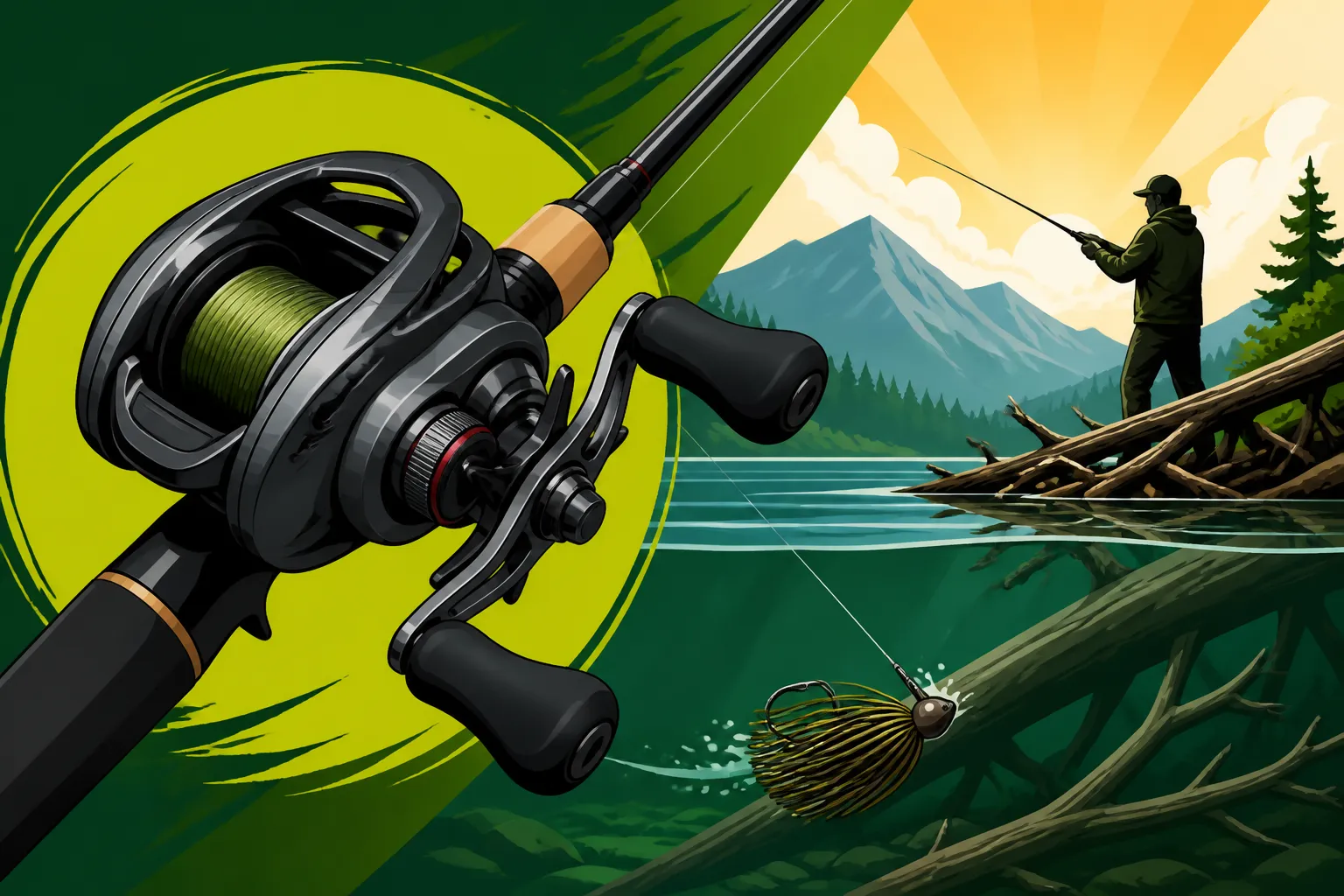
Best baitcaster for pitching jigs to laydowns
There's nothing quite as frustrating as seeing a prime piece of cover – a tangled log, a submerged brush pile, or a dense laydown – where you know a big pike or walleye is lurking, but you just can't get your jig in there precisely without spooking the fish or, worse, getting hopelessly snagged. We've all been there, trying to make an awkward sidearm cast with a spinning reel, only to land short, overshoot, or create a bird's nest. This guide is all about tackling that exact challenge by delving into the best baitcasting reels designed specifically for pitching jigs into those tight, fish-holding spots in Alberta's diverse waters.
Why a Baitcaster Excels for Pitching Jigs into Heavy Cover
When you're trying to fish those truly gnarly, fish-holding structures like fallen trees, thick reeds, or rocky crevices, a baitcaster isn't just a preference; it's often a necessity. While spinning reels have their place, the precise control and power offered by a baitcaster make it the undisputed champion for this demanding technique, especially here in Alberta where our fish love to hide deep in the timber.
Unmatched Accuracy and Control
The core advantage of a baitcaster for pitching lies in its ability to offer unparalleled accuracy and control, particularly at close to medium ranges. Think about trying to drop a jig into a small opening in a dense weed bed or just beyond a submerged log. With a spinning reel, you release the line and it pretty much goes where it wants, often with a noticeable "lob." A baitcaster, however, allows you to literally thumb the spool, feathering the line out with incredible precision. This means you can guide your jig with surgical accuracy, minimizing splash and placing your presentation exactly where you want it. This subtle approach is key when you're targeting wary fish tucked deep in cover.
Moreover, the direct connection you maintain with the lure allows for immediate adjustments mid-pitch. If you see a branch or a slight gust of wind alters your trajectory, a quick thumb adjustment can often correct the path, preventing a snag before it even happens. This fine-tuned control is what separates a good pitching setup from a frustrating one, particularly when dealing with the unpredictable elements often encountered on our Alberta lakes and rivers. This level of finesse also comes in handy when you're trying to avoid snags in notorious pike haunts where submerged timber is abundant. For more insights on targeting these toothy critters, check out Northern Pike Fishing in Alberta.
Power and Torque for Hauling Fish Out
Let's face it, when a big pike or a hefty walleye decides to hit a jig pitched into a laydown, their first instinct is often to dive straight back into that cover. This is where a baitcaster's power and torque truly shine. Unlike many spinning reels, which can feel underpowered when you're trying to muscle a strong fish away from structure, baitcasters are built for brute force. Their robust gearing systems provide incredible winching power, allowing you to turn a fish's head and pull it out of the snags before it can wrap your line.
This immediate stopping power and the ability to apply significant drag pressure directly through the reel are crucial. Imagine hooking into a 10-pound pike deep in a sunken tree on Lesser Slave Lake. With a spinning reel, you might struggle to keep it from burying itself further. With a quality baitcaster, you can often "shock" the fish, pulling it away from the cover in the critical first few seconds after the strike. This minimizes lost fish and broken lines, ensuring your hard-earned bite turns into a landed fish. This power also translates to handling heavier jigs and thicker lines necessary for these applications, which is something many anglers find essential when they're learning How to Catch Northern Pike in Alberta.
Durability and Longevity
Fishing heavy cover isn't gentle on your gear. Snags, unexpected strikes, and the constant battle with tough fish demand a reel that can take a beating and keep on performing. Baitcasters, by their very design, tend to be more robust than spinning reels. Their internal components are often beefier, and the overall construction is built to withstand the stresses of power fishing. This durability means your investment in a good baitcaster will last longer, even under the harsh conditions of pitching jigs into dense Alberta cover.
Think about the wear and tear a reel undergoes when you're constantly casting, fighting fish that want to wrap you around branches, and occasionally having to pull free a snagged jig. A well-constructed baitcaster is designed to handle this abuse day in and day out. While regular maintenance is always important for any reel, a baitcaster simply has fewer delicate parts exposed to potential damage compared to a spinning reel's open bail arm and rotor. This translates to more time fishing and less time worrying about your equipment failing when you need it most.
Key Features to Look For in a Pitching Baitcaster
Choosing the right baitcaster for pitching jigs isn't just about grabbing the first one you see. There are specific features that will make your life a whole lot easier and more successful when you're trying to hit those tight pockets in cover. Consider these elements carefully, and you'll be well on your way to a setup that feels like an extension of your arm.
Gear Ratio and Retrieve Speed
The gear ratio dictates how much line is retrieved with a single turn of the handle. For pitching jigs, especially when working heavy cover, a versatile to fast gear ratio is often preferred.
-
Higher Gear Ratios (7.1:1 to 8.1:1 and up): These reels excel at quickly taking up slack line, which is crucial for staying in contact with your jig as it falls and for setting the hook instantly when a fish bites. When a fish hits, you need to reel down quickly and lean into the hookset. High-speed reels also help you pull a fish out of cover faster after the strike, which can be the difference between landing it and losing it. They're fantastic for aggressive jigging or quickly retrieving your lure to make another precise pitch. If you're working a lot of shallow, snaggy areas, that fast retrieve can save you from a few hang-ups too.
-
Mid-Range Gear Ratios (6.3:1 to 6.8:1): While not as common for pure pitching specialists, a good mid-range gear ratio offers a balance of speed and power. These can be excellent "all-rounder" reels if you plan to use the same setup for pitching and other techniques like throwing spinnerbaits or heavier Texas rigs. They provide enough speed for hooksets but offer a bit more torque if you're dealing with exceptionally large fish or very thick cover where pure pulling power is paramount. However, for dedicated pitching, most anglers lean towards faster.
Braking Systems: Magnetic vs. Centrifugal
Braking systems are what prevent your spool from over-rotating and causing a dreaded backlash. For pitching, where short, controlled casts are the norm, having an effective and easily adjustable braking system is paramount.
-
Magnetic Braking Systems: These systems use magnets to apply resistance to the spool. They are generally externally adjustable, meaning you can dial the brakes up or down with a knob on the side of the reel without opening it up. This ease of adjustment is a huge plus for pitching because conditions (like wind, jig weight, or even your casting fatigue) can change rapidly. A quick turn of a dial allows you to adapt on the fly, reducing backlash and improving accuracy. They tend to be very consistent and forgiving, making them a good choice for those who are still honing their pitching skills or for anyone who values quick adjustments.
-
Centrifugal Braking Systems: These systems use small weights that move outward due to centrifugal force, pressing against a brake ring inside the reel. They provide a more "linear" braking force, often favored by experienced anglers for longer casts, as they provide strong braking at the beginning of the cast and less at the end, maximizing distance. For pitching, however, they can be less convenient as they often require opening the side plate to adjust the number of active weights. While some high-end reels offer external centrifugal adjustments, these are less common. If you prefer a very "tuned" feel and don't mind occasional internal adjustments, a centrifugal system can be incredibly effective, but for pure pitching convenience, magnetic or a hybrid system often wins out. Many reels today offer hybrid systems, combining the best of both worlds, providing strong initial braking and external fine-tuning.
Spool Design and Line Capacity
The spool is where your line lives, and its design can significantly impact your pitching performance. For jigs, especially heavier ones in cover, you'll want to use heavier line, which means line capacity is a factor.
-
Shallow Spools (often called "finesse" spools): While not strictly necessary for pitching jigs, some anglers prefer shallower spools for lighter jigs and thinner lines because they reduce the rotating mass, allowing for quicker startup and smoother casting of lighter presentations. However, for typical pitching jigs (1/4 oz and up) and heavier lines (15-20lb mono/fluoro or 30-50lb braid), a standard spool is perfectly fine and often preferred for better line capacity.
-
Deep Spools: For pitching, especially when using heavy monofilament, fluorocarbon, or braided line (which is often recommended for battling fish in structure), you need a reel with sufficient line capacity. You don't want to be constantly running out of line after a few heavy pitches or a strong fight. A spool that can comfortably hold 100-120 yards of 15-20lb fluorocarbon or 30-50lb braid is ideal. Deeper spools provide this peace of mind, ensuring you have enough line for powerful hooksets and battling big fish away from dense cover. When looking at options, you can often find great deals and a wide selection on Amazon or by visiting a local Bass Pro Shops to feel them in person.
Ergonomics and Weight
When you're pitching all day, often making hundreds of precise presentations, reel ergonomics become incredibly important.
-
Compact Design: A compact, low-profile baitcaster will fit more comfortably in your hand, reducing fatigue. This translates to more pitches, more accurately placed jigs, and a more enjoyable day on the water. A reel that feels like a natural extension of your hand enhances your sensitivity and control.
-
Weight: Lighter reels are generally better, as they reduce overall rod-and-reel fatigue. However, don't sacrifice durability or power for minimal weight savings. A slightly heavier, more robust reel that can handle the abuse of heavy cover fishing is often a better choice than an ultralight model that might not stand up to the task. The goal is a balanced setup with your chosen pitching rod.
Here's a quick comparison of key baitcaster features for pitching:
| Feature | Ideal for Pitching Jigs | Considerations |
|---|---|---|
| Gear Ratio | High (7.1:1 to 8.1:1+) | Fast slack pickup, quick hooksets, efficient retrieval |
| Braking System | Magnetic or Hybrid (externally adjustable) | Easy, on-the-fly adjustment for changing conditions, reduces backlash |
| Spool Design | Standard depth with good line capacity (100-120 yds 15-20lb mono/fluoro or 30-50lb braid) | Accommodates heavier line, sufficient for strong fights in cover |
| Ergonomics | Low-profile, compact, comfortable in hand | Reduces fatigue, improves control and accuracy over long fishing days |
| Durability | Robust frame and internal components | Withstands heavy cover fishing, powerful fish, and constant use |
Setting Up and Mastering Your Pitching Baitcaster
Getting a good baitcaster is just the first step. To truly unlock its potential for pitching jigs, you need to set it up correctly and then put in the practice to master the technique. It's not as daunting as it seems, and the rewards are well worth the effort, especially when you're targeting elusive fish in Alberta's tricky spots.
Line Choice: Braid, Fluorocarbon, or Both?
Choosing the right line is critical for pitching jigs into cover. Each type has its advantages and disadvantages.
-
Braided Line: This is often the top choice for pitching jigs into heavy cover due to its exceptional strength-to-diameter ratio and zero stretch. The lack of stretch means you get incredible sensitivity, feeling every bump and subtle bite, and powerful, instant hooksets even with a lot of line out. Its abrasion resistance, while not as good as fluorocarbon, is still very respectable, and its buoyancy can sometimes help with jig presentations. For jig pitching in thick stuff, I often run 30-50lb braid. The thicker diameter can actually be a plus as it's less likely to cut into wood or rock compared to thinner lines. You can learn more about specific lines in Best Braided Line for Pike Fishing.
-
Fluorocarbon Line: Known for its low visibility underwater and excellent abrasion resistance, fluorocarbon is another strong contender. It sinks, which can be advantageous for keeping your jig down in the strike zone. The low stretch offers good sensitivity and solid hooksets, though not quite as instant as braid. Its superior abrasion resistance makes it fantastic for grinding against rocks and timber without fraying as quickly. For pitching, anglers often use 15-20lb test fluorocarbon. A popular setup is to spool your baitcaster with braid and then add a 15-30 foot fluorocarbon leader using an Albright or FG knot. This gives you the strength and sensitivity of braid with the stealth and abrasion resistance of fluorocarbon. For leader material specifically designed for toothy fish, consider Best Leader for Pike Fishing.
-
Monofilament Line: While some anglers might use heavier mono for pitching in a pinch, it's generally not recommended for serious jig pitching in heavy cover. Its stretch reduces sensitivity and hooksetting power, and its abrasion resistance is inferior to fluorocarbon. Save the mono for topwaters or crankbaits where its stretch can be a benefit.
Tuning Your Braking System and Spool Tension
This is where the magic happens and where many beginners get frustrated. Proper tuning is key to preventing backlashes and achieving smooth, accurate pitches.
-
Spool Tension Knob: This is the small knob on the side of your reel, opposite the handle. It controls the mechanical tension on the spool. The general rule of thumb for pitching is to set it so that when you drop your jig, it falls freely to the ground, and when it hits the ground, the spool stops immediately or makes only one very slight turn. If it continues to spin, it's too loose. If the jig doesn't fall easily, it's too tight. Start a bit tighter than this and loosen it as you get more comfortable.
-
Braking System (Magnetic or Centrifugal):
- Magnetic Brakes: If your reel has external magnetic brakes, start with them set at about 50-70% power. Make some practice pitches. If you get backlashes, increase the brake setting. If your jig feels like it's "stopping short" or you're not getting good distance, decrease the brake setting. The beauty of magnetic brakes is how easily you can fine-tune them.
- Centrifugal Brakes: If your reel has internal centrifugal brakes, start by engaging 2-4 out of 6 weights (if applicable). As you get better and experience fewer backlashes, you can disengage weights one at a time to maximize performance. This takes more trial and error and is less convenient for on-the-fly adjustments.
The goal is to find the sweet spot where you get maximum distance and a smooth pitch with minimal thumbing, but without any dreaded backlashes. Remember, you'll still need to use your thumb as a "master brake" throughout the cast, especially as the jig slows down.
Mastering the Pitching Technique
Pitching isn't a traditional cast; it's a pendulum-like motion that requires practice.
-
Hold the Rod: Hold your rod with the reel up, about parallel to the ground or slightly angled down. The jig should be dangling 6-12 inches from the rod tip, just above the water (or ground, if practicing).
-
The Pendulum Swing: With your dominant hand on the reel, reel in until the jig is hanging correctly. Depress the thumb bar (or button) to free spool, keeping your thumb firmly on the spool. Gently swing the jig forward, letting the momentum load the rod. Just as the jig reaches the forward point of its swing and starts to move forward, remove your thumb from the spool.
-
The Release: The moment you remove your thumb, guide the rod tip to direct the jig. The motion is more of a "lob" or "swing" than a hard cast. As the jig flies, keep your eye on it and feather the spool with your thumb. This means light contact, slowing the spool just enough to prevent an overrun but not so much that it kills your distance.
-
The Landing: As the jig nears its target, lightly press your thumb onto the spool to stop it just as the jig hits the water. This provides a soft, silent entry, crucial for not spooking fish in shallow, clear water.
-
Practice, Practice, Practice: Start in your backyard or a wide-open area. Use a washer or a rubber practice plug instead of a jig. Set up targets – a bucket, a hula hoop, or even a small piece of paper – and practice pitching repeatedly. Focus on a smooth, controlled motion and consistent thumb pressure. The more you practice, the more intuitive it will become. You'll quickly develop that muscle memory that makes pitching second nature. You might even find yourself instinctively pitching into open water to warm up on an early morning before you start targeting the tough spots.
For anglers looking to expand their knowledge on other techniques, consider reading How to Fish a Spinnerbait for Alberta Lake Pike for alternative presentations. And always remember, a well-balanced rod and reel combo will make pitching much more enjoyable. Think about pairing your new baitcaster with a rod that matches its power and your intended use. For advice on rod choices, check out Best Rod Power for Pike Fishing.
Baitcaster Care and Maintenance for Heavy Use
Using your baitcaster for pitching into laydowns means it's going to work hard. Just like any tool that sees tough action, proper care and maintenance are absolutely essential to ensure its longevity and continued smooth performance. Neglecting your reel will lead to frustrating issues like sluggish casting, grinding gears, and ultimately, a breakdown.
Post-Trip Cleaning and Inspection
After every few trips, especially if you've been out in dusty conditions, heavy rain, or even just through a lot of snags, give your reel a quick once-over.
- Wipe Down: Use a damp cloth to wipe down the exterior of the reel, removing any dirt, grim, or dried water spots. Pay special attention to the line guide and any areas where dust might accumulate.
- Check Line: Inspect the first few feet of your fishing line for any nicks, fraying, or twists, especially if you've been working heavy cover. Retie your leader or cut back a few feet of main line if necessary. You don't want to lose a trophy fish due to weak line!
- Lubrication Points: Most modern baitcasters have easily accessible lubrication points for the handle knobs and the worm gear (under the line guide). A tiny drop of manufacturer-recommended reel oil in these spots can make a huge difference in smoothness. Don't overdo it; less is often more with reel oil.
- Drag Check: Test your drag to ensure it's still smooth and consistent. Over time, drag washers can wear out or get gummed up. If your drag feels sticky or jerky, it might be time for a more in-depth cleaning or replacement of the drag washers.
Taking these few minutes after each outing can prevent minor issues from becoming major problems, ensuring your reel is always ready for the next pitching adventure. This is particularly important for reels that get heavy use, like those dedicated to techniques such as Night Fishing for Walleye in Alberta where consistent performance is key.
Periodic Deep Cleaning and Service
Once or twice a season, depending on how often you fish, your baitcaster will benefit from a deeper cleaning. While some experienced anglers tackle this themselves, it's often best left to a professional reel technician if you're not comfortable disassembling intricate machinery.
- Disassembly and Cleaning: A deep clean involves carefully disassembling the reel, cleaning out old grease and grime from the gears, bearings, and other internal components. Specialized cleaning solutions are used to remove contaminants without damaging the parts.
- Inspection and Replacement: During a deep clean, all parts are inspected for wear and tear. Bearings might be replaced if they're no longer spinning freely, or drag washers if they're compressed or damaged. This proactive approach prevents failures out on the water.
- Re-lubrication and Reassembly: Once cleaned, all parts are carefully re-lubricated with specific reel grease for gears and oil for bearings and pivot points. Then, the reel is meticulously reassembled, ensuring all tolerances are correct for optimal performance.
Even if you're meticulous with your quick post-trip cleanings, internal grime and wear can build up. A professional service can restore your reel to like-new condition, extending its life significantly. Think of it like a tune-up for your vehicle; it keeps everything running smoothly and prevents costly breakdowns. This is especially true for reels that are constantly being used in challenging environments, such as those fishing for Walleye Special Harvest Licence Recovery Program eligible lakes, where reliability is paramount.
By investing a little time in care and maintenance, your pitching baitcaster will remain a reliable partner in your pursuit of Alberta's challenging but rewarding fishing opportunities, letting you confidently hit those tight laydowns season after season.
Disclaimer
This article is for general informational purposes only and does not constitute professional advice. Laws, prices and regulations vary by location and change over time. Consult a qualified professional for guidance on your specific situation.