Best anchor for fishing moving river current
Fishing in Alberta's beautiful rivers can be an incredibly rewarding experience, but anyone who's tried to hold a boat steady in a strong current knows the frustration. Trying to keep your craft in that perfect seam or over that productive drift while the river tugs relentlessly can be a battle, often leading to drifting past the ideal spot or worse, getting into a tricky situation. This guide is all about helping you understand the forces at play and choose the absolute best anchor and anchoring techniques for navigating those moving river currents safely and effectively, ensuring you spend more time fishing and less time fighting your boat.
Understanding River Dynamics and Anchor Challenges
When you're out on an Alberta river, whether it's the swift Bow River or a meandering prairie stream, you're interacting with a complex system of moving water. It's not like stillwater lake fishing where an anchor just needs to hit bottom and hold. Rivers are constantly pushing, swirling, and changing, and your anchoring strategy needs to reflect that dynamic environment.
The Force of the Current
Current isn't just about speed; it's about sheer force. A seemingly moderate current can exert significant pressure on your boat, especially if you have a larger profile or a deep hull. Imagine trying to hold a large kite in a steady wind – the bigger the kite, the harder it pulls. Your boat acts much the same way. The faster the water moves, the more pressure it applies to your hull, pushing it downstream. This force is what your anchor needs to overcome. In sections with rapids or chutes, the current can be so powerful that anchoring becomes extremely risky, as dragging an anchor or getting stuck could quickly become dangerous. Even a gentle current can become problematic if you don't have enough anchor holding power, slowly dragging you off your desired fishing spot without you even realizing it until it's too late.
Riverbed Composition Matters
What lies beneath the surface of the river is just as critical as the current above it. An anchor needs something to "bite" into, and riverbeds in Alberta are incredibly diverse. You might encounter anything from solid rock ledges to loose gravel, silty mud, or even dense weed beds.
- Rocky bottoms: These can be tricky. A traditional fluke anchor might just slide over smooth rock. You need something that can grab onto crevices or snag around larger boulders.
- Gravel and Sand: These are often good for anchors with sharp flukes or claws that can dig in and displace material. However, in very soft sand or fine gravel, a lightweight anchor might just plow a furrow.
- Mud and Silt: These soft bottoms require anchors with large surface areas or broad flukes that can penetrate deep and create suction or resistance. Small, pointy anchors will often just bury themselves without providing much hold.
- Weed Beds: These are notoriously difficult. Anchors tend to get fouled in the weeds, preventing them from digging into the bottom. In such cases, a heavier, non-digging anchor or a drag chain might be considered for simply slowing descent, rather than truly holding.
Understanding the typical riverbed composition of the particular stretch of river you're fishing is paramount to choosing an effective anchor. If you're unsure, a bit of probing with a sounding pole or even dragging a light test anchor can give you clues.
Safety First: Risks of Improper Anchoring
I can't stress this enough: safety is non-negotiable when anchoring in moving water. Improper anchoring can turn a peaceful fishing trip into a nightmare faster than you can say "snagged."
- Dragging Anchor: This is perhaps the most common issue. Your anchor isn't holding, and you're slowly but surely being pulled downstream. This can lead you into dangerous rapids, submerged obstacles, or even other boats. It's frustrating when you lose your spot, but it's dangerous if you lose control.
- Getting Stuck: Anchors can get wedged in rocks, logs, or other underwater debris. If you can't retrieve it, you're faced with cutting your expensive anchor line, or worse, being stuck fast in a strong current. Being stuck mid-stream with the current pushing your boat sideways against the line can quickly lead to capsizing. This is particularly concerning if you're alone or in cold water.
- Capsizing: If your anchor line snags and you don't have a quick release or enough slack, the force of the current can push your boat sideways, creating an immense amount of pressure. If the current gets under the upstream side of your boat, it can easily flip you over. Always know your Life Jacket Requirements for Alberta Boaters and make sure everyone on board is wearing one.
Always have a sharp knife readily accessible to cut your anchor line in an emergency. It's a last resort, but your life is worth more than an anchor.
Key Characteristics of a Good River Anchor
So, what makes an anchor suitable for river fishing? It's more than just a lump of metal. A truly effective river anchor is a combination of design, weight, and proper deployment technique.
Weight vs. Design: Finding the Balance
Many people mistakenly believe that the heavier an anchor is, the better it will hold. While weight certainly plays a role, especially in strong currents or on soft bottoms, it's the design of the anchor that truly dictates its holding power.
- Weight: Provides initial penetration and resistance to dragging. For smaller boats like kayaks or canoes, a lighter anchor might suffice for slowing down, but for actually holding in a decent current, you'll need a certain amount of mass. A heavier anchor can also help a fluke anchor dig into harder bottoms.
- Design: This is where the magic happens.
- Flukes/Blades: Anchors with broad, sharp flukes are designed to dig into soft or sandy bottoms, creating significant resistance.
- Claws/Grips: Anchors like the Bruce or 'Claw' type have a unique design that allows them to orient quickly and dig in effectively across a variety of bottom types, from mud to rock. They don't just sit; they grab.
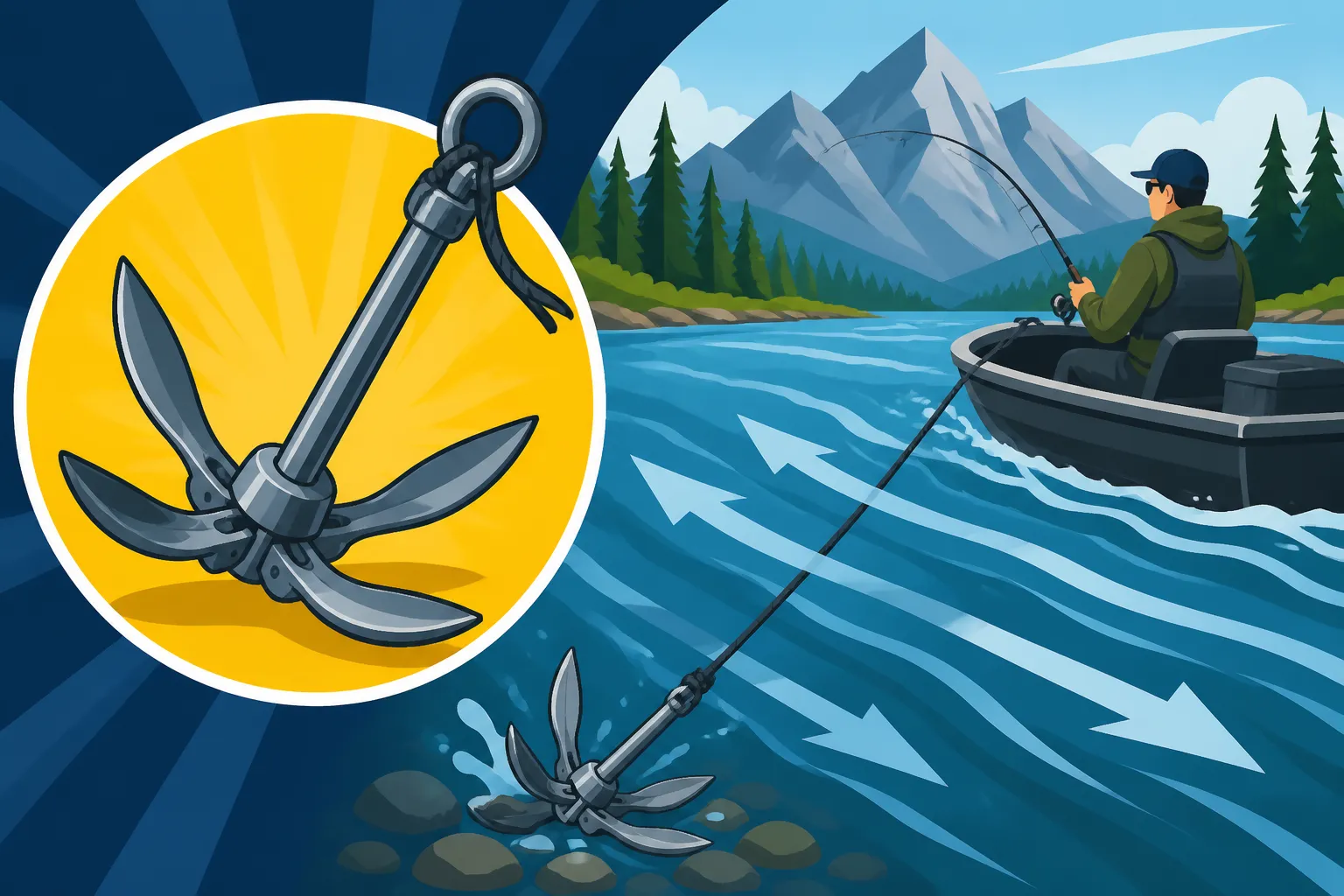
- Prongs/Arms: Grapnel anchors have multiple arms that are designed to snag onto rocks, logs, or other irregularities on the riverbed.
A well-designed anchor of moderate weight can often outperform a much heavier, poorly designed one. It's about how efficiently the anchor interacts with the riverbed to resist the pull of the current.
Rode Length and Scope: The Golden Ratio
This is one of the most overlooked aspects of effective anchoring, especially in rivers. "Rode" refers to your anchor line (rope, chain, or a combination). "Scope" is the ratio of the length of your anchor rode to the depth of the water (plus any height from the water to your bow roller or cleat).
- Why it matters: An anchor holds best when the pull on it is as horizontal as possible. If you drop your anchor directly below your boat (a 1:1 scope), the pull is vertical, and the anchor will likely just skip along the bottom or pull free. With a longer rode, the pull becomes more horizontal, allowing the anchor's flukes or claws to dig in more effectively.
- The "Golden Ratio" for rivers: For relatively calm waters, a 5:1 or 7:1 scope is often recommended (meaning 5-7 feet of rode for every 1 foot of depth). In rivers, however, with their constant current, you often need even more scope. I personally aim for at least 7:1, and sometimes up to 10:1 or more if the current is strong or the bottom is soft. This means if you're anchoring in 10 feet of water, you might need 70-100 feet of anchor line deployed!
- Consequences of insufficient scope: Your anchor won't dig in properly, it will drag, and you'll constantly be repositioning. It also increases the risk of snagging or getting stuck because the anchor isn't fully set.
Always carry more anchor rode than you think you'll need. It's better to have too much than not enough, especially on a long stretch of river.
Anchor Material and Durability
Your anchor is going to take a beating in a river. It'll scrape against rocks, get dragged through gravel, and be exposed to water constantly. The material it's made from directly impacts its lifespan and performance.
- Galvanized Steel: This is the most common and cost-effective material. Steel anchors are hot-dip galvanized, meaning they're coated in a layer of zinc to prevent rust and corrosion. It's durable and suitable for most freshwater river conditions, though the galvanization can wear off over time, especially with frequent use on rocky bottoms. You can find a wide range of galvanized anchors at places like Bass Pro Shops or on Amazon.
- Stainless Steel: The Cadillac of anchor materials. Stainless steel anchors are highly resistant to corrosion and offer a sleek, polished look. They're also much more expensive. While they look great and last a long time, the added cost is often hard to justify for typical river fishing, as their holding power isn't inherently better than a well-designed galvanized anchor.
- Lead or Coated Weights: Some smaller river anchors, especially for kayaks or canoes, might be made of lead or have a rubberized coating. These are often designed to be less abrasive to your boat and quieter when deploying. While they rely mostly on weight, their compact size can be an advantage in small craft.
Regardless of the material, always inspect your anchor and rode after each trip for signs of wear, especially if you've been on a particularly challenging river.
Types of Anchors for Alberta Rivers
Let's dive into the specific types of anchors that are best suited for the unique challenges of Alberta's moving waters. Each has its strengths and weaknesses, and the "best" one often depends on your specific boat, the river you're on, and the bottom composition.
River Anchors: The Workhorses
When most people think of a "river anchor," they often picture a heavy, compact design. These anchors are typically pyramid-shaped, mushroom-shaped, or have a simple flat-bottomed design with a few short flukes.
- Design Philosophy: They rely heavily on weight and their ability to dig in slightly or settle into softer bottoms, often in combination with ample scope. They are designed to minimize snagging compared to traditional fluke anchors.
- Strengths:
- Good for soft to medium bottoms (mud, sand, fine gravel).
- Less prone to snagging on rocky or debris-strewn bottoms compared to anchors with large, fixed flukes.
- Relatively compact and easy to store.
- Effective for slowing a drift rather than holding stationary, which is often preferable for certain fishing techniques.
- Weaknesses:
- Can struggle to hold in very strong currents, especially on harder bottoms where they can't dig in.
- May skip or drag on smooth rock.
- Requires significant weight for effective holding.
- Real-life scenario: If you're drifting a slow-moving section of the Oldman River in a jon boat, and you hit a consistent patch of sandy bottom where you want to pause and work a specific hole, a heavy pyramid anchor with plenty of rode can often do the trick. It provides a reliable, if not always immovable, hold.
Claw (Bruce) Anchors: Versatile Holders
The Bruce or "Claw" anchor, originally developed for oil rigs, has become incredibly popular for recreational boating due to its versatility.
- Design Philosophy: It has a distinctive three-claw design that is excellent at orienting itself quickly on the seabed and digging in. It offers very high holding power for its weight.
- Strengths:
- Excellent holding power in a wide variety of bottom conditions, including mud, sand, gravel, and even broken rock.
- Sets quickly and reliably.
- Less prone to fouling than some other designs.
- Can pivot in current without losing its bite.
- Weaknesses:
- Can be bulky to store compared to compact river anchors.
- Can get snagged in very heavy rock or debris fields, although less so than a traditional fluke anchor.
- Real-life scenario: Fishing the Bow River Trout Fishing Near Calgary where you might encounter patches of gravel, sand, and some cobble. A claw anchor is a fantastic choice because it adapts well to these changing conditions, giving you confidence that you'll hold fast in the often-swift current. For heavier boats, a 15-20 lb claw anchor can be a game-changer.
Grapnel Anchors: For Rocky Bottoms
Grapnel anchors feature four or more prongs that are designed to fold up for storage and deploy to snag onto submerged objects.
- Design Philosophy: They are not designed to dig into soft bottoms, but rather to latch onto irregularities like rocks, boulders, or sunken logs.
- Strengths:
- Excellent for extremely rocky riverbeds where other anchors would simply slide or get irrevocably stuck.
- Can be a good choice for smaller boats like a Best Kayak for River Fishing in Alberta where you might want to quickly snag onto something temporarily.
- Foldable designs are very compact.
- Weaknesses:
- Almost guaranteed to get snagged if not rigged with a trip line.
- Poor holding power on soft bottoms.
- Requires careful deployment and retrieval.
- Real-life scenario: If you're exploring smaller, rocky mountain streams in a canoe or kayak and need to momentarily hold your position against a rock for a cast. For this, a grapnel anchor with a trip line is essential.
- The Trip Line: This is crucial for grapnel anchors. Instead of attaching your anchor line to the top of the anchor, you attach it to the bottom, near the flukes. Then, you run a lighter line (the trip line) from the bottom attachment point up the shank and secure it to the top of the shank with a zip tie or light piece of twine. If the anchor gets stuck, you can pull hard on the main line, breaking the zip tie, and then pull the anchor out by its bottom, freeing it from the snag.
Drag Chains and Weighted Bags: DIY Solutions
Sometimes, especially for smaller crafts or in specific situations, a traditional anchor isn't the primary goal. You might just want to slow your drift or add a bit of stability.
- Drag Chains: A simple length of heavy chain, often 6-10 feet long, deployed from the bow. It's not designed to "hold" in the traditional sense, but the weight and friction of the chain dragging along the bottom can significantly slow your boat's drift.
- Pros: Very resistant to snagging, cheap, easy to deploy and retrieve, excellent for slowing a drift.
- Cons: Doesn't provide a true "hold," less effective in strong currents for stopping.
- Weighted Bags/Buckets: A heavy-duty bag filled with rocks or sand, or even a bucket with concrete, can act as a rudimentary anchor.
- Pros: Extremely cheap or free, good for very small craft or temporary stops.
- Cons: Very poor holding power, not durable, cumbersome.
- Real-life scenario: You're fly fishing from a drift boat on the Crowsnest River Trout Fishing and you want to slow your downstream progress just enough to thoroughly work a long run. A drag chain is perfect here; it keeps you moving but at a controlled pace, allowing you to focus on your casts and drifts without worrying about snagging or stopping completely.
| Anchor Type | Ideal Riverbed Types | Current Strength | Boat Size Recommendation | Pros | Cons |
|---|---|---|---|---|---|
| River Anchor | Mud, Sand, Fine Gravel | Moderate | Small to Medium | Less snagging, compact, good for slowing drift | Struggles on hard bottom/strong current, relies heavily on weight |
| Claw (Bruce) | Mud, Sand, Gravel, Broken Rock | Moderate to Strong | Medium to Large | High holding power, sets quickly, versatile | Can be bulky, minor snag risk in heavy rock |
| Grapnel Anchor | Heavy Rock, Boulders, Debris | Any (with trip line) | Small to Medium | Excellent for snagging rocky bottom, compact | Poor on soft bottom, requires trip line to prevent loss |
| Drag Chain | Any (for slowing, not holding) | Light to Moderate | Small to Large | Won't snag, excellent for slowing drift | Does not provide a secure hold |
Essential Rigging and Techniques for River Anchoring
Having the right anchor is only half the battle. Knowing how to rig it properly and deploy it safely is equally important, especially when contending with dynamic river currents.
The Anchor Rode: Rope, Chain, and Connectors
Your anchor rode is the critical link between your boat and the anchor. It's not just a length of rope; a proper setup includes both rope and chain.
- Anchor Chain: A short length of heavy chain (typically 6-10 feet) is indispensable for river anchoring. It serves several vital purposes:
- Weight: The chain adds weight directly above the anchor, helping it lie flat on the bottom and dig in. This improves the anchor's setting performance significantly.
- Abrasion Resistance: The chain protects the initial section of your rope from chafing and cutting on rocky or abrasive riverbeds.
- Shock Absorption: The weight of the chain helps absorb some of the shock from waves or boat movement, reducing the strain on the anchor and preventing it from popping free.
- Angle: The chain helps create a more horizontal pull on the anchor, improving its holding power (this ties back into the 'scope' discussion).
- Anchor Rope: This is the main length of your rode. It should be strong, durable, and resistant to UV degradation. Nylon is a popular choice because it has some stretch, which acts as a shock absorber. I usually carry at least 100-150 feet of rope for river fishing, sometimes more for deeper rivers or when I need maximum scope.
- Connectors: Use heavy-duty, marine-grade shackles to connect the chain to the anchor and the rope to the chain. Make sure all connections are secure and inspect them regularly for wear. Use stainless steel thimbles where the rope is spliced to form a loop, as this prevents chafing against the shackle.
Investing in good quality anchor rode will save you headaches (and potentially your boat) in the long run. Don't skimp here.
Quick Release Systems and Safety Considerations
In a river, things can go wrong very quickly. An anchor that snags unexpectedly in strong current can pull your boat sideways and flip it in seconds. This is why a quick-release system is not just recommended; it's absolutely essential.
- Cleat Hitch: The most common and effective quick-release method is to tie your anchor line to a sturdy bow cleat using a proper cleat hitch. Practice this knot until you can tie and untie it quickly, even under pressure. The key is to secure it so it holds firmly, but also allows for rapid release with a few pulls if necessary.
- Anchor Trip System (for some anchors): For certain anchor types, especially grapnels, a separate trip line (as discussed earlier) can help retrieve a snagged anchor without having to cut the main line.
- Cutting Knife: As mentioned, always have a sharp knife readily available and visible in the cockpit, perhaps attached to your PFD or a dedicated mount, so you can cut the anchor line in an absolute emergency. It's better to lose an anchor than your boat or your life.
- Never Anchor from the Stern: This is a golden rule of river safety. Anchoring from the stern can cause your boat to swamp or capsize almost instantly as the current flows over the transom. Always anchor from the bow, allowing your boat to naturally orient itself into the current.
Remember, even experienced anglers can face unexpected situations. Prioritizing safety through proper rigging and quick-release mechanisms is paramount.
Anchoring Upstream vs. Downstream
The direction you deploy your anchor matters significantly in a river.
- Deploying Upstream: This is the most common and safest method for stationary anchoring.
- Motor slowly upstream of your desired fishing spot.
- Stop your boat and begin to slowly drop your anchor while drifting downstream. As you drift, feed out anchor rode, allowing the chain to hit the bottom first, followed by the anchor.
- Continue drifting past your intended spot, feeding out enough rode to achieve the proper scope (e.g., 7:1 or more).
- Once sufficient rode is out, gently snub the anchor line. The boat's downstream momentum will help the anchor dig in.
- Check that the anchor is holding firmly. You should feel tension but no dragging. Your boat will now be facing upstream, held securely over or just above your fishing zone.
- Deploying Downstream (for retrieving or very specific techniques): While you generally anchor from the bow pointing upstream, there are times you might use downstream deployment as part of a retrieval or controlled drift. For example, some anglers use a second, lighter anchor dropped downstream to "pivot" their boat, or to slowly move down a section. However, for primary holding, always deploy upstream.
- Retrieving the Anchor:
- Motor slowly upstream, directly over your anchor. This reduces the strain on the anchor and allows you to pull it straight up.
- As you approach the anchor, take up the slack in the rode.
- Once directly above it, pull the anchor straight up and into the boat. Never try to retrieve a deeply set anchor by simply pulling hard against the current while stationary. You risk pulling your boat sideways or getting the anchor stuck.
Knowing how to properly deploy and retrieve your anchor is as crucial as picking the right one. Practice these techniques in calmer conditions before tackling swift currents.
Choosing the Right Anchor for Your Craft and Alberta Waters
The "best" anchor isn't a one-size-fits-all solution. It depends heavily on the type of boat you're using and the specific characteristics of the Alberta rivers you plan to fish.
Small Boats and Kayaks: Lighter Solutions
For personal craft like canoes, kayaks, and small inflatable boats, portability and ease of deployment are key. You're not trying to stop a large powerboat; you're often just trying to hold a smaller, lighter vessel.
- Kayak Anchors: Small, often coated, river anchors (pyramid or mushroom style) are very popular. Weights typically range from 1.5 to 5 pounds. The coating helps protect your kayak's hull and keeps noise down. A grapnel anchor with a trip line can also be effective for rocky areas.
- Anchor Trolley System: For kayaks, an anchor trolley is almost a mandatory accessory. This system uses a line and pulleys to allow you to move your anchor attachment point from the bow to the stern (or anywhere in between) without having to un-anchor and re-anchor. This is incredibly useful for Kayak Fishing Techniques for Alberta Lakes and rivers, letting you pivot your kayak to fish different angles without repositioning your anchor. You can find these systems at most marine retailers, including Bass Pro Shops.
- Rode: A strong braided rope, often 50-75 feet long, is usually sufficient, but always aim for generous scope.
- Real-life scenario: You're in your fishing kayak on a section of the Red Deer River with a gentle current, wanting to hold over a submerged log jam. A 3-pound coated river anchor paired with an anchor trolley allows you to easily set, adjust your position, and retrieve without fuss.
Larger River Boats: Heavier Duty Requirements
If you're operating a larger jon boat, drift boat, or even a jet boat on substantial rivers like the Bow River or the North Saskatchewan, you'll need significantly more robust anchoring solutions.
- Weight and Design: For these boats, a heavier claw anchor (10-30 lbs, depending on boat size and current) or a substantial river anchor (15-40 lbs) is often necessary. The greater weight helps overcome the increased surface area of the boat against the current.
- Electric Anchor Winches: For larger, heavier anchors, an electric anchor winch can be a back-saver. While an investment, it allows for effortless deployment and retrieval, keeping you focused on fishing.
- Anchor Nest/Bow Roller: A dedicated anchor nest or bow roller system helps manage a larger anchor and its chain, protecting your boat's bow from scrapes and making deployment smoother.
- Rode: You'll need at least 150-200 feet of robust anchor rope, along with a good length of heavy chain (10-15 feet), to achieve adequate scope in deeper, faster rivers.
- Real-life scenario: Navigating a powerful section of the Bow River in your drift boat, you spot a promising eddy. A 20-lb claw anchor, dropped upstream with proper scope, digs in firmly, allowing you to hold your position against the strong current and methodically work the water. For more information on boats suitable for these conditions, check out Best Boats for Alberta Lakes and Rivers.
Specific Alberta River Considerations
When fishing Alberta's diverse rivers, keep these regional insights in mind:
- Mountain Rivers (e.g., Bow, Crowsnest, Oldman): These rivers often feature swift currents, rocky bottoms, and variable depths. Claw anchors or well-rigged grapnel anchors (with trip lines) are often the best choices due to their ability to hold in mixed or rocky conditions. Ensure you have ample scope for the depth and current. Understanding How to fish a run and pool trout river also helps with anchor placement.
- Prairie Rivers (e.g., Red Deer, North Saskatchewan, Battle River): These rivers can have slower, meandering sections but also deep channels with strong currents. Bottoms can range from sandy and silty to gravelly. River anchors or claw anchors are typically effective here, with an emphasis on sufficient weight and scope for softer bottoms.
- National Parks (e.g., Banff, Jasper): Specific regulations may apply to fishing and boating within National Parks, including rules about anchoring. Always check the local park regulations before heading out.
Matching your anchor to your craft and the specific river you're fishing will significantly enhance your experience and safety.
Maintenance and Storage of Your River Anchor
Just like any other piece of essential fishing gear, your anchor needs a little love and attention to ensure it performs reliably for years to come. Proper care prolongs its life and, more importantly, ensures your safety on the water.
Cleaning and Inspection After Use
After a day on the river, especially if you've been dragging your anchor over various bottom types, it's good practice to give it a quick once-over.
- Rinse Off Debris: Mud, weeds, and small rocks can cling to your anchor. Rinse it thoroughly with fresh water. This prevents organic matter from rotting and reduces the spread of invasive species between waterways – a crucial aspect of responsible angling in Alberta. Alberta Boating Laws for Anglers often touch upon these environmental considerations.
- Check for Wear and Tear:
- Anchor Body: Look for bends, cracks, or excessive abrasion, especially on the flukes or claws. A severely damaged anchor might not hold properly.
- Chain: Inspect the links of your chain for wear, rust, or distortion.
- Rope: Examine the first few feet of your anchor rope (where it connects to the chain) very carefully for fraying, cuts, or weak spots. This is the most common area for damage due to chafing on the riverbed or against the boat. If you find significant fraying, it's time to replace that section of rope or consider splicing in a new piece.
- Connections: Ensure all shackles are tight and secure. Replace any corroded or weakened shackles.
A few minutes of inspection after each trip can prevent a major headache (or even a dangerous situation) on your next outing.
Proper Storage to Prevent Damage and Snags
How you store your anchor when not in use is just as important as how you deploy it.
- Keep it Tidy: Neatly coil your anchor rope. Some anglers use an anchor bag or bucket to keep the rope from tangling and to prevent dirt from getting into the boat. This also makes for quicker deployment next time.
- Secure the Anchor: Don't just let your anchor bounce around in the boat. A loose anchor can cause damage to your hull, other gear, or even injure someone.
- Anchor Locker: If your boat has one, this is the ideal place.
- Dedicated Anchor Holder/Strap: Many boats have specific mounts or straps on the bow or stern to secure the anchor.
- Bucket or Box: For smaller boats, storing the anchor in a sturdy bucket or plastic tote can keep it contained and prevent it from rolling around.
- Protect Your Rode: Keep your anchor rope out of direct sunlight when not in use, as UV rays can degrade nylon over time. Also, ensure it's not stored in a place where it can be chewed by rodents.
- Avoid Entanglement: Always stow your anchor and rode in a way that prevents it from getting tangled with other gear, especially if you have sensitive electronics or Best Rod and Reel Combo for Beginners lying around. A knotted, tangled anchor line is frustrating to deploy and can lead to dangerous delays in an emergency.
By taking these simple steps, your anchor will be ready when you need it, helping you enjoy more successful and safer fishing adventures on Alberta's beautiful rivers.
Disclaimer
This article is for general informational purposes only and does not constitute professional advice. Laws, prices and regulations vary by location and change over time. Consult a qualified professional for guidance on your specific situation.