Best Fly Boxes for the Bow River
Oh, the sheer joy, and sometimes sheer frustration, of preparing for a day of fly fishing on the magnificent Bow River! There's nothing quite like the feeling of carefully selecting your flies, anticipating the hatch, and then… realizing your favourite caddis patterns are crushed at the bottom of a generic tackle box, or worse, half-eaten by foam rot because of moisture. It's a common angler's lament, but fear not, because choosing the right fly box can truly elevate your fishing experience, protecting your precious patterns and making those crucial on-the-water fly changes a breeze. This guide is all about helping you navigate the options and pick the best fly boxes perfectly suited for the diverse and demanding conditions of the Bow River.
Why a Dedicated Bow River Fly Box Matters
Fly fishing the Bow River isn't just about casting a line; it's an art, a science, and sometimes, a bit of a battle against the elements. Your flies are your ammunition, and just like any good soldier, you need to keep your gear organized, protected, and ready for action. A dedicated fly box isn't just a container; it's a strategic tool.
The Bow River's Unique Demands
Think about the sheer variety of hatches and conditions you encounter on the Bow. One day you might be dealing with a blanket hatch of large golden stoneflies, requiring substantial dry flies, and the next, you're Euro nymphing tiny midges in deep runs. Then there are the streamers for those aggressive brown trout. Fly Fishing for Trout on the Bow River is a dynamic experience that demands adaptability, and your fly storage needs to reflect that.
A standard, run-of-the-mill fly box often falls short. Its compartments might be too small for larger patterns, or too open, allowing tiny nymphs to mingle into an indistinguishable tangle. The Bow can also throw anything at you, from blazing sun to sudden downpours, and a flimsy box won't cut it. You need something that can withstand being dropped on rocky banks, splashed in the boat, or even briefly submerged during a wading mishap.
Beyond the physical demands, there's the mental game. When the fish are rising, and the hatch is on, you don't want to fumble through a disorganized mess. Quick access to the right fly can be the difference between hooking a trophy and watching it sip away. A well-organized fly box tailored to Bow River fishing means less frustration and more time with your line in the water, which, let's be honest, is what we're all really after.
Protecting Your Investment
Let's face it, flies aren't cheap. Whether you tie them yourself, pouring hours of meticulous effort into each one, or you buy them from your favourite local fly shop, each fly represents an investment of time, money, and hope. A crushed hackle, a bent hook point, or a water-damaged material can render a fly useless, and that's just heartbreaking.
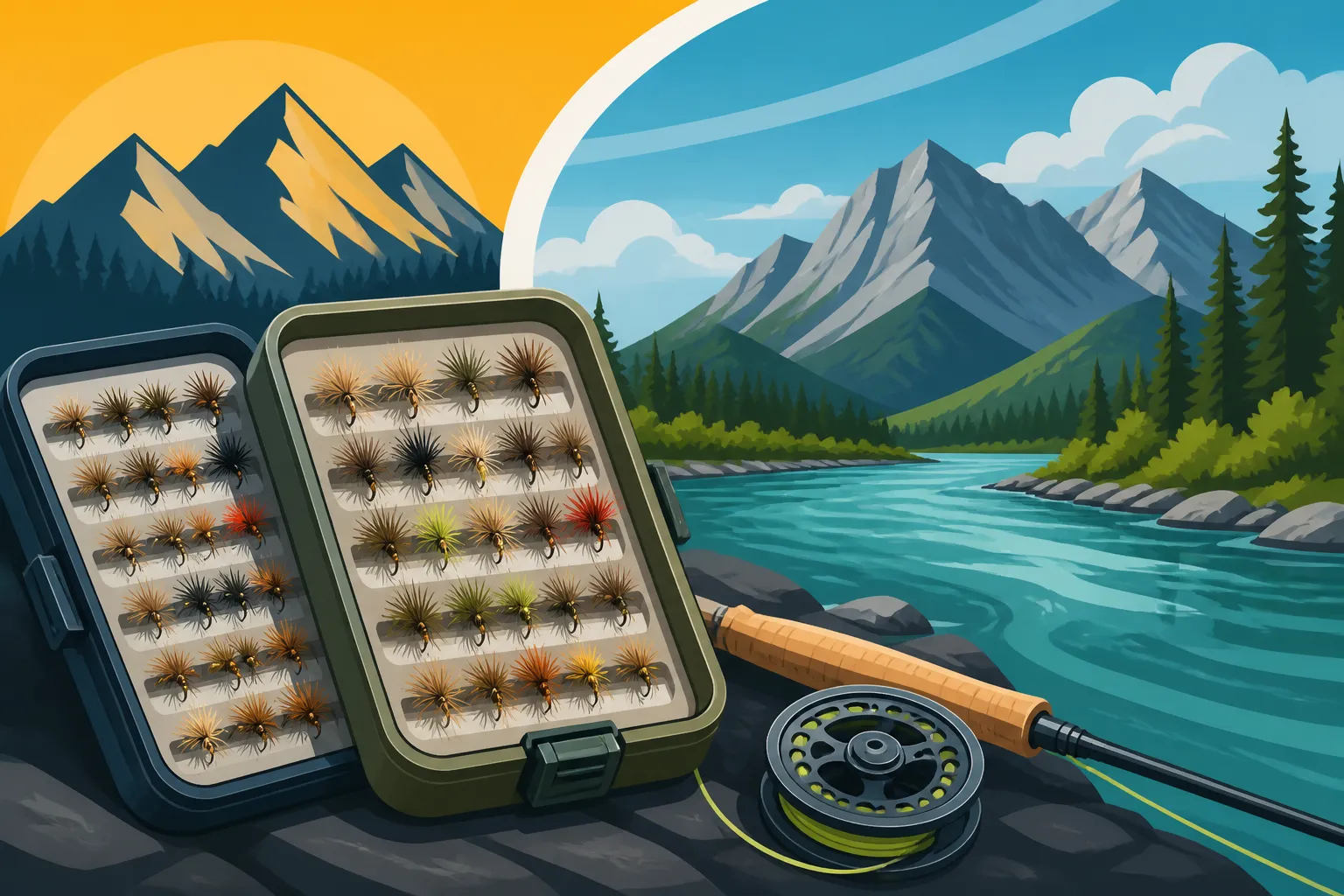
Quality fly boxes are designed with this protection in mind. They feature specialized foam inserts, magnetic bases, or silicone slits that securely hold each fly individually, preventing them from crushing against each other or rattling around. This is especially critical for delicate dry flies with their precise hackles and wings, or for small, barbed nymphs where a bent hook means a missed fish.
Furthermore, a good fly box guards against the elements. Moisture, whether from rain, splashes, or even just high humidity, can wreak havoc on natural materials, causing hooks to rust and threads to weaken. A waterproof or highly water-resistant box seals out the dampness, preserving your flies in pristine condition until you're ready to tie them on. Considering the effort and cost associated with acquiring a robust collection of Fly Patterns for the Bow River, protecting them is paramount to ensuring they perform their best when it counts.
Key Features to Look for in a Bow River Fly Box
When you're outfitting yourself for a day on the Bow, it’s not just about the rod and reel; the smaller details make a huge difference. Your fly box is one of those critical pieces of gear that needs to pull its weight.
Capacity and Compartmentalization
The Bow River boasts an incredible diversity of insect life, meaning you'll need a wide array of fly patterns to match. From tiny size 22 midges to bulky size 6 stonefly nymphs and streamers, your fly box needs to accommodate them all without turning into a chaotic jumble. This is where capacity and thoughtful compartmentalization come into play.
Consider how many different patterns and sizes you typically carry. Are you someone who likes to bring a huge selection, or do you prefer a more minimalist approach for a quick trip? For a full day of wading or floating, you'll likely want a larger box that can hold a hundred or more flies, possibly segmented into different sections for dry flies, nymphs, and streamers. Some boxes even have specific compartments for different sizes, making it easier to grab that size 18 Baetis emerger when the hatch gets tricky. Having a few different boxes, perhaps a smaller "on-person" box and a larger "base camp" box, is often the best strategy.
The type of fly retention system also dictates effective capacity. Boxes with dense slit foam might hold more flies in a smaller footprint than those with larger, individual compartments. Think about what kind of flies you carry most often for the Bow River. If you're primarily a dry fly angler, look for foam that offers good barb protection. If nymphs are your game, a box with sturdy silicone inserts will keep them from popping out. A well-designed fly box helps you maximize your carrying capacity without sacrificing organization.
Durability and Waterproofing
Alberta weather is, shall we say, unpredictable. One minute it's sunny, the next you're dodging a sudden downpour or dealing with a cold, damp mist. Your fly box needs to be as tough and reliable as the angler holding it. This means durability and waterproofing are non-negotiable features, especially when you're navigating slippery banks or the currents of the Bow.
Look for fly boxes constructed from robust materials like high-impact polycarbonate or durable ABS plastic. These materials can withstand accidental drops on rocks, being stepped on, or bouncing around in the bottom of a drift boat. The clasps and hinges are equally important; flimsy plastic latches are a common failure point. Opt for boxes with strong, secure locking mechanisms that won't pop open unintentionally, spilling your meticulously arranged flies into the river or onto the dusty trail.
Waterproofing is paramount. A good waterproof fly box will feature a rubber gasket seal around the lid, preventing moisture from seeping in. This protects your flies from rain, splashes, and condensation. Imagine hooking a beautiful brown trout, only to realize the flies you wanted to try next are ruined because your box wasn't properly sealed! Many anglers have learned this lesson the hard way. A truly waterproof box gives you peace of mind, knowing your flies will be dry and ready no matter what Mother Nature throws your way. This kind of protection is crucial, especially when you're relying on your gear in potentially challenging conditions, as discussed in Best Gear for Bow River Fly Fishing.
Foam Type and Retention
The internal guts of your fly box – the foam or retention system – are just as important as its outer shell. This is where your flies live, and the right system will keep them secure, undamaged, and easily accessible. There are a few main types, each with its own advantages for the Bow River angler.
Slit foam is perhaps the most common. It features pre-cut slits into which you slide the hook bend of your fly. This system is excellent for holding a large number of flies in a relatively compact space. For delicate dry flies, look for softer, denser foam that won't damage hackles, but still provides enough grip to keep them in place. For nymphs and smaller streamers, a firmer slit foam works well. The main thing to watch out for is foam that's too soft or too hard; too soft, and flies fall out; too hard, and you bend hook points trying to insert them.
Silicone inserts have become increasingly popular. They offer superior grip and are incredibly durable, often lasting longer than traditional foam. Silicone is fantastic for a wide range of fly sizes, from tiny midges that might get lost in foam to larger nymphs and streamers. It also tends to be less prone to "memory," meaning it won't permanently deform like some foams can over time, especially after holding many flies in the same spot. Plus, silicone often holds flies more securely, which is a blessing when your box takes a tumble.
Magnetic bases, while less common for general-purpose boxes, are brilliant for very small flies like midges, tiny nymphs, or emergers. They typically feature a flat magnetic surface that holds the flies by their hooks, often paired with a clear lid. This allows you to quickly see and grab the exact tiny pattern you need without fumbling. Some boxes combine magnetic bases with slit foam, offering versatility for different fly types. Consider your typical arsenal of Bow River patterns when deciding which retention system is best for you.
Different Styles of Fly Boxes for the Bow River Angler
Just as you wouldn't use the same rod for every fishing situation, you likely won't rely on just one fly box style for all your Bow River adventures. Different scenarios call for different solutions.
Slimline and Pocket Boxes
For those quick scouting missions, spontaneous after-work casts, or when you're wading deep and want to minimize bulk, slimline and pocket-sized fly boxes are absolute game-changers. These boxes are designed to be lightweight, unobtrusive, and provide quick access to your most essential patterns.
Imagine you're stalking rising trout along a secluded bank of the Bow. You don't want to carry a bulky pack, but you need a selection of dry flies, emergers, and perhaps a few trusty nymphs. A slimline box, no thicker than a paperback book, can easily slip into a wader pocket, vest pocket, or even a shirt pocket. It keeps your crucial patterns organized and at arm's reach, allowing you to react swiftly to changing hatch conditions without breaking your concentration or rummaging through a larger bag. Many of these also float, which is a huge bonus if you accidentally drop it in the current.
While their capacity is naturally limited compared to larger boxes, their advantage lies in their efficiency. They force you to be selective about what you carry, focusing on the patterns you know will work. This can often be a good thing, reducing decision fatigue. Many anglers will carry several slimline boxes, each dedicated to a specific type of fly (e.g., one for Caddis, one for Mayflies, one for attractor dries), making it incredibly easy to grab the right one for the job.
Large Capacity and "Boat Boxes"
If you're planning a full day float trip down the Bow, navigating its expansive runs and pools, or simply want to be prepared for every conceivable hatch and condition, then a large capacity or "boat box" is your best friend. These are the workhorses of fly storage, designed to hold hundreds, if not thousands, of flies.
These robust boxes are built to handle the rigours of boat life. They're often extra durable, with strong latches and highly waterproof seals to protect against splashes and rain. The sheer volume they can carry means you can bring a comprehensive selection of flies, covering every potential scenario: a full spectrum of nymphs for deep indicator fishing, an extensive collection of dry flies for surface action, and a diverse range of streamers for targeting larger, predatory trout. This is especially useful when you're unsure what the day will bring, or if you're guiding and need options for multiple clients.
Boat boxes are also excellent for organizing your "master collection" of flies at home, allowing you to replenish your smaller, on-person boxes before each trip. While too bulky for wading, they are perfect for keeping in the drift boat, strapped securely in a cooler, or stored in a gear bag. They often feature multiple compartments, flip-pages, or different foam types within a single box to help categorize your massive collection efficiently. Think of it as your portable fly shop on the water, ensuring you never run out of options.
Specialty Boxes
Beyond the general-purpose boxes, there's a world of specialty fly boxes designed for specific fly types or fishing techniques. These can be incredibly useful for optimizing your Bow River setup.
One common specialty is the streamer box. Streamers, with their long shanks, large profiles, and often weighted heads, don't always fit well into standard foam slits. Streamer boxes often feature larger, wider slits or even individual clips designed to accommodate these bigger flies without crushing their hackles or tails. Some also have magnetic bottoms to hold the heaviest streamers securely. When you're stripping large Sculpzillas or articulating Game Changers for those aggressive brown trout, having a dedicated box prevents tangled messes and damaged flies.
Nymph boxes are another popular choice. These are typically compact but feature dense, high-grip foam or silicone specifically designed to hold a multitude of small to medium-sized nymphs. Often, they have a clear lid to easily identify patterns. Similarly, dry fly boxes might feature softer, more delicate foam to protect the precise hackles of your parachute Adams or Royal Wulffs, sometimes with individual cells to prevent delicate wings from being crushed.
There are also "midge boxes" for those impossibly tiny size 20+ patterns, often with magnetic bases. And don't forget the various flip-page or multi-layer boxes that maximize storage in a compact footprint. Consider your primary fishing style on the Bow River. If you lean heavily into one technique, a specialty box can provide superior organization and protection for those specific flies.
Brand Spotlight: Finding Quality Fly Boxes
When you're investing in your fly fishing gear, brand reputation often gives you a good sense of quality and reliability. For fly boxes, there are a few names that consistently come up for their innovative designs and durable products.
Popular Brands and What They Offer
The world of fly boxes has seen some incredible innovation, moving far beyond the simple metal tins of yesteryear. Brands like Umpqua, Tacky (now part of Fishpond), and Cliff Outdoors are widely respected for their quality and thoughtful designs.
Umpqua offers a vast range of fly boxes, from small pocket boxes to large boat boxes. Their Umpqua UPG (Umpqua Proprietary Grips) line is particularly well-regarded, featuring unique silicone inserts that offer excellent fly retention and durability. They have boxes designed for specific fly types, such as their "Boat Box" series which is perfect for storing a massive selection of flies for a full day on the Bow River. Their designs are often very angler-focused, with clear lids for easy identification and robust, waterproof construction.
Fishpond (which now includes the popular Tacky fly box line) is another top-tier brand. Tacky boxes are famous for their unique, super-grippy silicone inserts that hold flies incredibly securely. The slits don't wear out, and they protect your hook points wonderfully. Their compact, clear-lid designs are simple, elegant, and highly functional. Fishpond's own line of boxes, like the "Bug Out" boxes, integrate well with their vest and pack systems, offering durable, waterproof solutions for serious anglers.
Cliff Outdoors is known for its incredibly robust and often quite large fly boxes. Their "Bugger Barn" and "Super Large" boxes are legendary for holding huge numbers of streamers, poppers, and other bulky patterns. They use a unique, soft "rippled foam" that allows flies to be inserted easily without crushing, yet holds them securely. If you're a streamer junky or need serious capacity for your largest Bow River patterns, Cliff boxes are a solid choice. Many local fly shops carry these brands, allowing you to feel them in person.
Where to Buy
Finding the perfect fly box for your Bow River adventures is easier than ever, thanks to a variety of retail options. While local fly shops offer invaluable expertise, larger retailers and online marketplaces provide convenience and often a wider selection.
For many anglers, the first stop is often a big-box sporting goods store like Bass Pro Shops. They typically carry a good selection of fly boxes from various brands, often at competitive prices. You can usually find a range of sizes and styles, from basic foam inserts to more advanced silicone models. The advantage here is being able to physically handle the boxes, open and close them, and get a feel for their construction before buying. This hands-on experience is great for ensuring the latches feel secure and the overall build quality meets your expectations.
Online retailers like Amazon also offer an enormous selection. The sheer variety can be overwhelming, but it also means you're likely to find exactly what you're looking for, often with customer reviews that can help guide your decision. Many of the specialized boxes or those from niche brands might be easier to find online. Just remember to check shipping times and return policies, especially if you're in a hurry for your next fishing trip. Buying online is also great for comparing prices across different brands and models right from the comfort of your home.
Don't forget your local, independent fly shops! While their inventory might be smaller, the staff's expertise on Best Fly Rods for the Bow River or Wading Techniques for Alberta Trout Rivers, and especially on what works best for your local waters, is priceless. They often stock the most popular and reliable brands for your specific region and can offer personalized recommendations based on your fishing style and the types of flies you use most. Supporting these local businesses also helps foster the angling community.
Organizing Your Bow River Fly Box for Success
Having a great fly box is only half the battle; knowing how to fill it and organize it strategically is what truly makes a difference on the water. A well-organized box saves time and prevents frustration.
Seasonal and Hatch-Specific Organization
The Bow River is famous for its prolific hatches, and being prepared means having the right flies for the right time of year. Organizing your fly boxes seasonally or by hatch can dramatically improve your success rate. For instance, in early spring, your box might be heavily weighted with stonefly nymphs, large black Caddis, and midges, while summer demands a robust collection of various Mayfly dries, emergers, and perhaps hoppers or other terrestrials.
Consider having a "seasonal core" box that lives in your main pack or boat, containing a broad spectrum of the most common flies for that time of year. Then, supplement this with smaller, "hatch-specific" boxes. For example, if you know the Green Drake hatch is imminent, you can pre-load a small, slimline box with various stages of Green Drakes: nymphs, emergers, duns, and spinners. This allows for quick changes when the fish key into a specific stage of the hatch. This approach means less fumbling and more focused fishing when the action heats up.
Another effective strategy is to dedicate separate sections or even entire boxes to "attractor patterns" versus "match-the-hatch" patterns. Sometimes, especially in off-hatch periods or faster water, a brightly coloured or heavily weighted attractor nymph will get the job done, even if it doesn't precisely mimic anything in the water. Keeping these separate from your delicate, exact-match patterns ensures you can easily switch between strategies based on what the fish are telling you. Knowing the Alberta Fishing Season Dates by Zone can help you predict which hatches will be active.
Essential Patterns for the Bow
While the Bow River offers incredible diversity, there are certainly some staple patterns that every angler should have in their arsenal, regardless of the season. Organizing these essentials in an accessible way within your fly box is key.
For nymphs, you'll want a range of sizes and colours of common patterns like Prince Nymphs, Hare's Ears, Pheasant Tails, and various stonefly imitations (e.g., Kaufmann's Stone, Pat's Rubber Legs). Having these in different weights (bead size) is crucial for getting them down to the fish in varying depths and currents. Consider dedicating a section of your primary nymph box to these workhorses. When conditions are tough, or you're just starting your day, these are the flies you'll often tie on first.
Dry flies for the Bow include a wide array of Caddis (Elk Hair Caddis, X-Caddis), Mayflies (Adams, Parachute Adams, BWO, Pale Morning Dun), and terrestrials (Hoppers, Ants, Beetles) for summer. You'll want a good spread of sizes and, ideally, a few different colours for each. Keep these in a box with softer foam or individual compartments to protect their delicate hackles and wings. For Dry Fly Fishing Alberta Mountain Streams, these patterns are equally vital.
Finally, for streamers, patterns like Woolly Buggers (in black, olive, and brown), Clouser Minnows, and various Sculpin imitations are incredibly effective for targeting larger, aggressive trout, particularly brown trout. Since these flies tend to be bulkier, make sure they have their own section or a dedicated streamer box. Having these essential patterns readily available, organized by type, size, or colour, ensures you're always prepared for the Bow's many moods. How to fish a wooly bugger for trout is a great reference for one of these essential patterns.
| Fly Box Type | Best Use for Bow River | Key Features | Pros | Cons |
|---|---|---|---|---|
| Slimline/Pocket | Quick trips, wading, scouting, specific hatch on your person | Compact, lightweight, often clear lid, fits in vest/wader pockets | Highly portable, quick access, minimalist approach, often floats | Limited capacity, not for full arsenal, smaller flies might get lost |
| Large Capacity | Full-day floats, storing main fly collection in boat/pack | Robust, waterproof, high capacity, multiple foam types/compartments | Holds hundreds of flies, ultimate preparation, ideal for guides and all-day trips | Bulky, heavy for wading, can be overwhelming to organize if not sorted well |
| Streamer Box | Targeting predatory trout with large flies | Wider slits/clips, magnetic base, often larger compartments | Protects bulky streamers, prevents tangles, easy access to big flies | Less ideal for small flies, specialized use |
| Nymph Box | Euro nymphing, indicator nymphing, deep water | Dense foam/silicone, clear lid, designed for small to medium weighted flies | Excellent for organization of small flies, secure retention, often compact | Limited capacity for large dry flies or streamers |
| Dry Fly Box | Delicate dry fly presentations, protecting hackles | Softer foam, individual cells, often clear lid, sometimes magnetic | Superior protection for delicate dry flies, maintains fly integrity | Not suitable for weighted flies or streamers, generally lower capacity |
Disclaimer
This article is for general informational purposes only and does not constitute professional advice. Laws, prices and regulations vary by location and change over time. Consult a qualified professional for guidance on your specific situation.