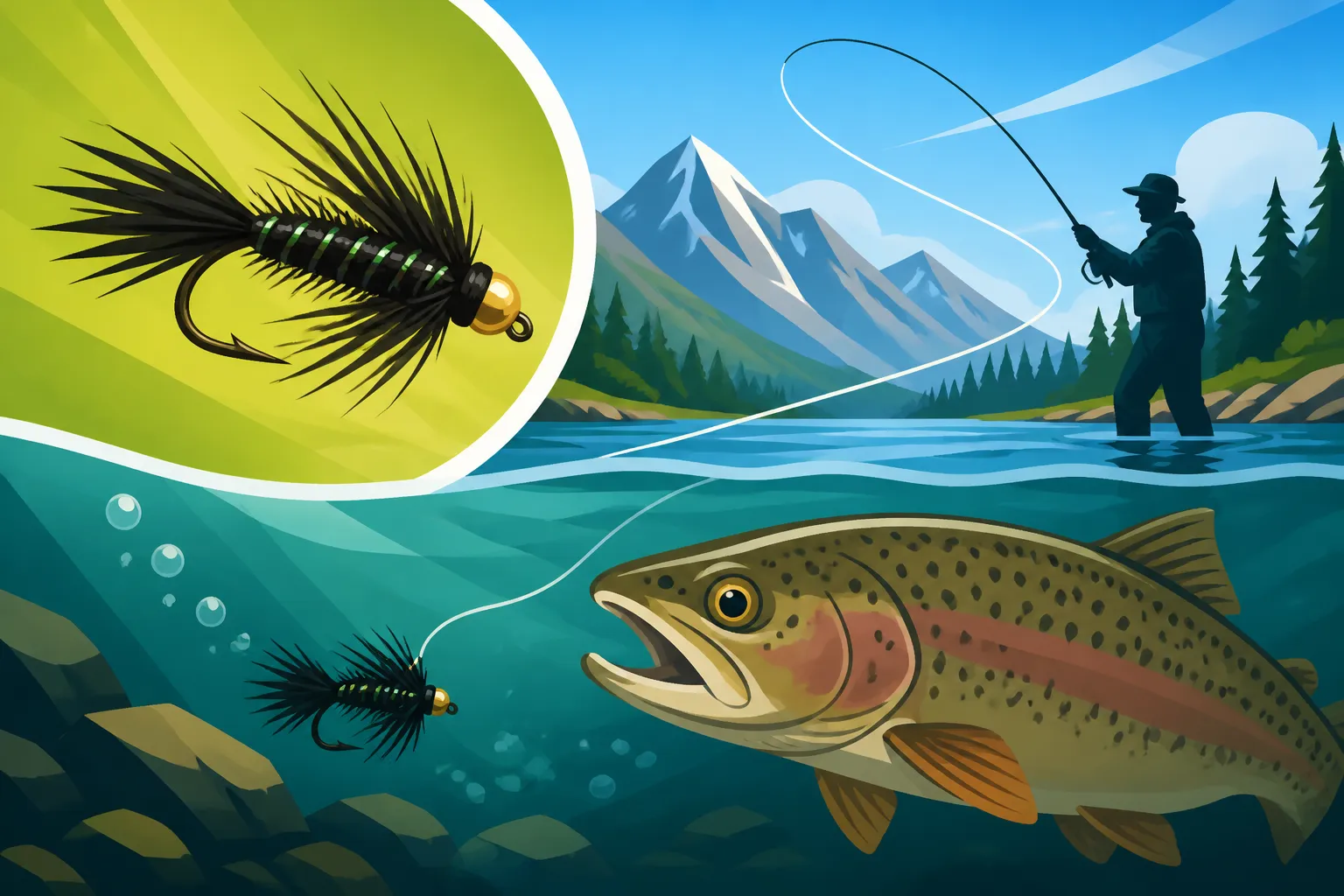
How to fish a wooly bugger for trout
There are days on the water when the trout seem to ignore every perfectly presented dry fly, leaving you wondering if you're doing something wrong. It can be frustrating, watching fish rise all around you, yet refusing your offering. But what if I told you there's a fly pattern so versatile, so simple, and so effective that it can turn a slow day into an unforgettable one? This guide is all about equipping you with the knowledge to fish the humble, yet mighty, wooly bugger for trout in Alberta, ensuring you're ready for whatever the fish, or the conditions, throw your way.
Why the Wooly Bugger is an Alberta Trout Angler's Best Friend
The wooly bugger isn't just another fly; it's a staple in virtually every trout angler's box for a reason. Its unique design allows it to imitate a wide array of trout forage, making it an incredibly versatile pattern. When you're fishing in Alberta, from the freestone rivers to the high-mountain lakes, having a confidence-boosting pattern that consistently produces is invaluable.
The Bugger's Universal Appeal and Imitation Power
Think about what trout eat beneath the surface. They're opportunistic feeders, constantly on the lookout for a meal. A wooly bugger, with its soft, pulsing marabou tail and hackled body, does an incredible job of mimicking so many of these subsurface food sources. It can look like a small baitfish, darting through the water. Imagine a hungry Rainbow Trout Fishing on the Bow River or a cunning Brown Trout Fishing in Alberta seeing that movement – it's an irresistible target.
Beyond baitfish, the bugger perfectly imitates leeches, those squiggly, protein-packed snacks that trout absolutely adore, especially after a long winter or when they're looking to bulk up. And let's not forget the multitude of aquatic insects, like large stonefly nymphs, that live on the river bottom. When dislodged or actively swimming, these insects provide another perfect imitation for the wooly bugger. Even an opportunistic Cutthroat Trout in Alberta's Mountain Streams or the elusive Bull Trout: Alberta's Threatened Native Fish might take a curious swipe. Its chameleon-like ability to fool fish into thinking it's something tasty is truly its superpower.
Simplicity and Effectiveness for All Skill Levels
One of the greatest joys of fishing the wooly bugger is its user-friendliness. You don't need years of fly casting experience or a perfectly executed drift to make this fly effective. Unlike delicate dry fly presentations where every ripple or drag can spook a fish, the bugger thrives on movement. It's forgiving, allowing new anglers to focus on learning basic casting and retrieval techniques without the added pressure of precision.
For the seasoned angler, its simplicity allows for experimentation. You can play with retrieve speeds, depths, and angles, constantly adapting to what the fish are telling you. This makes it an ideal fly for introducing newcomers to the sport, helping them build confidence when they feel that first exciting tug. It's a pattern that removes a lot of the intimidation factor often associated with fly fishing, proving that sometimes, less is truly more when it comes to effective patterns.
Essential Wooly Bugger Variations for Alberta Waters
While the classic black wooly bugger is undoubtedly a winner, the beauty of this pattern lies in its adaptability. Different colours, sizes, and weights allow you to tailor your presentation to specific water conditions, light levels, and the prevalent forage in Alberta's diverse aquatic environments.
Colour Choices and Their Purpose
Choosing the right colour can make all the difference between a frustrating day and a fantastic one. It's not just about aesthetics; it's about matching the hatch, or in this case, matching the food source or environmental conditions.
- Black: This is your all-around MVP. Black imitates leeches, dark sculpins, and even a large drowned insect. It creates a strong silhouette in the water, making it incredibly effective in low light conditions, murky water after a rain, or on overcast days. It's often the first colour I tie on, especially on rivers like the Bow when the water has a bit of colour or in the deeper pools.
- Olive: Another cornerstone colour, olive is fantastic for imitating general baitfish, small sculpins, and various aquatic nymphs. It's a go-to in clearer water, mimicking the natural greens and browns found in many of Alberta's rivers and lakes. An olive bugger can be particularly deadly in mountain streams where resident trout are accustomed to a diet of small fish and insects.
- Brown: While perhaps less common than black or olive, brown buggers excel at imitating crayfish, especially in waters where these crustaceans are present. They can also effectively mimic larger stonefly nymphs. If you're fishing a river with a rocky bottom or known crayfish populations, a brown bugger can be an unexpected surprise for aggressive trout.
- White/Grey: These lighter colours are excellent for imitating lighter-coloured minnows, smelt, or other forage fish. They can be particularly effective in bright conditions or when trout are keying in on lighter bait. Sometimes a flash of white can trigger a reaction strike when other colours fail.
- Flash: Many commercial wooly buggers, and those tied by savvy anglers, incorporate strands of Krystal Flash or similar flashy material into the tail. This subtle sparkle can act as an added attractant, mimicking the glint of scales or the iridescence of an insect. It's a great feature, especially in slightly turbid water or on sunny days when you want to catch the fish's eye.
Size, Weight, and Beadheads
Just as important as colour is selecting the right size and weight for your wooly bugger. This dictates how deep it will sink and how quickly, which is crucial for presenting the fly in the fish's strike zone.
- Sizes: Wooly buggers typically range from size #4 down to #12. Larger sizes, like #4 to #8, are excellent for imitating bigger baitfish or leeches, and are often preferred for larger rivers or lakes where bigger trout are present. Smaller sizes, #10 to #12, can be deadly in smaller streams, for more finicky fish, or when mimicking smaller nymphs. Always consider the average size of the forage in the water you're fishing.
- Weight: An unweighted wooly bugger is perfect for shallow, slower-moving water, or when you want the fly to suspend in the water column. However, for deeper runs, faster currents, or when fishing lakes, you'll often need extra weight. This can be achieved by using fly patterns that have lead wraps under the chenille body, making them "weighted" buggers.
- Beadheads: Many wooly buggers come with a beadhead, typically made of brass or tungsten. These beads serve two primary purposes: they add significant weight, allowing the fly to sink much faster and deeper, and they provide an attractive "hot spot" or flash that can entice strikes. Tungsten beads are denser than brass, meaning they sink faster with a smaller profile, which can be advantageous in strong currents or when you need to get down to the fish quickly without adding bulk. They are indispensable for getting your fly into the strike zone in those deeper pockets and runs.
Here’s a quick guide to help you pick the right bugger:
| Color | Primary Imitation | Best Conditions | Target Fish (Alberta) |
|---|---|---|---|
| Black | Leeches, dark minnows, large nymphs | Low light, murky water, overcast, deep pools | Rainbow, Brown, Bull Trout |
| Olive | Sculpins, baitfish, stoneflies | Clearer water, general all-purpose | Rainbow, Brown, Cutthroat |
| Brown | Crayfish, large stoneflies | Waters with rocky bottoms, crayfish populations | Brown, Pike (opportunistic) |
| White/Grey | Small minnows, smelt | Bright conditions, specific baitfish patterns | Lake Trout, Large Rainbows |
| Chartreuse | Attractor, "hot spot" | Murky water, aggressive fish, stained lakes | Stocked Trout, Walleye (rarely) |
Mastering the Retrieve: Bringing Your Bugger to Life
The beauty of the wooly bugger isn't just in its appearance, but in how you make it appear alive. Unlike still-water presentations, retrieving a bugger effectively mimics natural movement, triggering aggressive strikes from hungry trout. It’s all about creating illusion and enticing that predatory instinct.
Stripping Techniques for Aggressive Takes
This is where you truly become a puppeteer, animating your fly to mimic a fleeing or struggling meal. The way you strip your fly line can dramatically change how the bugger moves in the water, and often, varying your retrieve is the key to figuring out what the fish want on any given day.
- Short, Sharp Strips: Think of this as mimicking a frantic minnow trying to escape a predator. You'll make quick, short pulls on your fly line, causing the bugger to dart and pause. This erratic movement can be incredibly effective, especially when trout are actively feeding or feel competitive. It's often a great starting point, as it covers a lot of bases for what a trout might be looking for. Many anglers use this technique when targeting species like walleye or northern pike with streamers, and the same aggressive mindset can work wonders for trout too.
- Long, Slow Pulls: Sometimes, trout prefer a more leisurely presentation, perhaps mimicking a slow-moving leech or a fatigued baitfish. For this, make longer, smoother pulls on your line. The bugger will glide through the water with its marabou tail undulating seductively. This can be particularly effective in colder water, or when fish are less aggressive and need a softer invitation to bite.
- Strip-Pause-Strip: This retrieve pattern is a fantastic combination, creating an irresistible "stop-and-go" motion. You strip, pause for a moment, and then strip again. The pause allows the fly to sink slightly, giving its marabou tail a chance to "breathe" and collapse, only to flair out again on the next strip. This mimics an injured or struggling prey, often eliciting reaction strikes from wary trout. It’s an essential technique to have in your arsenal when trout are being finicky.
Dead-Drifting and Swing for Subtler Presentations
While stripping for aggressive takes is often the go-to, there are times when a more natural, passive presentation is what the trout are looking for. Knowing when and how to dead-drift or swing your bugger can dramatically increase your success, particularly in technical waters or when fish are holding tight to the bottom.
- Dead Drift: This technique involves letting your wooly bugger drift naturally with the current, just like a dislodged nymph or a drowning baitfish. You cast upstream and mend your line to allow the fly to sink and drift without any drag from your fly line. The key here is to maintain a "slack line" or a natural drift, so the fly appears to be moving freely, not tethered to your line. This is particularly effective in current seams, eddies, and slower pockets where trout might be lying in wait for easy meals. It's a great technique to use when fish aren't actively chasing and are relying on food coming to them.
- The "Swing": A classic and highly effective technique, especially in rivers, is the swing. After casting quartering upstream or across the current, you let the fly drift downstream, allowing the current to catch your line and swing the fly across the river in an arc. As the fly swings, it naturally rises and pulses, mimicking an emerging insect or a baitfish swimming across the current. The strike often comes at the very end of the swing, when the fly is directly downstream of you and pausing in the current before being retrieved or re-cast. This is a deadly presentation for trout holding in current breaks or deeper runs, and many anglers swear by it for inducing aggressive strikes.
Reading the Water for Optimal Presentation
Understanding where trout hold and how current affects your fly is paramount to consistent success with a wooly bugger. Alberta's rivers and lakes offer a myriad of features that act as prime real estate for trout.
Trout love structure and current breaks. Look for current seams where fast water meets slow, behind large rocks, submerged logs, or undercut banks. These are prime ambush points where trout can rest out of the main current while waiting for food to drift by. Drop-offs in lakes, weed bed edges, and submerged humps are also key areas. When you identify such a spot, consider how the current will carry your fly and how you can position yourself to present the bugger effectively.
The speed of the current should also dictate your retrieve. In faster water, a dead drift or a quick, short strip might be necessary to keep the fly in the strike zone and prevent it from simply washing downstream too quickly. In slower pools, longer, more deliberate strips or a slow swing can be more effective. Don't be afraid to experiment! If one retrieve isn't working, try another. Vary your depth, speed, and direction until you crack the code for that particular day and spot. Often, a slight change in presentation is all it takes to trigger a strike, transforming a quiet session into an exciting one.
Gear Setup for Successful Wooly Bugger Fishing
Having the right equipment makes a world of difference when you're fishing a wooly bugger. While the fly itself is versatile, pairing it with appropriate gear ensures you can cast it effectively, control its depth, and ultimately, land those powerful Alberta trout. You don't need the most expensive setup, but a balanced one will certainly enhance your experience.
Rod, Reel, and Line Considerations
Your choice of rod, reel, and line will largely determine how well you can cast and control your wooly bugger, especially when dealing with various sizes and weights of the fly.
- Fly Rod: For most general trout fishing with wooly buggers in Alberta, a 5-weight or 6-weight fly rod is an excellent all-around choice. A 5-weight is versatile enough for smaller streams and accurate presentations, while a 6-weight offers a bit more backbone for casting larger, heavier buggers, handling wind, and fighting bigger fish, particularly on larger waters like the Bow River Fishing Guide. If you're specifically targeting larger fish or fishing very large rivers with substantial buggers, a 7-weight can be a great option. A medium-fast to fast action rod will give you the power needed to cast weighted flies.
- Reel: Your reel should balance your rod well and have a smooth, reliable drag system. While trout typically don't take massive runs that demand an ultra-sophisticated drag, it's crucial when you hook into a larger rainbow or a powerful brown trout. A good quality, mid-arbor reel is usually sufficient, ensuring it can hold your fly line and appropriate backing.
- Fly Line: For most wooly bugger applications, a weight-forward (WF) floating line is your bread and butter. It allows for easy casting and mending. However, to get your bugger deeper, especially in lakes or faster, deeper rivers, you'll want to consider a sinking tip line or even a full sinking line. A sinking tip line has a short section of sinking line spliced into the end of a floating line, helping your fly get down quickly while still allowing for a floating main line for mending. A full sinking line is for when you need to get deep and stay deep throughout your retrieve.
- Leader and Tippet: A standard 7.5 to 9-foot tapered leader is a good starting point. The length of your leader will depend on the water clarity and how spooky the fish are. For tippet, 3X, 4X, or 5X fluorocarbon is generally recommended. Fluorocarbon is nearly invisible underwater and has a faster sink rate than monofilament, which helps your bugger get down and stay down. Choose 3X or 4X for larger buggers and aggressive fish, and 5X for smaller buggers or more subtle presentations in clear water.
Essential Accessories and Storage
Beyond your main rod and reel setup, a few key accessories will make your wooly bugger fishing trips more organized and enjoyable.
- Fly Boxes: You'll want a sturdy fly box or two to organize your buggers by size and color. Having a dedicated box for your streamers can prevent hooks from getting tangled with your smaller dry flies and nymphs. You can find excellent options on Amazon or at your local fly shop, designed specifically for larger flies.
- Hemostats or Pliers: These are non-negotiable for quickly and safely unhooking fish, especially when dealing with larger, aggressive trout. Choose a pair with a long nose for easy access into the fish's mouth.
- Split Shot/Weights: Even if you primarily fish weighted buggers, having a small assortment of split shot on hand can be a lifesaver. If you find your fly isn't getting deep enough, you can pinch on a small weight a foot or two above your bugger to help it sink faster. This allows you to adapt quickly to changing conditions without re-tying.
- Landing Net: A good quality Best Landing Net for Trout is essential for safely landing and releasing your catch, especially when fishing larger rivers where trout can be quite powerful. A net with a rubberized mesh is ideal as it's gentler on the fish's slime coat and less likely to tangle hooks.
Where and When to Fish a Wooly Bugger in Alberta
The versatility of the wooly bugger means there are very few places or times it won't at least get a look from a trout in Alberta. However, understanding where and when it truly shines can help you maximize your success. From rushing rivers to serene lakes, and through all four seasons, the bugger has a place.
Rivers and Streams
Alberta is blessed with an incredible network of rivers and streams, many of which hold robust trout populations. The wooly bugger is perfectly suited for these dynamic environments.
- Prime Locations: On larger rivers like the Bow River Fishing Guide near Calgary, the Crowsnest River in the south, or even the more intimate Oldman River or Red Deer River, focus your efforts on areas where trout are likely to ambush prey. This includes current seams where fast water meets slow, offering a resting spot with a conveyor belt of food. Look for eddies behind large rocks or logjams, undercut banks where fish hide, and the tail-outs of deep pools where fish often move to feed. Structure, whether natural or man-made, is always a magnet for trout.
- Technique Application: In rivers, you'll often employ a mix of stripping, dead-drifting, and swinging techniques. Cast upstream and across to allow your weighted bugger to sink, then either strip it back erratically or let it dead-drift through promising pockets. The swing, where the current pulls your fly across the river, is incredibly effective in riffles and runs, mimicking a fleeing baitfish or a struggling insect. Don't forget to cast towards the banks and into any visible structure, as trout frequently hold close to cover. For more general advice, check out our guide on the Best Fishing Rivers in Alberta.
Lakes and Ponds
While rivers get a lot of attention, Alberta's lakes and ponds also offer fantastic wooly bugger opportunities, particularly for stocked trout and even larger lake-dwelling species.
- Prime Locations: In stillwaters, the game changes slightly. Focus on drop-offs, the edges of weed beds, and areas around inlets or outlets where currents might bring in food. Points and submerged humps are also excellent spots, as they attract baitfish and provide structure for trout. Many of Alberta's numerous stocked ponds, as well as the beautiful Kananaskis Lakes Fishing Guide, are perfect for bugger fishing.
- Technique Application: In lakes, retrieves often tend to be slower and more deliberate, mimicking leeches or slower-moving baitfish. Long, slow strips with pauses can be highly effective. If you're fishing from a boat or float tube, fan-cast around promising structure, varying your retrieve until you find what works. A beadhead bugger is invaluable here for getting down to deeper-holding fish. For more insights into stillwater opportunities, refer to our comprehensive article on the Best Fishing Lakes in Alberta.
Seasonality and Conditions
The wooly bugger's effectiveness spans virtually the entire open-water fishing season in Alberta, and even into early ice-off conditions. It's truly a year-round workhorse.
- Spring: As waters warm after ice-out, trout become more active and aggressive. Spring runoff can often bring high, off-colour water, making the strong silhouette of a black or olive bugger incredibly effective. It's a prime time for opportunistic feeding.
- Summer: During the heat of summer, when trout might be holding in deeper, cooler water, a weighted or beadhead bugger is essential to get your fly down to them. Fishing during early mornings, evenings, or on overcast days can be particularly productive.
- Fall: As temperatures drop and fish begin to gorge in preparation for winter, the wooly bugger can be absolutely deadly. Trout are often aggressive, trying to pack on calories, and a well-presented bugger mimicking a baitfish is tough to resist.
- Adverse Conditions: One of the bugger's greatest strengths is its performance in adverse conditions. When water is high and murky from rain, or after a cold front makes fish sluggish and unwilling to rise, a bugger fished deep and slow can often entice strikes when nothing else will. For a detailed breakdown of fishing opportunities throughout the year, our guide on Alberta Fishing Seasons by Zone and Month is a great resource.
Disclaimer
This article is for general informational purposes only and does not constitute professional advice. Laws, prices and regulations vary by location and change over time. Consult a qualified professional for guidance on your specific situation.