Best Fish Finders for Alberta Lakes
One of the biggest frustrations for any angler hitting the vast, beautiful, but sometimes inscrutable lakes of Alberta is the feeling of casting into the void. You know the fish are there – Alberta is teeming with incredible species from walleye to lake trout – but where are they hiding? This comprehensive guide is dedicated to demystifying fish finders, helping you understand their technology, choose the right one for your style, and ultimately transform your fishing trips from a guessing game into a precise, targeted pursuit on Alberta's diverse aquatic landscapes.
Why a Fish Finder is Essential for Alberta Lake Anglers
Alberta's lakes are incredible, offering everything from shallow, weedy prairie waters to deep, cold mountain reservoirs. But their very diversity is what makes finding fish such a challenge. Without some help, you're often just hoping for the best. A quality fish finder isn't just a fancy gadget; it's a critical tool that gives you eyes below the surface, dramatically increasing your chances of success.
Understanding Alberta's Diverse Lake Ecosystems
Think about the sheer variety of lakes we have here. You've got massive bodies of water like Lesser Slave Lake, which is relatively shallow but incredibly expansive, or the deep, clear, glacial waters of Cold Lake. Each of these presents unique challenges. On Lesser Slave, you might be looking for subtle depth changes, weed lines, or vast flats where walleye roam. In Cold Lake, you’re often targeting lake trout suspended over hundreds of feet of water, or hiding along steep drop-offs and rocky reefs. Trying to find these specific features and the fish associated with them without knowing what's underneath your boat is like trying to navigate a dark room blindfolded. A fish finder allows you to "see" these underwater highways and hideouts.
Moreover, many of Alberta's smaller lakes and even some sections of larger ones have intricate bottom structures that are impossible to detect from the surface. Submerged timber, old creek beds, rock piles, or sudden changes in bottom composition are all prime fish real estate. A fish finder unveils these hidden structures, showing you exactly where to cast your line. It takes the guesswork out of locating those elusive fish hot spots, especially on unfamiliar waters.
Overcoming Visibility Challenges
Sometimes, a lake looks perfect on the surface – calm, pristine, inviting. But below, conditions can be anything but ideal for finding fish visually. Many prairie lakes, for example, have stained or murky water, especially after heavy rains or during certain times of the year, making it impossible to spot fish even in shallow areas. Even clear mountain lakes, while beautiful, are often so deep that fish are simply out of sight in the lower columns.
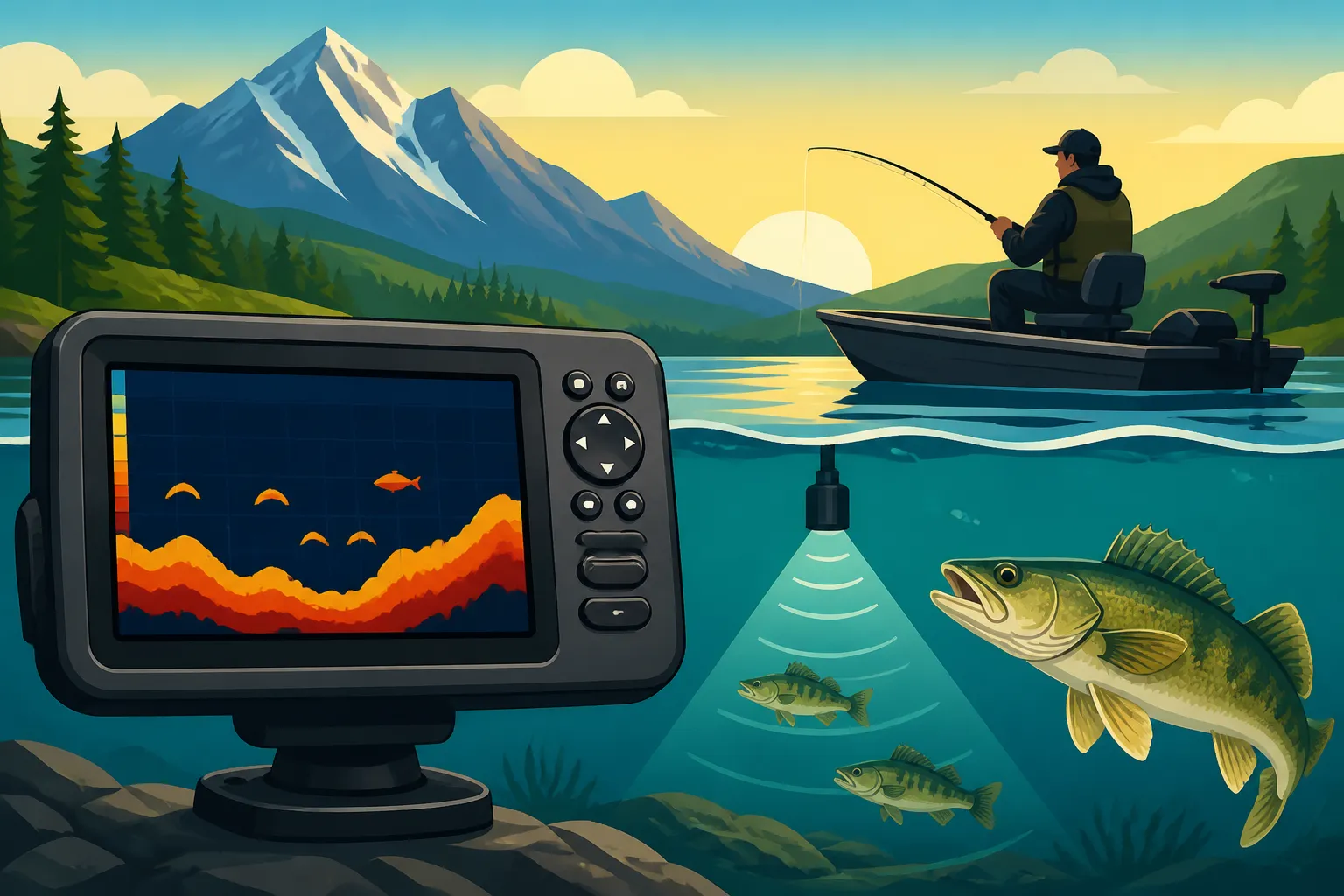
A fish finder cuts through these visibility challenges. Its sonar waves penetrate the water, bouncing off fish, structure, and the lake bottom, creating a detailed picture on your screen. This means you can confidently fish stained waters without wondering if you're targeting an empty area, or effectively explore the depths of clear lakes knowing exactly what lies beneath. It's truly a game-changer for adjusting your approach to the specific water conditions you encounter on any given day. You won't be squinting into the water, hoping for a glimpse of movement; you'll be reading a clear, real-time map of the underwater world.
Efficiency and Time Savings
Let's be honest, fishing time is precious. Whether you've driven for hours to get to a prime spot or you're just squeezing in a quick afternoon outing, you want to make the most of it. Spending hours trolling or casting blindly, only to come up empty, is incredibly frustrating and wasteful of that valuable time. A fish finder drastically cuts down on the search time. Instead of randomly exploring, you can quickly scan large areas, identify promising structures, locate baitfish schools, and most importantly, pinpoint the fish themselves.
Imagine arriving at a new lake. With a fish finder, you can quickly run along shorelines, over humps, or across deep flats, watching your screen for signs of life. You'll quickly identify the depth at which fish are holding, whether they're relating to weeds, rocks, or open water. This allows you to deploy your lures and techniques in the most effective manner, maximizing your chances of a bite. It's about working smarter, not harder, and ensuring that your precious moments on the water are spent fishing where the fish actually are. Best Time of Year to Fish in Alberta will give you an idea of when to be out there, and a fish finder helps you optimize those times.
Key Features to Look for in an Alberta Lake Fish Finder
Choosing a fish finder can feel overwhelming with all the jargon and technological advancements. But for Alberta lakes, there are specific features that will truly enhance your experience. Focusing on these core capabilities will help you narrow down the options and find a unit that suits your fishing style.
Sonar Technologies
At its heart, a fish finder is a sonar device, sending sound waves into the water and interpreting the echoes. However, modern units offer various types of sonar, each with its own advantages.
- 2D CHIRP Sonar: This is the foundational technology. CHIRP (Compressed High-Intensity Radar Pulse) sonar sends a range of frequencies, providing much clearer target separation and definition than older, single-frequency sonar. For Alberta lakes, especially when probing deeper waters for lake trout or identifying individual fish near the bottom, excellent 2D CHIRP is paramount. It gives you those classic fish arches and a clear picture of the bottom contour. This is your bread and butter for general fish detection.
- Down Imaging (or DownVu/DownScan): This technology provides a picture-like view directly below your boat, showing structure and fish with photo-realistic clarity. It's fantastic for identifying specific structures like submerged trees, rock piles, or weed edges that might hold walleye or pike. Instead of vague blobs, you'll see recognizable shapes, making it easier to interpret what you're looking at.
- Side Imaging (or SideVu/SideScan): This is a game-changer for covering vast areas. Side Imaging sends sonar beams out to the sides of your boat, scanning up to several hundred feet on either side. It creates a panoramic view of the bottom, revealing structure and fish far from your boat's path. For large Alberta lakes like Lesser Slave Lake or Pigeon Lake, where fish can be scattered, Side Imaging helps you quickly locate productive flats, humps, or channels without having to drive directly over them. It's incredibly efficient for finding new spots or understanding the full scope of a known area.
- Live Sonar (Panoptix LiveScope, ActiveTarget, Mega Live): These cutting-edge technologies offer real-time, live views of fish and structure. You can see fish swimming, reacting to your lure, and even discern their direction of travel. While a significant investment, for serious tournament anglers or those who want the ultimate advantage, seeing how fish interact with your presentation in real-time is revolutionary. It's like having an underwater camera without the visibility limitations. This can be particularly effective when targeting schooling fish or specific suspended fish.
GPS and Mapping Capabilities
Knowing where the fish are is one thing; knowing where you are and have been is another crucial aspect, especially on large Alberta lakes.
- GPS (Global Positioning System): All modern fish finders come with GPS, allowing you to mark waypoints for productive spots, follow track lines, and navigate safely. On big lakes where landmarks can be scarce or weather can change quickly, reliable GPS is a must for both finding your fishing grounds and returning safely to the launch. It's not just about finding fish; it's about navigating efficiently and safely.
- Pre-Loaded Maps: Many units come with detailed mapping for major North American lakes, often including contours, navigation markers, and even shaded depth ranges. For Alberta, make sure your chosen unit offers good coverage for the lakes you intend to fish. Brands like Garmin (with Navionics) and Humminbird (with LakeMaster) are known for their excellent mapping detail. These maps can instantly show you depth changes, humps, and drop-offs that you might otherwise miss.
- Custom Mapping/Genesis Live/AutoChart Live: Some advanced units allow you to create your own high-definition contour maps in real-time as you drive over an area. This is invaluable for smaller, unmapped lakes or for getting ultra-precise detail on known areas that standard maps might lack. You can literally map the exact contours of a productive hump or a hidden trench, ensuring you can return to it again and again. Best Fishing Lakes in Alberta often have areas that benefit from custom mapping.
- Waypoint Management: The ability to easily mark and manage waypoints is critical. When you find a school of walleye, a productive weed line, or a submerged rock pile, you want to be able to instantly save that location. Later, you can easily navigate back to it, or analyze your successful spots to identify patterns. This feature transforms random catches into repeatable success.
Screen Size, Resolution, and Display
You can have the most advanced sonar technology in the world, but if you can't clearly see and interpret the information on your screen, it's not going to do you much good.
- Screen Size: This is often a balance between budget, available space on your boat, and how much detail you want to see. Larger screens (7 inches and up) are fantastic for simultaneously displaying multiple sonar views (e.g., 2D, Down Imaging, and Map) without making them feel cramped. They are especially helpful for Side Imaging, where a wider display allows for a more expansive view of the underwater landscape. For a casual angler, a 5-inch screen might suffice, but for serious use on Alberta's larger waters, I highly recommend going bigger if your budget allows.
- Resolution: Measured in pixels (e.g., 800×480, 1024×600, 1280×800), higher resolution screens provide a sharper, more detailed image. This is particularly important for interpreting Down and Side Imaging views, where subtle details in structure or small fish can make all the difference. A higher pixel count means less pixelation and a clearer picture, which translates to better understanding of what you're seeing underwater.
- Display Type and Brightness: Look for units with bright, color displays that are readable in direct sunlight, a common challenge on sunny Alberta days. Anti-glare coatings are also a huge plus. Some units offer different color palettes, which can enhance contrast and make it easier to differentiate fish from structure, especially when fishing in various conditions. The ability to adjust backlight settings is also important for comfortable viewing at dawn, dusk, or even during night fishing for walleye.
| Feature Area | Key Considerations for Alberta Lakes |
|---|---|
| 2D CHIRP Sonar | Excellent target separation for deep suspended fish (lake trout) and bottom detail. Foundational for all serious units. |
| Down Imaging | Photo-like clarity directly beneath the boat. Crucial for identifying submerged timber, rock piles, and weed edges. |
| Side Imaging | Scans wide areas quickly (hundreds of feet per side). Ideal for finding scattered fish, vast flats, and hidden structure on large lakes. |
| Live Sonar | Real-time view of fish and lure interaction. Revolutionary for sight fishing, advanced tactics, and understanding fish behavior. |
| GPS & Mapping | Essential for navigation on large lakes, marking productive spots, and returning to them. Look for detailed Alberta lake maps. |
| Custom Mapping | Create your own high-def contours for unmapped or highly specific spots. |
| Screen Size | 7 inches or larger recommended for viewing multiple sonar views and detailed mapping clearly. |
| Resolution | Higher pixel count means sharper, clearer images, especially for Down/Side Imaging. |
| Display Brightness | Good visibility in direct sunlight is critical. Anti-glare and adjustable backlighting are big advantages. |
Different Types of Fish Finders for Various Fishing Styles
Just like there's no single "best" fishing lure for every situation, there's no one-size-fits-all fish finder. Your ideal unit will depend heavily on how and where you typically fish in Alberta. Understanding the main categories can help you identify which type will serve your needs best.
Standalone Units for General Angling
These are your bread-and-butter fish finders, designed primarily for basic fish and structure detection. They typically offer excellent 2D sonar, and many now include Down Imaging as well. They might have basic GPS functionality for marking waypoints, but often lack pre-loaded detailed maps or advanced networking capabilities.
Standalone units are fantastic for anglers who:
- Primarily fish from a smaller boat, kayak, or canoe where space is limited.
- Don't need intricate mapping features or plan to use their phone for navigation.
- Are looking for a cost-effective entry point into fish finding technology.
- Want simplicity and ease of use without being overwhelmed by advanced settings.
They are perfect for finding those initial fish concentrations on a lake or identifying basic bottom contours. For many recreational anglers exploring different fishing spots in Alberta, a solid standalone unit with 2D and Down Imaging will provide plenty of valuable information to improve their catch rates without breaking the bank. You can find some excellent entry-level models at retailers like Bass Pro Shops or online through Amazon.
Combination Units for Advanced Anglers
Combination units, often referred to as "combo" units or "chartplotter/fishfinder" units, integrate a full-featured GPS chartplotter with advanced sonar capabilities. These are typically larger units with bigger, higher-resolution screens that can display multiple views simultaneously – 2D sonar, Down Imaging, Side Imaging, and detailed mapping. They usually come with pre-loaded high-definition maps for a wide range of lakes and offer advanced networking options.
These units are ideal for anglers who:
- Fish larger boats on big Alberta lakes like Cold Lake, Lesser Slave Lake, or Lake Athabasca.
- Require detailed mapping for navigation, understanding complex contours, and targeting specific structures.
- Want the ability to integrate with other marine electronics, such as trolling motors (like a Minn Kota or MotorGuide), radar, or multiple displays.
- Are serious about their fishing, participate in tournaments, or simply demand the most comprehensive view of the underwater world.
The ability to run Side Imaging on one side of the screen while navigating a detailed map on the other, or seeing live sonar alongside 2D, provides an unparalleled advantage. For those pursuing trophy lake trout, walleye, or pike on expansive waters, a combination unit is practically a necessity. They represent a significant investment but offer a level of detail and versatility that can truly transform your fishing.
Portable and Castable Fish Finders
Not everyone fishes from a powered boat, and even those who do might want a lighter, more versatile option for specific situations.
- Portable Units: These are often smaller, self-contained units with their own battery, transducer, and display, usually mounted in a convenient carrying case. They're popular for ice fishing, small jon boats, canoes, or situations where permanent installation isn't feasible. Brands like Vexilar are classic for ice fishing, offering flasher-style displays perfect for tracking jigs and fish in the vertical column. Other brands offer portable versions of their standard units, providing more conventional sonar displays.
- Castable Fish Finders: These tiny, often spherical devices pair wirelessly with your smartphone or tablet. You cast them out, and they send sonar data back to your device, showing fish and structure in the area. They are incredibly popular for bank fishing, kayak fishing, or wading anglers who want to quickly scan a new spot. Brands like Deeper are well-known in this category. They offer convenience and portability, allowing you to bring fish-finding technology almost anywhere. While not as powerful or detailed as transom-mounted units, they provide valuable reconnaissance for identifying potential hot spots before committing to a location. Ice Fishing in Alberta is another area where portable units shine.
Each type serves a distinct purpose, and sometimes, having a combination of units (e.g., a large combo unit on your main boat and a portable for ice fishing or quick trips) offers the ultimate flexibility for all your Alberta angling adventures.
Sonar Technologies Explained for Alberta Lakes
Diving a little deeper into sonar is crucial because this is where the magic happens. Understanding how each technology works and what it excels at will empower you to choose a fish finder that truly matches the challenges and rewards of fishing Alberta's varied lakes.
2D CHIRP Sonar: The Reliable Workhorse
When you think of a traditional fish finder, you're likely thinking of 2D sonar. Modern 2D sonar, particularly CHIRP technology, has revolutionized this basic concept. Instead of sending out a single "ping" at one frequency, CHIRP sends a broad range of frequencies (e.g., 83/200 kHz or low/medium/high CHIRP) into the water. The unit then interprets the returning echoes from this wide spectrum.
The benefits for Alberta anglers are significant:
- Superior Target Separation: This means the unit can distinguish between individual fish in a school or separate a fish from a piece of structure very close to it. Instead of a single blob, you might see multiple distinct fish arches. This is invaluable when you're targeting specific species like walleye that might be relating tightly to bottom structure, or when you need to see if those marks are just baitfish or larger game fish.
- Less Clutter: CHIRP sonar is much better at filtering out noise and interference, providing a cleaner, more accurate image on your screen. This means fewer false readings and more reliable information.
- Deep Water Penetration: Lower CHIRP frequencies (e.g., 50 kHz or low CHIRP) are excellent for penetrating deep water, making them ideal for exploring the depths of Cold Lake for suspended lake trout. The ability to see fish arches clearly at 100+ feet deep is a huge advantage.
- Clear Bottom Detail: Even in conventional 2D, CHIRP provides a much crisper view of the lake bottom, allowing you to differentiate between hard bottom (rock, gravel) and soft bottom (mud, silt), which can be crucial for understanding where different fish species prefer to hold. This classic view is the foundation of every good fish finder.
Down Imaging and Side Imaging: Seeing the Structure
While 2D sonar is excellent for detecting fish, Down and Side Imaging take structure identification to a whole new level. These technologies use higher frequencies and thinner, fan-shaped beams to create photo-like images.
- Down Imaging (e.g., Humminbird Down Imaging, Garmin DownVü, Lowrance DownScan): This sonar focuses a very narrow beam directly beneath your boat. The result is a highly detailed, picture-like representation of what's directly below. You'll see individual branches of a submerged tree, distinct rock piles, and clear outlines of fish. Instead of ambiguous blobs or arches, you get an almost photographic view.
- Application for Alberta: Perfect for pinpointing those exact submerged humps on Pigeon Lake, identifying brush piles in a prairie lake for pike, or confirming that what looks like a bump on 2D is actually a key piece of cover holding walleye. It helps you understand the composition of the structure, not just its presence.
- Side Imaging (e.g., Humminbird Side Imaging, Garmin SideVü, Lowrance StructureScan): This is arguably one of the most transformative sonar technologies for covering large areas. Side Imaging beams fan out horizontally from your transducer, scanning wide swaths of the lake bottom on either side of your boat. This creates an expansive, panoramic image, often extending hundreds of feet to each side.
- Application for Alberta: For big lakes like Lesser Slave Lake, where you might be searching vast flats for walleye or expansive weed beds for pike, Side Imaging is a game-changer. You can drive down a single path and scan an area the width of a football field (or more!), quickly locating subtle contours, hidden rock piles, or scattered schools of fish that you would have completely missed with 2D or Down Imaging alone. It's fantastic for finding new productive spots or quickly assessing a large known area. Lesser Slave Lake Walleye Fishing will be much more productive with side imaging.
Live Sonar (Panoptix/LiveScope): Real-time Fish Tracking
This is the cutting edge of sonar technology and has rapidly gained popularity among serious anglers. Live sonar systems, like Garmin's Panoptix LiveScope, Lowrance's ActiveTarget, and Humminbird's Mega Live, provide a real-time, video-game-like view of what's happening underwater. Instead of a historical scroll, you see fish swimming, baitfish moving, and your lure descending and moving, all in real-time.
- How it Works: These systems use multi-directional transducers that can be aimed forward, down, or even to the side, allowing you to scan an area in front of or around your boat. The high-frequency, narrow beams produce incredibly detailed images that update almost instantly.
- Application for Alberta:
- Sight Fishing Deep Water: Imagine seeing a lake trout suspended 50 feet down in Cold Lake, watching your spoon drop towards it, and seeing the fish react to your presentation. You can adjust your jigging motion based on how the fish responds.
- Targeting Specific Fish: If you see a walleye holding tight to a specific rock on your screen, you can cast directly to it and watch your bait land right on its nose.
- Understanding Fish Behavior: Observing how fish move, relate to structure, and react to different lures in real-time gives you an incredible learning advantage. You can quickly figure out what's working and what's not, making micro-adjustments to your technique.
- Ice Fishing: Live sonar is revolutionary for ice fishing, allowing you to see your jig and fish approaching it simultaneously, offering unparalleled insight into bites. Ice Fishing in Alberta benefits immensely from this tech.
While a significant investment, live sonar offers an unprecedented window into the underwater world, allowing anglers to truly "see" the fish and their reactions, which can lead to incredible breakthroughs in technique and success.
Navigating with GPS and Mapping on Alberta's Lakes
A fish finder isn't just for locating fish; it's also your most powerful navigation tool, especially on Alberta's larger, less defined waters. Integrating GPS and mapping into your fishing strategy can save you time, keep you safe, and help you consistently find those productive honey holes.
Pre-Loaded Basemaps vs. High-Definition Charts
When you buy a fish finder with GPS, it will typically come with some form of mapping. Understanding the difference between basic basemaps and detailed charts is crucial.
- Pre-Loaded Basemaps: These are standard on many units and offer a general overview of landmasses, major waterways, and sometimes very basic depth contours. They're good for general navigation, telling you where the shorelines are, and showing major points of interest. However, for nuanced fishing, they often lack the detail needed to pinpoint fish-holding structures. You won't see subtle depth changes or small humps that are key to finding walleye or lake trout. They serve as a basic orientation tool.
- High-Definition Charts (e.g., Navionics, LakeMaster, C-MAP): These are the true game-changers for anglers. Available either pre-loaded on higher-end units or as purchasable add-on map cards, these charts provide incredibly detailed contour lines, often down to one-foot intervals. They can show bottom composition (hard/soft), submerged navigation aids, fishing hot spots, and even highlight specific depth ranges where fish are likely to be.
- Application for Alberta: On immense lakes like Lesser Slave Lake, detailed contour maps are essential for identifying shallow bars, deep channels, and vast flats where walleye roam. On deep, complex lakes like Cold Lake, precise contours reveal drop-offs, rock piles, and submerged points that are prime lake trout habitat. These maps let you "pre-fish" an area from your boat, identifying promising structure before you even drop a line. Many high-definition map packages cover popular Alberta fishing destinations, making them an invaluable asset. Looking up specific regions for Lesser Slave Lake Walleye Fishing or Cold Lake Lake Trout Fishing becomes much easier with these detailed charts.
Creating Custom Maps and Marking Waypoints
While pre-made charts are excellent, some of the most powerful mapping tools allow you to generate your own, hyper-accurate maps.
- Custom Mapping (e.g., Humminbird AutoChart Live, Lowrance Genesis Live, Garmin Quickdraw Contours): These features allow your fish finder to create a real-time, high-definition contour map of the bottom as you drive your boat. Your transducer sends data, and the unit instantly draws detailed contour lines on your screen. This is particularly useful for:
- Unmapped Waters: Many smaller Alberta lakes and ponds may not have detailed commercial charts available. With custom mapping, you can create your own.
- Finding Subtle Structure: Even on well-mapped lakes, custom mapping can reveal incredibly subtle depth changes, small humps, or hidden features that existing maps might miss due to their generalization.
- Targeting Specific Spots: You can get down to extremely precise contour lines around a known productive rock pile or a specific weed line, ensuring you can return to that exact spot again and again. You essentially become the cartographer of your own fishing grounds.
- Marking Waypoints: This is a fundamental GPS function. Whenever you catch a fish, see a school of fish on your sonar, identify a promising piece of structure, or encounter a hazard, you can instantly mark that spot with a waypoint.
- Organization: Modern units allow you to name and categorize waypoints (e.g., "Walleye Spot," "Rock Pile," "Weed Edge").
- Analysis: Over time, collecting waypoints allows you to identify patterns. Are your walleye typically in 15-20 feet of water? Are your pike always on the edge of a specific type of weed? This data helps you develop a fishing strategy based on actual success, not just guesswork. It's about building a digital fishing diary that constantly guides your future trips.
The Importance of GPS for Safe Navigation
Beyond finding fish, your fish finder's GPS is a critical safety device, especially on Alberta's expansive and sometimes challenging waters.
- Fog and Inclement Weather: On large lakes, a sudden fog can reduce visibility to near zero. Without GPS to guide you along a saved track back to the launch or to a known safe harbor, getting lost can be a serious and dangerous situation. Your GPS acts as your eyes when you can't see the shoreline.
- Night Fishing: Many anglers enjoy Night Fishing for Walleye in Alberta, but navigating in the dark without reliable GPS and a clear map of hazards is incredibly risky. Your GPS ensures you can safely move between spots and return to the dock after dark.
- Avoiding Hazards: Rocks, shallow shoals, and submerged obstacles can pose a significant threat to your boat and its occupants. With accurate GPS and detailed maps, you can clearly see and avoid these hazards, protecting your equipment and ensuring everyone's safety. This is especially important in rivers or shallower lake areas. Understanding Alberta Boating Laws for Anglers also includes being aware of safe navigation practices, and GPS is central to that.
- Return to Launch: After a long day of exploring new waters, the last thing you want is to struggle to find your way back to the boat ramp, especially if you're unfamiliar with the area. A simple "Go To Home" function on your GPS makes this a non-issue.
In essence, the GPS and mapping features of your fish finder are not just about finding fish; they are about fishing smarter, more efficiently, and most importantly, fishing safely on Alberta's incredible lakes and rivers.
Installation and Power Considerations for Your Fish Finder
You've picked out the perfect fish finder, but the journey isn't over yet! Proper installation and understanding your power requirements are absolutely critical for your unit to perform optimally and reliably on Alberta's waters. A poorly installed transducer or an insufficient power supply can turn a top-tier fish finder into a frustrating experience.
Transducer Mounting Options
The transducer is the "eye" of your fish finder, sending and receiving sonar signals. Its mounting location is paramount. The goal is to get it into clean, undisturbed water flow, free from air bubbles that can interfere with the sonar signal.
- Transom Mount: This is the most common and often easiest installation for most boats. The transducer is mounted on the back (transom) of the boat, outside the hull. It's relatively simple to install, offers good performance for most sonar types (2D, Down, Side Imaging), and is adjustable.
- Considerations for Alberta: Ensure it's mounted in a spot that avoids turbulence from the motor or hull strakes. Too high, and it might lose signal at speed; too low, and it's vulnerable to impact. It's generally a reliable choice for trailered boats on lakes.
- Trolling Motor Mount: Many transducers are designed to be mounted directly to the shaft or housing of a trolling motor. This is an excellent option because the trolling motor typically operates in relatively clean water, and the transducer moves and points with the motor, allowing you to scan precisely where you're casting or maneuvering.
- Considerations for Alberta: Ideal for walleye and pike anglers who use their trolling motors extensively to navigate weed lines and structure. Many newer Live Sonar transducers (like Garmin LiveScope or Humminbird Mega Live) are specifically designed for trolling motor mounts due to their directional scanning capabilities.
- In-Hull Mount: For fiberglass boats, some transducers can be epoxied inside the hull, shooting the sonar signal directly through the boat's material.
- Considerations for Alberta: This provides maximum protection for the transducer as it's not exposed to impacts. However, it only works with 2D sonar (you lose Down and Side Imaging clarity) and can result in some signal loss depending on hull thickness and material. It's a good choice for those who only need basic 2D sonar and prioritize transducer protection.
- Through-Hull Mount: This involves drilling a hole through the boat's hull and mounting the transducer flush or nearly flush with the bottom.
- Considerations for Alberta: This offers the absolute cleanest water flow and best performance for all sonar types, especially at high speeds. It's a professional installation and is often found on larger, more dedicated fishing boats. While providing superior performance, it's a more permanent and complex installation.
No matter the type, always ensure the transducer cable is routed cleanly, away from sources of electrical interference, and securely fastened to prevent damage or entanglement.
Wiring and Power Supply
Your fish finder is an electronic device, and it needs a clean, consistent power source to perform correctly.
- Dedicated Power Source: Whenever possible, wire your fish finder directly to its own battery or to a dedicated accessory circuit that is independent of your main starting battery and other high-draw electronics (like your main motor). This minimizes electrical interference (noise) that can show up as clutter on your screen.
- Considerations for Alberta: On larger boats with multiple electronics, investing in a dedicated battery just for your sensitive electronics, or at least a very clean wiring harness, can make a huge difference in sonar clarity. Use appropriate gauge wire for the length of the run to prevent voltage drop.
- Circuit Protection: Always include an inline fuse or circuit breaker close to the power source. This protects your expensive fish finder from power surges or short circuits. Check your unit's manual for the recommended fuse size.
- Battery Life and Capacity: Understand the power draw of your fish finder. A larger screen, powerful sonar (especially Live Sonar), and integrated mapping will consume more power. Ensure your boat's battery system has sufficient capacity (Amp-Hours) to run your electronics for the duration of your typical fishing day without draining your starting battery. This is particularly important for Alberta Boating Laws for Anglers, where having sufficient power for navigation and safety equipment is a must.
Portable Setups and Battery Management
For smaller craft, kayaks, or ice fishing, portable power solutions are key.
- Portable Batteries: Many portable fish finders come with small, rechargeable lithium-ion or sealed lead-acid (SLA) batteries. For DIY portable setups, 12V lithium batteries are lightweight, long-lasting, and offer consistent power output.
- Considerations for Alberta: For Ice Fishing in Alberta, a good quality lithium battery will handle cold temperatures better and last much longer than traditional lead-acid batteries. Always have a fully charged spare battery if you're planning a long day on the ice or water.
- Mounting Solutions: For kayaks or small boats, clever mounting solutions (like a transducer arm that clamps to the side or a track-mounted system) are available to get your transducer in the water without permanent modification. These systems usually incorporate the battery and display into a compact, easily removable package.
- Cable Management: Even with portable units, keeping cables tidy and secure is essential to prevent snags and damage. Zip ties or Velcro straps can be your best friends here.
Proper installation and power management might not be the most exciting part of getting a new fish finder, but they are foundational to its performance and your enjoyment on any Alberta lake. Don't cut corners here; it will pay dividends in reliable, clear sonar returns.
Top Brands and Models Recommended for Alberta Lakes
When it comes to fish finders, a few key brands consistently lead the pack, offering innovative technology and reliable performance. Each has its strengths, and understanding them will help you pick the best fit for your Alberta angling adventures. You'll find a wide selection of these brands and models at major retailers like Bass Pro Shops or through online platforms like Amazon.
Garmin: Innovation and User-Friendliness
Garmin has become a powerhouse in the marine electronics world, particularly renowned for its user-friendly interfaces and groundbreaking Live Sonar technology.
- Strengths for Alberta Lakes:
- LiveScope/Panoptix: This is where Garmin truly shines. The LiveScope system provides incredibly clear, real-time sonar views, allowing you to see fish swimming and reacting to your lure. For targeting suspended lake trout on Cold Lake or sight-fishing walleye on structure, LiveScope is revolutionary. You can literally watch a fish approach your bait.
- ClearVü/SideVü Imaging: Garmin's Down and Side Imaging offer excellent clarity for identifying structure and fish to the sides and directly below your boat.
- Navionics+ and Garmin LakeVü G3 Maps: Garmin units are compatible with Navionics charts, which offer highly detailed contour maps for many major Alberta lakes. Their Quickdraw Contours feature also allows you to create your own custom 1-foot contour maps in real-time, invaluable for lesser-known waters.
- User Interface: Garmin units are known for their intuitive menus and ease of use, making them accessible even for those new to advanced electronics.
- Popular Models: The ECHOMAP UHD and GPSMAP series are top choices, offering a range of screen sizes and capabilities, from entry-level combos to high-end networked systems with full LiveScope integration.
Humminbird: Imaging Superiority
Humminbird has long been recognized for its exceptional imaging clarity, particularly with its MEGA Imaging technologies, and robust mapping solutions.
- Strengths for Alberta Lakes:
- MEGA Imaging (Side, Down, 360): Humminbird's MEGA Imaging delivers incredibly sharp, high-frequency imaging for Down and Side views, providing almost photographic detail of structure and fish. Seeing a sunken tree or a rock pile with this level of clarity is a huge advantage for identifying prime holding spots for pike or walleye. Their 360 Imaging (a premium add-on) offers a full circular view around your boat.
- LakeMaster Mapping: Humminbird's LakeMaster charts are highly regarded for their detail and specific features like Depth Highlight (to shade depths where fish are often found) and Water Level Offset (to adjust contours for fluctuating lake levels). For anglers who rely heavily on detailed bathymetry, LakeMaster is a fantastic tool for Alberta's waters.
- AutoChart Live: Like Garmin's Quickdraw, AutoChart Live allows you to create your own custom maps, which is excellent for finding those hidden gems or getting ultra-precise detail on known spots.
- Mega Live Sonar: Humminbird has entered the live sonar game with Mega Live, offering real-time views similar to Garmin's LiveScope.
- Popular Models: The HELIX and SOLIX series are their flagship lines, offering a wide spectrum of features from advanced 2D and MEGA Imaging to full network integration and live sonar. Best Kayak for Lesser Slave Lake might benefit from a portable or smaller Helix unit.
Lowrance: Performance and Networkability
Lowrance has a long history in marine electronics and is known for its powerful sonar capabilities and advanced networking options, particularly favored by serious bass and walleye anglers.
- Strengths for Alberta Lakes:
- ActiveTarget Live Sonar: Lowrance's answer to live sonar, ActiveTarget, provides high-resolution, real-time views of fish and structure, allowing for interactive fishing.
- StructureScan HD/3D: Lowrance's DownScan and StructureScan deliver impressive detail for identifying bottom composition, structure, and baitfish. Their StructureScan 3D takes this a step further, providing a three-dimensional view of the underwater world.
- C-MAP and Genesis Live: Lowrance units utilize C-MAP charts, which offer excellent coverage and detail for many Canadian lakes. Their Genesis Live feature allows for real-time custom map creation, similar to the other brands.
- Networkability: Lowrance units are highly networkable, allowing seamless integration with trolling motors, multiple displays, and other marine electronics.
- Popular Models: The HDS LIVE and Elite FS series are popular choices, offering powerful sonar, detailed mapping, and robust networking capabilities suitable for serious fishing on Alberta's large lakes. For general walleye fishing, these units are very strong contenders.
Raymarine and Simrad: Other Strong Contenders
While Garmin, Humminbird, and Lowrance dominate much of the recreational fishing market, Raymarine and Simrad (often grouped for their similar marine electronics heritage) also offer excellent options, particularly for larger boats or those seeking specific advanced features.
- Raymarine: Known for its high-performance CHIRP sonar and Lighthouse OS, Raymarine offers powerful units like the Element and Axiom series. They have strong networking capabilities and excellent display quality.
- Simrad: Often found on larger vessels, Simrad units (like the GO and NSS evo series) offer robust navigation features, powerful sonar (including their ActiveImaging and ActiveTarget live sonar), and excellent integration with other marine systems.
For smaller boats, kayaks, or ice fishing, don't overlook dedicated portable brands like Deeper (for castable units that pair with your phone) and Vexilar (classic flasher-style units perfect for vertical jigging through the ice). These brands offer specialized solutions for specific fishing scenarios where a full boat-mounted system isn't practical.
Choosing the right brand and model depends on your budget, fishing style, and the specific features you prioritize for navigating and fishing Alberta's diverse lakes. Take the time to research, read reviews, and perhaps even see units in action at a local Bass Pro Shops or marine dealer to get a feel for their interface and capabilities.
Maximizing Your Fish Finder's Potential
Having a powerful fish finder is one thing; truly understanding and utilizing its full potential is another. Many anglers only scratch the surface of what these incredible devices can do. By learning to interpret the display, adjust settings, and integrate it with your overall fishing strategy, you can turn your fish finder from a simple "fish detector" into an invaluable scouting and fishing tool.
Understanding Sonar Returns and Interpreting the Display
The images on your fish finder screen are not always literal photographs; they are interpretations of sound waves. Learning to "read" these returns is a crucial skill.
- 2D Sonar – Arches and Lines:
- Fish Arches: The classic "arch" shape on 2D sonar indicates a fish. A full, strong arch usually means a larger fish passing through the sonar beam. Smaller or partial arches might be smaller fish, or a larger fish on the edge of the beam. The longer the arch, the longer the fish was under the cone.
- Bottom Contour: The line at the bottom of your screen represents the lake bed. A thin, hard line suggests a hard bottom (rock, gravel), while a thicker, softer line indicates a soft bottom (mud, silt). This helps you identify different habitats.
- Clutter/Noise: Sometimes you'll see scattered dots or lines that aren't fish. This can be baitfish, debris, or even electrical interference. Learning to distinguish this from true fish targets is key.
- Down Imaging – Photo-Realistic Views: Down Imaging provides much clearer, almost photographic detail directly below your boat.
- Structure Identification: You'll see recognizable shapes of submerged timber, rock piles, or weed beds. Pay attention to how fish relate to this structure – are they in it, on top of it, or hovering just off the edges?
- Fish on Structure: Fish will often appear as bright spots or streaks within or very close to the structure. This clarity helps confirm if what you see on 2D as a "blob on the bottom" is actually a fish in a brush pile.
- Side Imaging – The Wide View: Side Imaging displays a panoramic view of the bottom to either side of your boat.
- Shadows: The key to Side Imaging is often the shadows. Objects on the bottom create a "shadow" that is clear of sonar returns behind them. The length and shape of this shadow help you determine the size and height of the object. A long shadow indicates a tall object (e.g., a submerged tree).
- Finding Schools: Side Imaging is exceptional for locating schools of baitfish or game fish scattered over wide flats. They'll appear as bright clouds or groups of dots.
- Understanding Terrain: It allows you to quickly identify changes in bottom composition, transitions between rock and sand, or the edges of weed beds over a vast area. Learning to interpret Side Imaging takes practice, but once mastered, it's an unparalleled scouting tool for Alberta's large lakes.
Adjusting Settings for Different Conditions
Your fish finder isn't a "set it and forget it" device. Optimal performance often requires adjusting settings based on water depth, clarity, and the type of fishing you're doing.
- Sensitivity/Gain: This controls how strong a return signal the unit displays.
- Too Low: You'll miss faint returns from smaller fish or subtle structure.
- Too High: You'll get a lot of clutter and noise, making it hard to see real targets.
- Rule of Thumb: Turn it up until you start seeing noise, then back it down just enough for a clean screen. This maximizes your ability to detect targets.
- Depth Range: Setting the correct depth range is important for a clear display. If you're fishing in 30 feet of water, don't set your range to 100 feet; this will compress the useful information. Auto range works well in many situations, but manual adjustment for specific depths often yields better detail.
- Frequency:
- Lower Frequencies (e.g., 50/83 kHz, Low CHIRP): Better for deep water penetration and covering a wider cone angle, but with less detail. Good for deep lake trout fishing.
- Higher Frequencies (e.g., 200 kHz, High CHIRP, MEGA Imaging): Excellent for shallow to medium depths, providing superior detail and target separation. Ideal for walleye and pike in shallower lakes or targeting structure.
- Scroll Speed: This determines how fast the sonar history scrolls across your screen. A faster speed gives you a more "real-time" view (useful when actively fishing), while a slower speed allows for more detailed analysis of the bottom as you slowly troll.
- Noise Rejection/Surface Clarity: These settings help filter out interference from the surface (like waves) or electrical noise, giving you a cleaner image. Experiment with them to find the sweet spot for your specific boat and lake conditions.
Integrating with Other Electronics
Modern fish finders are often designed to be part of a larger marine electronics network. Integrating your unit with other devices can create a truly seamless and powerful fishing system.
- Trolling Motor Integration: Many fish finders can communicate directly with compatible GPS-enabled trolling motors (like Minn Kota's Ultrex with i-Pilot Link or MotorGuide's Xi5 with Pinpoint GPS). This allows for incredible functionality:
- Spot-Lock: Mark a waypoint on your fish finder, and your trolling motor will automatically hold your boat in that exact position, hands-free.
- Follow Contours: Some systems allow your trolling motor to automatically follow a specific depth contour from your map, making it easy to troll precisely along a break line for walleye.
- Route Following: Create a route on your chartplotter, and your trolling motor will navigate it automatically.
- Multiple Displays: On larger boats, having two or more fish finder displays networked together allows you to view different sonar types or maps simultaneously, giving you a comprehensive overview of the underwater world from multiple vantage points. For example, one screen for Side Imaging, another for your map, and a third for Live Sonar.
- VHF Radios and Autopilots: Higher-end units can also integrate with VHF marine radios for emergency communications (with GPS coordinates transmitted) or with autopilots for precise hands-free navigation. This adds an extra layer of safety, especially on large, open waters. A Pleasure Craft Operator Card Requirement will help you understand all the safety rules.
By continuously learning and experimenting with your fish finder's settings and integrating it with your other gear, you'll unlock its full potential, leading to more successful and enjoyable fishing trips on Alberta's diverse and beautiful lakes. It's an ongoing learning process, but the rewards are definitely worth it.
Disclaimer
This article is for general informational purposes only and does not constitute professional advice. Laws, prices and regulations vary by location and change over time. Consult a qualified professional for guidance on your specific situation.