How to fish a crawler harness for walleye
Trying to consistently catch walleye in Alberta can sometimes feel like solving a constantly changing puzzle. One day they're hitting everything, the next they're nowhere to be found, leaving you scratching your head. This guide is all about demystifying one of the most effective and time-tested methods for putting walleye in your boat or on the ice: the humble yet mighty crawler harness. We're going to break down everything you need to know to fish it successfully across Alberta's diverse waters.
Why the Crawler Harness is a Walleye Magnet in Alberta
There's a reason why the crawler harness has been a staple in walleye anglers' tackle boxes for decades, especially here in Alberta. It's not just a passing fad; it's a technique that consistently produces, often when other presentations fall flat. If you've ever felt frustrated by finicky walleye, a well-presented crawler harness might just be your secret weapon.
The Irresistible Appeal of a Live Crawler
Let's be honest, there's just something about a live nightcrawler that walleye can't resist. It's natural, it's wriggly, and it smells like a juicy meal. Imagine a struggling, injured minnow or a fat leech – that's the kind of natural attraction a good nightcrawler harness setup offers. The walleye's predatory instincts kick in almost immediately. Even when they're not actively feeding aggressively, the slow, natural movement of a crawler can trigger a bite when nothing else will. It's a fundamental truth of fishing: matching the hatch, or in this case, matching a natural food source, often yields the best results.
Think about those days when the bite is tough, and the fish seem to have lockjaw. A flashy crankbait might get a look, but a subtle, squirming nightcrawler slowly pulled past their nose often elicits that hesitant, yet decisive, strike. It's pure, unadulterated temptation for a walleye, tapping into their most basic survival instincts. This is especially true in waters where live bait is permitted and readily available.
Mimicking Natural Forage: The Subtle Presentation
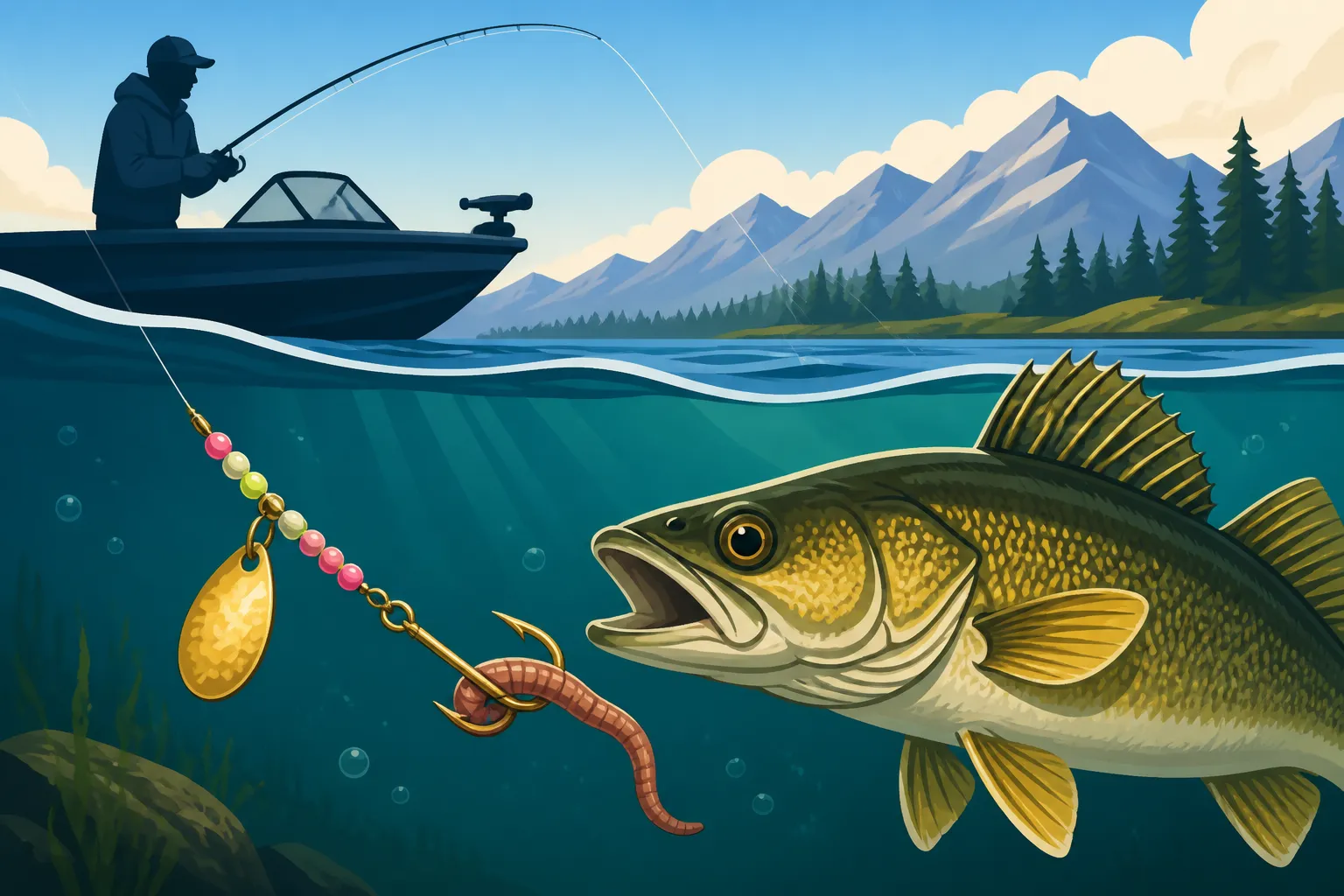
Beyond just being alive, a crawler harness setup is designed to present that nightcrawler in a highly appealing way. The spinner blade on the harness adds flash and vibration, mimicking a small baitfish fleeing or struggling. Meanwhile, the multiple hooks allow the worm to stretch out naturally, undulating and swaying in the water, appearing incredibly lifelike. This combination of flash, vibration, and natural movement is a deadly one. It’s not just a worm on a hook; it’s a sophisticated system designed to fool even the most cautious walleye.
This presentation is particularly effective for those suspended fish or walleye hugging the bottom that might be hesitant to chase a faster bait. The slow speed at which crawler harnesses are typically fished gives walleye ample time to inspect the offering before committing. It's a game of patience and finesse, allowing the fish to truly believe they've found an easy meal. This subtle approach can make all the difference, especially in clear waters where walleye have more time to scrutinize your offering. For more general tips on targeting these fish, check out our guide on How to Catch Walleye in Alberta.
Versatility Across Conditions and Waters
One of the greatest strengths of the crawler harness is its incredible versatility. Whether you're trolling open water on Lesser Slave Lake, drifting along a deep breakline on Cold Lake, or even casting from shore in a smaller reservoir, a crawler harness can be adapted to suit the situation. You can adjust the weight to get down to various depths, change blade sizes and colors to match water clarity and forage, and vary your retrieve speed to dial in the bite.
This adaptability makes it a fantastic choice for many of Alberta's diverse walleye fisheries. You can use it early in the season when waters are still cold, throughout the summer when fish are scattered or holding deep, and even into the fall. It's a technique that transcends specific seasons or locations, making it a reliable tool in any Alberta angler's arsenal. Different lakes and rivers have their own nuances, but the core principles of the crawler harness remain universally effective for walleye. Consider adapting your approach based on what you learn from guides like Where to Find Walleye in Alberta.
Essential Gear for Your Walleye Crawler Harness Setup
Getting your gear dialed in is crucial for maximizing your success with a crawler harness. It's not overly complicated, but paying attention to the details can significantly improve your hook-up ratio and overall experience. Having the right tools for the job makes all the difference, transforming a frustrating day into a fantastic one.
Rods, Reels, and Line: The Foundation
For fishing crawler harnesses, you'll want a rod with a good blend of sensitivity and backbone. A medium-light to medium power spinning or baitcasting rod, typically in the 6'6" to 7'6" range, is ideal. The softer tip allows the fish to take the bait without feeling too much resistance, while the backbone helps drive the hooks home and fight a strong walleye. A moderate-fast action is often preferred, giving you that forgiving tip yet enough power to handle larger fish. Many anglers find great options for these types of rods on platforms like Amazon, where you can compare different brands and reviews.
When it comes to reels, a spinning reel in the 2000-3000 size range is excellent for spinning setups, while a low-profile baitcaster with a smooth drag is perfect for baitcasting. The key is a smooth drag system, as walleye can make powerful runs, especially those larger ones. For line, 8-10 lb monofilament or fluorocarbon is a solid choice for its stretch and invisibility, respectively. Some anglers prefer a no-stretch braided line (10-15 lb) with a fluorocarbon leader for added sensitivity and abrasion resistance. Braided line really shines when you're trying to feel those subtle bites in deeper water or when trolling. For a detailed look at rod choices, check out Best Spinning Rods for Walleye.
Anatomy of a Crawler Harness: Components Explained
A standard crawler harness consists of several key components:
- Leader Material: This is typically fluorocarbon or monofilament, usually 10-20 lb test, chosen for its invisibility and abrasion resistance. The length can vary, but 4-6 feet is common.
- Hooks: Most harnesses feature two or three snelled hooks, often Octopus or Kahle style, designed to hold the crawler securely and ensure a good hookset. Sizes typically range from #2 to #6, depending on the size of your bait and the target walleye.
- Beads: These colourful beads serve several purposes: they protect the knot, add attraction, and can even act as a bearing for the spinner blade. They come in a myriad of colours, allowing for endless customization.
- Spinner Blade: This is the "flash" element. Blades come in various shapes (Colorado, Indiana, Willowleaf) and sizes, each producing a different vibration and flash profile. Colorado blades offer maximum vibration and lift, great for slower speeds, while Willowleaf blades provide less drag and more flash, ideal for faster trolling. The color can also be crucial; bright colours like chartreuse and orange for stained water, and silver or gold for clear water.
- Swivel: While not always built directly into the harness, a good quality barrel or ball bearing swivel should always be used to connect your main line to the harness leader to prevent line twist, especially when trolling with spinner blades.
You can often find pre-tied harnesses in sporting goods stores or on marketplaces like Amazon. Many anglers also enjoy tying their own, which allows for complete customization of blade size, colour, bead patterns, and hook spacing.
Choosing the Right Weight and Leader Length
The weight you use with your crawler harness is critical for getting your bait to the desired depth and maintaining contact with the bottom, or just above it. There are several options:
- Bottom Bouncers: These are arguably the most popular choice for crawler harnesses, especially when trolling or drifting over varied bottom structures. They feature an L-shaped wire arm, with a lead weight on the short arm and a swivel for your harness on the long arm. They come in weights from 1/2 oz up to 3 oz or more. The weight you choose depends on depth, current, and trolling speed. For instance, in deeper water or faster currents, you'll need a heavier bouncer to keep your line at a 45-degree angle.
- Bell Sinkers/Trolling Weights: Simple bell sinkers or specialized trolling weights can also be used, often with a three-way swivel setup. The three-way swivel allows you to run your main line to one eye, a dropper line to your weight on another, and your harness on the third. This setup is effective for controlled depth trolling.
- Inline Weights: These weights are designed to be tied directly into your main line, usually a few feet ahead of your harness. They're good for open water trolling where you want to keep your presentation relatively straight in line with your boat.
- Snap Weights: These allow you to add or remove weight from your line without retying, which is fantastic for quickly adjusting to different depths or conditions.
The leader length for your harness will also vary. A shorter leader (18-36 inches) is often used with bottom bouncers to keep the bait closer to the bottom and reduce tangles. Longer leaders (4-6 feet) can be more effective when fish are suspended higher off the bottom or when you want a more natural, subtle presentation in clear water. Experimentation is key to finding what the walleye prefer on any given day. If you’re fishing deep structure, especially during summer, adjusting your weight and leader length is paramount. Our article on How to fish deep structure for summer walleye can provide more insights here.
| Weight Type | Pros | Cons | Ideal Conditions |
|---|---|---|---|
| Bottom Bouncer | Excellent bottom contact, snag resistant | Can be bulky, less stealthy | Varied bottom, trolling, drifting |
| Bell Sinker | Simple, inexpensive, precise depth control | Prone to snagging, can cause line twist | Open water, consistent depth, three-way rigs |
| Inline Weight | Streamlined, less drag | Requires retying, limited depth adjustment | Open water trolling, specific depth |
| Snap Weight | Adjustable without retying, versatile | Can damage line, requires specific clips | Changing depths, flexible trolling |
Mastering the Retrieve: Techniques for Success
Fishing a crawler harness isn't just about rigging; it's about presentation. The way you retrieve or troll your harness can make all the difference between an empty livewell and a successful outing. Walleye can be incredibly sensitive to speed, depth, and the action of your bait.
Slow Trolling and Drifting: The Classic Approach
This is by far the most common and often most effective way to fish a crawler harness for walleye, especially on larger lakes like Lesser Slave or Cold Lake. The goal is to move your boat slowly, typically between 0.8 to 1.5 miles per hour, allowing the bottom bouncer (or other weight) to tick along the bottom occasionally, stirring up puffs of sediment. This mimics a foraging baitfish or crawler, and the blade spinning above it adds visual and vibrational attraction.
When trolling, pay close attention to your rod tip. You want to see a slight bend and an occasional "tick" as the weight contacts the bottom. If your rod tip is constantly bent or dragging, you're either going too slow, using too heavy a weight, or have too much line out. If you're not ticking bottom at all, you're likely too fast, too light, or not letting out enough line. The ideal angle for your line entering the water is usually around 45 degrees.
Drifting with a crawler harness is equally effective, especially when there's a gentle breeze to propel your boat. It allows for an even slower, more natural presentation. Drop your harness to the bottom, let out a bit of line, and allow the boat to slowly carry your bait. Periodically lift and drop your rod to impart a subtle jigging action and ensure you're maintaining bottom contact. Both trolling and drifting are excellent ways to cover water and locate active schools of walleye. For specific strategies on Best time to fish Lesser Slave Lake in summer, slow trolling often takes centre stage.
Casting and Retrieving: Active Presentations
While trolling dominates, don't overlook the effectiveness of casting a crawler harness, especially in smaller bodies of water, from shore, or when targeting specific structure. For casting, you might use a lighter bottom bouncer (1/4 to 1/2 oz) or even an inline weight ahead of your harness.
Cast your rig out, let it sink to the bottom, and then slowly retrieve it. You can do a slow, steady reel, or incorporate subtle lifts and drops, mimicking a jigging motion. This "lift and drop" retrieve allows the blade to stop spinning and then kick into action again, which can trigger hesitant strikes. It's an active way to explore shallower flats, weed edges, or rocky points that might not be suitable for continuous trolling. This method allows for a more hands-on approach, letting you feel every bump and subtle bite. When you’re dealing with aggressive walleye, a cast-and-retrieve method can be highly effective.
Reading the Water: Where to Present Your Harness
Knowing where to present your crawler harness is just as important as how. Walleye are creatures of structure and transition. Look for:
- Breaklines: These are areas where the depth changes abruptly. Walleye often patrol these edges, moving up to feed in shallower water and retreating to deeper water for safety.
- Humps and Submerged Islands: These underwater features act like magnets for baitfish and, consequently, walleye. Troll or drift around and over these structures, paying close attention to your fish finder.
- Weed Edges: Healthy green weeds provide cover, oxygen, and food for baitfish. Walleye will often sit just outside the weed lines, ambushing prey.
- Mud Flats: Especially in larger lakes, expansive mud flats can hold schools of walleye, particularly during low-light conditions or after cold fronts. The slight disturbance of your bottom bouncer can attract attention in these areas.
- Inflow/Outflow Areas: Points where rivers or creeks enter or exit a lake can concentrate baitfish and provide current, which walleye appreciate.
Always pay attention to what your fish finder is telling you. If you see baitfish or arcs that look like walleye, adjust your depth and speed to target them directly. Sometimes, the walleye might be suspended a few feet off the bottom, so raising your presentation slightly can be the trick. Understanding What walleye eat in Alberta lakes can also give you clues about where they might be lurking, as they’ll be near their food sources.
Baiting Up and Troubleshooting Common Harness Issues
Even with the right gear and technique, there are always little details that can make or break your day with a crawler harness. From rigging your bait perfectly to dealing with those frustrating short strikes, knowing a few tricks can significantly boost your confidence and catch rate.
Properly Rigging Your Nightcrawler
The way you rig your nightcrawler on the harness is crucial for presentation and hooking success. Here's a step-by-step approach:
- Select a Healthy Crawler: Choose a lively, medium to large-sized nightcrawler. Avoid small, shriveled ones.
- Hook the Head: Take the top hook of your harness and thread it through the very tip of the nightcrawler's head, just enough to secure it. You want the worm to remain alive and wriggly.
- Space the Hooks: Let the worm stretch out naturally. If you have a two-hook harness, find a spot about halfway down the worm to lightly thread the second hook. If it's a three-hook harness, space them evenly. The goal is to have the worm stretched out, with hooks along its body, but not tightly bunched or unnatural.
- Expose Hook Points: Ensure all hook points are exposed. A common mistake is burying the hook points deep within the worm, which can lead to missed strikes. The hooks should be protruding slightly from the worm's body.
- Avoid Over-Hooking: Don't try to get all the hooks through the thickest part of the worm. A light rigging allows the worm to undulate more freely, looking more natural in the water.
If you find your worms are constantly getting stolen or ripped off, you might be either using too large of a worm for your harness hooks, or the fish are just nipping at the tail. Sometimes shortening your worm slightly or using a smaller hook can help, but generally, the goal is a natural, stretched-out presentation. For more bait options for walleye, consider looking at Best Baits for Walleye on Lesser Slave Lake.
Dealing with Short Strikes and Snags
Short strikes are frustrating. You feel a bump, or your rod tip twitches, but when you go to set the hook, nothing's there. This often means the walleye is nipping at the tail of the crawler. Here's how to address it:
- Slow Down: Sometimes simply slowing your trolling or retrieve speed gives the walleye more time to engulf the entire bait.
- Pause and Drop: If you're casting, a brief pause during your retrieve can sometimes entice a hesitant walleye to commit. The worm flutters enticingly as it sinks.
- Slightly Shorter Worm: Trim a small portion off the tail of your nightcrawler, making it easier for the fish to get to the hooks.
- Smaller Hooks: While not always ideal for larger fish, smaller hooks can sometimes increase your hook-up ratio on short strikers.
- Patience: Instead of setting the hook immediately, wait a beat. Let the fish "load up" the rod a bit more before sweeping the rod back to set the hook. This is crucial for successful walleye fishing with harnesses.
Snags are another common issue, especially when fishing near structure. To minimize snags:
- Maintain 45-Degree Angle: Keep your line at a roughly 45-degree angle to the water when trolling or drifting with bottom bouncers. This ensures the bouncer glides over obstructions rather than wedging into them.
- Lift and Drop: Regularly lift your rod tip to "hop" your bottom bouncer over potential snags.
- Know Your Bottom: Pay attention to your fish finder. If you're coming up on a particularly rocky or brushy area, reel in slightly or lift your rod higher until you pass it.
- Lighter Bouncers (Sometimes): In some snag-prone areas, a slightly lighter bottom bouncer that just barely ticks bottom can be more forgiving than a heavy one that digs in.
Optimizing Your Setup for Alberta's Specific Challenges
Alberta's waters present their own unique challenges and opportunities. Here are some optimization tips:
- Water Clarity: In clear mountain lakes or rivers like parts of the Bow, fluorocarbon leaders are a must for their invisibility. In stained prairie lakes, mono leaders are fine, and bright blade colours (chartreuse, orange, pink) can be more effective.
- Depth and Structure: For deep, expansive lakes like Cold Lake, heavier bottom bouncers (1.5-2 oz) and a good fish finder are essential to stay in the strike zone. For shallower, weedy areas, lighter bouncers or even just an inline weight ahead of a short leader can work well, allowing your harness to ride just over the weed tops.
- Current: When fishing rivers or areas with current, you'll need heavier weights to maintain bottom contact. Adjust your trolling or drifting speed to be slightly slower than the current, giving your harness a natural drift.
- Regulatory Compliance: Always double-check the Alberta Bag and Possession Limits by Species and local regulations. Some special regulation waters might have restrictions on live bait or hook types. For instance, some trout streams may require Alberta Barbless Hook Requirement Waters. Always be aware of the rules for the specific body of water you're fishing.
- Trophy Hunting: If you're targeting bigger walleye, consider using slightly larger hooks (e.g., #2) and a robust, healthy nightcrawler. Sometimes, bigger bait can attract bigger fish. Understanding the Alberta walleye daily limit for your zone is also crucial, especially if you're fortunate enough to land a trophy.
By understanding the nuances of the crawler harness and adapting it to the specific conditions you face, you'll unlock a powerful tool for consistent walleye success in Alberta. Don't be afraid to experiment with different blade colours, sizes, bead patterns, and retrieve speeds. The walleye will tell you what they like!
Disclaimer
This article is for general informational purposes only and does not constitute professional advice. Laws, prices and regulations vary by location and change over time. Consult a qualified professional for guidance on your specific situation.