Best technique for fishing a riffle for trout
Fishing a riffle can feel like trying to solve a puzzle with a thousand moving pieces. The current is pushing, the water is tumbling, and it's easy to wonder where on earth a trout would even hold, let alone eat! But don't let those turbulent waters intimidate you. This guide is here to demystify riffles, helping you understand how trout feed in them and equipping you with the best techniques to consistently catch fish in these productive sections of Alberta's rivers.
Understanding the Riffle: Trout's Dinner Table
Before we even cast a line, let's get a good grasp on what a riffle actually is and why trout love them so much. Many anglers tend to think of a river as a uniform conveyor belt of water, but it's far from it. Rivers are a mosaic of different habitats, and riffles are one of the most vital for trout.
What Makes a Riffle "A Riffle"?
Imagine a section of a river where the water depth is relatively shallow, and the riverbed is made up of smaller rocks, gravel, and sometimes even cobble. As the current flows over this uneven bottom, it creates that characteristic broken, turbulent, and often noisy surface. This isn't just random chaos; it's a dynamic zone where the river's energy is highly concentrated, churning up oxygen and dislodging all sorts of delicious morsels for hungry trout. The water typically moves faster through a riffle than it does in deeper, smoother runs or pools. Think of it as the rapids of a smaller scale – not quite a whitewater adventure, but definitely more lively than the placid pool downstream.
For trout, this fast-moving, oxygen-rich environment is a prime feeding ground. The broken surface also offers a fantastic layer of camouflage, making it harder for predators (like us!) to spot them. It's a fantastic combination of safety, sustenance, and well-oxygenated water, especially when the river might be warmer in other sections during the height of summer.
Why Trout Gravitate Towards Riffles
Trout, being opportunistic predators, are constantly looking for the best combination of food delivery and minimal energy expenditure. Riffles provide exactly this. As the current tumbles over rocks and gravel, it dislodges aquatic insects in various life stages: nymphs, larvae, and even terrestrials that have fallen into the water. These insects, suddenly disoriented, become easy targets as they drift downstream.
Trout will position themselves strategically within the riffle, often in slightly slower pockets of water directly behind larger rocks, in depressions in the riverbed, or along the edges where the faster current meets calmer water. These spots are known as "holding lies." From these lies, they can dart out into the faster current to intercept food without having to fight the main flow constantly. It's like having a prime seat at an all-you-can-eat buffet with a built-in lazy river for the food. Understanding these holding lies is paramount to your success in Alberta's renowned trout streams, like the Bow River or the Crowsnest River.
Reading the Riffle for Optimal Trout Placement
The key to unlocking a riffle's potential isn't just casting randomly into the bubbly water. It's about learning to "read" the water, understanding the subtle clues it gives you about where trout might be holding. This skill is developed over time, but there are some universal principles that apply to virtually any trout stream, from the smallest mountain creeks to wider rivers.
Identifying Productive Holding Lies
Trout are incredibly efficient creatures. They won't expend energy needlessly. In a riffle, this means they'll seek out areas that offer a break from the main current but are still close enough to the food delivery line. Look for:
- Seams: These are the lines where fast water meets slow water. You'll often see distinct current lines on the surface. Trout love to sit just on the slow side of a seam, letting the fast water bring food to them. They can easily slide into the main current to grab a passing nymph, then retreat to their low-energy zone.
- Pocket Water: Large rocks, submerged logs, or even changes in the riverbed can create pockets of calmer water immediately downstream. These are classic holding lies, providing a comfortable eddy where trout can rest and ambush. The bigger the obstruction, the larger and more likely the pocket is to hold a fish.
- Depressions and Troughs: Sometimes the riverbed itself has subtle dips or deeper channels running through the riffle. These provide just enough depth and reduced current for a trout to sit comfortably. These can be harder to spot from the bank, but a pair of polarized sunglasses can sometimes reveal them.
- Edge Water: Where a riffle flows against the bank, especially if there's an undercut bank or overhanging vegetation, you'll often find a slightly slower current. Trout, especially larger ones, will use these areas for cover and easy access to terrestrial insects that might fall in. This is also a fantastic spot to explore if you're trying out different techniques for early spring pike.
Observing Insect Activity and Drift
Trout are keyed into what's drifting by. Before you even tie on a fly or lure, spend a few minutes observing the water. What kind of insects are flying around? Are there any bugs hatching and floating on the surface? If you can, flip over a few rocks in the shallower, slower parts of the riffle to see what nymphs and larvae are present. This "bug prospecting" can give you vital clues about what the trout are likely feeding on.
Pay attention to the natural drift. If you see a small leaf or a piece of foam floating down the riffle, watch its path. This will show you the exact current lines and seams, helping you understand where your presentation needs to be to reach a feeding trout. The goal is to make your bait or fly drift as naturally as possible, mimicking the insects the trout are accustomed to eating. This mimicry is crucial, especially in waters designated as Alberta catch and release only waters.
Top Techniques for Fishing Riffles for Trout
Now that we understand the anatomy of a riffle and where trout like to hang out, let's talk about how to present your offering effectively. While specific conditions might favor one over the other, having a few techniques in your arsenal will make you a much more versatile and successful angler.
Nymphing: The Bread and Butter of Riffle Fishing
For many anglers, especially fly fishers, nymphing is the quintessential technique for fishing riffles. Nymphs are the immature aquatic insect forms that live on the riverbed, and they make up the vast majority of a trout's diet. When the current dislodges them, they drift helplessly, making them easy prey.
How to Nymph a Riffle Effectively
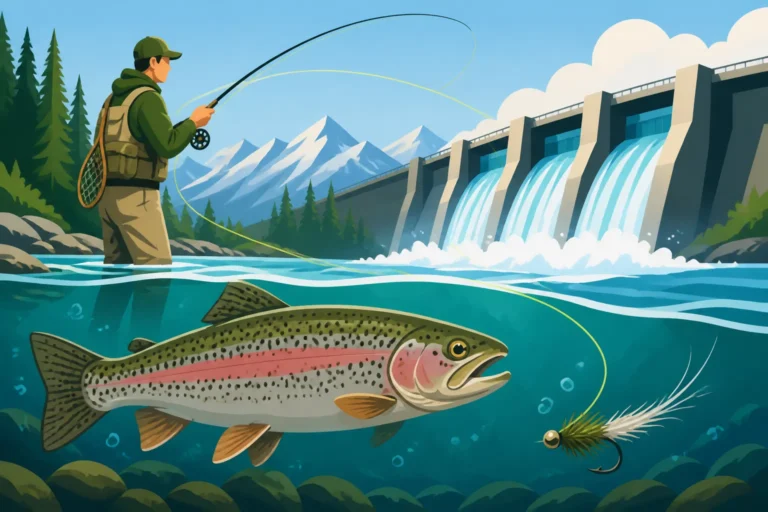
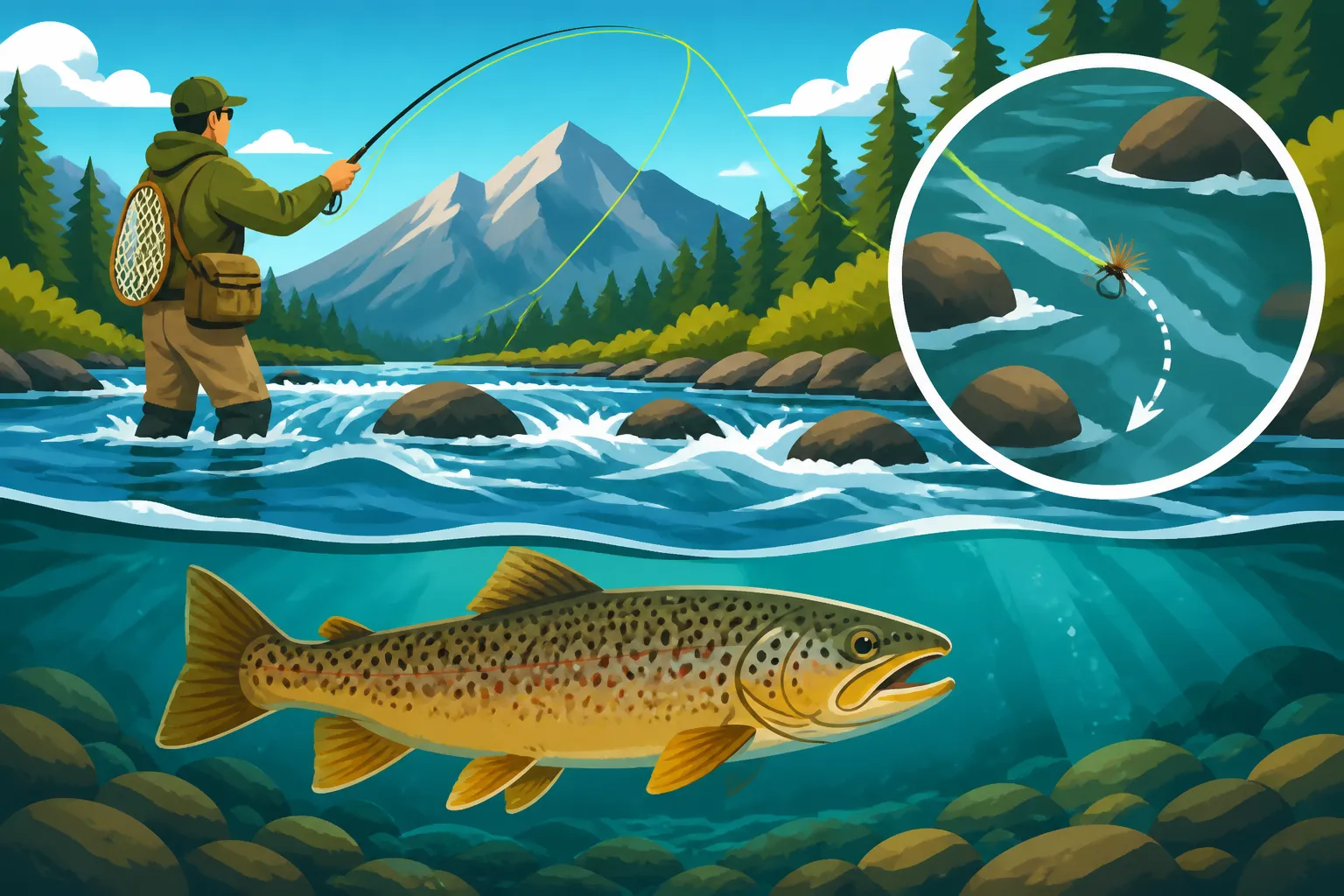
The core principle of nymphing is to get your fly (or bait, if using conventional tackle) down to the fish's feeding zone and allow it to drift naturally, without drag. For fly anglers, this often involves a strike indicator (a small bobber-like device) placed on your leader. You'll attach one or two weighted nymph patterns beneath it, often with split shot added to help them sink faster. The goal is to cast upstream of your target area and allow the indicator and nymphs to drift downstream at the same speed as the natural current. Watch your indicator carefully; any hesitation, sudden movement, or dip usually signals a bite.
For conventional anglers, a similar approach can be taken with a small piece of bait (like a worm or mealworm) or a micro jig. Use a light sinker a foot or so above your hook to get it down, and let it tumble naturally with the current. The lighter your line and the less weight you use, the more natural the drift will be. This requires precise casting and careful line management to avoid unnatural drag on your line, which will immediately signal to a wary trout that something is amiss. You'll find a good selection of specialized nymphing gear and indicators on Amazon, which can really help refine your presentation.
Dry Fly Fishing: When Trout Look Up
While nymphing is often the most productive, there's nothing quite like the thrill of catching a trout on a dry fly. This technique works best when insects are actively hatching and trout are rising to the surface to feed on them. Riffles can be incredible places for a hatch, as the turbulent water provides an ideal environment for insects to emerge.
Presenting a Dry Fly in a Riffle
When you see trout sipping insects from the surface in a riffle, it's time to switch to a dry fly. The challenge here is making your fly float naturally on the broken surface. You'll need to cast upstream of the rising fish, allowing your fly to drift down directly into its feeding lane. The key is a delicate presentation and keeping as much line off the water as possible to prevent drag. Mending your line (making small adjustments with your rod tip to reposition your line) is crucial to maintain a drag-free drift.
Choose a fly pattern that closely matches the size and shape of the natural insects hatching. Sometimes, a slightly larger, more visible pattern can work well in choppy riffle water, as the fish might not get a perfect view of every bug. If the trout are being selective, a smaller, more exact imitation might be necessary. Look for flies that are specifically designed for turbulent water, often tied with more hackle or floatant-friendly materials. Remember, many Alberta rivers, especially the freestone streams, have Alberta barbless hook requirement waters, so ensure your dry flies comply.
Wet Fly and Soft Hackle Swinging
Often overlooked, wet flies and soft hackles can be incredibly effective in riffles, especially when insects are emerging just beneath the surface or when trout are feeding on drowned insects. This technique is a bit of a hybrid between nymphing and dry fly fishing, and it can be incredibly meditative and effective.
The Art of the Wet Fly Swing
Instead of a drag-free drift, wet fly fishing involves a controlled swing. You cast quartering downstream and slightly across the current. As the line tightens, the fly begins to swing through the current, rising slightly towards the surface as it reaches the end of its arc. This rising motion mimics an emerging insect, which can be irresistible to trout. The trick is to feel for the subtle takes as the fly moves.
Soft hackles are particularly effective for this. Their natural movement in the current creates an enticing action that trout find hard to ignore. This method covers a lot of water and can be a great way to prospect a riffle when you're not seeing active rises or don't know exactly where the fish are holding. It's less about seeing a strike indicator and more about feeling the connection with the fish through the line, a truly engaging way to connect with Alberta's aquatic life.
| Technique | Primary Target Zone | Ideal Conditions | Key Action | Pros | Cons |
|---|---|---|---|---|---|
| Nymphing | Subsurface (riverbed to mid-water) | Most conditions, especially when no hatch | Drag-free drift with indicator | Highly effective, mimics most of trout's diet, works year-round | Can be challenging to detect subtle strikes, requires depth management |
| Dry Fly Fishing | Surface | Active hatch, rising trout | Drag-free float on surface | Exciting visual strikes, clear indication of a bite | Only effective during hatches, challenging in windy/choppy water |
| Wet Fly / Soft Hackle | Subsurface (emerging/drowned insects) | When fish are looking for emergers/drowned bugs | Controlled swing across/downstream | Covers water efficiently, subtle takes, versatile in various currents | Less direct strike indication, requires practice to master the swing |
| Small Spinners/Spoons | Subsurface (flash & vibration) | Aggressive fish, searching large areas | Retrieve with varying speed and depth | Can cover water quickly, good for active fish, easy to cast | Can spook wary trout, less natural presentation for selective fish |
Gear Up for Riffle Success
Having the right tools for the job can make a world of difference when you're tackling Alberta's riffles. You don't need the most expensive gear, but having reliable equipment that performs well in these conditions will certainly boost your confidence and your catch rates.
Rods, Reels, and Line
For fly fishing, a medium-fast action rod in a 4-weight to 6-weight range is typically ideal for most Alberta trout streams. This gives you enough backbone to handle larger fish but enough sensitivity for delicate presentations. A 9-foot rod is standard, offering good line control for mending. Match your rod with a reliable reel that has a smooth drag, and load it with a weight-forward floating line. When it comes to leaders and tippets, fluorocarbon is often preferred for nymphing due to its invisibility underwater and its faster sink rate. You can learn more about Best Gear for Bow River Fly Fishing in our detailed guide.
Conventional anglers will do well with a light to medium-light spinning rod, typically in the 6-foot to 7-foot range. A fast action tip will help you feel those subtle bites and make accurate casts into tight pockets. Pair it with a small spinning reel spooled with 4-8 pound monofilament or braided line. Adding a fluorocarbon leader will give you that extra edge in clear riffle waters. For specific recommendations, check out our guide on Best Fishing Rods for Alberta Rivers.
Waders and Wading Safety
You're going to get wet, so good waders are non-negotiable for serious riffle fishing. Breathable chest waders are generally the most comfortable, especially if you're hiking into spots. Pair them with sturdy wading boots that offer good ankle support and traction on slippery rocks. Felt soles offer excellent grip on wet rocks, but rubber soles with studs can be a good alternative, especially if you're walking a lot on trails.
Safety in the current is paramount. Always use a wading belt to prevent your waders from filling completely with water if you slip. A Best Wading Staff for Fast Current is an invaluable tool, providing a third point of contact and helping you maintain balance in strong currents. Never wade beyond your comfort level or into water that looks too fast or too deep. Always know the flow conditions before you go. You can find excellent options for both waders and boots on Amazon.
Essential Accessories
Beyond the basics, a few accessories will make your riffle fishing experience much smoother:
- Polarized Sunglasses: These are critical for cutting glare and allowing you to see into the water, spotting fish, structure, and potential holding lies.
- Net: A good quality, rubber-meshed landing net is essential for quickly and safely landing trout, especially if you plan on releasing them. This is particularly important for species like bull trout, which require careful handling and release. Read our guide on How to Catch Bull Trout and Release Them Safely for more tips.
- Fly/Tackle Box: Organize your flies, lures, split shot, and indicators in a compact, easy-to-access box.
- Forceps or Pliers: For quick and easy hook removal, especially with those pesky small flies or when dealing with toothy critters like pike (if you happen to hook one in slower sections).
- Nippers/Line Cutter: Keep your line neat and tidy, especially when tying on new leaders or tippets.
Mastering the Riffle: Tips for Success
Fishing riffles is a dynamic and engaging pursuit that rewards patience and attention to detail. Once you've got your gear and your basic techniques down, a few extra tips can help you truly master these productive sections of Alberta's rivers.
Stealth and Approach
Trout in riffles, despite the broken water, can still be surprisingly spooky. The chaotic surface might offer some camouflage from above, but vibrations and sudden movements on the bank or in the water can still alert them. Approach riffles quietly and cautiously. If you're wading, shuffle your feet rather than stomping. Try to stay low and use any available cover to break up your silhouette.
Casting upstream and allowing your offering to drift down to your target is often the most effective approach, as it keeps your body and line upstream of the fish, minimizing disturbance. If you're fishing a very clear, calm riffle, consider longer leaders and lighter tippets to avoid spooking fish. Every little bit of stealth helps, especially in heavily pressured waters or when targeting larger, warier trout. Remember to always be aware of your surroundings and other anglers, especially in popular spots in the Best Fly Fishing Rivers in Alberta.
Adjusting to Conditions
Riffles are constantly changing. Water levels can fluctuate with rain or snowmelt, water clarity can vary, and insect activity changes with the time of day and season. A successful riffle angler is constantly observing and adapting.
- Water Level: Higher water might mean trout move to the very edges of the riffle or into more protected pockets behind larger obstructions. Lower water might concentrate fish in deeper troughs or require lighter presentations as the fish become more exposed.
- Water Clarity: In clear water, finesse is key. Use smaller flies, lighter lines, and longer leaders. In murkier water, fish might be less selective, and you can get away with larger, brighter flies or lures that create more vibration.
- Time of Day/Season: Early mornings and evenings often see more insect activity and active rises. During midday, trout might hold deeper and be more receptive to nymphs. Spring often brings aggressive feeding, while fall can mean larger, migratory trout moving into riffles to spawn (be aware of Alberta Fishing Season Dates by Zone and any spawning closures).
Don't be afraid to change flies, adjust your weight, or switch techniques if what you're doing isn't working. Sometimes a slight change in fly size or color, or a subtle tweak to your drift, is all it takes to trigger a strike. Keep experimenting until you find what the fish want.
Safety First in Moving Water
Always prioritize your safety when wading in moving water. Riffles, with their uneven bottoms and sometimes swift currents, can be tricky. Beyond your wading staff and waders, here are some extra considerations:
- Know Your Limits: Don't attempt to wade through sections that are too deep or too fast for your skill level. It's better to walk around than to risk a fall.
- Buddy System: If possible, fish with a partner. They can help in case of a slip or offer an extra set of eyes for spotting fish and safe wading paths.
- Footing: Always test your footing before taking a step. The bottom of a riffle can be full of loose rocks, slippery algae, or sudden drop-offs.
- Flow Information: Before heading out, check local river flow data if available. High flows can make normally wadeable riffles extremely dangerous. The Alberta Guide to Sportfishing Regulations is also an essential read for any angler.
By understanding the dynamics of a riffle, employing the right techniques, using appropriate gear, and always prioritizing safety, you'll find that these turbulent waters can be some of the most rewarding places to fish for trout in Alberta. Happy angling!
Disclaimer
This article is for general informational purposes only and does not constitute professional advice. Laws, prices and regulations vary by location and change over time. Consult a qualified professional for guidance on your specific situation.