Milk River best fishing access
Finding reliable public fishing access along a smaller, often privately bordered river like Alberta's Milk River can feel like trying to solve a cryptic puzzle, especially when you’re venturing into new territory. The frustration of driving miles only to encounter "No Trespassing" signs is a common one for many anglers. This guide aims to clear up that confusion, offering a comprehensive look at the best fishing access points on the Milk River, helping you plan a successful and enjoyable trip without the guesswork.
Understanding the Milk River's Unique Character for Anglers
The Milk River is truly one of Alberta's hidden gems, offering a distinctly different angling experience compared to the province's more famous mountain rivers or vast northern lakes. Its character is shaped by its journey through Alberta's southern prairies, creating a unique environment for both fish and fishers.
Prairie Gem: The Distinctive Flow and Landscape of the Milk River
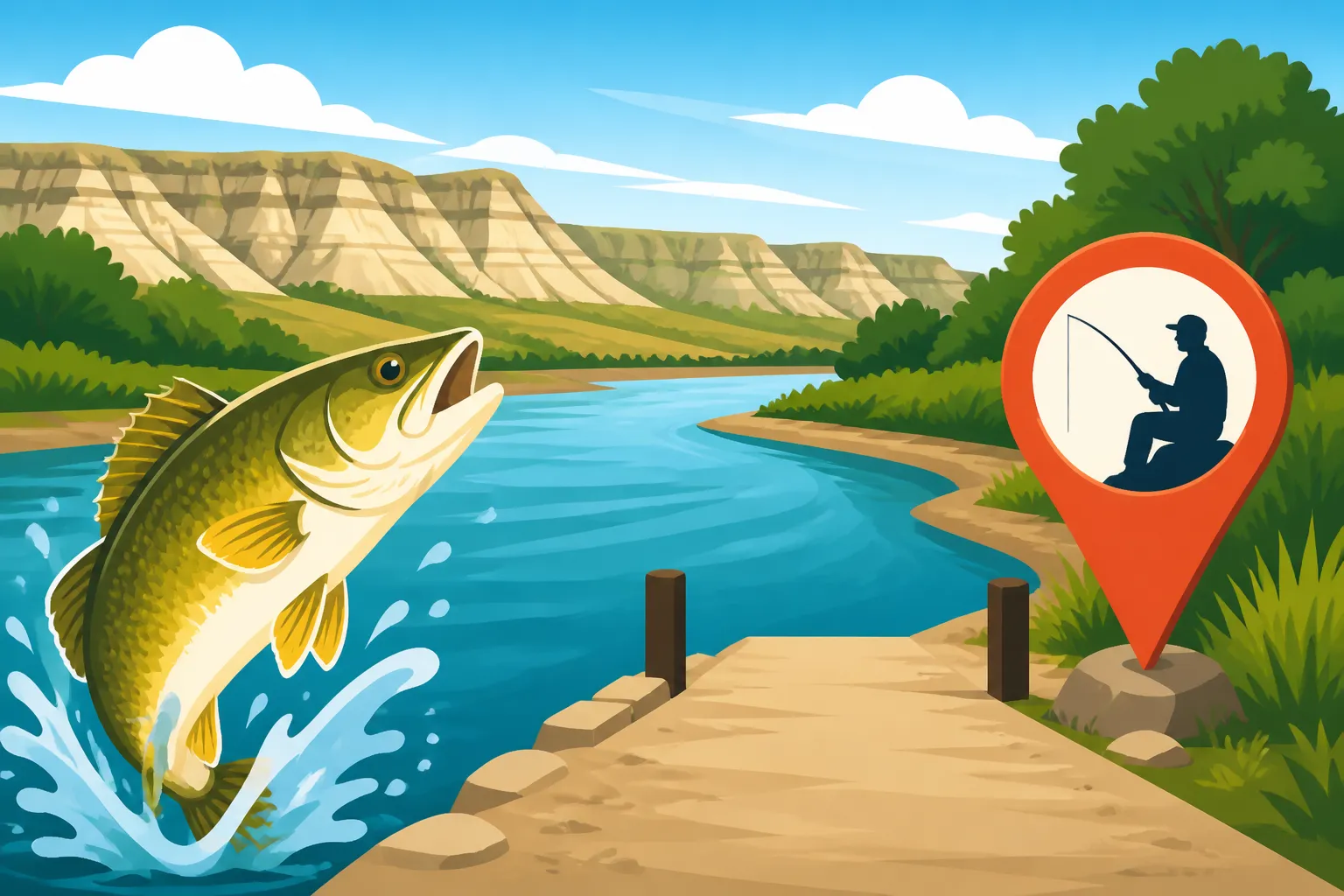
Unlike the roaring, crystal-clear torrents of the Bow River or the deep, expansive basins of Lesser Slave Lake, the Milk River is a prairie stream through and through. It’s characterized by its meandering course, often shallow runs, and slower currents, particularly during late summer. The landscape surrounding it is primarily agricultural, with wide-open skies and a mix of native grasslands and cultivated fields. This environment means you'll find plenty of undercut banks, submerged logs, and patches of aquatic vegetation – all fantastic ambush points for predatory fish.
The water clarity can vary dramatically depending on recent rainfall. After heavy rains, it can become quite turbid, carrying sediment from the surrounding farmlands. However, during drier spells, especially in spring and fall, the water clears up, making sight fishing in shallower sections a real possibility. This fluctuation in conditions requires anglers to be adaptable, choosing their approach based on what the river presents on any given day. You'll often be wading or bank fishing here, so comfortable, sturdy footwear is a must, and maybe even a good wading staff for fast current in certain spots.
What Bites Here: Key Fish Species to Target
The Milk River is home to a robust population of several species, offering diverse opportunities for anglers. While it might not be known for massive trophy trout like some other Alberta waters, it certainly holds its own for a rewarding day on the water.
- Northern Pike: These aggressive predators thrive in the Milk River's slower, weedy sections. They're often found lurking in deeper pools, around submerged logs, or within dense stands of reeds. Pike here can grow to respectable sizes, offering exciting battles on appropriate gear. They are particularly active during spring and fall.
- Goldeye: Known for their silvery appearance and strong fighting spirit, goldeye are a common and highly prized sport fish in the Milk River. They readily strike a variety of small lures and flies and are excellent eating. Look for them in areas with moderate current, often near deeper bends or where structure creates current breaks. If you're looking to target these, lighter tackle is usually best.
- Burbot: These unique, cod-like fish are primarily bottom-dwellers and are most often caught during the colder months, especially through the ice in deeper sections or by targeting them at night. While not as numerous as pike or goldeye in many parts of the Milk River, they're a fun catch for those seeking something different.
- Trout (Rainbow and Brown): While not the primary draw, some sections of the Milk River and its tributaries, particularly closer to the headwaters or where it’s stocked, can hold rainbow and brown trout. These are often smaller, but wild trout in a prairie setting are a special treat. Check the Alberta Fishing Season Dates by Zone to confirm specific trout regulations for the section you plan to fish, as rules can vary.
- Suckers: While often overlooked by sport anglers, suckers are abundant in the Milk River. They provide an important food source for predatory fish and can be fun to catch on light tackle for those interested in honing their bottom-fishing skills.
Understanding these target species will help you tailor your gear and techniques, greatly increasing your chances of success on this distinctive prairie waterway.
Unlocking the Best Public Fishing Access Points on the Alberta Milk River
Accessing the Milk River can be a bit more challenging than some of Alberta's larger, more well-known rivers due to the prevalence of private land. However, with a bit of local knowledge and respect for landowners, there are several excellent public access points that offer fantastic fishing opportunities.
Navigating Public and Private Land: Essential Considerations
Before you even think about casting a line, it's crucial to understand Alberta's land access rules. Much of the land bordering the Milk River is privately owned, primarily for agriculture. Fishing from private land without explicit permission is trespassing and can lead to fines and strained relations with local communities.
- Crown Land: Alberta has significant tracts of Crown land, which are publicly owned. If a section of the river flows through Crown land, you generally have the right to access it for recreational purposes, including fishing. However, identifying Crown land can be tricky. Resources like the Alberta Disposition Viewer (available through the province's official mapping tools) can help, but it's not always precise for river access.
- Road Allowances: Public road allowances (usually 30-foot wide strips of land on either side of a road, including bridges) often provide legal access points to rivers, even if the surrounding land is private. You can typically fish from these allowances or launch small, non-motorized boats. Always park safely and ensure you're not blocking farm access or private driveways.
- Landowner Permission: The golden rule for fishing on private land is simple: ask first. Many landowners are friendly and willing to grant access if approached respectfully. A quick knock on the door, a polite request, and an assurance that you'll leave no trace can open up numerous opportunities. FishingBooker also lists local guides who often have established relationships with landowners, providing legal and convenient access to prime spots.
- Respecting Property: Always leave gates as you found them (open or closed), avoid damaging fences, stay clear of crops and livestock, and pack out everything you pack in. This helps ensure future access for everyone.
Prime Access Spots and How to Find Them
While the Milk River is not dotted with numerous developed fishing parks, several key locations provide reliable public access. Here are some of the best fishing access points, moving generally from west to east within Alberta:
- Writing-on-Stone Provincial Park: This provincial park, a UNESCO World Heritage Site, offers direct access to the Milk River. While primarily known for its historical and cultural significance, the river here provides opportunities for fishing, particularly for goldeye and pike. You can often find decent bank fishing spots within the park boundaries. The park has designated day-use and camping areas, making it a great base for a multi-day trip. Remember to follow park rules regarding where you can fish and recreate. This area is also fantastic for its unique geology, offering a truly immersive experience.
- Highway 4 Bridge Crossing (South of Lethbridge near Coutts): As the Milk River meanders south towards the US border, bridge crossings like the one on Highway 4 can offer informal but legal access via the road allowance. Anglers can often park safely off the shoulder and walk down to the river. This area might be good for early season pike or goldeye.
- Highway 36 Bridge Crossing (Near Warner): Further east, the Highway 36 bridge crossing provides another point of access. Similar to other highway bridges, the road allowance here allows for legal access. The river in this section tends to be slower and wider, providing good habitat for pike. It's often a good spot for launching a canoe or kayak for a float trip downstream, provided you have a planned takeout point that respects private property.
- Range Road 155/Township Road 20 Road Allowances: Throughout its course, the Milk River is crossed by numerous range roads and township roads. These road allowances can be excellent points of informal access. Look for areas where the road comes close to the river, allowing a short walk to the bank. A good strategy is to use satellite maps (like Google Maps) to identify these crossings and then verify them on the ground. Always be mindful of private property signs immediately adjacent to the road allowance. These less-trafficked spots often hold less pressured fish.
- Easternmost Alberta Sections (Near the Saskatchewan Border): As the river approaches the Saskatchewan border, it often becomes even more remote. Access might require more exploration or specific local knowledge. Some Crown land sections exist, but they are often unmarked. This is where engaging a local guide through platforms like FishingBooker can be invaluable, as they possess the nuanced understanding of legal access points and private land boundaries that are not always evident to the casual visitor.
When planning your trip, consider the river's flow. Low water levels in late summer can make some spots challenging to access or fish effectively, while spring runoff might make certain areas too high or muddy.
Milk River's International Stretch: Reciprocity and Regulations
One of the unique aspects of the Milk River is its international journey. Originating in Montana, it flows north into Alberta, then loops back south into Montana before eventually joining the Missouri River. This means some anglers might consider fishing the boundary waters or even crossing into Montana.
It's absolutely critical to understand that your Alberta Fishing License Guide for 2026 is only valid within Alberta's provincial boundaries. If you plan to fish any section of the Milk River that is in the United States, even if it's just across the imaginary line, you will need a Montana fishing license. There is no direct reciprocity for a standard Alberta license with Montana for the Milk River.
Always research specific regulations for the exact section of the river you intend to fish. These can include:
- Bag and Possession Limits: Species like northern pike and goldeye often have specific limits that vary by zone. Check the Alberta Bag and Possession Limits by Species before you go.
- Special Regulations: Some sections might have specific rules regarding bait, hooks (e.g., barbless hook only waters), or even seasonal closures for certain species.
- WIN Card: You'll also need a valid Wildlife Identification Number (WIN) card to purchase any Alberta fishing license. If you don't have one, make sure to get your Alberta WIN Card, Explained before heading out.
Ignoring these rules can lead to hefty fines and confiscation of gear. When in doubt, consult the official Alberta Guide to Sportfishing Regulations or contact Alberta Environment and Protected Areas.
Essential Gear and Successful Strategies for Milk River Fishing
Success on the Milk River often comes down to matching your gear and techniques to the unique environment and the fish you're targeting. This isn't a place for heavy saltwater tackle, but rather a more refined approach suited to a prairie stream.
Recommended Tackle and Lures for Prairie Species
Your choice of tackle will significantly impact your Milk River experience. Light to medium-light spinning gear is typically ideal, offering versatility for the range of species present.
- Rods and Reels: A 6 to 7-foot spinning rod with a fast action, paired with a 1000 to 2500 size spinning reel, is a fantastic all-around setup. This will give you enough backbone for a decent pike but still offer sensitivity for goldeye. For those targeting larger pike, a medium-heavy baitcasting setup might be more appropriate.
- Line: 6-10 lb monofilament or fluorocarbon is excellent for general fishing. If targeting pike with heavier lures, 10-20 lb braided line with a 15-30 lb fluorocarbon or wire leader is highly recommended to prevent bite-offs. The best leader for pike fishing is often a short, strong wire or heavy fluorocarbon.
- Lures:
- Pike: Inline spinners (Mepps, Panther Martin), spoons (Daredevle, Five of Diamonds), medium-diving crankbaits, and soft plastic swimbaits rigged weedless are all highly effective. Bright colors like chartreuse, orange, and red can be very successful in the often-stained water.
- Goldeye: Small inline spinners (size 0 or 1), tiny spoons, small jigs (1/32 to 1/8 oz) tipped with a piece of worm or grub, and small flies (such as a Woolly Bugger or Prince Nymph) are excellent choices. They are also readily caught on bait like small pieces of earthworm.
- Burbot: Best targeted with bottom-fished jigs or baits (cut bait, pieces of sardine) near deeper holes, especially at night.
- Trout: If you're in a section with trout, small spinners, spoons, worms, or standard trout flies (nymphs, dry flies if there's a hatch) will work.
- Hooks: Carry a variety of hook sizes. For pike, a strong single hook on your lures is often preferred for catch and release. For bait fishing, circle hooks are excellent for minimizing gut hooking. Many anglers also prefer a landing net mesh for catch and release that is rubberized or knotless to protect the fish.
Don't forget essentials like pliers (for hook removal, especially with pike), a small tackle bag for easy bank mobility, and a measuring tape to ensure you comply with size regulations.
Seasonal Best: When to Fish the Milk River
The Milk River offers fishing opportunities throughout the open water seasons, but certain times of the year stand out for specific species.
- Spring (April – June): This is arguably the prime time for pike fishing. After ice-out, pike are often hungry and active in shallower waters, making them easier to target. Water levels are typically higher, and the fish are less pressured. Goldeye also become very active as the water warms. This period offers some of the best overall fishing conditions.
- Summer (July – August): Summer can be a mixed bag. Early summer can still be good for pike and goldeye, but as temperatures rise and water levels drop, fishing can become more challenging. Fish may retreat to deeper, cooler holes or become less active during midday. Dawn and dusk often offer the best opportunities. Be prepared for sun and heat.
- Fall (September – November): Similar to spring, fall offers excellent fishing as water temperatures begin to cool. Pike become active again as they feed heavily before winter, and goldeye remain strong. The cooler weather and changing foliage also make for a very pleasant fishing experience. This is a fantastic time for Northern Pike Fishing in Alberta on the Milk River.
- Winter (December – March): While ice fishing is popular in Alberta, the Milk River's often inconsistent ice conditions, particularly in sections with current, can make it less reliable than larger lakes. However, in colder, stiller sections or backwaters with safe ice, burbot can be targeted through the ice. Always prioritize safety and check ice thickness before venturing out.
Always check local weather conditions and river flow rates before you go, as these can dramatically impact fish behavior and safety.
Responsible Angling and Conservation on the Milk River
Fishing the Milk River isn't just about catching fish; it's about respecting the environment, adhering to regulations, and ensuring this unique fishery remains vibrant for future generations.
Understanding Alberta Fishing Regulations and Limits
Alberta has a robust set of fishing regulations designed to protect its fisheries. It is every angler's responsibility to know and follow these rules. The Milk River falls under specific management zones, and rules can vary even within different stretches of the river.
- The Alberta Guide to Sportfishing Regulations: This is your bible. You can find it online through the MyWildAlberta portal or pick up a physical copy at most tackle shops. Pay close attention to the General Regulations and then the specific Zone Regulations for the Milk River. Understanding Reading the Alberta Guide to Sportfishing Regulations is crucial.
- Catch and Possession Limits: Each species has a daily catch limit and a possession limit. For example, while northern pike might have a generous limit in some zones, other species like walleye (if encountered, though rare here) might be strictly catch-and-release or require a special tag.
- Size Restrictions: Some species may have minimum or maximum size limits. It's not just about how many you catch, but also how big they are.
- Bait Regulations: Always verify if natural bait is permitted in your chosen section. Some areas restrict the use of live baitfish to prevent the introduction of invasive species.
- Special Harvest Licences: While less common for the Milk River's primary species, some areas or species (like walleye in certain lakes) require a special harvest license obtained through a draw. Always check for these if you plan to keep certain species.
Protecting a Unique Ecosystem: Leave No Trace Principles
The Milk River is a fragile ecosystem, and its health depends on responsible angling practices. Adopting Leave No Trace principles is fundamental to preserving this natural resource.
- Pack it In, Pack it Out: Absolutely everything you bring with you (lures, packaging, food wrappers, empty beverage containers) must leave with you. This includes discarded fishing line, which can be deadly to wildlife.
- Minimize Bank Erosion: When accessing the river, try to use established paths. Avoid creating new trails, especially down steep banks, as this can lead to erosion that damages habitat and degrades water quality.
- Wading Responsibly: If wading, do so carefully to avoid disturbing fish spawning areas (if applicable) or trampling sensitive aquatic vegetation.
- Responsible Catch and Release:
- Handle Fish Gently: Use wet hands when handling fish you intend to release. Avoid squeezing them.
- Minimize Out-of-Water Time: Keep the fish in the water as much as possible, especially during warm weather. A quick photo is fine, but prioritize the fish's health.
- Proper Hook Removal: Use pliers or hemostats to quickly and carefully remove hooks. If a fish is deeply hooked, cut the line as close to the hook as possible rather than tearing internal organs.
- Revive Before Releasing: Hold the fish gently in the current until it can swim away strongly on its own.
- Boating and Watercraft: If using a boat (kayak, canoe, or small jon boat), be aware of Alberta Boating Laws for Anglers including life jacket requirements and proper registration. Respect other users of the river. Remember to clean, drain, and dry your boat and gear to prevent the spread of aquatic invasive species.
By being a responsible angler, you're not just following the rules; you're actively contributing to the long-term health and enjoyment of the Milk River fishery for everyone. If you're looking to explore new areas, remember that services like FishingBooker can help connect you with local guides who are well-versed in responsible angling practices and local regulations, ensuring your trip is both successful and sustainable.
Milk River Fishing Access Summary
To help you plan your Milk River adventure, here's a quick overview of key access points and what to expect:
| Access Point | Location Type | Primary Access Method | Key Species Targeted | Best Season | Notes |
|---|---|---|---|---|---|
| Writing-on-Stone Prov. Park | Provincial Park | Bank access, wading | Goldeye, Northern Pike | Spring, Fall | Designated areas, cultural site. Excellent base for camping. Be mindful of park rules. |
| Highway 4 Bridge | Road Allowance | Bank access, wading | Northern Pike, Goldeye | Spring, Fall | Informal access via road allowance. Park safely off highway. Potential for canoe/kayak launch. |
| Highway 36 Bridge | Road Allowance | Bank access, wading | Northern Pike, Goldeye | Spring, Fall | Informal access via road allowance. Good for launching small watercraft for floats. Be aware of private land downstream. |
| Various Range Roads | Road Allowance | Bank access | Northern Pike, Goldeye, Burbot | All Season | Numerous crossings offer informal access. Use satellite maps to identify. Always respect adjacent private property and leave no trace. |
| Private Land (with perm.) | Private Property | Bank access, wading | All species | All Season | Requires explicit landowner permission. Often provides access to less pressured sections. Be polite, respectful, and adhere to their wishes. |
Disclaimer
The information provided in this guide is for general informational purposes only and is subject to change. Fishing regulations, access points, and conditions can vary. Always consult the official Alberta Guide to Sportfishing Regulations and any relevant park or land-use guidelines before planning your trip. It is the angler's responsibility to be aware of and comply with all current provincial and local regulations. Fishing can be inherently dangerous; always prioritize your safety and the safety of others.