Best bait for lake trout in deep water
Trying to target those elusive lake trout in the vast, deep waters of Alberta can feel like searching for a needle in a haystack, especially when you're unsure what bait will entice them to strike. Many anglers get frustrated tossing various lures without understanding why these fish retreat to the depths or what their preferred forage might be down there. This comprehensive guide is here to demystify deepwater lake trout fishing, breaking down their habits, the most effective baits, and the techniques you'll need to successfully put these powerful fish in your boat or on the ice.
Understanding Lake Trout in Deep Water
Lake trout are true apex predators in their aquatic environments, and in Alberta's larger, deeper lakes, they spend a significant portion of their lives in the cool, oxygen-rich depths. Understanding why they seek these environments and how to locate them is your first step to success.
Why Lake Trout Go Deep
Lake trout are cold-water fish, plain and simple. They thrive in water temperatures that many other species find too frigid, generally preferring temperatures between 45 and 55 degrees Fahrenheit (7 to 13 degrees Celsius). As the surface waters warm, especially during Alberta's hot summer months, lake trout descend to the cooler thermocline or even deeper, where they can find their ideal temperature range. This is less about escaping heat and more about metabolic efficiency – they are designed for colder environments.
Beyond temperature, oxygen levels play a crucial role. While cold water generally holds more dissolved oxygen, in certain situations, deep water can become oxygen-depleted. However, in most of Alberta's prime lake trout waters, such as Cold Lake, the depths provide a stable, oxygenated sanctuary. They also go deep to follow their primary food sources. Large schools of baitfish, like cisco (lake herring) or even smaller whitefish, often congregate in specific depth ranges, and where the food goes, the predators follow.
It's also a matter of safety and comfort. Deep water offers cover from bright sunlight, which lake trout tend to avoid, and protection from human disturbance. They're built for stealth and ambush in low-light conditions, making the darker depths their natural hunting grounds. Understanding this core behavior is key to anticipating their movements throughout the year and knowing What water temperature lake trout prefer.
Seasonal Deepwater Patterns
Lake trout movements aren't static; they shift with the seasons, but generally, their deepwater preference holds true for much of the open water season.
Summer Stratification: During the summer, Alberta's deeper lakes stratify into distinct temperature layers. The warmest water is at the surface, a middle layer (thermocline) provides a rapid temperature drop, and the coldest water is at the bottom. Lake trout will typically be found in or just below the thermocline, often suspending over deep basins or near deep structure like humps and drop-offs. This is when deep-water presentations are most critical. You might find them anywhere from 40 feet to well over 100 feet down, depending on the lake and specific conditions. Knowing How deep lake trout go in summer is vital.
Winter: When the lakes freeze over, lake trout remain active, and they'll still be in deep water. Ice fishing for lake trout is a popular pursuit, and anglers often target similar deep structures and suspending fish they would find in summer. The main difference is access; ice fishermen drill holes directly over these deep areas. The entire water column eventually cools, but the fish often stick to deep basins and points, especially those with baitfish present.
Spring and Fall Transitions: These are often transition periods. In spring, as ice melts and surface waters are still cool, lake trout might be found shallower, especially early in the season, sometimes even near shorelines as they hunt for emerging bait. As the water warms, they'll gradually move deeper. In fall, as surface temperatures drop again, they might come shallower for a brief period before retreating to the depths for winter. These transition times can offer unique opportunities for anglers, sometimes allowing for less specialized deep-water gear.
Locating Deepwater Lake Trout
Finding lake trout in vast expanses of deep water requires patience and, ideally, the right tools. Simply dropping a line anywhere isn't an effective strategy.
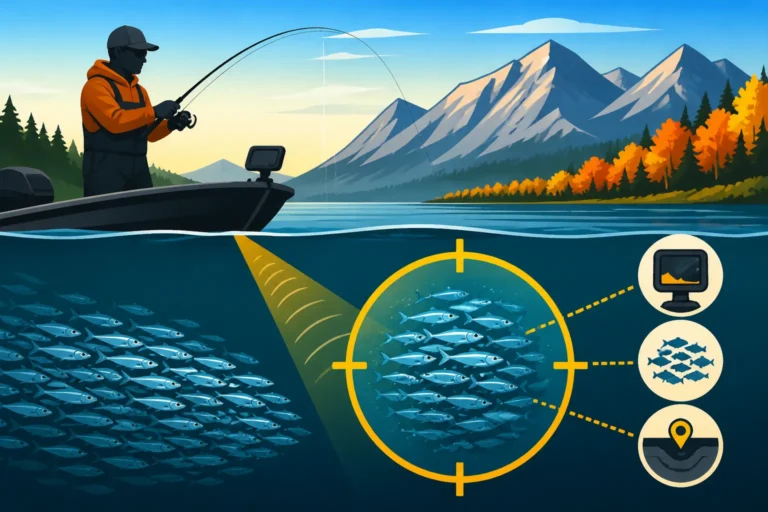
Sonar and Fish Finders: Modern sonar technology is your best friend when hunting deepwater lake trout. A quality fish finder can show you depth contours, identify schools of baitfish, and most importantly, mark individual lake trout. Look for those tell-tale arches or lines indicating larger fish, often suspended above the bottom or holding tight to structure. Many anglers spend considerable time idling over promising areas, marking fish, and then returning to present baits. A good understanding of your fish finder's capabilities, like those offered by Humminbird or Lowrance units you might find on Amazon, can make all the difference. For more details, refer to guides on Best Fish Finders for Alberta Lakes.
Structure and Depth Changes: Lake trout, even in deep water, relate to structure. This could be a submerged island, a steep drop-off, an underwater point, or a deep basin. These features provide ambush points, migratory routes, and areas where baitfish might concentrate. Pay close attention to topographical maps or your fish finder's mapping features to identify these prime locations. A deep flat adjacent to a sudden drop into a canyon can be a fantastic spot.
Baitfish Schools: Lake trout are opportunistic predators, and their movements are heavily influenced by the presence of their food. If your fish finder shows dense schools of baitfish in the mid-water column or near deep structure, you can bet lake trout won't be far away. Often, you'll see larger marks (the lakers) just below or around these baitfish schools, indicating they are actively feeding. Sometimes, following the bait is the most effective way to locate the predators.
The Best Baits for Deepwater Lake Trout
Once you've located those deepwater lakers, the next challenge is presenting them with something irresistible. Certain baits are specifically designed to reach the depths quickly and trigger strikes from these powerful fish.
Heavy Spoons and Jigs
When you need to get down deep and stay there, heavy spoons and jigs are often your best bet. Their weight allows for a fast descent, getting your bait into the strike zone efficiently.
Spoons: Heavy metal spoons are a classic for a reason. Their fluttering, wobbling action on the fall mimics injured baitfish, and when jigged, they flash and dart erratically. Spoons like the Williams Wabler, Little Cleo, or larger Dardevle spoons are popular choices. The key is their weight; you want something substantial enough to cut through the water and reach depths of 60, 80, or even 100+ feet without taking forever. Colors often matter, with silver, gold, and white being perennial favorites, sometimes with a splash of orange or chartreuse. For jigging, you'll want to experiment with lift and fall rates, pausing briefly to let the spoon flutter. This is a technique that demands active participation from the angler.
Jigs: Heavy jigs, particularly tube jigs or bucktail jigs, are also highly effective. A large, weighted tube jig, often 4-6 inches long and weighing an ounce or more, can be deadly. The soft plastic tube provides a lifelike profile and seductive action, while the heavy jig head gets it deep. Bucktail jigs, with their natural hair pulsate enticingly in the water, especially when tipped with a piece of baitfish or a soft plastic trailer. When fishing jigs in deep water, a sharp, upward rip followed by a controlled fall is a common retrieve. Many strikes occur on the fall, so paying attention to line tension is crucial. You might feel a slight 'tick' or just a sudden slackening of the line. Learning to discern these subtle bites is key to success.
Trolling Plugs and Stickbaits
For covering large expanses of water and targeting suspended fish, trolling with plugs and stickbaits is an incredibly effective method. This technique allows you to present baits at a consistent depth over vast areas.
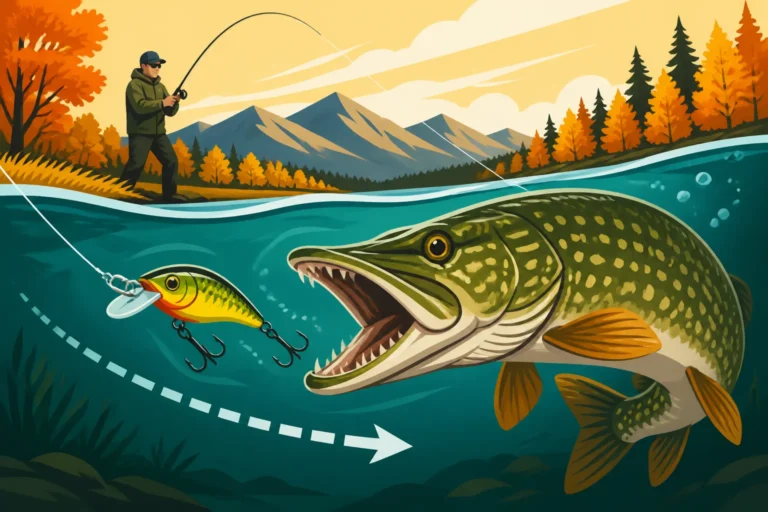
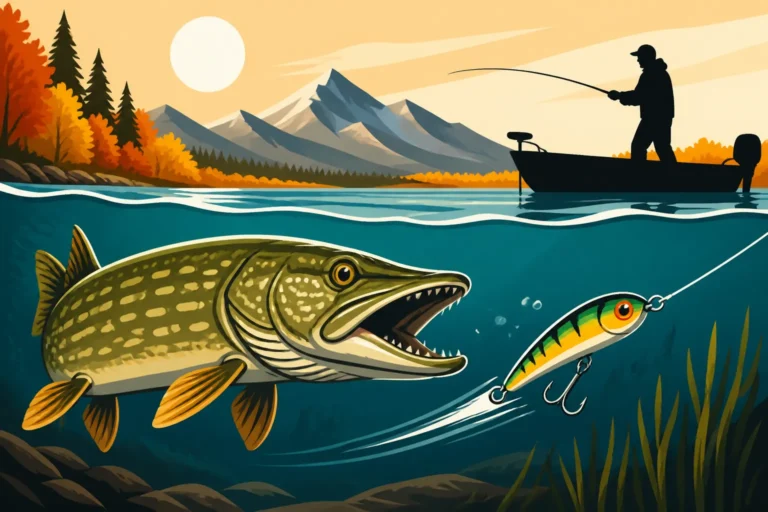
Plugs and Stickbaits: Large diving plugs and stickbaits are designed to imitate larger baitfish and have a built-in wobble or darting action that is irresistible to cruising lake trout. Brands like Rapala (Deep Husky Jerk, Down Deep Rattlin' Fat Rap), Storm (Deep ThunderStick), or even some larger spoons like the Northern King can be very effective. The key here is getting them to the desired depth. Standard diving baits will only go so deep on their own, even with heavy line.
Downriggers and Lead Core: To present these plugs at precisely the right depth, specialized equipment is often required. Downriggers allow you to lower a heavy weight (cannonball) to a specific depth, with your fishing line attached to a release clip. When a fish strikes, the line pops free, and you fight the fish directly without the weight. This is the most precise way to control lure depth. Lead core line is another option; it's a specialized fishing line with a lead core that causes it to sink. The more "colors" (sections) of lead core you let out, the deeper your bait will run. This method, while less precise than downriggers, is effective for reaching intermediate depths and can be particularly good when the fish are suspended high off the bottom. Remember that Trolling Techniques for Alberta Lake Trout are critical for success with these baits.
Live and Dead Baits
While artificial lures are incredibly popular, live or dead bait can sometimes be the ticket, especially for finicky lake trout or when fishing in colder conditions. Always check the current Alberta Fishing Regulations Explained to ensure that bait use is permitted in your chosen body of water.
Live Bait: Where legal, live baitfish can be incredibly effective. Species like minnows or smelt, if available and permitted, provide natural scent, movement, and profile that no artificial lure can perfectly replicate. They are often fished on a simple hook rig, sometimes weighted with a sinker to get them into the deeper strike zone. The natural struggle of a live minnow is a powerful attractant for a lake trout. However, rules around live bait can be strict to prevent the spread of invasive species, so always double-check.
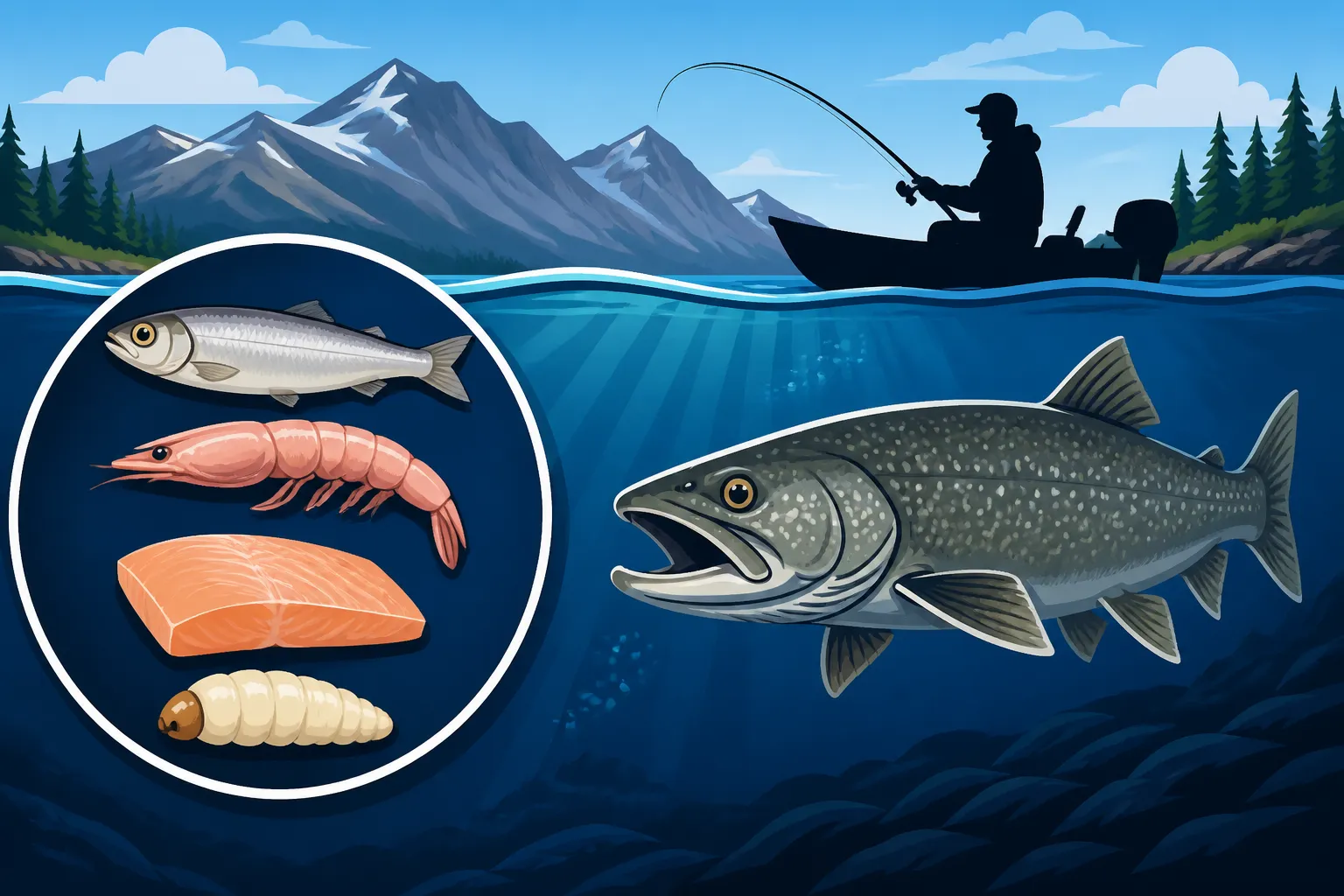
Dead Bait: Dead bait, such as herring, cisco, or even pieces of perch, can also be very enticing due to their strong scent. They are often fished on a quick-strike rig or a large single hook, weighted to get them to the bottom or suspended at a specific depth. When fishing dead bait, the focus is on scent and presentation. A slow, subtle lift and drop, or simply letting the bait sit on the bottom or suspend in the water column, can be effective. This method is particularly popular during ice fishing season when fish might be less inclined to chase a fast-moving lure. You might even find pre-packaged dead bait options on Amazon or at local tackle shops.
Here's a quick comparison of popular deepwater lake trout baits:
| Bait Type | Best Use | Pros | Cons |
|---|---|---|---|
| Heavy Spoons | Jigging, casting deep, mimicking injured bait | Flash, flutter, reaches depth quickly | Requires active jigging, can get snagged |
| Heavy Jigs | Vertical jigging, presenting soft plastic | Lifelike action, good for finicky fish | Can be slow to retrieve from extreme depths |
| Diving Plugs | Trolling at specific depths, covering water | Consistent action, covers large areas | Requires trolling gear (downriggers/lead core) |
| Live Bait | Finicky fish, maximum natural appeal | Unmatched natural scent and action | Legality restrictions, bait procurement issues |
| Dead Bait | Scent trail, slow presentation, ice fishing | Strong scent, low effort once set | Less active presentation, can be messy |
Presentation Techniques for Deep Water Baits
Having the right bait is only half the battle; knowing how to present it effectively in deep water is what truly separates successful anglers from those who struggle. It requires precision, boat control (or ice fishing strategy), and a good understanding of your gear.
Vertical Jigging Strategies
Vertical jigging is an active and engaging way to target deepwater lake trout, especially when you've pinpointed fish on your sonar. It allows for direct interaction with the bait and the fish.
Precise Depth Control: The absolute most critical aspect of vertical jigging is getting your bait to the exact depth of the fish. This is where a good fish finder with an accurate depth readout comes into play. Once you mark a fish or a school, drop your jig or spoon directly to that depth. Some anglers use line counters on their reels to track how much line they've deployed. A common mistake is fishing too deep or too shallow; if the fish are at 70 feet, your bait needs to be at 70 feet, not 60 or 80. Small adjustments can make a huge difference.
The Jigging Motion: Lake trout often respond best to a sharp, aggressive rip upward, followed by a controlled, tantalizing fall. The fall is where most strikes occur, as the bait flutters or spirals downwards, mimicking a stunned or dying baitfish. After the fall, let the bait pause for a few seconds before ripping it up again. Experiment with the height of your rips (from a foot to several feet) and the duration of your pauses. Sometimes a subtle quiver is all it takes; other times, an aggressive, almost violent jigging motion is needed to provoke a reaction strike.
Boat Control and Drifting: When jigging from a boat, maintaining your position over marked fish can be challenging. A good electric trolling motor with GPS spot-lock features can be invaluable, allowing you to hold your boat precisely over a deep hummock or a suspended school. If you're drifting, try to drift slowly over promising structure, watching your sonar for fish as you go. For ice fishing, you simply set up directly over your target area, often with multiple holes drilled to cover a small zone. Just like with Jigging for Burbot Through the Ice, the principle of vertical presentation is key.
Trolling with Downriggers and Lead Core
Trolling is perhaps the most efficient way to cover large areas of deep water and find actively feeding lake trout, especially when they are suspended. Precision depth control is paramount here.
Downrigger Precision: Downriggers are the gold standard for deepwater trolling. They allow you to run your lures at an exact depth, regardless of boat speed or lure type. Set your downrigger ball to the depth where you're marking fish or bait. The key is to keep your bait running true behind the boat, typically 50 to 150 feet back from the downrigger release clip. The action of the lure is what attracts the fish, so you want to ensure it's performing as intended. Adjusting your boat speed to find the optimal lure action is a common practice; generally, a speed between 1.5 and 3 mph works well for lake trout.
Lead Core Depth Management: While less precise than downriggers, lead core line is a fantastic option for reaching intermediate to deep depths, especially if you don't have downriggers or are fishing shallower deep zones (e.g., 20-50 feet). Each "color" of lead core (typically 10 yards or about 30 feet) will get your lure to a certain depth. The general rule of thumb is about 5 feet of depth for every color at 2 mph, but this varies greatly with lure type, line diameter, and speed. You'll need to experiment to dial in your setup. It's often used with long rods to keep lines separated and avoid tangles, and is great for covering water efficiently. Consider different setups for various depths, as outlined in guides like Best Trolling Speed for Lake Trout.
Lure Selection and Action: When trolling, select plugs or spoons that have a good action at your chosen speed. Some lures wobble wildly, others have a tighter wiggle, and some dart side to side. Lake trout often prefer different actions on different days. Vary your lure colors, sizes, and actions until you find what triggers bites. Don't be afraid to run multiple rods with different presentations if regulations allow, to quickly determine what the fish are keying in on.
Static Baits and Bottom Fishing
Sometimes, the simplest approach is the most effective, especially when lake trout are lethargic or holding tight to the bottom in deep water. This involves presenting a bait and letting it sit or move very slowly.
Still Fishing with Scent: If live or dead bait is permitted, still fishing can be deadly. Drop a weighted rig with your bait to the bottom, or suspend it just off the bottom using a slip float or by watching your line counter. The key here is the natural scent and subtle movement of the bait. This works particularly well during colder periods or when lake trout are less active. You're waiting for the fish to come to your bait, rather than actively pursuing them. This method demands patience but can be incredibly rewarding.
Tip-Ups for Ice Fishing: During the winter, ice anglers often use tip-ups, which are devices that hold your line in the water and signal a bite when a flag springs up. These are set with a dead bait or large minnow at a specific depth, often near the bottom or suspended in the water column. The advantage of tip-ups is that you can cover a wider area with multiple lines (where legal), allowing you to wait out the fish while you actively jig another hole. This passive approach often hooks some of the largest lake trout, as they have ample time to mouth the bait.
Bottom Bouncing: A lesser-used but effective technique involves slowly dragging a heavy bait along the bottom, or just above it. This is typically done with a heavy bottom bouncer rig, often tipped with a large grub, a live minnow, or even a piece of dead bait. The lead weight bounces along the contours, stirring up sediment and attracting attention, while the bait trails tantalizingly behind. This method is effective for fish holding tight to bottom structure.
Gear Considerations for Deepwater Lake Trout
Fishing deepwater lake trout puts unique demands on your gear. You need robust, reliable equipment that can handle heavy weights, strong fish, and the strain of repetitive drops and retrieves from significant depths.
Rods, Reels, and Line
The right rod and reel combo, paired with appropriate line, is crucial for both feel and power when battling a deepwater laker.
Rods: For deepwater jigging, you'll want a medium-heavy to heavy power rod with a fast action. This provides the backbone to handle heavy lures and strong fish, along with the sensitivity to feel subtle bites at depth. A length of 6'6" to 7'6" is common. For trolling with downriggers or lead core, a medium-heavy rod with a more moderate action is often preferred, as it acts as a shock absorber against the heavy weights and the powerful runs of a hooked fish. A graphite composite or fiberglass rod can be excellent for this. Finding specialized rods for this kind of fishing on Amazon can be a good starting point.
Reels: A sturdy baitcasting reel or a robust spinning reel with a strong drag system and ample line capacity is essential. For jigging, a high-quality baitcaster often provides better control over the drop and retrieve, as well as more torque for fighting powerful fish. A retrieve ratio of around 6.X:1 is versatile. For trolling, especially with lead core or heavier downrigger setups, a larger conventional reel with a line counter is almost mandatory. The line counter ensures you're deploying the correct amount of line for precise depth control. Look for reels known for durability and a smooth, consistent drag.
Line: Braided line is king for deepwater lake trout. Its minimal stretch provides incredible sensitivity, allowing you to feel every bump and subtle bite, even at 100 feet. Its strength-to-diameter ratio means you can use a thinner, stronger line, which helps cut through current and reach depths more easily. A 30-50 lb test braid is common. Always pair braid with a fluorocarbon leader (15-25 lb test, 6-10 feet long) for its invisibility and abrasion resistance, especially since lake trout can be line-shy in clear waters. Fluorocarbon also sinks, helping your lure get down.
Essential Electronics
Beyond the basic rod and reel, modern electronics are game-changers for deepwater fishing, transforming a guessing game into a targeted hunt.
Fish Finders and Sonar: As mentioned earlier, a high-quality fish finder is non-negotiable. Look for units with powerful transducers, good screen resolution, and features like CHIRP sonar, down imaging, and side imaging. These technologies provide crystal-clear views of the bottom, structure, and fish, helping you identify promising areas and individual fish at depth. A unit with reliable GPS and mapping capabilities is also incredibly helpful for marking hotspots and navigating. This makes the job of locating fish much easier and more efficient.
GPS and Chartplotters: Integrated GPS is vital for marking waypoints where you found fish, productive structure, or specific depth contours. It allows you to return to those exact spots time and time again. Many modern fish finders have this built-in, acting as a complete chartplotter. This helps you understand the underwater topography of Alberta's best lake trout lakes and plan your fishing strategy more effectively.
Terminal Tackle
Don't overlook the small but critical components that connect your line to your bait. Strong, reliable terminal tackle is paramount when dealing with powerful lake trout.
Swivels: Heavy-duty ball bearing swivels are a must, especially when trolling or using lures that impart a lot of line twist (like some spoons). They prevent your line from twisting up, which can weaken it and lead to frustrating tangles. Use appropriate sizes for your main line and leader strength.
Leaders: Fluorocarbon leaders are essential. Their invisibility in water makes them less detectable to wary lake trout, and their abrasion resistance protects your main line from sharp teeth and rough structure. Always use a leader that is slightly lighter than your main line in terms of breaking strength, so if you get snagged, you're more likely to break off at the leader, saving your expensive braided main line.
Hooks: Ensure your hooks are sharp and strong. Lake trout have bony mouths, and a dull hook will result in missed strikes or lost fish. Replace hooks that are bent or dull. When using treble hooks on lures, consider upgrading them to stronger, sharper trebles, especially if you're targeting Lake Trout Average Size in Alberta Lakes or trophy fish. If using bait, a circle hook is often recommended for its ability to hook fish in the corner of the mouth, reducing gut-hooking and improving catch-and-release survival rates.
Weights and Sinkers: For deepwater fishing, you'll need various weights and sinkers to get your bait down. Pyramids, bell sinkers, and pencil weights are common. The weight you choose depends on the depth, current, and the action you want your bait to have. Having a good assortment on hand is always a good idea. For those really deep applications, you can find a variety of weights on Amazon that will quickly get your bait to the strike zone.
By understanding the habits of deepwater lake trout, selecting the right baits, employing precise presentation techniques, and equipping yourself with appropriate gear, you'll significantly increase your chances of success. It's a challenging but incredibly rewarding pursuit, offering the chance to catch one of Alberta's most iconic and powerful game fish. For more on catching these magnificent fish, check out our full guide on How to Catch Lake Trout in Alberta.
Disclaimer
This article is for general informational purposes only and does not constitute professional advice. Laws, prices and regulations vary by location and change over time. Consult a qualified professional for guidance on your specific situation.