Alberta boat title vs registration difference
It's incredibly frustrating when you're trying to do everything by the book for your boat in Alberta, but the terminology just doesn't quite line up with what you might hear or read elsewhere, especially if you're comparing notes with friends from south of the border. Many boat owners get understandably confused about the difference between a boat "title" and "registration" here in Canada. This guide is here to untangle that knot, clarify what truly applies in Alberta, and ensure you're squared away with all the right paperwork.
Understanding the Basics: Boat Ownership in Alberta
Getting a boat is a dream come true for many, offering endless opportunities to explore Alberta's stunning lakes and rivers, whether you're casting a line for walleye on Lesser Slave Lake or cruising along the vast expanse of Cold Lake. But before you hit the water, there's some essential paperwork you need to understand. Unlike vehicles, which have clear titles and registrations, boats in Canada operate under a slightly different system, which can sometimes lead to a bit of head-scratching.
What is a Boat Registration (Vessel License)?
In Alberta, and across Canada, what most people commonly refer to as "boat registration" is officially called a Vessel License by Transport Canada. This isn't just a suggestion; it's a legal requirement for most recreational vessels. The primary purpose of this license is identification. Think of it as your boat's unique ID card. It allows authorities like the RCMP, Canadian Coast Guard, and other enforcement agencies to quickly identify your vessel in case of an emergency, theft, or if you're involved in an incident on the water. It’s a vital tool for ensuring safety and aiding in search and rescue operations.
This vessel license is required for any recreational vessel equipped with a motor of 10 horsepower (7.5 kW) or more, regardless of whether that motor is gasoline, diesel, or electric. If you've just bought a small aluminum boat with an electric trolling motor, and that motor is rated at 10hp or above, you'll need this license. The license displays your vessel's unique license number, which must be clearly marked on both sides of the bow of your boat. It also includes details about the vessel itself, such as its make, model, hull identification number (HIN), and the owner's name and address. This information is crucial for keeping track of vessels on Canadian waters and ensuring accountability.
Obtaining a vessel license is typically a straightforward process handled through Transport Canada, usually online or by mail. It’s free of charge and valid for five years. When you apply, you'll need to provide proof of ownership, such as a bill of sale, and personal identification. This is often where the confusion with a "title" begins for many, as that proof of ownership document is what serves a similar function to a car title in establishing who legally owns the vessel, even though it's not a standalone "boat title" in the Canadian system.
The Concept of a Boat "Title" in Alberta
Now, here's where we get to the core of the confusion: generally speaking, recreational boats in Alberta, and indeed anywhere in Canada, do not have a "title" in the same way that cars do. If you've ever bought a car, you're familiar with the vehicle title certificate – a document issued by the province that proves legal ownership and usually notes any liens against the vehicle. This system does not exist for pleasure craft in Canada. This can be a significant point of frustration for people moving from the United States, where boat titling is common in many states and functions very much like a car title.
Instead of a provincial or federal "title" document for recreational boats, proof of ownership in Canada primarily relies on a comprehensive bill of sale and a continuous chain of previous ownership documents. When you purchase a used boat, the bill of sale from the previous owner, combined with their original vessel license (if applicable) and any prior bills of sale, forms the legal basis of your ownership. For a new boat, your dealer invoice serves this purpose. Essentially, your "title" equivalent is the paper trail showing how the boat came into your possession.
This lack of a formal "title" document for recreational boats doesn't mean ownership is less secure, but it does mean you need to be diligent in keeping all your purchase records. When you register your vessel license, Transport Canada requires proof of ownership to issue the license, and this typically involves presenting your bill of sale or other purchase documents. Without a clear chain of ownership, you might run into issues when trying to license your boat or, more importantly, when trying to sell it down the road. It also means that checking for liens on a boat is a different process compared to checking a car title; you might need to conduct a personal property search.
Key Differences and Why They Matter for Alberta Boaters
Understanding the distinction between a vessel license (registration) and the concept of ownership is crucial for any boater in Alberta. It impacts everything from purchasing a boat to operating it legally and even selling it when the time comes. The Canadian system, while different from some others, is designed to be effective, provided you know how to navigate it.
Proof of Ownership vs. Operating Authority
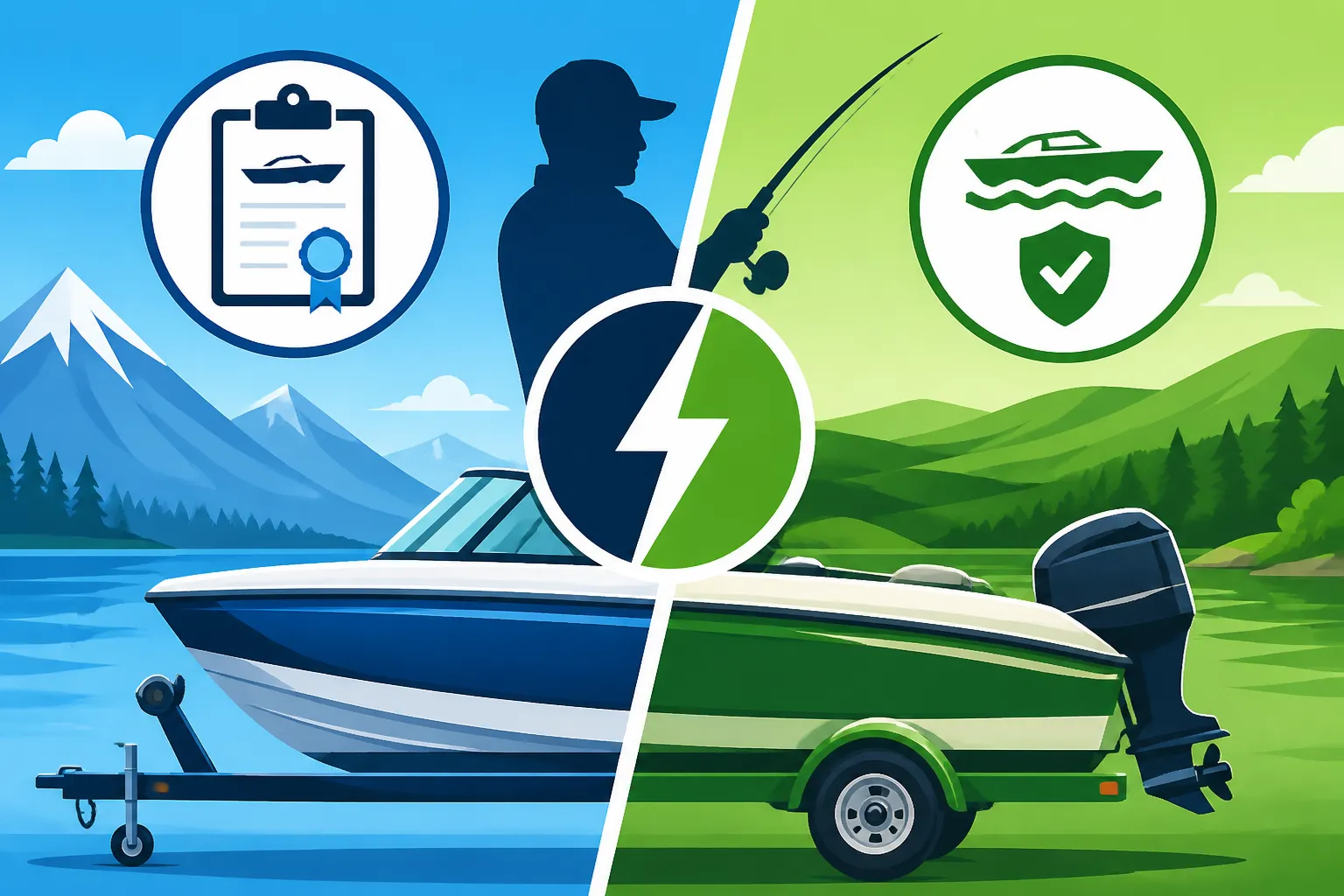
The fundamental difference boils down to this: your Vessel License grants you the legal authority to operate your boat on Canadian waters and serves as an identification document for the vessel itself. It confirms that the boat meets basic administrative requirements and can be tracked by authorities. It doesn't, however, definitively prove who owns the boat in the absolute sense. While your name is on the vessel license as the owner, it's merely linking the registered operator to the vessel ID.
Conversely, your proof of ownership – primarily a bill of sale, often supported by previous ownership documents – is the true legal record establishing you as the proprietor of the vessel. This is the document you'd use in a legal dispute over ownership, or to demonstrate that you legally acquired the boat. Imagine you’re selling your boat; the buyer will want to see that bill of sale, not just your vessel license, to ensure they are getting a clear transfer of ownership. It’s also what you would present to your insurance company to prove insurable interest. If you buy a boat, ensure you get a robust bill of sale. There are many templates available online, and some basic ones can even be found by searching on Amazon, though it's always wise to ensure they cover all necessary details like the Hull Identification Number (HIN), make, model, year, and names/addresses of both parties.
The distinction is particularly important when buying or selling. When you sell your boat, you transfer ownership via the bill of sale. The new owner then uses that bill of sale to apply for a new vessel license in their name. You don't "transfer" your existing vessel license; rather, your old license becomes invalid for that boat once it's sold, and the new owner applies for a fresh one. This ensures that the current operator is always linked to the active license.
When Registration is Required and When It's Not
The 10-horsepower rule for vessel licensing is pretty clear-cut, but it's worth diving into the nuances to avoid any misunderstandings that could lead to fines. If your recreational boat has a motor (gas, diesel, or electric) that's 10 horsepower or more, you must obtain and display a vessel license. This applies to a vast majority of powerboats, from fishing boats with modest outboards to high-performance pleasure craft. Having an up-to-date vessel license is a cornerstone of compliance with Canadian boating laws, alongside possessing your Alberta Pleasure Craft Operator Card Requirement.
There are, however, specific exemptions. You do not need a vessel license for:
- Vessels without a motor. This includes canoes, kayaks, paddleboards, and sailboats that rely solely on wind power.
- Vessels with a motor of less than 10 horsepower. This covers many small fishing boats with electric trolling motors or very small gasoline outboards.
- Vessels that are already registered in the Canadian Register of Vessels (a different, more formal registration system for larger commercial vessels or those travelling internationally, which is beyond the scope of typical recreational fishing).
- V Vessels visiting Canada for less than 45 consecutive days, provided they are principally maintained in another country and are in compliance with that country's boating laws.
It's important to remember that even if your boat doesn't require a vessel license, you still need to adhere to all other federal and provincial boating regulations, including carrying required safety equipment and having your Pleasure Craft Operator Card. Knowing Alberta Boating Laws for Anglers is paramount for all boaters, regardless of their vessel's size or horsepower. The Alberta government takes water safety very seriously, and ignorance of the rules is never an excuse.
Navigating the Paperwork: Practical Steps for Alberta Boaters
Dealing with paperwork can sometimes feel like trying to land a trophy fish on ultralight tackle – a delicate and precise operation. But with a bit of guidance, you can ensure your boat's documentation is in perfect order, saving you headaches down the line. It's not just about avoiding Alberta fishing without a license penalty for yourself, but about making sure your boat is also legally sound.
Obtaining and Renewing Your Vessel License
The process of getting your initial vessel license or renewing it every five years is fairly straightforward, handled directly by Transport Canada. The easiest way to apply for a new vessel license is through the Transport Canada website. They have an online application portal where you can submit all your documents electronically. You'll need to gather a few things before you start:
- Proof of Ownership: This is critical. For a new boat, it's typically your new boat bill of sale or dealer invoice. For a used boat, you'll need the bill of sale from the previous owner. If the previous owner never had a vessel license, you'll need the bill of sale along with proof of ownership from their purchase, and so on, to establish a clear chain.
- Valid ID: Government-issued identification, such as your driver's license.
- Vessel Information: Details like the Hull Identification Number (HIN), make, model, and year of manufacture.
- Photos of the Vessel: You'll need clear photos showing the bow, stern, starboard, and port sides of your boat.
Once you have these, head to the Transport Canada website, locate the "Vessel Licensing" section, and follow the prompts. You'll fill out the application form, upload your documents, and submit. The license is free and generally processed within a few weeks. Once approved, you'll receive your vessel license certificate. Remember, your Alberta boat registration renewal period is every five years, and Transport Canada usually sends a reminder, but it's ultimately your responsibility to keep track. You can find many useful accessories for your boat, from safety equipment to organizational tools, on Amazon, which can help keep your paperwork and essential items neatly stored and accessible.
Proving Ownership: Bills of Sale and Other Documents
Since there's no official "title" document for recreational boats in Alberta, your proof of ownership is paramount. When you buy a boat, especially a used one, insist on a comprehensive bill of sale. This isn't just a formality; it's your legal safeguard.
A good bill of sale should include:
- Full legal names and addresses of both the buyer and the seller.
- Detailed description of the vessel: Make, model, year, length, hull identification number (HIN), and current condition. Include any included equipment (e.g., motor, trailer, depth finder).
- Purchase price and the date of the sale.
- Signatures of both buyer and seller, and ideally, the signatures of witnesses.
- Statement of "as-is" sale: Unless otherwise specified, most private boat sales are "as-is."
For new boats, your purchase agreement and dealer invoice from a reputable marine dealer like those selling Lund or Crestliner boats, will serve as your proof of ownership. Keep these documents in a safe place! If you ever sell your boat, this bill of sale (and previous ones) will be essential for the new owner to secure their own vessel license. Without a clear paper trail, proving ownership can become a tangled mess, potentially impacting resale value or even leading to disputes. It's always a good idea to keep digital copies of all your important documents in the cloud, in addition to physical copies in a waterproof dry bag on your boat.
Common Misconceptions and Troubleshooting
The unique aspects of Alberta's boat documentation system can definitely lead to some head-scratchers, especially for those new to boating in Canada or accustomed to different regulatory environments. Let's tackle a couple of common pitfalls.
US Boat Titles and Importing to Alberta
One of the biggest sources of confusion comes from boats purchased in the United States. Many US states do issue boat titles, which function very similarly to car titles. So, if you've bought a boat from, say, Montana or Washington, it will likely come with a US title document. When you import this boat into Alberta, that US title is a crucial piece of your ownership history, but it does not translate into an equivalent "Alberta boat title."
Once the boat crosses the border and goes through Canadian customs, that US title becomes simply another document in your chain of ownership proof. You will then use that US title, along with your Canadian customs documentation and your bill of sale, to apply for a Canadian Vessel License (registration) through Transport Canada. The Canadian system doesn't convert or recognize the US title as a continuing title in the Canadian sense. It simply acknowledges it as a historical record of ownership in another jurisdiction. So, while you absolutely need to keep that US title as part of your ownership packet, don't expect to receive a new, Canadian "boat title" after importing. Your primary document for operating authority will be the Alberta Pleasure Craft License, Explained, which is the federal vessel license.
What to Do if You Don't Have Proper Documentation
What happens if you've inherited a boat, or bought one years ago from a friend, and now you can't find the bill of sale? This is a surprisingly common scenario and can be a real headache. Without proper proof of ownership, applying for a vessel license or trying to sell the boat can become a bureaucratic nightmare.
If you find yourself in this situation, here are some steps you can take:
- Contact the Previous Owner (if possible): The ideal scenario is to get a new, properly filled out bill of sale from the person you bought the boat from, or from the estate if it was inherited.
- Statutory Declaration: If a previous owner cannot be reached, or no formal bill of sale ever existed, you might need to prepare a statutory declaration. This is a sworn statement, witnessed by a lawyer or commissioner of oaths, detailing how you acquired the boat, when, and from whom. It essentially outlines your claim of ownership. While not as strong as a bill of sale, it can sometimes be accepted by Transport Canada as proof of ownership, especially if supported by other evidence like old insurance policies, repair receipts in your name, or registration documents from the previous owner.
- Police Report for Lost Documents: If your original documents were lost or stolen, filing a police report might provide some official backing to your claim, though it won't replace the need for proof of ownership.
- Serial Number/HIN Check: Try to locate the Hull Identification Number (HIN) on your boat. This is typically on the transom. With the HIN, you might be able to trace its manufacturing history or, in some cases, previous registrations (if any) through official channels.
This process can be lengthy and frustrating, so the best advice is always to keep all your original purchase and licensing documents in a secure, waterproof location from day one. You can find sturdy, waterproof document holders easily on Amazon that are perfect for this purpose.
Boat Registration vs. Proof of Ownership: A Quick Look
To help clarify, here’s a simple comparison of what "registration" (Vessel License) is versus what serves as your "proof of ownership" in Alberta:
| Feature | Boat Registration (Vessel License) | Proof of Ownership (Title Equivalent) |
|---|---|---|
| Purpose | Identifies the vessel and its operator for safety, search & rescue, and enforcement. Grants operating authority. | Establishes legal ownership of the vessel. Used for buying, selling, insuring, and resolving ownership disputes. |
| Document Issued By | Transport Canada (federal government) | Buyer and seller (private sale), or marine dealer (new boat). Not a single government-issued document like a car title. |
| What it Is | A unique license number displayed on the boat's bow, and a corresponding certificate. | Primarily a detailed bill of sale, supported by previous bills of sale, dealer invoices, and import documents (if applicable). |
| Requirement | Mandatory for recreational boats with motors 10 HP (7.5 kW) or more. | Essential for all boat owners to prove legal possession, even if the boat doesn't require a Vessel License. |
| Validity | Valid for five years, requires renewal. | Perpetual, as long as the chain of ownership is maintained. |
| Transferable? | No, the new owner applies for a new license. | Yes, the bill of sale is the mechanism for transferring ownership to a new buyer. |
| What to Display | License number on bow, carry certificate onboard. | Keep securely on file (physical and digital copies). |
This table should provide a clear snapshot of the fundamental differences. Remember, while the terminology can be confusing, the practical implications are straightforward once you understand what each document (or lack thereof for a "title") represents. It's all about ensuring you can legally operate your boat and definitively prove it belongs to you. Make sure you also check out Alberta Boat Registration Rules for more specifics.
Important Considerations for Alberta Boat Owners
Beyond understanding the core differences, there are a few other aspects of boat ownership documentation in Alberta that can save you time and trouble. Being proactive and well-informed is always the best approach when it comes to enjoying our beautiful waterways responsibly.
The Hull Identification Number (HIN)
Every manufactured boat built after November 1, 1972, should have a Hull Identification Number (HIN). This is a unique 12-digit serial number, usually found on the starboard side of the transom (the flat back part of the boat). Think of it as your boat's VIN (Vehicle Identification Number). The HIN is incredibly important because it permanently identifies your boat, regardless of ownership changes or licensing. It's used by manufacturers, law enforcement, and insurance companies.
When you're buying a used boat, always verify that the HIN on the boat matches the HIN listed on the bill of sale and any existing vessel license. Discrepancies can be a red flag, potentially indicating a stolen boat or fraudulent activity. If a boat doesn't have a HIN, or if it appears to have been altered, proceed with extreme caution and consider contacting Transport Canada or local law enforcement. This number is essential for everything from applying for your vessel license to understanding Life Jacket Requirements for Alberta Boaters or looking up specific boat safety information.
What About Boat Registration Costs in Alberta?
This is where many people get a pleasant surprise! As mentioned, the vessel license issued by Transport Canada for recreational boats (what many call "registration") is free of charge. There are no fees to apply for it initially or to renew it every five years. This stands in stark contrast to car registration fees, which are an annual expense in Alberta. So, while there's paperwork involved, at least it won't cost you anything directly from a government perspective for the license itself.
However, keep in mind that "free" doesn't mean "cost-free" in every sense. There might be costs associated with getting certified copies of documents if yours are missing, or potentially notary fees if you need a statutory declaration. Also, if you’re applying by mail, there's the cost of postage. But for the direct application process through Transport Canada, there is no fee. It's one less thing to worry about when considering the overall Alberta boat registration cost.
Keeping Your Documentation Safe
Given the importance of your bill of sale as your primary proof of ownership, and your vessel license certificate for legal operation, keeping these documents safe and accessible is crucial. Consider the following:
- Physical Copies: Keep original documents in a secure, fireproof location at home, like a safe. Make photocopies of everything.
- Digital Copies: Scan all your documents and save them to a cloud service (like Google Drive, Dropbox, or iCloud) and on an external hard drive. This way, if originals are lost, you have backups.
- Onboard Copies: Always carry a copy of your vessel license certificate onboard your boat. It doesn't have to be the original, but a clear, legible copy is sufficient. Store it in a waterproof bag or container. You can find excellent waterproof document bags on Amazon that are specifically designed for marine environments.
- Lost Documents: If you lose your vessel license certificate, you can apply for a replacement through Transport Canada, similar to how you would for Replacing a lost Alberta fishing license. For lost bills of sale, the situation is tougher, as outlined in the troubleshooting section above.
By taking these precautions, you can ensure that you always have the necessary paperwork readily available, whether you're asked by an enforcement officer, dealing with insurance, or preparing to sell your beloved fishing machine. It makes enjoying the Best Boats for Alberta Lakes and Rivers a much smoother experience.
Disclaimer
The information provided in this guide is for general informational purposes only and does not constitute legal advice. While we strive to provide accurate and up-to-date information, regulations can change. It is always the responsibility of the boater to consult the official Transport Canada website and the current Alberta Guide to Sportfishing Regulations for the most current and specific requirements.