How to fish a jerkbait for early spring pike
The ice has just pulled back from Alberta's lakes, the air still has a bite, and many anglers are itching to get out on the water. But for northern pike, especially in those early spring days, they can be notoriously sluggish. They're waking up from winter, their metabolism is slow, and they aren't always chasing down fast-moving baits. This guide will walk you through the art of fishing a jerkbait, one of the most effective, yet often misunderstood, tools for coaxing these cold-water predators into striking during the early spring in Alberta.
Why Jerkbaits are a Game Changer for Early Spring Pike
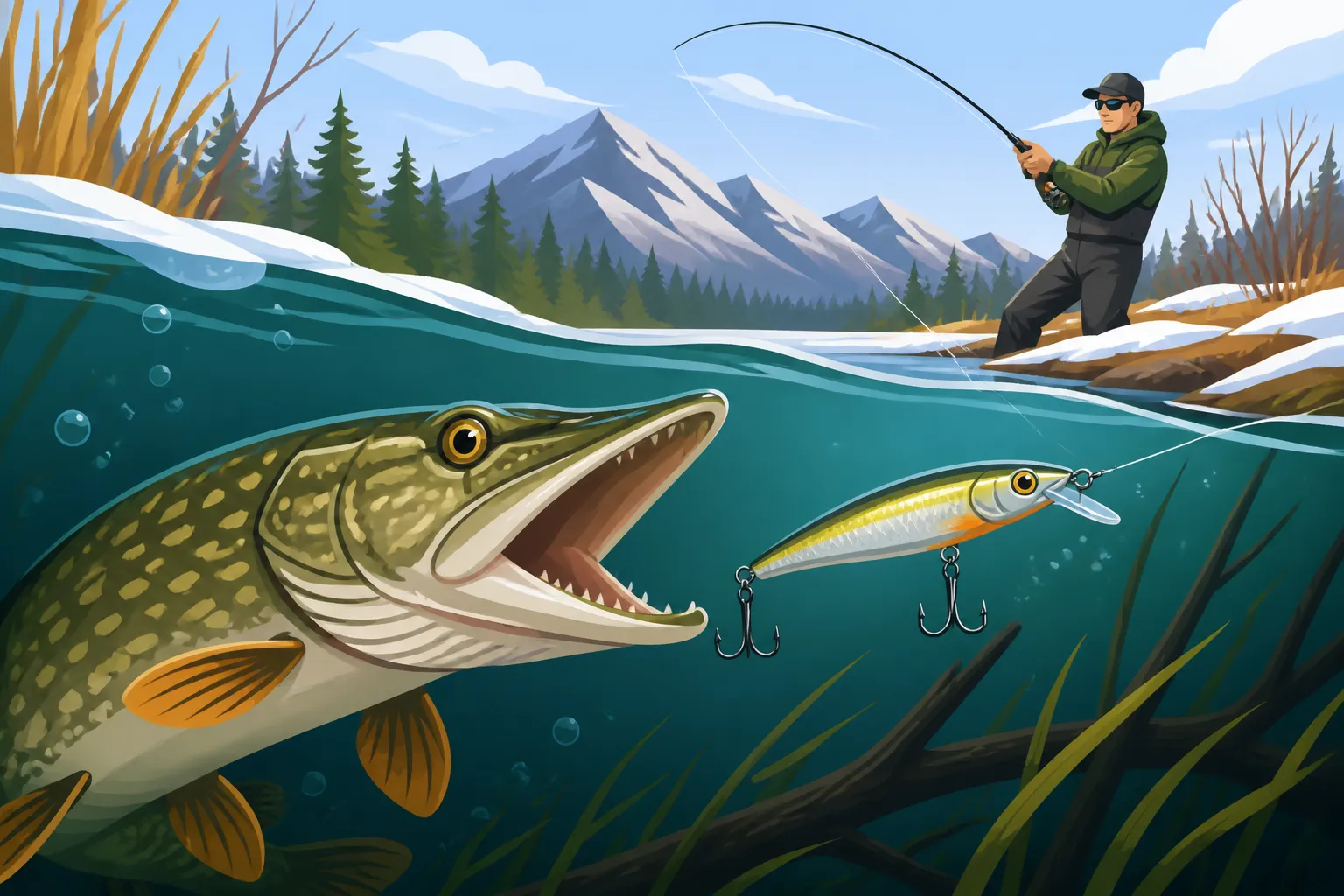
When the water temperatures are barely above freezing, around 40-50 degrees Fahrenheit (4-10 degrees Celsius), northern pike aren't nearly as aggressive as they are in the warmer months. Their metabolism is slow, and they're not expending a lot of energy chasing down a meal. This is where the magic of a jerkbait truly shines, offering a distinct advantage over faster retrieves or baits that don't allow for a significant pause. A jerkbait's erratic darting action, followed by a tantalizing suspend, perfectly imitates a wounded or dying baitfish, presenting an easy target that even the most lethargic pike can't resist.
Think about it from the pike's perspective. After a long winter, they're looking for an easy meal, something that requires minimal effort. A crankbait ripping by might not even register, or it might be too much work to pursue. But a jerkbait that darts, then hangs motionless in the water column for several seconds, practically screams "free lunch!" This extended hang time allows a slow-moving pike ample opportunity to approach, observe, and ultimately commit to a strike. It’s a subtle game, but one that consistently pays off when fish are still in their winter sluggishness.
Early spring also often means pike are starting to move into shallower, warmer areas, especially those with darker bottoms that absorb sunlight, or remaining ice edges. These areas, like shallow bays, flats near river mouths, or weed line transitions, are where the water warms up first. A suspending jerkbait can be worked effectively in these shallower zones without constantly snagging the bottom or getting hung up in emerging weeds, allowing you to thoroughly probe key ambush points where pike might be staging before or after their spawn. This strategic presentation in specific locations is what makes it so deadly.
Essential Jerkbait Selection for Alberta's Early Spring Conditions
Choosing the right jerkbait isn't just about grabbing the prettiest one off the shelf. For early spring pike in Alberta, you need to consider size, color, and most critically, its action in cold water. Getting these elements right can make all the difference between a frustrating day of casting and a memorable one filled with solid pike action.
Size and Profile Considerations
When pike are cold, their feeding windows are shorter, and they tend to prefer a meal that's substantial but not overly challenging. This means choosing jerkbaits generally in the 4 to 6-inch range. This size is large enough to be perceived as a worthwhile meal, yet not so large as to intimidate or appear unmanageable for a sluggish fish. Slimmer profiles are often more effective as they mimic common Alberta baitfish like shiners, ciscoes, small suckers, or even juvenile perch, which are prevalent food sources in many of our lakes and rivers.
A narrower profile also allows the bait to dart and glide more naturally with minimal resistance, which is key to triggering those reactive strikes. Bulky baits can sometimes move too much water, signaling "too much work" for a cold-water pike. Focus on brands that offer a good selection of these medium-sized, slender jerkbaits. Many anglers find a good assortment of these profiles readily available through online retailers like Amazon, making it convenient to explore various options.
Color and Clarity Choices
Color selection plays a crucial role and should be dictated by the water clarity you're fishing. In Alberta, early spring can present a mix of gin-clear mountain lakes and rivers, or still somewhat stained prairie lakes. For clear water, natural baitfish patterns such as silver, chrome, perch, cisco, or firetiger with subtle greens and browns are usually best. These colors mimic the pike's natural forage and don't spook wary fish.
Conversely, when fishing in stained or murky water, brighter, more contrasting colors can be incredibly effective. Chartreuse, firetiger with vibrant oranges and yellows, or even a pure white can stand out and provide the necessary visibility for pike to track the lure. Sometimes, even in clear water, a flash of something unnatural can trigger an aggressive reaction, so don't be afraid to experiment, but always start with what makes sense for the water conditions at hand.
The Critical Role of Suspending Jerkbaits
This is arguably the most vital characteristic for early spring pike fishing. You absolutely want a suspending jerkbait. Unlike floating baits that rise to the surface on the pause or sinking baits that plummet, a suspending jerkbait, when paused, will hang almost perfectly motionless in the water column. This "dead stick" moment is often when a pike will commit and strike.
A floating jerkbait might be useful for working over shallow weed beds with quick pauses, but in cold water, that upward movement is often enough to deter a strike. A sinking jerkbait, while useful for deeper presentations, doesn't offer that crucial long hang time in the strike zone. The ability of a suspending jerkbait to just sit there is what allows a slow-moving pike to approach without effort, observe the "wounded" baitfish, and then engulf it. Always check the bait's packaging to ensure it's a suspending model, or better yet, test it in a bucket of water at home if you're unsure. You'll find a wide variety of suspending jerkbaits on platforms like Amazon, making it easy to compare options and find exactly what you need.
Mastering the Jerkbait Retrieve for Cold Water Pike
Fishing a jerkbait effectively for early spring pike isn't about brute force or speed; it's about finesse, patience, and a deep understanding of how a cold-blooded predator behaves. The retrieve is less a frantic jigging motion and more a deliberate dance designed to provoke a strike.
The "Jerk-Jerk-Pause" Cadence
The classic and often most effective retrieve for cold water pike is the "jerk-jerk-pause" cadence. This involves two quick, sharp jerks of your rod tip downwards towards the water, followed by a significant pause. The jerks make the lure dart erratically from side to side, mimicking a distressed baitfish. Crucially, the pause that follows allows the lure to hang motionless, creating an irresistible target.
The duration of this pause is critical in early spring. While in warmer water you might pause for only a second or two, for cold-water pike, you'll often need to extend that pause to anywhere from 5 to 20 seconds, sometimes even longer. This extended suspension in the strike zone is what often gets the bite. Many pike strikes happen not during the jerks, but on the pause, as they approach the seemingly easy meal. It feels agonizingly long to us, but it’s just right for a lethargic pike to decide. This technique is also highly effective for other species, such as during the spring trout fishing techniques for Alberta streams when trout can also be a bit sluggish.
Rod Position and Line Management
Your rod position is key to imparting the correct action and feeling those subtle cold-water bites. Keep your rod tip pointed down towards the water, typically between 8 and 4 o'clock. This downward angle gives you the maximum range of motion for those sharp jerks and helps to keep the lure from surfacing prematurely. As you jerk, reel in the slack line just enough to keep tension, but don't over-reel. The lure needs that slack to dart and glide effectively.
After each "jerk-jerk," quickly gather the slack with a quarter to a half turn of the reel handle, then let the lure suspend. During the pause, watch your line for any twitch, jump, or subtle movement – often a pike will simply "mouth" the lure or swim off with it gently, and you'll only detect it by a slight line movement or a feeling of added weight. Setting the hook immediately on these subtle indications is crucial. Understanding how to catch northern pike in Alberta often comes down to mastering these small details.
Varying the Retrieve to Find the Pattern
While the "jerk-jerk-pause" is a great starting point, don't be afraid to experiment. Some days, a single jerk followed by a long pause might be more effective. Other days, three shorter jerks before the pause might elicit more strikes. The key is to pay attention to how the pike are reacting. If you're not getting bites after 10-15 casts, try altering the number of jerks, the intensity of the jerks, or most importantly, the length of your pause.
Water temperature, light conditions, and even barometric pressure can all influence how aggressive pike are. What worked yesterday might not work today. This willingness to adapt and experiment with your retrieve until you find the day's pattern is a hallmark of successful early spring pike fishing in Alberta. Remember, the pike will tell you what they want if you pay close enough attention.
Tackle Setup for Optimal Jerkbait Performance
Having the right rod, reel, and line setup is just as important as the jerkbait itself. A properly balanced system will allow you to cast effectively, impart the correct action to the lure, and most importantly, feel those often subtle cold-water strikes and successfully land a feisty early spring pike.
Rod and Reel Choices
For jerkbait fishing, a medium-heavy power casting rod, typically between 6'6" and 7'2" in length, with a fast or extra-fast tip action, is ideal. The medium-heavy power provides the backbone to handle larger jerkbaits and fight strong pike, while the fast tip is crucial for snapping the rod to make the lure dart and for feeling those delicate bites. A shorter rod can be beneficial for making those sharp downward jerks without hitting the water, especially if you're fishing from a boat.
Pair this with a baitcasting reel that has a moderate gear ratio, somewhere in the 6.2:1 to 7.1:1 range. This gear ratio offers a good balance of power for retrieving and allows for controlled line pickup during the retrieve and pause. A higher gear ratio might encourage you to reel too fast, which can be detrimental in cold water, while a lower ratio might make it difficult to quickly pick up slack. Finding the right best baitcasting reels for pike fishing can significantly improve your experience.
Line and Leader
When it comes to line, you have a couple of solid options. Many anglers prefer a good quality fluorocarbon line (12-17 lb test) directly to the lure. Fluorocarbon has low stretch, which enhances sensitivity and allows you to really feel the lure's action and any subtle bites. It's also virtually invisible underwater, a huge advantage in clear early spring water.
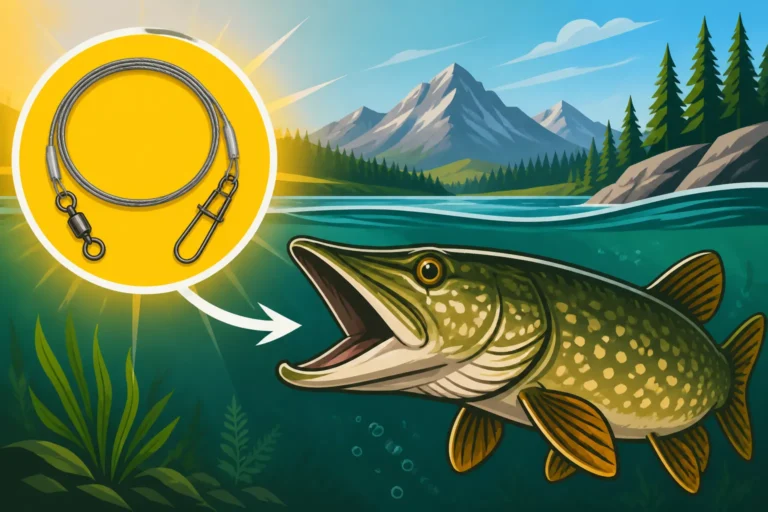
Alternatively, you can use braided line (20-30 lb test) as your main line, which offers superior casting distance and strength. If you go with braid, you absolutely must tie on a fluorocarbon leader (15-20 lb test, 2-3 feet long) to mitigate the braid's visibility and provide some shock absorption. Crucially, regardless of your main line choice, you need a bite-proof leader for pike. Their teeth are razor-sharp. A short, heavy fluorocarbon leader (40-60 lb test) or a thin wire leader (like titanium or knot2kinky) is essential. These specialty leaders can be found at local tackle shops or online retailers like Amazon, ensuring you're prepared for those toothy encounters. Neglecting a proper leader is a surefire way to lose your prized jerkbait and potentially a trophy fish. Learning about best line weight for pike fishing is critical for success.
| Jerkbait Characteristic | Clear Water (Natural Prey) | Stained Water (Visibility) | Pike Aggression (High) | Pike Aggression (Low) |
|---|---|---|---|---|
| Size/Profile | 4-5 inch, slender | 5-6 inch, slightly wider | 5-6 inch, any profile | 4-5 inch, slender |
| Color | Silver, Perch, Cisco | Chartreuse, Firetiger, White | Bright, Contrast | Natural, Subtle |
| Action Type | Suspending | Suspending | Suspending | Suspending |
| Retrieve Cadence | Jerk-jerk-pause (short) | Jerk-jerk-pause (medium) | Faster, Shorter Pauses | Slower, Longer Pauses |
| Leader Type | Heavy Fluorocarbon | Heavy Fluorocarbon / Wire | Wire Leader | Heavy Fluorocarbon |
The early spring can be an incredibly rewarding time to chase northern pike in Alberta, and the jerkbait is a tool that truly shines in these colder conditions. By understanding the pike's behavior and applying these specific techniques, you'll be well on your way to a successful day on the water. Patience, precision, and the right gear are your best allies. For more details on the species you're targeting, be sure to check out our comprehensive guide on Northern Pike Fishing in Alberta. And if you're curious about all the rules of the game, our guide on Alberta Fishing Regulations Explained is an invaluable resource. So bundle up, get out there, and enjoy the thrill of the early spring bite!
Disclaimer
This article is for general informational purposes only and does not constitute professional advice. Laws, prices and regulations vary by location and change over time. Consult a qualified professional for guidance on your specific situation.