Best downrigger settings for summer lake trout
Oh, the elusive summer lake trout! If you've spent any time on Alberta's big, beautiful lakes in the heat of summer, you know the frustration of seeing a blank sonar screen or, worse, marking fish deep down but never getting a bite. Those lakers move to the depths when the surface water warms, and reaching them effectively is a whole different ballgame than spring or fall fishing. This guide is all about mastering your downrigger settings to consistently put your lure right in front of those deep-dwelling lake trout, turning those frustrating days into memorable catches.
The Deep Dive: Why Downriggers Rule for Summer Lake Trout
When summer hits, many of us dream of lazy days on the water, but if you're chasing lake trout, "lazy" isn't quite the word for it. These fish become masters of the deep, and conventional methods often fall short. This is where the downrigger becomes your best friend, transforming your ability to present baits where the fish actually live.
The Thermocline Tango: Where Lake Trout Hide
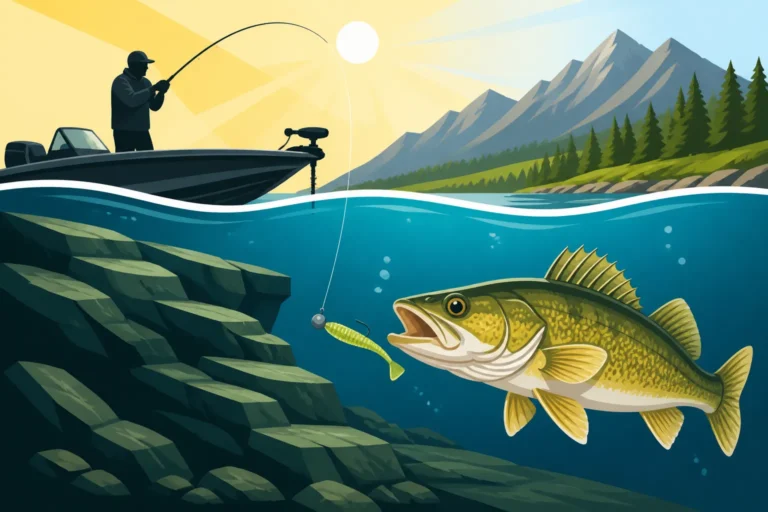
Imagine the surface of a big lake like Cold Lake or Lake Athabasca baking under the intense Alberta sun. That warm water is great for swimming, but for a cold-water species like lake trout, it's akin to a sauna. They simply can't tolerate it for long. So, what do they do? They head for the hills, or rather, the depths!
Below the warm surface layer, there's a distinct boundary called the thermocline. This is where the water temperature drops significantly, and it's also often where vital oxygen levels are still good. Lake trout seek out this cooler, oxygenated water, and they'll hug it like a security blanket. Sometimes they're just above it, sometimes right in it, and sometimes just below, depending on the specific lake and conditions. Without a downrigger, trying to consistently get your lure into this relatively narrow band, often 40, 60, or even 100 feet down, is nearly impossible. Sinkers and weighted lines suffer from "blowback," where the drag of the water pulls your line higher than you intend, making your actual depth a guesswork game. Your sonar might show fish stacked at 60 feet, but your weighted spoon might only be running at 45, completely missing the strike zone. This is one of the biggest frustrations anglers face when trying to target summer lakers, and it's precisely what downriggers eliminate.
Beyond Weight: How Downriggers Offer Precision and Control
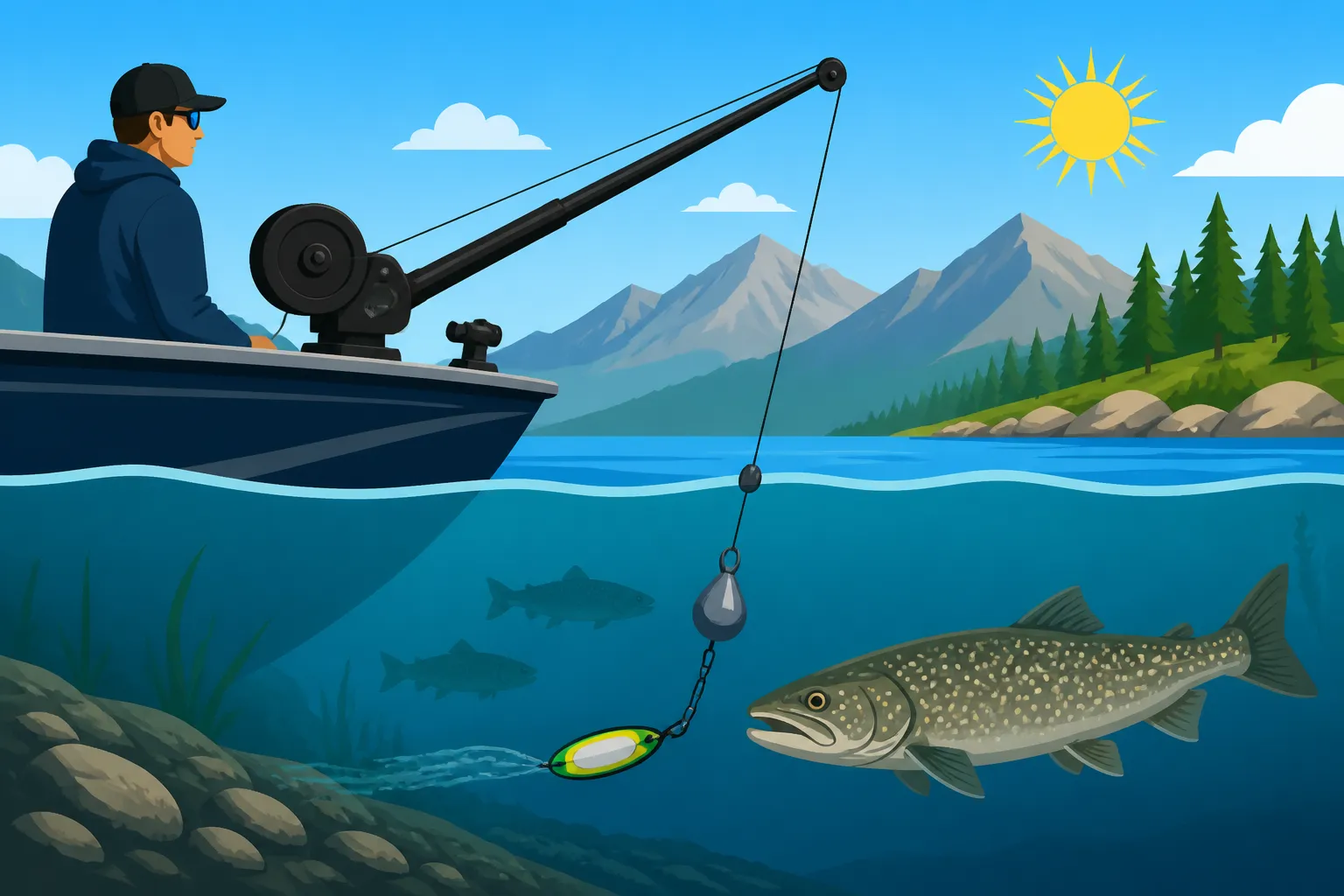
So, what makes a downrigger so special? It's all about separating the weight that gets your lure down from the line you actually fish with. Think of it like this: your fishing rod, reel, and line are used to fight the fish, not to drag a heavy weight through the water. A downrigger uses a heavy cannonball (typically 8 to 12 pounds) on a separate cable to carry your fishing line down to a precise, predetermined depth. Your fishing line is then held to this cable by a special release clip. When a fish strikes, the clip releases, and you're fighting the fish directly on your main line, without the drag of the heavy weight.
This system offers unparalleled precision. You can literally put your lure within a few feet, or even inches, of a specific depth that your fish finder is showing fish. This is crucial for summer lake trout because they can often be finicky. They're not always aggressively chasing; sometimes, they're just suspending, waiting for an easy meal to pass right by their nose. That consistent, exact depth presentation that a downrigger provides can make all the difference between a frustrating day of seeing fish and a triumphant day of catching them. Plus, running lighter line on your fishing rod means a better fight, and let's be honest, that's what we're all after, isn't it? It truly elevates your game when fishing those deep, cool pockets in lakes like those in Kananaskis Lakes Fishing Guide.
Decoding Summer Lake Trout Behavior for Optimal Downrigger Settings
To truly master your downrigger, you need to think like a lake trout. Understanding their habits, especially in the dog days of summer, will inform every decision you make about your settings. It's not just about dropping a weight; it's about presenting an irresistible offering in their living room.
What the Sonar Tells You: Reading the Water Column
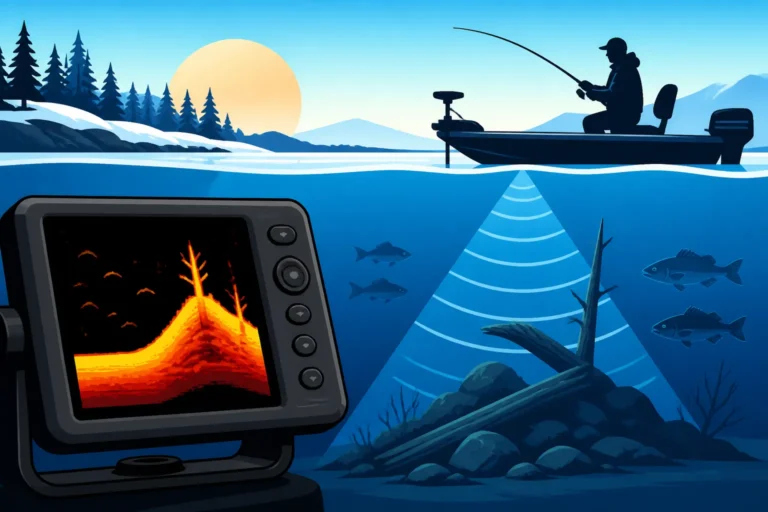
Your fish finder isn't just a fancy depth gauge; it's your window into the underwater world. For summer lake trout, it becomes an absolutely indispensable tool. Before you even think about dropping a downrigger ball, you need to understand what your sonar is showing you. Look for the thermocline – it usually appears as a distinct, often fuzzy, line across your screen. This is your primary target zone. If your fish finder has a temperature gauge on the transducer, even better, as you can directly see the temperature break.
Beyond the thermocline, look for baitfish schools. Lakers are predators, and they'll often relate to concentrations of their food source. If you see clouds of baitfish at 50 feet, you can bet the lake trout won't be far off, probably lurking just below or to the side, ready to ambush. Also, pay attention to submerged structure – humps, underwater points, old river channels, and sudden drop-offs. Even when deep, lake trout are still drawn to structure. They use it for ambush points, shelter, or simply as navigational aids. If you mark fish over a humped area at 70 feet, your downrigger needs to be running your lure exactly in that zone. Taking the time to properly set up your fish finder and learn to read it will pay dividends, and resources like Best Fish Finders for Alberta Lakes can help you choose the right one.
Speed and Scent: Triggering a Strike
Summer lake trout, while still powerful predators, can sometimes be a bit more lethargic or selective than their spring counterparts. The warmer surface temperatures mean their metabolism might slow down, or they might just not need to exert as much energy to find food. This often translates to a need for slightly slower presentations and sometimes, an added enticement.
Trolling speed is critical. While spring lakers might chase a fast-moving spoon, summer lakers often prefer a more subtle, enticing pace. We're generally talking about speeds between 1.5 to 3 miles per hour, but this is definitely something you need to experiment with. Sometimes a slightly faster burst will trigger a chase, other times a near-crawl is what they want. Watch your lure's action at different speeds. Does it swim naturally? Is it darting erratically? Knowing your lure's optimal speed is key. Additionally, don't underestimate the power of scent. Whether it's a commercially available scent applied to your lure or a strip of real bait (like a piece of herring or anchovy) attached to a flasher or spoon, scent can provide that extra trigger for a hesitant lake trout to commit. The deeper water means less light, and a strong scent trail can guide a laker right to your offering.
Dialing In Your Downrigger: Precision Settings for Success
This is where the rubber meets the road, or rather, the cannonball meets the thermocline. Optimizing your downrigger settings involves a careful balance of depth, speed, setback, and lure choice. Get these right, and you're well on your way to consistent success.
Depth, Depth, Depth: The Golden Rule
There's a reason I'm repeating it: depth is absolutely non-negotiable for summer lake trout. Your primary goal is to present your lure exactly where the fish are holding, or a few feet above them, which they'll often look up to strike. Start by identifying the thermocline and any fish marks on your sonar. If fish are consistently showing at 60 feet, that's your starting point. You'll dial your downrigger counter to 60 feet.
When running multiple downriggers, which is common on larger boats, you have an incredible advantage to cover different parts of the water column. Consider staggering your depths: one ball at 55 feet, another at 65 feet, and perhaps a third at 70 feet. This allows you to "fish out" the exact depth the trout are most active at on a given day. Sometimes, they're right on the nose of the thermocline; other times, they prefer to be just below it. Adjusting by 5-10 foot increments can be the difference between a silent spread and screaming reels. Remember, even with downriggers, some slight variations can occur due to current, boat speed, and cannonball weight, but they are minimal compared to weighted line fishing. For specific lakes like Cold Lake, understanding the best depths for different times of year is crucial; you might want to read up on How deep to troll for lake trout on Cold Lake.
Speed: Finding the Sweet Spot
We touched on this earlier, but it deserves a deeper dive. The right trolling speed is critical for making your lure look natural and enticing. Too fast, and your lure might spin unnaturally, or the fish might not have time to react. Too slow, and it might lack the action to draw attention.
For summer lake trout, a typical range is often between 1.5 to 3.0 miles per hour (mph). However, this is just a guideline. The ideal speed depends heavily on the specific lure you're using. Spoons, for instance, often have a good fluttering action at lower speeds, while some plugs or dodgers might require a bit more pace to get them working correctly. Pay attention to your rod tip. The gentle twitching of the rod tip will tell you that your lure is working properly. If it's dead still, your lure might not be active enough. Experimentation is key: try making gradual S-turns with your boat. The lure on the outside of the turn will speed up, and the one on the inside will slow down. Often, one side will get more hits, telling you if the fish prefer faster or slower presentations that day. Sometimes, a subtle acceleration or deceleration can be the trigger. A good practice is to attach a snubber – a stretchy rubber or plastic section – between your downrigger cable and your release clip. This absorbs shock and helps maintain a consistent lure action even in choppy water or with slight speed variations.
Setback and Spacing: The Art of the Spread
"Setback" refers to the length of your fishing line from the downrigger release clip to your lure. This is a critical setting, especially for line-shy lake trout. A longer setback (e.g., 50-100 feet) means your lure is further away from the boat and the downrigger ball, which can spook wary fish. This is often the preferred choice in clear water or when fish are being particularly finicky. A shorter setback (e.g., 10-30 feet) can be effective when fish are aggressive or in stained water where visibility is reduced.
When running multiple lines, "spacing" becomes paramount. You want to cover a wide area without getting tangled. This involves a combination of depth staggering (as discussed above) and side-to-side spacing. Many boats use planer boards to spread lines horizontally on the surface, but with downriggers, you're spreading lines vertically and slightly horizontally behind the boat. Use longer rods on the outside downriggers and shorter rods on the inside. You can also deploy your outside downriggers slightly further back than your inside ones. This creates a "V" shape in your lure spread, both horizontally and vertically, helping to prevent tangles when turning or battling a fish. Mastering these Trolling Techniques for Alberta Lake Trout is crucial for maximizing your chances.
Release Clips and Lures: Presenting the Bait
The release clip is a small but mighty piece of hardware. It needs to hold your line securely while deploying, but release reliably when a fish strikes. There are various types of clips, from simple pinch clips to tension-adjustable models. For summer lake trout, you'll often be using larger, heavier lures, so you'll want a clip that provides enough tension to hold your lure without prematurely releasing in choppy water or during a sudden turn. However, it shouldn't be so tight that a smaller fish can't trip it. Experiment with different tensions. A good rule of thumb is to use heavier tension for larger lures or when running deeper, and lighter tension for smaller lures or when fish are finicky. Many anglers find adjustable clips, which you can often find on Amazon, offer the most versatility.
Now, for the fun part: lures! Summer lake trout respond well to a variety of presentations.
- Flashers and Dodgers with a Trailing Bait: These create lots of flash and vibration, attracting fish from a distance. Behind them, trail a small spoon, a fly, or a baited hook.
- Large Spoons: Classic spoons like Dardevles, Crocodiles, or EGBs in silver, blue/silver, or green/silver patterns are perennial lake trout favorites. Their fluttering action mimics an injured baitfish.
- Deep-Diving Plugs: Think large Rapalas, J-Plugs, or similar crankbaits designed to run deep on their own, further enhancing their depth when used with a downrigger. Colors like blue/silver, firetiger, or perch patterns can be very effective.
- Soft Plastics: Sometimes a large tube jig or a plastic swimbait rigged on a heavy head can be effective, especially when fished slowly.
In the low light of deep water, contrast and flash are often more important than intricate color patterns. Silver, white, glow-in-the-dark, and chartreuse can all be excellent choices. Always check your lure's action boatside before deploying to ensure it's swimming correctly.
| Lure Type | Recommended Trolling Speed (mph) | Recommended Setback (feet) | Notes |
|---|---|---|---|
| Large Spoons (e.g., Daredevil) | 1.8 – 2.5 | 30 – 60 | Fluttering action, good for active fish. |
| Flashers/Dodgers w/ Fly | 1.5 – 2.0 | 5 – 15 (behind flasher) | Creates attraction, subtle trailing bait. |
| Deep-Diving Plugs (e.g., J-Plug) | 2.0 – 3.0 | 20 – 40 | Aggressive action, good for covering water. |
| Tube Jigs / Soft Plastics | 1.0 – 1.8 | 15 – 30 | Slower, more subtle presentation for finicky fish. |
| Herring/Anchovy Strips | 1.5 – 2.2 | 5 – 15 (behind dodger) | Natural scent and action, often irresistible. |
Note: These are general guidelines. Always experiment to find what works best on your specific lake on any given day.
Troubleshooting and Advanced Downrigger Tactics
Even with your downrigger settings dialed in, fishing isn't always straightforward. Wind, current, and fish behavior can throw a wrench into your plans. Knowing how to troubleshoot and employ advanced tactics can give you an edge.
Dealing with Blowback and Current: Staying True
While downriggers dramatically reduce blowback compared to weighted lines, it's not entirely eliminated, especially when fishing very deep, using lighter cannonballs, or trolling at higher speeds. "Blowback" refers to the angle at which your downrigger cable runs through the water, being pulled back by hydrodynamic drag. If your cable is angled back significantly, your cannonball and thus your lure, might not be at the exact depth you've set on your counter.
To counteract this:
- Use Heavier Cannonballs: An 8-pound ball is standard, but if you're consistently fishing 80+ feet or in strong currents, bumping up to a 10 or 12-pound ball can help keep your line running truer to the set depth.
- Adjust Your Set Depth: If your sonar indicates fish at 60 feet and you see a slight blowback angle on your downrigger cable, you might need to set your downrigger to 62 or 63 feet to ensure your lure is actually at the target depth.
- Monitor Your Sonar: Some advanced fish finders can show the downrigger ball on the screen. If yours does, this is the ultimate way to verify your actual depth. Otherwise, pay attention to the angle of your downrigger cable. A straighter up-and-down angle means less blowback. When fishing rivers or areas with strong currents, like sections of the Best Fishing Rivers in Alberta, this becomes even more important.
The Double-Header Advantage: Stacking Lines
One really neat trick with downriggers is "stacking" lines. This allows you to run two separate fishing lines off a single downrigger cable, effectively doubling your presentation in the water column without needing more downriggers. This is incredibly useful when you've located a wider band of fish, or when you're just trying to figure out their preferred depth.
To stack a line, you simply attach a second release clip to the downrigger cable above your primary release clip. The second line's lure will then run shallower than the primary lure. For example, if your main downrigger ball is set at 60 feet, you might attach your secondary release clip 20 feet up the cable, meaning that lure will be running at approximately 40 feet.
The advantages are clear: you cover more of the water column efficiently, which is great for prospecting. The downside is that retrieving a stacked line can be a bit more complicated, especially with a fish on the deeper line, as you'll have to deal with two lines at once. It requires practice, but it's a fantastic technique for maximizing your chances, particularly when targeting various depths of Lake Trout Fishing in Alberta where they might be spread out.
Maintenance and Safety: Keeping Your Rig Running Smoothly
Like any piece of valuable fishing gear, your downriggers need a little love to perform their best. Regular maintenance ensures reliability and safety on the water.
- Cable Inspection: Frequently check your downrigger cable for kinks, fraying, or rust. Saltwater exposure can accelerate wear, but even in fresh water, constant use can take a toll. Replace cables proactively if you see any signs of wear.
- Release Clip Checks: Ensure your release clips are working properly. Test their tension and make sure they're not sticking or too loose. Clean them regularly to remove any grime or salt buildup.
- Motor and Pulley System: If you have electric downriggers, regularly inspect the motor, pulleys, and belt (if applicable). Keep them clean and lubricated according to the manufacturer's instructions. A reliable power source is also key; ensuring you have a good quality deep cycle battery for your electric downriggers is a must. You can often find excellent options for marine batteries and accessories on Amazon.
- Mounting Security: Downriggers, especially with heavy cannonballs, exert significant force. Always ensure they are securely mounted to your boat. Check mounting bolts and plates before each season.
- Handling Cannonballs: Those heavy cannonballs can be dangerous if mishandled. Always be mindful of their swing, especially when deploying or retrieving. Use proper lifting techniques.
Safety on the water extends beyond your downrigger. Always make sure you have all required safety gear, understand Alberta Boating Laws for Anglers, and wear your Life Jacket Requirements for Alberta Boaters. A well-maintained downrigger is a safe downrigger, allowing you to focus on the thrill of the catch rather than equipment malfunctions.
By understanding lake trout behavior and meticulously dialing in your downrigger settings – from depth and speed to setback and lure choice – you'll transform your summer lake trout fishing. It takes a bit more effort than simply casting from shore, but the reward of consistently landing those magnificent, deep-dwelling lakers is absolutely worth it. Get out there, experiment, and enjoy the depths Alberta's fantastic lakes have to offer!
Disclaimer
This article is for general informational purposes only and does not constitute professional advice. Laws, prices and regulations vary by location and change over time. Consult a qualified professional for guidance on your specific situation.