How to catch walleye at night on Lesser Slave Lake
The sun dipping below the horizon on a vast body of water like Lesser Slave Lake can be both beautiful and a little daunting, especially if you're set on chasing walleye after dark. Many anglers get frustrated trying to replicate their daytime success once the lights go out, finding the lake feels entirely different and the fish patterns shift dramatically. But trust me, those post-sunset hours on Lesser Slave can be some of the most rewarding for targeting big, active walleye if you understand their nocturnal habits and adapt your approach. This guide is all about equipping you with the knowledge, gear, and techniques to confidently and successfully catch walleye under the stars on one of Alberta's most iconic fisheries.
Why Night Fishing for Walleye on Lesser Slave Lake is a Game-Changer
Let's face it, daytime fishing on Lesser Slave Lake can be fantastic, but it also comes with its share of challenges – boat traffic, bright sun pushing fish deeper, and sometimes, just plain finicky walleye. When night falls, a whole new world opens up, and it's one that often strongly favors the angler targeting walleye. The entire dynamic of the lake changes, and with it, the behavior of these highly sought-after fish. Understanding why this shift occurs is the first step to unlocking incredible nighttime success.
Walleye Behavior After Dark
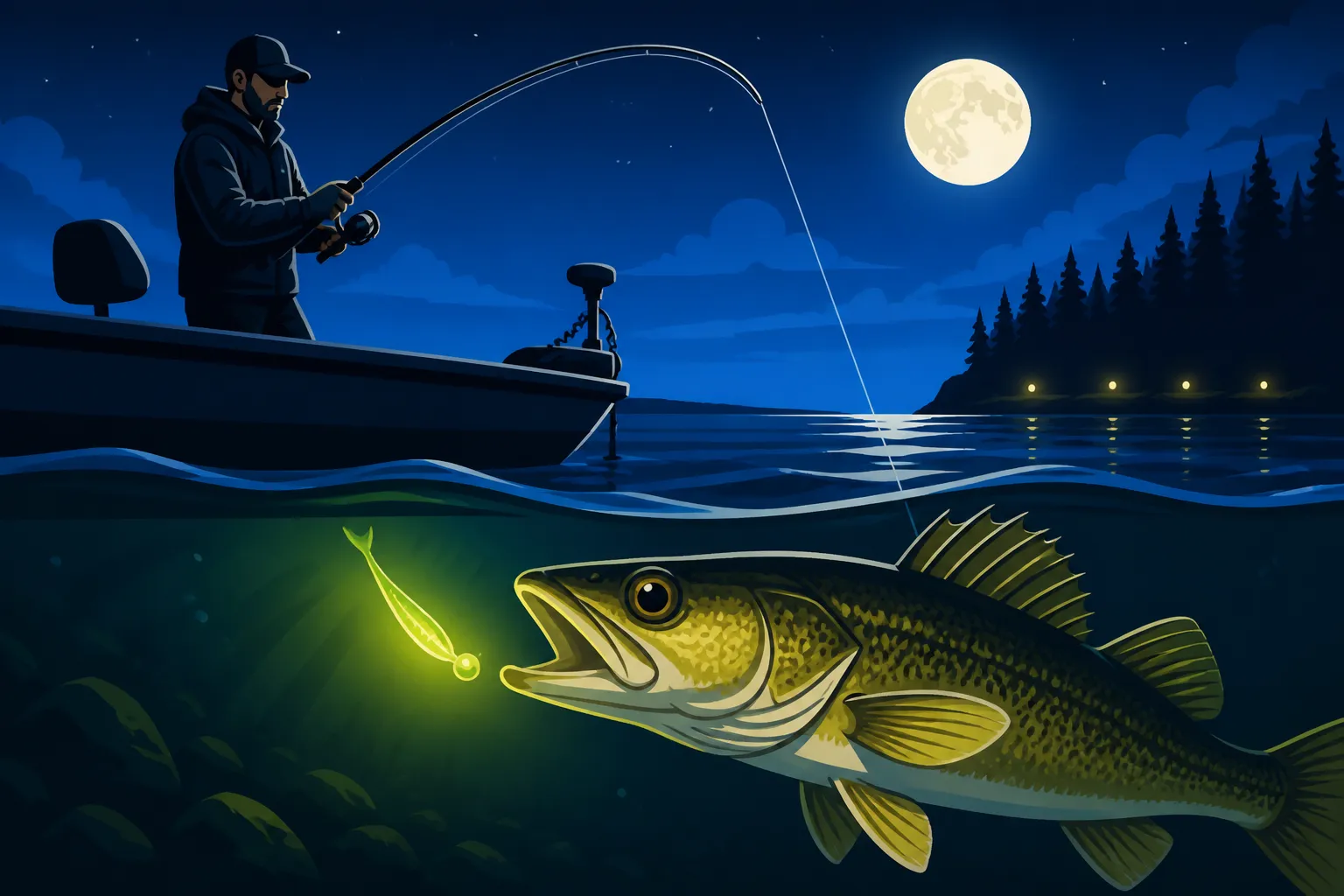
Walleye are often described as crepuscular, meaning they are most active during twilight hours – dawn and dusk. However, on larger, shallower, and often murkier lakes like Lesser Slave, that heightened activity can extend well into the night. Their large, light-sensitive eyes are perfectly adapted for low-light conditions, giving them a significant advantage over their prey, like ciscoes and yellow perch, once the sun sets. During the day, walleye frequently retreat to deeper, darker water or thick cover to avoid bright light. But as darkness descends, they push into shallower feeding grounds, often moving from deep structure like main lake humps or major drop-offs, to flats, points, and weed lines just a few feet deep. This migration from their daytime haunts means they are often more accessible and aggressive.
Imagine the lake bottom coming alive. Schools of baitfish that were holding in open water or scattered during the day now feel more comfortable moving into shallower zones to feed on invertebrates or simply travel. The walleye, with their superior night vision, are right there with them, ambushing unsuspecting prey from the cover of darkness. This is why those vast shallow flats and transitional areas, which might seem devoid of life during the bright afternoon, can become walleye highways at night.
Reduced Pressure and Cooler Waters
Beyond the biological advantages for the walleye, night fishing offers distinct benefits for the angler. First and foremost, the fishing pressure often drops dramatically. Those busy summer weekends where every prime spot has multiple boats can transform into peaceful solitude once dusk settles. Fewer boats mean less noise, less competition, and less disturbance to the fish. This can make a huge difference in how willing walleye are to bite. They might be more apt to hold in certain areas without being spooked by constant boat traffic, making them more predictable targets.
Another critical factor, especially during the warm summer months, is water temperature. While Lesser Slave Lake isn't typically known for extreme heat, prolonged periods of hot weather can warm the surface waters, making walleye a bit sluggish during the day. As night falls, the surface water cools, often triggering a renewed sense of activity in the fish. This cooling effect can be particularly pronounced in shallower bays and nearshore areas where walleye are likely to be hunting, making them more active and increasing their metabolic rate – which means they need to eat! If you're looking for an edge over other anglers, mastering the art of night fishing is a definite way to find it. For more detailed insights into walleye habits, you might find our guide on Walleye Fishing in Alberta helpful.
Essential Gear for Night Walleye Fishing on Lesser Slave Lake
Stepping onto Lesser Slave Lake after dark requires more than just your usual daytime setup. Visibility is the biggest challenge, so safety and specialized gear become paramount. You need to be able to navigate safely, see what you're doing, and present your baits effectively in conditions where you can barely see your hand in front of your face. Taking the time to properly equip yourself will not only increase your success but, more importantly, ensure a safe and enjoyable experience. Many of these specialized items can be found conveniently on Amazon.
Lighting and Safety Gear
This is non-negotiable. Night fishing introduces inherent risks, and being prepared is key.
- Headlamps: A good quality headlamp is your best friend. Look for one with a red-light option. White light can ruin your night vision for 20-30 minutes, but red light allows you to see what you're doing (tying knots, baiting hooks) without compromising your ability to see in the dark. Keep spare batteries or a portable charger on hand.
- Boat Navigation Lights: These are legally required in Alberta when operating after sunset. Ensure your bow (red/green) and stern (white) lights are fully functional before you leave the dock. A quick check of Alberta Boating Laws for Anglers will give you the full breakdown.
- Personal Flotation Devices (PFDs): Everyone on board must have an approved PFD, easily accessible or worn. In low visibility, accidents can happen quickly, and a PFD could save a life. Consider an inflatable PFD for comfort, but ensure it's approved and in good working order.
- First Aid Kit: A well-stocked first aid kit for minor cuts, scrapes, or hook mishaps is essential.
- Communication Device: Your cell phone might not always have service on all parts of Lesser Slave. A marine VHF radio is a smart addition for emergencies.
- Spotlight/Searchlight: A powerful, handheld spotlight is incredibly useful for navigating, spotting buoys, or locating landmarks.
Rods, Reels, and Line
While your favorite walleye combo might work, certain characteristics make for a better night setup.
- Sensitive Rods: Walleye bites can be subtle, especially in the dark when you're relying more on feel than sight. A medium-light to medium power spinning or casting rod, typically 6'6" to 7'6" in length, with a fast action tip will help you detect those light taps. Graphite rods tend to be more sensitive than fiberglass.
- Smooth Reels: A good quality spinning or baitcasting reel with a smooth drag system is crucial. You don't want any hitches when fighting a fish in the dark.
- Line Choice: Many anglers prefer a braided main line (10-20 lb test) due to its zero stretch and incredible sensitivity. This allows you to feel even the slightest bump. Pair it with a fluorocarbon leader (8-12 lb test, 2-6 feet long) tied with a strong knot like an FG knot. Fluorocarbon is nearly invisible underwater, which can be an advantage for spooky walleye, and offers abrasion resistance around rocks or zebra mussels that might be present in Lesser Slave. The length of your leader might vary depending on how shy the fish are, but a longer leader gives a more natural presentation.
Night-Specific Lures and Baits
This is where the magic happens. While day lures can work, certain options shine in the dark.
- Glow-in-the-Dark Jigs: These are absolute staples for night walleye. Jigs tipped with soft plastics (grubs, shads) or live bait (minnows, leeches) that glow can be irresistible. Charge them periodically with a strong flashlight or UV light source. Sizes typically range from 1/4 to 3/8 ounce, depending on depth and presentation.
- Scented Soft Plastics: Even without glow, plastics infused with strong scents can be highly effective. Walleye use their lateral line and sense of smell to locate prey in the dark. Brands like Berkley Gulp! or PowerBait often perform well.
- Crankbaits with Rattles or Strong Vibration: Walleye in low light rely heavily on their lateral line to detect vibrations. Crankbaits that produce a lot of noise or have a strong, erratic wobble are excellent choices. Trolling these at night allows fish to track them from a distance. Consider darker colors or those with a silhouette effect against the dim sky. You can find a great selection of these specialized lures and baits on Amazon.
- Live Bait on Slip Bobbers: Minnows, leeches, or worms presented under a slip bobber are hard to beat, especially when walleye are suspended or holding tightly to a specific depth. The natural movement and scent of live bait can entice even the most cautious fish. Use a lighted bobber for easy visibility. For more on what to put on your hook, check out Best Baits for Walleye on Lesser Slave Lake.
Prime Nighttime Spots on Lesser Slave Lake
Lesser Slave Lake is a massive body of water, and finding walleye in the dark can feel like searching for a needle in a haystack if you don't know where to start. However, walleye tend to follow predictable patterns, especially when transitioning from their daytime holding patterns to their nighttime feeding grounds. Focusing on specific types of structure and depth contours will greatly increase your chances. Understanding the "anatomy" of a good night spot on this lake is crucial.
Shallow Water Structure and Weed Edges
As mentioned, walleye often push shallower at night. On Lesser Slave, this means focusing on areas that might be too bright or active for them during the day.
- Large Flats: Lesser Slave is famous for its extensive shallow flats. These vast, relatively featureless areas can be teeming with baitfish at night, attracting walleye looking for an easy meal. Look for flats adjacent to deeper water (15-20 feet), especially those with a subtle depth change from 5-10 feet.
- Submerged Weed Lines: Healthy weed beds provide cover for both baitfish and walleye, creating perfect ambush points. During the day, walleye might be inside the weeds. At night, they often patrol the edges of these weed beds, picking off any baitfish that venture out. Using a fish finder even at night can help you identify these hidden edges, especially with your sensitivity turned up. The deeper weed lines (8-12 feet) are usually prime targets.
- Points and Shoals: Any point that extends into the lake, particularly those with a gradual slope, can be a magnet for walleye. These act as natural funnels for baitfish movement. Shoals, especially those that top out around 5-15 feet, will concentrate feeding walleye. The key is finding spots where walleye can quickly move from deeper safety to shallower feeding.
Think about areas near Big Fish Bay, or the vast flats on the west end of the lake, for instance. These areas, when combined with the right approach, can be goldmines after dark.
Transitional Zones and Drop-Offs
Walleye are creatures of transition. They love areas where different types of bottom or depth contours meet. These are natural pathways and ambush points.
- Inside Turns and Bays: Look for the inside turns of large bays or where a gradual slope suddenly breaks. These spots offer depth changes and often accumulate baitfish. Walleye will cruise these transitions, moving from deeper water into the shallower bay to feed.
- Sand Flats Adjacent to Channels: Lesser Slave has some distinct channels and deeper troughs. Walleye will often stage in these deeper sections during the day and then move onto adjacent sand or gravel flats at night. Targeting the edges where the channel meets the flat, especially if there's scattered rock or wood cover, can be incredibly productive.
- Rock Piles and Humps: While many walleye move shallow, some of the biggest fish will still relate to deeper offshore structure. If you know of a prominent hump or rock pile that tops out around 15-25 feet and is surrounded by deeper water, try working the top and edges of it at night. Walleye might be using it as an aggregation point, ambushing baitfish moving over the structure. Your Best Fish Finders for Alberta Lakes can be invaluable here, even in the dark, to pinpoint these subtle contour changes. For general information on where to find these fish, consider our guide on Lesser Slave Lake best fishing spots.
Effective Night Fishing Techniques on Lesser Slave Lake
Now that you know why walleye are active at night and where to find them, let's talk about the how. Night fishing requires a different rhythm and reliance on senses beyond sight. Slowing down, feeling for subtle bites, and understanding how your lure is behaving in the dark are all critical components. These techniques are proven to work on a large lake like Lesser Slave and can be adapted to various conditions.
Trolling for Walleye at Night
Trolling is often one of the most effective methods for covering water and locating active walleye after dark on a large lake like Lesser Slave. It allows you to present baits at a consistent depth and speed, which can be key when fish are spread out.
- Slow and Steady: Unlike some daytime trolling where speed might be varied, night trolling for walleye on Lesser Slave often benefits from a slower, more consistent pace, typically between 1.0 to 2.0 mph. This gives the walleye more time to locate and commit to the lure.
- Crankbaits are King: Choose crankbaits that dive to the desired depth and have a strong wobble or rattle. Darker colors (black, purple, dark blue) or those with glow patterns can be very effective as they create a clear silhouette against the minimal light. Many anglers swear by specific models that have a good thumping action. For more on selecting the right lure, check out Best Crankbaits for Alberta Walleye.
- Planer Boards for Wider Coverage: If you're in a boat with multiple rods, employing planer boards can significantly increase your spread, allowing you to cover a wider swath of water. This is particularly useful on broad flats where walleye might be scattered. Position your boards to present lures to both the shallower and slightly deeper edges of your target depth.
- Monitor Your Electronics: Even in the dark, your fish finder is a valuable tool. Keep an eye on depth contours, baitfish schools, and any marks that might indicate walleye. Adjust your trolling path to stay on prime structure or where you're seeing activity. Sometimes, the subtle change from a hard bottom to a soft bottom, visible on your screen, can be the key.
Drifting and Jigging
When you've located a concentration of fish, or if conditions (like wind) allow for a controlled drift, then drifting and jigging can be incredibly productive. This method allows for a more vertical presentation and focused targeting.
- Controlled Drifts: Use your Minn Kota trolling motor, or even a drift sock, to control your speed and direction over prime structure like humps, points, or the edges of flats. Aim for a drift speed that allows your jig or bait to stay near the bottom without dragging excessively.
- Vertical Jigging: This is a classic walleye technique that translates well to night fishing. Use glow-in-the-dark jigs tipped with soft plastics (grubs, paddle tails) or live minnows/leeches. Drop your jig to the bottom, then lift it a few inches or a foot, letting it fall back on a semi-slack line. Most bites occur on the fall. Pay close attention to any "weightlessness" or slight tap.
- Slip Bobbers with Live Bait: For suspended walleye or when fishing over weeds where a jig might snag, a lighted slip bobber rig is outstanding. Set your bobber stop to position your minnow or leech just above the weed tops or at the depth where you're seeing fish on your electronics. The natural movement and scent of live bait can be irresistible to night-feeding walleye. The lighted bobber makes it easy to spot a bite, as it will often disappear or move erratically. This is a very patient technique, but often yields larger fish.
Casting and Pitching to Shoreline Structures
For those preferring a more active, hands-on approach or when fishing from shore (where legal and safe), casting towards shallow shoreline structures can be very effective, especially in bays or protected areas of Lesser Slave Lake.
- Targeting the Shallows: Focus your casts on shallow points, rocky shores, isolated cover like downed trees, or the edges of visible weed beds (if you can discern them with a spotlight). These are the areas where walleye will often move right up to the bank to hunt.
- Lure Choices: Casting crankbaits, especially those with rattles or a strong action, is excellent for covering water. Soft plastic swimbaits on a jig head can also be very effective. Try to use lures that you can retrieve slowly while still maintaining their action, as walleye are often not chasing at high speeds in the dark.
- Fan Casting: If you don't have a specific target, use a fan-casting approach, casting to different angles around your boat or position to cover a wide area and locate active fish. Retrieve slowly and deliberately, paying close attention to any changes in lure feel. Sometimes, the fish are holding tighter to a specific piece of structure than you realize.
Remember, patience and persistence are your best friends when night fishing. The bites can be fewer but often more aggressive once you find the active schools. For general tips on how to effectively catch these fish, our comprehensive guide on How to Catch Walleye in Alberta offers valuable insights.
Comparing Night Walleye Presentations on Lesser Slave Lake
Choosing the right presentation for night walleye on Lesser Slave Lake can depend on a variety of factors: the specific structure you're fishing, the activity level of the fish, and even your personal preference. Here's a quick comparison of some popular and effective techniques.
| Technique | Best Use Case | Lure/Bait Examples | Pros | Cons |
|---|---|---|---|---|
| Trolling Crankbaits | Covering large flats, finding scattered fish, targeting specific depths. | Deep-diving crankbaits (dark colors, rattles), shallow-running crankbaits. | Covers large areas efficiently, consistent depth, good for locating fish. | Can be less sensitive for subtle bites, requires boat control, can snag. |
| Vertical Jigging | Over specific structure (humps, rock piles), when fish are concentrated. | Glow jigs (1/4-3/8 oz) with scented soft plastics (grubs, minnow imitations) or live bait. | Highly sensitive, precise presentation, excellent feel for bites. | Slower coverage, requires more boat positioning, can be repetitive. |
| Slip Bobber & Live Bait | Suspended fish, over weed beds, when fish are finicky or shy. | Lighted bobber, live minnows, leeches, or worms. | Natural presentation, effective for wary fish, easy to detect bites. | Slower fishing, less active, can be harder to cast long distances. |
| Casting Crankbaits | Shallow points, weed edges, shorelines, active fish. | Shallow-running crankbaits (rattles), soft plastic swimbaits on jig heads. | Active fishing, covers mid-range areas, good for aggressive fish. | Less precise depth control, can be challenging in strong winds. |
When you head out, don't be afraid to experiment. Sometimes, a subtle change in retrieve speed, jig weight, or even lure color can make all the difference. What worked last week might not work tonight, and that's just part of the exciting challenge of night fishing for walleye on Lesser Slave Lake! Remember to check Alberta Fishing Regulations Explained before you head out, just to be sure you're up to date on all the rules, and for more on species-specific seasons, check out Alberta Fishing Season Dates by Zone.
Disclaimer
This article is for general informational purposes only and does not constitute professional advice. Laws, prices and regulations vary by location and change over time. Consult a qualified professional for guidance on your specific situation.