Best technique for pike in farm ponds
There's a special kind of thrill that comes with fishing Alberta's farm ponds. While many anglers chase the big fish in our famous rivers and sprawling lakes, those smaller, often overlooked ponds can be absolute goldmines for aggressive northern pike. The challenge often lies in figuring out how to approach these unique bodies of water, as they don't always fish like their larger counterparts. This guide is all about equipping you with the best techniques for targeting pike in Alberta's numerous farm ponds, helping you discover the fantastic fishing opportunities they hold.
Understanding Alberta Farm Pond Pike
Farm ponds, dugouts, sloughs – whatever you call them, these smaller, often shallower bodies of water pepper the Alberta landscape. Many anglers drive past them without a second thought, but that's a mistake. These ponds can be teeming with vibrant, hungry northern pike, offering incredible action if you know how to find and catch them.
Why Farm Ponds Are Pike Havens
What makes a farm pond so attractive to northern pike? It boils down to a few key factors that create an ideal habitat. First, many farm ponds are relatively shallow and warm up quickly in the spring, which means an earlier spawn for the pike. This also kickstarts the growth of aquatic vegetation, providing crucial cover and ambush points for these predatory fish. Think about it: a small body of water means less area for baitfish to hide, concentrating them for the pike. These ponds are often nutrient-rich, leading to an abundance of forage like minnows, frogs, and even small waterfowl, making them excellent places for pike to grow quickly. For us anglers, this often translates to a higher density of fish in a more confined space, which can make for some seriously exciting fishing. It's not uncommon to catch several pike in a relatively short period once you've located a productive pond.
Key Characteristics of Pond-Dwelling Pike
Pike in farm ponds often exhibit slightly different behaviours compared to their larger lake-dwelling cousins. Due to the typically shallower and often warmer water, they can be incredibly active and aggressive. They tend to be ambush predators, lurking in dense weeds or near submerged structures, waiting for an unsuspecting meal to swim by. You might notice that pond pike, while perhaps not always reaching the behemoth sizes seen in massive lakes like Lesser Slave Lake, are often thick-bodied and incredibly strong for their length. Their aggressive nature means they're often willing to strike at a variety of lures, making them a fantastic target for anglers looking for consistent action. Understanding these characteristics helps you tailor your approach, selecting lures and techniques that play right into their predatory instincts. When they hit, it's often with a vengeance, so be prepared for a fight!
Reading the Pond: Structure and Cover
To consistently catch pike in farm ponds, you absolutely have to be able to "read the water." Since these ponds are generally smaller, identifying key structures and areas of cover becomes even more critical. Look for dense weed beds, which are prime ambush points. These could be lily pads, cattails, or submerged grasses. Pike will hug the edges of these weeds or lie deep within them. Don't shy away from fishing right in the thick stuff; that's often where the biggest fish are hiding. Submerged timber, old fence posts, rock piles, or even changes in bottom contour (like a sudden drop-off near a bank) are all high-percentage areas. Any feature that breaks up the uniformity of the pond bottom or surface is a potential holding spot for pike. Consider the sun's angle – pike will often position themselves in shaded areas to avoid bright light and to better ambush prey. A good pair of polarized sunglasses can be a game-changer here, allowing you to spot these underwater features and even cruising fish.
Essential Gear for Farm Pond Pike
While you don't need highly specialized equipment for farm pond pike, having the right setup can make a huge difference in your success and enjoyment. It's about being prepared for aggressive strikes and the potential to pull fish out of thick cover.
Rods, Reels, and Lines for Pond Pike
When it comes to farm pond pike, a versatile medium-heavy to heavy action spinning or baitcasting setup is usually your best bet. You're often dealing with relatively short casts and the need to muscle fish away from weeds. A 6'6" to 7'6" rod with a fast or extra-fast tip provides the backbone for setting hooks and fighting strong fish, while still offering enough sensitivity. For reels, a spinning reel in the 3000-4000 series or a baitcasting reel with a good drag system will handle these powerful fish.
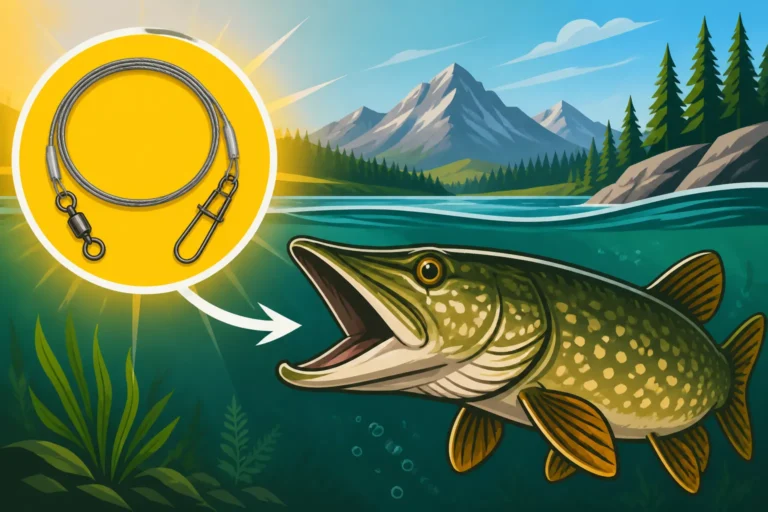
Line choice is critical. Braided line is highly recommended, usually in the 30-50 lb test range. It has no stretch, providing excellent sensitivity and immediate hook sets, which is crucial when fishing around heavy cover. The strength of braid also helps cut through weeds. You'll definitely want to tie on a steel or heavy fluorocarbon leader (20-30 lb test) to prevent bite-offs from those razor-sharp pike teeth. Losing a fish and a lure to a bite-off is a common and frustrating occurrence if you skimp on your leader material. For a great selection, check out various options on Amazon.
Must-Have Lures and Baits
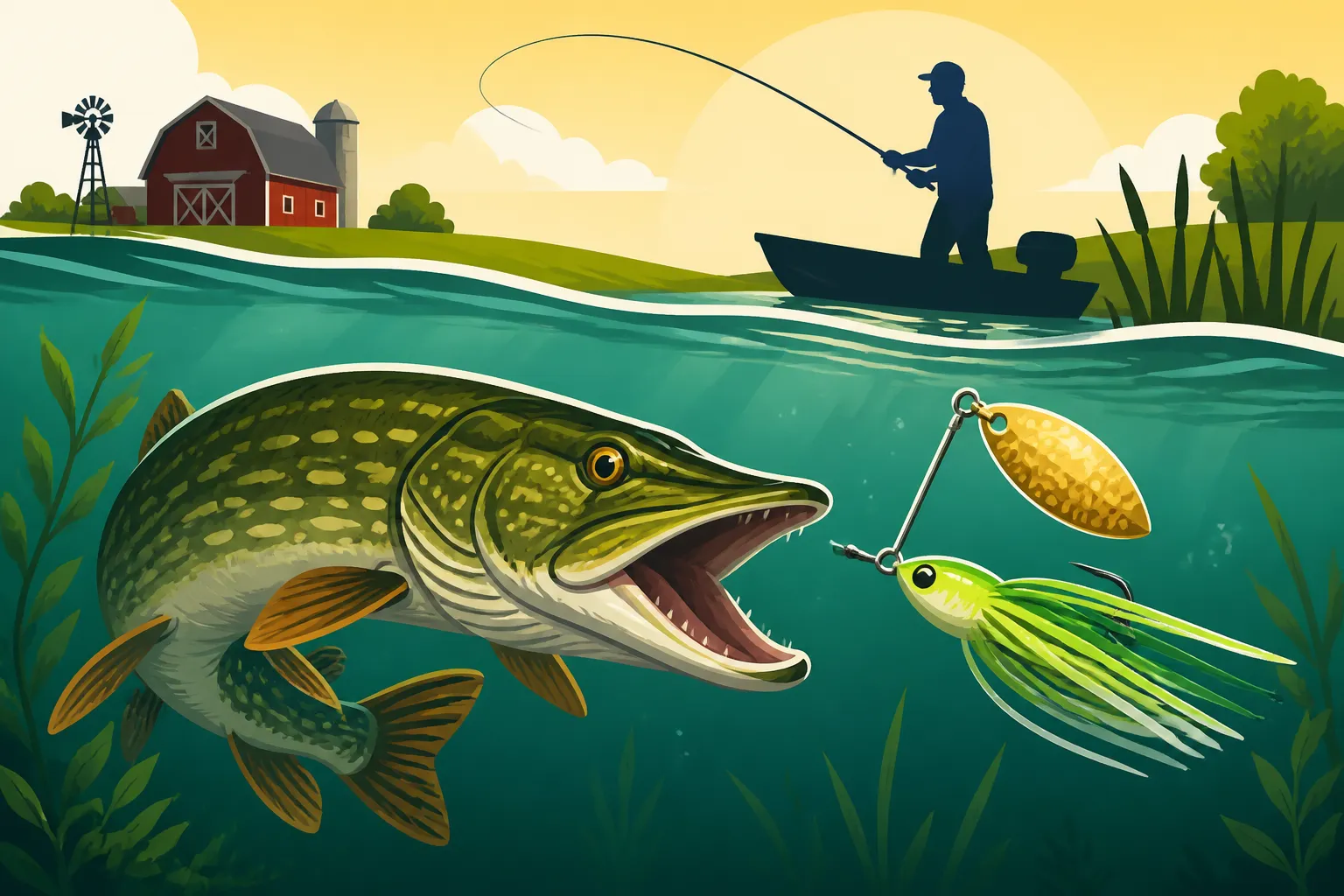
Pike are opportunistic eaters, so a variety of lures can be effective. However, some stand out as consistent producers in farm pond environments. For starters, spinnerbaits are fantastic. Their flash and vibration can draw pike out of cover, and they're relatively weedless, which is a huge advantage in weedy ponds. Bright colours like chartreuse, white, or firetiger are often excellent choices. Spoons, especially weedless varieties, also work wonders. Their erratic wobbling action mimics injured baitfish, making them irresistible. You can often find a wide array of colours and sizes of these types of lures readily available online, perfect for stocking your tackle box.
Don't forget topwater lures, especially during warmer months or low-light conditions. Poppers, walk-the-dog baits, and frogs can trigger explosive strikes that are truly unforgettable. Plastic swimbaits or soft jerkbaits rigged weedless on a wide-gap hook are also highly effective, allowing you to probe dense cover without getting snagged. These options give you the versatility to adjust to what the pike are reacting to on any given day. If you want to dive deeper into specific options, you can read up on the Best Lures for Northern Pike in Alberta.
Essential Accessories
Beyond your rod and reel, a few key accessories will significantly improve your farm pond pike fishing experience. First and foremost, a good pair of pliers or forceps for hook removal is absolutely essential. Pike have rows of sharp teeth, and reaching in with your bare hands is a recipe for injury. Long-nosed pliers allow for safe and efficient hook extraction, minimizing harm to both you and the fish. A robust landing net, ideally rubberized to protect the fish's slime coat, is also highly recommended. It makes landing a feisty pike much safer and easier, especially when you're fishing alone or trying to get a quick photo before release. For guidance on appropriate nets, consider checking out options mentioned in discussions on the Best Landing Net for Pike.
Finally, a small tackle bag or backpack stocked with extra leaders, a few different lure options, and perhaps some bug spray is always a good idea. Many farm ponds are accessed via overgrown paths, so comfortable, water-resistant footwear and appropriate clothing are also key.
Top Techniques for Success
Fishing farm ponds for pike isn't just about throwing a lure out and reeling it in. There are specific strategies and approaches that will drastically increase your chances of success. Understanding how to present your bait, where to cast, and how to adapt to conditions is paramount.
Casting and Retrieval Strategies
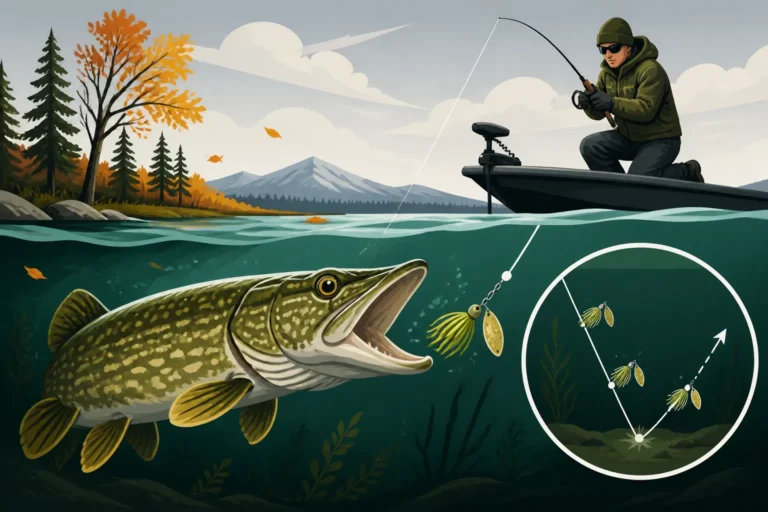
When fishing farm ponds for pike, precision casting is often more important than distance. You're typically targeting specific patches of weeds, submerged structure, or tight pockets. Focus on making accurate casts that land your lure right on the edge of cover or in small openings within it. A common strategy is to cast beyond the desired target and retrieve the lure past it, giving the pike an opportunity to ambush. For example, if you're fishing a prominent weed line, cast parallel to it or slightly past it, then work your lure along its edge.
Retrieval speed and action are equally important. Pike in farm ponds are often aggressive, so a moderate to fast retrieve can trigger reaction strikes. Don't be afraid to experiment with erratic retrieves – sudden pauses, twitches, and changes in speed can imitate a panicked or injured baitfish, which often infuriates pike into striking. With topwater lures, a steady retrieve with occasional pauses to let the ripples dissipate can be deadly. Remember, you're trying to provoke a bite, so make your lure look as appetizing or as vulnerable as possible. For more insights on specific lure actions, check out guides on How to fish a spinnerbait for Alberta lake pike.
Targeting Different Depths and Structures
The beauty of farm ponds is that they are often less complex than larger lakes, making it easier to pinpoint where pike might be hiding. In shallow, weedy ponds, pike will almost always be associated with cover. This means casting right into the thickest weeds you can find (with weedless lures, of course), or along the transition zones where weeds meet open water. If the pond has deeper sections, especially during the heat of summer, pike might retreat to these cooler, darker waters. In such cases, jigs tipped with soft plastics or crankbaits that dive deeper can be more effective.
Don't overlook small, subtle changes in the bottom contour. A slight drop-off, a patch of gravel among mud, or an isolated clump of weeds can hold a trophy pike. Cast to every piece of visible structure, and then fan-cast around it to explore the surrounding area. Remember that pike are ambush predators, so they'll often be positioned to dart out and grab prey. Think like a pike: where would you hide to surprise your meal?
Seasonal Adjustments for Pond Pike
Pike behaviour in farm ponds changes with the seasons, just like in larger bodies of water.
Spring: After ice-out, pike in farm ponds become very active, often moving into the shallowest areas to spawn. This is a prime time for aggressive fishing. They're hungry and easily accessible. Spinnerbaits and shallow-running crankbaits can be incredibly effective. Consider reading more about Best Techniques for Early Spring Pike.
Summer: As waters warm, pike might seek slightly deeper, cooler water if available, or burrow deeper into dense weed beds for shade and ambush cover. Early morning and late evening are often the most productive times. Topwater lures can be explosive at dawn and dusk. During the day, switch to weedless presentations like frogs or soft plastics to target them directly in the thick stuff. The article on Topwater Fishing for Pike in Alberta offers excellent insights for this season.
Fall: As water temperatures drop, pike enter a feeding frenzy, bulking up for winter. This can be one of the best times to catch large, active fish. They'll often be found in a variety of depths, from shallow weed edges to deeper drop-offs. Large spinnerbaits, spoons, and even bigger crankbaits can entice savage strikes. For a detailed guide on this season, refer to Best Techniques for Fall Trout Fishing (while it's about trout, the principles of fall feeding frenzies and lure choice can be adapted).
Winter (Ice Fishing): Farm ponds can offer fantastic ice fishing opportunities for pike. They remain active under the ice, often patrolling weed lines and drop-offs. Dead bait under a tip-up or large jigging spoons can be very effective. Ensure ice safety, as smaller ponds can have variable ice thickness.
Here's a quick overview of seasonal approaches:
| Season | Prime Locations | Recommended Lures/Techniques | Best Time of Day |
|---|---|---|---|
| Spring | Shallow spawning areas, weed edges | Spinnerbaits, shallow crankbaits | All day, especially warm afternoons |
| Summer | Dense weed beds, shaded areas, deeper pockets | Topwater (early/late), weedless soft plastics, frogs | Dawn, Dusk, cooler cloudy days |
| Fall | Weed edges, drop-offs, open water | Large spinnerbaits, spoons, jerkbaits | All day, especially midday |
| Winter | Weed lines, structure near deeper water | Dead bait (tip-ups), large jigging spoons | Midday, stable weather |
Practical Tips for Farm Pond Pike Anglers
Beyond the core techniques, there are several practical considerations that can greatly enhance your farm pond pike fishing experience in Alberta. These range from how you handle your catch to how you gain access to these often-private fisheries.
Catch and Release Best Practices
While Alberta's farm ponds can hold abundant pike, practicing responsible catch and release is crucial for maintaining healthy fish populations, especially in smaller, more confined waters. Pike are generally hardy, but proper handling is still vital. When you land a pike, try to keep it in the water as much as possible. If you must remove it for a photo, do so quickly and support its body horizontally to avoid internal injury. Use those long-nosed pliers to remove hooks quickly and gently. If the fish is deeply hooked, it's often best to cut the line as close to the hook as possible rather than tearing sensitive tissues trying to extract it.
Always be mindful of your Alberta Bag and Possession Limits by Species and any specific regulations for the water body you're fishing. Even if you plan to keep a fish, handling it carefully until it's ready for the cooler is important. For general information on the species, you can refer to the Northern Pike Fishing in Alberta guide.
Gaining Access to Private Ponds
This is perhaps the biggest hurdle for farm pond fishing. Many of these ponds are on private land. Never assume you have permission to fish. Trespassing is illegal and can lead to fines and, more importantly, can ruin opportunities for all anglers by creating negative perceptions of the fishing community. Always seek permission from the landowner before you even consider casting a line. A polite knock on the door, a friendly conversation, and an offer to share some of your catch (if you plan to keep any) can go a long way. Building a good relationship with a landowner can open up amazing fishing opportunities for years to come. Remember to respect their property, pack out all your trash, and leave no trace. Showing respect and appreciation is key to maintaining access to these hidden gems.
Safety Considerations
Fishing farm ponds comes with its own set of safety considerations. First and foremost, be aware of your surroundings. Many ponds are near active farms with equipment, livestock, and potentially uneven terrain. Watch your footing, especially around steep banks or muddy areas. Water levels can fluctuate, exposing slippery banks. If you're wading, always know the depth and bottom conditions, and never wade alone without proper safety gear.
If you're fishing near livestock, maintain a respectful distance and avoid disturbing them. Farmers appreciate it when you're considerate of their operations. Be mindful of any hazards like old fencing, submerged obstacles, or even power lines that might be overhead. Finally, always let someone know where you're going and when you expect to return, especially if you're exploring a new, remote pond. While farm ponds are often smaller, they are still natural environments that demand respect and caution. A well-stocked first aid kit is also a sensible addition to your gear, available from retailers like Amazon.
Disclaimer
This article is for general informational purposes only and does not constitute professional advice. Laws, prices and regulations vary by location and change over time. Consult a qualified professional for guidance on your specific situation.