Best bait for pike in weed beds
It's incredibly frustrating, isn't it? You spot that perfect patch of lily pads or submerged weed growth, knowing full well that trophy pike are lurking beneath, ready to ambush unsuspecting prey. But getting your lure through that thick stuff without snagging every second cast feels like an impossible mission. This guide is here to unravel that mystery, providing you with the best bait choices and techniques to effectively target those elusive northern pike hidden deep within Alberta's weedy havens.
Understanding Pike Habits in Weedy Environments
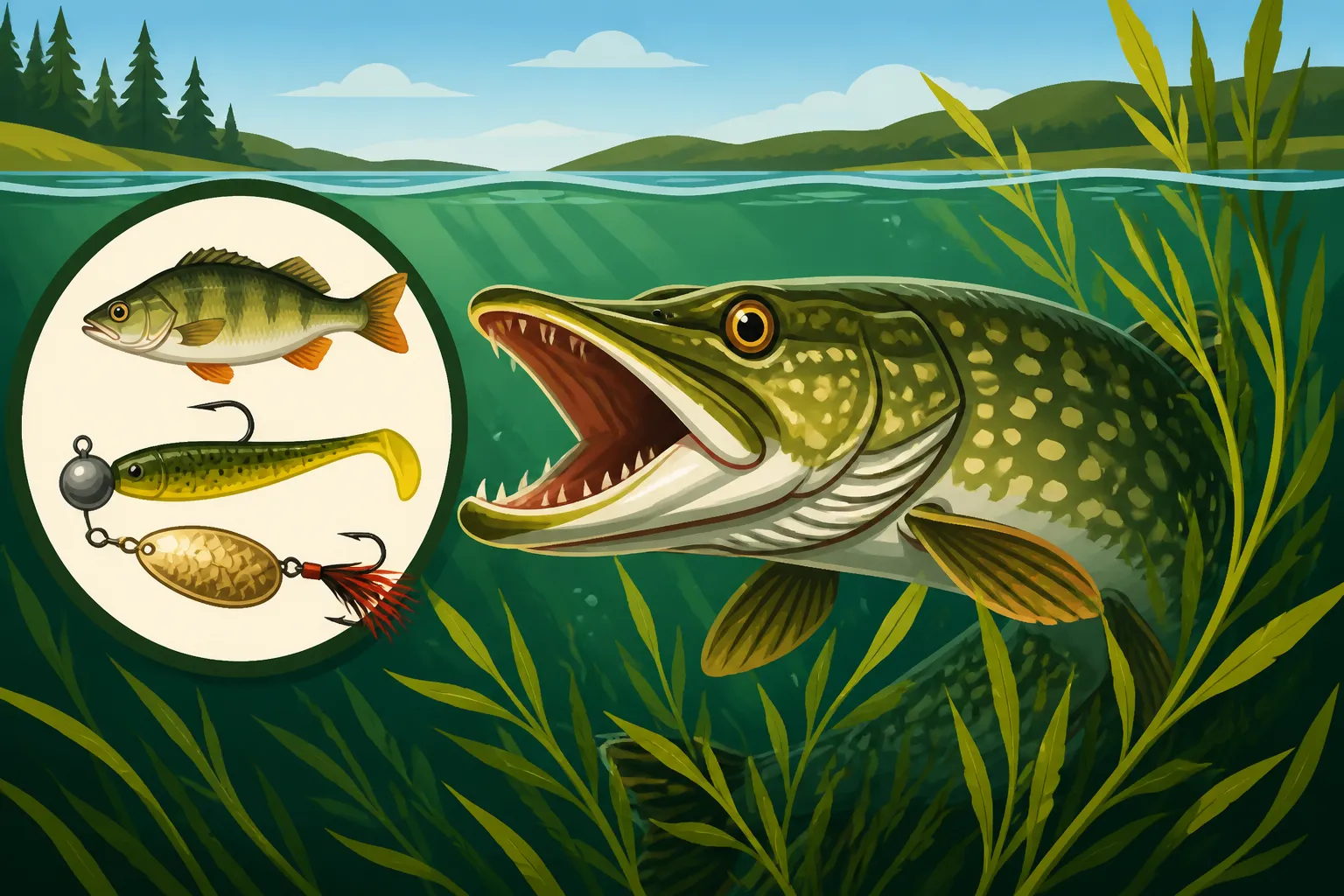
Northern pike are apex predators, and their strategy often involves using cover to their advantage. Weed beds, whether they're emergent lily pads, dense submerged coontail, or expansive fields of milfoil, provide everything a pike needs: ambush points, shade from the sun, and a buffet of baitfish and amphibians that also seek refuge there. To consistently catch pike in these areas, you first need to think like one.
Why Pike Seek Out Weeds
Imagine you're a pike. The sun is beating down on a clear Alberta lake, making the open water feel exposed and bright. You've just expended energy chasing down a school of minnows. Where do you go to rest, digest, and wait for your next meal? Into the thick, cool cover of the weeds. These green jungles offer camouflage, allowing pike to blend in perfectly with their surroundings, ambushing prey without being seen. They also provide a thermal refuge, particularly in the warmer months when surface temperatures climb, offering cooler water just a few feet deeper within the weed lines. From smaller jackfish to massive gators, all sizes of pike appreciate this protection and hunting advantage.
Identifying Productive Weed Beds
Not all weed beds are created equal. A sprawling, uniformly dense patch of weeds can be tough to fish and might not hold many active pike. The most productive weed beds usually have certain characteristics. Look for areas with distinct edges where the weeds meet open water or a sharp drop-off. These "edge habitats" are prime ambush points. Patches with pockets, lanes, or openings within the dense growth are also gold mines, as pike will patrol these clearings. Submerged humps or points that are topped with weeds, or areas where different types of weeds converge, create fantastic structure. On lakes like Lesser Slave Lake or Keho Lake, identifying these subtle variations can be the difference between a slow day and a successful one. Even small weed clumps near deeper water can hold surprisingly large fish.
Seasonal Movement in Weeds
Pike's reliance on weeds can shift throughout the seasons. In spring, as waters warm, pike will often be found in shallower, warming weed beds, especially after their spawn. These areas are rich with newly hatched baitfish. During the hot summer months, they'll retreat to deeper, denser weed lines or where cooler water flows into a weedy bay. As fall approaches, and water temperatures begin to cool, pike become incredibly active, feeding aggressively. They'll often still relate to weed beds, particularly those adjacent to deeper foraging grounds, before eventually moving to deeper basin areas for winter. Understanding these patterns, as detailed in our guide on Alberta Fishing Seasons by Zone and Month, can help you pinpoint where the active fish might be holding.
Top Bait Categories for Weedy Pike
When fishing in weed beds, the primary challenge is presenting your lure effectively without constantly snagging. This means selecting baits that are either inherently weedless, or can be adapted to be so. Forget treble hooks dragging through thick vegetation; we're talking about baits designed to glide, slide, and weave their way through the green stuff.
Weedless Soft Plastics
Soft plastic lures are incredibly versatile and can be rigged in numerous ways to be virtually weedless. This category includes everything from creature baits and worms to paddle-tail swimbaits and frogs. Their soft, pliable nature allows the hook point to be buried back into the plastic, only exposing itself when a fish strikes.
For example, a Texas-rigged soft plastic jerkbait or a large worm can be incredibly effective when slowly twitched through thick submerged weeds. The key is to use a wide gap hook, burying the point just under the plastic's skin. When a pike bites, the plastic compresses, exposing the hook for a solid set. For surface weeds like lily pads, a hollow-bodied frog lure is unmatched. It floats directly on top, allowing you to "walk" it over the thickest cover, and when a pike explodes on it, the soft body collapses, exposing the double hook embedded in its back. Many anglers find excellent bulk deals on quality soft plastics on platforms like Amazon, ensuring they always have a good supply.
Spinnerbaits and Buzzbaits
These baits are fantastic choices for covering water in and around weeds due to their unique design. Spinnerbaits, with their "R" shaped wire frame, have the hook riding upwards, shielding it from snags as the lure moves through vegetation. The spinning blades create flash and vibration that pike find irresistible. They're excellent for targeting pike holding just inside the weed line or along weed edges.
Buzzbaits, on the other hand, are topwater lures featuring a propeller-style blade that churns water, creating a commotion on the surface. They are incredibly effective when pike are active and looking up, particularly during low light conditions or over submerged weeds where fish will rise to strike. The single upward-facing hook on both these lure types greatly reduces snags, making them a go-to for many Alberta anglers looking to entice aggressive strikes. If you're looking for more general options, our guide on Best Lures for Northern Pike in Alberta covers a broader range.
Weedless Spoons and Jigs
While traditional spoons might seem like a snagging nightmare in weeds, specific weedless variations are incredibly effective. The most famous example is the Johnson Silver Minnow, which features a single hook protected by a wire guard. This design allows it to glide over and through weeds without accumulating them. A slow, steady retrieve with occasional twitches can make it flutter tantalizingly through openings, often drawing savage strikes.
Weedless jigs, often dressed with a skirt and tipped with a soft plastic trailer, are also excellent choices. These typically feature a heavy wire weed guard or a streamlined head design that helps them slip through cover. They can be jigged vertically in pockets, or slowly dragged along the bottom through sparse weeds. Combining a weedless jig with a paddle-tail grub or a crawfish imitation can be particularly deadly, especially when trying to imitate a struggling baitfish or a crayfish scuttling through the weeds.
Specific Lures and Baits for Success
Let's dive into some specific recommendations that have proven time and again to be exceptional for catching pike in weedy conditions. These aren't just generic suggestions; they're battle-tested options designed for navigating the green jungle.
Hollow-Bodied Frogs
When pike are shallow and holding in thick mats of lily pads, duckweed, or emergent grass, nothing beats a hollow-bodied frog. Brands like Spro Bronzeye Frog or Livetarget Hollow Body Frog offer incredible realism and action. You can literally cast these lures right onto the thickest cover, twitch them, walk them, and pop them right over the weeds. The key is the collapse factor: when a pike hits, its mouth compresses the soft body, exposing the sharp double hooks.
The excitement of a topwater frog bite is unparalleled. Imagine your frog sitting motionless on a mat of green, then a subtle twitch, and suddenly, the water erupts in a violent explosion as a pike rockets out of the cover. Give the pike a second to really engulf the bait before setting the hook hard. This technique is especially effective on smaller, shallower lakes and ponds across Alberta where heavy weed growth is common throughout the summer months.
In-Line Spinnerbaits
While traditional spinnerbaits have a "V" shape, in-line spinnerbaits, like the classic Mepps Aglia or Blue Fox Vibrax, have the blade(s) directly on the main wire shaft. While not as inherently weedless as a standard spinnerbait with an upward hook, their slim profile and single hook can still be quite effective when fished along the edges of weed beds or through more sparse vegetation. The constant flash and vibration are powerful attractants.
The trick here is to keep them moving just fast enough to keep the blades spinning, but slow enough to entice a strike. Experiment with different blade sizes and colours; chartreuse, white, and silver are perennial favourites for pike. On many Alberta rivers and lakes, you'll find pike patrolling the defined edges of weed lines, making these lures an excellent choice for casting parallel to the weeds and drawing fish out of cover. For general pike strategies, you might want to review How to Catch Northern Pike in Alberta.
Weedless Swimbaits (Rigged with Weighted Hooks)
For fishing in the submerged weeds, soft plastic swimbaits rigged on weedless weighted hooks are a game-changer. These hooks typically have a screw-lock keeper at the eye and a weighted keel or belly, ensuring the swimbait swims true. The hook point is then Texas-rigged into the back of the swimbait, keeping it perfectly weedless.
Popular swimbaits like the Keitech Swing Impact FAT or the Storm Largo Shad, paired with an appropriate weighted swimbait hook (e.g., Owner Weighted Beast Hook or a similar VMC model), can be slowly reeled through dense submerged vegetation. The paddle tail kicks and vibrates, sending irresistible signals to hidden pike. The weighted hook allows for deeper penetration into the weed column. This technique is incredibly subtle and often entices strikes from less aggressive or pressured fish. You can find a vast array of these swimbaits and weighted hooks on Amazon. When using this setup, a robust fluorocarbon leader is highly recommended to prevent bite-offs, a topic explored further in Best leader for pike fishing.
Chatterbaits
A relatively newer, but incredibly effective, lure for weedy pike is the chatterbait, sometimes called a bladed jig. These lures combine the flash and vibration of a spinnerbait with the weedless profile of a jig. The unique bladed front causes the lure to vibrate erratically, creating a "chattering" sound and action that pike can't ignore. The single, stout hook is dressed with a skirt and often has a soft plastic trailer added for extra bulk and action.
Chatterbaits excel at tearing through sparse to medium-dense weeds. The blade deflects off obstructions, often triggering reaction strikes from lurking pike. They can be retrieved steadily, popped, or even worked with a stop-and-go action. For aggressive pike, especially in stained or murky water where vibration is key, a chatterbait can be absolutely deadly. They're particularly effective in early spring and fall when pike are actively feeding and still relating to vegetation.
Here’s a quick comparison of some popular weed-friendly pike baits:
| Bait Type | Primary Use | Weedless Rating | Retrieval Style | Key Advantage |
|---|---|---|---|---|
| Hollow-Bodied Frog | Surface mats, emergent weeds | Excellent | Twitch, walk, pop | Lands on heaviest cover, explosive topwater strikes |
| Spinnerbait | Weed edges, sparse submerged weeds | Good | Steady retrieve, slow roll | Flash & vibration, covers water quickly |
| Weedless Swimbait (Rigged) | Submerged weeds, pockets | Excellent | Slow retrieve, jig | Realistic profile, subtle action, deep penetration |
| Chatterbait | Medium-dense weeds, open pockets | Very Good | Steady retrieve, stop-go | Unique vibration & erratic action |
| Weedless Spoon | Moderate weeds, open lanes | Very Good | Slow & steady, flutter | Classic profile, natural wobble, easy to use |
Tips for Fishing Weed Beds Effectively
Getting your bait into the strike zone is only half the battle. How you present it, and how you prepare for the fight, are just as crucial for success when targeting pike in thick cover.
Master the Retrieve
The retrieve is paramount when fishing weed beds. A slow and steady retrieve is often best for weedless swimbaits and spoons, allowing them to subtly weave through the cover. For spinnerbaits and chatterbaits, a slightly faster retrieve might be needed to keep the blades moving and generate their characteristic action. With topwater frogs, varying your retrieve from long pauses to aggressive pops can be key to triggering strikes.
Don't be afraid to experiment. Sometimes, a super-slow retrieve, just barely ticking the tops of the submerged weeds, will draw a strike. Other times, a faster, more erratic retrieve that mimics an injured baitfish fleeing for its life is what they're looking for. Pay attention to how the lure feels through the weeds; you want it to deflect off cover, not get stuck. That deflection often triggers an instinctive strike from a nearby pike.
Utilize Key Areas within Weed Beds
As mentioned earlier, uniform weed beds are hard to fish. Focus your efforts on the "sweet spots":
- Edges: Cast parallel to weed lines, working your bait along the transition zone between weeds and open water. This is a primary ambush zone for pike.
- Pockets and Lanes: These clearings within the dense weeds are like highways for pike. Work your weedless lures directly through these areas, paying extra attention to the entry and exit points.
- Irregularities: Any break in the pattern – a deeper hole, a clump of different vegetation, a small point extending into the weeds – can hold a fish. These subtle structural changes offer additional ambush opportunities.
- Deep Weed Lines: In summer, pike will often sit just outside or on top of the deepest weed growth, often 10-15 feet down. Target these areas with weedless jigs or weighted swimbaits.
Using a good fish finder can help identify these deeper weed lines and irregularities. Many anglers find quality fishing electronics and other gear on Amazon.
Line and Leader Choices
Fishing for pike in weeds demands stout tackle.
- Braided Line: This is your best friend. Braided line has zero stretch, offering incredible sensitivity to feel subtle bites and, crucially, the power to rip your lure free from minor snags. Its abrasion resistance is also excellent when dealing with rough weed stalks. A minimum of 30 lb test, often up to 50 or 65 lb test, is recommended, especially for larger pike. Learn more about Best line for pike fishing in weedy water.
- Leaders: Pike have rows of razor-sharp teeth that will easily sever monofilament or fluorocarbon main lines. A bite-proof leader is non-negotiable. Fluorocarbon leaders in the 40-80 lb test range, or even thin steel or titanium leaders, are essential. While fluorocarbon offers stealth, wire leaders offer ultimate bite protection. The specific leader type can depend on water clarity and the size of pike you're targeting. Our article on Best leader for pike fishing provides further insights.
Dealing with Snags and Follow-Ups
Snags are inevitable when fishing weeds, but with the right technique, you can minimize lost lures. When your lure gets hung up, first try a sharp, upward rip of the rod to dislodge it. If that doesn't work, give your line some slack, then pull straight back on the lure from the opposite direction of the snag. Often, this will free it.
Pike are known for their aggressive follow-ups. If a pike strikes and misses your lure in the weeds, or you see one follow it, don't give up! Immediately cast back to the same spot, often with a slightly different retrieve or even a different lure. Pike are highly territorial and will often strike again if presented with another opportunity. Sometimes, a quick change to a topwater frog after a missed subsurface strike can trigger an explosive second attack.
The Thrill of the Weedy Battle
There's a unique satisfaction that comes from expertly extracting a feisty northern pike from a dense weed bed. It's a testament to your understanding of their habitat and your ability to present a lure where few others dare. The challenge of weaving your bait through the green jungle, the explosive strike, and the thrilling battle of a powerful fish trying to bury itself back in the cover – it’s what makes fishing for pike in Alberta's weed beds so incredibly rewarding. So next time you're out on the water, don't shy away from those thick patches; arm yourself with these baits and techniques, and get ready for some exhilarating action!
Disclaimer
Fishing regulations can change. Always consult the most current Alberta Guide to Sportfishing Regulations before heading out. This guide is for informational purposes only and does not supersede official government regulations.