Best streamer rod setup for big brown trout
Chasing big brown trout with streamers in Alberta's renowned rivers is one of the most exciting and challenging pursuits an angler can undertake. These elusive fish are true predators, often lying in wait for a substantial meal, and presenting a large, enticing streamer effectively requires a specific rod setup designed for power, precision, and endurance. This guide will walk you through building the optimal streamer rod setup to consistently target and land those elusive trophy browns.
Understanding Big Brown Trout and Streamer Fishing in Alberta
Brown trout are known for their aggressive nature and their tendency to feed on larger prey as they grow. This makes them prime targets for streamer fishing, a technique that mimics baitfish or other aquatic creatures. In Alberta, rivers like the Bow and the Crowsnest are legendary for their substantial brown trout populations, offering anglers a fantastic opportunity to test their skills with this dynamic method.
Why Streamers are Effective for Trophy Browns
Big brown trout, especially the ones that lurk in the deeper, darker sections of Alberta's rivers, become increasingly piscivorous – meaning they prefer to eat other fish. A small nymph or dry fly, while effective for smaller trout, often doesn't offer enough caloric reward to pique the interest of a truly large brown. Streamers, tied to imitate minnows, sculpins, or even leeches, present a substantial, irresistible meal that can trigger a powerful, instinctual strike. It's not just about size, though; the erratic, fleeing motion you impart to a streamer often imitates an injured or disoriented baitfish, something a predatory brown can't resist. You're tapping into their core hunting instincts, making streamer fishing for these big guys incredibly rewarding.
When you're out on the Bow River Fishing Guide or the Crowsnest River Trout Fishing, you'll quickly realize that the biggest browns often hold in ambush points. They aren't casually sipping emergers off the surface; they're waiting for something substantial to drift by. A well-presented streamer gets right into their strike zone and provokes a reaction. It's a completely different game than dry fly or nymph fishing, focusing on aggression rather than subtlety.
Reading Water for Brown Trout with Streamers
Successfully targeting large brown trout with streamers hinges on your ability to read the water and understand where these fish hide. Big browns are often solitary and prefer areas that offer protection from strong currents while providing easy access to feeding lanes. Look for deep pockets, undercut banks, large submerged rocks, and fallen timber. These structures create current breaks and ambush points where a brown can sit comfortably, expending minimal energy while waiting for prey.
Confluence points, where two currents meet, or the seams along faster moving water are also prime locations. The slower water on the inside of a bend, especially if it has depth and structure, can hold significant fish. Remember, these fish are looking for easy meals, so focusing your casts and retrieves through these high-probability areas is key. It's less about covering vast amounts of water and more about precision and repetition in the most likely holding spots. Knowing how water behaves around different structures will greatly increase your chances of connecting with a trophy. When you're fishing for Brown Trout Fishing in Alberta, observation is your best friend before you even make your first cast.
Essential Components of Your Streamer Rod Setup
Building the right streamer setup is paramount for success. You need a system that can cast heavy, wind-resistant flies with accuracy, handle aggressive strikes, and possess the backbone to fight powerful fish in strong currents. Each component plays a critical role in this delicate balance of power and finesse.
The Rod: Length, Weight, and Action
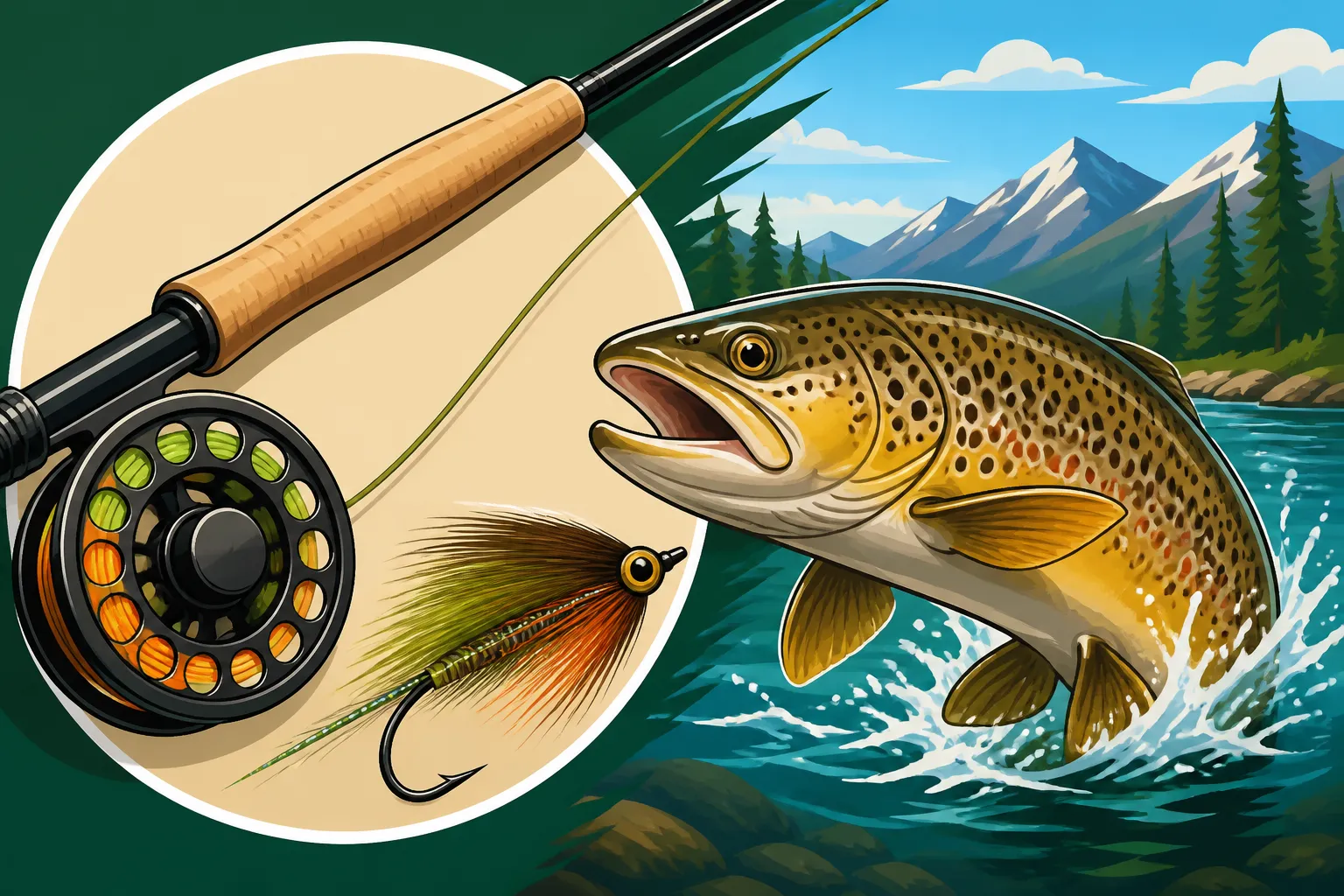
When it comes to streamer fishing for big brown trout, your standard 5-weight trout rod just won't cut it. You need a rod with more power to cast heavier flies and to exert control over larger fish. Typically, a 6, 7, or even 8-weight fly rod is preferred. An 8-weight rod is excellent for very large, wind-resistant streamers and when you anticipate truly trophy-sized fish, offering maximum casting power and fish-fighting capability. For slightly smaller streamers or less extreme conditions, a 6 or 7-weight can offer a bit more delicacy while still having ample backbone.
Length is also important, with 9 to 10 feet being standard. A longer rod (9'6" or 10') can aid in casting distance, line control, and mending, especially when wading or fishing from a boat. The action of the rod should ideally be "fast" or "extra-fast." This stiff action allows the rod to load quickly and powerfully, driving those heavy flies into the wind and delivering them precisely. A fast-action rod also provides the backbone necessary to set the hook firmly and battle a strong brown trout without feeling undergunned. A quality rod in this category will make your casting experience significantly more enjoyable and effective. When choosing from the array of Best Fishing Rods for Alberta Rivers, consider what kind of streamers you'll be throwing most often.
The Reel: Matching Power and Capacity
Your fly reel for streamer fishing needs to be more than just a line holder; it's a critical tool for fighting large fish. The most important features are a smooth, powerful drag system and ample line capacity. Large arbor reels are highly recommended because they retrieve line quickly, which can be crucial when a fish makes a fast run directly at you, creating slack. This faster retrieve also minimizes line coil, which can be a nuisance with heavier lines.
The drag system must be capable of smoothly applying consistent pressure without sticking or jerking, which can lead to broken tippets or lost fish. Look for sealed drag systems, as they offer better protection against grit and water, especially in variable Alberta weather conditions. Finally, ensure the reel has enough capacity for your heavy streamer line plus at least 150-200 yards of strong backing. When a big brown makes a screaming run, you'll be glad for that extra backing! Balancing the reel with your rod is also key; a well-balanced setup reduces fatigue over a long day of casting heavy flies.
The Line: Weight-Forward, Sinking, and Integrated Lines
The fly line is arguably the most critical component of a streamer setup. You need a line that is specifically designed to cast heavy, air-resistant flies and get them down to the fish quickly. Standard floating trout lines are generally not suitable. You'll want a weight-forward (WF) taper, as the concentrated weight at the front of the line helps turn over large flies.
For streamer fishing, sinking tips or full sinking lines are indispensable. Sinking tips, often integrated into a floating running line, allow you to fish streamers at various depths while still being able to mend and control the floating portion of your line. These come in different sink rates (e.g., intermediate, Type III, Type VI) for different depths and current speeds. Full sinking lines are designed to get your entire line and fly deep, fast, which is excellent for deep pools or strong currents. Integrated shooting heads are another popular option, featuring a heavy, compact sinking head seamlessly welded to a thinner, slick running line. These are fantastic for maximum distance and depth, though they can be a bit more challenging to mend. Many reputable brands offer excellent options; you can often find a great selection of these specialized lines at stores like Bass Pro Shops or browse options on Amazon.
Terminal Tackle and Accessories for Streamer Fishing
Once you have your rod, reel, and line dialed in, it's time to focus on the business end of your setup and the crucial accessories that support a successful day on the water. The right terminal tackle ensures your fly presents naturally and holds up to a powerful strike, while essential accessories enhance safety and efficiency.
Leaders, Tippets, and Knots for Streamers
Unlike delicate dry fly fishing, streamer leaders are typically shorter and much stronger. A common streamer leader setup is a short, stout leader (usually 4-7 feet in length) with a powerful butt section that seamlessly transitions the energy from your heavy fly line to your fly. Many anglers opt for a simple straight section of heavy fluorocarbon or monofilament, or a short, tapered leader designed for streamers. The idea is to have a strong, stiff leader that can turn over a heavy fly without collapsing.
For tippet material, fluorocarbon is often preferred due to its abrasion resistance, faster sink rate, and nearly invisible properties underwater. Tippet strength generally ranges from 1X to 0X (around 12-15 lb test), depending on the size of your flies and the target fish. Strong, reliable knots are absolutely critical here; a bad knot will be the weakest link in your system. Practice your loop knots for attaching flies (like a Non-Slip Mono Loop) and your line-to-leader connections (like a Triple Surgeon's or Blood Knot) to ensure maximum strength and security when a monster brown decides to bite.
Must-Have Streamer Patterns for Alberta Browns
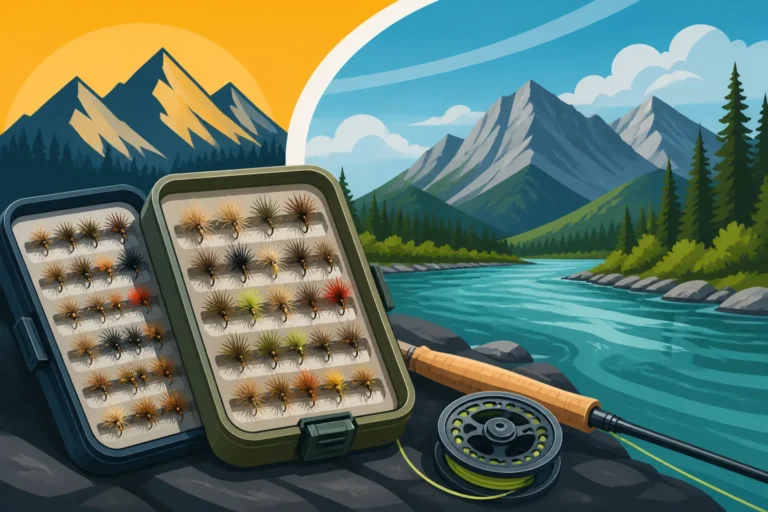
The world of streamers is vast, but a few patterns consistently produce big brown trout in Alberta. These flies generally imitate the local baitfish, sculpins, or even larger insects and leeches that make up a brown trout's diet. Patterns like the Sculpzilla, Sex Dungeon, Dolly Llama, and other articulated streamers are top choices. Their articulated bodies provide lifelike movement in the water, mimicking a swimming baitfish with incredible realism. Colors can vary, but olive, black, brown, and white are often very effective, sometimes with flashes of pearl or gold.
Don't forget the venerable Woolly Bugger in various sizes and colors – it's a classic for a reason and can imitate a huge range of prey. Clouser Minnows, especially in olive/white or chartreuse/white, are also highly productive. It's wise to carry a selection of sizes, from 2 inches up to 5 or even 6 inches for truly aggressive fish, and in different weights (e.g., with bead heads or lead eyes) to target different depths. Experimentation with retrieve speed and pattern changes is often the key to unlocking a brown's aggression. While there isn't a dedicated Best Streamer Patterns for Alberta Brown Trout article in our list, knowing these few go-to patterns will put you in good stead.
Other Essential Streamer Fishing Accessories
Beyond your rod, reel, line, and flies, a few key accessories will significantly improve your streamer fishing experience and safety, especially when targeting big browns in Alberta's dynamic river environments.
- Landing Net: A large, rubberized landing net is indispensable. Rubberized mesh protects the fish's slime coat and fins, which is crucial for healthy release, and the larger size makes it easier to scoop a thrashing trophy. A net with a long handle is often helpful when wading in deeper water or fishing from a boat. Best Landing Net for Trout provides more details on choosing the right one.
- Forceps/Pliers: Large, strong forceps or long-nosed pliers are essential for safely removing hooks from toothy fish like brown trout and for crimping barbs (which is often a regulation on certain Alberta rivers or just good practice for fish health). Best Pliers for Unhooking Pike are often robust enough for trout too.
- Wading Staff: If you plan on wading in swift, rocky rivers like the Bow or Crowsnest, a sturdy wading staff is a non-negotiable safety item. It provides crucial stability, especially in fast currents or on slippery bottoms, helping prevent falls. Consult Best Wading Staff for Fast Current for more information.
- Polarized Sunglasses: These are not just for comfort; they are a vital fishing tool. Polarized lenses cut through the glare on the water's surface, allowing you to see submerged structure, detect subtle takes, and even spot fish. Best Polarized Sunglasses for Sight Fishing Clear Water explains their benefits in detail.
- Tackle Bag/Backpack: A comfortable and organized way to carry your fly boxes, extra leaders, tippets, water, and other essentials. Given the size of streamer boxes, a slightly larger bag might be necessary. A dedicated Best Tackle Bag for Bank Fishing can be a great investment.
- Line Nippers and Leader Straighteners: Small tools that make a big difference in efficiency.
Many anglers find excellent deals on accessories like polarized sunglasses or quality landing nets on Amazon or through retailers like Bass Pro Shops. Investing in good quality accessories enhances not only your fishing experience but also your safety and the well-being of the fish you catch.
Techniques for Presenting Streamers to Alberta Brown Trout
Having the best streamer rod setup in the world won't matter if you don't know how to wield it effectively. Streamer fishing is an active pursuit that requires precise casting, varying retrieves, and careful fish handling to maximize your success rates, especially when pursuing those elusive big brown trout in Alberta's challenging waters.
Casting and Retrieving Streamers Effectively
Casting heavy, wind-resistant streamers accurately is a skill that takes practice. Traditional overhead casts can work, but learning a double haul will significantly increase your line speed and distance, allowing you to punch flies through the wind. Roll casts and Spey casts are also invaluable for getting your fly out when you have limited backcasting room, which is common on many Alberta rivers with high banks or heavy vegetation. The goal is to present the streamer to the fish's likely holding water and retrieve it in a way that mimics a fleeing baitfish.
The retrieve is just as important as the cast. Don't just strip line in at a constant pace. Vary your retrieve speed: fast strips, short jigs, long pauses. This erratic action often triggers a predatory response. Experiment with different depths too; let the streamer sink for a few seconds before starting your retrieve, especially in deeper pools or near drop-offs. Always be prepared for a strike on the pause or as the fly begins its movement; big browns often hit with surprising ferocity. Pay attention to how the current affects your fly's movement and adjust your retrieve to keep the fly looking natural. This active engagement with the water is what makes Fly Fishing for Trout on the Bow River with streamers so engaging.
Fighting and Landing Big Brown Trout
Hooking a big brown trout on a streamer is an exhilarating experience, but the fight is only half the battle. Landing these powerful fish safely requires a specific approach to ensure both your success and the fish's well-being. When you feel that aggressive strike, set the hook hard with a strip-set rather than just lifting the rod, as this provides a more direct and powerful hook-set, essential for larger flies. Once hooked, keep steady pressure on the fish, maintaining a deep bend in your rod. Avoid "horsing" the fish in, which can put too much stress on your tackle and the fish itself.
Use side pressure to steer the fish away from snags and towards shallower, calmer water where you can net it. Let the reel's drag do its job; don't clamp down on the spool unless absolutely necessary. When the fish is tired, use your large, rubberized net to scoop it headfirst. Try to keep the fish in the water as much as possible for photos and hook removal, especially if you plan on releasing it. Handle the fish gently with wet hands, supporting its belly, and release it only when it's strong enough to swim away on its own. This ethical approach is particularly important when you might encounter other sensitive species, such as when you need to know How to Catch Bull Trout and Release Them Safely.
| Rod Weight (Wt) | Preferred Length (ft) | Action | Ideal Streamer Size | Target Fish Size | Notes |
|---|---|---|---|---|---|
| 6-Weight | 9' – 9'6" | Fast | Small to Medium (2-4") | Medium Browns (16-20") | Versatile, good for smaller rivers or lighter presentations. |
| 7-Weight | 9' – 10' | Fast | Medium to Large (3-5") | Large Browns (20-25") | Excellent all-around streamer rod for most conditions. |
| 8-Weight | 9' – 10' | Fast | Large to XL (4-6"+) | Trophy Browns (25"+) | Best for big flies, windy conditions, and battling true monsters. |
Disclaimer
This article is for general informational purposes only and does not constitute professional advice. Laws, prices and regulations vary by location and change over time. Consult a qualified professional for guidance on your specific situation.