Best kayak anchor trolley system
Oh, the sheer frustration of being out on a beautiful Alberta lake or river in your kayak, feeling that gentle tug of a fish, only to have a sudden gust of wind or an unexpected current totally blow you off your prime spot! It’s a common scenario that can turn an idyllic fishing trip into a constant battle with your paddle, making you miss more bites than you catch. This guide is all about solving that exact problem, showing you why a kayak anchor trolley system isn't just a nice-to-have, but an absolute game-changer for any serious kayak angler, ensuring you can stay put exactly where the fish are.
Why an Anchor Trolley is a Kayak Angler's Best Friend
When you're out on the water, whether it's the sprawling expanse of Lesser Slave Lake or the winding currents of the Bow River, precision matters. Without the ability to hold your position, you're constantly drifting, paddling, and repositioning, which frankly, takes away from the actual fishing. An anchor trolley system provides that critical control, transforming your kayak from a floating leaf into a stable fishing platform.
Battling Wind and Current
Imagine this: You've just cast your line near a promising submerged log on an Alberta lake. You feel a tap, your heart races, and then a light breeze kicks up, pushing your kayak away from the sweet spot. Before you can even set the hook, you're out of position, and the moment is gone. Sound familiar? It’s a classic kayak fishing dilemma.
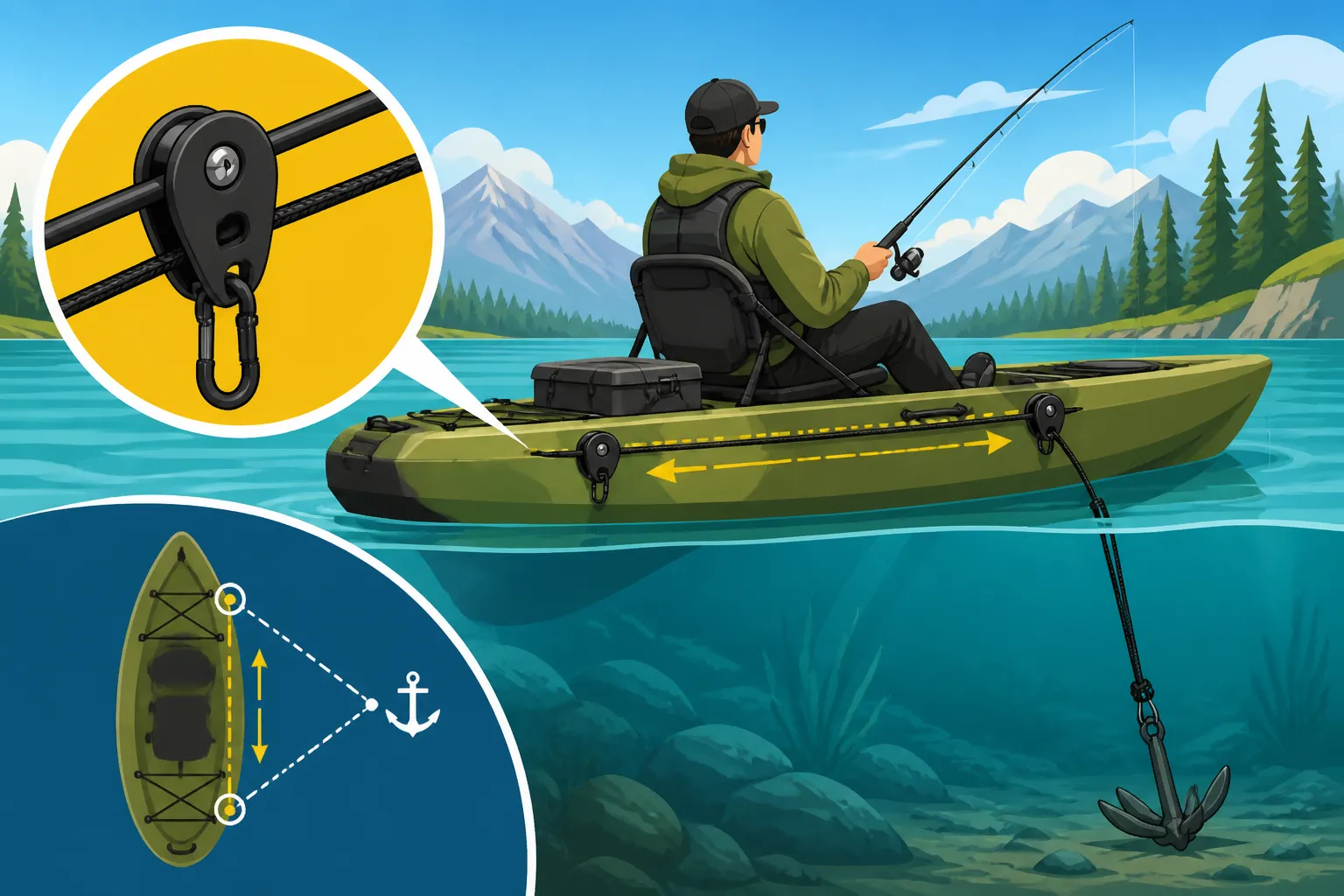
An anchor trolley system radically changes this experience. Instead of your anchor being fixed at either the bow or the stern, which inevitably makes your kayak act like a weather vane in the wind or current, a trolley allows you to move the anchor point along the length of your kayak. This means you can pivot your boat into the wind or current, keeping you perfectly aligned with your target. No more frantic paddling while trying to fight a fish or drift over a productive weed bed. It truly is the unsung hero that allows you to focus on the fishing, not the fighting of the elements.
This capability is particularly crucial when you're trying to fish those delicate seams where slow and fast water meet on a river like the Oldman, or when attempting to pick apart a specific piece of structure on a windy day. The trolley lets you adjust your boat's orientation with ease, presenting your bait or lure naturally to the fish, regardless of the conditions. It's about gaining an edge and removing one of the biggest frustrations of kayak angling in Alberta's diverse waters.
Precise Positioning and Stealth
Beyond simply holding your ground, an anchor trolley gives you unparalleled precision. Think about approaching a shallow flat where walleye might be cruising, or sneaking up on a wary brown trout in a clear stream. If your anchor is permanently tied to the front, deploying it can send ripples and noise directly over the fish you're trying to catch.
With an anchor trolley, you can drop your anchor discreetly from the stern, then use the trolley system to slide the anchor line to the bow, effectively pulling your kayak backward into position. This "stealth approach" allows you to present your lure to untouched water, increasing your chances of a bite. You become a master of your position, able to hold tight against a bank, over a drop-off, or within a specific current lane, making micro-adjustments that can mean the difference between an empty livewell and a successful day. For those delicate presentations, especially in crystal-clear waters, this stealth capability is invaluable.
The ability to reposition your anchor point from bow to stern, or anywhere in between, also means you can work a piece of structure more thoroughly. Instead of just one angle of attack, you can anchor upstream, swing your stern across the structure, fish it, and then slide your anchor to the stern to fish the downstream side, all without lifting your anchor from the bottom. This systematic approach ensures you cover every inch of promising water, something that would be nearly impossible without the flexibility an anchor trolley offers.
Safety and Convenience
Let's talk safety, because while fishing is fun, being safe on the water is paramount. Tying an anchor directly to your kayak's bow can be incredibly dangerous, especially in strong currents or if your anchor gets snagged. The kayak can quickly be pulled sideways, leading to capsizing or swamping. Manually reaching for a fixed anchor in a stressful situation can also put you off balance.
An anchor trolley, by design, centralizes control. The entire system is run along the side of your kayak, within easy reach of your seating position. If you need to quickly deploy, retrieve, or release your anchor due to a sudden current shift or a snag, you can do so with minimal effort and without having to lean awkwardly out of your boat. This is particularly important when you're trying to avoid being pulled into hazards like submerged trees or rapids. Alberta Boating Laws for Anglers emphasize safety, and an anchor trolley greatly contributes to it by allowing for quick adjustments and releases.
Furthermore, the convenience factor cannot be overstated. No more tangled lines in your lap or reaching precariously for an anchor point. Everything is managed through the smooth-running pulley system, keeping your deck clear and your focus on fishing. Many systems also incorporate quick-release features, allowing you to instantly sever the anchor line in an emergency, though this means losing your anchor, it could save your boat – and your day. This peace of mind allows you to fish more confidently, knowing you have complete control over your position and a safe exit strategy if needed.
Anatomy of a Great Kayak Anchor Trolley System
To truly appreciate how an anchor trolley system works its magic, it helps to understand its individual components. Each part plays a crucial role in providing you with the control and flexibility you need on the water. It’s a relatively simple system, but the synergy of its parts is what makes it so effective.
The Pulley System
At the heart of any anchor trolley is its pulley system. Typically, this consists of two small pulleys, one mounted near the bow and one near the stern of your kayak. A continuous loop of rope or cord runs through these pulleys, creating a smooth track along the side of your boat. The anchor line itself doesn't run through these; rather, the anchor is attached to a ring that is then attached to this continuous loop.
When you pull on the trolley rope, the ring (and thus your anchor) slides along the side of your kayak, allowing you to position your anchor point anywhere from bow to stern. This is the mechanism that gives you the ability to pivot your kayak. The quality of these pulleys is important; you want ones that are robust, corrosion-resistant, and have smooth-spinning wheels to minimize friction and wear on your trolley rope. High-quality pulleys ensure smooth operation, even when under tension or when dealing with dirty water from a spring runoff. You'll often find these components sold individually or as part of a complete kit from retailers like Bass Pro Shops, which cater specifically to kayak anglers.
The rope itself is also vital. Look for a durable, non-stretch, UV-resistant cord that's easy to grip when wet. Some anglers prefer a brightly coloured rope for better visibility, especially if fishing alone or in low light conditions. The continuous loop design, combined with robust pulleys, is what provides the effortless movement of your anchor point, making precise adjustments a breeze and allowing you to fine-tune your position with minimal effort.
The Anchor Ring and Cleat/Cam Cleat
Connected to the continuous loop of your trolley system is the anchor ring. This is the point where you actually attach your anchor line. It’s usually a strong, corrosion-resistant metal or heavy-duty plastic ring, robust enough to withstand the pull of your anchor and the forces of wind and current. The beauty of this ring is that it slides freely along the trolley rope, allowing you to easily move your anchor line attachment point.
To secure your anchor line once it's deployed, you'll need a cleat or a cam cleat. A standard cleat is a simple, horned fitting where you can wrap and secure your anchor line. It’s effective and reliable. A cam cleat, on the other hand, is a bit more advanced. It features a spring-loaded mechanism that grips the rope automatically when tension is applied, and releases it with a simple upward pull. This offers faster, one-handed operation, which can be a huge advantage when you need to make quick adjustments or release your anchor in a hurry.
Choosing between a standard cleat and a cam cleat often comes down to personal preference and budget. Both are designed to hold your anchor line securely, preventing unwanted drift. The cleat ensures your anchor stays put once deployed, letting you focus on the fish. Many anglers opt for a cam cleat on their Best Kayak for River Fishing in Alberta setups due to the often-changing river conditions that require rapid adjustments. You can often find a good selection of both cleats and anchor rings on Amazon, giving you options to customize your system.
Choosing the Right Anchor
While not strictly part of the trolley system itself, selecting the right anchor is absolutely crucial to its effectiveness. An anchor trolley is only as good as the anchor it deploys! The "best" anchor really depends on the type of water you're fishing in Alberta.
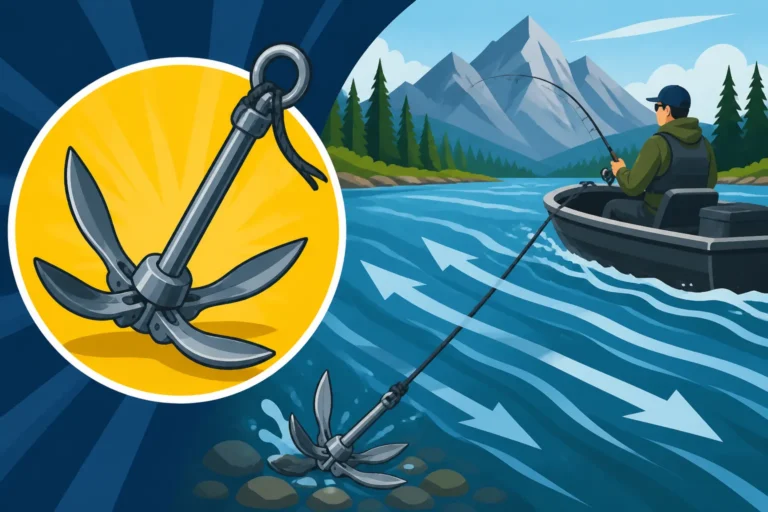
- Grappling Anchors: These are perhaps the most popular for kayaks. They have multiple prongs that can fold in for storage and deploy to grab onto various bottom types like rocks, weeds, or logs. They're versatile and work well in many river and lake environments.
- Mushroom Anchors: Best suited for soft, muddy, or sandy bottoms, as their cup-like shape creates suction to hold your position. They're typically heavier for their size and less effective on hard or rocky bottoms. These might be ideal for some of Alberta's shallower prairie lakes with soft bottoms.
- Drag Chutes/Drift Socks: Not anchors in the traditional sense, but often used in conjunction with a trolley system. A drag chute slows your drift, allowing you to fish a long stretch of water more effectively. When you want to cover ground but still maintain some control over your speed, a drag chute attached via your anchor trolley can be incredibly efficient.
Consider the common fishing scenarios you encounter. If you primarily fish the rocky bottom of the Bow River, a grappling anchor is your best bet. If you frequent the silty shores of Lesser Slave Lake, a mushroom anchor might be more suitable. Having a couple of different anchor types on hand, especially for different fishing trips, can make a significant difference in your ability to hold position effectively. This choice directly impacts how well your anchor trolley performs, making it a critical consideration for any kayak angler.
Installation Insights and Best Practices
So, you're convinced an anchor trolley is the way to go – fantastic! Now comes the installation. Don't worry, it's not as daunting as it might seem. With a bit of planning and the right tools, you can have your system set up and ready to fish in no time. Taking your time here will ensure a functional, safe, and durable setup that will last for years of Alberta angling adventures.
Planning Your Layout
Before you drill a single hole, take a moment to plan out your anchor trolley's placement. This is crucial for both functionality and ensuring it doesn't interfere with your existing kayak setup. Think about where your rod holders are, any fish finder mounts, paddle holders, or even just your natural paddling stroke. You want the trolley line to run smoothly along the side of your kayak without snagging on anything.
Typically, the trolley runs from the bow to the stern on one side of the kayak. Consider which side is most convenient for you to operate from your seated position – usually your dominant hand side, or the side opposite your primary paddle stroke. Mark your desired pulley locations with a pencil or marker, ensuring they are positioned far enough apart to give you maximum range of motion for your anchor point. It’s a good idea to sit in your kayak (on dry land, of course!) and simulate operating the system to confirm easy access to the cleat and smooth movement of the trolley rope. This pre-planning prevents you from having to rework the system or deal with annoying snags when you're on the water.
Also, think about the specific waters you'll be fishing. If you're primarily in calm lakes, your setup might be slightly less robust than if you're frequently tackling the strong currents of a major river like the Bow. Make sure your layout accommodates easy access to your anchor and quick release mechanisms, particularly if you’re fishing moving water where speed can be critical.
Mounting Hardware and Tools
The type of hardware you use will depend on your kayak's material and construction, as well as the kit you purchase. Most common kayak mounting hardware includes:
- Pop Rivets: Ideal for thinner plastic kayaks. They require a rivet gun and create a strong, permanent bond.
- Well Nuts: Great for thicker plastic or composite kayaks. They expand as you tighten a screw, creating a secure, waterproof seal.
- Through-Bolts: The strongest option, typically used when you can access both sides of the kayak hull (e.g., inside a hatch). This provides the most robust attachment.
Regardless of the method, always use marine-grade stainless steel hardware to prevent corrosion, especially with Alberta's varied water conditions. You'll need basic tools like a drill, drill bits appropriate for your chosen hardware, a screwdriver (if using bolts or well nuts), and potentially a rivet gun. The most important step during installation is to seal every single hole you drill with marine-grade sealant (like marine silicone or a dedicated sealant). This prevents water intrusion, which can lead to a host of problems down the line, including affecting your kayak's buoyancy.
Many anchor trolley kits come with all the necessary hardware and clear instructions. Brands like Wilderness Systems and Perception often include well-designed kits. You can find comprehensive kits and individual components, along with the right sealants and tools, at large outdoor retailers or online. Checking out options at a place like Bass Pro Shops or scrolling through listings on Amazon can give you a good idea of what's available and what will work best for your kayak. Remember, a little extra effort during installation pays off in years of reliable, leak-free performance.
Rope Management and Maintenance
Once your anchor trolley is installed, proper rope management and regular maintenance will ensure its longevity and smooth operation. The trolley rope itself is a critical component, constantly exposed to UV light, water, and friction, so choose a high-quality, durable, non-stretch cord designed for marine use. Braided nylon or polypropylene ropes are common choices. Ensure your knots are secure – a good bowline or figure-eight knot will prevent slippage.
Always keep your trolley rope neat and organized. Excess slack can snag on fishing lines, hooks, or even your paddle. When not in use, you might coil it and secure it with a small bungee or clip. Regular inspection is key: check the rope for fraying, especially where it passes through the pulleys. Examine the pulleys themselves for any signs of wear, cracks, or resistance when spinning. Dirty pulleys can quickly degrade your rope, so a quick rinse with fresh water after each trip can prevent grit buildup.
Similarly, check all your mounting hardware for tightness and corrosion. If you notice any rust or looseness, address it immediately. A small amount of marine lubricant on the pulley axles can also keep things running smoothly. Taking just a few minutes for these simple checks after each fishing adventure will drastically extend the life of your anchor trolley system and prevent unexpected failures on the water. A well-maintained system means more time fishing and less time troubleshooting.
Maximizing Your Anchor Trolley's Potential
An anchor trolley isn't just a simple on-off mechanism; it's a versatile tool that can be adapted and refined to enhance nearly every aspect of your kayak fishing. From subtle drifts to quick releases, understanding its full potential can open up new strategies and make you an even more effective angler.
Pairing with Different Anchors and Drags
One of the great strengths of an anchor trolley is its adaptability. It's not just for a single anchor; you can easily swap out different anchoring devices based on the conditions and the type of fishing you're doing. For example, when you're targeting those specific eddies and runs on a river like the Crowsnest, a small grappling anchor deployed via your trolley will allow you to hold a precise position against the current. You can even use two anchors for ultimate stability in very strong currents, deploying one from the bow and one from the stern, both managed by a single, clever trolley system that allows you to adjust tension.
But what if you want to cover more water? This is where pairing your trolley with a drift sock or drag chute comes in handy. Instead of dropping an anchor, you can attach a drift sock to your trolley ring. This allows you to slow your drift considerably, giving you ample time to thoroughly fish a productive weed line or a long section of river, while still maintaining control over your kayak's orientation. You can adjust the trolley to keep your bow pointed into the wind or current, ensuring a consistent presentation of your lure. This technique is fantastic for covering ground when fishing for pike in larger lakes or walleye on extensive flats. Kayaking Fishing Techniques for Alberta Lakes often involve controlled drifts, and the trolley is essential for this.
Consider having a few options ready to go. A lightweight folding grappling anchor for quick stops, a heavier mushroom anchor for softer bottoms, and a drift sock for covering ground. The anchor trolley seamlessly integrates with all these tools, making your kayak a truly multi-functional fishing platform. This versatility means you're prepared for whatever Alberta's waters throw at you, from fast-flowing rivers to expansive, windswept lakes.
Troubleshooting Common Issues
Even the best-installed anchor trolley can run into a snag (pun intended!) from time to time. Knowing how to quickly troubleshoot common issues can save you a lot of headache on the water.
- Anchor Snagged: This is perhaps the most common frustration. If your anchor gets hopelessly stuck on the bottom, don't just pull harder – you risk capsizing or breaking your line. First, try to move your kayak in a wide circle around the snagged point, pulling the anchor from different angles. Sometimes, a change in angle is all it takes to free it. If it’s still stuck, try moving your anchor trolley to the opposite end of the kayak from where the anchor is deployed. This will reverse the pull on the anchor, often freeing it. If all else fails, and you've incorporated a quick-release system or a weak link in your anchor line, you may need to sacrifice your anchor. Better to lose an anchor than your kayak or risk a swim!
- Trolley Line Fraying or Sticking: If your trolley rope isn't sliding smoothly, check the pulleys first. They might be clogged with grit, sand, or weed fragments. A quick rinse or gentle cleaning can usually fix this. If the rope itself is fraying, it's time to replace it. A frayed line can snap under tension, causing your anchor to drift or creating a dangerous situation.
- Cleat Not Holding: Ensure your rope is correctly wrapped or seated in the cleat. Over time, ropes can glaze or wear, making them slick, or cleats can become worn. If this happens, you might need to roughen up the rope a bit or consider replacing the cleat. For crucial applications, a cam cleat provides a much more secure grip, especially for those heavy anchors in strong currents.
Regular checks and maintenance, as discussed earlier, are your best defense against these issues. Being prepared with a small repair kit, including extra rope, a knife, and perhaps a small file for burrs, can save a fishing trip. Understanding these simple fixes allows you to quickly get back to fishing, minimizing downtime and maximizing your enjoyment on the water.
Customization and Upgrades
The basic anchor trolley system is excellent, but there's always room for personalization to match your specific fishing style and needs. Many anglers love to tinker and enhance their gear, and the anchor trolley is a perfect candidate for some thoughtful upgrades.
One popular customization is adding a quick-release mechanism. This can be as simple as a carabiner or a specialized quick-release clip that attaches your anchor line to the trolley ring. In an emergency, or when you need to quickly chase a hooked fish, you can instantly detach your anchor line from the trolley system without having to untie a knot or struggle with a cleat. Some anglers even rig a small buoy to the end of their anchor line so they can release it and easily retrieve it later. This is particularly useful in situations where you need to abandon your anchor momentarily, like during a big fight or to avoid an obstacle. You can often find these types of accessories at Bass Pro Shops or specialty kayak fishing stores.
Another upgrade involves integrating a longer, stronger trolley line or adding a separate rope management system for deploying and retrieving the anchor itself, making the whole process even smoother. Some advanced systems use a small, dedicated line winder or a spring-loaded reel to manage the anchor line, keeping it tidy and tangle-free. This is especially beneficial if you’re using heavier anchors or fishing in deeper waters where you need a lot of line. Exploring different types of pulleys that offer less friction or better corrosion resistance can also be a subtle but effective upgrade.
Ultimately, your anchor trolley system should work seamlessly with your fishing style, allowing you to focus on the thrill of the catch rather than managing your gear. Whether you're upgrading to a heavier duty cleat for Best Anchor System for River Fishing or adding a retrieval ring to your anchor for less snags, these customizations ensure your setup is truly optimized for your Alberta fishing adventures.
| Anchor Type | Best Use Case (Alberta Waters) | Pros | Cons |
|---|---|---|---|
| Grappling Anchor | Rocky river bottoms (Bow River), weedy lakes (Pigeon Lake) | Folds for storage, grips varied bottom types well | Can get snagged easily in heavy structure |
| Mushroom Anchor | Soft, muddy, sandy lake bottoms (Lesser Slave Lake, many prairie ponds) | Good holding power in soft mud, won't snag as easily | Not effective on rocky or hard bottoms, bulky for its weight |
| Drag Chute / Drift Sock | Controlled drifts over flats for walleye/pike (Cold Lake, Sylvan Lake) | Slows drift effectively, maintains kayak orientation | Not a true anchor, doesn't hold stationary |
| River Anchor / Box Anchor | Strong currents (large rivers like Athabasca) | Excellent holding power, designed for current | Heavy, larger profile, can be overkill for small kayaks |
This table can help you decide which anchor type is best for your typical fishing spots, and how it will interact with your Best Kayak Anchor Trolley System.
Disclaimer
This article is for general informational purposes only and does not constitute professional advice. Laws, prices and regulations vary by location and change over time. Consult a qualified professional for guidance on your specific situation.