Best braided line for pike fishing
There's nothing quite as frustrating as feeling that explosive strike from a big northern pike, only to have your line snap mid-fight, leaving you with a broken heart and a lost lure. Many anglers struggle with lines that can't stand up to the sheer power and toothy aggression of Alberta's pike. This comprehensive guide will walk you through everything you need to know about selecting and using the best braided line to conquer these freshwater titans, ensuring your next encounter ends with a successful catch.
The Undeniable Advantages of Braided Line for Pike Fishing
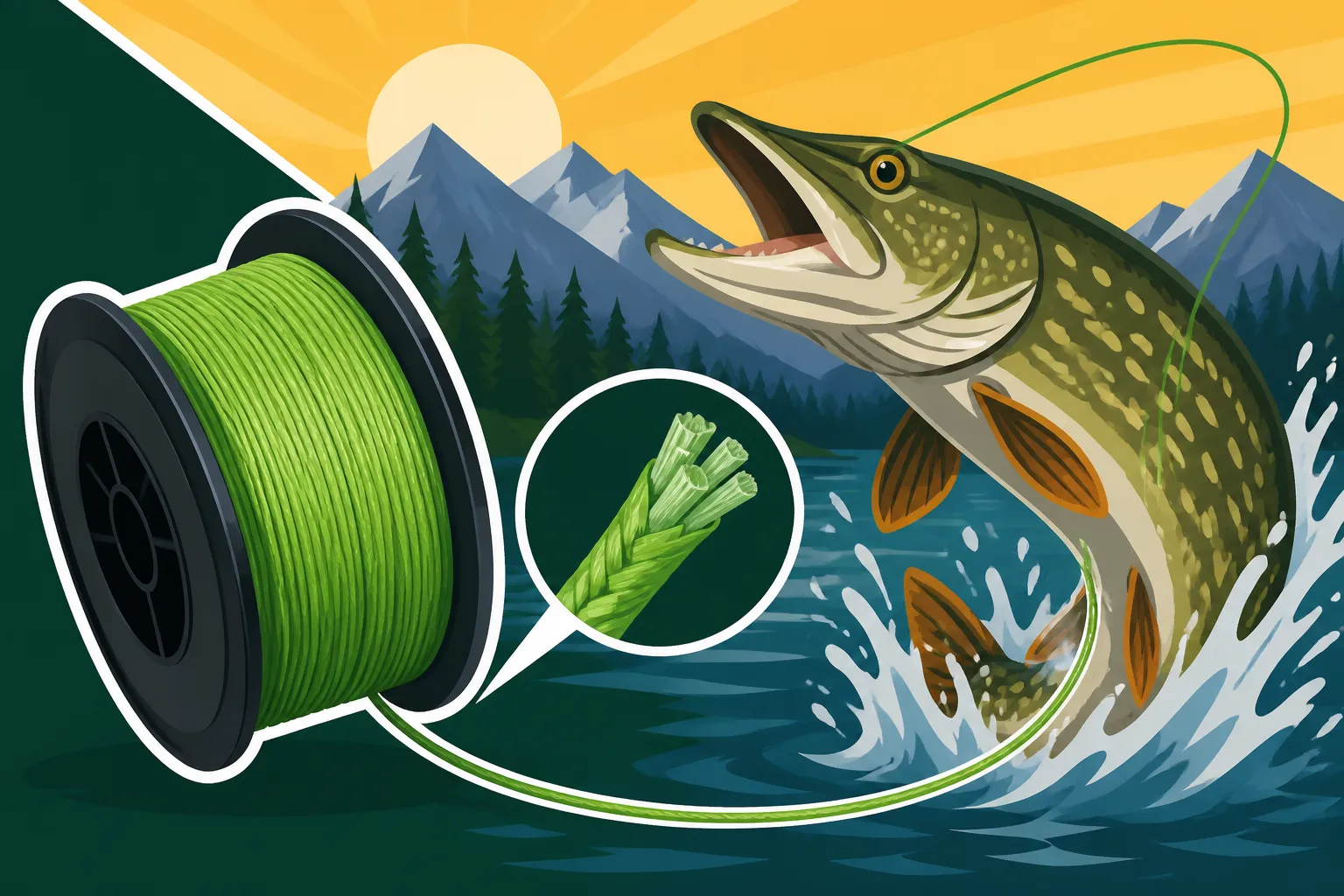
When you're targeting northern pike in Alberta, you're not just fishing for any ordinary catch. These are ambush predators, known for their aggressive strikes, powerful runs, and razor-sharp teeth. Your fishing line needs to be up to the challenge, and that's where braided line truly shines. Unlike monofilament or fluorocarbon, braid offers a combination of characteristics that make it almost tailor-made for battling these formidable fish.
Unmatched Strength and Sensitivity
One of the most significant benefits of braided line is its incredible strength-to-diameter ratio. This means you can use a much thinner line for a given breaking strength compared to mono or fluoro. A thinner line cuts through the water and air with less resistance, which translates directly into better casting distance and accuracy, especially with those heavier pike lures. But it's not just about brute strength; braid is also virtually stretch-free. This lack of stretch provides an unparalleled level of sensitivity. Every subtle twitch, every light tap, and certainly every powerful strike from a pike is transmitted directly to your rod tip, giving you instant feedback. Imagine jigging a weed line in Lesser Slave Lake for walleye (and often encountering pike!) – that instant feel can be the difference between setting the hook and missing a bite entirely. This sensitivity is a game-changer when pike are hitting lures softly, or when you're trying to feel your bait working correctly through thick vegetation.
Another point often overlooked is how much more efficiently you can retrieve a hooked fish with braid. When a pike dives into a thick weed bed or tries to wrap your line around submerged timber, the low stretch allows you to apply constant, direct pressure, often pulling them out of cover where a stretchier line might just let them dig in further. This control is vital when you're trying to prevent a trophy pike from breaking you off.
Superior Casting Distance and Durability
The smooth, consistent diameter of braided line, combined with its slick surface, allows it to fly off the spool with minimal friction. This means you can cast further and more accurately, covering more water and reaching those distant weed beds or submerged structures where pike love to ambush prey. Whether you're casting large spoons, spinnerbaits, or oversized swimbaits, braid helps propel them to their target with ease. This extended casting range is especially beneficial on larger bodies of water, like Lac La Biche or Pigeon Lake, where pike might be spread out or holding in areas tough to reach from shore or a short cast.
Beyond casting, braided line is incredibly durable. It resists abrasion much better than monofilament, which is a huge advantage when fishing around rocky shorelines, submerged logs, or dense weed beds – common pike habitats in Alberta. While it's not entirely impervious, it holds up significantly better to nicks and scrapes. Furthermore, braid doesn't degrade from UV light exposure like monofilament does over time. This means your line will maintain its strength and performance season after season, provided you take good care of it. Think of the cost savings over time; while the initial investment might be a bit higher than mono, the longevity of braided line often makes it more economical in the long run.
Key Considerations for Choosing Your Pike Braid
Stepping into the world of braided line can feel a bit overwhelming with all the options available. Not all braids are created equal, and choosing the right one for pike fishing in Alberta involves looking at a few crucial factors. Getting these details right will dramatically improve your fishing experience and your success rate.
Breaking Strength and Line Diameter
When it comes to pike, you want a braided line with a robust breaking strength. For general pike fishing in Alberta, a good starting point is usually between 30 to 50 lb test. This range offers plenty of power to handle average-sized pike, provide excellent hook sets, and give you the leverage needed to pull them out of cover. If you're specifically targeting truly massive trophy pike, or fishing extremely heavy cover, you might even consider bumping up to 65 lb test. Remember, a 50 lb braid is often the same diameter as 12-15 lb monofilament, so you're still getting a relatively thin line for its strength.
Here's a quick look at typical applications:
| Breaking Strength | Typical Target Fish/Conditions | Advantages | Disadvantages |
|---|---|---|---|
| 20-30 lb | Smaller pike, clear water, light lures, less dense cover | Thinner, quieter, excellent casting with lighter lures | Less abrasion resistance, less pulling power |
| 40-50 lb | General pike fishing, medium to large pike, varied cover | Versatile, strong, good casting, solid hooksets | Can be a bit visible in very clear water |
| 65 lb+ | Trophy pike, heavy cover (lily pads, dense weeds), large lures | Maximum power, extreme abrasion resistance | Thicker, can be noisy, casts shorter with lighter lures |
Why not go even heavier? While tempting, excessively heavy braid can be overkill. It's thicker, which can impact casting distance with smaller lures, and it might be more visible in clear water, potentially spooking wary pike. Furthermore, your rod, reel, and knots need to be able to handle the line's breaking strength. If your rod is only rated for 20 lb test, putting 65 lb braid on it might lead to equipment failure before the line breaks. Always match your line to your rod and reel setup. Many excellent braids designed for heavy-duty fishing are readily available at stores like Bass Pro Shops or online through Amazon, so you'll have plenty of options to choose from.
Line Color and Coating
The color of your braided line is a surprisingly important factor, though anglers often debate its true impact. High-visibility colors like bright yellow or neon green are fantastic for detecting subtle line movement, especially when watching for strikes, or when guiding your lure in murky water. They make it easier to see where your line is in relation to snags or other anglers, which can be very helpful when casting to specific targets. However, some believe that high-vis lines can spook fish in clear water, particularly larger, more wary pike.
Low-visibility colors like dark green, moss green, or brown are popular for blending into the water, especially in clear lakes and rivers like the Bow River. They are often preferred when fishing without a fluorocarbon leader, though that's generally not recommended for pike due to their sharp teeth. A common compromise is to use high-visibility main line for its advantages in line watching, and then tie on a fluorocarbon or wire leader for stealth and bite protection. This gives you the best of both worlds.
Many braided lines also come with various coatings. These coatings can improve casting distance by making the line even smoother, increase abrasion resistance, and help prevent water absorption, which can lead to a "soggy" line feeling. Some coatings even reduce line noise as it runs through the rod guides. While coated lines might feel a bit stiffer initially, they often break in nicely and offer enhanced durability. Be mindful that some coatings can wear off over time, especially with heavy use, potentially changing the line's properties.
Leader Systems: Connecting Braid to Pike Leaders
Using braided line for pike fishing almost always necessitates a leader. While braid is incredibly strong and sensitive, its one major weakness when dealing with toothy critters like pike is its susceptibility to being cut by sharp teeth. A direct bite-off on straight braid is a common, heartbreaking occurrence. This is why a proper leader system is absolutely critical.
Why Use a Leader with Braided Line?
The primary reason for using a leader with braided line for pike is bite protection. Pike possess rows of needle-sharp teeth that can sever braided line with alarming ease. A monofilament, fluorocarbon, or wire leader acts as a sacrificial barrier, protecting your main line from being cut. Fluorocarbon leaders, in particular, are popular because they are nearly invisible underwater, helping to trick wary pike into biting. They also offer a good balance of abrasion resistance and stealth. However, even heavy fluorocarbon can be compromised by a particularly aggressive bite or if the leader gets into the "gape" of the pike's mouth.
For maximum bite protection, especially when targeting larger pike or using larger, more expensive lures, many anglers opt for a wire leader. These leaders are designed specifically to withstand the sharpest teeth and virtually eliminate bite-offs. Wire leaders come in various forms, from single-strand steel to multi-strand titanium or stainless steel, some with a nylon coating. The downside to wire leaders is that they can be more visible than fluorocarbon and may affect the action of some lures. However, the peace of mind they offer against bite-offs is often worth it. You can find a wide array of pre-made wire leaders or bulk wire at any reputable tackle shop or online. This choice of leader material is a key part of your overall Best Leader for Pike Fishing strategy.
Another advantage of using a leader, especially a fluorocarbon one, is that it provides a bit of stretch at the business end of your setup. While braid's no-stretch quality is great for sensitivity and hook sets, a little give in the leader can act as a shock absorber during violent head shakes, preventing hooks from tearing out or applying too much sudden pressure on the fish's mouth. This is particularly important with treble hooks, which can create larger holes in the fish's mouth if not handled carefully.
Essential Knots for Braid-to-Leader Connections
Tying braided line to a leader requires specific knots that can handle the slick, thin nature of braid and its high breaking strength. Not all knots are created equal, and using the wrong one can drastically reduce your line's breaking strength, leading to frustrating break-offs. Here are a couple of go-to knots for this critical connection:
-
FG Knot: Widely regarded as one of the strongest and most streamlined braid-to-leader knots, the FG knot passes smoothly through rod guides, allowing for excellent casting distance. It's a bit more complex to tie, especially initially, but with practice, it becomes second nature. This knot is excellent because it creates a near 100% strength connection, meaning your knot will hold almost as strong as the line itself. If you're using 40 lb braid to a 30 lb fluorocarbon leader, the connection will hold up to the 30 lb leader's breaking strength, assuming the knot is tied correctly.
-
Alberto Knot (Modified Albright Knot): This is another very popular and strong knot for connecting braid to a mono or fluorocarbon leader. It's easier to tie than the FG knot and still provides excellent strength, typically retaining about 80-90% of the line's breaking strength. It's a great option for those who find the FG knot too fiddly, especially out on the water in less than ideal conditions. For many pike applications, where leaders might be changed more frequently, the Alberto knot is a reliable choice.
-
Double Uni Knot: While not as strong or streamlined as the FG or Alberto, the Double Uni knot is very easy to tie and still provides a decent connection. It's often a good choice for beginners or when you need a quick connection on the fly. However, it creates a slightly bulkier knot, which can sometimes "catch" on rod guides during casting.
No matter which knot you choose, proper technique is crucial. Always moisten the line before cinching down the knot to prevent friction heat buildup, which can weaken the line. Cinch it down slowly and firmly. Practicing these knots at home before your fishing trip will save you a lot of headache on the water. Many anglers recommend using 18-24 inches of leader material; this provides ample bite protection and some room for re-tying if you nick the leader or need to change lures. When targeting pike, it is also important to consider your entire setup, from your Best Baitcasting Reels for Pike Fishing to your chosen line and leader.
Maximizing the Life of Your Braided Line
Investing in high-quality braided line for your Alberta pike adventures means you want it to last. Proper care, from the moment you spool it onto your reel to post-fishing maintenance, can significantly extend its lifespan and keep it performing at its best. Neglecting these steps can lead to premature wear, reduced performance, and ultimately, lost fish.
Proper Spooling and Initial Setup
The first step to a long-lasting braided line is proper spooling. Braided line does not have memory like monofilament, so it doesn't need to be stretched onto the spool under high tension. However, it does need to be spooled tightly and evenly. Loose line on the spool can lead to "digging in," where the line buries itself into the layers below, causing frustrating backlashes or snags during casting.
Here's how to do it right:
- Use a backing line: Since braided line is expensive and doesn't stretch, you don't need to fill your entire spool with it. Spooling 50-75 yards of monofilament (e.g., 8-10 lb test) as a backing first will prevent the braid from slipping on the bare spool and save you money. Tie the mono backing to the braid using a strong knot like an Albright or a Double Uni.
- Apply consistent tension: When spooling the braid, apply consistent, moderate tension. You can do this by having someone hold the spool with a pen through the center, or by using a line winder. Keep the line coming off the filler spool in a way that minimizes line twist.
- Don't overfill: Leave a small gap (about 1/8 inch) between the line and the lip of the spool. Overfilling can cause tangles and wind knots, especially with braided line.
Once spooled, remember that braid has no stretch. Ensure your drag is set correctly. A properly set drag will allow line to be pulled off the reel before the rod breaks or the line snaps, especially important when battling a hard-fighting pike. Without the inherent stretch of mono, your reel's drag system is your primary shock absorber. Check your drag before every outing, especially if you're fishing for How to Catch Northern Pike in Alberta with heavier gear.
Post-Fishing Care and Inspection
After a day of fishing, especially in the often murky or sandy waters some Alberta lakes and rivers present, your braided line needs a little TLC. Salt, dirt, algae, and even fish slime can build up on the line, potentially weakening it or affecting its casting performance.
- Rinse your line: A simple rinse with fresh water after each trip is crucial. You don't need fancy cleaning solutions; just run your reel under a gentle stream of tap water while slowly reeling in the line. This helps remove grime and can prevent abrasive particles from working their way into the line fibers.
- Periodically strip line: Over time, the first 20-30 feet of your line, which sees the most action (casting, abrasion, knot tying), will wear out faster. Periodically (e.g., every few months of regular use), you can strip off this worn section and re-tie your leader. If you have plenty of line on your spool, you can even reverse the line on your reel halfway through its life, giving you a fresh, unused section to fish with.
- Inspect for fraying: Before each fishing trip, visually inspect the first 10-20 feet of your braided line. Look for any signs of fraying, nicks, or discoloration. If you see any damage, it's always best to cut off the compromised section and re-tie your leader. A small amount of frayed line can be a major weak point. This quick inspection is critical for ensuring your line can withstand the power of Northern Pike Fishing in Alberta and the challenging environments they inhabit.
- Store properly: When not in use, store your rods and reels in a cool, dry place away from direct sunlight. While UV light doesn't degrade braid as much as mono, keeping it out of the elements will still contribute to its longevity.
By following these simple steps, you'll ensure your braided line remains in top condition, giving you the confidence that when that trophy pike hits, your gear is ready to bring it to the net. Remember, your line is your direct connection to the fish, and maintaining it is just as important as choosing the right Best Lures for Northern Pike in Alberta or the perfect Best Pike Gear for Alberta Lakes.
Disclaimer
This article is for general informational purposes only and does not constitute professional advice. Laws, prices and regulations vary by location and change over time. Consult a qualified professional for guidance on your specific situation.