Best Fly Rods for the Bow River
There's nothing quite like the feeling of standing on the banks of the Bow River, fly rod in hand, ready to cast into its legendary waters. But for many, especially those new to this incredible fishery, the sheer number of fly rod options can feel utterly overwhelming. You're not just buying a stick; you're investing in your success and enjoyment on a river known for its hefty trout and challenging conditions. This guide is here to cut through the confusion and help you select the absolute best fly rod to conquer the currents and catch the magnificent fish of the Bow.
Understanding the Bow River's Unique Demands
Let's be real: the Bow River isn't your average trout stream. It's a powerhouse, a world-class fishery that demands respect and the right tools. Its broad, often swift currents, combined with the size of its fish and the need for accurate, sometimes long casts, mean you can't just grab any old fly rod and expect optimal performance. This river asks for a specific kind of angling approach, and your rod needs to be up to the task.
The Bow's Renowned Trout
When we talk about fishing the Bow, we're talking about genuinely impressive trout. The river is famous for its abundant population of wild rainbow trout and brown trout, many of which are well into the 18 to 24-inch range, with plenty of opportunities for even larger specimens. These aren't small, skittish creek trout that you can easily subdue with a light rod. A 22-inch Bow River rainbow, fresh from the cold, oxygen-rich water, will put a serious bend in your rod and test your knots.
Consider the force these fish can exert. When a powerful rainbow decides to peel line off your reel and bolt downstream in the heavy current, a flimsy rod will leave you feeling undergunned and potentially losing the fish of a lifetime. The rod needs enough backbone to turn a strong fish, to maintain pressure, and to protect delicate tippets from sudden surges. You need to be able to fight the fish effectively without exhausting it to the point of no return, especially if you're practicing catch and release. This isn't just about landing the fish; it's about doing it quickly and cleanly for its survival.
Current and Structure
The Bow River is a complex beast, with varying currents, riffles, deep runs, and intricate subsurface structure. Whether you're wading or drifting from a boat, your fly rod's ability to handle these conditions is paramount. If you're wading, you might find yourself needing to make long casts to reach promising seams or to present your fly effectively in a broad channel. The wind, which is often a factor on the prairies, can also make accurate casting a real challenge.
From a drift boat, you might be making shorter, more precise casts to structure along the banks, but you'll still need the power to mend your line over complex currents and ensure a drag-free drift. Strong currents can put immense pressure on your line and rod, especially when nymphing with multiple flies and heavy indicators. A rod with good line speed and a responsive tip will help you manage these forces, maintain control over your fly, and set the hook with authority. It’s a dance between power and finesse, and your rod is your primary partner. For more insights on how to navigate this incredible waterway, check out our Bow River Fishing Guide.
Key Fly Rod Characteristics for the Bow River
Choosing the right fly rod is a bit like choosing the right tool for a specific job. You wouldn't use a hammer to drive a screw, and you wouldn't use a delicate creek rod on the Bow River. Several key characteristics define a fly rod, and understanding them is crucial to making an informed decision for this unique fishery.
Rod Weight
The "weight" of a fly rod refers to the numerical rating that corresponds to the weight of the fly line it's designed to cast. For the Bow River, versatility is key, but you also need enough power. A 5-weight rod is often considered the all-around workhorse for many trout fisheries, and while it can work on the Bow, it might feel a little light when battling a 24-inch rainbow in a strong current or trying to cast large, weighted streamers.
Many experienced Bow River anglers lean towards a 6-weight or even a 7-weight rod.
- 5-weight: A good choice for lighter dry fly presentations and smaller nymph rigs, especially on calmer days or in less powerful sections of the river. It offers a delicate touch, but you might find yourself underpowered when hooking into a true Bow River hog or trying to cast into a stiff headwind.
- 6-weight: This is arguably the sweet spot for the Bow River. A 6-weight offers a fantastic balance of power and finesse. It's capable of casting larger dry-dropper rigs, indicator nymphing setups, and even moderate streamers. More importantly, it has the backbone to handle those powerful Bow River trout, allowing you to land them efficiently and safely.
- 7-weight: If your primary focus is throwing big streamers, heavy indicator rigs, or fishing during windy conditions, a 7-weight is an excellent choice. It provides extra casting power and even more fighting muscle, which can be a real advantage when targeting the largest brown trout or trying to punch a heavy fly through a gust. However, it might feel a bit overkill for delicate dry fly presentations on a calm evening.
Most anglers find that a 6-weight is their go-to for all-around Bow River action, providing the flexibility to adapt to changing conditions and techniques.
Rod Length
While 9-foot rods are standard for most trout fishing, the unique challenges of the Bow River can make slightly longer rods a compelling option.
- 9-foot: This is the traditional standard and a perfectly capable length for the Bow. It offers a good balance of casting distance, accuracy, and line control. It's manageable for both wading and boat fishing and is a solid choice if you're looking for one versatile rod.
- 9.5-foot or 10-foot: These longer rods offer distinct advantages on the Bow, especially for nymphing and mending. The extra length allows for superior line control, making it easier to mend your line over complex currents and achieve longer, drag-free drifts, which is critical for effective nymph fishing. When you're trying to keep multiple flies tumbling naturally in a strong current, that extra foot can make all the difference. For boat anglers, it can also aid in reaching distant seams without having to move the boat as much. For those who want to really dial in their nymphing game, considering a slightly longer rod, particularly a 10-foot 6-weight, could significantly improve your success rate. This also ties into techniques like Euro Nymphing the Bow River, where longer rods are standard.
Rod Action
A rod's "action" describes how much and where the rod bends when casting. This is a highly personal preference, but for the Bow River, certain actions tend to perform better.
- Fast Action: These rods bend primarily in the tip section, offering excellent power and line speed. They excel at cutting through wind, making long casts, and turning over heavy rigs or large flies. For battling big fish in strong currents, a fast action rod provides the leverage and control you need. Most Bow River anglers prefer fast to medium-fast action rods because they deliver the power required to handle big fish and challenging conditions.
- Medium-Fast Action: These rods bend further down the blank, into the middle section. They offer a good compromise between power and feel. They are often more forgiving to cast than fast action rods, making them a good choice for anglers who prefer a bit more feedback and feel in their casting stroke, while still having enough backbone for the Bow.
- Medium Action (or Moderate): These rods bend even deeper, into the butt section, providing a softer, more traditional feel. While excellent for delicate presentations on smaller streams, they often lack the power and line speed needed for the typical Bow River conditions and larger flies.
For the Bow River, a fast or medium-fast action rod is generally recommended. It provides the necessary power for casting heavy rigs and fighting strong fish, while still allowing for accurate presentations.
Choosing the Right Rod for Your Bow River Style
The beauty of the Bow River is its diversity, both in fishing conditions and in the techniques anglers use. Your personal fishing style will heavily influence the "best" fly rod for you. Are you a dedicated dry fly enthusiast, a methodical nympher, or do you prefer to hunt for the biggest fish with streamers? Understanding your preferred approach will narrow down your choices considerably.
Dry Fly and Nymphing Versatility
Many anglers on the Bow River will find themselves doing a bit of everything, often switching between dry flies and nymph rigs depending on the hatch or the time of day. For this all-around versatility, you want a rod that can handle both delicate presentations and robust nymphing setups.
A 9-foot 6-weight fast to medium-fast action rod is arguably the most versatile option for the Bow River. It possesses enough finesse to gently lay down a dry fly during a mayfly hatch, but also has the backbone to cast a heavy indicator rig with two weighted nymphs. The 6-weight has the power to manage line in the strong currents when nymphing and can turn over larger dry flies like hoppers or Chernobyl ants with ease. When a big rainbow takes your nymph, this rod provides the leverage you need to fight it confidently. If you're looking to minimize your gear and have one rod that does almost everything well on the Bow, this is your sweet spot. Brands like Orvis, Sage, and Redington offer excellent rods in this category, often available at local fly shops or through online retailers like Amazon. For more on targeting specific species, check out Rainbow Trout Fishing on the Bow River and Brown Trout Fishing in Alberta.
Streamer Fishing and Heavy Nymph Rigs
If your passion lies in targeting the biggest brown trout that lurk in the Bow's deep pockets and undercuts, or if you're consistently throwing elaborate multi-fly nymph rigs with heavy split shot, you might need to step up your game. These techniques require more power and a rod capable of handling heavier loads.
For dedicated streamer fishing or heavy nymphing, a 9-foot or 9.5-foot 7-weight fast action rod becomes the hero. The extra rod weight and fast action give you the horsepower to cast large, wind-resistant streamers (think big articulated patterns or heavy Clouser Minnows) across the river and get them down to where the big fish hide. The added length can also improve line control and mending for truly complex nymphing scenarios. When a trophy brown slams a streamer, the 7-weight provides superior lifting power and control, helping you subdue the fish faster and protect your gear. This setup is less about delicate presentation and more about pure power and efficiency. If you find yourself frequently using these heavier tactics, don't be afraid to invest in a rod that can truly handle the load. Many top brands cater to this power-oriented fishing, and you can often find great deals on these workhorse rods at retailers like Bass Pro Shops.
Budget-Friendly vs. Premium Options
Fly fishing can be an expensive hobby, and fly rods range from incredibly affordable to eye-wateringly pricey. It's natural to wonder if you need to break the bank to get a good rod for the Bow River.
- Budget-Friendly (Under $300-400): You absolutely do not need to spend a fortune to get a capable Bow River rod. Many brands offer fantastic entry-level and mid-range rods that perform exceptionally well. These rods often use slightly heavier materials or simpler construction, but they are built to last and can certainly handle the demands of the Bow. Brands like Redington, Fenwick, and Echo provide excellent value. A budget-friendly rod is perfect for someone starting out, or for an angler who doesn't hit the river every weekend but still wants a reliable tool. The key is to look for good reviews and consistent performance. You can often find great deals on these rods at Bass Pro Shops or online through Amazon.
- Mid-Range ($400-$700): This price point often offers a significant jump in performance and technology. You'll find lighter blanks, more refined actions, and higher quality components. Rods in this category often represent the best "bang for your buck" for many experienced anglers. They offer a noticeable improvement in casting feel, line speed, and overall responsiveness without reaching the top-tier prices. Think Sage Foundation, Orvis Recon, or Scott Centric Lite.
- Premium ($700+): At the top end, you're paying for cutting-edge materials, advanced tapers, meticulous craftsmanship, and often lighter swing weight. These rods are incredibly sensitive, powerful, and a joy to cast all day long. They can offer subtle advantages in feel and performance that dedicated anglers truly appreciate. Examples include the Sage R8 CORE, Orvis Helios, or Winston Air. While not strictly necessary for catching fish on the Bow, a premium rod can enhance the overall experience, especially for those who spend a lot of time on the water.
Ultimately, the best rod is the one that feels good in your hand and fits your budget. Don't let marketing hype convince you that you need the most expensive rod to enjoy the Bow. Start with what you can afford, and upgrade as your skills and passion grow.
Beyond the Rod: Essential Considerations
Your fly rod is the star of the show, but it's part of a larger system. To truly maximize your success and enjoyment on the Bow River, you need to consider how your rod interacts with other critical pieces of gear. A perfectly matched outfit performs much better than mismatched components.
Reel and Line Pairing
A good fly rod is only as good as the reel and line you pair with it. Balance is paramount.
- Reel: Your reel for the Bow River needs to be more than just a line holder. While most trout don't "run" like saltwater species, those Bow River rainbows and browns can certainly make strong, sustained runs, especially in the heavy current. You need a reel with a smooth, reliable drag system that can withstand the pressure of a powerful fish. A mid-arbor or large-arbor reel is generally preferred as it retrieves line faster and reduces line memory. Ensure the reel is properly weighted to balance your chosen rod. A perfectly balanced setup reduces fatigue and improves casting efficiency. For example, a 6-weight rod typically pairs with a 5/6 or 6/7 weight reel.
- Line: The fly line is the engine of your fly cast, and choosing the right one is critical. For the Bow River, a weight-forward floating line (WF) is the most versatile choice for dry flies and indicator nymphing. Look for lines with a good taper for casting distance and turnover, especially if you're throwing larger flies or multiple nymphs. You might also consider a specialized nymphing line if that's your primary technique, or a sinking tip line if you plan on doing a lot of streamer fishing. Matching your line weight exactly to your rod weight (e.g., a 6-weight line on a 6-weight rod) is usually the best starting point, though some anglers intentionally "overline" by one weight for more feel or easier casting of heavy rigs.
Leader and Tippet Specifics
The leader and tippet are the invisible link between your fly line and your fly, and they are where the rubber meets the road when fighting a fish.
- Leader: For the Bow River, a knotless tapered leader of 9 to 12 feet is a good starting point. The length helps to keep the fly line further from the fish, which can be critical in the clear waters of the Bow. For dry fly fishing, a standard tapered leader will work. For nymphing, you might opt for a thicker butt section for better turnover of heavy rigs, or even a specialized indicator leader.
- Tippet: This is arguably the most crucial component for actual fishing success. The Bow River's large, powerful trout demand strong tippet, but the clear water often requires thinner diameters to avoid spooking fish. Fluorocarbon tippet is extremely popular on the Bow because it's nearly invisible underwater, sinks, and is highly abrasion-resistant—a huge advantage when fishing around rocky bottoms or battling fish that like to rub against structure. Most anglers will carry a range of tippet sizes from 3X to 5X, with 4X being a versatile go-to. For trophy fish or heavy streamers, you might go as thick as 2X. Conversely, for very small dry flies on super clear water, 5X or even 6X might be necessary. For more details on what works for spooky fish, check out Best Tippet Size for Spooky Bow River Trout.
Accessories That Make a Difference
Beyond the core components, a few key accessories can significantly enhance your Bow River fly fishing experience and protect your rod.
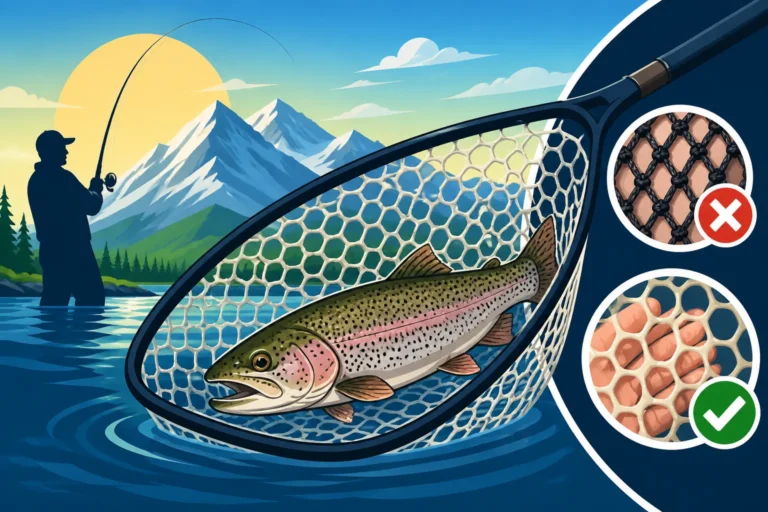
- Landing Net: A good quality, rubberized landing net is essential. It's not just about landing the fish; it's about protecting them. Rubber mesh is much gentler on fish scales and slime coats, reducing harm during release. A net with a long handle is invaluable for reaching fish from a drift boat or when wading in deeper water. Look for one that's large enough to accommodate a 24-inch trout comfortably. We have a whole guide dedicated to choosing the Best Landing Net for Trout.
- Rod Case: A sturdy rod case is a non-negotiable item, especially if you're travelling to the Bow or transporting your rod frequently. Hard cases protect your rod from accidental damage during transport, whether in a car, on a plane, or just bouncing around in the back of your truck. This is an investment in your rod's longevity.
- Gear Bag/Pack: A comfortable and functional gear bag or pack allows you to carry extra spools of tippet, fly boxes, leaders, tools, and other essentials, keeping them organized and easily accessible on the water. Whether it's a sling pack, chest pack, or backpack, choose one that suits your style of fishing (wading vs. boat) and ensures you have everything you need.
Taking Care of Your Bow River Rod
Your fly rod is an investment, a trusted companion on countless adventures. Like any fine piece of equipment, it performs best and lasts longest when properly cared for. The Bow River can be tough on gear, from grit and grime to bumps and scrapes, so a little preventative maintenance goes a long way.
Cleaning and Storage
It's easy to just toss your rod back in its tube after a long day of fishing, but taking a few extra minutes for proper cleaning and storage will extend its life and performance significantly.
- Cleaning: After each outing, especially if your rod gets wet or muddy, take a soft, damp cloth and gently wipe down the blank and guides. Pay extra attention to the ferrules (where rod sections connect), as grit here can cause wear and tear, leading to loose connections or even breakage. Use a cotton swab to clean inside the female ferrules. If you've been saltwater fishing (not common on the Bow, but good practice), always rinse thoroughly with fresh water. Avoid harsh chemicals, as they can damage the rod's finish.
- Storage: Always store your rod in its cloth sock and then in a hard rod tube. This protects it from dust, impacts, and direct sunlight, which can degrade the epoxy and blank over time. Store the rod in a cool, dry place, ideally un-assembled if you have the space, to relieve any stress on the ferrules. Never store it assembled and leaned against a wall, as this can put uneven pressure on the blank and cause warpage over time.
Transporting Your Rod Safely
Getting your rod to and from the Bow River can be just as hazardous as fishing it. Accidents happen, and a broken rod tip or cracked ferrule is a heartbreaking way to end a trip.
- In a Vehicle: Always transport your rod in a hard case. Avoid leaving it loose in the back of a truck where it can slide around or get crushed by other gear. If you use a roof-mounted rod carrier, ensure it's securely latched and that the rod sections are properly seated within the carrier to prevent rattling and damage. When traveling with multiple rods, ensure they don't rub against each other within their cases.
- During Travel: If you're flying to fish the Bow (perhaps as a non-resident), always pack your rod in a sturdy, lockable hard case and check it as luggage. Never risk putting a valuable rod in soft luggage. For added peace of mind, consider a dedicated travel rod designed to break down into shorter sections for easier packing. When buying a rod case, look for ones with good padding and secure closures. Even a short drive on a bumpy gravel road can put stress on an unprotected rod. Consider your rod an investment, and transport it accordingly.
By understanding the Bow River's unique challenges, matching your rod to your preferred fishing style, and taking good care of your gear, you'll be well on your way to countless memorable days on this incredible fishery. Whether you snag a great deal at a place like Bass Pro Shops or find the perfect model browsing on Amazon, the right fly rod will truly elevate your experience.
Disclaimer
This article is for general informational purposes only and does not constitute professional advice. Laws, prices and regulations vary by location and change over time. Consult a qualified professional for guidance on your specific situation.