Best Tackle for Alberta Walleye
Alright fellow anglers, let's talk walleye! There's nothing quite like the thrill of feeling that distinct "thump" on your line, knowing it's a hungry walleye on the other end. But if you've spent frustrating hours on the water, watching others pull in fish while your livewell stays empty, you know the struggle is real. Often, the difference between a good day and a great day isn't just luck or location, but having the right tackle. This comprehensive guide is going to walk you through everything you need to rig up properly for Alberta's fantastic walleye fisheries, ensuring you're prepared for whatever these finicky eaters throw your way.
Understanding Walleye Habits and Their Impact on Tackle
Before we even dive into specific gear, it’s crucial to understand a bit about walleye themselves. These fish are predators, but they can be surprisingly subtle biters, especially in clear water or during cold fronts. They often hug structure, whether it’s a rocky drop-off, a weed line, or a submerged hump. Their vision is excellent in low light, making dawn, dusk, and even night prime feeding times. This means your tackle choices need to accommodate their feeding behaviors, preferred habitats, and even the time of day you're fishing.
Walleye's Preferred Habitats and Feeding Zones
Walleye are masters of their environment, adapting their behavior based on the season, water temperature, and available forage. In spring, after the ice melts, they often move to shallower areas like rocky points, current breaks, and river mouths to spawn. During this time, they might be less active biters but are still catchable if you present your bait slowly and precisely. As summer progresses, they tend to move deeper to cooler, oxygen-rich waters, often relating to distinct structures such as humps, ledges, or deep weed edges. Come fall, they move shallower again, feeding aggressively in preparation for winter, often found on flats adjacent to deep water. Understanding these movements is key to choosing not just what lure to use, but also how to fish it, which directly impacts your rod, reel, and line choices.
For example, fishing shallow weed lines might call for a lighter jig or a shallow-diving crankbait, requiring a rod with enough sensitivity to feel subtle bites but also backbone to pull fish out of cover. Conversely, targeting deep humps in summer might mean heavier jigs or larger crankbaits, necessitating a more powerful rod and a reel with a good retrieve ratio. The transparency of the water also plays a huge role; clear lakes might demand lighter lines and more natural presentations, while stained or murky waters allow for heavier gear and more aggressive lure colors.
The Subtle Bite and Why Sensitivity Matters
One of the most challenging, yet rewarding, aspects of walleye fishing is deciphering their bite. Unlike aggressive pike or feisty trout, a walleye often "inhales" a bait or jig with a barely perceptible "thump," or sometimes it's just a feeling of added weight or slack in your line. It's not always the rod-bending strike you might expect. This is precisely why sensitivity in your rod, reel, and even your fishing line is paramount.
A highly sensitive graphite rod can transmit these subtle vibrations directly to your hand, allowing you to detect a bite that a less sensitive rod might miss entirely. This is crucial when jigging soft plastics or live bait, where the lure might be several feet below the boat. The difference between feeling that slight tick and not feeling it could mean the difference between landing a trophy walleye and missing it completely. Similarly, using a low-stretch line like braid can dramatically improve bite detection compared to traditional monofilament, as it transfers every little movement from the lure straight to your rod tip. When you’re trying to tempt a wary walleye in clear, cold water, every bit of sensitivity helps to turn those almost-bites into landed fish.
Rods and Reels for Walleye Angling
Choosing the right rod and reel combination is foundational to successful walleye fishing. The goal is to have a setup that provides sensitivity for those light bites, enough power to set the hook firmly, and the ability to handle larger fish. You'll likely want different setups for different techniques, but a versatile all-around combo is a great starting point.
Spinning Rod and Reel Combos: The Versatile Choice
For most walleye situations in Alberta, a spinning rod and reel combo is going to be your most versatile and user-friendly option. This is especially true if you're a beginner or enjoy a wide range of techniques like jigging, slip-bobber fishing, or throwing lighter crankbaits.
Rods: Look for a medium-light to medium power rod, typically 6'6" to 7'6" in length, with a fast or extra-fast action.
- Power: Medium-light offers excellent sensitivity for light jigs and finesse presentations, while medium power gives you a bit more backbone for slightly heavier lures and fighting bigger fish, especially in current or near cover.
- Length: A 6'6" rod is great for jigging directly below the boat or in tight quarters, offering precise control. A 7' to 7'6" rod excels at casting longer distances, trolling, or using slip bobbers, as the extra length helps with line pickup and cushioning runs.
- Action: A fast or extra-fast action means the rod bends mostly in the tip section. This is crucial for walleye as it provides superior sensitivity to detect those subtle bites and allows for quick, powerful hook sets. The stiffer mid-section still gives you the power to fight and land fish effectively. Graphite rods are generally preferred for their light weight and sensitivity.
Reels: Pair your spinning rod with a 2000 or 2500 series spinning reel.
- Size: This size range offers a good balance of line capacity, retrieve speed, and drag smoothness. A 2000 series is ideal for lighter lines and finesse techniques, while a 2500 series provides a bit more cranking power and capacity for slightly heavier lines or when you might hook into an unexpected pike.
- Features: Look for a reel with a smooth, consistent drag system, as this is vital for tiring out a fighting walleye without breaking your line. A high-quality retrieve, free from excessive wobble or grinding, also contributes to better feel and less fatigue over a long day of fishing. Many anglers find reliable spinning reels from brands like Shimano, Daiwa, or even some of the Bass Pro Shops house brands offer excellent value and performance for walleye.
Baitcasting Rod and Reel Combos: Power and Precision
While spinning gear is the go-to for many, baitcasting setups offer distinct advantages, particularly for specific walleye techniques or when targeting bigger fish. They provide increased power and control, making them a favourite for experienced anglers, especially for How to Catch Northern Pike in Alberta as well as walleye.
Rods: For walleye baitcasting, a medium to medium-heavy power rod, usually 6'6" to 7' in length, with a fast action, is a solid choice.
- Power: The increased power allows you to cast heavier lures, such as larger crankbaits, blade baits, or heavier jigging spoons, with greater efficiency. It also provides the necessary backbone to muscle walleye out of heavy current or thick weeds.
- Length & Action: Similar to spinning rods, a fast action is preferred for sensitivity and quick hook sets. The slightly shorter lengths (compared to some spinning rods) can offer more leverage for controlled presentations, especially when vertical jigging heavier baits.
- Material: Again, high-modulus graphite is preferred for its sensitivity and lightweight properties. The balance of the rod with the reel is important here to minimize fatigue during repetitive casting or jigging.
Reels: A low-profile baitcasting reel in the 100 or 150 size is usually ideal for walleye.
- Size and Gear Ratio: These reels offer a good compromise between ergonomic comfort, casting distance, and retrieve speed. Look for models with a gear ratio in the 6.3:1 to 7.1:1 range. A higher gear ratio allows for faster retrieves, which is excellent for covering water quickly with crankbaits or for burning jigs back to the boat after a missed strike. A slightly lower ratio might offer more torque for working larger, deep-diving crankbaits.
- Features: A smooth, robust drag system is just as crucial here as it is with spinning reels. An adjustable centrifugal or magnetic braking system is also vital for preventing backlashes, especially when casting into the wind or with varying lure weights. Ergonomics are key for baitcasters, so choose a reel that feels comfortable in your hand for prolonged use. Many anglers find excellent baitcasting options on platforms like Amazon, offering a wide array of choices from various manufacturers.
Line Choices: The Connection to Your Catch
Your fishing line is the critical link between you and the fish. The right line choice can significantly enhance your bite detection, casting distance, and overall success. For walleye, anglers typically gravitate towards braided line with a fluorocarbon leader, or sometimes a straight fluorocarbon or monofilament setup, depending on the conditions and technique.
Braided Main Line with Fluorocarbon Leader: The Ultimate Combo
This setup is arguably the most popular and effective line choice for serious walleye anglers, offering a powerful blend of sensitivity, strength, and stealth.
Braided Line (Main Line):
- Properties: Braid is known for its incredible strength-to-diameter ratio, meaning you can use a much thinner line than monofilament or fluorocarbon of the same breaking strength. It has virtually zero stretch, which translates into unparalleled sensitivity – you'll feel every bump, tick, and subtle bite. It also floats, which can be an advantage for topwater presentations (though not common for walleye) and it excels at cutting through weeds.
- Recommended Size: For walleye, a 10-15 lb test braided line is usually perfect. The thinner diameter helps with casting distance and allows for better penetration through the water column with jigs.
- Advantages: Superior bite detection, strong hook sets due to no stretch, excellent knot strength, and great durability. It's fantastic for How to Catch Walleye in Alberta when jigging or using reaction baits.
Fluorocarbon Leader:
- Properties: Fluorocarbon is nearly invisible underwater due to its refractive index being very close to that of water. It's also much more abrasion-resistant than monofilament, sinks faster, and has minimal stretch compared to mono.
- Recommended Size: A 6-10 lb test fluorocarbon leader, typically 2-4 feet long, is ideal. The lighter end (6-8 lb) is great for clear water and finicky fish, while the heavier end (8-10 lb) provides more abrasion resistance around rocks or zebra mussels.
- Advantages: The invisibility of fluorocarbon is key for wary walleye, especially in clear Alberta lakes. The abrasion resistance protects your main line from nicks and cuts, and the slight stretch provides a shock absorber, helping to prevent break-offs during powerful head shakes.
- Connection: Use a reliable knot like the Double Uni Knot, FG Knot, or Alberto Knot to connect your braided main line to your fluorocarbon leader. These knots maintain a good portion of the line's breaking strength and pass smoothly through rod guides.
Straight Fluorocarbon or Monofilament: When to Choose
While braid with a leader is often superior, there are specific situations where a straight fluorocarbon or even monofilament line can be advantageous.
Straight Fluorocarbon:
- When to Use: This is a fantastic choice for techniques like cranking or trolling, where you want your lure to dive deeper (fluorocarbon sinks) and you don't necessarily need the ultimate sensitivity of braid. It's also great in extremely clear water where the invisibility of the line is critical, and you prefer not to tie a leader. The low stretch still provides decent sensitivity and strong hook sets.
- Recommended Size: 8-12 lb test. This range offers a good balance of strength, castability, and invisibility.
- Advantages: Excellent abrasion resistance, sinks quickly, very low visibility, and good sensitivity. It also doesn't absorb water, maintaining its strength over time.
Monofilament:
- When to Use: Monofilament, or "mono," is still a viable option, especially for specific presentations. Its inherent stretch can be beneficial when using treble-hooked baits like crankbaits, as it acts as a shock absorber, preventing hooks from tearing out of a walleye's mouth during aggressive strikes or head shakes. It's also very affordable and easy to tie. Mono floats, making it ideal for techniques where you want your bait to stay high in the water column or when using slip bobbers.
- Recommended Size: 8-10 lb test.
- Advantages: Affordability, ease of use, excellent knot strength, and the stretch can be forgiving. It's a good choice for Trolling Techniques for Alberta Lake Trout and walleye alike when using reaction baits.
- Disadvantages: Much less sensitive than braid or fluorocarbon, higher visibility, and can suffer from line memory (coiling) over time, especially if left on the spool for extended periods.
Lures and Baits: Tempting the Walleye
This is where the fun really begins! Walleye are opportunistic feeders, and having a diverse selection of lures and baits is crucial. The key is to match your presentation to the walleye's mood, the water conditions, and their preferred forage.
Jigs: The Walleye Staple
Jigs are arguably the most versatile and effective lures for walleye, especially when paired with various soft plastics or live bait. No walleye angler's tackle box is complete without a wide assortment of jig heads and bodies.
Jig Heads:
- Weight: Walleye jigs typically range from 1/8 oz to 1 oz, with 1/4 oz to 1/2 oz being the most common for most depths and currents. Lighter jigs (1/8-3/16 oz) are great for shallow water, slow currents, or finicky bites. Heavier jigs (3/8-1 oz) are necessary for deeper water, strong currents, or windy conditions to maintain bottom contact.
- Shape: Different shapes affect fall rate and retrieve. A round head jig offers a fast, straight fall. A stand-up jig head (like an Erie jig) keeps your bait horizontal on the bottom, mimicking a feeding minnow, which is excellent for walleye in Alberta on hard bottoms. Banana-shaped heads can be good for dragging.
- Hook Size: Match the hook size to your soft plastic or live bait. Generally, a jig head with a sharp, strong hook in sizes 1/0 to 3/0 is appropriate for walleye.
- Color: Jig head color can sometimes make a difference. Plain lead, black, white, chartreuse, orange, and glow-in-the-dark are all popular. Sometimes a contrasting head color with the body can trigger strikes.
Soft Plastics:
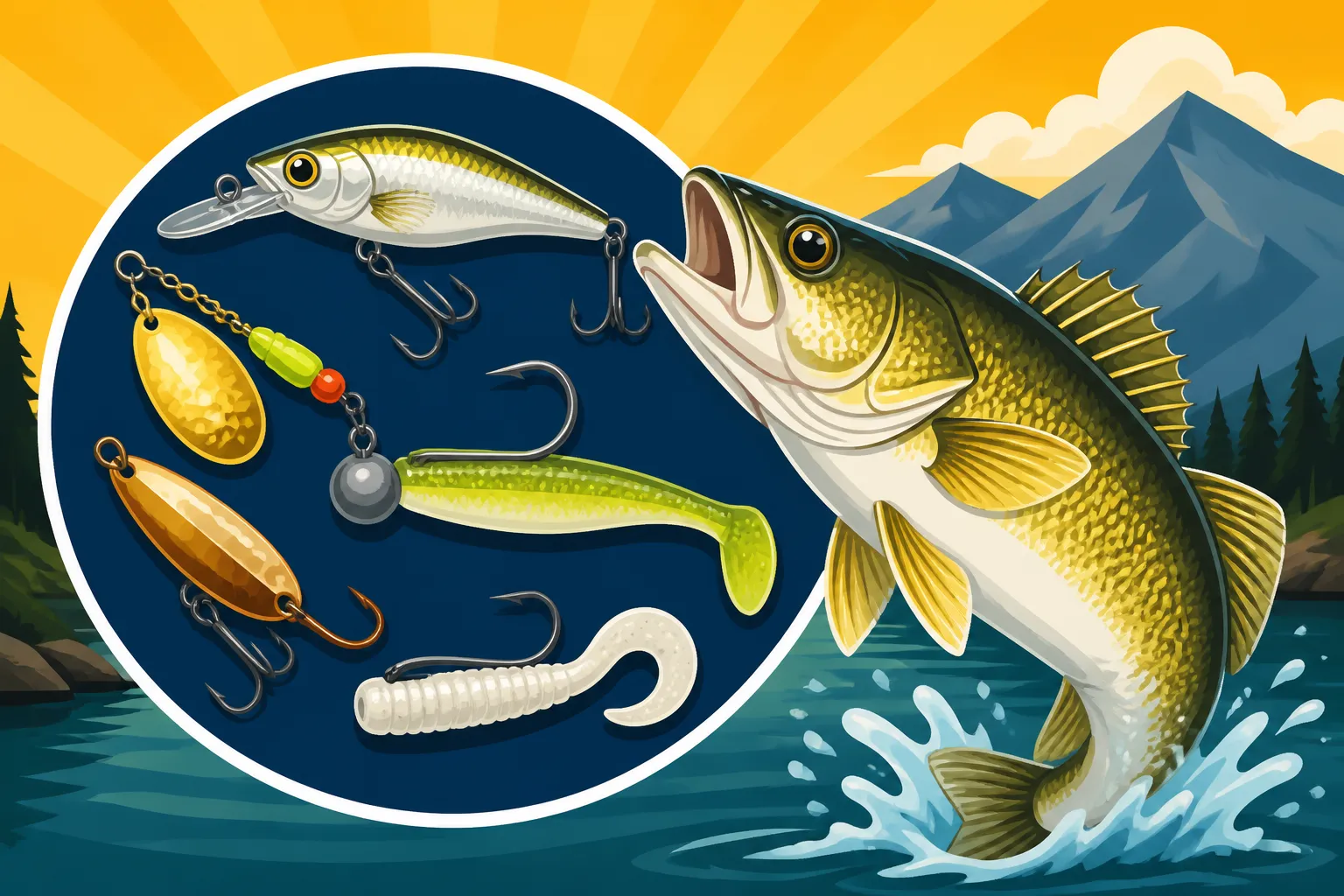
- Grubs/Paddle Tails: These are incredibly popular. A 3-4 inch grub (single or double tail) or paddle tail swimbait (like a Keitech Swing Impact or a Berkley Gulp! Minnow) on a jig head is a classic. The tail action creates vibration and attraction.
- Minnow Imitations: Soft plastic jerkbaits or fluke-style baits rigged on a jig head can perfectly mimic injured baitfish.
- Creature Baits: Sometimes, a subtle worm or creature bait can be effective when walleye are finicky.
- Color: Natural colors (perch, smelt, shiner) are great for clear water. Bright colors (chartreuse, orange, pink) excel in stained water or low light. Always have a variety! Bass Pro Shops often has a great selection of jig heads and soft plastics.
Hair Jigs:
- These are traditional and still incredibly effective. Made with deer hair, bucktail, or marabou, they offer a subtle, pulsating action that walleye find irresistible, especially in cold water or during finesse presentations.
- Colors: Black, brown, white, and chartreuse are staples.
Crankbaits: Covering Water and Triggering Bites
Crankbaits are fantastic search baits, allowing you to cover large expanses of water quickly and efficiently. They come in a vast array of shapes, sizes, and diving depths.
- Shallow-Diving (0-8 feet): These are great for casting over shallow flats, weed beds, or along shorelines, especially during spring and fall. Examples include shallow husky jerks or lipless crankbaits.
- Mid-Diving (8-15 feet): Your all-around workhorses for general casting and trolling. Many classic walleye crankbaits fall into this category, perfect for exploring drop-offs and structure.
- Deep-Diving (15+ feet): Essential for summer walleye in deeper lakes. These lures have large lips to get down quickly and stay in the strike zone longer. Often used for trolling. For targeting deeper walleye, consider models like the Berkley Flicker Shad or Rapala DownDeep Husky Jerk.
- Lipless Crankbaits: These vibrate intensely and sink, making them excellent for ripping through weeds or covering large flats. They can be very effective for triggering reaction strikes.
- Color: Again, natural patterns (perch, shiner, smelt) for clear water, and bright, high-contrast colors (firetiger, chartreuse, clown) for stained water or low light. UV reflective finishes can also be a game-changer on cloudy days. Check out Best Crankbaits for Alberta Walleye for more in-depth advice.
Spinner Rigs and Live Bait: The Classic Approach
Sometimes, nothing beats the real thing, or at least a convincing imitation combined with natural attraction. Spinner rigs, also known as crawler harnesses, are devastatingly effective, especially when paired with live bait.
-
Spinner Rigs (Crawler Harnesses): These typically consist of a leader with 1-3 hooks, beads, and a spinner blade, often pulled behind a bottom bouncer or trolling weight. The spinner blade creates flash and vibration, while the live bait provides scent and natural movement.
- Blades: Colorado blades create more thump and lift, good for slower speeds or stained water. Willowleaf blades offer less resistance and flash, great for faster trolling or clear water. Indiana blades are a hybrid.
- Colors: Silver, gold, copper are classic. Chartreuse, orange, and "wonderbread" (multi-colored) are also popular.
- Live Bait: Nightcrawlers are the most common. Leeches and minnows can also be rigged on spinner harnesses. This setup is a prime choice for How to fish a crawler harness for walleye.
-
Slip Bobbers with Live Bait: For targeted presentations over structure or when walleye are suspended, a slip bobber rig with live bait (minnows, leeches, or nightcrawlers) is hard to beat. The slip bobber allows you to fish at any depth, and the live bait's natural action is often irresistible.
- Baits: Live minnows (e.g., shiners, dace) are a go-to. Leeches are incredibly effective and durable. Nightcrawlers are also excellent, especially when fished near the bottom.
- Hooks: Use light wire Aberdeen or Octopus hooks (size 6-2) that don't hinder the bait's natural movement.
Blade Baits and Spoons: Vertical Power
These lures are fantastic for vertical jigging, especially over distinct structure or when fish are schooled up.
- Blade Baits: These vibrating metal lures (e.g., Vibrato, Cicada) are fished with a lift-and-drop retrieve. They create a strong vibration on the lift and flutter on the fall, mimicking an injured baitfish. They are excellent for cold water, deep water, and triggering reaction bites.
- Jigging Spoons: Similar to blade baits, jigging spoons (e.g., Swedish Pimple, Acme Kastmaster) are designed for vertical presentations. Their wobbling, fluttering action on the fall is very enticing. They come in various weights and finishes, including glow-in-the-dark, which can be effective in deep or dark conditions.
| Lure Type | Best Use Case | Key Features to Look For | Preferred Retrieve |
|---|---|---|---|
| Jigs | All depths, finesse, live bait, plastics | Weight (1/8-1oz), head shape (round, stand-up), hook size, color | Lift-and-drop, drag-and-pause, swim-and-shake |
| Crankbaits | Covering water, active fish, specific depths | Diving depth (shallow, mid, deep), rattle, action, color | Steady retrieve, stop-and-go, trolling |
| Spinner Rigs | Live bait, slow trolling, bottom bouncing | Blade type (Colorado, willowleaf), size, color, leader length | Slow retrieve, trolling, drift |
| Slip Bobbers | Suspended fish, specific depth, live bait | Sensitivity, weight capacity, visibility | Still fishing, light drift |
| Blade Baits | Vertical jigging, deep water, reaction bites | Weight, size, vibration, color | Hard rip & fall, snap-jigging |
| Jigging Spoons | Vertical jigging, deep water, ice fishing | Weight, flutter action, flash, color (including glow) | Lift-and-fall, ripping |
Terminal Tackle: The Small Details That Make a Big Difference
Often overlooked, the small components of your terminal tackle are absolutely critical to your success. A weak swivel or a dull hook can easily cost you a trophy walleye.
Hooks: Sharpness and Strength Are Key
Whether you're fishing live bait or rigging soft plastics, the quality of your hook is paramount.
- Jig Hooks: Integrated into jig heads. Ensure they are sharp out of the package. A quality jig hook will be chemically sharpened and stout enough to handle a fighting walleye without bending. Sizes typically range from #1 to 3/0 for walleye.
- Octopus Hooks: These are fantastic for live bait rigs like snells or slip bobbers. Their unique bend allows for a natural bait presentation and excellent hook-up ratios. Sizes #6 to #2 are common for minnows, leeches, and worms.
- Treble Hooks: Found on crankbaits and some spoons. Inspect them regularly for sharpness. If they're dull or bent, replace them. Many anglers upgrade stock treble hooks to sharper, stronger models like Gamakatsu or VMC for better penetration and holding power. Ensure your hook size matches the lure's action and doesn't hinder its movement.
Weights: Getting Your Lure to the Zone
Weights are essential for getting your bait or lure to the desired depth and keeping it there, especially in current or deep water.
- Bottom Bouncers: A walleye angler's best friend for trolling or drifting live bait rigs and spinner harnesses. They keep your bait near the bottom while minimizing snags. Weights from 1/2 oz to 2 oz are common, chosen based on depth, current, and boat speed.
- Bullet Weights/Egg Sinkers: Used for Texas-rigging soft plastics or creating slip sinker rigs with live bait. They allow the line to slide through, letting the fish pick up the bait without immediately feeling the weight.
- Split Shots: Small, pinch-on weights for fine-tuning the depth of a slip bobber rig or adding a little extra weight to a small jig.
- Drop Shot Weights: For drop shotting, typically cylindrical or tear-drop shaped, designed to minimize snags and transmit bottom feel.
- Snap Weights/In-Line Weights: Used primarily for trolling to get crankbaits or other lures to specific depths without using a planer board.
Swivels and Snaps: Preventing Line Twist and Quick Changes
- Barrel Swivels: Essential for preventing line twist, especially when trolling spinner rigs or using certain baits that spin.
- Ball Bearing Swivels: Offer superior anti-twist properties compared to barrel swivels, but are more expensive. Ideal for applications where line twist is a major issue.
- Coastlock Snaps/Duo-Lock Snaps: Allow for quick and easy lure changes without having to re-tie your line every time. Pair them with a swivel to prevent line twist. Ensure the snap is appropriately sized for your lure and won't hinder its action. For crankbaits, a small, quality snap is usually sufficient.
Essential Walleye Fishing Accessories
Beyond rods, reels, lines, and lures, a few key accessories can significantly improve your efficiency, comfort, and success on the water. These items are often the difference between a frustrating day and a smoothly executed trip.
Landing Net: Crucial for Conservation and Control
A good landing net is indispensable for walleye fishing, serving both the angler and the fish.
- Rubberized, Knotless Mesh: This is a non-negotiable feature. Rubberized mesh protects the fish's delicate slime coat, fins, and scales, reducing injury if you plan to release it. It also prevents hooks from getting tangled, a common frustration with traditional knotted nets.
- Size: A net with a hoop size of at least 20-24 inches and a moderately deep basket is ideal. This size can comfortably handle a large walleye, even a surprise pike or lake trout.
- Handle: Look for a sturdy, telescoping handle that extends to give you extra reach, especially important if you're fishing from a boat with high sides or a wide gunwale.
A proper net ensures you can quickly and safely land your fish, minimizing its time out of water, which is particularly important for species recovery efforts like the Alberta Walleye Special Harvest Licence Program where catch-and-release is often practiced.
Pliers and Line Cutters: Handy Tools
These seemingly small tools are used constantly and prevent a lot of frustration.
- Long-Nose Pliers: Essential for safely removing hooks from a walleye's mouth, especially if the fish has swallowed the bait deeply or if you're dealing with sharp treble hooks. Look for a pair with a comfortable grip and a spring-loaded action for ease of use. Many come with integrated line cutters.
- Line Cutters: A sharp pair of scissors or dedicated line nippers will make quick, clean cuts on all types of line, especially braided line which can fray with dull tools. Integrated cutters on pliers or a multi-tool are also very convenient. Having a backup or a pair dedicated to braid is always a good idea.
Fish Gripper or Lip Gripper: Safe Handling
A fish gripper can be a real hand-saver, protecting both you from hooks and the fish from damage.
- Purpose: Allows you to securely hold a walleye by its lower jaw without putting your fingers near its sharp teeth or gill plates. This is invaluable for unhooking, weighing, and photographing fish.
- Material: Look for sturdy plastic or stainless steel models. Plastic models are often lighter and less likely to conduct cold in winter.
- Scale Integration: Some models even have an integrated scale, allowing you to weigh your catch instantly.
Tackle Box or Bag: Organization is Key
A well-organized tackle system saves time and prevents headaches on the water.
- Types: You can choose between a traditional hard-sided tackle box, a soft-sided tackle bag, or a series of clear utility boxes (like those from Plano or Flambeau).
- Organization: The goal is easy access to your lures, terminal tackle, and tools. Utilize clear utility boxes with adjustable dividers to keep jigs, crankbaits, hooks, and weights neatly separated. Labeling these boxes can save valuable fishing time.
- Portability: Consider how you'll be fishing. A large boat might accommodate a substantial box, while bank fishing or a kayak trip would demand a more compact, portable bag or backpack. Bass Pro Shops and Amazon both offer a wide variety of tackle storage solutions to suit any fishing style.
Depth Finder/Fish Finder: Locating the Action
While not strictly "tackle," a depth finder is an invaluable electronic accessory for walleye fishing, helping you locate fish and structure.
- Function: Modern fish finders use sonar to display underwater contours, submerged structure (like humps, points, and weed lines), and most importantly, show you where fish are holding.
- Features: Look for models with clear, high-resolution screens, good transducer performance, and features like GPS mapping, side imaging, or down imaging for a comprehensive view of the underwater world. This technology takes the guesswork out of finding prime walleye habitat. Even portable, castable fish finders are available for those without a boat or fishing from shore.
Seasonal Tackle Adjustments for Alberta Walleye
Walleye behavior changes significantly with the seasons, and so too should your tackle strategy. Adapting your approach to the water temperature, light conditions, and depth preference of walleye throughout the year is key to consistent success.
Spring Walleye: Post-Spawn Finesse
After the ice melts and water temperatures begin to rise, walleye in Alberta migrate to shallower areas for spawning. Post-spawn, they can be lethargic and spread out, often recuperating. This period usually calls for more subtle and finesse-oriented presentations.
- Lures: Small jigs (1/8 – 1/4 oz) tipped with soft plastics or live minnows/leeches are incredibly effective. Suspending jerkbaits worked slowly can also trigger strikes from hesitant fish. Shallow-diving crankbaits are good for covering broad flats adjacent to spawning areas.
- Retrieve: Slow and steady is the name of the game. Let jigs sit on the bottom for extended periods, or twitch jerkbaits with long pauses. Walleye might not chase aggressively, so present the meal directly in front of them.
- Depth: Focus on depths from 5 to 15 feet, often around rocky points, current breaks, or newly emerging weed beds. The fish are often still near their spawning grounds but starting to disperse to feed.
- Line: Lighter fluorocarbon leaders (6 lb) paired with braided main line are excellent for increased sensitivity and a natural presentation in often clearer spring waters.
Summer Walleye: Deep Water and Structure
As Alberta's lakes warm up in summer, walleye typically move to deeper, cooler water. They often relate to distinct underwater structures like humps, ledges, deep weed lines, and rock piles. This is when they become more active, and you can employ a wider range of techniques.
- Lures: Deeper-diving crankbaits are fantastic for trolling over humps or along contours. Bottom bouncers with spinner rigs (crawler harnesses) are a staple for drifting or slow trolling the bottom. Heavy jigs (3/8 – 3/4 oz) with large soft plastics or live bait are effective for vertical jigging over structure. Blade baits and jigging spoons also shine for schooling fish.
- Retrieve: Trolling speeds can vary, from slow (0.8-1.5 mph) for live bait to faster (1.8-3.0 mph) for crankbaits. For jigging, a sharp lift and fall often provokes a reaction strike.
- Depth: Walleye can be found anywhere from 15 to 40+ feet, depending on the lake and time of day. Utilize your fish finder to mark schools and structure.
- Line: Heavier braided main line (15 lb) with a robust fluorocarbon leader (8-10 lb) provides the strength to fight fish out of deeper water and the abrasion resistance for rocky structures.
Fall Walleye: Aggressive Feeding Frenzy
Fall is often considered one of the best times to target trophy walleye in Alberta. As water temperatures cool, walleye go on a feeding binge, stocking up on calories for the long winter. They can often be found in shallower depths again, especially during low light, aggressively chasing baitfish.
- Lures: Larger crankbaits (both shallow and deep divers), lipless crankbaits, and big swimbaits can be incredibly effective. Heavy jigs tipped with larger minnows or soft plastics are also prime. Some anglers will still use bottom bouncers and crawler harnesses, but often with larger bait.
- Retrieve: More aggressive retrieves often work well. Snap-jigging, ripping lipless crankbaits, or faster trolling speeds can trigger fierce strikes.
- Depth: Walleye might be shallower (8-20 feet) in the mornings and evenings, moving deeper to transitional areas during the day. Focus on areas with abundant baitfish.
- Line: Stick with your strong braided main line and fluorocarbon leader. You might even go up to 10-12 lb leader if you're targeting truly big fish with aggressive lures. Remember to check Alberta Walleye Limit by Zone as fall limits can sometimes vary or be more restrictive in certain areas.
Winter Walleye: Ice Fishing Tactics
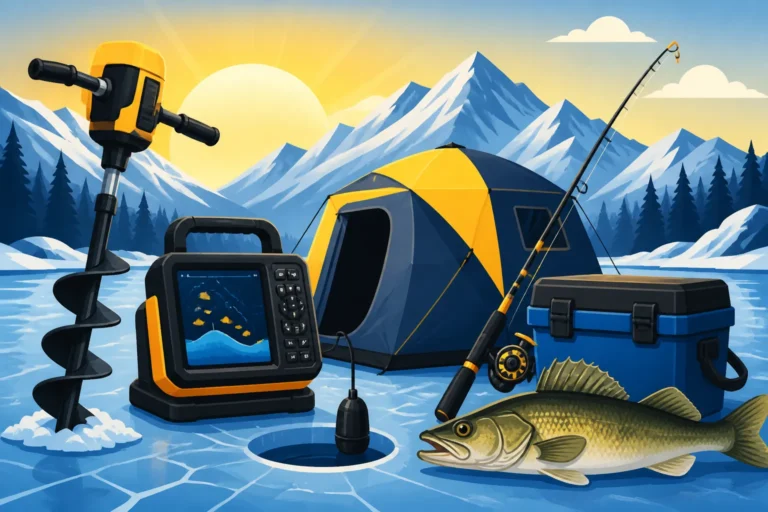
When Alberta's lakes freeze over, the walleye action doesn't stop. Ice fishing for walleye is a popular winter pastime, requiring a different set of tackle and techniques.
- Rods: Short, sensitive ice fishing rods (24-36 inches) are required, often with medium-light to medium power.
- Reels: Small spinning reels (500-1000 series) are common.
- Line: Monofilament (4-8 lb) is popular for its stretch, which helps absorb shock and prevent hook pulls, especially with thin ice rods. Fluorocarbon can also be used for stealth.
- Lures: Small jigging spoons (1/8 – 1/4 oz), blade baits, and flashy jigs tipped with minnow heads, maggots, or scented soft plastics are key. Deadsticking (using a second rod to present a live minnow on a plain hook under a bobber) is also very effective.
- Technique: Vertical jigging, subtle lifts and drops, and letting lures sit perfectly still are common tactics.
- Depth: Walleye often hold near structure or deep breaks under the ice. Use your flasher or portable fish finder to locate them.
Tackle Box Organization: Maximizing Efficiency
An organized tackle box isn't just about neatness; it's about efficiency and effectiveness on the water. When the bite is on, or conditions suddenly change, you don't want to be fumbling around for the right lure or terminal tackle.
Categorizing Your Lures and Baits
The first step to efficient organization is categorizing your lures. Think about how you typically fish and group items accordingly.
- By Lure Type: Dedicate separate compartments or utility boxes to jigs, crankbaits, spinner rigs, and soft plastics. For example, all your walleye jigs (jig heads and soft plastics) can go in one box, crankbaits in another, and so on.
- By Depth/Size: Within each lure type, you might further categorize by diving depth (for crankbaits) or weight/size (for jigs). Keep your deep-diving crankbaits together, shallow-runners together. Similarly, your heavy jig heads might be separate from your finesse jigs.
- By Color: While not always necessary for every lure, having a selection of common colors easily accessible can be a lifesaver. Keep natural baitfish patterns separate from brighter, more aggressive colors.
Clear utility boxes are fantastic for this, as you can see exactly what's inside without opening every single one. Many tackle bags are designed to hold multiple such boxes, making it easy to grab the specific box you need. Brands like Plano and Flambeau offer excellent, durable options for this kind of modular storage. For those with a boat, Best tackle organizer for a small boat might offer some great ideas.
Storing Terminal Tackle Neatly
Tiny hooks, swivels, and weights can quickly become a tangled mess if not properly stored.
- Small Compartment Boxes: Use very small, multi-compartment boxes specifically for terminal tackle. These are often available in sets and fit inside larger tackle bags.
- Label Everything: Seriously, label it! Use a permanent marker to write the hook size, line strength, or weight on the lid of each compartment. This will save you countless minutes trying to identify a #6 hook from a #4.
- Snell Holders: For pre-tied snells or spinner rigs, consider using foam snell holders to keep them untangled and ready to go. You can often make these yourself with a piece of pool noodle or buy purpose-built ones.
- Weights: Keep different weight sizes of sinkers (split shots, bullet weights, bottom bouncers) in their own compartments to prevent them from rolling around and mixing.
Maintenance and Replenishment
Organization isn't just about putting things away; it's about maintaining your gear.
- Regular Inventory: Before and after each significant fishing trip, take an inventory of your tackle. What did you use up? What got damaged? What do you need more of? This prevents you from arriving at the lake only to realize you're out of your favorite jig heads.
- Clean and Dry: Always ensure your tackle is clean and dry before putting it away to prevent rust on hooks and lures. A quick rinse with fresh water and thorough drying can extend the life of your expensive tackle significantly.
- Hook Sharpening: Keep a hook sharpener in your tackle box. Dull hooks are the enemy of good hook sets. A few swipes can turn a missed fish into a landed one.
- Line Spooling: Check your line for nicks and abrasions, especially your leader. Re-spool your reels with fresh line at least once a season, or more frequently if you fish often.
By taking the time to organize and maintain your walleye tackle, you'll spend less time searching and more time fishing, ultimately increasing your chances of success on Alberta's waters.
Disclaimer
This article is for general informational purposes only and does not constitute professional advice. Laws, prices and regulations vary by location and change over time. Consult a qualified professional for guidance on your specific situation.