Best trolling speed for lake trout
There's nothing quite as frustrating as spending a beautiful day out on an Alberta lake, trolling for those elusive lake trout, only to come back empty-handed because you couldn't quite figure out the magic speed. It feels like you're just dragging a lure through the water, hoping for the best, instead of actively hunting. This guide is here to unravel the mystery of trolling speed for lake trout, helping you understand how to dial in that perfect pace for consistent success on Alberta's cold, deep waters.
Understanding the Role of Trolling Speed for Lake Trout
When you're out there on the water, whether it's the vast expanse of Cold Lake or a smaller, deep reservoir in the mountains, your trolling speed isn't just about moving forward. It's a critical component of your presentation, mimicking the movement of natural prey and influencing how your lures behave. Many anglers overlook this, assuming any speed will do, but that's a surefire way to miss out on strikes.
Why Speed Matters More Than You Think
Imagine a minnow frantically trying to escape a predator, or a wounded baitfish slowly struggling. Each scenario implies a different speed, a different cadence, and lake trout are highly attuned to these subtle cues. Your trolling speed dictates how your chosen lure performs. Too slow, and many lures simply won't have their intended action – a spoon might just wobble listlessly, a crankbait might not dive or wiggle correctly. Too fast, and a lure might blow out, spinning unnaturally, or appear too aggressive for a wary laker, especially when the water is cold or they're in a neutral mood.
Think about the natural food sources of lake trout in Alberta. They prey on cisco, whitefish, and smaller trout. These baitfish don't always swim at a constant, predictable speed. They dart, pause, accelerate, and glide. Your trolling speed, combined with boat maneuvers, attempts to replicate these natural movements, making your offering irresistible. The difference between a good day and a great day can often come down to a fraction of a mile per hour in your speed.
General Speed Ranges to Start With
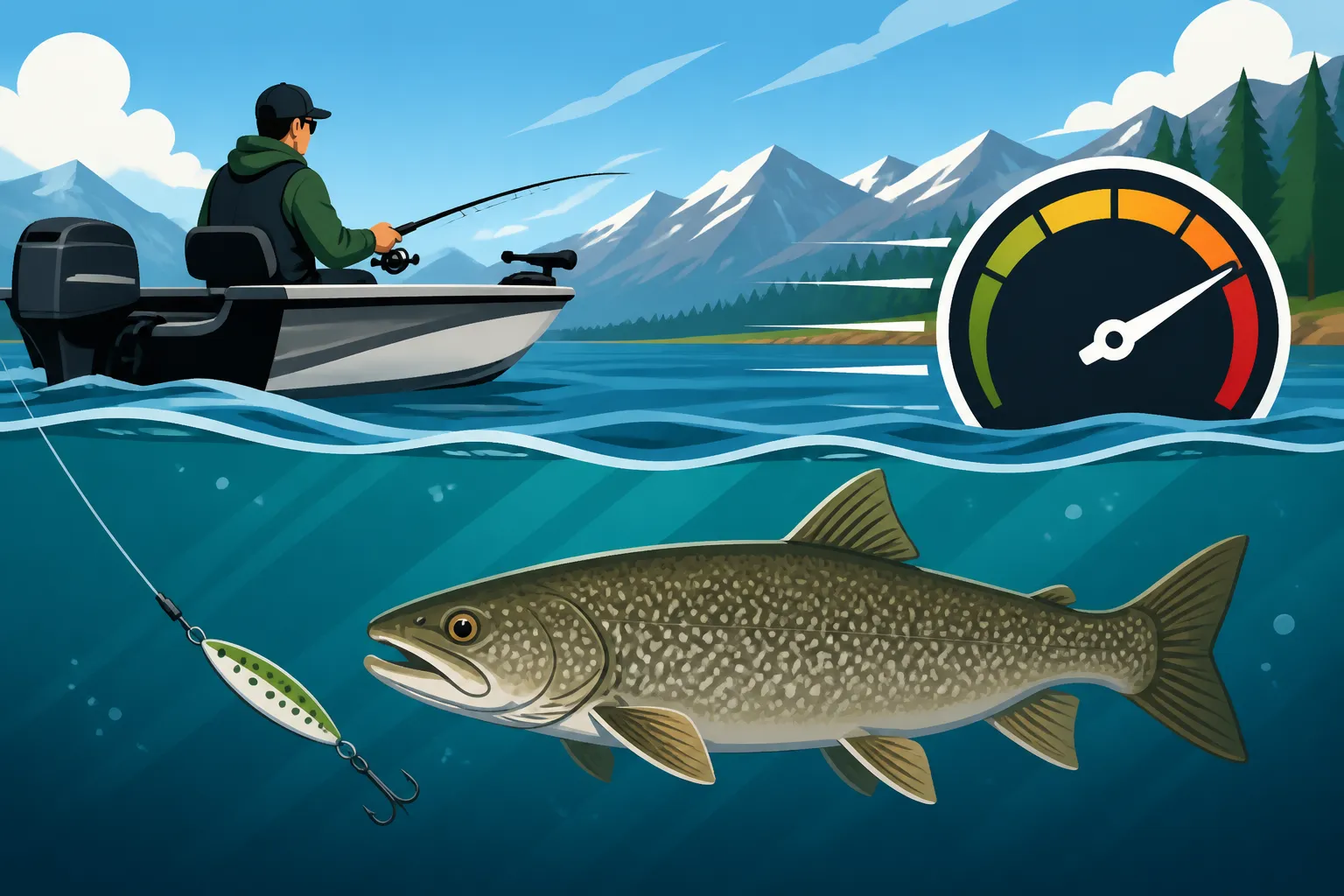
While there's no single "perfect" speed, most experienced lake trout anglers in Alberta find their sweet spot within a fairly consistent range. Generally, you'll be looking to troll somewhere between 1.8 to 3.5 miles per hour (mph). This is a broad range, I know, but it’s a crucial starting point.
- Slower Speeds (1.8 – 2.5 mph): These speeds are often effective in colder water, early in the season, or when lake trout are lethargic or suspended deeper. It allows for a more subtle presentation, giving the fish more time to react to your lure. Large, slow-moving spoons or even live bait presentations often shine in this range.
- Moderate Speeds (2.5 – 3.0 mph): This is arguably the most common and versatile speed range. It’s a great all-around speed that works for a wide variety of lures, from spoons to crankbaits, ensuring they have good action without being overly aggressive. It’s a fantastic starting point when you're exploring a new lake or haven't quite figured out the fish's mood.
- Faster Speeds (3.0 – 3.5+ mph): When the water warms up, or lake trout are actively chasing bait, bumping up your speed can trigger aggressive reaction strikes. This is particularly true if you're targeting big, actively feeding fish. Erratic, fast-moving spoons or larger stickbaits can be deadly at these higher speeds, especially when covering a lot of water.
Remember, these are just starting points. The real magic happens when you begin to fine-tune within these ranges based on conditions and fish behaviour.
Factors That Influence Optimal Speed
You can't just pick a speed and stick with it all day. Many variables come into play, constantly requiring you to adjust.
- Water Temperature: This is perhaps the biggest factor. Colder water typically means less active fish, so a slower presentation is usually more effective. As the water warms, lake trout become more active and willing to chase, allowing for faster trolling speeds.
- Baitfish Activity: Are the baitfish schooled up tight and moving fast, or are they scattered and seemingly dormant? Mimicking their behavior can be key. If you see bait on your sonar darting around, a faster, more erratic troll might be in order.
- Lake Trout Mood and Aggression: Sometimes, lake trout are on the hunt, smashing anything that moves. Other times, they're finicky, requiring a delicate presentation. Experimenting with speed helps you read their mood. A neutral fish might ignore a fast lure but strike at a slow, enticing one.
- Lure Type and Size: As mentioned, different lures are designed for different speeds. A small spoon might "swim" perfectly at 2.0 mph, while a large flasher and fly setup might require 2.8 mph to get its optimal action.
Fine-Tuning Your Trolling Speed for Success
Getting your trolling speed just right isn't a set-it-and-forget-it deal. It’s an art form that involves keen observation, a bit of scientific understanding, and a willingness to adapt. The best anglers in Alberta are constantly experimenting and making micro-adjustments throughout their day.
Reading Your Electronics and How Fish React
Your fish finder isn't just for locating fish; it's a window into how they're reacting to your presentation. If you mark fish arches on your screen and they don't seem interested as your lures pass by, it might be time to change your speed. Are they rising to meet your lures or diving away? Are they just sitting there, seemingly ignoring everything?
Modern fish finders, especially those with advanced CHIRP sonar, can show you not just the fish, but often the bait balls, and even the action of your downrigger weights or heavy lures. Pay attention to how the fish are positioned in the water column relative to your lures. If you're consistently marking fish but getting no bites, try increasing or decreasing your speed by small increments, say 0.2 mph at a time, and observe if there's any change in fish behavior or, more importantly, if you start getting bites. Many anglers use tools from brands like Garmin or Humminbird, which are often available through retailers on Amazon, to help them interpret what's happening beneath the surface. For a deeper dive into the tech, you might find our guide on the Best Fish Finders for Alberta Lakes incredibly useful.
Lure Type and Action: A Speed-Sensitive Dance
Every lure has an optimal speed range where it performs as designed. Understanding this is paramount.
- Spoons: These are perhaps the most versatile lake trout lures. At slower speeds, a spoon might have a wide, enticing wobble. Speed it up, and that wobble tightens, making it dart and flash more aggressively. Brands like Williams and Luhr-Jensen make excellent spoons that respond well to varying speeds.
- Crankbaits and Stickbaits: These lures have a lip that causes them to dive and wiggle. Their action is highly dependent on speed. Too slow, and they won't dive to their advertised depth or have much action. Too fast, and they might "blow out," losing their stable swimming motion. Many of these lures come with recommended speed ranges on their packaging, which is a great starting point.
- Flashers and Flies/Hoochies: Popular for presenting an illusion of a school of baitfish, flashers are designed to rotate and create flash, attracting fish to the trailing fly or hoochie. The rotation rate of the flasher is directly tied to your boat speed. Too slow, and it barely moves; too fast, and it spins wildly and unnaturally. You often need a very specific, consistent speed to get the ideal action from these setups. For more insights on this specific approach, check out our piece on Trolling Techniques for Alberta Lake Trout.
- Plugs: These can be similar to crankbaits but often have a more erratic, "wounded fish" action. They often perform best at moderate to slightly faster speeds, depending on their design.
It's a good practice to periodically pull your lures up next to the boat and observe their action at your current trolling speed. Does it look natural? Is it doing what it's supposed to do? If not, adjust your speed until it does.
Seasonal and Environmental Adjustments
The time of year and prevailing conditions drastically alter the ideal trolling speed.
- Early Season/Cold Water: When lake trout are just emerging from winter lethargy, or during the colder periods, they tend to be less active. Slower speeds (1.8-2.2 mph) are often best, allowing them to expend minimal energy to strike. They're not going to chase something moving like a bullet.
- Mid-Summer/Warm Water: As water temperatures rise (in the depths where lakers reside, of course), their metabolism speeds up, and they become more aggressive. This is when you can often get away with, and even benefit from, faster trolling speeds (2.8-3.5+ mph), particularly if you're fishing deep structure where they're actively ambushing prey.
- Fall Transition: As the water cools again, and lake trout begin their pre-spawn gorging, you might find a return to moderate speeds. They're still active, but perhaps not as frantically chasing as in the peak of summer.
- Wind and Current: These natural forces can significantly impact your true lure speed, even if your boat's GPS shows a consistent speed. If you're trolling into a strong headwind or current, your lure might be moving slower through the water than your boat speed indicates. Conversely, with a tailwind or current, your lure could be moving faster. Always monitor your "speed over ground" (SOG) via GPS, but also consider the actual water speed. Sometimes, adjusting your troll to be slightly "faster" or "slower" by your GPS to compensate for current is necessary to achieve the actual ideal lure speed.
Table: General Trolling Speed Guidelines by Lure Type and Condition
| Lure Type / Condition | Recommended Speed Range (MPH) | Notes |
|---|---|---|
| Spoons (Standard) | 2.0 – 3.2 | Wider wobble at slower speeds, tighter action at faster speeds. |
| Crankbaits / Stickbaits | 2.5 – 3.5 | Ensure proper diving and wiggling action. Check manufacturer specs. |
| Flashers & Flies / Hoochies | 2.8 – 3.5 | Consistent speed critical for flasher rotation. |
| Live/Cut Bait Rigs | 1.5 – 2.5 | Slower, natural presentation. Avoid unnatural spinning. |
| Extremely Cold Water (<45°F) | 1.8 – 2.2 | Lethargic fish, subtle presentation. |
| Moderate Water (45-55°F) | 2.2 – 2.8 | Versatile range, good starting point. |
| Warmer Water (>55°F – Deep) | 2.8 – 3.5+ | Active, chasing fish. Reaction strikes. |
| High Wind / Strong Current | Adjust SOG | Monitor lure action, compensate for water speed vs. boat speed. |
Practical Tips for Dialing in Your Speed on Alberta Waters
Now that we've covered the why and the general how, let's get into the nitty-gritty of practical application when you're out there on your favourite Alberta fishing lake.
Using GPS and Advanced Speed Control
Gone are the days of guessing your speed by looking at the water ripple. Modern fishing boats are equipped with GPS units that provide highly accurate speed over ground (SOG) readings. This is your most reliable tool for monitoring trolling speed.
- Dedicated GPS/Sonar Units: Many fish finders double as GPS units, displaying your SOG right on the screen. Having this constant visual feedback is invaluable. If you notice your speed fluctuating due to wind or wave action, you can make immediate adjustments.
- Autopilot/Trolling Motors with GPS: Some electric trolling motors, like those from Minn Kota or Motorguide, come with integrated GPS and autopilot features. These are a game-changer for trolling, as they can hold a precise course and speed regardless of wind or current. You simply set your desired speed, and the motor adjusts its thrust to maintain it. This frees you up to focus on your rods and fish. While these can be a significant investment, the consistency they provide for trolling is unmatched. You can often find a good selection of these on Amazon, reading reviews to ensure you pick the right one for your boat and fishing style.
- Prop Pitch and RPM: For those running gasoline outboards, understanding your prop pitch and how it affects your boat's speed at various RPMs can also help. Sometimes, even at idle, a boat might be too fast for very slow trolling. In such cases, a "kicker" motor (a small, auxiliary outboard) or an electric trolling motor becomes essential for fine speed control.
The Power of Experimentation and Observation
Fishing, especially trolling for lake trout, is as much about being a detective as it is about being an angler. Don't be afraid to experiment!
- The 0.2 MPH Rule: If you're not getting bites, try increasing or decreasing your speed by just 0.2 mph. Sometimes, that tiny adjustment is all it takes to trigger a strike. Keep meticulous notes, even mental ones, of what speeds were productive on a given day with specific lures.
- The "S-Curve" Maneuver: This is a classic trolling technique that inherently varies your lure speed and depth. Instead of driving in a straight line, make wide, gentle "S" turns.
- As your boat turns into the curve, the lures on the inside of the turn will slow down, while those on the outside will speed up.
- As you straighten out or turn the other way, the opposite happens.
- This constant variation in speed and lure action often triggers strikes from fish that might ignore a straight-line troll. Many big lake trout are caught on the outside turn of an S-curve, as the lure speeds up and appears to be escaping. It adds that little bit of unpredictable action that can be key.
Remember, every lake and every day is different. What worked last week might not work today. Stay flexible, keep observing, and be ready to adapt.
Common Mistakes and How to Avoid Them
Even experienced anglers can fall into traps when it comes to trolling speed. Avoiding these common missteps will dramatically improve your lake trout success.
Sticking to One Speed All Day
This is probably the most prevalent mistake. Many anglers pick a speed they're comfortable with and stick with it, hoping for the best. As we've discussed, lake trout are highly sensitive to changes in conditions, and their preferred speed can vary not just by the day, but by the hour.
- The Solution: Embrace experimentation. Start with a general range, but be prepared to adjust. Think of your trolling speed as another variable to test, just like lure colour or depth. If 2.5 mph isn't producing, try 2.2 mph for 15 minutes, then 2.8 mph for another 15. The fish will tell you what they prefer. Don't be afraid to deviate from conventional wisdom; sometimes, an unusually fast or slow troll is the ticket.
Ignoring Your Lure's Actual Action
You might think your crankbait is diving and wiggling perfectly at 3.0 mph, but have you actually seen it? Sometimes, a lure might be fouled with a piece of weed, or the speed might be slightly off, causing it to run incorrectly.
- The Solution: Periodically check your lures. Pull them up next to the boat and watch them swim at your current speed. Does it look natural? Is it tracking straight? If you're using a flasher and fly, is the flasher rotating correctly, or is it just wobbling? This quick check can save you hours of unproductive trolling with a lure that simply isn't performing. Ensure your lures are clean and free of debris.
Forgetting the Interconnectedness of Speed and Depth
Speed isn't an isolated factor; it's intricately linked with your lure's running depth. If you change your speed, you're almost certainly changing your depth, especially with diving lures.
- The Solution: Understand how your gear performs.
- Downriggers: If you're using downriggers, changing your speed can cause your downrigger ball to "blow back" (move further behind the boat and ride shallower) more or less. Faster speeds mean more blowback, reducing your effective depth. Slower speeds reduce blowback, increasing your effective depth. Always monitor your depth on your fish finder, and if your downrigger has a depth counter, take blowback into account. Our guide on How deep to troll for lake trout on Cold Lake delves deeper into managing depth effectively.
- Diving Lures (Crankbaits): The faster you troll, generally, the deeper a crankbait will dive, up to a certain point where it might blow out. However, factors like line diameter and length also play a huge role.
- Weight and Line: If you're using snap weights, lead core, or simply heavier lures on conventional lines, speed will also affect their running depth. A heavier lure will run deeper at a given speed compared to a lighter one.
Always consider how changes in speed will impact where your lure is in the water column, and adjust other elements of your presentation (downrigger settings, line out) to keep your lures in the strike zone. The goal is to present your lure at the right depth and the right speed simultaneously.
Final Thoughts on Trolling for Alberta Lake Trout
Successfully trolling for lake trout in Alberta's stunning lakes is a rewarding experience, and mastering your trolling speed is a cornerstone of that success. It's not about finding a magic number, but rather developing a keen understanding of how various factors interact – from water temperature and fish behavior to your specific lure choice and the capabilities of your boat and electronics.
Remember to start with the general speed guidelines, but then be relentless in your experimentation. Use your GPS, observe your lures, watch your fish finder for reactions, and don't be afraid to make those subtle 0.2 mph adjustments. Keep an eye on how different areas of the lake might demand different approaches; perhaps the Best Fishing Lakes in Alberta have their own unique characteristics that call for particular strategies.
Embrace the detective work, learn from every bite and every non-bite, and you'll soon be consistently putting those powerful Alberta lake trout in the net. Happy trolling!
Disclaimer
This article is for general informational purposes only and does not constitute professional advice. Laws, prices and regulations vary by location and change over time. Consult a qualified professional for guidance on your specific situation.