Best lure color for muddy water walleye fishing
We've all been there: you wake up excited for a day of walleye fishing in your favorite Alberta lake or river, only to find the water is murky, stained, or even chocolate milk brown after a heavy rain or spring runoff. That sick feeling in your stomach quickly sets in, because you know your go-to clear water baits probably won't cut it. It’s incredibly frustrating when conditions change, leaving you wondering if you should even bother. But don't despair! Walleye are tough, adaptable fish, and with the right approach to lure color, you can absolutely turn a challenging day into a successful one. This guide is all about cracking the code of muddy water walleye fishing, specifically focusing on the best lure colors to get those 'eyes to bite when visibility is nil.
Understanding Why Water Gets Muddy and How it Affects Walleye
Before we dive into the rainbow of lure options, it’s really helpful to understand why muddy water is such a game-changer and how it impacts the walleye themselves. It’s not just about a pretty picture for us; it fundamentally alters the underwater world.
The Science Behind Murky Water
Muddy water isn't just dirty; it's water laden with suspended sediment like clay, silt, and organic matter. This can happen for a bunch of reasons, and we see it all the time here in Alberta. Think about a massive spring snowmelt, where rivers swell and carry tons of debris and soil from thawing banks downstream. Or those intense summer thunderstorms that turn a calm river into a raging torrent of brown water in a matter of hours. Even persistent winds on shallower lakes can churn up the bottom, creating a milky, silty environment that drastically reduces visibility. Heavy agricultural runoff can also contribute, washing topsoil into tributaries. These conditions make it incredibly difficult for fish, and certainly for anglers, to rely on sight.
Walleye's Sensory World in Low Visibility
Walleye are often nicknamed "walleyes" for a reason – they have fantastic eyesight, especially in low light. Their large eyes are designed to gather what little light is available, giving them an advantage over many prey species at dawn, dusk, or in deeper water. However, when the water is truly muddy, even their superior peepers can only do so much. This is where their other senses kick in big time.
They become much more reliant on their lateral line, which is a system of sensory organs running along their sides that detects vibrations and pressure changes in the water. This allows them to "feel" prey moving nearby, even if they can't see it. Scent also plays a much larger role. A walleye in muddy water is essentially hunting by sound, vibration, and smell, like a predator with its eyes closed, rather than actively pursuing by sight. This shift in their primary hunting mechanism is critical for us to understand when choosing lures.
The Best Lure Colors for Muddy Water Walleye
When visibility drops, your lure needs to scream "Eat me!" in ways that don't rely on a walleye seeing fine details. This means going for colors that create a strong visual presence, even if the light penetration is minimal.
Why Bright and Bold is Beautiful
In muddy water, bright, fluorescent, and highly contrasting colors are often your best bet. Think about it: these colors stand out significantly, even when there's very little light. They absorb and reflect light differently than natural colors, making them more visible.
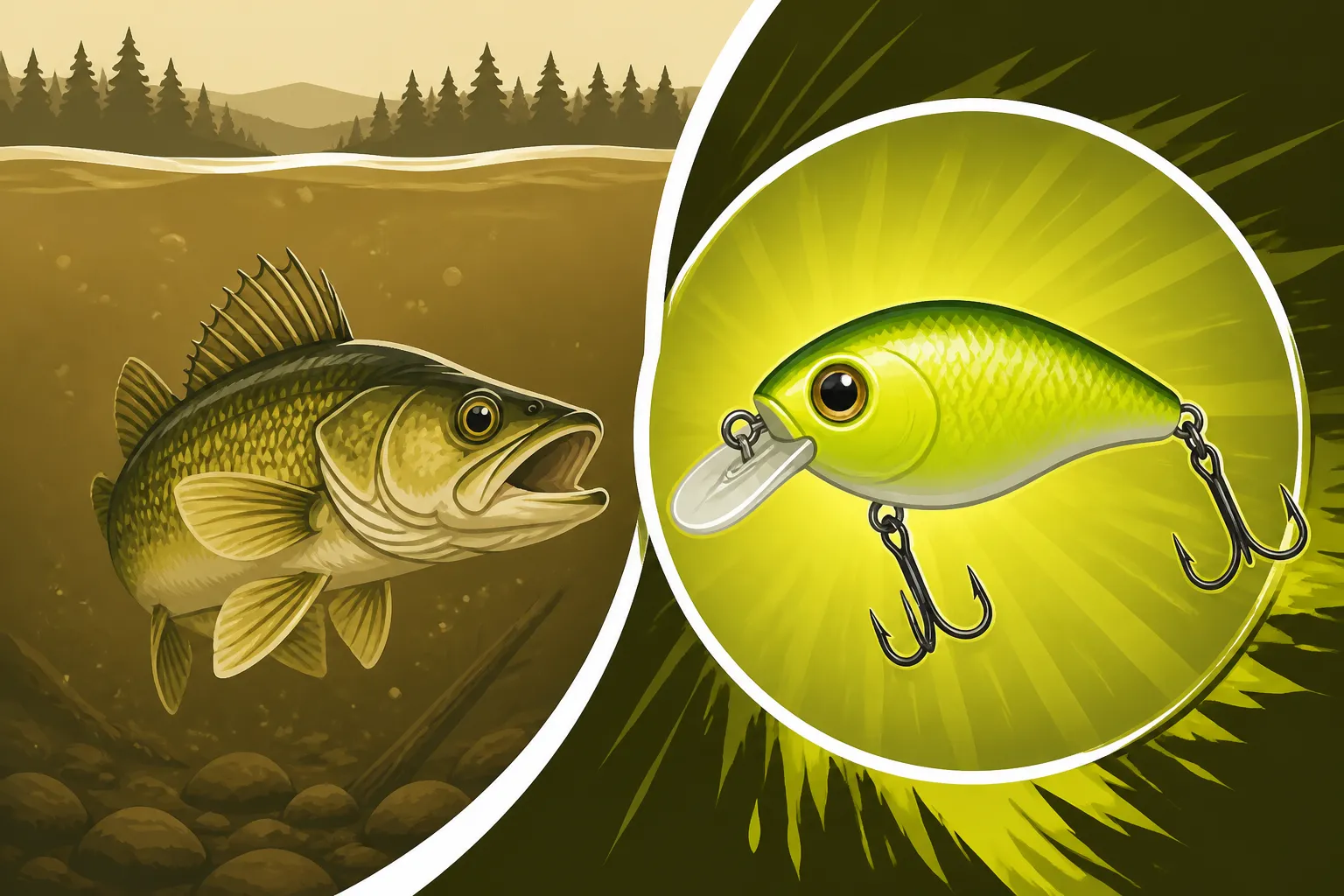
- Chartreuse: This neon yellow-green is a classic for a reason. It's incredibly bright and highly visible in stained water, often appearing as a powerful glow to a walleye. Many anglers swear by it, and for good reason—it works consistently.
- Orange: From vibrant traffic-cone orange to a fiery reddish-orange, these hues are fantastic. They create a distinct profile that can be seen from a distance in murky conditions.
- Hot Pink: Sometimes overlooked, hot pink can be a surprisingly effective color. It's truly eye-catching and creates a high-contrast target. Don't be shy about trying it, especially if other bright colors aren't producing.
- Firetiger: This isn't a single color but a pattern, usually combining chartreuse, orange, and black stripes. The combination of bright colors with dark contrasting lines creates a highly visible, almost aggressive, target that walleye can home in on. It's a perennial favorite, and you'll find it in virtually every tackle box for good reason.
The key here is contrast and intensity. These colors aren't trying to imitate natural prey perfectly; they're trying to be seen by a walleye that can barely see a few inches in front of its face. The stronger the contrast against the murky background, the better.
The Power of Dark Silhouettes
While bright colors get a lot of attention, don't underestimate the power of dark colors in muddy water. This might seem counterintuitive, but it's about creating a strong silhouette. In extremely dark or muddy conditions, a light lure might simply blend into the cloudy background, but a dark lure will create a distinct, opaque shape that walleye can detect.
- Black: A plain black jig or soft plastic can be incredibly effective. It creates the strongest possible silhouette against even the dimmest light. Walleye might not see its color, but they'll definitely see something there, a solid object moving through their territory.
- Purple: Dark purple, especially combined with a black or blue flake, is another excellent choice. It provides a distinct profile and often has a subtle luminescence in dim light that can attract attention.
- Dark Blue: Similar to purple, dark blue offers a strong silhouette and can appear even darker in very low light. It's a fantastic alternative to black, especially if you want a hint of color.
These dark colors don't rely on reflecting light; they rely on blocking it to create a clear, defined shape. Imagine looking at a dark object against a cloudy sky – you can still clearly make out its form, even if there's no direct light on it. It’s the same principle underwater for a walleye relying on its lateral line and peripheral vision.
Glow-in-the-Dark and UV Reactive Lures
For those truly extreme low-visibility days, or when you're fishing deeper areas in muddy water, glow-in-the-dark and UV (ultraviolet) reactive lures can give you an edge.
- Glow Lures: These lures absorb light (you usually "charge" them with a flashlight) and then emit their own light for a period. This glowing effect can be irresistible to walleye in very dark water, like during deep-water trolling or ice fishing in highly turbid conditions. The emitted light offers a beacon in the gloom.
- UV Reactive Lures: Many modern lures are designed to react to UV light, which penetrates water differently than visible light. Even in murky conditions, some UV light can still reach deeper. These lures "pop" or glow with a unique intensity when exposed to UV, making them more visible to fish that can perceive these wavelengths. It's like a secret weapon for visibility. When shopping for lures, look for descriptions like "UV enhanced" or "UV bright" to add these to your arsenal. You can often find a great selection of these specialized lures on Amazon from brands like Northland Tackle or Berkley.
Choosing between bright, dark, and glowing options often comes down to experimentation. Start with the brightest you have, and if that's not working, try a strong, dark silhouette.
Pairing Color with Lure Type and Technique
It’s not just about the color itself, but how that color works with the action and vibration of your chosen lure. A brightly colored lure that moves realistically and creates a strong presence will outperform a static, brightly colored piece of plastic any day.
Jigs and Soft Plastics
Jigs are a staple for walleye anglers, and they are incredibly versatile in muddy water. When paired with soft plastics, the color choice becomes paramount.
- The Jig Head: Often, anglers focus only on the plastic, but the jig head color matters too! A chartreuse or orange jig head paired with a contrasting soft plastic, like a white or dark plastic, can double your visual appeal. Consider a bright jig head with a darker plastic for silhouette, or a dark head with a bright plastic for contrast.
- Soft Plastic Body: For the soft plastic bodies (grubs, shads, minnows, worms), stick with the bright and bold colors like chartreuse, orange, or hot pink. The soft plastic's tail action, whether a paddle tail or curly tail, creates vibration that the walleye's lateral line can detect. The vivid color then serves as the visual confirmation once the walleye gets close. For example, a 3-inch chartreuse Berkley Gulp! Minnow on a 1/4 oz jig head is a proven killer in dirty water. The added scent from the Gulp! further enhances its appeal, addressing the walleye's reliance on smell.
- Presentation: With jigs and soft plastics in muddy water, a slower, more deliberate retrieve is often best. Let the lure get down to the bottom, where walleye are often hugging in murky conditions, and work it with hops, drifts, or slow rolls. The bright color gives them more time to zero in on it.
Crankbaits and Blade Baits
When walleye are active and you need to cover water, crankbaits and blade baits are excellent choices. Their inherent vibration and wobble are key in muddy conditions.
- Crankbait Colors: Firetiger is king for crankbaits in muddy water. The combination of chartreuse, orange, and black creates an incredibly aggressive visual. Other effective colors include solid chartreuse, solid orange, or black/silver combinations. The wide wobble of a deep-diving crankbait creates significant vibrations, and the bright color ensures it’s seen. Brands like Rapala, Reef Runner, and Berkley offer a wide range of crankbaits in these effective muddy water colors. Don't be afraid to experiment with brighter blues or purples too, especially if the water isn't quite chocolate milk.
- Blade Baits: Blade baits, known for their intense vibration and flash, can also be highly effective. The fast, erratic action and shimmering metal draw attention, and a painted blade in chartreuse or orange can seal the deal. These are excellent for vertical jigging or casting and retrieving, allowing you to quickly determine if walleye are in the area.
- Trolling vs. Casting: For trolling, bright, highly visible crankbaits allow walleye to track them from a greater distance through the murky water. When casting, the erratic action combined with a loud rattle (many crankbaits have internal rattles) and a bright color maximizes your chances. Remember, in very muddy water, walleye may not be willing to chase a lure very far, so getting your crankbait right in their face is important.
Spinnerbaits and Rigs
Spinnerbaits and bottom-bouncing rigs are classic walleye presentations that also shine in stained water due to their flash and vibration.
- Spinnerbaits: These lures combine a thumping blade (or blades) with a jig or a soft plastic body, offering both visual and sensory appeal. For muddy water, opt for larger, Colorado-style blades that produce maximum vibration. The blade itself can be brightly colored (chartreuse, orange) or a reflective silver/gold that catches any ambient light. Pair it with a brightly colored grub or minnow-shaped soft plastic in chartreuse or orange. The continuous flash and thump of a spinnerbait make it easy for walleye to locate, even if they're relying mostly on their lateral line. Many anglers will also add a scented plastic or scent gel to the jig or trailer hook for extra attraction.
- Crawler Harnesses / Walleye Rigs: These rigs, often trolled behind a bottom bouncer, incorporate beads, a clevis, and spinner blades. In muddy water, go with large, bright spinner blades (Colorado style again is great for vibration) in chartreuse, orange, or even a metallic gold. The beads on the harness can also be brightly colored. The combination of the thumping blade, the live bait (like a nightcrawler), and the bright colors is a powerful attractant. This is a go-to technique for covering large flats and breaklines in many of Alberta's best walleye lakes. Remember that How to Fish a Crawler Harness for Walleye dives deeper into effective rigging.
| Water Clarity Level | Recommended Lure Colors | Key Characteristics | Common Lure Types |
|---|---|---|---|
| Slightly Turbid | Chartreuse, Orange, Firetiger, Bright Yellow, White | Reduced visibility, some light penetration | Crankbaits, Jigs, Spinnerbaits, Paddle Tails |
| Moderately Muddy | Hot Pink, Chartreuse, Firetiger, Dark Purple, Black/Chartreuse | Low visibility, minimal light penetration | Jigs, Soft Plastics, Blade Baits, Noisy Crankbaits |
| Extremely Murky | Black, Dark Purple, Glow-in-the-Dark, UV Reactive, Black/Orange | Near zero visibility, almost no light | Scented Jigs, Hair Jigs, Glow Spoons, Loud Rattling Crankbaits |
Other Factors Beyond Color for Muddy Water Success
While color is a crucial piece of the puzzle, it's just one part of a comprehensive strategy for success in muddy water. Walleye in these conditions are often less active and more reluctant to chase, so you need to appeal to all their senses.
Vibration and Sound
As we’ve touched on, walleye rely heavily on their lateral line in murky conditions. This means vibration and sound are incredibly important.
- Rattles: Many crankbaits and some jigs come with internal rattles. These create a distinct noise underwater that walleye can home in on. If your lure doesn't have a rattle, you can often add small rattle chambers to soft plastics.
- Thumping Blades: As mentioned with spinnerbaits and crawler harnesses, large, rounded blades like Colorado blades displace more water and create a stronger thumping vibration than willowleaf blades. This makes them easier for walleye to detect.
- Wider Wobbles: Crankbaits with a wider, more aggressive wobble move more water, sending out stronger pressure waves. Look for baits known for their exaggerated action.
- Jigging Action: When jigging, sharp snaps and drops create sudden movements and vibrations that can trigger a strike. It’s all about getting that lure to send out a clear signal in the underwater chaos. For example, if you're exploring How to Read Structure for Walleye on Lesser Slave Lake, combining that knowledge with a noisy, brightly colored jig can be a deadly combination.
Scent and Taste
With sight severely limited, the walleye's sense of smell can be a powerful tool for them to locate food. Incorporating scent into your presentation can make a huge difference.
- Scented Soft Plastics: Brands like Berkley Gulp! and PowerBait are infused with strong attractants that disperse in the water. These are incredibly effective in muddy conditions, providing an olfactory trail for walleye to follow. You can find a huge variety of these on Amazon, making it easy to stock up.
- Scent Gels and Sprays: You can add scent to any lure, whether it's a jig, a crankbait, or a spinnerbait. Products like Smelly Jelly or Pro-Cure come in various scents (garlic, crawfish, minnow, worm) and can be applied directly to your lure. Reapply often, as the scent washes off over time.
- Live Bait: There's no denying the power of live bait in muddy water. A lively minnow, a squirming nightcrawler, or a juicy leeches provides natural scent, vibration, and taste that no artificial lure can perfectly replicate. Tipping your bright jig with a piece of worm or a minnow head can be the perfect combination of visual and olfactory appeal. Learn more about What Walleye Eat in Alberta Lakes to choose the most effective natural baits.
Slowing Down and Presenting Close
Walleye in muddy water are often more lethargic and less willing to chase. They're conserving energy and waiting for an easy meal to come to them.
- Slow Down Your Retrieve: Whether you're trolling or casting, slow down your pace significantly. Give the walleye ample time to find and react to your lure. A slow roll of a jig, a crawling crankbait, or a slow troll with a crawler harness are often more effective than speedy presentations.
- Fish Closer to Structure: Walleye will often hug bottom or relate tightly to visible structure (like rocks, logs, or weed edges) in murky water. They feel more secure and can ambush prey more easily. Focus your efforts on these areas. This means working your lure slowly and deliberately right on the bottom or along the breaks.
- Shorter Casts: If you're bank fishing or casting from a boat, shorter, more precise casts can be better than long bombardments. In dirty water, your chances of a walleye seeing your lure from 50 feet away are slim. Keep your casts accurate and work the immediate vicinity thoroughly. Remember to check Alberta Walleye Limit by Zone and other regulations before heading out, no matter what color lure you choose!
By combining these factors – the right colors, strong vibrations, enticing scents, and a patient, precise presentation – you significantly increase your odds of success even when Mother Nature throws you a curveball with muddy water.
Disclaimer
Fishing regulations and conditions can change. Always consult the most current Alberta Guide to Sportfishing Regulations before heading out. This article provides general information and recommendations, but it is your responsibility to ensure you are compliant with all provincial and local fishing laws.