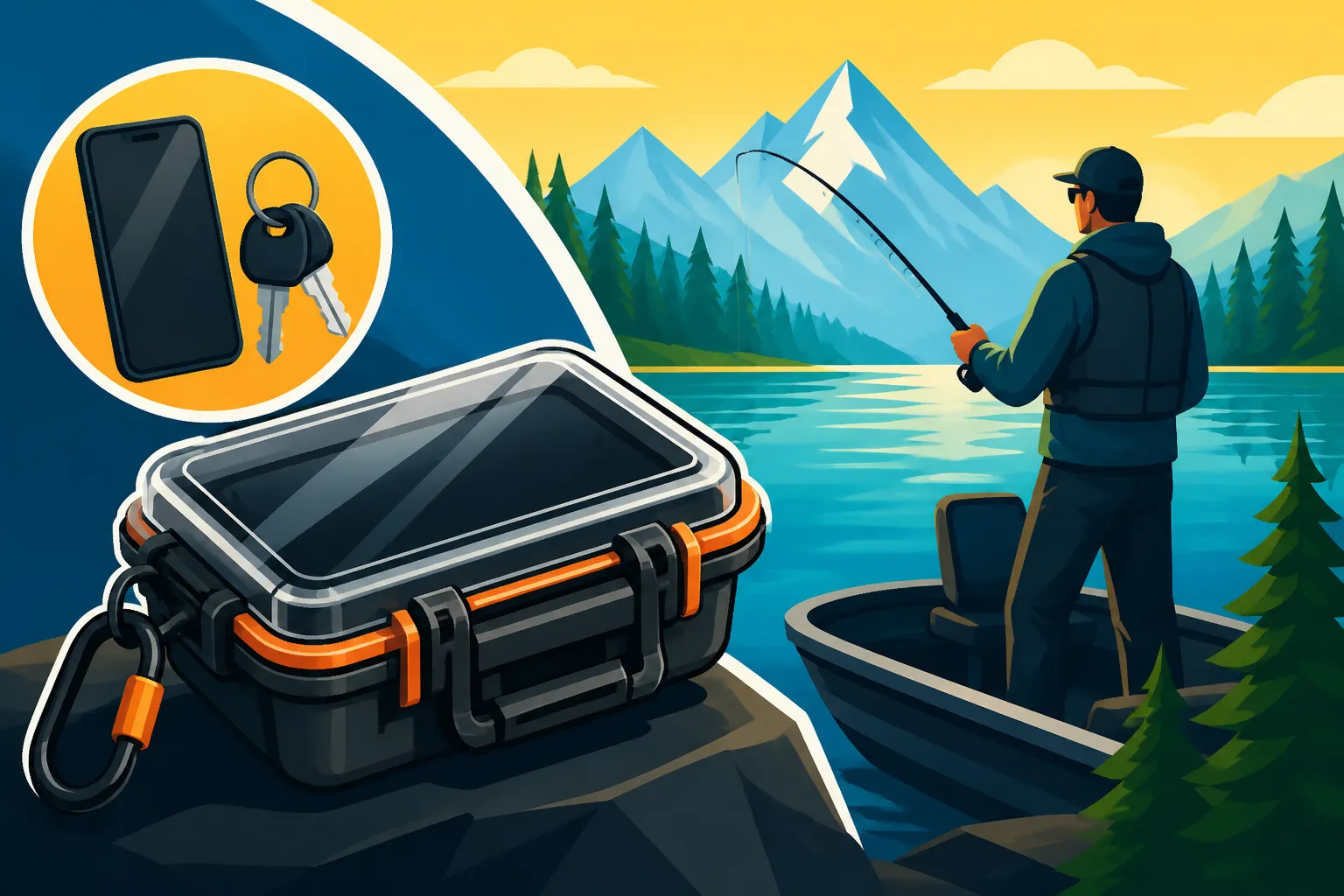
Best dry box for phone and keys on the water
We've all been there, standing knee-deep in a pristine Alberta river or bobbing gently on a vast lake, when that sudden thought hits: "My phone… my keys… are they safe?" The fear of an accidental splash, an unexpected downpour, or worse, a quick tumble into the water with your most vital possessions in your pocket, is a common frustration for any angler. Losing your phone means losing your connection, your navigation, and your precious fishing photos. Losing your keys means a very long, cold walk home. This guide is all about giving you peace of mind on the water by helping you choose the best dry box for your phone and keys, ensuring your essentials stay bone-dry no matter what Alberta's weather or your fishing adventures throw at them.
Why a Dry Box is Non-Negotiable for Alberta Anglers
Fishing in Alberta offers incredible experiences, from the powerful currents of the Bow River to the vast expanse of Lesser Slave Lake. But with every cast, every paddle stroke, and every step along the shore, there's an inherent risk to your personal electronics and vehicle keys. It's not just about protecting expensive gadgets; it's about safeguarding the tools that connect you to the outside world and get you home safely.
Protecting Your Essentials from the Elements
Picture this: you're out on a beautiful summer day, the fish are biting, and then, without warning, the skies open up. A sudden Alberta thunderstorm can drench everything in minutes. Or maybe you're reeling in a monster pike, and it puts up such a fight that a wave of water splashes over the side of your boat, soaking everything in its path. Even if your phone is "water-resistant," that's usually for a shallow dunk, not a prolonged soak or a high-pressure spray. Car key fobs, especially the modern electronic ones, are even more vulnerable to moisture.
A good dry box creates an impenetrable barrier against these common occurrences. It’s an investment that pays for itself many times over by preventing the need for costly phone replacements, complex key fob programming, or the agonizing realization that your wallet is now a soggy mess. Think of it as essential insurance for your most critical items. It allows you to confidently bring your essentials with you, capturing those trophy fish photos or checking maps on your phone without a second thought about the weather turning or a clumsy accident near the water.
Keeping Valuables Safe While You Focus on Fishing
One of the greatest joys of fishing is the ability to disconnect from the daily grind and immerse yourself in nature. But that peace can be shattered if you're constantly worrying about your phone tucked precariously in your pocket or your keys dangling insecurely. This anxiety detracts from the whole experience. Are you really focused on that subtle bite or the perfect fly presentation if you're also wondering if your expensive smartphone is safe from the next splash?
A reliable dry box eliminates this distraction entirely. You can stow your phone, keys, wallet, and even your Alberta Fishing License Guide for 2026 knowing they are sealed away, safe from harm. This freedom allows you to fully engage with the fishing experience – to appreciate the quiet ripple of the water, the anticipation of a tug on your line, and the pure joy of being outdoors in Alberta. It’s about more than just protection; it’s about enhancing your mental tranquility so you can truly focus on what you came to do: fish.
The Specific Risks of Fishing in Alberta Waters
Alberta's diverse fishing environments present unique challenges. If you're wading the Bow River Fishing Guide, a stumble on slippery rocks could send your pocketed items into the current. Kayak anglers navigating a smaller lake or river will undoubtedly encounter splashes and drips, and the confined space means there's less room to keep things dry. On larger lakes like Cold Lake or Lesser Slave Lake, boating means exposure to wind-driven waves and sudden downpours, not to mention the possibility of gear sliding off seats into bilge water. Even ice fishing, while seemingly "dry," involves slush, melting ice, and cold condensation that can seep into pockets and damage electronics.
Consider the potential for unexpected swims, either for you or your gear. A strong gust of wind might send an unsecured item flying into the water. If you’re fishing from shore, a rogue wave or even just setting your bag down in a damp spot can be enough. A well-chosen dry box provides that crucial layer of defense against these varied and often unforeseen aquatic encounters, making it an indispensable piece of gear for any serious or casual angler in Alberta.
Key Features to Look for in a Quality Dry Box
When you're entrusting your phone, keys, and other valuables to a dry box, you want to be sure it's up to the task. Not all "waterproof" claims are created equal, and understanding what to look for will help you make an informed decision that truly protects your gear.
Waterproof Rating and Sealing Mechanisms
This is the absolute core of a dry box's function. Don't just settle for "water-resistant" if you're planning on being near, or even on, the water. Look for explicit waterproof ratings, most commonly expressed as an IP (Ingress Protection) rating.
- IP Ratings Explained: An IP rating like IP67 or IP68 indicates how well a device or enclosure protects against solids (the first digit, usually 6 for dust-tight) and liquids (the second digit). For fishing, the second digit is crucial:
- IPX7: Means it can withstand submersion in water up to 1 meter for 30 minutes. This is generally the minimum you want for protection against accidental drops.
- IPX8: Means it can withstand continuous submersion beyond 1 meter, with the manufacturer specifying the exact depth and duration. This offers superior protection for serious water exposure.
Always aim for at least IPX7 for phone and key protection, especially if kayak fishing or boating.
The physical sealing mechanism is just as important. Look for sturdy, robust latches that clamp down securely, ensuring a tight seal. High-quality dry boxes use O-ring gaskets, which are precisely fitted rubber rings that compress to create a watertight barrier when the lid is closed. These O-rings should be thick and pliable, and ideally, replaceable if they ever get damaged. Check for consistent pressure around the entire seal when closed. Flimsy clasps or thin, uneven seals are red flags.
Size, Capacity, and Organization
What exactly do you need to protect? Just your phone and keys? Or do you also want to stash your wallet, your Alberta WIN Card, Explained, a small first-aid kit, some extra fishing line, or even a compact camera? The size of your dry box will depend entirely on its intended contents.
- Compact Boxes: Perfect for just a phone, keys, and perhaps an ID or credit card. These are great for slipping into a vest pocket or attaching to a belt.
- Medium Boxes: Can accommodate a phone, keys, wallet, a portable charger, and possibly a small snack or headlamp. These are versatile for most day trips.
- Larger Cases: If you're carrying multiple phones, GPS units, satellite communicators, or need to protect a significant amount of gear, larger cases with internal dividers or customizable foam inserts are ideal. These are more common for boaters or those doing multi-day trips.
Consider internal organization too. Some dry boxes come with padded inserts or foam that you can customize to fit your items snugly, preventing them from rattling around and getting scratched. Others might have small mesh pockets or elastic straps to hold smaller items in place. Good organization ensures your essentials are not only dry but also protected from internal impact.
Durability and Construction Materials
A dry box isn't much good if it cracks the first time you drop it or degrades under the harsh Alberta sun.
- Impact Resistance: Look for dry boxes made from tough, high-impact resistant plastics like ABS or polypropylene. These materials can withstand accidental drops onto rocks, boat decks, or icy surfaces without compromising the seal. If you're really hard on your gear, metal cases (often aluminum) offer even greater impact protection, though they tend to be heavier and more expensive.
- UV Resistance: Long hours under the sun, especially on bright water, can degrade plastics over time, making them brittle. A good dry box will be UV-stabilized to prevent this, ensuring its longevity and continued performance.
- Buoyancy: This is a huge, often overlooked, feature. If your dry box goes overboard, will it sink to the bottom of the lake or bob safely on the surface? Many smaller, empty dry boxes are inherently buoyant, but once loaded with a phone, keys, and wallet, they might become negatively buoyant. Always test your loaded dry box in shallow water before heading out. Some dry boxes are specifically designed with air pockets or low-density materials to ensure they float even when full. This is absolutely critical if you're fishing from a kayak or canoe on a river like the Crowsnest River Trout Fishing where retrieval might be difficult.
Portability and Attachment Options
How you're going to carry and secure your dry box is important for both convenience and safety.
- Lanyards and Carabiner Loops: Many smaller dry boxes come with a sturdy loop or attachment point for a lanyard or carabiner. This allows you to secure it to your PFD, belt loop, tackle bag, or kayak. A brightly colored lanyard can also make it easier to spot if it goes overboard.
- External Straps/Handles: Larger cases might have integrated handles or attachment points for external straps, making them easier to carry or lash down in a boat or on a paddleboard.
- Ergonomics: Consider how easy it is to open and close with one hand, especially if you're wearing gloves or trying to manage other gear. Smooth edges and a comfortable grip are also nice-to-haves. Whether you're hiking into a remote lake or just stepping out of your truck, the ease of carrying and accessing your dry box contributes significantly to its overall utility.
Types of Dry Boxes for Different Alberta Fishing Scenarios
Just like there are different types of fishing, there are different types of dry boxes designed to meet various needs and levels of protection. Understanding these categories will help you match the right dry box to your specific Alberta fishing adventures.
Hard Cases for Maximum Protection
When you picture a dry box, you're often thinking of a hard case. These are the tanks of the waterproof world, built to withstand serious abuse while keeping their contents pristine. They typically feature rigid, impact-resistant plastic shells, often with reinforced corners and heavy-duty latches.
- Pros:
- Unparalleled Protection: Hard cases offer the best defense against crushing, impact, and deep-water submersion. They're often crush-proof and can withstand being stepped on or having heavy gear placed on top of them.
- Secure Sealing: They almost always utilize robust O-ring seals and multiple strong latches, providing superior waterproofing, often to IP68 standards.
- Internal Customization: Many come with pluck-and-pull foam inserts or padded dividers, allowing you to create a custom, snug fit for your specific items, preventing internal damage from rattling.
- Cons:
- Bulk and Weight: They tend to be heavier and bulkier than soft-sided options, which might be a consideration for backpackers or minimalist anglers.
- Cost: Generally, hard cases are a more significant investment than soft bags or pouches.
- Less Flexible Storage: Their rigid shape means they don't conform to tight spaces as easily as soft bags.
Hard cases are fantastic for boaters who might have them rattling around in the bilge or bouncing on waves. They're also excellent for ice fishing, protecting electronics from the cold, damp environment and accidental kicks. If you're carrying expensive camera equipment, a handheld GPS, or multiple phones, a hard case is often the best choice. You can find a wide selection of these rugged cases at retailers like Bass Pro Shops, which often carry reputable brands known for their durability in outdoor conditions.
Soft-Sided Dry Bags and Pouches for Versatility
Soft-sided dry bags and pouches offer a more flexible, lightweight, and often more affordable alternative to hard cases. They're typically made from durable, coated fabrics like PVC or TPU, with seams that are welded or taped for waterproofing.
- Pros:
- Lightweight and Flexible: Their pliable nature makes them easy to stuff into a backpack, kayak hatch, or tackle bag. They conform to various shapes, which can be a huge advantage in cramped spaces.
- Affordability: Generally, soft dry bags are less expensive than hard cases.
- Buoyancy: Many soft dry bags are inherently buoyant, especially if they have some air trapped inside, making them excellent for kayak or canoe fishing where dropping items overboard is a real concern.
- Cons:
- Less Impact Protection: While they protect against water, they offer minimal protection against crushing or hard impacts. A phone inside a soft bag could still be damaged if something heavy falls on it.
- Sealing Method: Most use a roll-top closure system, which, while effective, requires proper technique (rolling it down 3-4 times) to ensure a watertight seal. This can be less foolproof than latches.
- Durability: While materials are strong, sharp objects can puncture them more easily than a hard case.
Soft dry bags are the go-to for kayak anglers, canoeists, and shore anglers who need to conserve space and weight. A small dry bag is perfect for tucking into the front of your kayak or clipping to your life vest, keeping your phone and keys within easy reach yet fully protected. Many anglers find convenient options on Amazon, which offers a vast array of sizes and styles suitable for different water activities, including fishing.
Watertight Containers for Specific Items
Beyond the general-purpose hard cases and soft bags, there are also highly specialized watertight containers designed for very specific items, most commonly smartphones and keys.
- Smartphone Dry Pouches: These are often clear, soft pouches with a zip-lock style closure and then a roll-top or clamp-style seal. They allow you to use your phone's touchscreen while it's still inside the pouch, making them ideal for checking maps, taking photos, or making quick calls without exposing your device to water. They often come with lanyards for easy carrying.
- Key Fob Dry Containers: These are typically small, hard plastic containers designed specifically to fit a modern car key fob, often with a carabiner clip. They are usually IPX7 rated or better and are much less bulky than a full dry case if only keys are your concern.
- Small, Capsule-Style Dry Boxes: These are tiny, cylindrical or rectangular cases perfect for just keys, cash, or medication. They're often very robust and can be easily clipped to a vest or belt.
These specialized containers are fantastic for anglers who want minimal bulk and maximum accessibility for a single, critical item. If your main concern is simply keeping your phone usable while on the water, a clear phone pouch is a brilliant, cost-effective solution. If it's just your car keys that haunt your thoughts, a dedicated key fob container offers peace of mind without taking up much space.
| Dry Box Type | Protection Level | Buoyancy (Empty/Loaded) | Ideal Use Case | Pros | Cons |
|---|---|---|---|---|---|
| Hard Case | Highest (Crush/Impact) | Varies (often sinks when full) | Boating, Ice Fishing, Expensive Electronics | Ultimate protection, durable, customizable foam | Bulky, heavier, higher cost, can sink when loaded |
| Soft Dry Bag | Medium (Waterproof) | Often floats (with air) | Kayak/Canoe, Backpacking, Shore Fishing | Lightweight, flexible, affordable, often floats | Less impact protection, requires proper roll-top seal |
| Phone/Key Pouch | Good (Waterproof) | Often floats | Minimalist, Quick Access, Phone Use | Compact, allows phone use, inexpensive, floats | Very limited capacity, minimal impact protection |
Choosing the Right Dry Box for Your Alberta Adventure
The "best" dry box isn't a one-size-fits-all solution; it's the one that perfectly matches your specific fishing style and the conditions you'll encounter in Alberta. Think about your typical fishing day, the gear you carry, and your personal risk tolerance.
Considerations for Boat and Shore Anglers
If you primarily fish from a larger boat, whether it's on Lesser Slave Lake Walleye Fishing or trolling for Lake Trout Average Size in Alberta Lakes on Cold Lake, you generally have more space and less concern about weight. This opens up options for larger, hard-sided dry cases.
- Boat Anglers: A robust hard case, perhaps one you can even bolt down or secure in a locker, is often ideal. It can hold multiple phones, cameras, spare batteries, wallets, and keys. Look for cases with good latching systems and perhaps a pressure release valve for easy opening after temperature changes. Since a boat offers a relatively stable platform, you might prioritize ultimate protection over portability. Consider models that stack easily or fit into existing storage compartments. The convenience of knowing everything is safe in one central, indestructible spot can significantly reduce stress.
- Shore Anglers: For those who prefer casting from the bank of a river or a lake, portability is key. You're likely carrying a backpack or a tackle bag, so a bulky hard case might be inconvenient. A medium-sized soft dry bag or a dedicated waterproof phone pouch, perhaps clipped to your waders or belt, is often a better fit. You need something that can withstand splashes from wading or being set down on wet ground. Think about how easily you can access your phone for photos or checking your fishing regulations app without fumbling. A compact, buoyant option is also a smart move in case it slips from your grasp.
Kayak and Canoe Fishing Essentials
Kayaking and canoeing inherently involve close proximity to water, and the risk of capsizing or dropping gear overboard is higher. Space is also at a premium.
- Buoyancy is Paramount: For kayak and canoe fishing, prioritizing a dry box that floats even when loaded is non-negotiable. Many smaller hard cases can become negatively buoyant with a phone and keys inside, so check specifications carefully or test it yourself. Soft dry bags are often a safer bet here because the air trapped inside usually ensures they'll float.
- Secure Attachment: A dry box needs to be securely tethered to your kayak, PFD, or a gear crate. Look for strong loops for carabiners or integrated attachment points. An Best Trolling Motor for a Fishing Kayak setup or Best Kayak for Lesser Slave Lake often means you're moving and gear can shift, so securement is key. A simple lanyard around your neck might seem convenient, but it's a nuisance while paddling and can be a snag hazard.
- Accessibility: Choose a dry box that allows for relatively easy one-handed access if you need to quickly grab your phone for a photo or check your location. Clear phone pouches are a favorite among kayak anglers for this reason, allowing touch screen use without opening the seal.
Ice Fishing and Extreme Conditions
Ice fishing presents its own unique set of challenges beyond just keeping things dry from melting ice and slush. Extreme cold can impact electronics and plastics.
- Cold Resistance: Choose materials that remain flexible and strong in sub-zero temperatures. Some plastics can become brittle and crack more easily in the cold. Look for robust latches that are easy to operate even with gloves on, as fiddly small clasps can be frustrating.
- Insulation (Optional): While not strictly for waterproofing, some larger hard cases offer a degree of insulation which can help protect sensitive electronics from extreme cold, preserving battery life in phones or GPS units.
- Visibility: In a landscape of white snow and ice, a brightly colored dry box can be a lifesaver if you accidentally drop it or leave it behind.
- Capacity for Multiple Items: Ice fishing often means longer periods out in the elements, so you might need space for more than just a phone and keys – perhaps a headlamp, spare batteries, snacks, or even a small stove lighter, all of which need to stay dry.
Ultimately, whether you're battling the elements on a windswept lake or enjoying a serene evening on a calm stream, investing in the right dry box is a small step that brings immense peace of mind. It allows you to fully enjoy your Alberta fishing adventure, knowing your essentials are safe and sound, ready when you need them, and protected from whatever the water throws your way.
Disclaimer
This article is for general informational purposes only and does not constitute professional advice. Laws, prices and regulations vary by location and change over time. Consult a qualified professional for guidance on your specific situation.