How deep lake trout go in summer
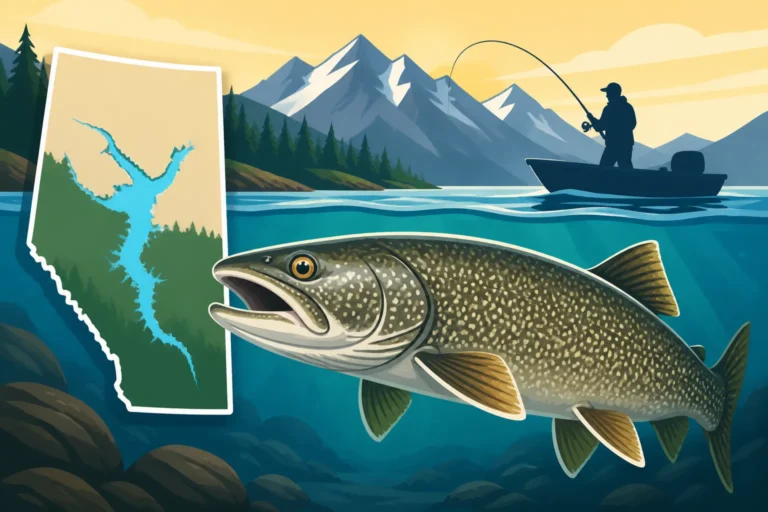
It’s a familiar frustration for many Alberta anglers: the summer sun shines bright, the boat is prepped, but the lake trout seem to have vanished into thin air. You're casting and trolling the same spots that produced fish in spring, only to come up empty-handed. The truth is, as water temperatures rise, lake trout don't disappear; they simply relocate to the deeper, cooler, and more oxygenated parts of the lake. This guide will help you understand the dynamics of lake trout behavior in Alberta's summer months and equip you with the knowledge to find them in their deepwater sanctuaries.
Why Lake Trout Seek the Depths in Summer
Lake trout are cold-water fish, and their physiology is simply not built for the warmer surface temperatures that grace our beautiful Alberta lakes during the summer. As the sun beats down and the days grow longer, the upper layers of water warm up significantly, creating an uncomfortable and even dangerous environment for these magnificent predators. Understanding this fundamental need for cold is the first step in locating them.
The Critical Role of the Thermocline
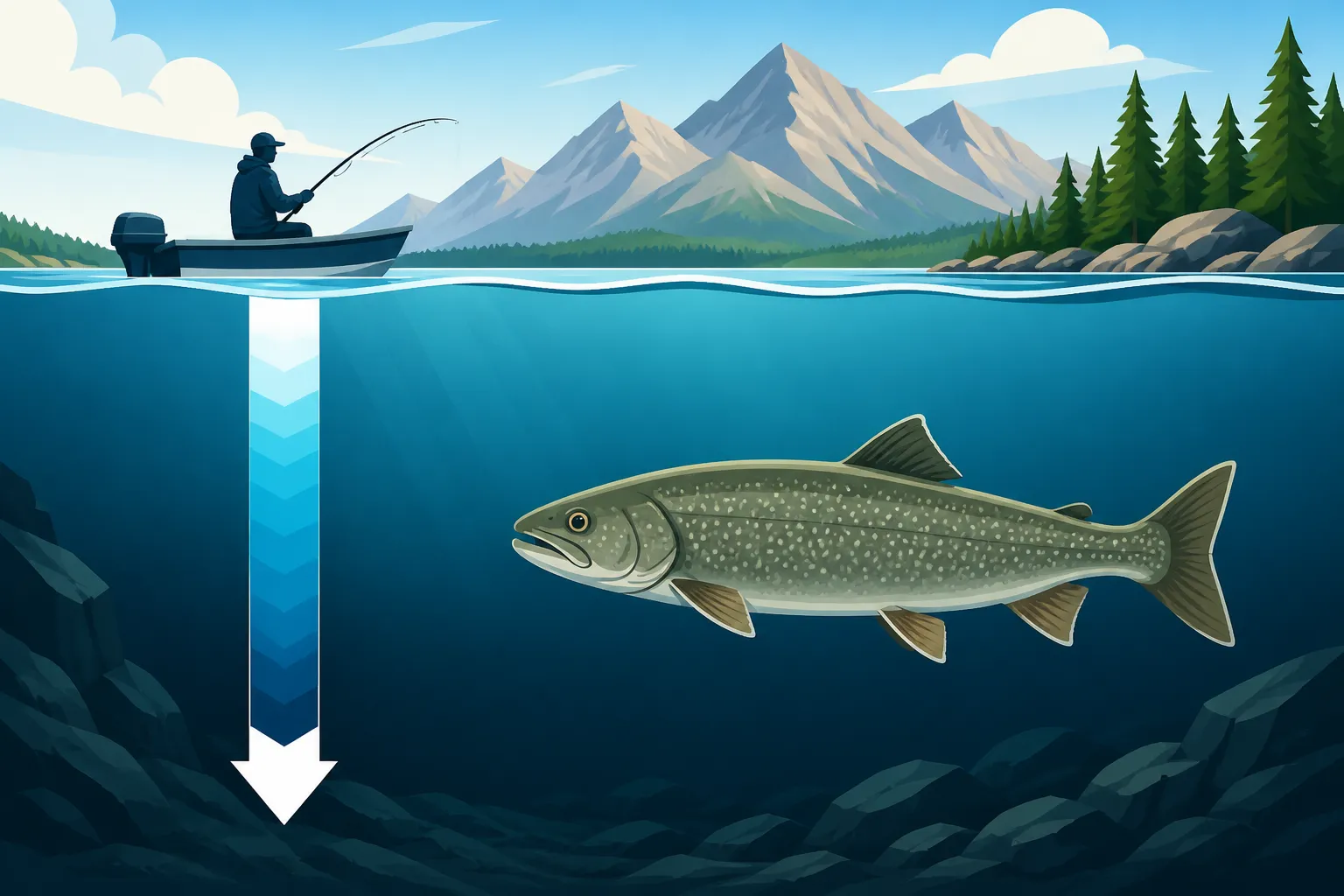
Picture a lake in summer as a layered cake, each layer with a different temperature. The warmest layer is right at the top, called the epilimnion. Below that, there’s a distinct band where the temperature drops rapidly, almost like a wall of cold water. This crucial zone is what we call the thermocline. It's not just about temperature; the thermocline also acts as a boundary for light penetration and, importantly, often dictates where plankton and smaller baitfish will congregate. Lake trout will actively seek out this thermocline, or just below it, as it offers their preferred water temperatures, typically ranging from 45 to 55 degrees Fahrenheit (7 to 13 degrees Celsius).
Imagine you're trying to cool off on a scorching day – you wouldn't stand directly in the sun, would you? You'd seek shade, or maybe a cool basement. Lake trout do the same thing, but their "basement" is the cold water layer. They're constantly trying to maintain their ideal body temperature, and the thermocline provides that perfect refuge. This thermal stratification is incredibly strong in large, deep lakes like Cold Lake or some of the Kananaskis Lakes, making it a critical factor in understanding where the fish are holding.
Oxygen Levels and Lake Trout Comfort
While temperature is a primary driver, oxygen levels are also incredibly important for lake trout survival and comfort. In deep, stratified lakes, the epilimnion (top layer) is usually well-oxygenated due to interaction with the air and photosynthesis. However, as you move deeper, below the thermocline into the hypolimnion, oxygen levels can sometimes decrease, especially in nutrient-rich lakes where decomposition consumes oxygen. Lake trout need sufficient oxygen to thrive, so they won't just go to the deepest, coldest water if it's deoxygenated.
Therefore, their summer depth isn't just a fixed number; it's a dynamic zone where the ideal temperature and oxygen levels meet. They're looking for that sweet spot. If a thermocline is strong and deep, say at 60 feet, but the oxygen starts to thin out at 70 feet, you'll likely find the lake trout concentrated in that 60-70 foot range. This is why a good fish finder isn't just about spotting fish; it's about interpreting the entire water column to understand the lake's ecological conditions. Knowing the typical depths of the thermocline for specific lakes, which you can sometimes find in regional fishing reports or by asking local tackle shops, can give you a huge advantage.
Understanding the Lake Trout's Summer Diet
Once lake trout settle into their summer depths, their feeding habits often shift to target the baitfish that also seek similar conditions. Many species of smaller fish, like ciscos, minnows, and even juvenile whitefish, will suspend themselves in or just above the thermocline, or relate to deep structure. This provides a consistent food source for the lake trout without them having to expend too much energy chasing prey in uncomfortable water.
So, when you're looking for lake trout in the summer, you're often looking for schools of baitfish. A good fish finder will not only show you the thermocline but also the dense clouds or individual marks of baitfish. If you find concentrations of bait in the ideal temperature and oxygen zone, there's a very high probability that lake trout are nearby, actively feeding or waiting for an easy meal. This understanding informs your lure selection and presentation – matching the hatch, even in deep water, can be incredibly effective. Consider How to Catch Lake Trout in Alberta might discuss this in more detail for specific seasons.
Reading the Lake: Using Sonar and Topographical Maps
Finding deep-dwelling lake trout in expansive Alberta lakes requires more than just guessing; it requires technology and a good understanding of underwater geography. Relying solely on your intuition when the fish are suspended deep can lead to endless unproductive trolling. Modern electronics and detailed maps are your best friends in this pursuit.
Decoding Your Fish Finder: Beyond the Arches
Your fish finder is an invaluable tool for summer lake trout fishing. It doesn't just show you little arches; it paints a picture of the underwater world. First and foremost, learn to identify the thermocline on your screen. It will often appear as a distinct, dense line or band, sometimes with scattered returns above and below it. Once you've located this thermal break, you have a starting point for your target depth.
Next, look for structure. Even in deep water, lake trout will relate to features like underwater points, humps, ledges, and channels. These appear as changes in the bottom contour on your sonar. Large schools of baitfish will also show up as dense clouds of dots, usually suspended above or within the thermocline. And, of course, the big, strong, distinct arches or lines are your target lake trout themselves. Don't just motor over a spot; truly read your screen. Notice how Best Fish Finders for Alberta Lakes delve into specific models and their features. A good fish finder from brands readily available on platforms like Amazon can truly elevate your deepwater game.
Utilizing Lake Contours and Structure Maps
Before you even launch your boat, spend some time studying detailed bathymetric (contour) maps of the lake you're fishing. These maps, often available online or through fishing apps, show you the underwater topography, including depth changes, drop-offs, humps, and submerged islands. Mark potential lake trout holding areas: deep points, saddles between underwater hills, or sharp breaks where deep water meets shallower structure.
In summer, lake trout will often patrol these deep-water structures. For instance, on a large lake like Lesser Slave Lake or Cold Lake, a prominent underwater hump that rises from 150 feet to 80 feet, with the thermocline sitting at 60 feet, becomes a prime target. The lake trout will be using the cooler water around the hump while feeding on baitfish that are also attracted to the structure. Having a GPS unit that integrates with these maps is a game-changer, allowing you to accurately position your boat and repeatedly target productive areas.
Spotting Baitfish Schools
As mentioned, baitfish are key. Your fish finder's ability to locate these schools is paramount. Often, lake trout won't be right in the baitball but rather lurking on the edges or slightly below, waiting for an opportunity to ambush. A common scenario is seeing a large school of baitfish suspended at 50 feet, with individual, larger fish (likely lake trout) marked at 60-70 feet nearby.
When you locate a promising area with both suitable depth/temperature and baitfish, pay close attention to the depth range they occupy. This will be your primary target depth when deploying your lures. Don't be afraid to make multiple passes through these zones. Sometimes, a slight change in boat speed or lure presentation can trigger a bite. Understanding the nuances of Trolling Techniques for Alberta Lake Trout can help you present your baits effectively when you've pinpointed these bait concentrations.
Targeting Deepwater Lake Trout: Techniques and Gear
Once you've identified the depths and structures where summer lake trout are likely holding, it’s time to choose the right techniques and gear to get your lure in front of them. This isn't your shallow-water casting game; it requires specialized approaches to combat the significant depths.
Downrigging: The Precision Approach
Downriggers are arguably the most effective way to consistently present lures at precise depths for suspended lake trout. A downrigger uses a heavy ball (cannonball) attached to a cable, which is lowered to a desired depth. Your fishing line, with its lure, is clipped to the downrigger cable with a release clip. When a fish strikes, the line pops free from the clip, allowing you to fight the fish without the resistance of the heavy ball. This allows your lure to swim freely at the precise depth you've chosen, often right in the thermocline or just above deep structure.
The beauty of downrigging is the control it offers. You can run multiple lines at different depths, cover a lot of water, and keep your bait in the strike zone for extended periods. This is particularly effective in large, deep lakes like Cold Lake, where lake trout might be suspending anywhere from 40 to 100 feet. Look for sturdy downriggers and quality release clips; many reputable brands offer excellent options that can be found through retailers like Amazon.
Jigging and Vertical Presentation
When lake trout are concentrated in a smaller area, or if you've pinpointed them on a specific piece of structure, vertical jigging can be incredibly effective. This involves dropping a heavy jig, spoon, or weighted soft plastic bait directly down to the depth where you're seeing fish on your sonar. Once it reaches the target depth, you impart action by lifting and dropping your rod, mimicking a struggling baitfish.
This technique is often used when the boat is stationary or drifting slowly. It's an active way to fish and can be very rewarding. Specialized jigging rods and reels with accurate line counters are a huge asset here, allowing you to consistently drop your lure to the exact depth where the fish are holding. Remember that current, even in deep water, can affect your lure's fall, so adjust your jig weight accordingly. How to Catch Burbot Through the Ice might focus on a different species, but many of the vertical jigging principles apply.
Trolling with Heavy Weights and Wire Line
For anglers without downriggers, or those who prefer a more traditional trolling approach, using heavy weights or specialized lines is necessary to reach deepwater lake trout. Heavy lead core line, copper line, or even stainless steel wire line can be used with planer boards or directly off the rod tip to get lures down to significant depths.
Lead core line, for example, is weighted line that sinks at a predictable rate (e.g., about 5 feet per color, with each "color" being 10 yards of line). By letting out several colors of lead core, you can get your lure down deep. Copper and wire lines are even heavier and can reach extreme depths, but they require specialized rods and reels. While these methods are less precise than downriggers, they can still be very effective, especially for covering large areas of a lake where fish are scattered. Ensure your knots are strong and your leaders are abrasion-resistant, as deep-water lake trout are powerful fish.
Common Misconceptions and Troubleshooting
Even with the right knowledge and gear, fishing for summer lake trout can present its challenges. It's easy to fall into traps or make assumptions that limit your success. Let's address some common pitfalls and how to troubleshoot them.
The Myth of "Too Deep"
One common misconception is that lake trout can go "too deep" to be caught. While it's true they'll seek out their preferred thermal zone, they won't simply vanish into an abyss where no lure can reach. Most deep, fish-holding lakes in Alberta have optimal lake trout habitat ranging from 40 to 150 feet in the summer. With the right equipment – whether it's downriggers, heavy lead core, or weighted jigs – you can absolutely reach these depths.
The challenge isn't usually that the fish are "too deep," but rather that anglers aren't getting their lures to the right depth, or they're not presenting them effectively at that depth. If your sonar shows fish at 80 feet, but your lure is only reaching 40 feet, you're not in the game. Invest in a good line counter reel and understand the dive curves of your lures, or embrace downrigging for ultimate depth control. Don't be intimidated by the numbers on your screen; view them as an invitation to go deeper!
Adjusting for Changing Conditions
Lake conditions are rarely static, and what worked yesterday might not work today. Factors like barometric pressure, recent weather fronts, and even significant boat traffic can influence where lake trout hold. A cold front, for instance, might push baitfish (and subsequently lake trout) a bit deeper or make them less aggressive. Conversely, a stable period of warm weather might see them spread out more along a deep structure.
Always be prepared to adjust your strategy. If you're not getting bites at 60 feet, try 50 feet or 70 feet. Experiment with different lures, colors, and retrieve speeds. Pay attention to what your fish finder is telling you about baitfish movement. Sometimes, a subtle change in your trolling pattern, like a slight turn that causes your lure to drop or rise in the water column, is all it takes to trigger a strike. Flexibility is key when targeting summer lake trout. For further reading, check out Best Time of Year to Fish in Alberta.
Patience and Persistence
Finally, deepwater lake trout fishing in the summer often requires a significant amount of patience and persistence. These are not always fast-paced, high-volume fisheries. You might spend hours covering water, meticulously watching your electronics, before you hit a productive zone or get a single bite. But when that rod finally bends, and you feel the powerful surge of a deepwater lake trout, it makes all the effort worthwhile.
Don't get discouraged if you're not instantly successful. Learn from every outing. Keep a log of depths, lures, and conditions that produced fish. Talk to local anglers at the boat launch or tackle shops – they often have invaluable insights into specific lake nuances. The more time you spend on the water, the better you'll become at interpreting the signs and mastering the art of deepwater lake trout fishing. Lake Trout Fishing in Alberta offers more general insights into this incredible species.
Summer Lake Trout Depth Guide
To help you visualize the factors influencing lake trout depth in summer, here's a quick reference table:
| Factor | Influence on Depth | Typical Summer Depth Range (feet) | Notes |
|---|---|---|---|
| Water Temperature | Primary driver; trout seek 45-55°F (7-13°C) | 40-150 | Will follow the thermocline as it forms and deepens. |
| Oxygen Levels | Trout need sufficient oxygen; avoid anoxic zones. | Varies | May limit deepest range if oxygen depletes in hypolimnion. |
| Baitfish Location | Trout follow food source, often suspended with bait. | Varies, often near thermocline | Look for schools on sonar; trout typically sit below or on edges of bait. |
| Lake Structure | Trout relate to deep points, humps, ledges. | 40-150 | Structure offers ambush points and cooler water. |
| Light Penetration | Trout prefer lower light, avoid bright surface. | Deeper, beyond strong sun | Can push fish deeper on bright, clear days. |
| Weather (Fronts) | Can influence fish activity and depth shifts. | Variable | Cold fronts may push fish slightly deeper or make them less active. |
By understanding these dynamics and employing the right techniques, you'll greatly increase your chances of finding and catching Alberta's elusive summer lake trout.
Disclaimer
This article is for general informational purposes only and does not constitute professional advice. Laws, prices and regulations vary by location and change over time. Consult a qualified professional for guidance on your specific situation.