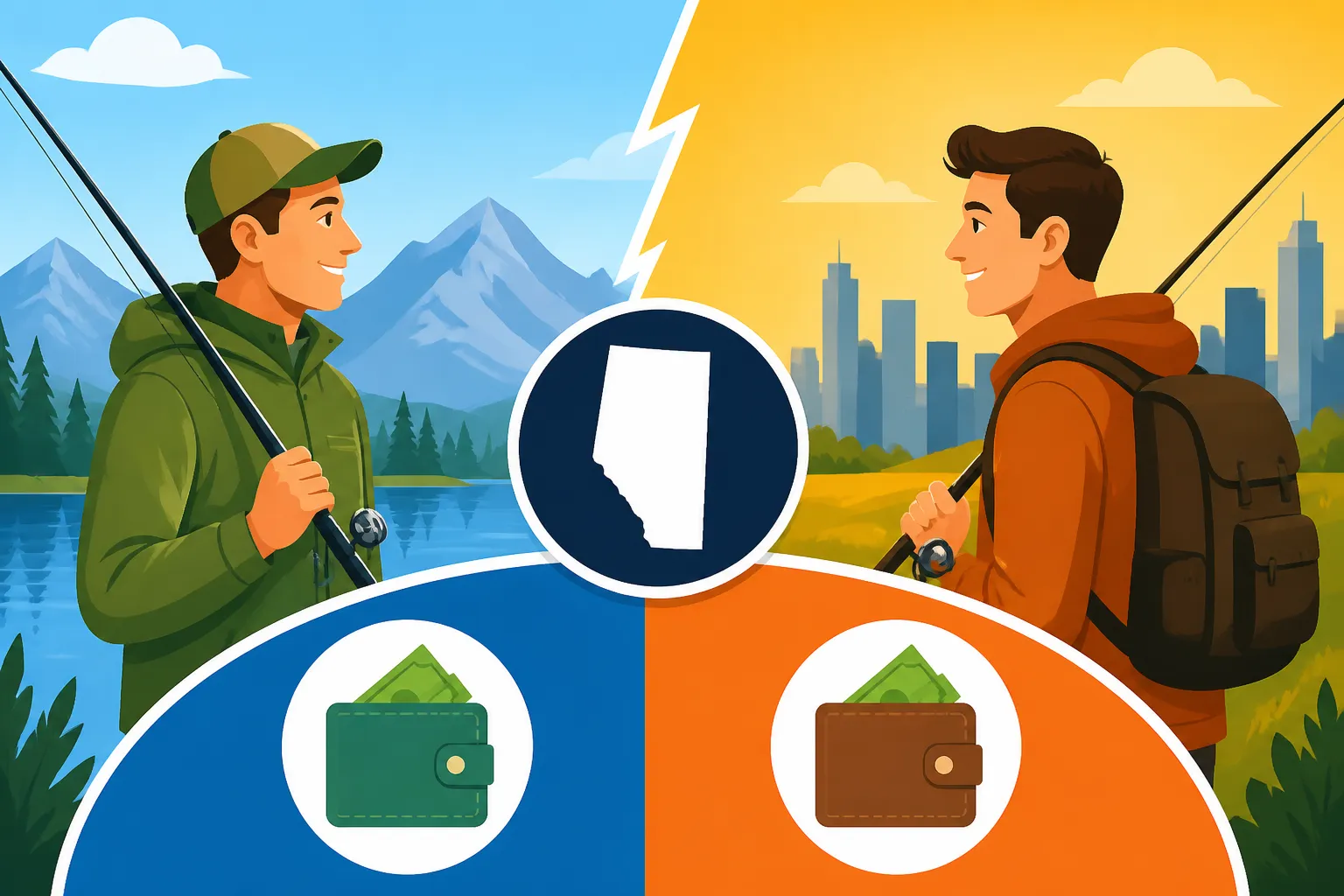
Resident vs Non-Resident Fishing License Costs in Alberta
Figuring out the exact cost of an Alberta fishing license can feel like navigating a maze, especially when you're trying to determine if you qualify as a resident or what options are available for visitors. It's a common frustration, and nobody wants to get caught on the water without the right paperwork. This comprehensive guide is here to clear up all the confusion, breaking down the costs and requirements for both Alberta residents and non-resident anglers, whether you're visiting from another province or another country.
Understanding What Defines an Alberta Resident for Fishing Purposes
Before we even dive into the numbers, the absolute first thing we need to establish is whether you're considered an Alberta resident in the eyes of the law when it comes to fishing. This isn't just a minor detail; it's the foundation upon which your license type and its associated costs are built. Misinterpreting this can lead to purchasing the wrong license, which is no fun for anyone, and potentially leads to fines.
The Legal Definition of Residency
The Alberta government has a pretty clear definition for what constitutes a "resident" when it comes to hunting and fishing licenses. Generally, to be considered an Alberta resident, you must have your primary residence in Alberta and have lived here for at least six consecutive months immediately prior to applying for your license. This means your main home, where you genuinely live, has to be within the provincial borders, and it can't just be for a quick summer visit. It's about genuine, established ties to the province. If you're a Canadian Armed Forces member temporarily stationed outside Alberta but still maintain a primary residence here, or if you're a full-time student from Alberta studying out-of-province but intending to return, there are usually specific provisions for you as well. These nuances are important because they acknowledge real-life situations that might not fit the most basic interpretation of residency.
For example, if you moved to Calgary last October and are applying for a fishing license in March, you'd likely meet the six-month residency requirement. However, if you're just here for a four-month work contract and your primary home is in, say, British Columbia, then you would not qualify as an Alberta resident, even if you're paying rent here during that period. The key is the primary residence and the six consecutive months. This rule is in place to ensure that those who are truly part of the Alberta community and contribute to its resources are eligible for resident rates, while visitors contribute differently to the conservation efforts.
Common Scenarios and Clarifications for Residency
Let's explore a few scenarios that often pop up and cause confusion. Imagine you're a student attending the University of Alberta in Edmonton, but your parents live in Saskatchewan, and you go home for breaks. If you've lived in Alberta for those six consecutive months for your studies, you'd typically qualify as a resident. However, if you're from Ontario, came to Alberta for a short work stint, and kept your primary home in Ontario, even if you were here for longer than six months, you'd still be considered a non-resident. It truly hinges on where your primary domicile is.
Another common question arises for property owners. Owning a cabin on Sylvan Lake doesn't automatically make you an Alberta resident if your main home is across the border in Montana. The "primary residence" rule is paramount. You need to be living in Alberta, paying your taxes here, getting your mail here, and generally establishing your life within the province. For any doubt, it’s always best to check the official Alberta Guide to Sportfishing Regulations or contact Alberta Environment and Protected Areas directly. Getting it right upfront saves a lot of headaches later on. Remember, enforcement officers can and do ask for proof of residency, so always be prepared to show appropriate identification like an Alberta driver's license or other government-issued ID.
The Essential Components of an Alberta Fishing License
When you set out to get your fishing license in Alberta, it's not always just a single piece of paper you're buying. There are usually two distinct components that come together to form your legal right to fish in the province's incredible waters. Understanding these parts is crucial, as one is a prerequisite for the other, and they both carry their own fees.
Your Mandatory WIN Card: More Than Just a Number
The first thing almost every angler needs in Alberta is a Wildlife Identification Number (WIN) Card. Think of your WIN Card as your unique angler (or hunter) ID number, much like a driver's license number for driving. It's a permanent nine-digit client ID that you'll use for all your future license purchases. Even if you don't buy a license every year, you'll still use the same WIN Card. This system helps the province track participation and manage its resources more effectively. You only buy a WIN Card once, though there is a small activation fee when you initially get it. This fee is separate from your actual fishing license cost.
Getting an Alberta WIN Card, Explained is a simple process, usually done online through the MyWildAlberta portal, or in person at a designated license issuer. Once you have it, it's valid for five years, after which you'll need to renew it (which also has a small fee). It's not a fishing license itself; it's just the essential identification that allows you to purchase a fishing license. Many anglers keep their WIN Card number handy, perhaps saved on their phone or even written on a waterproof note in their tackle box, because you'll need it every time you renew or buy a new fishing license. Without a valid WIN Card, you simply cannot proceed to buy a sportfishing license. It’s the gatekeeper to all your fishing adventures in Alberta.
The Actual Sportfishing Licence: What It Covers
Once you have your WIN Card, you can then purchase the actual Alberta fishing license. This is the document that grants you the legal right to fish in Alberta's general waters, subject to the provincial regulations. The cost of this license is what primarily differs between residents and non-residents, and also depends on the duration of the license you choose. Most standard sportfishing licenses cover all legal species, but certain specialized fishing activities or species (like Walleye Special Harvest Licences) might require additional tags or draws.
This sportfishing license is what you need to carry with you when you're out on the water. It will display your WIN Card number, your personal details, and the validity dates of the license. Whether you choose an annual license or a short-term option, this is the legal proof you're authorized to fish. Remember, it's not enough to just have a WIN Card; you must also have a valid sportfishing license to cast a line. Think of it this way: your WIN Card is your library card, and the sportfishing license is the book you've checked out for a specific period. Both are necessary to enjoy the resource. You can find detailed information about what this license covers by consulting the comprehensive guide to Alberta Fishing Regulations Explained.
Delving into Alberta Resident Fishing License Costs
For those of us lucky enough to call Alberta home, the cost of a fishing license is generally more affordable, reflecting our direct contributions to provincial taxes and conservation efforts. However, "resident" isn't a single category, and there are still different options and even some exemptions that can apply.
Annual Resident License Breakdown
The most common choice for Alberta residents is the annual fishing license. This license provides you with year-round access to the province's general fishing waters, typically valid from April 1st of one year to March 31st of the next. For 2026, the Alberta resident fishing license cost 2026 is usually quite reasonable, making it an excellent value for anyone who plans to fish more than a few days a year. As of my last check, the annual resident sportfishing license for adults typically hovers around the $30-$40 range, including GST, but excluding the initial WIN Card activation fee or renewal fee. This modest investment grants you access to an incredible array of fishing opportunities, from the famous trout streams of the Bow River to the vast walleye lakes up north like Lesser Slave Lake.
It's important to remember that these costs are subject to change, so always verify the current rates on the MyWildAlberta portal when you're ready to purchase. However, the general principle of a low-cost, comprehensive annual license for residents remains consistent. This fee contributes directly to the province's fisheries management, conservation programs, and stocking initiatives, ensuring that the incredible fishing resources remain healthy and abundant for future generations.
Special Resident License Options and Exemptions
Alberta also recognizes that not everyone fits into the standard adult resident category. There are specific exemptions and potential discounts available that can significantly reduce or even eliminate the cost for certain groups. For instance, Alberta Youth Fishing License Exemption Under 16 means that children under the age of 16 who are residents of Alberta do not need a sportfishing license. They still need to abide by all the regulations, including bag limits and season dates, but the license fee is waived. This is a fantastic initiative to encourage young people to get outdoors and experience fishing. Just imagine a family trip to a stocked pond near Calgary; the kids can fish freely while learning the ropes.
Similarly, Alberta Senior Fishing License Exemption at 65 provides that Alberta residents aged 65 and older also do not require a sportfishing license. Again, they must adhere to all regulations, but the cost is lifted. This is a wonderful way to acknowledge the contributions of our seniors and keep them active in the community. You might see a retired couple enjoying a quiet afternoon fishing on Gull Lake, taking advantage of this exemption. It's worth noting that while these age groups are exempt from purchasing the sportfishing license, they still need a valid WIN Card if they are actively participating in fishing activities (except for youth under 16 who are directly supervised by a licensed adult, in which case the adult's WIN card and license may suffice for the youth's activity, but it's always safer for the youth to have their own if they are frequently fishing independently). These exemptions highlight Alberta's commitment to making fishing accessible across generations.
Navigating Non-Resident Canadian Fishing License Costs
For our fellow Canadians visiting from other provinces, the fishing experience in Alberta is equally welcoming, but the licensing structure and costs are different from those for Alberta residents. It's important to understand these distinctions so you can plan your trip and budget accordingly.
Annual and Short-Term Options for Canadian Visitors
If you're a Canadian citizen or permanent resident but live outside of Alberta, you're considered a "non-resident Canadian" for fishing license purposes. You'll still need a WIN Card, just like an Alberta resident, and there will be an activation fee for that. Once your WIN Card is in hand, you can then purchase your sportfishing license. For visitors, Alberta offers a few options, primarily annual and short-term licenses, which are priced higher than resident licenses.
A Non-Resident Annual Fishing License Cost in Alberta is designed for those who plan extended stays or multiple trips throughout the year. While more expensive than the resident annual license, it provides the flexibility to fish anytime within the license year (April 1 to March 31). This might be a good option for someone who has family in Alberta and comes to visit and fish for several weeks spread across different seasons. For instance, if you're from Vancouver and want to fish the Bow River for trout in the spring and then target walleye on Lesser Slave Lake in the fall, the annual non-resident Canadian license might be the most economical choice in the long run.
For shorter trips, Alberta offers more flexible options. The Alberta 1-Day Non-Resident Fishing License Cost is perfect for a quick angling excursion, perhaps a single day spent trying to catch some pike on Keho Lake. This is usually the cheapest option for a non-resident. If your trip is a bit longer, say for a long weekend, the Alberta 7-Day Non-Resident Fishing License Cost might be more suitable. These short-term licenses provide a cost-effective way to enjoy Alberta's fisheries without committing to an annual fee for infrequent visits.
Understanding the Price Difference for Our Neighbours
The primary reason for the difference in price between resident and non-resident Canadian licenses boils down to shared responsibility for conservation and resource management. Alberta residents contribute to the province's infrastructure and conservation through their taxes year-round. Non-residents, while welcome and valued visitors, don't contribute in the same ongoing way. Therefore, the higher license fees for non-residents help to offset the costs of maintaining healthy fish populations, managing habitats, and enforcing regulations for everyone's benefit.
For example, a non-resident Canadian might pay around $80-$100 for an annual license, while a 7-day license could be in the $40-$60 range, and a 1-day license around $20-$30, not including the WIN card fee. These are general ranges and can vary annually, so it's always best to check the official MyWildAlberta website for the most current figures. It's a fair system that ensures everyone who enjoys Alberta's fishing opportunities contributes to their sustainability. So, whether you're coming from Manitoba to experience the incredible fishing on Lake Athabasca or from Ontario to fly fish the Crowsnest River, understanding these costs upfront helps you plan a worry-free trip.
Non-Resident Non-Canadian (International) Fishing License Costs
Anglers from outside of Canada are also warmly welcomed to experience Alberta's world-class fishing. Whether you're coming from the United States, Europe, or beyond, you'll find diverse species and stunning landscapes. However, like our Canadian non-resident counterparts, international visitors have a specific licensing structure and higher costs compared to residents.
Short-Term vs. Annual Licenses for Global Anglers
If you're visiting Alberta from outside Canada, you are considered a "non-resident non-Canadian." Similar to all other anglers, you'll first need a WIN Card. This is a one-time purchase (with a renewal fee every five years), and it's your permanent ID for all hunting and fishing activities in the province. Once your WIN Card is secured, you can then proceed to purchase your sportfishing license.
International visitors typically choose between an annual license or one of the short-term options. An annual non-resident non-Canadian license is the most comprehensive option, giving you the freedom to fish from April 1st to March 31st. This is ideal if you plan an extended stay or anticipate making multiple fishing trips to Alberta within the year. While it's the most expensive license type, it offers maximum flexibility. For example, if you're an American angler planning a multi-week vacation to Banff and Jasper National Park to fish the pristine mountain lakes, an annual license would cover your entire trip.
For those planning shorter trips, the daily or 7-day non-resident non-Canadian fishing licenses are usually the best value. The cost for these short-term options will naturally be higher than their Canadian non-resident equivalents but offer a proportionate price based on duration. A 1-day license is perfect if you're just dipping your toes in the water for a single day, perhaps on a guided trip. The 7-day license provides a full week of fishing, which is a popular choice for many international visitors who come for a dedicated fishing vacation. You can often find great deals on fishing tackle and gear, like waterproof cases for your license, on sites like Amazon before your trip, ensuring you're well-prepared.
Considerations for International Anglers Planning a Trip
International anglers need to be mindful of a few extra details when planning their Alberta fishing adventure. Beyond the license costs, there are potential customs regulations for bringing fishing gear into Canada, especially regarding invasive species. Always ensure your gear is clean and dry to prevent the spread of aquatic invasive species. Additionally, if you're traveling with a boat, there are specific Alberta Boating Laws for Anglers to consider, including vessel registration and mandatory safety equipment. You'll also want to confirm any visa or entry requirements for Canada itself, separate from fishing licenses.
The cost structure for non-resident non-Canadians reflects the greater investment in conservation for visitors who do not contribute to Alberta's tax base. An annual international license might cost anywhere from $100-$150, a 7-day license around $60-$90, and a 1-day license roughly $30-$50, plus the WIN card fee. These rates ensure that the financial burden of managing Alberta's fisheries is shared equitably among all who benefit from them. Many international anglers find that the quality of fishing in Alberta, from the trophy pike to the wild trout, justifies the investment in these licenses. Planning ahead by checking the official MyWildAlberta site for current fees and regulations is always the best approach for a seamless and enjoyable experience.
A Side-by-Side Look at Alberta Fishing License Costs
Now that we've broken down the categories and individual components, let's put it all together. Seeing the different license options and their approximate costs laid out side-by-side can be incredibly helpful for planning your next fishing trip to Alberta. Keep in mind that these are approximate ranges and official government websites will always have the most up-to-date figures.
Comprehensive Comparison Table
Here's a simplified table comparing the typical costs for the main types of Alberta fishing licenses, not including the initial WIN Card fee or its 5-year renewal fee, which typically ranges from $8 to $12. The WIN Card activation fee, Explained is usually a one-time charge, then a renewal every five years.
| License Type | Eligibility | Approximate Cost Range (CAD) | Validity Period | Notes |
|---|---|---|---|---|
| WIN Card Activation/Renewal | All Anglers (16+) | $8 – $12 | 5 years | Mandatory prerequisite for all licenses. |
| Resident Annual | Alberta Resident (16-64) | $30 – $40 | April 1 – March 31 | Best value for frequent resident anglers. |
| Resident Youth | Alberta Resident (Under 16) | $0 | N/A | License not required, but WIN Card may be needed for specific scenarios. |
| Resident Senior | Alberta Resident (65+) | $0 | N/A | License not required, but WIN Card may be needed for specific scenarios. |
| Non-Resident Canadian Annual | Canadian (non-AB resident) | $80 – $100 | April 1 – March 31 | Good for multiple trips or extended stays. |
| Non-Resident Canadian 7-Day | Canadian (non-AB resident) | $40 – $60 | 7 consecutive days | Ideal for short fishing vacations. |
| Non-Resident Canadian 1-Day | Canadian (non-AB resident) | $20 – $30 | 1 single day | Most affordable for a quick fishing outing. |
| Non-Resident Non-Canadian Annual | International (non-CAN) | $100 – $150 | April 1 – March 31 | Comprehensive option for international visitors with extended plans. |
| Non-Resident Non-Canadian 7-Day | International (non-CAN) | $60 – $90 | 7 consecutive days | Popular choice for international fishing trips. |
| Non-Resident Non-Canadian 1-Day | International (non-CAN) | $30 – $50 | 1 single day | Best for a single-day international fishing experience. |
Note: These prices are estimates and can change. Always confirm current prices on the official MyWildAlberta website before purchasing.
Strategic Choices Based on Your Fishing Plans
Looking at this table, you can see how important your personal situation and fishing plans are in determining the most cost-effective license for you. If you're an Alberta resident and you hit the water more than a couple of times a year, the annual resident license is a no-brainer. It provides unlimited access for pennies a day. However, if you're a student from out-of-province who just wants to try fishing for a day or two while visiting a friend in Edmonton, a 1-day non-resident Canadian license would be your best bet, saving you from a pricier annual commitment.
For our international friends, if you're making a once-in-a-lifetime trip to fish the legendary Bow River for its monster trout, a 7-day non-resident non-Canadian license offers excellent value for a dedicated fishing vacation. Conversely, if you're just passing through and want to spend a single afternoon casting a line, the 1-day option prevents overspending. The key is to honestly assess how long you plan to fish and how many trips you intend to make within a given license year. Don't forget that many retailers, including those found on platforms like Amazon, offer great deals on starter fishing kits that pair perfectly with these license options for new anglers. Making an informed decision now can save you money and ensure your focus stays on the joy of fishing, not on license worries.
Where and How to Secure Your Alberta Fishing License
Once you've figured out which type of license you need and understood the associated costs, the next step is actually getting your hands on one. Thankfully, Alberta offers a few convenient methods for purchasing your fishing license, catering to both the tech-savvy and those who prefer a more traditional approach.
The Convenience of Online Purchases
For most people these days, buying an Alberta fishing license online is by far the easiest and quickest option. The official MyWildAlberta portal is your one-stop shop for everything related to licenses and permits. You can apply for your WIN Card, renew it, and then purchase your sportfishing license all from the comfort of your home, at any time of day or night. This is incredibly convenient, especially if you suddenly decide on a spur-of-the-moment fishing trip and realize your license has expired.
The process for How to Buy an Alberta Fishing License Online typically involves a few simple steps:
- Log in or create a MyWildAlberta account: If you're a new user, you'll need to set up your profile and obtain your WIN Card. If you already have one, simply log in using your WIN number and password.
- Select your license type: Choose whether you need a resident, non-resident Canadian, or non-resident non-Canadian license, and then select the duration (annual, 7-day, or 1-day).
- Review and pay: Confirm your details and the license cost, then proceed to payment using a credit card.
- Print or save: Once purchased, you'll usually receive an email confirmation with your license attached as a PDF. You can then print this out to carry a physical copy, or save it to your smartphone or tablet for quick access. Printing or Carrying a Digital Fishing License in Alberta is completely acceptable, as long as it's readable and you can present it to an enforcement officer upon request. It's a fantastic system that puts the power right in your hands, avoiding unnecessary trips to physical locations.
In-Person Options for Traditional Buyers
While online purchasing is popular, some anglers still prefer the human touch or simply don't have easy internet access. For these individuals, there are still plenty of in-person options to buy an Alberta fishing license. Various vendors across the province are authorized to issue licenses. These typically include:
- Select sporting goods stores: Larger outdoor retailers like Cabela's, Bass Pro Shops, or even smaller local tackle shops often have the necessary systems in place to issue WIN Cards and fishing licenses. They can also be a great source for local fishing advice and gear.
- Convenience stores: Many gas stations, corner stores, or general stores in rural areas, especially those near popular fishing destinations, are licensed vendors. Look for signs indicating "Fishing Licenses Sold Here."
- Alberta Environment and Protected Areas offices: While less common for direct license purchases, some regional government offices may offer this service or at least direct you to the nearest vendor.
The benefit of buying in person is that you can ask questions directly if you have any uncertainties about regulations or specific zone rules. However, always remember to bring a valid form of identification, especially if you're applying for your WIN Card for the first time or need to prove your residency. It's a great way to support local businesses while ensuring you're legally prepared for your fishing adventure. Just like with online purchases, ensure you get a physical copy of your license or have it digitally accessible on your device before heading out to the water.
Final Considerations for a Smooth Fishing Experience
Getting your fishing license is a critical first step, but it’s just one piece of the puzzle for a truly smooth and enjoyable fishing experience in Alberta. There are a few more things every angler, resident or non-resident, should keep in mind.
Always Carry Your License and ID
This might seem obvious, but it's surprising how often anglers forget this simple rule. When you are actively fishing, you must have your valid Alberta sportfishing license and your WIN Card with you. This can be a printed paper copy, or it can be a digital copy on your phone or other device, provided it's easily accessible and readable. Alongside your license, always carry appropriate personal identification, such as a driver's license or passport. This is crucial for proving your identity and, if applicable, your residency status to a Fish and Wildlife Enforcement Officer.
Enforcement officers routinely patrol Alberta's lakes and rivers to ensure compliance with regulations. If you're asked to present your license and ID and you can't, you could face significant fines, even if you genuinely purchased a license and simply left it at home. It’s a bit like driving a car without your driver's license – you might be a legal driver, but you still need to prove it. So, before you leave home for your fishing spot, make it a habit to do a quick check: "Keys, wallet, phone, and fishing license!" This simple check can save you a lot of hassle and potential penalties.
Staying Informed with the Latest Regulations
Beyond just having the right license, it's absolutely vital to understand and follow Alberta's fishing regulations. These rules are put in place to manage fish populations, protect sensitive species like Bull Trout (which has a Zero Possession Rule in Alberta in most areas), and ensure sustainable fishing for everyone. Regulations can vary significantly depending on the body of water you're fishing in, the species you're targeting, and even the time of year. For instance, the Alberta Fishing Season Dates by Zone are critical for knowing when certain species are open for harvest in different parts of the province.
The Alberta Guide to Sportfishing Regulations is published annually and is your authoritative source for all the rules. You can find it online on the MyWildAlberta portal, and often pick up a physical copy at license vendors. Many anglers also use the Alberta Fishing Regulations App and Zone Lookup, Explained which provides an interactive, mobile-friendly way to check regulations on the go. This is incredibly helpful when you're exploring new waters or trying to quickly confirm a specific limit. Don't rely on outdated information or hearsay from other anglers. Taking the time to read and understand the regulations for your chosen fishing spot is not just about avoiding fines; it's about being a responsible angler and contributing to the health of Alberta's incredible aquatic ecosystems.
Disclaimer
The information provided in this guide is for general informational purposes only and is not legal advice. Fishing regulations and license costs in Alberta are subject to change by the provincial government. Always refer to the official Alberta Environment and Protected Areas website and the current year's Alberta Guide to Sportfishing Regulations for the most accurate and up-to-date information before engaging in any fishing activities.