Best jig weight for perch through the ice
There's nothing quite like the crisp air and serene quiet of ice fishing in Alberta, eagerly watching that tiny spring bobber for the slightest indication of a bite. But let's be honest, it can be incredibly frustrating when the perch aren't biting, and you're left wondering what you're doing wrong. Often, the secret to success, especially with finicky perch under the ice, boils down to one crucial detail: your jig weight. This comprehensive guide will help you understand the nuances of selecting the perfect jig weight, ensuring your presentation is irresistible to those hungry yellow perch.
Understanding the Nuances of Ice Fishing for Perch
Ice fishing for perch isn't just about drilling a hole and dropping a line. It's a delicate dance with nature, where every subtle choice can make a huge difference. Perch, while often abundant, can be surprisingly particular, especially when they're under a thick sheet of ice.
Why Perch Behavior Matters Under Ice
Beneath the ice, the world for a perch changes dramatically. Light penetration is reduced, water temperatures are uniformly cold, and their metabolism slows down. This often makes them less aggressive and more sensitive to unnatural presentations. What might work well for an aggressive walleye in open water can completely spook a perch in winter. They're often schooling tightly, conserving energy, and might only be willing to move a short distance for a meal.
A heavy jig can often be too aggressive, dropping too fast and making too much of a commotion, sending a school of wary perch scattering. Conversely, a jig that's too light might not get down to the feeding zone quickly enough, especially if you're over deeper water, or it might get pushed around by subtle currents, making it difficult to detect those light bites. The goal is to mimic a natural, easy meal that doesn't require much effort for them to chase down. Understanding these behaviors is fundamental to choosing the right jig weight, which is a significant part of mastering Best Techniques for Perch Through the Ice.
The Impact of Water Depth and Current
The environment beneath the ice is rarely static. Even seemingly still lakes can have subtle currents, especially in deeper basins or near inlets and outlets. These factors play a huge role in how your jig performs and, consequently, how attractive it is to perch.
Consider a sunny afternoon on a popular perch lake like Pigeon Lake or Gull Lake. If you're fishing in shallow water, say 10 to 15 feet, a lighter jig allows for a slower, more natural fall, giving the perch ample time to observe and commit to the bite. The subtle flutter of a light jig can be incredibly enticing. However, if you're targeting perch in 30 feet of water or more, or in an area with a slight current, a super light jig might take ages to reach the bottom. By the time it gets there, the school could have moved on, or your line might be bowed, making bite detection nearly impossible. In such scenarios, a slightly heavier jig becomes a necessity to quickly get into the strike zone and maintain control. It's all about ensuring your bait is where the fish are, for as long as possible, in a way that looks appealing.
Choosing the Right Jig Weight: A Detailed Breakdown
When it comes to ice fishing for perch, there's no single "best" jig weight. Instead, it's about having a range of options and knowing when to use each. The subtle differences in ounces can truly be the difference between a full bucket and an empty one.
Light Jigs for Finicky Perch
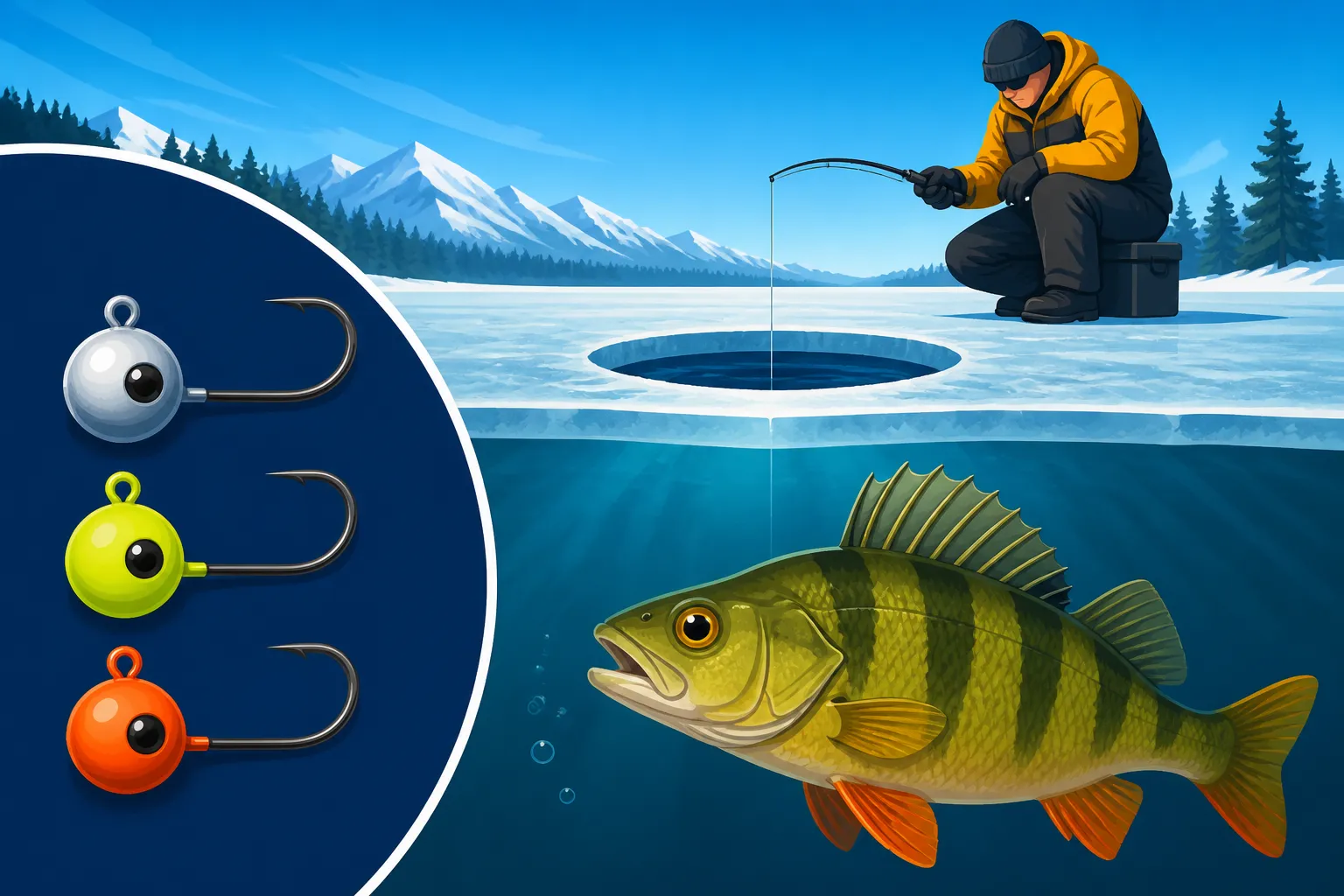
When perch are finicky, inactive, or you're fishing in relatively shallow water (think 5 to 15 feet), very light jigs are your best friend. We're talking about jig weights in the 1/32 ounce range, or even lighter, like 1/64 ounce. Some anglers even use micro jigs that are nearly weightless. The beauty of these tiny jigs lies in their incredibly slow, natural fall. They flutter and dance on the way down, perfectly imitating a struggling insect larva or a small, vulnerable minnow.
These light jigs often require sensitive gear. A light or ultra-light rod with a fast tip, paired with thin monofilament or fluorocarbon line (2-4 lb test), will help you detect the often subtle "thump" or "tick" of a perch inhaling your offering. Think about those days when the fish checker at the cleaning station tells you, "They were biting, but really light today." That's when these jigs shine. You'll typically pair them with small live baits like maggots (spikes), wax worms, or tiny soft plastic baits that complement the jig's size. Popular brands offer tiny tungsten jigs, which are denser for their size, making them fall a bit faster than lead but still maintaining a small profile, and you can find a good selection of these on Amazon.
Medium Jigs for Versatility
The 1/16 ounce jig is often considered the workhorse of ice fishing for perch, and for good reason. It strikes a fantastic balance, offering enough weight to get down to medium depths (10 to 25 feet) relatively quickly, while still providing a natural fall that perch find appealing. If you're only going to carry one size, this is often the one.
This weight is incredibly versatile, making it a staple in any angler's tackle box for panfish fishing in Alberta. It's heavy enough to resist minor currents and to maintain good contact with your line, allowing for better bite detection than its lighter counterparts. Yet, it's light enough to present your bait in a natural, enticing manner. You can effectively pair 1/16 ounce jigs with a variety of baits, from a cluster of maggots or wax worms to a small minnow head or a 1-inch soft plastic grub. On lakes like Sylvan Lake, where perch can be found at varying depths, a 1/16 ounce jig allows you to cover more ground effectively. It's also a great starting point when you're exploring a new hole or trying to gauge the perch's activity level.
Heavier Jigs for Deeper or Moving Water
While perch are often shallow-water dwellers, they do move into deeper basins, especially on larger lakes or during mid-winter. When you're fishing in depths of 25 feet or more, or if you encounter significant current, a 1/8 ounce jig or even a 1/4 ounce jig might be necessary.
The primary advantage of a heavier jig is its ability to reach the desired depth quickly and efficiently. This is crucial when you're trying to stay on top of a moving school of perch in deep water or when you want to minimize downtime between drops. The increased weight also helps you maintain better control of your presentation in current, preventing your jig from being swept away from the strike zone. While these jigs might fall faster and present a slightly less "delicate" offering, they can be essential for active perch in deeper water that are willing to chase a meal. A larger minnow head or a chunk of cutbait often pairs well with these heavier jigs, appealing to more aggressive fish. For larger bodies of water, like Lesser Slave Lake, where perch can sometimes be found deeper, having a few heavier options on hand is a smart move.
Matching Your Jig Weight to Conditions and Bait
Selecting the perfect jig weight isn't a standalone decision. It's a dynamic choice influenced by the conditions you're facing and the bait you've chosen. Thinking of these elements together will significantly improve your success rate.
Balancing Weight with Bait Presentation
Your bait, whether live or artificial, has its own weight and buoyancy, which must be considered when choosing a jig. A tiny maggot on a 1/32 ounce jig will have a completely different fall rate and action than a minnow head on the same jig.
If you're using delicate live baits like a single maggot or a small plastic grub, a lighter jig (1/32 to 1/16 oz) allows that bait to really shine. The jig acts as an anchor, but the bait itself can waft and move naturally, creating a more enticing presentation. This is especially true when perch are barely moving, and you need that subtle action to trigger a bite.
Conversely, if you're using a larger bait, such as a minnow head or a larger soft plastic, a heavier jig (1/8 oz) might be more appropriate. It helps to sink the bait at a reasonable speed and ensures the overall presentation has enough weight to be felt on your line. A minnow head on a too-light jig can sometimes "swim" erratically or be difficult to control, especially if the current is pushing it around. The goal is to create a balanced system where the jig helps your bait get to the fish and then presents it naturally. Don't be afraid to experiment; sometimes a slightly heavier jig with a natural bait can actually look more like a dying or struggling meal, which can be irresistible.
Adjusting for Active vs. Inactive Perch
Perch activity levels vary greatly throughout the day and the winter season. Early winter and late winter often see more active fish, while mid-winter can bring slower, more finicky bites. Your jig weight should reflect these changes.
When perch are active – perhaps you're seeing lots of marks on your fish finder, or your buddies are catching them steadily – you can often get away with a heavier jig, even up to 1/8 ounce. Active perch are more willing to chase, and a faster fall can sometimes trigger a reaction strike. You can drop your jig quickly, work it aggressively with short, sharp lifts, and entice those fish to strike before they can think too much. This also means you can re-bait and drop back down faster if you miss a fish, maximizing your time in the school.
However, when perch are inactive or "locked down," it's time to lighten up. This is where those 1/32 ounce and lighter jigs truly shine. The focus shifts from aggressive presentation to subtle temptation. You'll want to present your bait slowly, with minimal jigging motion. Let the jig hang, with tiny twitches, allowing the bait to gently move and entice a hesitant perch. Often, a "dead stick" technique, where you have a second rod with a very light jig and bait suspended motionless in the water, can outperform aggressive jigging when fish are finicky. It's all about matching the energy of your presentation to the energy level of the fish.
Here's a quick reference table for choosing jig weights for perch:
| Jig Weight (oz) | Ideal Depth Range | Perch Activity | Preferred Bait | Notes on Presentation |
|---|---|---|---|---|
| 1/64 to 1/32 | 5-15 feet | Inactive, Finicky | Maggots, Wax Worms, Micro Plastics | Very slow fall, subtle twitches, dead stick effective. |
| 1/16 | 10-25 feet | Moderate | Maggots, Minnow Head, Small Plastics | Versatile, controlled fall, good for light current. |
| 1/8 | 20-40+ feet | Active | Minnow Head, Larger Plastics, Cut Bait | Fast drop, handles moderate current, more aggressive jigging. |
| 1/4 | 30+ feet | Very Active, Deep | Larger Minnow, Chunk Bait | Quickest drop, for strong currents or highly active deep fish. |
Beyond Jig Weight: Other Factors for Perch Success
While jig weight is paramount, it's just one piece of the puzzle for consistent perch success through the ice. A holistic approach that considers your entire setup and technique will give you the best chances on Alberta's frozen lakes.
Rod and Line Selection for Ice Perch
Your rod and line are the conduits between you and the fish, transmitting vital information about bites and allowing you to control your jig. For perch, sensitivity is key. An ultra-light or light action ice fishing rod, typically 24 to 30 inches long, is ideal. These rods have a very flexible tip that bends easily, allowing you to see the subtlest bites, which are common when perch are just gently mouthing the bait. A good quality rod will transmit those light taps right up your arm.
Pair your sensitive rod with a high-quality, low-stretch line. Many anglers prefer 2-4 pound test monofilament or fluorocarbon. Monofilament offers a bit of stretch, which can act as a shock absorber for hard fighting fish, while fluorocarbon is nearly invisible in water and has very little stretch, enhancing sensitivity. Braid can also be used, especially in slightly heavier tests, but it requires a fluorocarbon leader because it's highly visible and can freeze up in cold conditions. Finding a reliable, sensitive rod and reel combo that won't break the bank is easy, and a quick search on Amazon will show you many highly-rated options perfect for perch, like those mentioned in our guide on Best Rod and Reel Combo for Beginners.
Sonar and Locating Perch Schools
You can have the perfect jig weight and the most enticing bait, but if you're not fishing where the perch are, it's all for naught. This is where modern sonar technology becomes an absolute game-changer for ice fishing. A quality fish finder, whether it's a flasher or a modern LCD unit, allows you to "see" what's happening under the ice in real time.
When you drop your jig down, you can watch it descend on the screen, seeing exactly where it is in relation to the bottom and, crucially, in relation to any fish. Perch often school tightly, appearing as a "cloud" or "blob" on your sonar. You'll be able to see them react to your jig. Are they rising to meet it? Are they shying away? A good sonar unit helps you fine-tune your depth and presentation instantly. If you see fish at 20 feet, but your jig is at 25, you can quickly adjust. It also helps you locate productive areas faster. Instead of drilling dozens of holes blindly, you can use your sonar to scan for structure, drop-offs, and baitfish, which are all indicators of where perch might be holding. For more on maximizing your gear, check out our piece on Best Ice Fishing Gear for Alberta.
Ultimately, success with perch through the ice is a blend of understanding their behavior, choosing the right tackle, and using technology to your advantage. Mastering jig weight is a huge step, but remember to keep experimenting with other factors to truly unlock the potential of Alberta's incredible winter fishing.
Disclaimer
Fishing regulations can change frequently. Always consult the most current Alberta Guide to Sportfishing Regulations before heading out on the water. This article is intended for informational purposes only and does not supersede official government regulations.