How to Catch Lake Trout in Alberta
There's nothing quite like the thrill of hooking into a powerful lake trout in Alberta's deep, pristine waters. But let's be honest, these ancient predators can be incredibly challenging to find and even harder to coax into biting, especially if you're not prepared for their elusive nature and deep-water habits. This comprehensive guide is dedicated to equipping you with the knowledge and strategies you need to successfully target and land these magnificent fish, from understanding their biology to mastering the techniques that bring them to the net.
Understanding Alberta's Lake Trout: The Deep Water Predator
Lake trout, often simply called "lakers," are truly unique in the Alberta fishing landscape. They're not your average pond fish; they thrive in the coldest, deepest parts of our province's most majestic lakes. Understanding their biology and preferred habitats is the first crucial step to unlocking consistent success.
Lake Trout Biology and Habits
Lake trout (Salvelinus namaycush) are a fascinating species, known for their impressive size, incredible strength, and preference for frigid, oxygen-rich waters. They are the largest native trout species in North America and an apex predator in their ecosystem. Unlike rainbow or brown trout that often inhabit rivers and shallower areas, lakers are true deep-water dwellers, especially during the warmer months.
They are incredibly slow-growing fish, which makes catching a true trophy laker a testament to patience and persistence. A 10-pound lake trout might be decades old! This slow growth also means they can live for a very long time, sometimes over 50 years in pristine conditions. Their bodies are built for endurance, with thick shoulders and powerful tails that allow them to make incredible, drag-peeling runs when hooked. Their diet is primarily composed of other fish like cisco (also known as lake herring), whitefish, sculpins, and even smaller trout. In lakes where these forage species are abundant, lake trout can grow to truly enormous sizes. They are highly attuned to temperature, constantly seeking out the "thermocline" – the layer of water where warm surface water meets cold deep water – as this is often where their food congregates.
Where to Find Lake Trout in Alberta
When you're chasing lake trout in Alberta, you're looking for specific types of water bodies: deep, clear, cold, and well-oxygenated lakes. These are generally the massive, glacial-fed lakes and reservoirs found throughout the province.
One of the most renowned lake trout fisheries in Alberta, and indeed in North America, is Cold Lake. This massive, deep lake on the Alberta-Saskatchewan border is famous for producing large numbers of lakers, including some absolute giants. Other fantastic lake trout destinations include the Upper and Lower Kananaskis Lakes and the Spray Lakes Reservoir in Kananaskis Country, which offer stunning mountain backdrops to your fishing adventure. Further north, the immense Lake Athabasca holds a sparse but often trophy-sized population of lake trout. Even some deeper, lesser-known lakes in the northern regions can hold surprises. While not historically known for them, even a lake like Pigeon Lake can occasionally hold a laker in its deepest, coldest pockets, though this is rare. When you're scouting locations, remember to consider factors like the Lake Trout Spawning Season in Alberta as their behavior changes dramatically around these times. Look for lakes with significant depth, rocky structures, underwater points, humps, and steep drop-offs. These features provide the cover, ambush points, and cooler water that lake trout crave.
Essential Gear for Alberta Lake Trout Fishing
Successfully tackling lake trout requires a specialized approach to gear. These fish are big, strong, and live in challenging environments, so your equipment needs to be up to the task. Skimping on quality here can lead to heartbreak.
Rods, Reels, and Line
When it comes to rods, you'll want something with a good backbone. A medium-heavy to heavy power rod, typically 7 to 8.5 feet in length, is ideal for both trolling and deep-water jigging. This length provides the leverage needed to fight powerful fish and the casting distance for covering water. For reels, a robust baitcasting reel is often preferred for trolling and heavy jigging, as it offers superior line capacity and cranking power. Look for models with a smooth, powerful drag system, because a screaming laker can quickly expose weaknesses. If you prefer spinning gear, opt for a larger size (4000-5000 series) with a high-quality drag.
Line choice is critical. Braided line, in the 30 to 50 lb test range, is almost universally recommended for your main line. Its zero-stretch properties offer incredible sensitivity, allowing you to feel subtle bites even in 100 feet of water, and its strength provides the confidence to battle big fish. Always pair your braid with a fluorocarbon leader. A 15 to 30 lb test fluorocarbon leader, about 6 to 10 feet long, is excellent for abrasion resistance against sharp rocks and the lake trout's rough mouth, while also being virtually invisible underwater. You can find a fantastic selection of these specialized rods, reels, and lines on online retailers like Amazon, making it easy to get exactly what you need. If you're looking to explore different rod options, our guide on Best Fishing Rods for Alberta Rivers might also offer some relevant insights into rod actions and materials, which can often be adapted for lake fishing. And don't forget to organize all this specialized gear with a good Best Tackle Box Setup for Alberta Anglers.
Lures and Baits
Lake trout are primarily piscivores, meaning they eat other fish. Your lure selection should reflect this. Large spoons are perhaps the most iconic and effective lake trout lures. Brands like Dr. Spoon, Len Thompson, Luhr Jensen Daredevl, and Williams Wabler are staples. Colors can vary, but metallic finishes (silver, gold, brass) often mimic natural baitfish, while bright colors (chartreuse, orange, firetiger) can be excellent in stained water or low light.
Deep-diving crankbaits are another excellent choice, especially for trolling. Look for lures that can reach significant depths, like Rapala Deep Tail Dancers, Storm ThunderSticks, or Reef Runner deep divers. These lures often have a strong wobbling action that triggers aggressive strikes. For jigging, heavy tube jigs (3-6 inches), bucktail jigs, or large soft plastic swimbaits rigged on heavy jig heads (1-3 oz or more) are deadly. The key is to get them down to where the fish are and work them with an erratic, enticing motion. If regulations permit, large live bait such as cisco, suckers, or substantial minnows can be incredibly effective, often fished on a quick-strike rig or a large circle hook. Always check the current Alberta fishing regulations regarding bait use, as live bait is restricted in many waters. You'll find an extensive range of these proven lures and baits available on platforms like Amazon, offering convenience and variety for your tackle box.
Electronics and Accessories
Modern electronics have revolutionized lake trout fishing. A high-quality fish finder or sonar unit is not just a luxury; it's practically a necessity. You need to be able to identify depth, bottom structure, locate baitfish schools, and most importantly, mark the individual lake trout holding in the depths. Brands like Humminbird, Lowrance, and Garmin offer excellent units with features like CHIRP sonar, side imaging, and down imaging that give you a clear picture of the underwater world.
Beyond electronics, downriggers are incredibly valuable for precise depth control when trolling. These devices allow you to present your lures at an exact depth, consistently putting your bait in the strike zone. Planer boards can be useful if you're trolling multiple lines and want to spread them out to cover a wider area, especially in larger lakes with fewer fishing boats. A large, rubberized landing net is also essential for safely landing and releasing big lake trout, minimizing stress on the fish. Lastly, heavy anchors are crucial for holding your boat steady over deep structure when you're jigging. If you're looking to upgrade your setup, our guide on the Best Fish Finders for Alberta Lakes will give you a comprehensive overview of the options available. These crucial pieces of equipment, from advanced fish finders to sturdy downriggers, are readily available from online retailers like Amazon.
Top Techniques for Catching Alberta Lake Trout
Lake trout fishing isn't a one-size-fits-all endeavor. Their deep-water habits and seasonal movements demand a variety of techniques to consistently find success. Mastering these methods will significantly increase your chances of landing that trophy laker.
Trolling for Lake Trout
Trolling is arguably the most popular and often the most effective method for covering vast expanses of water and finding active lake trout, especially in large lakes like Cold Lake or Spray Lakes Reservoir. The idea is to slowly pull your lures behind the boat at a controlled depth and speed.
The speed is crucial; typically, 1.5 to 3.0 mph is a good starting point, but you'll need to experiment to find what the fish prefer on any given day. Depth control is paramount. This is where downriggers shine, allowing you to set your lure precisely at the depth where fish are holding or where the thermocline is. Without downriggers, you can use snap weights, lead core line, or even specialized diving planes to get your lures deep. Your lure choice will typically be large spoons or deep-diving crankbaits. When trolling, don't just go in a straight line. Make S-turns, figure-eights, and vary your speed to create an erratic action that can trigger strikes. Pay close attention to your fish finder to identify contours, underwater humps, and drop-offs, and try to troll along these features. For a deeper dive into this specific method, check out our guide on Trolling Techniques for Alberta Lake Trout.
Jigging Deep for Lake Trout
When lake trout are concentrated over specific structures, or if you prefer a more active, hands-on approach, deep-water jigging can be incredibly productive. This technique involves presenting a heavy jig vertically to the fish.
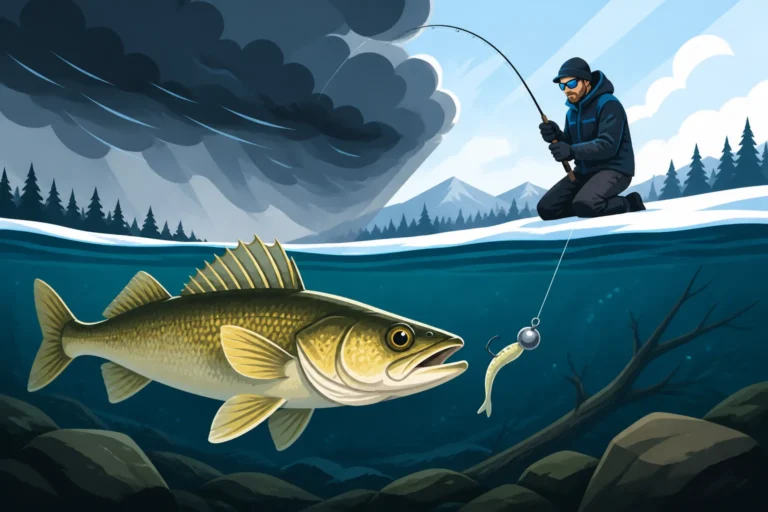
The key to successful jigging is to use your fish finder to pinpoint schools of baitfish or individual lake trout holding near the bottom or suspended in the water column. Once you've marked fish, position your boat directly over them using your trolling motor or a heavy anchor. Heavy jigs, such as large tube jigs, bucktail jigs, or spoons, are dropped to the desired depth. The retrieve involves a lift-and-fall motion – a sharp upward snap followed by a controlled fall, allowing the lure to flutter enticingly. Experiment with the height of your lifts, the speed of your fall, and the duration of your pauses. Often, the strike will come on the fall, so a sensitive rod and braided line are essential for detecting these subtle bites. This technique requires patience and a good understanding of what your sonar is showing you. While often used for other species, the principles of deep jigging are similar to those outlined in our guide on Jigging for Burbot Through the Ice.
Still-Fishing and Bait Presentation
While not as common for actively searching out lake trout as trolling or jigging, still-fishing with bait can be very effective when you've located a concentration of fish, or for a more relaxed approach. This method often involves anchoring over a known piece of structure or a proven deep hole and presenting bait directly to the fish.
If live bait is allowed in the water you're fishing (always double-check regulations!), large minnows, suckers, or cisco are excellent choices. Rig them on a quick-strike rig designed for large predators or a simple slip sinker rig with a large circle hook. The advantage of a circle hook is that it typically hooks the fish in the corner of the mouth, making for easier, safer release. Dead bait, especially oily ones like herring or smelt, can also be effective due to their strong scent. The key is to get your bait down to the desired depth and let the scent and natural movement do the work. This method requires patience, but it can be incredibly rewarding, especially during periods when fish are less active or when targeting very large, wary individuals.
Ice Fishing for Lake Trout
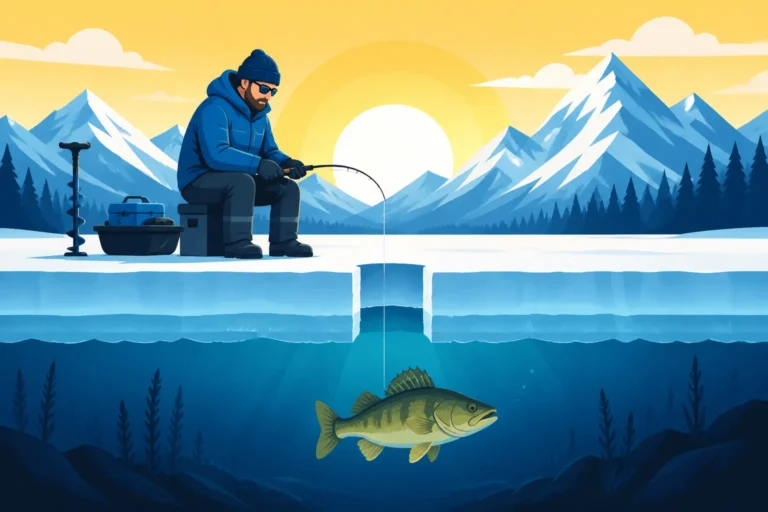
When winter blankets Alberta's lakes, a whole new world of lake trout fishing opens up through the ice. Ice fishing for lake trout is a challenging but immensely rewarding experience, drawing anglers to some of the province's deepest lakes during the coldest months.
To succeed, you'll need a heavy-duty ice auger (power augers are a must for cutting through thick ice and making many holes) and a portable fish finder or flasher. Lake trout often relate to deep structure, similar to open water, so focusing on underwater points, humps, and steep drop-offs is key. Common techniques include jigging heavy spoons (e.g., Williams Wabler, Swedish Pimple) or large tube jigs. A popular strategy is "hole hopping" – moving from hole to hole, jigging for a few minutes, and if no bites, moving on. Another effective method is using tip-ups baited with large frozen or live bait (again, check regulations for live bait). Set your tip-ups at various depths to find the active zone. Remember that lake trout are powerful, even through a small hole in the ice, so have a gaff or an ice fishing scoop ready for landing. Safety is paramount when ice fishing; always check ice thickness and conditions. For more general tips on enjoying the hard water season, refer to our comprehensive guide on Ice Fishing in Alberta.
Seasonal Strategies for Targeting Lake Trout
Lake trout behavior changes dramatically throughout the year, primarily driven by water temperature and spawning cycles. Understanding these seasonal shifts is crucial for adapting your tactics and finding success.
Spring Tactics (Ice-Out to Early Summer)
Spring, right after the ice melts, is a fantastic time to target lake trout. The water is still cold throughout the entire water column, and the trout often move shallower, cruising along shorelines, rocky points, and feeding near river inflows where baitfish might be congregating.
During this period, you can often find lakers in depths of 10 to 40 feet, sometimes even shallower early in the season. Trolling or casting spoons and crankbaits near these shallower structures can be incredibly effective. Consider bright, flashy spoons that mimic newly active baitfish. As the water slowly begins to warm, they'll gradually retreat to deeper water, making this a prime, but often short-lived, opportunity to catch them without needing specialized deep-water gear like downriggers. Pay attention to water temperature – once surface temps consistently rise above 50-55°F (10-13°C), expect them to start heading deeper. To get a better sense of when different species become active, consult the Alberta Fishing Seasons by Zone and Month guide.
Summer Deep Water Challenges
Ah, summer. While beautiful for being on the water, it presents the biggest challenge for lake trout anglers. As the surface water warms significantly, lake trout are forced to descend into the cold, oxygen-rich depths of the lake, often holding in 60 to 150 feet or even deeper, depending on the lake's thermocline.
This is when those sophisticated electronics and downriggers become absolutely essential. Without them, you're essentially fishing blind. Focus your efforts on deep structure: submerged islands, humps, sharp drop-offs, and deep points. Trolling deep-diving crankbaits or heavy spoons on downriggers is the most efficient way to cover water and present lures at these extreme depths. Vertical jigging directly over marked fish is another highly effective summer tactic. The bites can be subtle in deep water, so feel for any unusual resistance or change in line tension. Sometimes, late evening or early morning (dawn) can see lake trout venturing slightly shallower, but typically, summer means deep, deep water.
Fall and Pre-Spawn Activity
As the days shorten and the water temperatures begin to drop in the fall, lake trout start to become more active and once again move shallower, often in preparation for their spawning rituals. This pre-spawn period can offer some of the most exciting fishing of the year.
Lake trout typically spawn in late fall, often on rocky shoals, reefs, or points in relatively shallow water (10-50 feet). Before this, they will aggressively feed, making them more susceptible to a wider range of presentations. Trolling large spoons and crankbaits along these spawning grounds or known staging areas can be incredibly productive. Casting heavy spoons or large swimbaits from shore or boat can also be effective if you find them in shallower water. The fish are often fat, active, and willing to chase. This time of year offers a great chance to catch a true trophy. Knowing the precise Lake Trout Spawning Season in Alberta will give you a significant advantage in timing your fall trips.
Winter Ice Fishing Opportunities
Winter lake trout fishing, as discussed earlier, is a unique and thrilling experience. Once the lakes are safely frozen, anglers venture out onto the ice, often in remote locations, to target these deep-water giants.
During winter, lake trout patterns can be quite consistent. They'll often be found in the same deep areas and near the same structures they frequented in late fall. The primary challenge is getting your presentation to them through a small hole in the ice. Heavy jigging spoons, tube jigs, and large plastics are the go-to artificials. Many anglers also set up multiple tip-ups with large minnows or cut bait to maximize their chances. The cold water means these fish fight with incredible power, and landing a big laker through an ice hole is a true test of strength and skill. Always remember to prioritize safety on the ice, checking thickness regularly and being prepared for extreme weather conditions.
Advanced Tips and Tricks for Tricky Lakers
Lake trout can be frustratingly elusive. While the basic techniques are a great start, incorporating some advanced strategies can make all the difference between a few missed opportunities and a truly memorable day on the water.
Reading the Water and Structure
Modern fish finders are incredible tools, but they're only as good as the angler interpreting the data. Learning to "read the water" goes beyond just marking fish; it's about understanding the entire underwater environment.
Pay close attention to your sonar for changes in bottom contour – subtle humps, ledges, gradual slopes, or sudden drop-offs. These are prime areas where lake trout ambush bait. Look for baitfish schools; where the bait is, the lakers will follow. Also, identify the thermocline, which appears as a distinct band on your sonar where the temperature changes rapidly. Lake trout will almost always be found in or just below this layer during summer. Wind and current also play a role; strong winds can push baitfish against certain shorelines or points, concentrating the predators. By combining your sonar readings with an understanding of these environmental factors, you can make informed decisions about where to fish and how to present your lures.
Lure Color, Size, and Action
There's no magic bullet when it comes to lure selection, and what works one day might be ignored the next. Experimentation with color, size, and action is crucial for lake trout.
Color: In clear water, natural baitfish patterns (silver, white, perch, smelt imitations) are often best. In stained or deeper, darker water, brighter colors like chartreuse, orange, or firetiger can be more visible. On overcast days or in low light, sometimes black or dark blue can be surprisingly effective. Don't be afraid to change colors if you're not getting bites.
Size: Lake trout eat big prey, so don't be shy about using larger lures, especially for trophy fish. Spoons 4-7 inches, crankbaits 5-9 inches, and jigs with 3-6 inch soft plastics are all fair game. However, sometimes a smaller, more subtle offering can trigger a bite when fish are finicky.
Action: How you retrieve your lure is just as important as its physical characteristics. When trolling, experiment with speed. When jigging, vary your lift height, speed of fall, and the duration of your pauses. Sometimes a fast, aggressive rip is needed, other times a slow, methodical flutter is key. Don't fall into a monotonous rhythm; make your lure look like an injured or panicked baitfish.
Fighting and Landing Large Lake Trout
Hooking a big lake trout is only half the battle; bringing it to the net is another challenge entirely. These fish are renowned for their powerful, sustained runs and deep dives.
When you hook a laker, resist the urge to horse it in. Let the drag do its job. Ensure your drag is set correctly – firm enough to tire the fish but loose enough to prevent line breakage during a powerful run. Keep your rod tip high to maintain pressure and absorb shocks. When the fish runs, let it take line, but be ready to pump the rod and reel down when it pauses. Avoid reeling against a strong run; you'll only twist your line or burn out your drag. As the fish gets closer to the boat, it will often make a last, desperate dive under the boat. Be ready to quickly move your rod tip around the bow or stern to keep the line from rubbing. Use a large, rubberized landing net (like those recommended in our Best Landing Net for Pike guide, as pike nets are often suitable for large trout) to safely scoop the fish, minimizing contact with its body. If you intend to release the fish, handle it gently and quickly.
Conservation and Responsible Angling
As anglers, we have a responsibility to protect Alberta's incredible lake trout fisheries for future generations. These slow-growing, long-lived fish are particularly vulnerable to overfishing, and habitat degradation, making conservation practices paramount.
Catch and Release Best Practices
Many lake trout fisheries in Alberta have strict catch and release regulations, or reduced possession limits, precisely because of their vulnerable nature. If you're releasing a lake trout, which is highly encouraged, follow these best practices to maximize its survival:
- Minimize Fight Time: Use appropriate tackle to bring the fish in as quickly as possible without overstressing it.
- Avoid Air Exposure: Keep the fish in the water as much as possible. If you must remove it for a quick photo, do so gently and quickly.
- Wet Hands: Always wet your hands before touching the fish to protect its delicate slime coat.
- Support its Body: If holding for a photo, support its body horizontally, especially around the belly, to avoid internal organ damage. Never hold a large fish vertically by its jaw.
- Use Barbless Hooks: Many Alberta waters mandate barbless hooks. Even where not required, de-barbing your hooks makes removal much easier and less damaging.
- Proper Hook Removal: Use long-nosed pliers or a hook remover to quickly and carefully extract the hook. If the hook is deeply swallowed, cut the line as close to the hook as possible.
- Revive Gently: If the fish seems sluggish, hold it upright in the water, facing into the current (if applicable), until it swims away strongly on its own.
The care we take in handling these fish ensures they can continue to grow and reproduce, much like the efforts described for protected species in the Alberta Bull Trout Zero Possession Rule.
Understanding Regulations
Alberta's fishing regulations are designed to protect fish populations and ensure sustainable angling opportunities. For lake trout, these regulations can vary significantly from lake to lake and from zone to zone. It is absolutely critical that you consult the most current Alberta Guide to Sportfishing Regulations before every fishing trip.
This guide will outline specific limits (zero possession, one over a certain length, etc.), season dates (when fishing for lake trout is open or closed), and bait restrictions for each water body. For example, some lakes might have a "zero possession" for bull trout (a close relative) but allow retention of lake trout within specific size ranges. Always be aware of any special harvest draws, like those sometimes implemented for walleye, which could apply to other species in the future. Ignorance of the regulations is not an excuse, and penalties for violations can be severe. A thorough read of Alberta Fishing Regulations Explained and knowing how to navigate Reading the Alberta Guide to Sportfishing Regulations will prepare you for a compliant and enjoyable fishing experience.
Protecting Lake Trout Habitat
Beyond direct angling practices, protecting the habitat of lake trout is vital for their long-term survival. These fish require pristine, cold, and clean water to thrive.
As anglers, we can contribute by always practicing "Leave No Trace" principles: pack out everything you pack in, and perhaps even a little more. Avoid introducing invasive species by cleaning your boat, trailer, and gear thoroughly between water bodies. Report any suspicious sightings of non-native species. Support conservation organizations that work to protect and restore Alberta's aquatic ecosystems. By being mindful stewards of our waters, we ensure that Alberta's majestic lake trout can continue to grace our lakes for generations to come.
Comparison of Lake Trout Fishing Techniques
Here's a quick overview comparing the primary techniques for targeting lake trout in Alberta:
| Technique | Best Conditions | Required Gear Highlights | Pros | Cons | Notes |
|---|---|---|---|---|---|
| Trolling | Large lakes, covering vast areas, finding active fish | Downriggers (summer), heavy rods, large lures | Efficiently covers water, good for suspended fish, less physically demanding | Requires boat, can be expensive (gear), less "hands-on" feeling | Ideal for summer when fish are deep and scattered. |
| Deep Jigging | Over marked fish/structure, winter ice fishing | Fish finder, heavy jigs, sensitive rod | Exciting, direct connection to fish, good for precise presentations | Can be physically tiring, requires precise boat positioning/anchoring | Great when fish are concentrated or less active. |
| Still-Fishing | Anchored over known spots, patient anglers | Heavy tackle, live/dead bait (if allowed) | Relaxed approach, effective for wary fish, can use multiple lines | Less active, relies on fish coming to you, limited coverage | Best used when you know fish are in a specific area. |
| Ice Fishing | Winter, frozen lakes | Ice auger, flasher, heavy jigs/tip-ups | Access to otherwise unreachable spots, unique winter challenge | Requires specialized gear, safety concerns, extreme weather conditions | Popular on lakes like Cold Lake, offers unique access to deep water. |
Disclaimer
The information provided in this guide is for general informational purposes only and is not intended to be a substitute for professional advice. Fishing regulations in Alberta are subject to change, and it is the angler's responsibility to consult the most current Alberta Guide to Sportfishing Regulations published by the provincial government before engaging in any fishing activities. Always prioritize safety on the water and ice.