Best deep water structure spots on Cold Lake
Cold Lake is an absolute behemoth, a jewel of Alberta that promises incredible fishing, especially for those elusive, hard-fighting lake trout. But let's be real, a lake this size can feel overwhelmingly vast, making it incredibly tough to pinpoint where those big lakers are hiding, especially when they dive into the depths. You might spend hours just cruising, wondering if you're even in the right zip code. This comprehensive guide is here to cut through that frustration, helping you understand, locate, and effectively fish the best deep water structure spots on Cold Lake for those sought-after lake trout.
Understanding Cold Lake's Deep Water Appeal for Lake Trout
Lake trout are creatures of habit, especially when it comes to their preferred environment. On a massive, deep lake like Cold Lake, understanding why they go deep is the first step to consistently finding them. It's not just random; there's a science to their movement.
Why Lake Trout Go Deep
During much of the year, particularly as surface waters warm, lake trout seek out colder, oxygen-rich environments. This phenomenon is known as thermal stratification, where the lake divides into layers of differing temperatures. The colder, deeper water is where lake trout thrive. They are cold-water species, preferring temperatures in the 45-55°F (7-13°C) range, and these conditions are consistently found in the deeper sections of Cold Lake.
Moreover, their primary food source, like cisco (also known as lake herring) and various sculpins, also tends to congregate in these cooler depths, forming schools that lake trout actively pursue. So, it's a matter of comfort and cuisine. If you're out on a warm summer day, scanning the surface and seeing nothing, remember that the party is likely happening much, much deeper. They're not just deep; they're relating to specific underwater features within that deep-water comfort zone. To truly understand their behaviour, it helps to know what water temperatures lake trout prefer, which guides their movements year-round.
Reading Cold Lake's Unique Underwater Topography
Cold Lake boasts an impressive maximum depth of over 300 feet (91 meters), and its basin is far from a featureless bowl. It's a complex underwater landscape of dramatic drop-offs, gradual slopes, submerged humps, and intricate contours. Fishing this lake without a solid understanding of its topography is akin to driving blindfolded.
The key to success lies in interpreting contour maps and using advanced sonar technology. You're looking for underwater features that break up the otherwise flat bottom. Think of it like a cityscape for fish: they use these structures for cover, ambush points, and navigation. These can include:
- Humps: Submerged hills that rise from the bottom, often attracting baitfish, which in turn attract predators.
- Drop-offs: Steep changes in depth, providing quick access to deep water.
- Underwater Islands: Completely submerged landmasses, often with distinct peaks and surrounding deep troughs.
- Points: Submerged extensions of land that taper into deeper water.
- Trenches/Channels: Deeper depressions, often formed by ancient riverbeds or currents.
Mastering how to read these contours on your fish finder or GPS chartplotter is paramount. It allows you to visualize the underwater world and anticipate where fish might be holding. Remember, the deeper you go, the more subtle these structures can appear on your screen, requiring a keen eye and often, patience, to decipher.
Key Deep Water Structure Types on Cold Lake
When targeting lake trout in the vast expanses of Cold Lake, it's crucial to identify and focus on specific deep water structures. These aren't just random bumps on the bottom; they are magnets for baitfish and, consequently, for the predatory lake trout.
Submerged Humps and Reefs
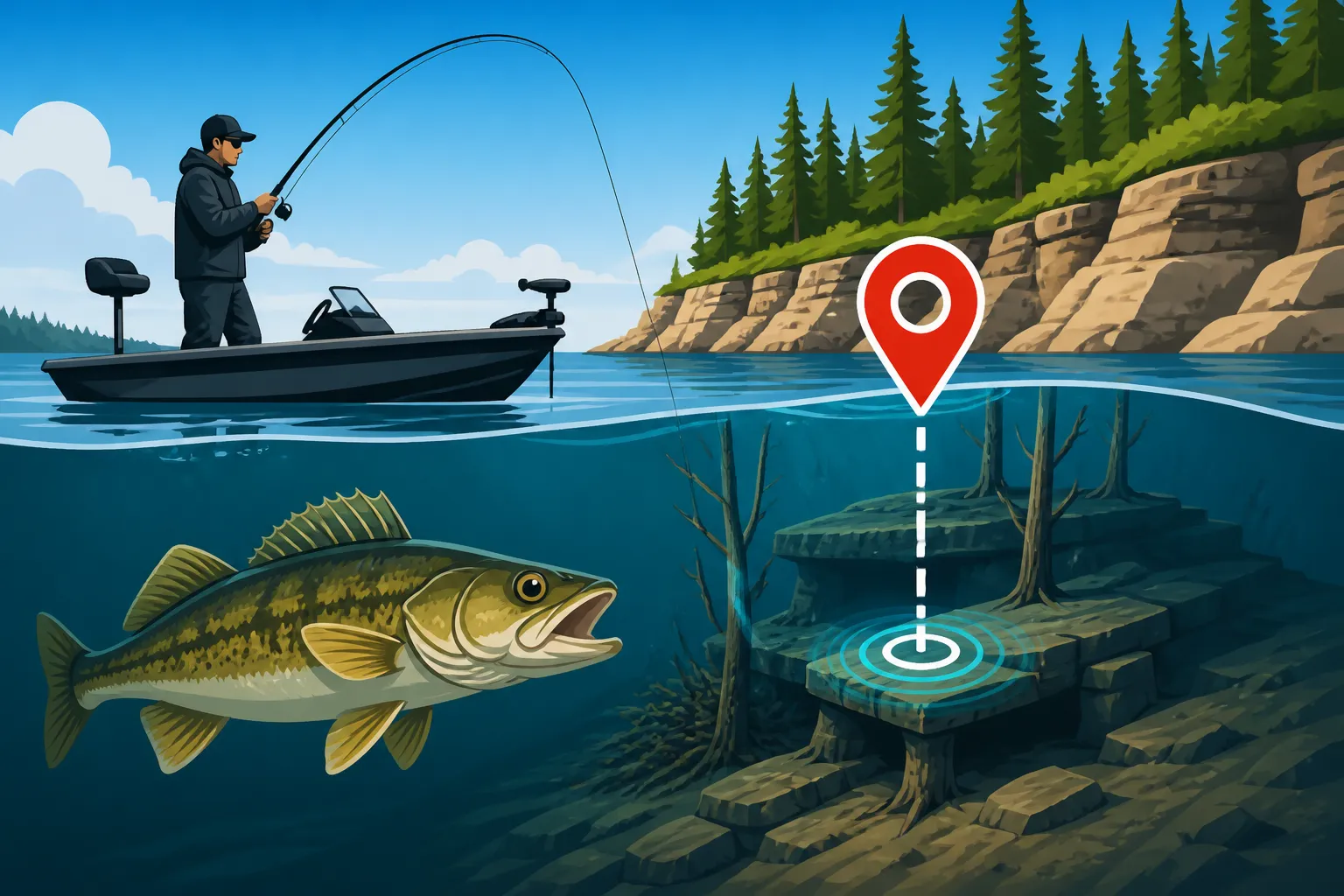
Imagine an underwater mountain range, complete with peaks and valleys. Submerged humps and reefs are precisely that: elevated areas of the lakebed that rise significantly from the surrounding bottom. On Cold Lake, these can be formidable structures, rising from depths of 100 feet or more up to 40-60 feet below the surface. Lake trout absolutely love these features because they offer excellent ambush points and concentrate baitfish.
A classic scenario involves a school of cisco hovering over a hump in 50 feet of water, with larger lake trout lurking just off the edges, waiting for an opportune moment to strike. These humps often have rocky or gravelly tops, providing cover and attracting smaller organisms, creating a miniature ecosystem. Locating these on your sonar and marking them precisely with your GPS is non-negotiable. You'll want to make multiple passes, mapping out the shape and size of the hump, and looking for any smaller "spines" or "fingers" that extend off the main structure. These smaller anomalies can often be the most productive.
Steep Drop-offs and Ledges
Drop-offs are essentially underwater cliffs or steep inclines where the depth changes rapidly. On Cold Lake, you can find ledges that drop from 30 feet down to 80 feet or even more dramatically from 60 feet to 150 feet within a short horizontal distance. These features are incredibly important because they provide lake trout with easy access to varying depths.
During colder months or early mornings, lake trout might be cruising the shallower sections of the drop-off, but as the sun rises and temperatures change, they can quickly retreat to the deeper, darker waters along the same ledge. Fishing the edges of these structures, both at the top and the bottom, is a highly effective strategy. Consider where the structure forms a sharp break – that's often where predatory fish will patrol. They offer both cover and a clear migration route, allowing lakers to move up and down the water column with minimal effort. This is where advanced sonar with side-imaging can truly shine, allowing you to see fish holding just off the face of these deep-water cliffs.
Underwater Points and Bays
Just like points on the shoreline, underwater points are extensions of land that taper out into deeper water. These points act as natural funnels for current and baitfish movement. As baitfish move along a contour line, they often get channeled around these points, making them prime locations for waiting lake trout. On Cold Lake, you'll find submerged points extending from larger islands or even from the mainland shoreline, pushing out into significant depths.
Focus on both the "inside turn" (the sheltered side of the point) and the "outside turn" (the exposed side facing open water). Lake trout can be found on either, depending on current, light conditions, and baitfish presence. Bays that feature deep water access are also crucial. While the very back of a shallow bay might not hold lakers, the deep transition zone where the bay meets the main lake often does. These areas can act as holding patterns for fish before they move into shallower water to feed or as safe havens after feeding. Understanding these structural nuances is key to consistent success. For those looking to gain even more expertise, exploring resources on Lake Trout Fishing in Alberta can offer broader insights.
Prime Deep Water Hotspots on Cold Lake
While Cold Lake is vast, certain areas consistently produce excellent deep water lake trout fishing due to their unique underwater geography. Knowing where to start your search can save you hours of unproductive trolling or casting.
The French Bay Deep Drop
On the eastern side of Cold Lake, near French Bay, lies a significant deep-water drop-off that is a known haunt for larger lake trout. This area is characterized by fairly shallow waters closer to the bay, which then quickly transition into much deeper expanses. The "deep drop" itself isn't a single point but a series of dramatic contours and ledges that plunge into depths exceeding 150 feet.
Anglers often focus on the transition zones here, looking for concentrations of baitfish or isolated rock piles on the deeper ledges. The lake trout use these areas as a highway and a pantry, moving up and down the contours in search of food. Trolling large spoons or crankbaits along the 60-120 foot depth range can be particularly effective, especially during summer and fall. Pay close attention to your sonar as you traverse this area; subtle changes in the bottom profile can indicate a hot spot. If you're new to the area, connecting with local guides through platforms like FishingBooker can sometimes offer invaluable real-time insights into these specific spots.
The Medley River Mouth Trench
Where the Medley River flows into Cold Lake on the southwestern side, the interaction of river currents and the lake's basin has created a distinct trench or deeper channel. Rivers often deposit nutrients and sediment, subtly altering the lakebed over time, and these changes can create unique fish habitats. This trench offers lake trout a slightly different deep-water environment, often with cooler, potentially more oxygenated water from the river inflow.
Lake trout might stage in this trench, especially during certain times of the year or when there's an influx of forage fish attracted to the river's outflow. While the exact location and prominence of this trench can vary, it generally runs offshore from the river mouth into the main lake basin. Fishing this area requires careful attention to your electronics to identify the channel and any adjoining structures. Vertical jigging or slow trolling over and along the edges of this trench, particularly in depths of 70-130 feet, can yield impressive results. Understanding how to interpret your Best Fish Finders for Alberta Lakes will be crucial here.
Mid-Lake Humps and Plateaus
Moving further out into the expansive main basin of Cold Lake, away from the immediate shorelines, you'll discover a series of less defined but incredibly productive mid-lake humps and plateaus. These aren't always as dramatic as the French Bay drop-off, but they are subtle rises from the deep bottom that can hold significant numbers of lake trout. Often, these structures are several miles offshore, making them harder to locate without good GPS and sonar.
These plateaus might only rise 10-20 feet from a surrounding depth of 150-200 feet, but that slight elevation is enough to concentrate baitfish and provide orientation for lake trout. You'll need to spend time slowly motoring over these areas, carefully watching for arches on your sonar that indicate fish or schools of bait. Once you find a productive hump or plateau, mark it as a waypoint on your GPS. These offshore structures can be particularly good during the peak summer months when lake trout are seeking the coldest, deepest water available. For anglers seeking an edge in locating these elusive deep-water fish, platforms like FishingBooker often list charters with intimate knowledge of these secret mid-lake gems.
Techniques for Targeting Deep Water Lake Trout
Finding the deep water structures on Cold Lake is only half the battle. Once you've identified potential hotspots, you need the right techniques and gear to effectively present your lure to these often-finicky predators.
Using Sonar and GPS Effectively
Modern sonar and GPS units are indispensable tools for deep water lake trout fishing. Your fish finder isn't just for showing you what's directly beneath the boat; it's a window into the underwater world. Start by running grid patterns over suspected areas to thoroughly map out the contours, humps, and drop-offs. Mark any significant bottom structure, changes in depth, or signs of baitfish schools with waypoints on your GPS.
When you're over a deep water structure, look for distinct arches on your sonar that indicate fish. Sometimes, you'll see large, individual arches (trophy lake trout!), and other times, you'll see dense clouds of smaller marks, which are likely schools of baitfish like cisco. Lake trout will often be found either directly within these baitfish schools or just below or to the side, waiting to ambush. Utilize features like side-imaging and down-imaging, if your unit has them, to get a clearer picture of structures and fish holding off to the sides of your boat. Adjust your sensitivity and depth range settings to optimize the view for deep water. Knowing how to interpret these displays effectively is a game-changer for How to Catch Lake Trout in Alberta in deep environments.
Popular Deep Water Lures and Presentations
When it comes to lures for deep water lake trout on Cold Lake, heavier, fast-sinking options are often preferred to quickly reach the strike zone. You're dealing with substantial depths, and lighter lures can take too long to get down, or drift too far from your target.
- Jigging Spoons: Heavy jigging spoons, like Williams Woblers or Northland Tackle Buck-Shot Rattle Spoons, are excellent for vertical jigging directly over marked fish or structure. Drop them to the bottom, then lift and drop, varying your retrieve to entice a strike. Experiment with silver, gold, and white, or even glow-in-the-dark options for very deep, dark conditions.
- Heavy Swimbaits & Tube Jigs: Large, weighted soft plastic swimbaits or tube jigs can also be deadly. Fish them on heavy jig heads (1-3 oz or more) and work them with a similar lift-and-drop motion. The subtle action of the plastic can be very appealing to hesitant lakers.
- Downrigging with Crankbaits/Flasher-Fly Combos: Trolling with downriggers is a highly effective method for covering large areas of deep water and presenting lures at precise depths. You can use large diving crankbaits in natural baitfish colours or, a very popular option for lake trout, a flasher or dodger followed by a fly or spoon. Brands like Gibbs Delta or Luhr Jensen make excellent flashers that impart an irresistible action to your trailing lure. The flash and vibration mimic baitfish and attract curious lakers. This is a core technique for Trolling Techniques for Alberta Lake Trout.
- Wire Line Trolling: For anglers without downriggers, wire line (monel or stainless steel) with heavy spoons or deep-diving plugs can get lures down, though depth control is less precise.
The key is often to match the hatch – use lures that resemble the cisco or other baitfish that lake trout are feeding on in Cold Lake.
Seasonal Considerations for Deep Water Fishing
While lake trout are generally deep water fish, their exact preferred depths and locations on Cold Lake can shift subtly throughout the seasons.
- Ice-Out (Spring): Immediately after the ice melts, lake trout can be found in a wider range of depths, sometimes even relatively shallow (20-40 feet) as they disperse from deeper wintering grounds. They might still relate to deep structures but will be more active higher in the water column.
- Summer: This is peak deep water season. As surface temperatures rise, lake trout retreat to the deepest, coolest parts of the lake. They'll be tightly tied to those humps, drop-offs, and trenches in 80-150+ feet of water. This is when techniques for Best Techniques for Deep Water Summer Lake Trout truly shine.
- Fall: As water temperatures begin to cool, lake trout may start to move shallower again, especially in anticipation of their spawning season. They might still use deep structures, but they could be found higher up on the humps or along the tops of drop-offs. Knowing the Lake Trout Spawning Season in Alberta will help you predict these movements.
- Winter (Ice Fishing): Even under the ice, lake trout continue to inhabit deep water. Anglers will target deep humps, steep drop-offs, and basin areas with heavy jigs and spoons, often in 60-120 feet of water. The fish are often more lethargic but still present.
By understanding these seasonal shifts, you can refine your approach and increase your chances of finding and catching these magnificent fish in the depths of Cold Lake.
Here's a quick summary of typical deep water structure types and their characteristics for lake trout:
| Structure Type | Characteristics | Target Depths (Cold Lake) | Why it Attracts Lake Trout |
|---|---|---|---|
| Submerged Humps | Hills rising from the lakebed (e.g., from 100ft to 50ft) | 40-100+ feet (top to base) | Ambush points, concentrates baitfish, provides cover |
| Steep Drop-offs | Rapid changes in depth (underwater cliffs/ledges) | 50-150+ feet | Easy access to varying depths, travel corridors |
| Underwater Points | Extensions of land tapering into deep water | 60-120+ feet (where it drops) | Funnels baitfish, current breaks, ambush points |
| Mid-Lake Plateaus | Broad, elevated areas in the main basin | 80-180+ feet (top to base) | Large feeding grounds, subtle structure in open water |
| River Mouth Trenches | Deeper channels formed by river flow into the lake | 70-130+ feet | Cooler water, nutrient flow, attracts baitfish |
Disclaimer
Fishing conditions and regulations in Alberta can change. Always consult the most current Alberta Guide to Sportfishing Regulations before heading out. This guide is for informational purposes only and does not guarantee fishing success.