Alberta fishing license reciprocity with Saskatchewan boundary waters
It’s a common scenario: you’re an angler in Alberta, looking at a map, and you see that perfect fishing spot just across the provincial line in Saskatchewan, or perhaps a lake that seems to straddle both. The burning question immediately arises: "Does my Alberta fishing license cover me there?" This guide is dedicated to clearing up that confusion, diving deep into the realities of fishing license reciprocity between Alberta and Saskatchewan, so you can plan your cross-province angling adventures with confidence and stay on the right side of the law.
The Myth and Reality of Fishing License Reciprocity
The idea of a fishing license from one province being valid in another is a fantastic thought, conjuring images of seamless angling adventures. Unfortunately, in the vast majority of cases, it remains just that – a thought, rather than a widespread reality. Many anglers assume that because provinces are part of the same country, there might be a blanket agreement, especially for waters that are physically close or shared. This assumption, while understandable, often leads to confusion and, potentially, costly fines.
What Reciprocity Actually Means (and Doesn't Mean for Alberta-Saskatchewan)
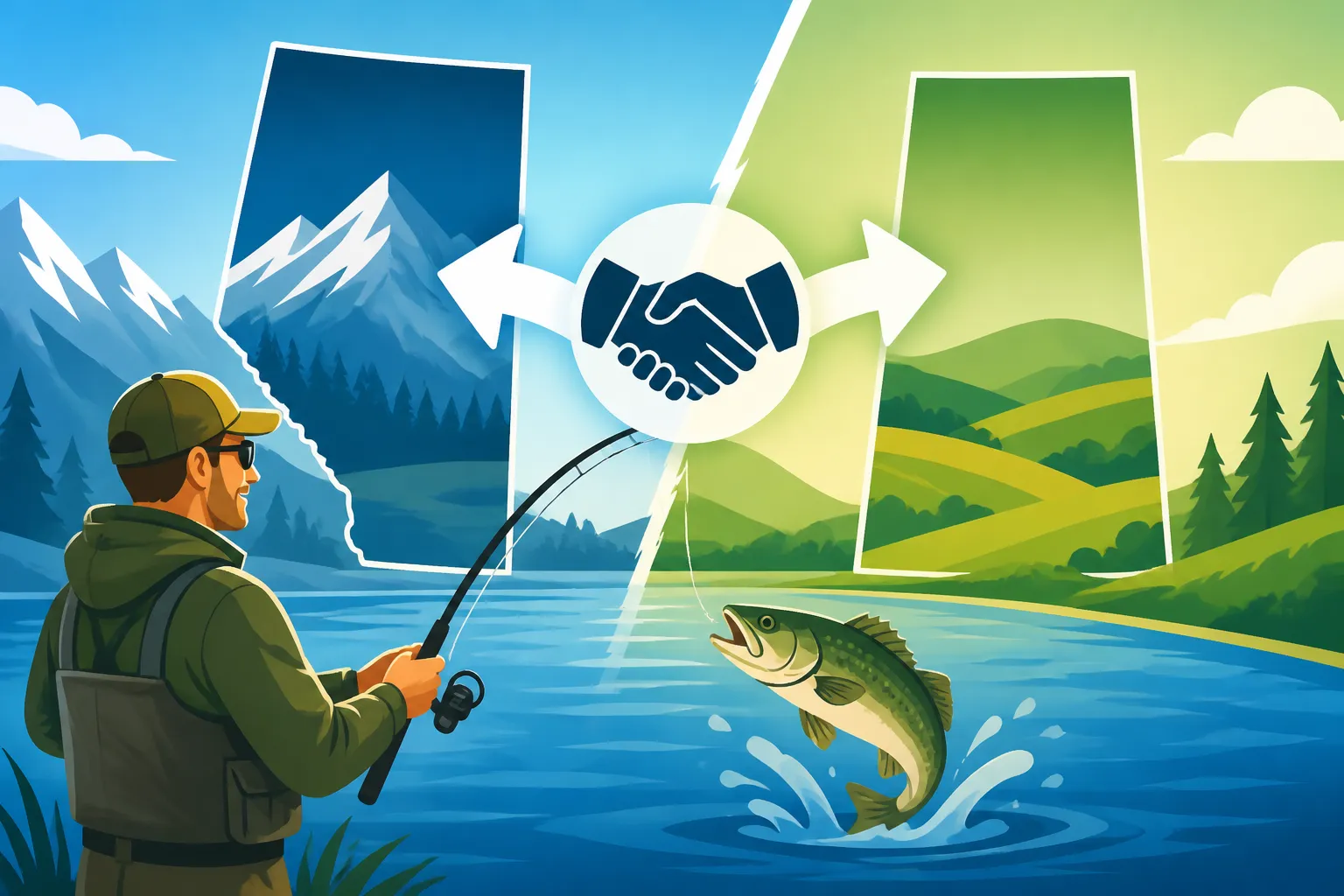
True reciprocity in fishing licenses would mean that a license issued by Alberta is legally recognized and valid for fishing in Saskatchewan waters, and vice-versa. This kind of agreement is rare between Canadian provinces for general sportfishing licenses. While it might exist for very specific, often small, shared boundary waters in other regions or for certain Indigenous fishing rights, it's not the standard for the provincial sportfishing licenses you purchase.
For most of us who hit the lakes and rivers, if you're fishing in Alberta, you need an Alberta license, and if you're fishing in Saskatchewan, you need a Saskatchewan license. Even if you're standing on the Alberta side of a river and casting into what looks like the same water that flows into Saskatchewan, if your line, lure, or bait is in Saskatchewan waters, you need their license. This is a critical distinction and often a source of frustration, especially when planning a trip to a body of water that might technically be considered "boundary water." It's not about where you are standing; it's about where your hook is.
Why Interprovincial Rules are So Tricky
The complexity arises because each province has its own unique set of regulations, fisheries management plans, and licensing structures, all tailored to their specific aquatic ecosystems and conservation goals. What might be a healthy, harvestable population of walleye in one part of Alberta might be a struggling, catch-and-release only population just a few kilometers away in Saskatchewan. These provincial differences make a broad reciprocal agreement practically impossible to implement fairly and effectively for conservation purposes. The fees collected from licenses also directly fund each province's respective fisheries programs, making it difficult to share revenue across provincial lines. This independent management is essential for sustainable fishing, even if it creates a bit of a headache for anglers.
Navigating Alberta-Saskatchewan Boundary Waters: What You Actually Need
So, if there's no widespread reciprocity, what do you actually need when you're looking at those appealing waters near the Alberta-Saskatchewan border? The answer is straightforward but requires diligence: you likely need a valid license for each province if you intend to fish in both.
Defining "Boundary Waters" for Anglers
While the term "boundary waters" might evoke images of vast lakes split down the middle by an invisible line, for fishing license purposes, it really comes down to the precise geographical location of where you are deploying your fishing gear. This isn't always obvious on a large body of water. For instance, if you're fishing on a lake like Cold Lake, which is entirely within Alberta, your Alberta license is sufficient. However, if you're near the border on a smaller river or lake that physically crosses the provincial line, you need to be acutely aware of which province's jurisdiction you're in.
Let's imagine you're fishing a river that flows from Alberta into Saskatchewan. You start your day on the Alberta side, happily catching trout with your Alberta license. Later, you decide to move downstream, crossing a bridge that takes you into Saskatchewan territory. The moment your line enters the water on the Saskatchewan side, you are now subject to Saskatchewan's regulations and require a Saskatchewan fishing license. This isn't just a hypothetical; it's a real-world scenario that catches many unsuspecting anglers off guard.
The Clear Requirement: Separate Licenses
To be absolutely clear, if you plan to fish in waters governed by Alberta and also in waters governed by Saskatchewan, you must purchase a fishing license for Alberta and a separate fishing license for Saskatchewan. There isn't a joint "border water" license that covers both, nor does one province's general license magically extend its validity into the other for typical sportfishing.
This means you’ll need to understand the process for each. For your Alberta adventures, you'll need to know about getting your Alberta WIN Card, Explained first, then purchasing your actual Alberta Fishing License Guide for 2026. If you're heading into Saskatchewan, you'll need to follow their process, which typically involves obtaining a Saskatchewan Wildlife Identification Number (similar to Alberta's WIN card) and then purchasing their appropriate fishing license. Always remember to check their specific regulations, as they can differ significantly.
Example Scenario:
Consider an angler, Sarah, who lives near Lloydminster, which famously sits on the Alberta-Saskatchewan border. Sarah loves fishing a local creek that meanders through both provinces. On Monday, she fishes a section of the creek entirely within Alberta. She only needs her Alberta fishing license. On Wednesday, she drives a few minutes east to a different section of the same creek, but this part is located within Saskatchewan. For this trip, she must possess a valid Saskatchewan fishing license. She cannot rely on her Alberta license, even though it's the same waterway and just a short drive away. This perfectly illustrates the lack of general reciprocity.
What About Boating?
While this guide focuses on fishing licenses, it's worth noting that if you're using a boat on boundary waters, you also need to be aware of boating regulations. Both provinces adhere to federal Canadian boating laws, but there can be subtle provincial differences or local bylaws. For instance, understanding Alberta Boating Laws for Anglers is crucial if you're launching from the Alberta side, but you should also quickly review Saskatchewan's specific rules for their waters, especially concerning required safety equipment or operational restrictions on certain lakes.
Key Regulations to Understand When Fishing Border Regions
Beyond just the license itself, navigating the regulations of two different provinces requires careful attention. What's legal for a specific species, size, or catch limit in Alberta might be completely different in Saskatchewan. This is where most anglers encounter the biggest challenges.
Different Bag and Possession Limits
Imagine you're targeting Northern Pike. In Alberta, the Alberta Northern Pike Limit might allow you to keep a certain number of fish within a specific size slot. However, if you cross into Saskatchewan waters, their Northern Pike limit could be drastically different – perhaps fewer fish, a different size restriction, or even a catch-and-release only rule for certain areas. The same applies to species like walleye, trout, or perch. You cannot mix and match regulations. The moment you are fishing in a province's waters, their bag and possession limits apply.
It's not uncommon to need to consult two different regulation guides:
- You'll be very familiar with Reading the Alberta Guide to Sportfishing Regulations.
- You'll need to acquire and study Saskatchewan's current angling guide, which is typically available online or from their local license vendors.
A good practice is to have both guides readily accessible. The Alberta Fishing Regulations App and Zone Lookup, Explained is fantastic for Alberta, but it won't help you once you're casting in Saskatchewan.
Seasonal Opening and Closing Dates
Seasonal dates can also vary. Alberta might have certain "trout opener" dates, while Saskatchewan might have different schedules for similar species. Some lakes or rivers in one province might be open year-round, while a corresponding section in the other province could be closed for spawning or conservation reasons. Always double-check the exact dates for the specific body of water and the specific species you intend to target in each province.
For example, if you're planning an early spring trip for walleye, the season might open on May 15th in a particular zone in Alberta, but not until May 25th for the exact same species just across the border in Saskatchewan. Fishing even one day early could result in a significant fine.
Special Regulations and Protected Species
Both Alberta and Saskatchewan have special regulation waters. These could be catch-and-release only zones, areas with bait restrictions (like Alberta Barbless Hook Requirement Waters), or designated fly-fishing-only stretches. Some species, like Bull Trout in Alberta, have very strict conservation rules (e.g., Alberta Bull Trout Zero Possession Rule), which might not directly translate to a similar species or level of protection in Saskatchewan. Always verify these special rules for any body of water you plan to fish, particularly near the border, as provincial lines do not exempt you from local regulations.
Key Considerations for Anglers
- Documentation: Always carry both licenses (if you have them) and proper identification when fishing near the border. Whether you choose to carry a Digital vs paper fishing license in Alberta for your Alberta license, ensure you have easy access to it.
- Proof of Residency: If you're claiming resident status in one province for a cheaper license (e.g., Resident vs Non-Resident Fishing License Costs in Alberta), be prepared to show proof of residency if requested by enforcement officers.
- Enforcement: Conservation officers from both provinces have the authority to enforce their respective regulations within their provincial boundaries. They are trained to identify and address violations, regardless of where an angler purchased their primary license. Fishing Without a License in Alberta: Penalties can be severe, so don't take chances.
Essential Gear and Trip Planning for Interprovincial Fishing
Successfully fishing across provincial lines, even with the dual license requirement, is absolutely achievable with good planning. It’s not just about the license; it’s about preparing for the nuances of two distinct sets of rules and environments.
Research, Research, Research
Before you even pack your rods, dedicate time to thorough research.
- Identify Waters: Pinpoint the specific lakes, rivers, or streams you plan to fish.
- Determine Jurisdiction: Clearly establish which parts of these waters fall under Alberta's jurisdiction and which under Saskatchewan's. Detailed maps, sometimes found on official government fisheries websites, can be invaluable.
- Consult Guides: Download or purchase the official fishing regulations guides for both Alberta and Saskatchewan for the current year. Read them carefully, paying special attention to the species you target, the specific water bodies, and any general regulations that apply. You might even find specific publications or articles on Amazon that consolidate regional information.
What to Pack: Beyond the Usual Tackle
When you're venturing near a provincial border, your usual fishing checklist needs a few additions:
- Both Licenses: If you plan to fish in both provinces, ensure you have both your valid Alberta and Saskatchewan fishing licenses (and WIN cards/IDs) easily accessible. Keep them in a waterproof holder.
- Two Sets of Regulations: Have both provincial regulation guides on hand. You can often download PDF versions to your phone or tablet, but a physical copy can be a lifesaver if you lose signal.
- GPS or Mapping App: A reliable GPS device or a robust mapping app on your smartphone (like one that shows provincial boundaries) can be incredibly helpful for knowing exactly where you are, especially on large, open water bodies or winding rivers.
- Species-Specific Tackle: Be prepared for potential differences in target species or techniques. One province might have an excellent walleye fishery in a boundary lake, while the adjacent section in the other province might be known for pike.
- Emergency Contact Info: Have the contact numbers for both Alberta's and Saskatchewan's enforcement services programmed into your phone.
A Quick Checklist for Border Fishing
Here’s a simplified table to help you keep things straight when planning a trip that might involve both Alberta and Saskatchewan waters:
| Item/Action | Alberta Waters | Saskatchewan Waters | Notes |
|---|---|---|---|
| Fishing License | Required (Alberta Sportfishing License) | Required (Saskatchewan Angling License) | No general reciprocity. You need both if fishing in both provinces. |
| Wildlife ID Card | Alberta WIN Card required | Saskatchewan Wildlife ID (HWN) or similar required | Essential for purchasing licenses. |
| Regulations Guide | Alberta Guide to Sportfishing Regulations | Saskatchewan Angler's Guide | Study both carefully for different limits, seasons, and special regulations. |
| Bag & Possession Limits | Alberta's specific limits apply | Saskatchewan's specific limits apply | Do not mix catch from different provinces; follow the rules for where the fish was caught. |
| Season Dates | Alberta's zone-specific dates apply | Saskatchewan's zone-specific dates apply | Be mindful of varying opening and closing dates for species and waters. |
| Bait/Lure Restrictions | Check Alberta's special regulations for specific waters | Check Saskatchewan's special regulations for specific waters | Some waters may have bait bans, barbless hook rules, or other restrictions. |
| Boating Regulations | Federal + Alberta-specific rules apply | Federal + Saskatchewan-specific rules apply | Carry required safety equipment for both. Your Pleasure Craft Operator Card is federally recognized. |
| Enforcement | Alberta Fish & Wildlife officers | Saskatchewan Conservation officers | Both have authority within their respective borders. |
| Where to Buy License | MyWildAlberta online, vendors | Saskatchewan's Ministry of Environment online, vendors | Ensure you know Where and How to Buy an Alberta Fishing License. |
Being a Responsible Interprovincial Angler
Ultimately, the onus is on you, the angler, to know and follow the rules. It's easy to get excited about fishing new waters, but that excitement shouldn't override your responsibility. Double-checking regulations, buying the necessary licenses, and respecting the conservation efforts of both Alberta and Saskatchewan will ensure that these boundary waters remain fantastic fishing destinations for years to come. Remember, a quick search on Amazon can even provide you with regional fishing atlases that might help you visualize these provincial boundaries more clearly.
Enjoy your cross-border fishing adventures, and tight lines!
Disclaimer
The information provided in this guide is for general informational purposes only and is subject to change. Fishing regulations, license requirements, and reciprocal agreements (or lack thereof) can be updated by provincial authorities at any time. It is the sole responsibility of the angler to consult the most current official Alberta Guide to Sportfishing Regulations and the Saskatchewan Angler's Guide before engaging in any fishing activities. Failure to do so may result in penalties.