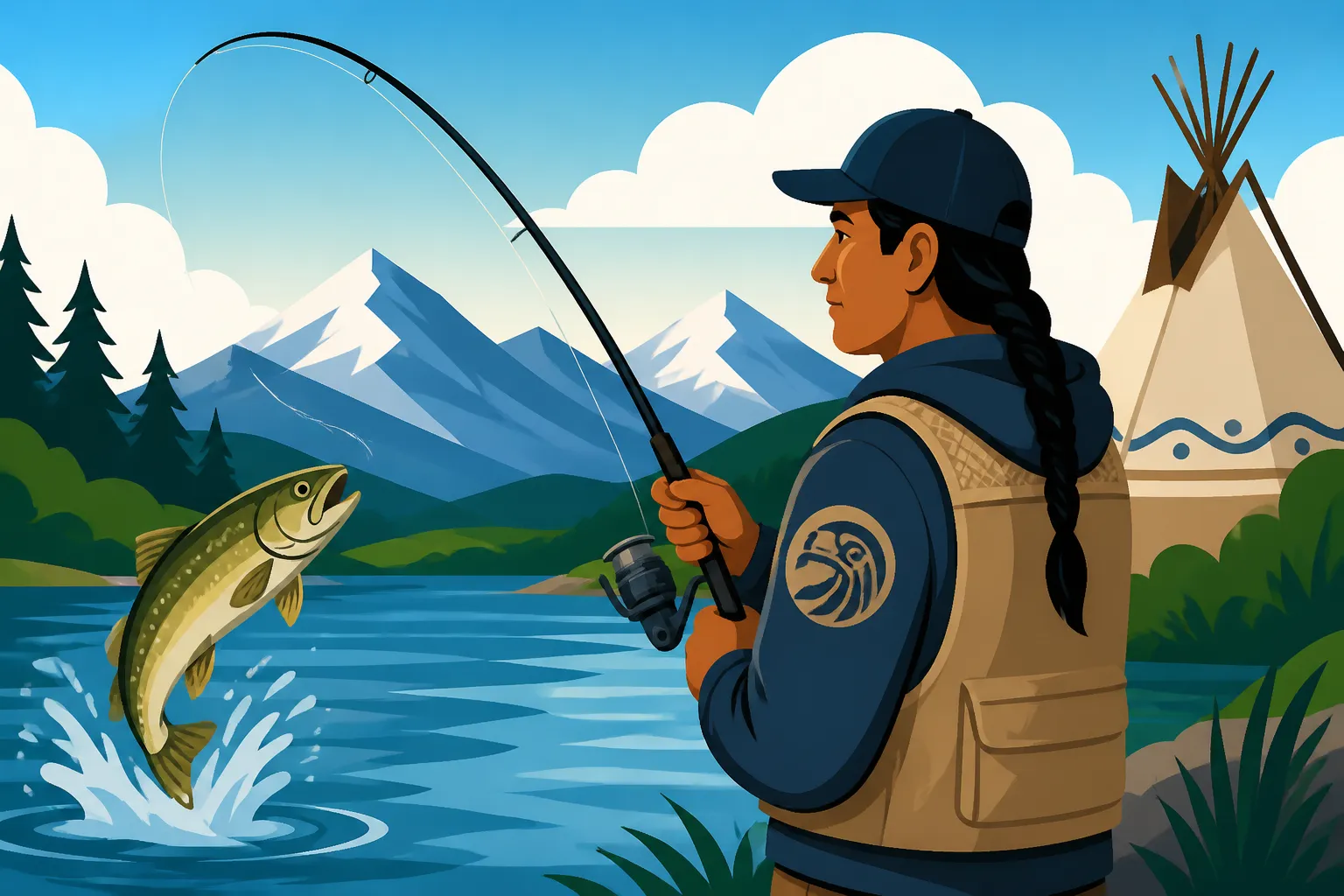
Alberta fishing license for First Nations treaty waters
For many in Alberta, understanding fishing regulations is complex enough, but when you introduce the nuanced realm of First Nations treaty waters and rights, it can feel like navigating a maze blindfolded. Many First Nations individuals, and even non-Indigenous anglers fishing nearby, often grapple with questions about who needs what license, when, and where. This guide aims to clear up that confusion, diving deep into the specific considerations for First Nations members fishing in Alberta’s treaty territories.
Understanding First Nations Treaty Rights and Fishing in Alberta
The relationship between First Nations and the land, including its waters and the fish within them, is deeply rooted in history, culture, and constitutionally protected rights. These rights are not just legal statutes; they are integral to the identity and way of life for many Indigenous communities.
The Historical Context of Treaty Rights
Alberta is covered by several historic treaties, most notably Treaties 6, 7, and 8. These treaties, signed between First Nations and the Crown, are foundational documents that acknowledge and affirm certain rights, including the right to hunt and fish for sustenance. It’s crucial to understand that these are not mere privileges granted by the government; they are inherent rights that were recognized and formalized through the treaty process.
What this means in practice is that for a status Indian (as defined by the Indian Act) who is a member of a First Nation band with treaty fishing rights, their ability to fish for food, social, and ceremonial purposes within their traditional territories is constitutionally protected. This often means they are exempt from certain provincial regulations that apply to the general public, specifically the requirement to hold a provincial fishing license. This isn't about getting a "discounted" license or a special permit; it's about the recognition of a pre-existing right that pre-dates provincial jurisdiction. For a deeper understanding of the broader framework, you can refer to the guide on Alberta Fishing Regulations Explained.
Who Qualifies for Treaty Rights Exemptions
The exemptions related to treaty fishing rights are specific. They apply to individuals who are recognized as "status Indians" under Canada's Indian Act and are members of a First Nation band that holds treaty rights to fish in a particular area. It's not a blanket exemption for all Indigenous people, nor does it extend to non-Indigenous spouses or family members unless they also hold status and are members of a relevant band.
To exercise these rights, individuals are typically required to carry proof of their status, such as a Secure Certificate of Indian Status (SCIS) card, sometimes referred to as a "status card." This identification serves as verification of their entitlement to exercise treaty rights. Without it, conservation officers may not be able to confirm their exempt status, leading to potential misunderstandings or challenges. Imagine an angler, proud of their heritage and traditions, heading out to their ancestral fishing grounds, only to be questioned because they don't have their card handy. It's a common, frustrating scenario that's easily avoided by ensuring proper identification is always carried.
Fishing License Requirements for First Nations in Treaty Areas
While the general principle is one of exemption for sustenance fishing, the specifics can get a bit muddy. It's vital to understand the nuances to ensure compliance and respect for both treaty rights and conservation efforts.
General Exemptions and Specific Conditions
As we've discussed, a primary aspect of treaty rights is the exemption for status Indians from needing a provincial fishing license when fishing for food, social, or ceremonial purposes within their traditional territories. This is affirmed by Section 35(1) of the Constitution Act, 1982, which recognizes and affirms existing Aboriginal and treaty rights. This means that if you are a First Nations member exercising these rights, you do not typically need to purchase an Alberta Fishing License Guide for 2026 or an Alberta WIN Card, Explained.
However, this exemption comes with critical conditions:
- Purpose of Fishing: The exemption primarily applies to fishing for food, social, or ceremonial purposes. This is distinct from recreational or sport fishing, where the primary intent is leisure, competition, or trophy hunting. If the purpose shifts to sport fishing, a provincial license may be required.
- Traditional Territory: The fishing must take place within the traditional territory of the First Nation whose member is exercising the right. While traditional territories are generally understood, specific boundaries can sometimes be subject to interpretation or consultation.
- Conservation Measures: Even with constitutionally protected rights, conservation is a paramount concern. First Nations' fishing rights are not absolute and can be subject to justified infringement for conservation purposes. This means that if a particular fish stock is severely depleted, or a specific area is designated a critical habitat, there might be regulations (e.g., specific closures, reduced bag limits, or restrictions on gear) that apply to everyone, including treaty rights holders, to ensure the long-term sustainability of the fishery. For instance, the Alberta Bull Trout Zero Possession Rule might apply due to the species' threatened status, regardless of treaty status, although specific band management plans may also address this. These situations are usually developed through consultation between First Nations, provincial governments, and Fisheries and Oceans Canada.
Consider a scenario where a First Nations elder is fishing for walleye for a community feast on Lesser Slave Lake, a traditional fishing ground. They would typically be exempt from needing a provincial license and could operate under their community's traditional practices or band-specific regulations regarding harvest. However, if that same individual decided to enter a recreational walleye tournament hosted by a non-Indigenous organization, they might then fall under the requirement for a provincial sport fishing license.
When a First Nations Member Might Need a License
Despite the general exemptions, there are several situations where a First Nations member might still need or choose to purchase a provincial fishing license in Alberta. Understanding these scenarios is key to avoiding penalties for Fishing Without a License in Alberta: Penalties.
- Recreational/Sport Fishing: If the primary intent of fishing is recreational pleasure, competition, or catching fish for sport rather than for sustenance (food, social, ceremonial), then a provincial sport fishing license is generally required. This applies whether fishing within or outside traditional territories. The distinction can sometimes be subtle, focusing on the intent and disposition of the catch. Are you fishing primarily to relax and release, or to keep fish for a community event? The former leans towards sport, the latter towards sustenance.
- Fishing Outside Traditional Territory: If a First Nations member chooses to fish outside their recognized traditional territory, for any purpose, they would generally be subject to the same provincial regulations as any other resident angler, including the requirement to purchase an Alberta Resident Fishing License Cost 2026. For example, a member of a Treaty 7 Nation fishing far north in Treaty 8 territory might be expected to have a provincial license if they are not also a member of a First Nation with treaty rights in that northern area, and if the purpose isn't sustenance according to that specific Treaty.
- Commercial Fishing: Treaty rights generally pertain to sustenance. Commercial fishing, which involves selling fish, typically requires specific commercial licenses or permits issued by Fisheries and Oceans Canada (DFO), often in conjunction with band-specific allocations, and falls outside the scope of the provincial sport fishing license exemption.
- Desire for Clarity or Participation: Some First Nations individuals may choose to purchase a provincial fishing license even if they believe they are exempt. This might be to avoid potential misunderstandings with enforcement officers, to participate in certain organized events that require proof of a provincial license, or simply because they want to contribute to the provincial conservation fund, knowing that license fees often support fisheries management and stocking programs. This choice is a personal one, but it illustrates the complexity.
Here's a quick overview of scenarios for clarity:
| Scenario | Purpose of Fishing | Location | Provincial Fishing License Required? |
|---|---|---|---|
| First Nations member (status Indian) | Food, Social, or Ceremonial | Within traditional treaty territory | No |
| First Nations member (status Indian) | Recreational/Sport | Anywhere in Alberta | Yes |
| First Nations member (status Indian) | Food, Social, or Ceremonial | Outside traditional treaty territory | Yes |
| Non-Indigenous family/friend with FN member | Any | Anywhere in Alberta | Yes |
| Commercial fishing by FN member | Commercial | Anywhere in Alberta | Specific DFO/Band Permits (Not prov. sport license) |
This table clarifies that while rights are protected, the context of the fishing activity is paramount.
Navigating Regulations and Resources for First Nations Anglers
Given the intricacies, knowing how to navigate the system and where to find support is just as important as understanding the rules themselves. It’s about being informed and prepared.
Importance of Carrying Identification and Knowing Your Rights
For First Nations individuals exercising their treaty fishing rights, carrying proper identification, such as their Secure Certificate of Indian Status card, is non-negotiable. This card is your primary proof of entitlement and can prevent unnecessary delays or complications if you encounter a fisheries officer. Imagine being out on a tranquil lake, perhaps trying out some new gear purchased from Amazon, only to have your peaceful day interrupted by questions about your license status. Having your card readily available can make all the difference.
Beyond identification, it’s also crucial to be knowledgeable about your specific band’s bylaws and any regional agreements concerning fishing. Many First Nations communities have their own fisheries management plans that operate in conjunction with or are recognized alongside provincial and federal regulations. A good example might be specific closures or harvest limits set by a band for a lake within their territory to ensure local conservation, which might be more stringent than provincial rules. Having a copy of these documents, or a letter from your band council, especially in areas where rights might be contested or less clearly defined, can be incredibly helpful. You can often find useful information in the Reading the Alberta Guide to Sportfishing Regulations as well, even if it primarily focuses on non-treaty fishing.
Where to Find Specific Information and Support
The best first point of contact for First Nations individuals seeking clarity on their fishing rights and responsibilities is almost always their specific First Nation band office. Band councils and their natural resources departments are often the most knowledgeable about their community's specific treaty rights, traditional territories, and any band-specific fishing regulations or management plans. They can provide accurate, up-to-date information tailored to their members.
Additionally, both provincial and federal government agencies play a role:
- Alberta Environment and Protected Areas (AEPA): This provincial body manages Alberta's fisheries. While they primarily enforce provincial sport fishing regulations, they are also involved in consultations with First Nations regarding fisheries management and conservation. Their website or regional offices can sometimes provide general information, although direct consultation with your band is usually more fruitful for treaty-specific questions.
- Fisheries and Oceans Canada (DFO): The federal government, through DFO, has primary jurisdiction over fisheries and marine resources, including the management of Aboriginal and treaty fishing rights. DFO is often involved in the negotiation and implementation of fisheries agreements with First Nations. If you have questions about specific DFO policies or agreements, their regional offices are a valuable resource.
It’s also worth exploring community liaison officers or Indigenous relations departments within these governmental bodies. They are often specifically tasked with bridging the gap between Indigenous communities and government regulations, offering a more culturally sensitive point of contact. Furthermore, for general provincial rules, understanding Alberta Bag and Possession Limits by Species is always a good idea, as some general conservation limits may still apply.
Gear and Practices for Responsible Fishing
Regardless of whether an angler is fishing under treaty rights or a provincial license, responsible fishing practices are paramount to ensuring the sustainability of Alberta's fisheries for future generations. This includes:
- Sustainable Harvest: Taking only what is needed for sustenance and respecting any applicable bag limits, whether they are set by provincial regulations or band bylaws. Overfishing, even for sustenance, can quickly deplete local stocks.
- Selective Fishing: Focusing on healthy, mature fish and avoiding the harvest of juveniles or oversized brood stock if those are important for the population's health.
- Proper Catch-and-Release: If fishing recreationally or practicing catch-and-release, using appropriate gear and techniques to minimize harm to the fish. This means using barbless hooks, minimizing handling time, and reviving fish properly before release. A good quality landing net, perhaps found readily on Amazon, can greatly aid in safe handling.
- Minimizing Waste: Utilizing all harvested fish and avoiding discarding edible parts.
Being well-equipped also contributes to responsible fishing. Choosing the Best Fishing Rods for Alberta Rivers or the Best Tackle for Alberta Walleye not only enhances your experience but can also help you fish more effectively and minimize harm to fish if you're practicing catch and release. Having a good understanding of Alberta Fishing Season Dates by Zone is also beneficial, as even exempt fisheries may observe certain closures to protect spawning fish.
Ultimately, fishing in Alberta's treaty waters is a matter of respect—respect for the land, the fish, the traditions, and the laws. By understanding the rights and responsibilities involved, First Nations anglers can continue to connect with their heritage and the bountiful waters of Alberta in a sustainable and meaningful way.
Disclaimer
The information provided in this guide is for general informational purposes only and does not constitute legal advice. Fishing regulations and treaty rights are complex and subject to change. Anglers are responsible for consulting the most current Alberta Guide to Sportfishing Regulations, as well as their specific First Nation band office or relevant federal authorities (Fisheries and Oceans Canada) to ensure full compliance with all applicable laws and regulations before fishing.