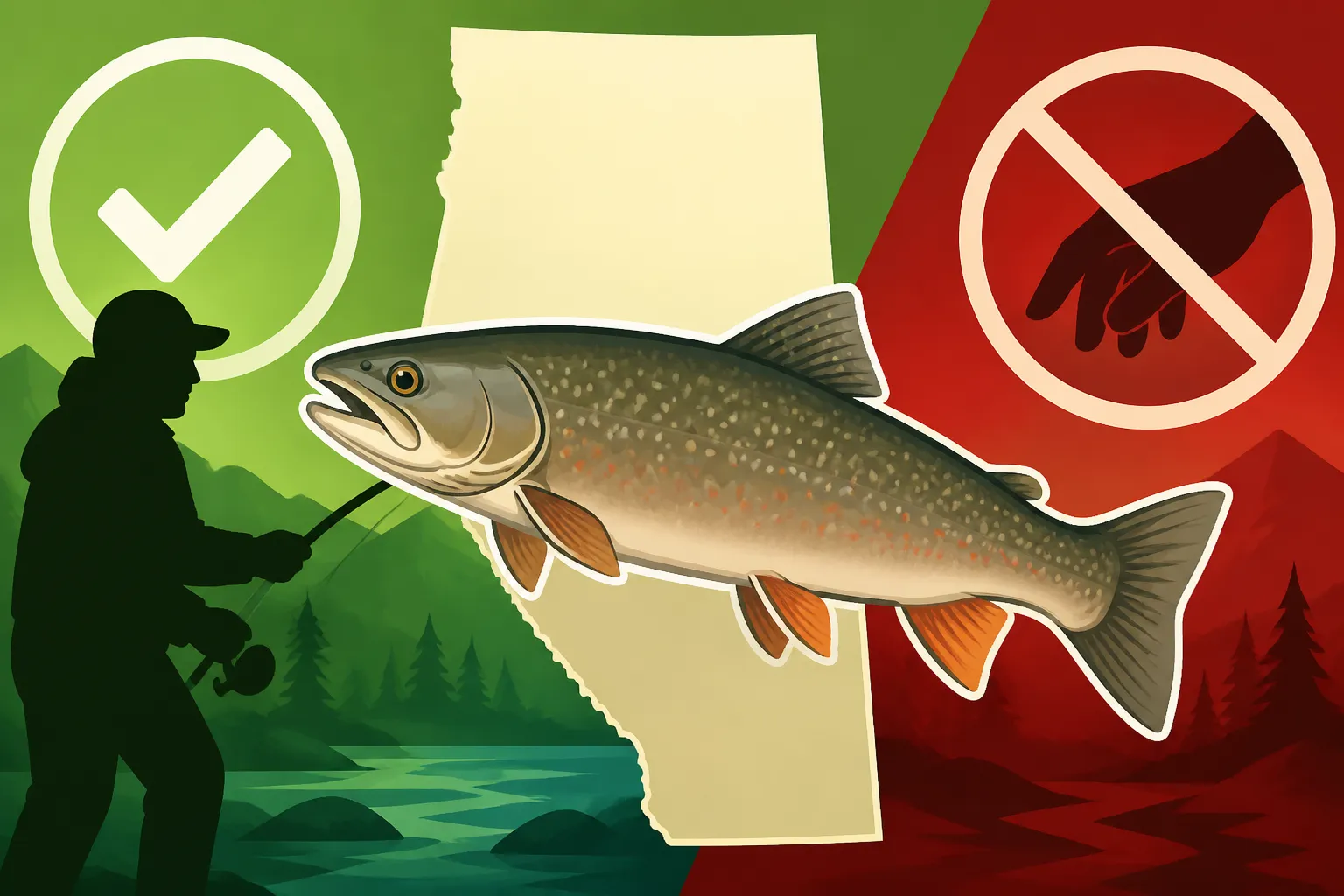
Is Keeping a Bull Trout Ever Legal in Alberta?
For many anglers in Alberta, the majestic bull trout is a bucket-list species, but the excitement of hooking into one often comes with a gnawing question: "Can I actually keep it?" The regulations around bull trout are notoriously strict and often lead to confusion, leaving even seasoned fishers unsure about the rules. This guide is here to untangle that complexity, clearly explaining when, if ever, keeping a bull trout in Alberta is legal, and why these beautiful fish are so fiercely protected.
Understanding Bull Trout Conservation in Alberta
Alberta's bull trout populations are a source of immense pride for many, representing a true wilderness experience. However, their numbers have faced significant challenges over the decades, leading to the stringent conservation measures we see today. Understanding the "why" behind these rules is crucial for all anglers.
Why Bull Trout Are So Heavily Protected
Bull trout ( Salvelinus confluentus ) are an iconic native species to Alberta's pristine cold-water rivers and lakes, particularly in the foothills and mountain regions. They are apex predators in their ecosystems, playing a vital role in maintaining the health and balance of their aquatic environments. Unlike many other trout species, bull trout require very specific conditions to thrive: exceptionally cold, clean, and well-oxygenated water, often found in high-elevation streams with complex habitat structures like large woody debris and undercut banks. They also have a relatively long lifespan and mature slowly, making them particularly vulnerable to environmental changes and overfishing.
Historically, bull trout were harvested quite heavily, as they are a large and attractive sport fish. However, decades of habitat degradation from land use practices, climate change impacting water temperatures, and past overfishing practices led to a dramatic decline in their populations. Their unique habitat requirements mean they are often among the first species to suffer when ecosystems are stressed. Because of their slow reproductive cycle and specialized needs, their recovery is also a very slow process. That's why the provincial government, in partnership with conservation groups, has implemented strict rules to give these populations the best chance at recovery. This commitment to safeguarding the species is paramount, influencing every aspect of how we interact with them as anglers.
Historical Decline and Recovery Efforts
The story of the bull trout's decline in Alberta is a stark reminder of human impact on sensitive ecosystems. In the early to mid-20th century, bull trout were a common catch in many of Alberta's cold-water rivers, from the Bow River to the Crowsnest. However, expanding human settlements, increased resource extraction activities like logging and oil and gas exploration, and the construction of dams led to widespread habitat fragmentation and degradation. The introduction of non-native species, such as brook trout, also posed a significant threat through competition and hybridization in some areas. These combined pressures pushed bull trout populations to critically low levels in many historical strongholds.
Recognizing the urgency of the situation, Alberta began implementing protective measures decades ago. These efforts escalated to the point where, in many areas, the species was classified as "threatened" or "sensitive." Recovery strategies have focused on a multi-pronged approach, including rigorous habitat restoration projects, reintroducing bull trout into historical ranges where feasible, and, most notably, establishing strict fishing regulations. For a deeper dive into their status, you might find the article on Bull Trout: Alberta's Threatened Native Fish to be very informative. Anglers are now seen as a critical component of these recovery efforts, as their compliance with regulations and commitment to safe handling practices directly contributes to the species' survival.
The General Rule: Zero Possession
When it comes to bull trout in Alberta, the general rule is clear, firm, and designed with conservation as its absolute priority: zero possession. This means that for the vast majority of anglers under normal circumstances, keeping a bull trout is simply not an option.
What "Zero Possession" Truly Means for Anglers
The term "zero possession" is exactly what it sounds like. It means that if you catch a bull trout in Alberta, you are legally required to release it immediately and unharmed. You cannot keep it, transport it, or have it in your possession, even for a brief moment to take a photo if that action harms the fish. This rule applies to all recreational anglers, whether you're a resident or a non-resident, and regardless of the specific water body you're fishing, unless it falls under one of the incredibly rare and specific exceptions we'll discuss shortly.
The intent behind this rule, which is also elaborated in the Alberta Bull Trout Zero Possession Rule, is to maximize the survival rate of every bull trout encountered by anglers. Every fish, especially a slow-growing, long-lived predator like the bull trout, is vital to the recovery of its population. This means that careful handling and immediate release are not just good practice, they are a legal requirement. Anglers must be prepared to identify bull trout quickly and accurately. If there's any doubt about species identification, the safest approach is to assume it's a bull trout and release it. This principle underpins a significant portion of the Alberta Fishing Regulations Explained and is a key part of responsible angling in the province.
Accidental Catches and Safe Release Practices
Let's face it, sometimes you're not targeting bull trout, but they still decide to take your hook. It happens. You might be after a rainbow trout on the Bow River or a cutthroat in a mountain stream, and suddenly, you've got a beautiful bull trout on the line. This is an "accidental catch," and while it's thrilling, it immediately triggers the zero possession rule. Your responsibility doesn't end once you've landed the fish; it shifts entirely to ensuring its safe and swift return to the water.
To minimize harm during an accidental catch, proper catch and release techniques are paramount. Here’s how you can make a real difference:
- Reduce Fight Time: Try to land the fish as quickly as possible without "horsing" it in, which can cause internal damage. A longer fight can exhaust the fish, making it more vulnerable after release.
- Keep the Fish Wet: If at all possible, keep the fish in the water while unhooking it. Removing a fish from its aquatic environment, especially for extended periods, causes immense stress and can damage its protective slime coat and delicate gills.
- Use Barbless Hooks: Alberta's regulations mandate barbless hooks in many trout streams for this very reason. If you're fishing in waters where bull trout are present, using barbless hooks significantly reduces injury and makes unhooking much easier and quicker. You can find quality barbless hooks or tools to crimp barbs on regular hooks easily, even through retailers like Amazon.
- Handle with Care: If you must briefly lift the fish, use wet hands to support its entire body, especially under the belly. Avoid squeezing it, touching its eyes or gills, or holding it vertically by the jaw or tail, which can cause internal injury.
- Quick Unhooking: Use needle-nose pliers or hemostats to quickly remove the hook. If the fish is deeply hooked, especially in the gills, it might be better to cut the line as close to the hook as possible rather than try to tear it out.
- Revive if Necessary: If the fish seems sluggish, hold it gently in the current, facing upstream, until it regains its strength and can swim away on its own. Don't let it go until it actively tries to escape your grasp.
These practices are not just suggestions; they are vital for the survival of the fish and reflect the spirit of the How to Catch Bull Trout and Release Them Safely guide. Every successful release contributes to the long-term health of Alberta's bull trout populations.
Specific Exceptions to the Zero Possession Rule
While the "zero possession" rule for bull trout is incredibly broad, there are a handful of very specific and narrow exceptions. These are not opportunities for recreational anglers to keep a bull trout, but rather allowances for critical research or recognized traditional practices.
Research or Scientific Permits
One of the primary exceptions to the zero possession rule is for individuals or organizations operating under specific scientific or research permits issued by Alberta Environment and Protected Areas (AEPA). These permits are incredibly difficult to obtain and are granted only for legitimate research purposes aimed at understanding, managing, or recovering bull trout populations.
For example, a fisheries biologist might be granted a permit to collect a limited number of bull trout for genetic analysis, population health studies, or reproductive assessments. These studies provide crucial data that informs conservation strategies. The collection under such permits is highly controlled, with strict limits on the number, size, and location of fish that can be retained, and often involves specialized techniques to minimize impact on the broader population. These are not open-ended permits; they are project-specific and meticulously reviewed. For the average angler, encountering someone operating under such a permit is rare, but it's important to understand that these activities serve a vital role in protecting the species.
Indigenous Harvesting Rights
Another significant exception recognized within Alberta's regulatory framework pertains to Indigenous peoples exercising their constitutionally protected harvesting rights. First Nations and Métis communities in Alberta hold inherent rights to hunt, fish, and trap for food, social, and ceremonial purposes, as outlined in treaties and affirmed by various court decisions.
These rights are distinct from the general provincial sportfishing regulations that apply to recreational anglers. While specific details can vary by community and treaty area, Indigenous harvesters are often permitted to harvest fish species, including bull trout where it is part of their traditional diet or cultural practices, subject to their own community-based management plans and conservation protocols. These traditional harvests are typically managed in a way that aligns with the broader conservation goals for the species. It's a complex and deeply important aspect of fisheries management that acknowledges historical agreements and ongoing relationships between Indigenous peoples and the land and its resources. Understanding this distinction is key to comprehending the full scope of fishing rights and regulations in Alberta.
Consequences of Illegal Bull Trout Possession
Ignoring the strict regulations around bull trout isn't just a minor infraction; it carries serious legal consequences and can have significant negative impacts on the very species we're trying to protect. Enforcement of these rules is taken very seriously by Alberta Fish and Wildlife officers.
Fines and Penalties
If you are caught in possession of a bull trout in Alberta without a valid permit or recognized Indigenous right, you could face substantial fines and other penalties. These aren't just small tickets; they can be quite hefty, designed to deter illegal activity and reflect the severe conservation status of the species.
For instance, the minimum fine for unlawfully possessing a fish can be several hundred dollars, and it can quickly escalate into the thousands, especially if multiple fish are involved or if there are aggravating circumstances (e.g., trying to conceal the fish, repeat offenses). In addition to monetary fines, individuals may also face:
- Seizure of Equipment: Your fishing gear, including rods, reels, boats, and even vehicles used in the commission of the offense, can be seized. Imagine losing your prized fly rod or even your boat – that's a serious consequence.
- Fishing Suspensions: Your privilege to fish in Alberta (and potentially across Canada, depending on the severity) can be revoked for a period of time, sometimes for years.
- Criminal Charges: In very serious cases, particularly involving commercial poaching or repeated offenses, individuals could face criminal charges, leading to jail time.
These penalties are not arbitrary; they are a direct reflection of the value placed on protecting this vulnerable species. It underscores the importance of knowing and following the Alberta fishing without a license penalty and other specific species regulations. It's always best to be thoroughly familiar with the most recent Reading the Alberta Guide to Sportfishing Regulations to avoid any costly mistakes.
Impact on Conservation Efforts
Beyond the personal legal repercussions, the act of illegally possessing a bull trout has a ripple effect that directly undermines critical conservation efforts. Every bull trout that is unlawfully removed from the water represents a loss to a population that is already struggling to recover.
Consider this: if bull trout are slow to mature and long-lived, removing even a single breeding adult can have a disproportionately large impact on future generations. It reduces the number of fish available to spawn, limits genetic diversity, and slows down the overall population growth. When multiple individuals are illegally taken, the cumulative effect can set back years of dedicated conservation work, including habitat restoration, population monitoring, and education programs. These illegal activities force conservation resources to be diverted from proactive recovery efforts to enforcement and investigation, making the job of protecting these fish even harder.
Moreover, illegal possession can create a perception that the regulations aren't being followed, potentially discouraging other anglers from adhering strictly to the rules or leading to frustration among those who diligently practice catch and release. True conservation relies on the collective responsibility of all stakeholders, and illegal harvesting actively works against that collective goal, endangering the very future of bull trout fishing in Alberta for everyone.
How Anglers Can Contribute to Bull Trout Conservation
While the regulations can feel restrictive, remember that they exist for a vital reason. As anglers, we have a unique and powerful role to play in the conservation of bull trout. It's not just about obeying the rules; it's about actively participating in the stewardship of this precious resource.
Educating Yourself and Others
The first and most critical step in contributing to bull trout conservation is education. You're already doing it by reading this guide! Understanding the regulations, knowing how to identify bull trout, and learning proper catch-and-release techniques are fundamental.
- Stay Informed: Always consult the most current Alberta Guide to Sportfishing Regulations before you head out. Regulations can change, and what was legal last year might not be this year. The Alberta fishing regulations app and zone lookup, explained can be an invaluable tool right on your phone.
- Species Identification: Be absolutely confident you can distinguish a bull trout from other salmonids. Bull trout typically have light spots on a darker background (often olive-green to blue-grey), a large head, and an adipose fin with a white leading edge. If in doubt, always release.
- Teach Others: Share your knowledge respectfully with fellow anglers, especially those new to Alberta's waters. A friendly conversation on the riverbank about responsible fishing practices can go a long way. You could even point them to resources like this blog or direct them to buy the official fishing guide (which can sometimes be found on platforms like Amazon) for quick reference.
- Report Violations: If you witness illegal fishing activity, report it to Alberta Fish and Wildlife. You can do so confidentially. This is a tough one for many, as no one wants to be a "snitch," but it's a necessary step to protect our shared resources.
Supporting Conservation Initiatives
Beyond individual actions, supporting broader conservation initiatives is another powerful way to contribute. There are many organizations dedicated to protecting bull trout and their habitats in Alberta.
- Volunteer: Many local conservation groups organize river clean-ups, habitat restoration projects (like planting riparian vegetation or installing fish-friendly culverts), and public education events. Donating your time to these efforts is incredibly valuable.
- Donate: If you don't have time to volunteer, consider donating to reputable organizations like Trout Unlimited Canada, Alberta Conservation Association, or local watershed groups. Your financial contributions help fund critical research, habitat restoration, and advocacy work that directly benefits bull trout.
- Advocate: Engage in discussions about land use practices and policies that impact bull trout habitat. Support sustainable development and responsible resource management.
- Practice Ethical Angling: Beyond just bull trout, adopt ethical angling practices across the board. Minimize your footprint, pack out all your trash, and be mindful of wildlife. The healthier the overall ecosystem, the better it is for all native species, including bull trout.
By embracing these roles, anglers become more than just users of a resource; they become its protectors, ensuring that future generations can also experience the thrill of encountering Alberta's magnificent bull trout.
Here's a quick summary table of the Bull Trout regulations:
| Aspect | Details |
|---|---|
| General Rule | Zero Possession. All recreational anglers must immediately release all Bull Trout caught, unharmed. |
| Primary Goal | Bull Trout conservation and population recovery. |
| Species ID | Anglers must be able to identify Bull Trout. (Light spots on dark background, large head, white-edged adipose fin). |
| Handling Practices | Use barbless hooks (mandated in many areas), minimize fight time, keep fish in water, wet hands, gentle support, quick unhooking, revive if needed. This is covered in more detail in Bull trout catch and release survival tips. |
| Exceptions | 1. Scientific/Research Permits: Highly specific, government-issued permits for authorized research. 2. Indigenous Harvesting Rights: Constitutionally protected rights for food, social, and ceremonial purposes. |
| Penalties for Violation | Substantial fines (hundreds to thousands of dollars), seizure of fishing gear (rods, reels, boats, vehicles), fishing license suspensions, potential criminal charges for severe or repeated offenses. |
Disclaimer
The information provided in this guide is for general informational purposes only and is not a substitute for the official Alberta Guide to Sportfishing Regulations. Regulations can change, and it is the responsibility of every angler to consult the most current official guide before fishing. Always ensure you are in compliance with all provincial and federal laws.