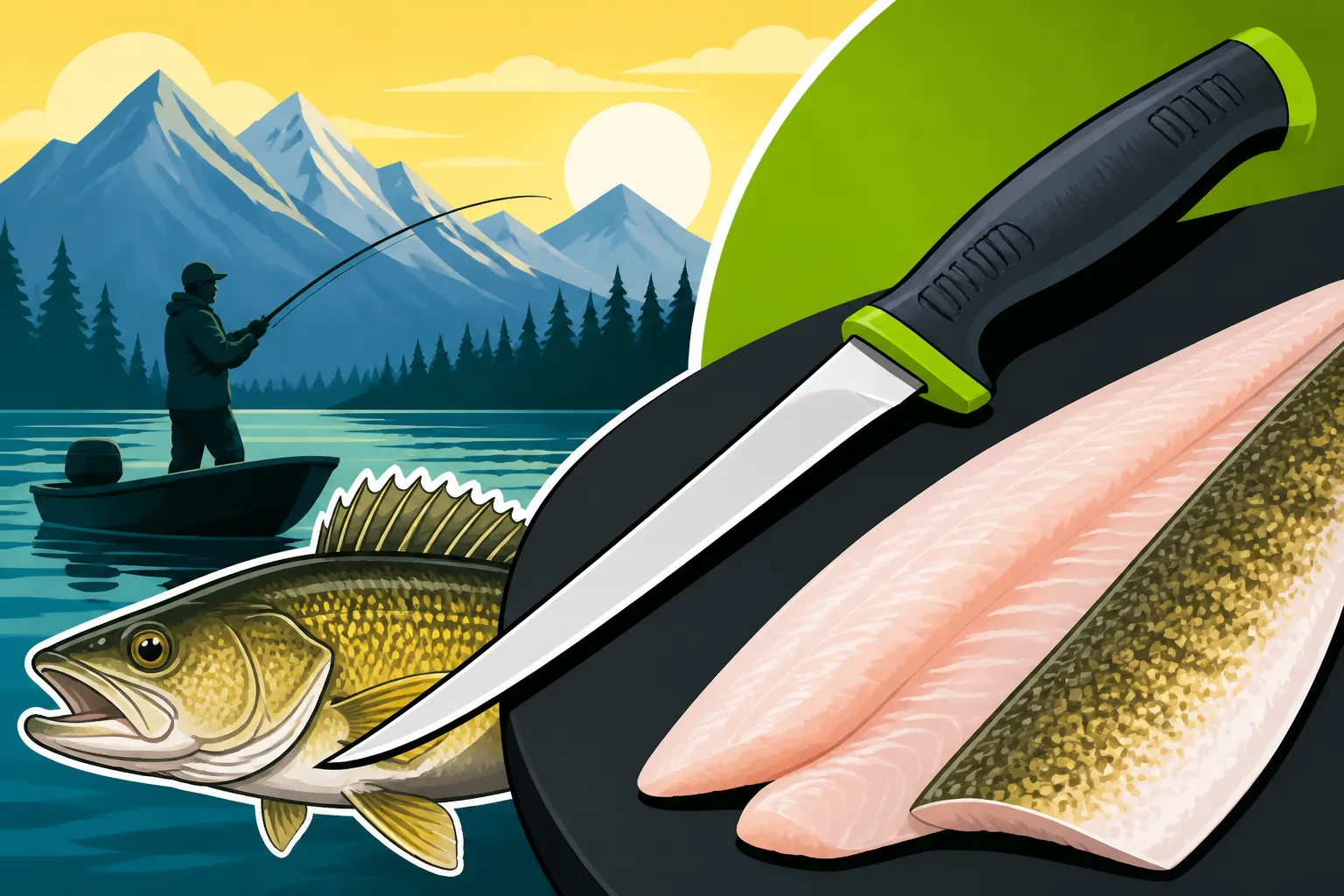
Best fillet knife for cleaning walleye
You've just come off the water after a fantastic day, maybe you nailed your limit of walleye on Lesser Slave Lake, and now comes the moment of truth: cleaning your catch. Nothing is more frustrating than fumbling with a dull, flimsy knife that tears the beautiful fillets, leaves meat on the bones, or worse, slips in your hand. This guide is all about helping you choose the best fillet knife for cleaning walleye, transforming that chore into a smooth, satisfying final step of your angling adventure.
Why a Good Fillet Knife Matters for Walleye
When you're dealing with a prized catch like walleye, you want to honour it by processing it properly. A sub-par knife can turn a simple task into a messy, aggravating ordeal, and frankly, it's not fair to the fish or your dinner plate. Having the right tool makes all the difference, ensuring you get the most tender, clean fillets possible.
The Frustration of a Dull or Improper Blade
Think about it: you’re standing at the cleaning station, eager to get those golden fillets ready for the pan, and your knife just isn't cooperating. It drags, it snags, it doesn't glide smoothly along the backbone. You end up applying too much pressure, which can be dangerous, or you carve away precious meat in uneven chunks. This isn't just inefficient; it's genuinely disheartening when you’ve put in the effort to catch those fish.
A dull knife is not only ineffective, but it’s also a safety hazard. When you have to force a blade, the chances of it slipping and causing injury increase dramatically. Beyond that, an improperly shaped or too-stiff blade can make it nearly impossible to navigate the delicate bone structure of a walleye, leading to ragged fillets and a lot of wasted meat. No one wants to spend an hour filleting a few fish, only to feel like they left half the meal behind on the carcass. It’s a common frustration many anglers face, but it's entirely avoidable with the right equipment.
What Makes Walleye Unique for Filleting
Walleye, while delicious, present their own specific challenges when it comes to filleting. Unlike some other species, their bone structure is quite distinct, featuring a relatively prominent rib cage that requires a flexible, precise blade to work around. The skin can also be a bit tougher than some panfish, demanding a sharp edge that can glide smoothly from flesh to skin without tearing.
The flesh itself is often described as delicate and flaky, especially when cooked, which means rough handling with an unsuited knife can bruise or damage the texture of the fillet. You want a knife that allows you to feel the bones, follow their contours, and separate the meat cleanly without mashing it. A blade that's too thick or too stiff will struggle to make these nuanced cuts, resulting in thicker, less appealing fillets that might still have small bones attached, diminishing the overall eating experience. Understanding these characteristics helps in appreciating why a specialized fillet knife is not just a luxury, but a necessity for walleye.
Efficiency and Enjoyment in the Cleaning Process
Let's be honest, after a long day of fishing, maybe on one of the Best Walleye Lakes in Alberta, the last thing you want is a tedious and difficult cleaning session. A truly good fillet knife transforms this chore into a quick, almost meditative process. Imagine your knife slicing through the meat with minimal effort, cleanly separating the fillet from the backbone, and effortlessly removing the skin in one smooth motion. This efficiency not only saves time but also significantly reduces the physical strain on your hands and wrists.
Beyond efficiency, there's a certain satisfaction that comes from expertly filleting a fish with a sharp, well-balanced knife. It’s a skill that builds over time, and having the right tool empowers you to refine that skill, resulting in consistently beautiful, bone-free fillets. This enjoyment extends to the dinner table, knowing that you’ve prepared your catch with care and precision, maximizing both yield and flavour. It truly rounds out the entire fishing experience, from the first cast to the final bite.
Key Features to Look For in a Walleye Fillet Knife
Choosing the "best" knife isn't about finding the most expensive one, but rather the one that perfectly matches the task at hand – which, in this case, is filleting walleye. There are several critical features that differentiate a mediocre knife from one that feels like an extension of your hand, making the job effortless and enjoyable.
Blade Material and Flex
The heart of any fillet knife is its blade, and for walleye, material and flexibility are paramount. Most quality fillet knives are made from stainless steel, which offers excellent corrosion resistance – a must when dealing with fish guts and water. However, not all stainless steels are created equal. High-carbon stainless steel blends the rust-resistance of stainless with the edge-holding capabilities of carbon steel, meaning your blade stays sharper for longer. Some premium knives might even use specialty alloys designed for even better edge retention and toughness.
Flexibility is another non-negotiable trait. A good walleye fillet knife needs to be limber enough to bend and follow the contours of the fish's backbone and rib cage without breaking or requiring excessive force. A blade that's too stiff will struggle to make these precise, curving cuts, often resulting in more meat left on the bones. Conversely, a blade that's too flimsy might lack the necessary backbone (pun intended!) to push through tougher spots. You’re looking for a sweet spot – enough flex to be agile, but enough rigidity to be controlled. This balance allows for clean separation of meat, maximizing your yield and minimizing waste.
Blade Length and Shape
When it comes to blade length, there’s no one-size-fits-all answer, but for walleye, most anglers find a blade in the 6-inch to 9-inch range to be ideal. A 6-inch blade offers superior control for smaller walleye and detailed work around the ribs, while an 8-inch or 9-inch blade can make quick work of larger fish, providing longer, sweeping cuts that reduce the number of passes needed. If you frequently encounter a wide range of walleye sizes, from smaller pan-fryers to those trophy specimens, you might consider having two knives of different lengths.
The shape of the blade is equally important. Walleye fillet knives typically feature a narrow, tapering blade with a pointed tip. This design allows for precise entry cuts, easy navigation around the bones, and efficient removal of the skin. The slight curve often seen in these blades also helps in making those long, smooth cuts that separate the fillet cleanly. A broad, straight blade, like a chef's knife, simply won't offer the necessary agility and precision for the intricate task of filleting a walleye.
Handle Ergonomics and Grip
A sharp blade is crucial, but a comfortable, secure handle is what prevents accidents and reduces fatigue. When you're dealing with slimy fish and wet hands, a non-slip grip is paramount. Look for handles made from textured materials like rubber, composite, or even certain synthetic polymers that provide a firm hold even when drenched in fish slime. Finger grooves, ergonomic contours, and a well-balanced feel in your hand are all indicators of a thoughtfully designed handle.
Consider the material and shape. Wooden handles, while traditional and beautiful, can become slippery when wet and absorb fish odours, making them less ideal for serious filleting. Synthetic materials are often easier to clean and maintain, and they provide consistent grip. A handle that fits comfortably in your hand, without hot spots or awkward angles, will allow you to maintain control and precision throughout the entire filleting process. This is especially important if you're cleaning a limit of fish after a successful day on the Bow River or other Best Fishing Rivers in Alberta. Safety and comfort should never be compromised.
Sharpening and Maintenance
Even the best fillet knife will eventually dull with use, and a dull knife, as we’ve discussed, is a liability. Therefore, ease of sharpening and proper maintenance are critical considerations. A good fillet knife should be relatively easy to sharpen, allowing you to restore its razor-sharp edge quickly with a suitable sharpening stone, ceramic rod, or an electric sharpener. Many anglers appreciate a knife that can hold an edge well, reducing the frequency of sharpening, but knowing how to properly maintain that edge is key to its longevity and performance.
After each use, the knife should be thoroughly cleaned with soap and water, ensuring all fish residue is removed. Drying it completely before storage prevents rust and keeps the handle in good condition. Storing your knife properly, perhaps in a sheath or a dedicated knife block, protects the blade edge from damage and keeps it safely out of reach. Neglecting these simple steps can quickly degrade even a high-quality knife, turning your precision tool into a frustrating hindrance. Investing in a good sharpener and establishing a simple cleaning routine is just as important as choosing the knife itself.
Electric vs. Manual Fillet Knives for Walleye
When it comes to processing your walleye, anglers often find themselves at a crossroads: do you stick with the traditional manual fillet knife, or do you embrace the speed and power of an electric model? Both have their dedicated fan bases, and each offers distinct advantages depending on your preferences, the volume of fish you're cleaning, and your individual filleting style.
The Case for Manual Fillet Knives
For many seasoned anglers, the manual fillet knife is a time-honoured tradition, offering a level of precision and control that's hard to match. With a manual knife, you get direct feedback from the blade as it glides along the bones, allowing you to "feel" your way through the fish. This tactile connection enables incredibly clean, thin fillets with minimal waste, especially around the rib cage where delicate movements are required. If you're particularly focused on maximizing every bit of meat from your catch or enjoy the meditative process of filleting, a manual knife is often the preferred choice.
Manual knives are also inherently portable and require no power source, making them perfect for cleaning fish at remote campsites or areas without electricity. They are typically lighter, quieter, and generally more affordable than their electric counterparts. For someone who cleans a few fish at a time, or values the craft of filleting, a high-quality manual knife offers a rewarding and efficient experience. Many renowned brands, available at places like Bass Pro Shops or online through Amazon, offer excellent manual knives known for their sharpness and durability, perfectly suited for the How to Catch Walleye in Alberta enthusiast.
The Benefits of Electric Fillet Knives
On the other end of the spectrum, electric fillet knives offer sheer speed and reduce effort, especially when you're faced with a substantial pile of fish. Imagine hitting your limit on a prime walleye lake and needing to clean several fish quickly – an electric knife can make quick work of the task, transforming hours of filleting into minutes. The oscillating blades do most of the work, powering through bones and skin with minimal strain on your hands. This is a huge advantage for anglers who might have hand fatigue issues or simply want to get the job done faster.
Electric knives are fantastic for consistent, clean cuts, particularly for those long, straight passes along the backbone. While they might not offer the same delicate precision around the ribs as a skilled hand with a manual knife, their ability to zip through a large number of fish with uniform results is undeniable. They are a game-changer for group fishing trips or when you’ve had a particularly successful day and have a full cooler. If you're aiming to quickly process a lot of fish, perhaps after harvesting your Alberta Walleye Limit by Zone during a productive outing, an electric knife is an invaluable tool.
Making the Right Choice for Your Angling Style
Deciding between a manual and an electric fillet knife really comes down to your personal preferences and how you typically fish. If you’re a casual angler who brings home a couple of walleye after a relaxing afternoon, a good manual knife might be all you need. You'll appreciate the control, the quiet operation, and the traditional feel. It's also a great way to hone your filleting skills.
However, if you're frequently targeting walleye in numbers, perhaps on a multi-day trip to Lesser Slave Lake Walleye Fishing where you might bring home a significant catch, an electric knife will be a true asset. It saves your hands, speeds up the process, and allows you to spend less time cleaning and more time relaxing or planning your next Best Time of Day to Catch Walleye strategy. Ultimately, many dedicated anglers choose to own both, leveraging the precision of a manual knife for delicate tasks and the power of an electric knife for bulk processing. There's no shame in having a versatile toolkit!
| Feature | Manual Fillet Knife | Electric Fillet Knife |
|---|---|---|
| Precision | Excellent; high control for intricate cuts | Good; consistent cuts but less fine detail around bones |
| Speed | Moderate; depends on skill and number of fish | High; significantly faster for large quantities |
| Effort | Requires more manual dexterity and arm strength | Low; blades do most of the work, reducing fatigue |
| Portability | High; no power source needed, lightweight | Moderate; requires power (corded or battery) |
| Maintenance | Requires sharpening stone/rod; simple cleaning | Requires blade cleaning; sometimes blade replacement |
| Cost | Generally lower | Generally higher (initial investment) |
| Noise | Silent | Moderate to high (motor noise) |
| Best For | Few fish, intricate cuts, skill development, remote use | Many fish, quick processing, reducing strain |
Recommended Fillet Knife Brands and Accessories
Once you've decided on the type of knife that suits your style – be it manual, electric, or both – it's time to consider specific brands and the essential accessories that will complete your walleye cleaning station. Trust me, having the right supporting gear makes the whole process smoother and safer.
Top Manual Fillet Knife Brands
When it comes to manual fillet knives, some brands have earned their reputation through decades of reliable performance. Rapala is often a go-to for many anglers, known for their sharp, flexible stainless steel blades and comfortable handles. Their knives offer excellent value and are widely available at sporting goods stores and online retailers like Amazon. They come in various lengths, making it easy to find one that fits your typical walleye size.
Another powerhouse in the manual knife world is Dexter-Russell. These knives are often praised by commercial processors and serious anglers for their incredibly sharp edges, long-lasting durability, and ergonomic handles that provide superior grip even when wet. While perhaps a bit pricier, many consider them a worthwhile investment for their longevity and cutting prowess. Bubba Blade is also a popular choice, particularly for those who appreciate their aggressive, non-slip handles and super-sharp, coated blades that resist sticking. Regardless of the brand, always look for high-carbon stainless steel and a comfortable, secure grip – these are the hallmarks of a quality manual fillet knife that will serve you well for many seasons.
Top Electric Fillet Knife Brands
For those who lean towards the power and speed of an electric knife, several brands dominate the market. Mister Twister has long been a favourite, known for its powerful motor and variety of blade lengths that make short work of cleaning a cooler full of walleye. Their robust construction stands up to heavy use, and they're often found at large retailers like Bass Pro Shops. The convenience of an electric knife truly shines when you're facing a pile of fish, perhaps after a successful outing on one of Alberta's productive walleye fisheries.
Another highly regarded brand is American Angler. These knives are often lauded for their strong motors, comfortable grip, and a wide selection of interchangeable blades designed for different fish sizes and tasks. Some models even offer cordless options, adding to their versatility for those times when an outlet isn't readily available. When choosing an electric knife, consider the motor's power, battery life (if cordless), and the availability of different blade types. A good electric knife should feel balanced in your hand, allowing you to guide it smoothly through the fish without it feeling cumbersome.
Essential Accessories for Walleye Filleting
Having the best fillet knife is a great start, but a few key accessories will round out your cleaning station and make the whole process more efficient and safe. First and foremost, a good sharpening system is non-negotiable. Whether it’s a simple ceramic stick, a multi-stage sharpener, or an electric sharpener, keeping your blade razor-sharp is the single most important maintenance task. A dull knife is frustrating and dangerous.
Next, a sturdy, non-slip cutting board is essential. Look for one made from food-grade plastic that's easy to clean and has a good grip on your work surface. Many anglers prefer boards with a "juice groove" to catch fish fluids, keeping your area tidier. Filleting gloves are also a smart investment, offering protection from slips and cuts, especially when handling slippery fish. And don't forget a small, dedicated bone-remover tool or a pair of needle-nose pliers for those pesky pin bones that can sometimes linger even in the cleanest fillets. These small additions, readily available at fishing supply stores or online, elevate your filleting experience from basic to professional.
Disclaimer
This article is for general informational purposes only and does not constitute professional advice. Laws, prices and regulations vary by location and change over time. Consult a qualified professional for guidance on your specific situation.