Best boat lights for night fishing
There's nothing quite like the tranquility of fishing as the sun dips below the horizon, or the thrill of that first bite under a starlit sky. But as beautiful as night fishing can be, it brings a whole new set of challenges, especially when it comes to boat safety and visibility on Alberta's vast lakes and winding rivers. This guide is here to illuminate the path, covering everything you need to know about the best boat lights for night fishing, ensuring your twilight angling adventures are both productive and, most importantly, safe.
Why Night Fishing Lights Are Essential for Safety and Success
Venturing out on the water after dark without proper lighting is an invitation for disaster, not just for you but for other boaters. Reduced visibility drastically increases the risk of collisions, and even a familiar body of water can become disorienting in the dark. Beyond the critical safety aspects, having the right lights can also significantly improve your fishing experience.
Enhancing Navigation and Awareness
Imagine you're on a vast lake like Lesser Slave Lake, and a sudden fog rolls in as dusk settles. Without reliable navigation lights, you're essentially invisible to other vessels, whether they're other anglers, pleasure craft, or even commercial boats. Your ability to see obstacles like submerged logs, shallow sandbars, or even floating debris is severely compromised. Navigation lights aren't just about seeing; they're about being seen, a crucial element in preventing accidents.
It's not just about avoiding big collisions, either. Think about simply getting back to the launch in the dark. Channel markers, buoys, or even the outline of the shoreline can disappear into the blackness. Proper navigation lights, combined with reliable utility lighting, help you maintain your bearings, read the water, and safely guide your vessel back to shore. This peace of mind allows you to focus on the fishing, rather than constantly worrying about what's lurking in the dark.
Improving Fishing Efficiency After Dark
Beyond safety, strategic lighting can actually make you a more effective night angler. Picture this: you've just hooked a nice walleye, but it's pitch black, and you can barely see your net, let alone the fish thrashing boatside. A well-placed utility light can transform this struggle into a smooth operation. It allows you to see your tackle box, re-tie knots with ease, unhook fish quickly, and safely handle your catch.
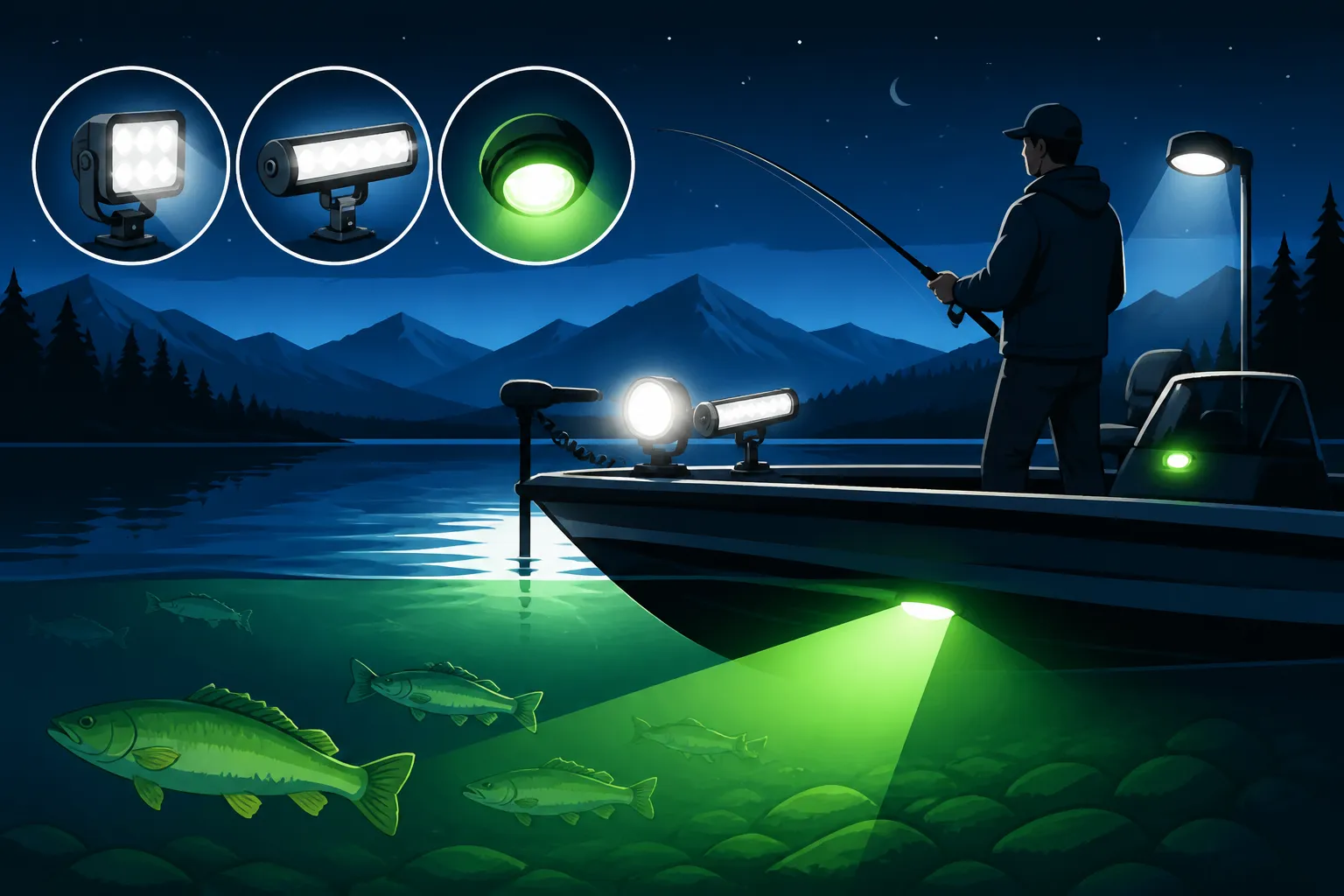
Some specialized lights, like those with green or white LEDs, can even attract baitfish, which in turn draws in predatory species like walleye or pike. While not always the primary purpose, smart lighting choices can give you an edge. Think about how much easier it is to bait a hook or manage your line when you can actually see what you're doing, rather than fumbling around with a tiny headlamp that creates more shadows than light. This efficiency translates directly into more time fishing and less time frustrated.
Understanding Alberta's Regulations for Boat Lighting
Before you even think about buying a single light, you absolutely must understand the rules. Alberta, like all Canadian provinces, follows federal regulations set by Transport Canada regarding vessel lighting. These aren't suggestions; they are laws designed for everyone's safety on the water. Breaking them can lead to hefty fines and, more importantly, put you and others at serious risk.
Federal Requirements for Navigation Lights
For any power-driven vessel under 12 meters (39.4 feet) that operates between sunset and sunrise, or during periods of restricted visibility (like fog or heavy rain), specific navigation lights are mandatory. This includes most fishing boats you'll find on Alberta's lakes and rivers. Generally, you'll need:
- Masthead Light: A white light placed over the fore and aft centerline of the vessel, showing an unbroken light over an arc of the horizon of 225 degrees and fixed to show from right ahead to 22.5 degrees abaft the beam on either side of the vessel. Think of it as your forward-facing white light.
- Sidelights: A green light on the starboard (right) side and a red light on the port (left) side, each showing an unbroken light over an arc of the horizon of 112.5 degrees and fixed to show from right ahead to 22.5 degrees abaft the beam on its respective side. These are your "stop and go" lights that indicate your direction to other boaters.
- Sternlight: A white light placed as nearly as practicable at the stern, showing an unbroken light over an arc of the horizon of 135 degrees and fixed to show from 67.5 degrees abaft the beam on each side of the vessel. This is your rear-facing white light.
Sometimes, a single all-around white light can serve as both the masthead and sternlight for smaller power-driven vessels under 12 meters, but it must be visible for 360 degrees. Always double-check your specific boat's length and type against the current regulations to ensure compliance. You'll find detailed breakdowns in resources like Alberta Boating Laws for Anglers or by consulting the official Transport Canada Safe Boating Guide.
Additional Lighting for Utility and Safety
While navigation lights are strictly regulated, other types of lighting are just good common sense for night fishing. These aren't typically mandatory under federal law for showing your presence, but they are crucial for practical use and personal safety on board.
For instance, having a powerful spotlight can help you locate a mooring buoy or navigate through a tricky section of a river quickly. Deck lights, powered by your boat's electrical system or by portable batteries, provide essential illumination for baiting hooks, handling fish, or moving around your boat without tripping. A good headlamp is also an absolute lifesaver for tasks that require both hands, like tying intricate knots or unhooking a deeply swallowed lure.
It's also a good idea to keep spare batteries for any portable lights and even a backup flashlight on board. Think about what you'd need if your main power system failed. Having redundant lighting sources ensures you're never left completely in the dark, allowing you to deal with emergencies or simply pack up safely. This foresight is part of being a responsible boater, especially when exploring Alberta's diverse waters.
| Light Type | Primary Purpose | Mandatory for Night Use | Power Source (Common) | Considerations |
|---|---|---|---|---|
| Navigation Lights | Indicate vessel presence, direction, and position | Yes (most vessels) | Boat Battery (12V) | Specific arcs of visibility, color requirements |
| All-Around White | Combines masthead & sternlight for smaller vessels | Yes (some vessels) | Boat Battery (12V) | Must be visible 360 degrees |
| Anchor Light | Indicate anchored status at night | Yes (if anchored) | Boat Battery (12V) | Must be visible 360 degrees |
| Bow / Deck Lights | Illuminate casting deck, tackle area, boat interior | No | Boat Battery (12V), Battery-Powered LED | Practical utility, can attract bugs |
| Spreader Lights | Wide area illumination from a high point | No | Boat Battery (12V) | Great for overall deck lighting |
| Spotlight / Searchlight | Identify distant objects, navigate hazards | No | Boat Battery (12V) | Powerful, but can blind others if misused |
| Underwater Lights | Attract baitfish, ambient glow | No | Boat Battery (12V) | Can be effective for attracting fish |
| Headlamps | Hands-free task lighting, personal mobility | No | Battery (AA/AAA/Rechargeable) | Essential for personal use, avoid shining at others |
| Lanterns (Portable) | General ambient light in boat, portable | No | Battery (D/AA/Rechargeable) | Convenient, good backup |
Types of Boat Lights for Night Fishing
When it comes to outfitting your boat for night fishing, you'll find a dizzying array of options. But they generally fall into a few key categories, each serving a distinct purpose on the water after dark. Understanding these types will help you build a comprehensive lighting system that keeps you safe and enhances your fishing success.
Navigation Lights
These are the non-negotiables. As we touched on earlier, navigation lights are your boat's way of communicating its presence and direction to every other vessel on the water. They are mandated by law, and getting them right is paramount. You'll typically find navigation lights sold as individual units (red/green sidelights, white sternlight, white masthead light) or as combination units, especially for smaller boats where an all-around white light might cover both masthead and stern functions.
Modern navigation lights are almost exclusively LED, offering incredible brightness, low power draw, and a much longer lifespan than older incandescent bulbs. When choosing, look for lights that are U.S. Coast Guard (USCG) approved, as this usually signifies compliance with similar international standards that Canada also adheres to. Whether you're cruising across Cold Lake or navigating the broad sections of the North Saskatchewan River, properly functioning and positioned navigation lights are your first line of defense against collisions. You can find robust, marine-grade navigation lights at retailers like Bass Pro Shops, which often carry reputable brands known for durability and compliance.
Deck and Spreader Lights
Once your navigation lights are sorted, your next priority should be illuminating your working areas. Deck lights and spreader lights are designed to do just that, casting a broad, even glow over your boat's interior, casting deck, or transom. This type of lighting is critical for all those hands-on tasks that become so much harder in the dark. Imagine needing to re-tie a leader after a big pike breaks you off on Keho Lake. Without adequate deck lighting, you'd be fumbling in frustration.
Spreader lights, typically mounted higher up on a boat's arch or T-top, provide an even wider flood of light, reducing shadows and making it easier to see everything on deck. LED strips or small, waterproof LED puck lights can also be strategically placed around the gunwales or under consoles to provide subtle, yet effective, task lighting. When selecting these, consider their brightness (lumens), beam pattern (flood vs. spot), and color temperature. While bright white is common, some anglers prefer a softer, warmer light to reduce eye strain, or even red/green options that preserve night vision.
Underwater and Attractor Lights
Now we're moving into the realm of specialized lighting that can give you an edge in fishing. Underwater lights, as the name suggests, are mounted below the waterline, either on the transom or along the hull. These lights can create an incredible halo of light in the water, illuminating baitfish and, consequently, drawing in larger predatory species. While not always a guaranteed fish magnet, many night anglers swear by their effectiveness, especially for walleye on lakes like Pigeon Lake or even burbot in deeper waters.
Green LED lights are particularly popular for underwater applications, as they penetrate water more effectively and are thought to be highly attractive to plankton and baitfish. However, it's worth noting that using attractor lights near sensitive fishing areas or where regulations specify "light fishing" rules might be restricted. Always check the Alberta Fishing Regulations Explained for any specific prohibitions on light usage that might apply to certain species or bodies of water. These lights are often quite powerful and require a solid 12V connection, so proper installation is key.
Portable and Emergency Lighting
Even with a fully lit boat, having reliable portable lighting is a non-negotiable for night fishing. Headlamps are arguably the most essential piece of personal night fishing gear. They offer hands-free illumination, pointing light exactly where you look. This is invaluable for tying knots, rigging tackle, or simply navigating a dark boat dock. Look for headlamps with multiple brightness settings and, ideally, a red-light mode to preserve your night vision when you don't need full illumination.
Beyond headlamps, a good waterproof flashlight or a portable LED lantern can serve as invaluable backups. These can be used for signaling in an emergency, inspecting your motor, or providing ambient light when your boat's main power is off. Many anglers keep a small, powerful LED flashlight readily accessible in a dry box. For larger ambient light, portable battery-powered lanterns, some even offering USB charging ports, are fantastic for longer trips. These supplementary lights are easy to grab and use, and a quick search on Amazon will show you a huge variety of options, from compact and bright to long-lasting and durable. Remember, redundancy is key when it comes to safety after dark.
Choosing the Right Boat Lights for Your Alberta Adventures
Selecting the best boat lights isn't just about buying the brightest or the most expensive. It's about tailoring your lighting system to your specific boat, your fishing style, and the unique conditions you'll encounter on Alberta's waters.
Assessing Your Boat and Needs
First, consider the size and type of your boat. A small jon boat used primarily for shallow river fishing on the Oldman River will have very different lighting needs than a larger deep-V fishing machine tackling the broad expanses of Lesser Slave Lake. What kind of power supply does your boat have? Most fishing boats run on a 12-volt DC system, which is what marine LED lights are designed for. Do you have enough battery capacity to run all your desired lights for an extended period?
Think about your primary fishing targets and techniques. Are you strictly a catch-and-release trout angler on the Bow River who needs minimal deck lighting for knot tying, or are you chasing walleye all night on Wabamun Lake, requiring more robust illumination for landing fish and moving around the boat? If you frequently fish alone, hands-free lighting like a headlamp becomes even more critical. If you fish with friends, having multiple light sources that don't cast shadows on each other's work can prevent frustration.
Durability and Weather Resistance
Alberta's weather can be unpredictable, even in the summer. From sudden thunderstorms to chilly late-season evenings, your boat lights need to withstand the elements. Look for lights that are explicitly rated for marine use, often indicated by an IP (Ingress Protection) rating. An IP67 or IP68 rating means the light is highly resistant to dust and can be submerged in water for a period without damage. This is non-negotiable for lights mounted externally, and even internal lights should have some level of moisture resistance.
Corrosion resistance is also crucial, especially if you venture into brackish waters or simply deal with constant exposure to moisture. Stainless steel hardware and durable, UV-resistant plastic or aluminum housings will ensure your lights last more than just a season. While an inexpensive light might seem appealing, investing in quality, marine-grade lighting from a trusted brand means less hassle, fewer replacements, and greater reliability when you truly need it out on the water.
Power Consumption and Battery Life
Modern LED lighting has revolutionized boat lighting due to its incredibly low power draw. This is a huge advantage for night fishing, as it means your lights won't quickly drain your boat's battery. However, if you plan to run multiple powerful lights (like underwater attractors or several deck lights) for many hours, you still need to be mindful of your overall power budget.
Consider installing a separate battery specifically for your accessories, or ensure your main battery system is robust enough for your demands. Some lights come with built-in rechargeable batteries, offering portability and flexibility without taxing your boat's main system. Always carry a portable power bank for recharging headlamps and other USB-powered devices. Understanding your power needs and matching them with efficient LED lighting is key to preventing a dead battery stranded in the dark, far from the launch.
Installation and Positioning Tips
Proper installation is just as important as choosing the right lights. Navigation lights must be positioned according to Transport Canada regulations to achieve their required arcs of visibility. This might mean mounting them higher on a mast or stern pole for an all-around light, or precisely on the bow and sides for sidelights. Incorrectly installed navigation lights are essentially useless and can even be dangerous, giving other boaters a false sense of your position or direction.
For utility and task lighting, think about where you perform most of your activities. Lights mounted under gunwales can illuminate the deck without blinding you or your fishing partners. Spreader lights should be high enough to cast a wide, even beam. Experiment with temporary placements before making permanent holes. Consider lights with adjustable mounts, allowing you to direct the light where it's needed most. When wiring, always use marine-grade wire, proper connectors, and appropriate fuses to protect your electrical system and prevent fire hazards. If you're unsure, it's always best to consult with a marine electrician or a knowledgeable professional at a store like Bass Pro Shops for installation guidance.
Disclaimer
This article is for general informational purposes only and does not constitute professional advice. Laws, prices and regulations vary by location and change over time. Consult a qualified professional for guidance on your specific situation.