Best treble hook size for crankbaits
Oh, the age-old dilemma of fishing! You've got your favorite crankbait, it's swimming beautifully, but are those hooks really doing their job? There's nothing more frustrating than getting a strong strike, feeling that tell-tale tug, only to reel in a perfectly un-hooked lure. Many anglers face this exact issue, agonizing over whether their treble hooks are too big, too small, or just plain wrong for the job. This comprehensive guide will dive deep into how to pick the absolute best treble hook size for your crankbaits, making sure you increase your hook-up ratio and spend more time landing fish in Alberta's incredible waters.
Why Treble Hook Size Matters for Crankbaits
Choosing the right treble hook size isn't just a minor detail; it's a critical component that can dramatically affect your crankbait's performance and, ultimately, your success on the water. It’s easy to overlook, but trust me, understanding this can elevate your fishing game from good to great. We're talking about more than just catching fish; we're talking about the subtle science of presentation and effective hooking.
Action of the Crankbait
One of the most overlooked aspects of treble hook size is its direct impact on the crankbait's action. Every crankbait is meticulously designed by engineers to have a specific wobble, dive depth, and buoyancy. These characteristics are calibrated with a specific hook size and weight in mind. If you swap out the factory hooks for ones that are too large or too heavy, you can inadvertently kill that carefully engineered action. The lure might run shallower than intended, its wobble could become sluggish, or it might even sink faster than it's supposed to. Conversely, hooks that are too light might make the lure float up too quickly or lose its balance in faster retrieves, especially if it's a suspending model. Think of it like putting oversized tires on a sports car – it might look tough, but it won't handle the same. This nuanced interaction is why understanding original lure specifications is so important, particularly for those sensitive lures you rely on for finicky walleye or cautious trout in rivers like the Bow.
Hook-Up Ratio
This is where the rubber meets the road, or rather, the hook meets the fish. The hook-up ratio refers to how many strikes result in a successfully hooked fish. If your hooks are too small, they might not provide enough gap to properly penetrate a fish's mouth, especially larger species like northern pike with their bony jaws. They might just prick the fish, leading to short strikes or fish shaking off quickly. On the other hand, hooks that are too large can become a problem too. They might get tangled with each other, especially on smaller crankbaits, or become so unwieldy that they hinder the lure's natural presentation, making it less appealing to fish. Furthermore, oversized hooks can sometimes get pinned against the lure body during a strike, preventing a clean hook set. Finding that sweet spot where the hook can swing freely and offer maximum penetration is key. It's about ensuring that when a walleye commits to your Best Crankbaits for Alberta Walleye, you've got the best chance of bringing it to the boat.
Snagging and Fouling
Oh, the agony of a snagged lure! Especially when it’s your favorite, most productive crankbait. Treble hook size plays a huge role here. Larger hooks naturally have more surface area and can catch on submerged branches, weeds, or rocks more easily. If you're fishing in areas with heavy cover, like rocky shorelines or weedy flats, opting for slightly smaller hooks can sometimes reduce snags without significantly compromising your hook-up potential. The trade-off is often worth it if it means saving your prized lure. Furthermore, hooks that are too large for the bait can sometimes foul themselves during the cast or retrieve, snagging on the line or tangling with each other, which totally ruins the lure's action and makes it ineffective. Nobody wants to reel in a crankbait that's spinning wildly because its front hook is wrapped around the line. This is a common frustration, especially when casting into tight spots along Alberta's riverbanks or trying to work through patchy weeds in a shallow lake.
Understanding Common Treble Hook Sizing Systems
Navigating the world of treble hook sizes can feel a bit like deciphering a secret code, especially with different manufacturers. But once you get the hang of it, it's pretty straightforward. Knowing the basics will empower you to make informed decisions, whether you're browsing the aisles at Bass Pro Shops or looking for specific replacements online.
Standard Hook Size Numbers
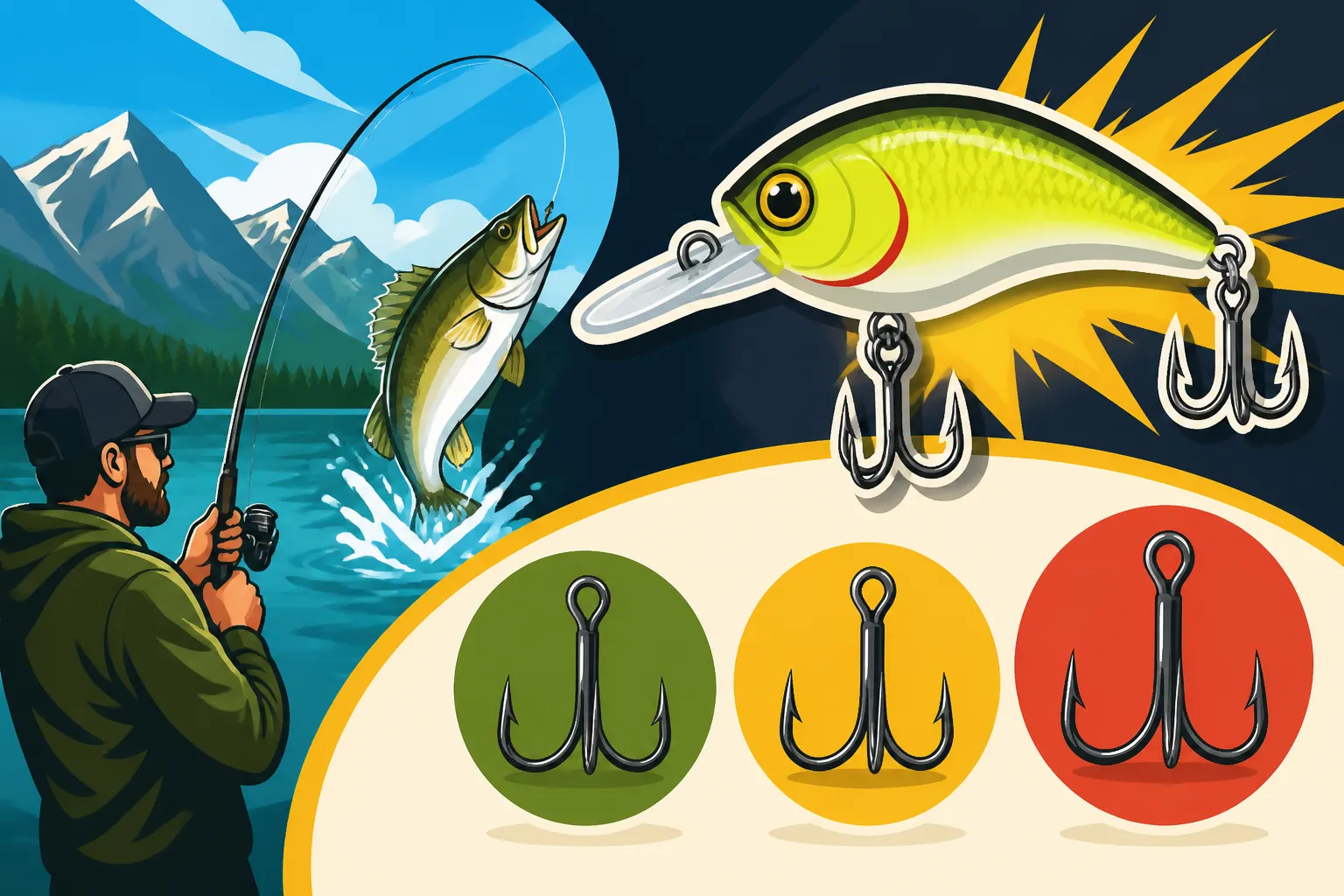
Unlike clothing sizes where a larger number means a larger item, fishing hook sizes work a bit differently. For standard treble hooks, the general rule is: the smaller the number, the larger the hook. So, a size 2 treble hook is significantly larger than a size 8. This is where many new anglers get tripped up. Sizes typically range from tiny micro-trebles (like size 14 or 16 for panfish lures) all the way up to huge hooks (like 2/0 or 3/0, often seen on musky baits). When you see a "0" after the number (e.g., 1/0, 2/0, 3/0), it signifies hooks larger than a size 1. So, the sequence generally goes: 16, 14, 12, 10, 8, 6, 4, 2, 1, 1/0, 2/0, 3/0, and so on, with 16 being very small and 3/0 being very large. This system is pretty universal across brands, though the exact wire gauge or barb sharpness might vary. Always double-check the packaging and, if possible, compare it to the hooks you're replacing to ensure you're getting the right size.
Matching Hooks to Crankbait Body Size
The most critical step in selecting treble hooks is to match them appropriately to the crankbait's body size. A good starting point is to observe the original factory hooks. Manufacturers generally equip their lures with hooks that best suit their design, so using them as a baseline is always a smart move.
When considering replacements or upgrades, here's a general guideline:
- Small Crankbaits (1-2 inches): These tiny lures, often used for trout or smaller panfish, usually come with hooks in the size 10 to 14 range. Going too large here will kill the action and cause constant tangling.
- Medium Crankbaits (2-4 inches): This is a very common size range for many walleye and smaller pike crankbaits. You'll typically find hooks in the size 6 to 8 range on these. These are the workhorses for many anglers targeting species across Alberta's lakes.
- Larger Crankbaits (4-6 inches+): For bigger presentations aimed at trophy pike or lake trout, you're looking at hooks from size 4 down to 1, and even 1/0 or 2/0. These larger lures need robust hooks to handle powerful fish and their often larger mouths.
It's crucial to ensure that the hooks don't touch each other or the body of the lure when hanging naturally. If they do, they're likely too big and will foul. Conversely, if they look ridiculously tiny, they're probably too small to secure a good hook set on your target species. Pay attention to the "gap" of the hook – the distance from the point to the shank. This gap needs to be wide enough to encompass the lip of the fish.
Factors to Consider When Choosing Treble Hook Size
Beyond the general guidelines, several specific factors influence the optimal treble hook size for your crankbaits. Thinking through these points will help you fine-tune your selection for maximum effectiveness in different fishing scenarios.
Target Species and Mouth Size
The type of fish you're after is perhaps the most significant factor. Think about the size and structure of their mouths.
- Walleye: These fish have relatively delicate, paper-thin mouths. Hooks that are too large can tear free, and hooks that are too small might not get a solid purchase. A common size range for walleye crankbaits is usually size 6 or 8. If you're using larger deep-diving crankbaits for big walleye, you might go down to a size 4. They're often gentle biters, so a sharp, correctly sized hook is paramount for a good hook-up. Our guide on How to Catch Walleye in Alberta goes into more detail on their feeding habits.
- Northern Pike: Pike have huge, bony mouths and an aggressive strike. They can easily engulf larger baits, so you need hooks with enough gap and strength to penetrate that hard cartilage. Sizes 2, 1, or even 1/0 are common for pike crankbaits, especially on bigger lures. They can really trash a hook, so durability is important. For more on these toothy critters, check out Northern Pike Fishing in Alberta.
- Trout (Rainbow, Brown, Cutthroat): Smaller trout, especially in streams or stocked ponds, will require smaller hooks, often sizes 8, 10, or even 12, on micro-crankbaits. Larger trout, like those found in the Bow River, might warrant a size 6 or 8. Their mouths are generally softer than a pike's, but they can be finicky. For these situations, hook sharpness is often more critical than brute size.
Consider the force of the bite too. An aggressive pike might bend a weaker hook, whereas a gentle walleye might just mouth the lure, requiring a super-sharp point to grab hold.
Cover and Structure Considerations
Where you're fishing heavily influences your hook choice. Are you casting into open water, over a clean bottom, or are you navigating a minefield of snags?
- Heavy Cover (Weeds, Timber, Rocks): If you're trying to fish around submerged logs, thick weed beds, or rocky points, larger hooks are just asking for trouble. They will snag constantly, leading to lost lures and endless frustration. In these situations, many anglers opt to go down one hook size, or even replace the front treble with a single hook to reduce snags. Some even go to a single, weedless hook in extreme situations, though this changes the lure's action significantly. This is a common tactic when fishing for Northern Pike Habits in Alberta Lakes in shallow, weedy areas.
- Open Water: When fishing over sand flats, deep water, or areas with minimal cover, you have more freedom. Here, you can lean towards slightly larger hooks if you feel it will improve your hook-up ratio, especially for bigger fish. The risk of snagging is minimal, so you can optimize purely for hooking power.
- Riprap and Bank Fishing: Anglers casting from shorelines often deal with varying depths and structures. Having a balance is key. You don't want hooks so large they constantly catch on the riprap, but you still need them robust enough to land whatever bites.
The type of cover should always be a consideration. It's often a trade-off between maximizing hook exposure and minimizing snags.
Crankbait Body Style and Buoyancy
Every crankbait has a unique profile and buoyancy. Matching the hook size to these characteristics is crucial for maintaining the lure's intended performance.
- Fat-Bodied Crankbaits: These lures often displace more water and can handle slightly heavier hooks without much impact on their action. The broader body provides more surface area for hooks to hang clear without fouling.
- Thin-Bodied or Jerkbaits: These more streamlined lures are very sensitive to weight changes. Adding too large or heavy a hook can severely dampen their tight wiggle or delicate suspending action. For these, it's often best to stick very close to the factory hook size, or even use lighter wire hooks of the same size. For instance, the subtle action needed for Best Techniques for Early Spring Pike often relies on the lure's original design.
- Suspending Crankbaits: These lures are designed to hover at a specific depth when paused. Their buoyancy is finely tuned. Swapping hooks for a different size or weight can turn a suspending lure into a slow-sinking or slow-floating one, completely altering its effectiveness during pauses. If you must change hooks on a suspending bait, try to match the weight of the original hooks as closely as possible, using a sensitive scale if available.
- Floating/Diving Crankbaits: While less sensitive to minor weight changes than suspending baits, drastically altering hook size can still impact dive depth and buoyancy. A heavier hook might make a floating bait dive deeper, or a lighter hook might prevent it from reaching its maximum depth.
Always observe how your crankbait behaves in the water after changing hooks. A quick test cast in clear, shallow water can reveal a lot about how the new hooks affect its action.
| Crankbait Type | Typical Body Length (Inches) | Suggested Treble Hook Sizes (Starting Point) | Primary Target Species | Snagging Risk Consideration |
|---|---|---|---|---|
| Small Finesse | 1 – 2.5 | #12 – #8 | Trout, Panfish | Low (smaller hooks) |
| Medium Diving/Shallow | 2.5 – 4 | #8 – #6 | Walleye, Smaller Pike | Moderate |
| Large Deep Diving | 4 – 6 | #6 – #4 | Walleye, Pike, Lake Trout | Moderate to High |
| Musky/Trophy Pike | 6+ | #2 – #1/0 | Trophy Pike, Lake Trout | High (larger lure profile) |
| Jerkbaits (Suspending) | 3 – 5 | #8 – #4 (match original weight carefully) | Walleye, Pike | Moderate (sensitive action) |
Practical Tips for Selecting and Replacing Treble Hooks
Now that we've covered the "why" and "what," let's talk about the "how." Making smart choices and knowing how to properly replace hooks can save you time, money, and frustration on the water.
Trial and Error on the Water
Fishing is as much an art as it is a science, and sometimes, textbook advice needs a little real-world adjustment. The best way to truly know if a hook size is perfect for your specific crankbait in your specific fishing conditions is to test it out. Don't be afraid to experiment! Start with the factory hooks or a close equivalent. If you're noticing a lot of short strikes, fish shaking off, or consistent snags, consider making a change.
For example, if you're fishing a weedy lake known for good pike fishing, and your crankbait keeps getting hung up, try going down one hook size (e.g., from a #4 to a #6). Or, if you're consistently getting bites but not landing the fish, perhaps a slightly larger size (e.g., from a #8 to a #6) or a different hook style (like a wider gap) might improve your hook-up ratio. Carry a small selection of different hook sizes and styles with you. It’s a lot easier to make a quick adjustment on the water than to miss out on prime fishing because your gear isn’t dialed in. This adaptive approach is what separates good anglers from great ones.
Tools and Techniques for Replacement
Replacing treble hooks is a straightforward process, but having the right tools makes all the difference. You don't want to be fumbling with pliers and potentially damaging your lure or, worse, yourself.
- Split Ring Pliers: These are absolutely essential. They have a small, pointed jaw that allows you to easily open the split ring (the small metal ring connecting the hook to the lure) without bending or damaging it. Trying to do this with regular pliers is an exercise in frustration and often results in bent split rings or broken fingernails. You can find good quality split ring pliers at any reputable fishing store, including Bass Pro Shops, or readily available on Amazon.
- Heavy Duty Side Cutters: Sometimes, old hooks are rusted on, or you simply need to cut off a bent or damaged hook quickly and safely. A good pair of side cutters, designed for fishing, will make short work of this.
- New Split Rings: It's often a good idea to replace the split rings along with the hooks, especially if the old ones are fatigued or rusted. Matching the size and strength of the original split rings is important for maintaining the lure's integrity and action.
When replacing, simply use the split ring pliers to open the old split ring, remove the old hook, and then add the new hook. Be careful with sharp points! Always secure the lure and hold the hooks away from your fingers. This attention to detail will help you keep your tackle in top shape, ready for any fish Alberta's waters throw at you.
When to Upgrade or Downgrade
Knowing when to change hook sizes isn't always about fixing a problem; sometimes it's about optimizing for a specific situation.
-
Upgrading (Larger or Stronger Hooks):
- Targeting Bigger Fish: If you're getting hits from genuinely large pike or lake trout that are bending or breaking your existing hooks, it's definitely time for a size or strength upgrade.
- Increased Hook-Up Ratio: If you're experiencing a lot of fish coming unbuttoned during the fight, and you've ruled out other factors like line stretch, a slightly larger or wider-gap hook might be necessary.
- Enhanced Durability: Some factory hooks are simply not as strong or sharp as they could be. Upgrading to premium hooks (often referred to as "1X," "2X," or "3X" strong, indicating thicker wire) can prevent bent or broken hooks, especially on more expensive crankbaits.
-
Downgrading (Smaller Hooks):
- Reducing Snags: This is the primary reason for downsizing. If you're consistently snagging in heavy cover, going down one hook size can make a world of difference.
- Improving Lure Action: On very small or delicate crankbaits, or those with a very specific suspending action, lighter-wire or slightly smaller hooks can restore or enhance their natural movement.
- Finesse Presentations: Sometimes, in very clear water or with pressured fish, a more subtle approach is needed. Smaller, less obtrusive hooks can sometimes make a lure more appealing.
Remember that every change has a consequence. A larger hook might increase your hook-up ratio but also increase snags. A smaller hook might reduce snags but could lead to lost fish. It's about finding that personal balance that works best for your style of fishing and the waters you frequent, whether you're chasing Alberta walleye daily limit in Lesser Slave Lake or casting for big pike in a secluded back bay. Don't be afraid to experiment, and always pay attention to how your changes affect your fishing experience.
Disclaimer
This article is for general informational purposes only and does not constitute professional advice. Laws, prices and regulations vary by location and change over time. Consult a qualified professional for guidance on your specific situation.