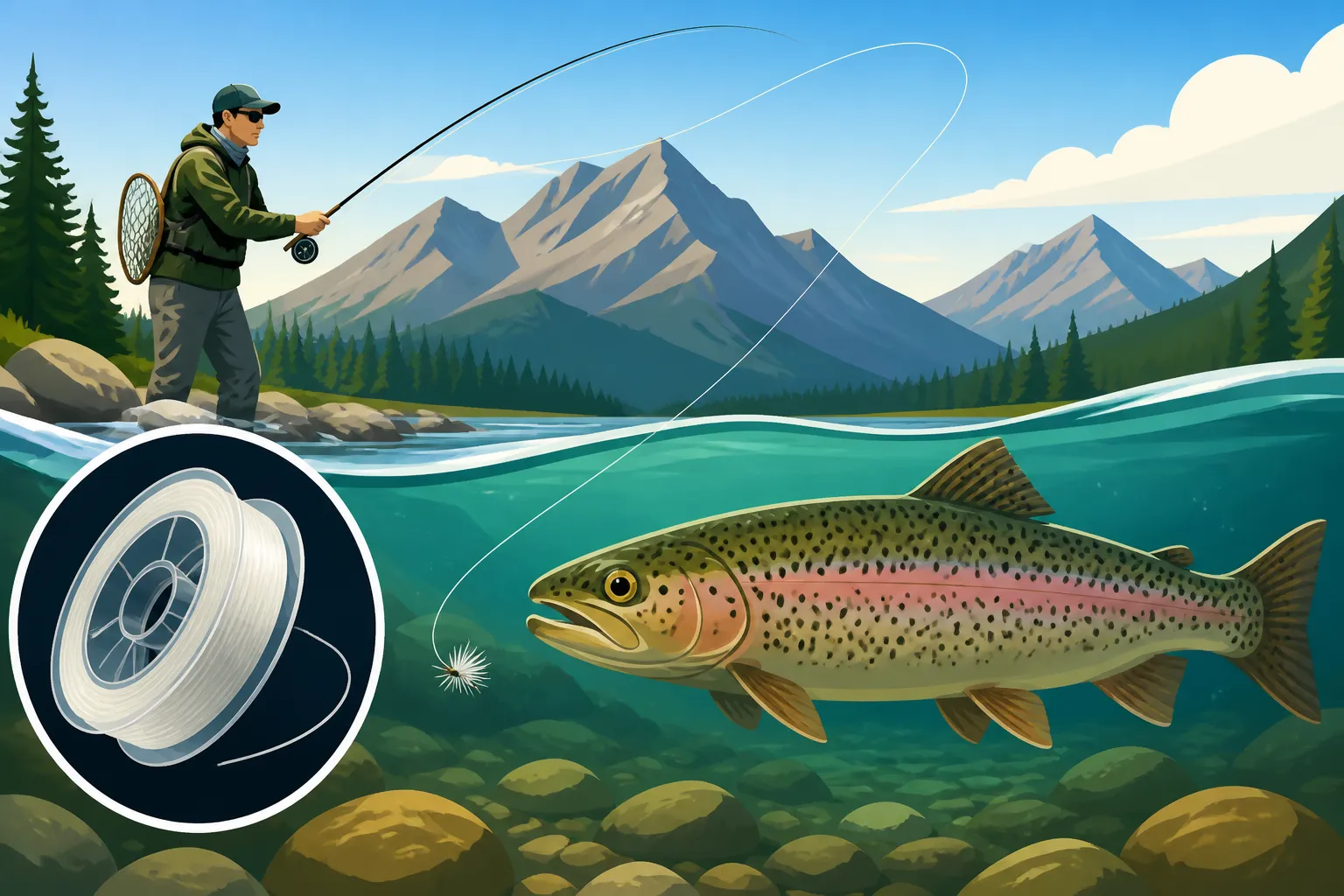
Best tippet material for spooky Bow River trout
There’s nothing quite like the beauty of the Bow River, is there? It’s a truly iconic fishery, but if you’ve spent any time on its legendary waters, you know its resident trout can be incredibly smart and, yes, downright spooky. Getting your fly to them without alerting their keen senses is the name of the game, and one of the biggest challenges anglers face often boils down to something as seemingly small as your tippet material. This guide is all about helping you understand the nuances of tippet, ensuring you're making the best choices to fool those wary Bow River rainbows and browns.
Understanding the Bow River and Its Trout
Before we even dive into the technical jargon of tippet, let's take a moment to appreciate what makes the Bow River such a unique challenge for fly anglers. This isn't your average stocked pond where fish will hit anything that moves. We're talking about wild, often large, and incredibly well-educated trout that have seen it all.
Clear Water and Keen Eyes
The Bow River, particularly the stretches below Calgary, is renowned for its remarkably clear, cold waters. This crystal clarity is fantastic for spotting fish, but it also means those fish have an unobstructed view of everything above and around them. Imagine trying to sneak past a watchful predator when your every move, every glint, every unnatural line, is perfectly visible. This is the reality for a fly drifting on the Bow. The trout here aren't just looking for food; they're constantly assessing potential threats, and anything that doesn't look completely natural can send them bolting for cover.
It’s not just about what they see in the water; it's also about the light. On bright, sunny days, the clarity combined with direct sunlight can make even thin lines visible if they're not designed for stealth. Trout have lateral lines that detect vibrations, but their vision is truly remarkable, and they've learned to associate unnatural lines with danger or deception. This is why paying attention to every detail, from your casting approach to your fly selection, and especially your tippet, becomes paramount. If you're looking to really dial in your approach, you might find some useful insights in Fly Fishing for Trout on the Bow River.
Pressure and Experience of Bow River Fish
The Bow River is a celebrated fishery, which means it sees a fair bit of angling pressure, especially during peak seasons. While it's wonderful that so many people get to enjoy this incredible resource, it also contributes to the "spookiness" of the trout. These fish encounter flies, lines, and anglers on a regular basis. They've learned to distinguish between what's real and what's connected to something dangerous. A fish that's been caught and released a few times becomes incredibly wary, developing a sixth sense for anything that seems off.
This accumulated experience makes them discerning feeders. They’re not going to rush to an obvious, poorly presented fly. They’ll often hold in current seams, inspecting offerings for subtle inconsistencies before deciding to commit. This is particularly true for larger, older fish that have survived multiple seasons and countless encounters with anglers. The margins for error become incredibly small, meaning your tippet choice and presentation need to be as flawless as possible. Sometimes, it’s not just about the fly itself, but the entire setup.
Key Characteristics of Tippet Material for Spooky Trout
When you're trying to outsmart a discerning Bow River trout, the tippet isn't just a piece of line; it's a critical component of your presentation. Several characteristics of tippet material directly influence your success rate.
Low Visibility and Refractive Index
Perhaps the most crucial characteristic for spooky trout is low visibility. This means the tippet should blend seamlessly with the water, effectively becoming invisible to the fish. The scientific term for this is refractive index. Simply put, water has a specific refractive index, and materials that match it more closely will be harder to see when submerged.
Think of it like trying to see a pane of glass underwater. If the glass has a similar refractive index to water, it virtually disappears. If it has a different refractive index, you see a shimmering outline or a distinct "line" in the water. For the Bow River's clear conditions, choosing a tippet material with a refractive index as close to water as possible is paramount. A visible line creates a "halo" effect around your fly, or worse, spooks the fish before they even get a good look at your offering. This is where modern tippet technology truly shines, helping you achieve that nearly invisible connection to your fly.
Suppleness and Natural Drift
Beyond invisibility, the suppleness or flexibility of your tippet material plays a significant role in how naturally your fly drifts in the current. A stiff, rigid tippet can prevent your fly from moving freely, making it drag or skate unnaturally across current seams. Spooky trout are experts at detecting these unnatural movements.
A supple tippet allows your fly to move with the subtle intricacies of the water, mimicking the behaviour of natural insects or baitfish. Whether you're dry fly fishing a delicate Caddis, dead-drifting a Nymph, or swinging a Streamer, a supple connection ensures that your fly acts like the real thing. This natural presentation is often the difference between a refusal and a solid hook-up on the Bow River. It's especially critical when targeting fish that are selectively feeding on specific insects and demand a perfect drift. For different fly patterns, check out Fly Patterns for the Bow River.
Abrasion Resistance and Knot Strength
While invisibility and suppleness are key for convincing wary trout, durability is essential for landing them. The Bow River, like many active trout streams, has its share of underwater structure – rocks, submerged logs, gravel beds – all of which can abrade or cut your tippet during a fight. A weak tippet or a poorly tied knot can lead to heartbreaking break-offs, especially when you hook into one of the Bow's trophy fish.
Look for tippet materials that offer excellent abrasion resistance, which means they can withstand friction without compromising their integrity. Equally important is superior knot strength. Even the strongest line is only as good as the knot you tie in it. Some materials are notoriously difficult to knot properly, leading to reduced breaking strength. You want a tippet that cinches down tight and holds its strength reliably, even after being subjected to the stresses of casting and fighting a fish. After all, you've gone to all that effort to fool the fish; you want to ensure you bring it to the net safely.
Types of Tippet Material for Alberta Fishing
When standing in your local Bass Pro Shops or browsing online at Amazon, you'll primarily encounter two main types of tippet material: monofilament and fluorocarbon. Both have their place in an angler's arsenal, but understanding their specific properties is crucial for targeting spooky Bow River trout.
Monofilament Tippet (Nylon)
Traditional monofilament tippet, made from nylon, has been the workhorse for fly anglers for decades. It's generally more affordable than fluorocarbon and offers a good balance of strength, stretch, and knotability.
One of the defining characteristics of monofilament is its stretch. This can be a double-edged sword: the stretch acts as a shock absorber, cushioning sudden strikes and reducing the chance of breaking off a fish on a hard run. It's particularly forgiving for anglers new to setting the hook or fighting strong fish. However, this stretch can also reduce sensitivity, making it harder to detect subtle takes, especially when nymphing at a distance. For dry fly fishing, its buoyancy can be an advantage, helping your dry fly float higher on the water's surface. On the downside, nylon monofilament tends to absorb water, which can slightly reduce knot strength over extended periods. It also has a higher refractive index than water, making it more visible to fish in very clear conditions, particularly thicker diameters. Despite this, for many situations, especially with choppier water or less pressured fish, monofilament remains a perfectly viable and often preferred choice due to its versatility and cost-effectiveness.
Fluorocarbon Tippet
Fluorocarbon tippet has become incredibly popular for its stealth and durability, especially when fishing clear waters like the Bow River. It boasts a refractive index very close to that of water, making it nearly invisible when submerged. This is its single biggest advantage when trying to fool spooky trout.
Unlike monofilament, fluorocarbon has very little stretch, offering incredible sensitivity. This means you can feel even the most subtle tugs or bumps, which is a huge benefit for detecting light bites while nymphing or when using streamers. Its density also causes it to sink faster than monofilament, pulling nymphs and streamers down to the strike zone more quickly and efficiently. Fluorocarbon is also highly abrasion-resistant, a major plus when fishing around rocky bottoms or fighting fish that might rub the line on structure. While typically more expensive than monofilament, its benefits for stealth and sensitivity often outweigh the cost for serious anglers targeting wary fish. However, its lower stretch means it's less forgiving than mono, and it can be a bit stiffer, which occasionally affects the most delicate dry fly presentations if not chosen carefully. You'll often find a great selection of high-quality fluorocarbon tippet brands at fly shops or through online retailers like Amazon.
Here's a quick comparison of the two:
| Feature | Monofilament (Nylon) | Fluorocarbon |
|---|---|---|
| Visibility | More visible (higher refractive index) | Nearly invisible (refractive index close to water) |
| Stretch | Significant stretch (shock absorption, less sensitive) | Very low stretch (high sensitivity, less forgiving) |
| Density/Sink Rate | Floats/Sinks slowly (good for dry flies) | Sinks quickly (good for nymphs/streamers) |
| Abrasion Resistance | Good | Excellent |
| Knot Strength | Generally good, can lose strength if wet | Excellent, can be stiffer to knot |
| Suppleness | Generally more supple | Can be stiffer, varies by brand |
| UV Resistance | Degrades over time with UV exposure | Highly UV resistant |
| Cost | More affordable | More expensive |
Choosing the Right Tippet Strength and Diameter
Once you've decided between monofilament and fluorocarbon, the next critical step is selecting the appropriate strength and diameter, often referred to as "X" ratings. This choice needs to balance the need for stealth with the power required to land a fish.
Understanding the "X" System
The "X" system (e.g., 5X, 6X, 7X) is a standard way to denote tippet diameter and, by extension, its breaking strength. The higher the "X" number, the thinner the tippet and the lighter its breaking strength. Conversely, a lower "X" number means a thicker, stronger tippet.
For example, a 5X tippet is thicker and stronger than a 7X. On the Bow River, with its clear water and often educated fish, you'll generally be fishing with thinner tippet than you might on a less pressured stream. Many anglers on the Bow might start with 4X or 5X for general nymphing or streamer fishing, but quickly drop down to 6X or even 7X for finicky dry fly situations or when fish are particularly shy. The rule of thumb is often "fish the lightest tippet you can get away with." This maximizes stealth and natural presentation, which are key for spooky trout. However, going too light risks break-offs. It's a constant calibration based on conditions, fly size, and fish behaviour.
Matching Tippet to Fly Size
A critical aspect of choosing tippet diameter is matching it to the size of your fly. This isn't just about strength; it's about presentation. A tippet that's too thick for a small, delicate dry fly can negatively impact its natural drift and sink it prematurely. Conversely, a tippet that's too thin for a large, heavy streamer might break during casting or when a strong fish strikes.
A general guideline is to divide the hook size of your fly by three to get a rough idea of the "X" rating. For instance, if you're fishing a size 18 dry fly, 18 divided by 3 is 6, suggesting a 6X tippet. For larger flies, like a size 8 streamer, you'd be looking at 3X or 4X. This isn't a hard and fast rule, but a good starting point. You'll often find yourself experimenting to see what the fish will tolerate. On a river like the Bow, where fish can be incredibly selective, the perfect match between fly and tippet diameter can be crucial. If you're struggling to get bites on small flies, often stepping down a tippet size, say from 5X to 6X, can make all the difference. This detail is especially important when fishing small dry flies for selective trout, as explored in Best fly size for the Bow River in spring.
Balancing Stealth with Landing Power
The eternal dilemma for any angler on the Bow River: how thin can you go without losing the fish? The objective is to use the lightest, most invisible tippet possible to entice a strike, but one that is still strong enough to withstand the fight. This is where knot strength and careful fish-fighting techniques come into play.
If you're using 6X or 7X fluorocarbon for tiny dry flies, you'll need to be extra gentle with your hook set and allow the rod to absorb the shock of any sudden runs. Your drag setting on your reel also becomes paramount. Conversely, if you're throwing large streamers with 3X or 4X tippet, you have a bit more margin for error, but you still need to be mindful of heavy structure. Conditions like high water or low clear water will also influence your choice, often demanding different approaches as discussed in Best techniques for high water spring conditions and Best techniques for low clear water conditions. Ultimately, finding that sweet spot between invisibility and power is a skill developed over time on the river, and it's a testament to the challenge and reward of Bow River fishing.
Tips for Rigging and Presentation
Choosing the right tippet is only half the battle. How you rig it and present your fly can equally influence your success, especially when targeting those notoriously spooky Bow River trout.
Knot Selection and Tying
The strongest tippet material in the world is useless if your knots fail. For Bow River fishing, where every fish is a prize and every opportunity precious, reliable knots are non-negotiable. Two knots are essential for most fly anglers: the surgeon's knot for connecting tippet to leader, and the improved clinch knot (or an equivalent like the Davy knot or Orvis knot) for attaching your fly to the tippet.
When tying any knot, moisten the line thoroughly before cinching it down. This lubrication helps the line slide smoothly, preventing friction from weakening the material. Pull slowly and steadily, ensuring the knot forms correctly and doesn't get "burned." For fluorocarbon, which can be a bit stiffer, taking extra care to fully seat the knot is even more important. Some anglers prefer specific knots for fluorocarbon due to its slicker nature. Practicing these knots at home, perhaps while watching TV, will build muscle memory and ensure that when you’re on the water, your knots are second nature, strong, and dependable. Don't let a faulty knot ruin your day when a trophy Bow River rainbow takes your fly.
Leader-Tippet Connections
Your tippet is an extension of your leader, and the connection between the two is a critical link in your entire system. A well-constructed leader tapers down smoothly from your fly line to your tippet, transferring energy efficiently for accurate casts and presenting your fly delicately. The surgeon's knot is a popular choice for connecting different sections of your leader and for attaching a new section of tippet.
When adding new tippet, ensure that the diameter of your new tippet isn't drastically different from the end of your leader. A sudden jump in diameter can create a hinge point, ruining your cast and potentially making your line more visible. Most commercially available leaders have a good taper, so simply adding a section of appropriate "X" rated tippet should work well. Regularly inspecting your leader and tippet for nicks, abrasions, or sun damage is also crucial. Over time, UV rays can degrade nylon monofilament, weakening it, so it's wise to replace tippet frequently, especially after a few long days on the water. This also applies to the leader itself; a worn leader will hinder your ability to cast effectively and present flies delicately, which is crucial for Best Gear for Bow River Fly Fishing.
Achieving a Natural Drift
Ultimately, the goal of selecting the perfect tippet is to achieve the most natural, drag-free drift possible. This means your fly should move at the same speed as the surrounding current, without any unnatural tugging or hesitation caused by your line. Spooky trout will instantly recognize a fly that isn't drifting naturally.
Techniques like mending your fly line upstream to remove drag, varying your cast angle, and using slack-line casts (like a parachute or reach cast) all work in conjunction with your tippet to achieve this. When fishing dry flies, ensure your tippet isn't creating any dimples or unnatural disturbances on the water's surface. With nymphs, the nearly invisible and denser nature of fluorocarbon helps them sink quickly and stay in the strike zone longer. Remember that presentation often trumps fly pattern when fish are picky. A perfect drift with an "okay" fly will almost always outfish a poor drift with the "perfect" fly. Mastering your presentation on the Bow River will elevate your angling game significantly.
Final Considerations for Alberta Anglers
Beyond the technical aspects of tippet, there are always a few other things to keep in mind when you're out chasing those elusive Bow River trout. Every little detail can contribute to your success.
Carrying a Variety of Tippet Sizes
No single tippet size will be perfect for every situation on the Bow River. Conditions change, hatches vary, and fish moods shift. A bright, sunny day might call for super-fine 7X fluorocarbon for tiny midges, while a cloudy day with larger stoneflies hatching might allow you to get away with 5X monofilament. The best approach is to carry a wide range of tippet sizes, typically from 3X to 7X, in both fluorocarbon and monofilament.
Having options allows you to adapt to whatever the river throws at you. You might start the day nymphing with 5X fluorocarbon, but if you notice fish rising to small dry flies in the afternoon, you can quickly switch to a longer, finer 6X or 7X monofilament. Being prepared for these changes can be the difference between a frustrating day and a memorable one. Most fly shops, including the well-stocked Bass Pro Shops, will have convenient tippet spools that stack together, making it easy to carry multiple sizes. Always check your tippet and leaders often; nicks and abrasion are real fish-losers.
The Importance of Stealth Beyond Tippet
While we've focused heavily on tippet, it's crucial to remember that it's just one piece of the stealth puzzle. Spooky Bow River trout require an all-encompassing approach to stealth. Your casting technique, your approach to the river, and even your clothing can make a difference.
Avoid heavy-footed wading that sends vibrations through the water. Cast smoothly and accurately, minimizing false casts that can create shadows or disturb the water. Wear subdued clothing that blends with the natural environment rather than bright, contrasting colours. Keep a low profile, especially when you've spotted fish. All these elements work in concert with your carefully selected tippet to create the illusion of a natural, undisturbed environment for the fish. Even the smallest details, like using a longer leader to keep your fly line further from the fish, can make a difference. If you want to refine your technique, consider exploring Wading Techniques for Alberta Trout Rivers.
Respecting the Resource
Finally, and perhaps most importantly, is the responsibility we have as anglers to respect the incredible fishery that is the Bow River. Many of the techniques and gear choices we've discussed, including using appropriate tippet, contribute to successfully landing fish. But landing them also means safely releasing them, especially on a river known for its healthy population of wild trout, including species like the rainbow trout detailed in Rainbow Trout Fishing on the Bow River.
Always use a good quality, rubber-meshed landing net that is gentle on fish scales and fins. Minimize the time fish are out of the water, and handle them with wet hands. If possible, keep them in the water for photos. The goal is to return them to the river healthy and strong, ready to fight another day and provide joy for future anglers. The health of the Bow River and its trout populations depend on all of us practicing responsible angling. It's a privilege to fish these waters, and treating them with care ensures they remain legendary for generations to come.
Disclaimer
This article is for general informational purposes only and does not constitute professional advice. Laws, prices and regulations vary by location and change over time. Consult a qualified professional for guidance on your specific situation.